
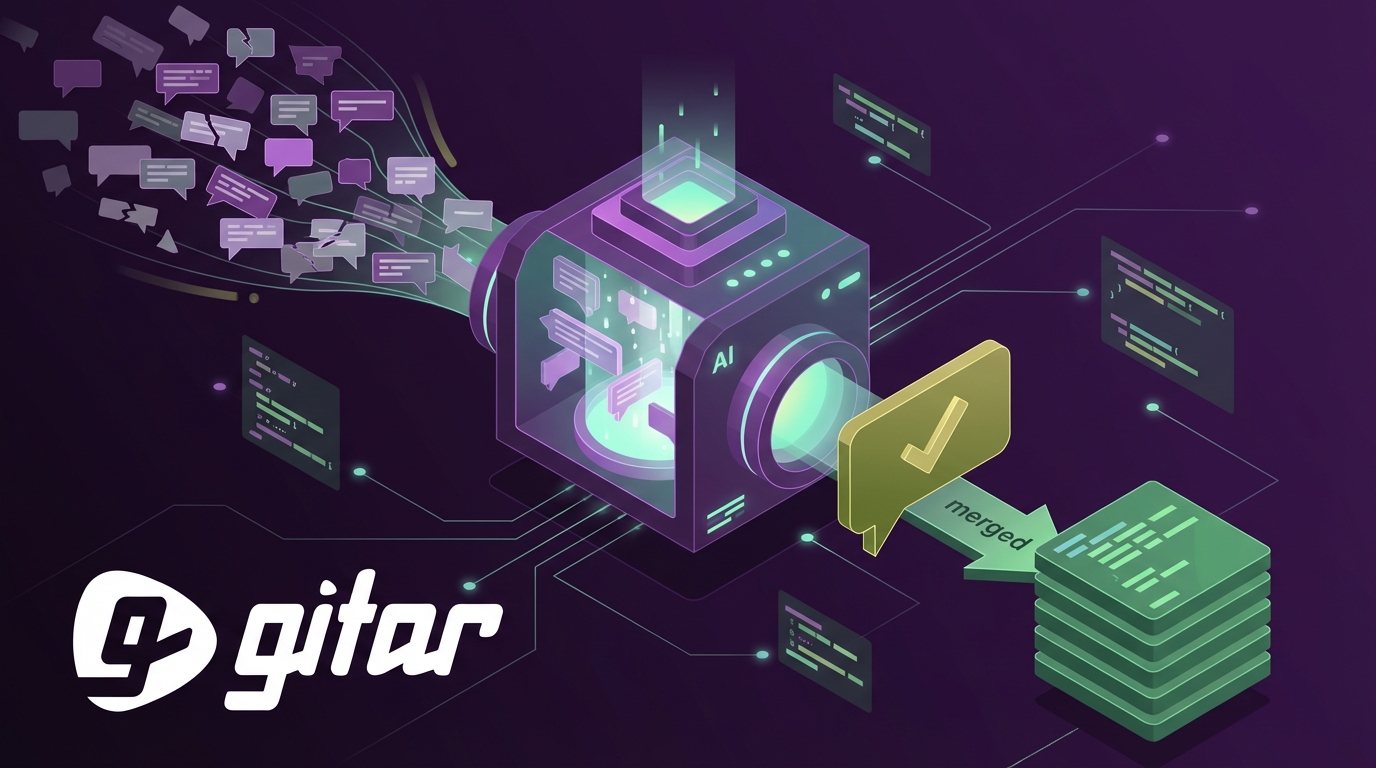
Written by: Ali-Reza Adl-Tabatabai, Founder and CEO, Gitar
Key Takeaways
- AI PR review time has surged 91% despite faster code generation, creating notification overload from nitpicky comments.
- Top low-noise tools prioritize logic bugs and security over style nitpicks, using single-comment consolidation to cut noise by 80%.
- Gitar leads as the free solution with auto-fixing for CI failures, validated at Pinterest scale for $750K annual savings.
- Paid competitors like CodeRabbit and Greptile offer suggestions only, lack auto-apply, and generate inline notification spam.
- Install Gitar now for free healing automation that outperforms paid tools and removes review bottlenecks.
Core Capabilities of Low-Noise AI PR Reviewers
Low-noise AI PR reviewers focus on high-impact issues and keep feedback easy to scan. They behave more like senior reviewers than lint bots.
- Context-aware prioritization, focusing on logic errors, security vulnerabilities, and performance issues instead of cosmetic style preferences
- Incremental review intelligence, analyzing only changed code and related dependencies instead of entire codebases
- Single-comment consolidation, updating one dashboard comment instead of scattering inline notifications
- Auto-apply validated fixes, implementing corrections and validating them against CI instead of leaving suggestions only
- CI failure root-cause analysis, separating infrastructure issues from code bugs to avoid wasted debugging time
| Feature | Gitar | CodeRabbit | Greptile |
|---|---|---|---|
| PR summaries | Yes (Free) | Yes (Paid) | Yes (Paid) |
| Inline noise | No (single comment) | Yes | Yes |
| Auto-fix CI | Yes (14-day trial) | No | No |
Gitar provides detailed setup instructions for these low-noise review patterns across GitHub, GitLab, and CI platforms. See the Gitar documentation for complete integration guides.
Top 7 AI PR Reviewers That Cut Comment Noise
1. Gitar: Free Healing Engine with Single-Comment UX
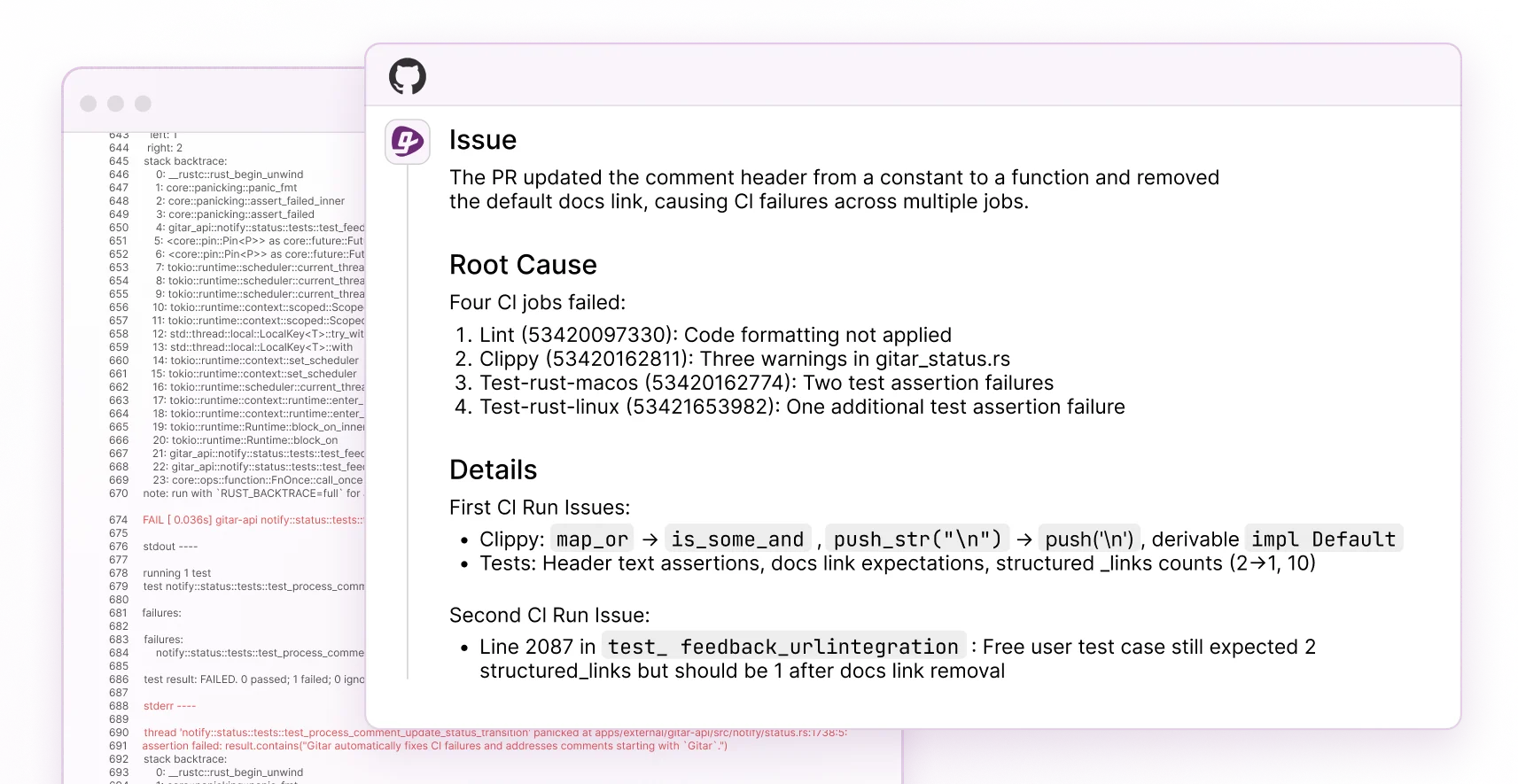
Gitar is the only free AI code review platform in this list that fixes code instead of only suggesting changes. When CI fails with lint errors, test failures, or build breaks, Gitar analyzes failure logs, generates validated fixes, and commits them directly to your PR.
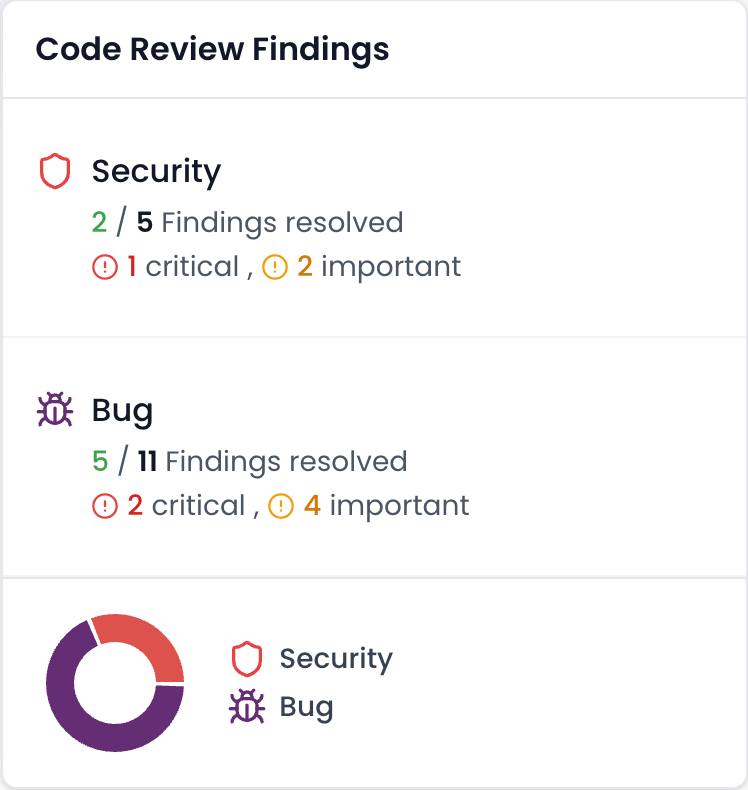
All feedback appears in a single updating dashboard comment that collapses resolved items. This design removes notification spam and keeps reviewers focused on remaining issues.
The platform supports natural language rules in .gitar/rules/*.md files for custom workflow automation without complex YAML. Cross-platform integration covers GitHub, GitLab, CircleCI, and Buildkite with timezone-proof operation that applies reviewer feedback while teams sleep. See the Gitar documentation for setup details.
Pricing: Free unlimited repositories and users, with a 14-day free trial of auto-fix features.
Strengths: Validated at Pinterest scale with 50M+ lines of code, delivers $750K annual savings for 20-developer teams through automated CI resolution, and achieves zero notification noise through single-comment design.
Implementation phases: Install GitHub app, review suggestions, enable auto-commit for trusted fix types, then expand with custom workflow rules.
Install Gitar now to automatically fix broken builds and ship higher quality software faster.
2. CodeRabbit: Paid Suggestions with Inline Comments
CodeRabbit processes over 13 million PRs with unhelpful comment rates under 3% and provides detailed walkthrough summaries using more than 40 integrated linters. The platform offers one-click fix suggestions and strong GitHub integration with inline comments.
This inline approach can create notification fatigue on larger changes, especially without careful configuration to filter low-value feedback.
Pricing: $15-30 per developer per month.
Limitations: Suggestion-only model that requires manual implementation, no CI failure auto-fixing, and an inline comment approach that increases notification volume.
3. Greptile: Deep Codebase Context with Inline Output
Greptile provides comprehensive repository analysis with full dependency graph understanding for complex codebases. Teams report more concise summaries compared to other tools, which helps reviewers scan changes quickly.
The platform still relies on inline comment patterns that can create notification spam and does not auto-apply suggested fixes.
Pricing: $30 per developer per month.
Limitations: No auto-fix capabilities, inline comment approach, and premium pricing for suggestion-only functionality.
Install Gitar now for free healing that outperforms paid suggestion engines.
4. Graphite Agent: Real-Time Reviews with Low False Positives
Graphite Agent achieves 96% positive feedback rates with under 5% negative feedback through real-time analysis. It detects bugs, vulnerabilities, and style issues and completes reviews in under 90 seconds.
Results appear directly in Graphite’s PR inbox for a cleaner interface. The platform requires paid subscriptions and does not provide CI auto-fixing capabilities.
5. Qodo: Fast, Detailed PR Analysis
Qodo delivers very fast, detailed PR reviews with deep issue analysis and supports GitHub, GitLab, and Bitbucket through the open-source PR-Agent with self-hosting options. The platform focuses on logic and correctness issues.
Qodo remains limited to suggestion-only functionality and does not implement validated fixes automatically.
6. Bugbot: Security-First, Low-Noise Reviews
Bugbot maintains low false-positive rates by concentrating on substantive issues like bugs and security vulnerabilities instead of style nitpicks. This targeted scope reduces noise for reviewers.
The tool still requires manual implementation of suggested fixes and lacks CI integration capabilities.
7. Ellipsis: Automated Standards and Fixes
Ellipsis focuses on automated fix implementation and coding standards to reduce refactoring cycles. It offers some auto-application capabilities for standards enforcement.
The platform operates at limited scale for large enterprises and does not provide comprehensive CI failure analysis.
Install Gitar now to automatically fix broken builds and eliminate review bottlenecks.
Why Gitar Healing Beats CodeRabbit and Greptile Suggestions
Gitar differs from paid competitors by centering on healing instead of suggestions. CodeRabbit and Greptile charge $15-30 per developer each month for comment-based feedback that still requires manual implementation.
Gitar provides free code review with validated auto-fixing capabilities that commit working changes directly to your PR.
| Capability | Gitar | CodeRabbit | Greptile |
|---|---|---|---|
| Auto-apply fixes | Yes | No | No |
| CI Integration | Yes | Limited | No |
| Single Comment | Yes | No | No |
| Pricing | $0 | $15-30 | $30 |
Many teams worry about free pricing models and automated commits. Code review now behaves like commoditized infrastructure, while real value comes from workflow automation and development intelligence on top.
Gitar’s configurable trust levels let teams start in suggestion mode. They can then gradually enable auto-commit for specific failure types as confidence grows.
For 20-developer teams, the ROI is clear. Automated CI resolution cuts productivity losses from $1M annually to $250K while also removing $450-900 in monthly tool costs from paid alternatives.
Measuring and Rolling Out Low-Noise Reviews
The Signal Ratio framework measures review quality as (Tier 1 + Tier 2 findings) / Total comments. Tier 1 represents production failure risks, and Tier 2 covers maintainability issues.
Good tools achieve signal ratios above 60%. Great tools exceed 80% and keep reviewers focused on meaningful changes.
Implementation follows a clear 7-step rollout:
- Install the Gitar GitHub app or GitLab integration.
- Enable repository monitoring for immediate PR analysis.
- Review consolidated feedback in a single dashboard comment.
- Trial auto-fix capabilities with 14-day free access.
- Configure .gitar/rules/*.md files to ignore style nitpicks.
- Connect Slack and Jira integrations for workflow automation.
- Monitor analytics for noise reduction and cycle time improvements.
Gitar provides configuration guides for GitLab, CircleCI, Buildkite, and custom CI environments in the documentation. Studies show 31.8% cycle time reduction when teams apply automated PR review improvements correctly.
Frequently Asked Questions About Gitar
Is Gitar really free compared to paid tools like CodeRabbit and Greptile?
Gitar’s core code review functionality is completely free for unlimited repositories and users. This coverage includes PR analysis, security scanning, bug detection, and performance review with no seat limits or credit card requirements.
The 14-day free trial of auto-fix features provides validated healing capabilities that paid competitors do not offer at any price point. Code review now acts as commoditized infrastructure, while real value comes from the development intelligence platform built on top.
Does Gitar only work with GitHub or support other platforms?
Gitar supports cross-platform integration including GitHub, GitLab, CircleCI, and Buildkite. Unlike GitHub-focused competitors, Gitar provides native GitLab integration and works across multiple CI systems.
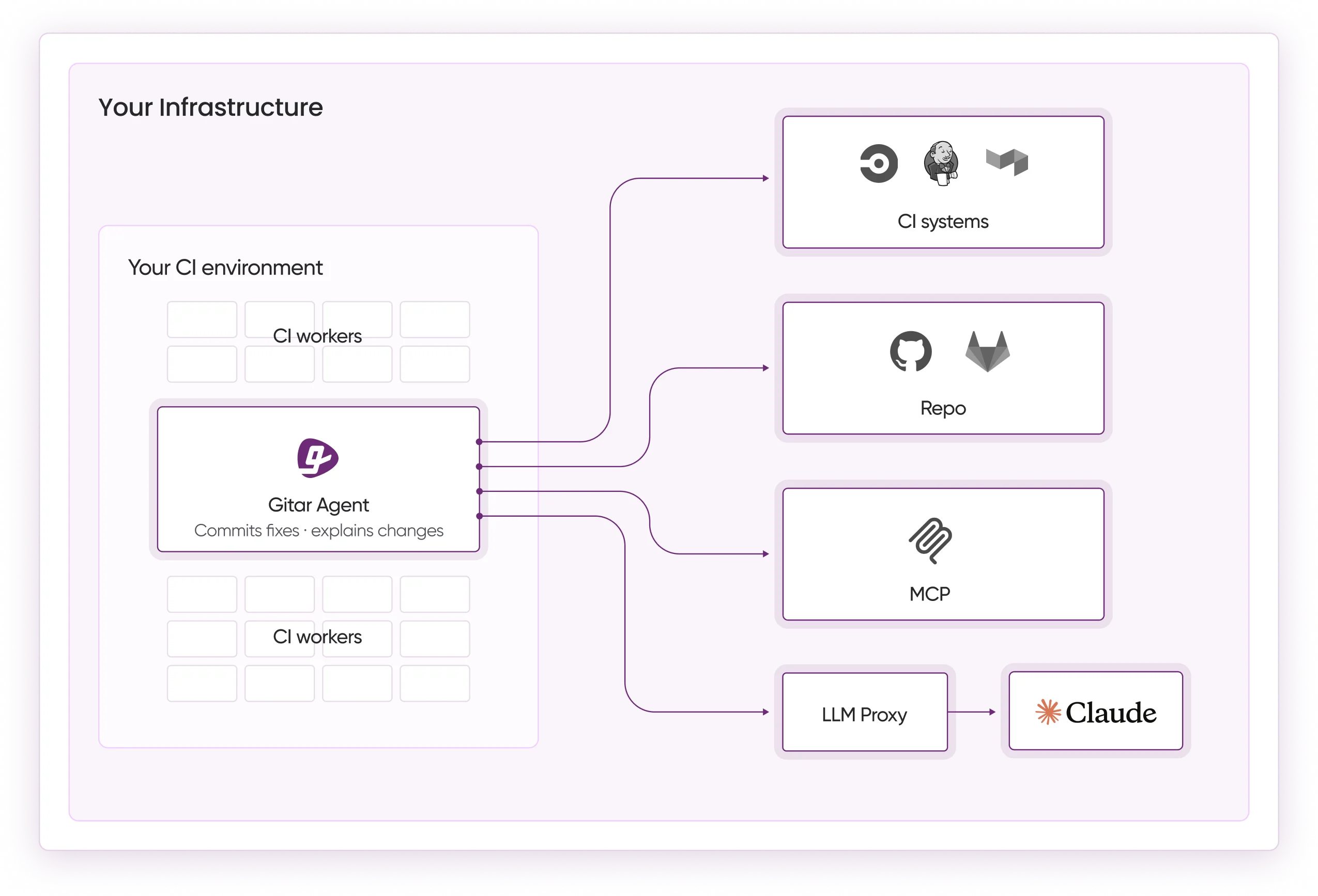
Enterprise deployments can run the agent within existing CI pipelines for maximum context access to configs, secrets, and caches without code leaving your infrastructure. See docs.gitar.ai for integration guides.
How does Gitar reduce nitpicky comments and notification spam?
Gitar uses a single updating dashboard comment that consolidates all findings instead of scattering inline notifications across your diff. When you push fixes, resolved items collapse automatically.
Natural language rules in .gitar/rules files let teams silence style preferences and focus on logic bugs and security issues. This approach achieves more than 80% noise reduction compared to traditional inline comment patterns that generate dozens of notifications per PR. Learn more in the Gitar documentation.
Can Gitar handle complex CI environments and enterprise-scale codebases?
Gitar operates at Pinterest scale with more than 50 million lines of code and thousands of daily PRs. The platform emulates full CI environments including specific SDK versions, multi-dependency builds, and third-party security scans.
Enterprise tier deployments run agents inside your own CI infrastructure with complete access to secrets and caches. This design ensures fixes work in production environments instead of isolated testing setups.
How do I switch from CodeRabbit or Greptile to Gitar?
Switching to Gitar is straightforward because it provides free healing capabilities that exceed paid suggestion engines. Install the GitHub app or GitLab integration, enable repository monitoring, and start using single-comment consolidation and auto-fix trials immediately.
Teams typically see 80% noise reduction and three times faster shipping within the first week. The 14-day auto-fix trial demonstrates validated healing compared to the manual suggestion implementation required by competitors.
How do I measure whether an AI code reviewer is actually reducing noise?
Track the Signal Ratio metric as (Tier 1 + Tier 2 findings) / Total comments, where Tier 1 represents production risks and Tier 2 covers maintainability issues. Target more than 60% for good tools and more than 80% for excellent performance.
Monitor notifications per PR, time spent on manual fix implementation, and cycle time from PR creation to merge. Gitar’s analytics dashboard provides these metrics automatically with clear before and after comparisons.
Conclusion: Ship Faster with Low-Noise Healing
Gitar stands out among low-noise AI PR reviewers through its mix of free comprehensive review, validated auto-fixing, and single-comment consolidation that removes notification spam. Paid competitors charge $15-30 per developer for suggestion-only functionality, while Gitar delivers healing automation that fixes code and keeps builds green.
Install Gitar now to automatically fix broken builds, cut 80% of review noise, and ship higher quality software up to three times faster.