
Key Takeaways
- AI coding tools generate code 3-5x faster, yet PR review delays can cost teams up to $1M annually in lost productivity.
- Pattern-learning AI tools analyze PR history and team preferences, then deliver personalized code reviews that mirror your standards.
- Gitar leads as a free tool with contextual memory, CI auto-fixes, and scalability to 50M+ lines of code across GitHub, GitLab, and more.
- Paid competitors like Greptile ($30/dev) and CodeRabbit ($15/dev) only provide suggestions and lack Gitar’s validated auto-fixes and zero cost.
- Start with Gitar’s free AI code review to remove review bottlenecks and ship higher quality software faster.
How We Evaluated AI Code Review Tools
We evaluated tools based on pattern-learning capabilities, including PR history analysis and hierarchical memory. We also compared auto-fix functionality with CI integration, pricing models from free to $15-30 per developer, and setup complexity. Scalability to 50M+ lines of code and platform integrations played a major role. Assessment criteria drew on 2026 Reddit and GitHub discussions, vendor documentation, and real-world deployment examples.
Top 7 AI Code Review Tools at a Glance
| # | Tool | Key Feature | Pricing |
|---|---|---|---|
| 1 | Gitar | Free AI code review + CI auto-fixes | $0 |
| 2 | Greptile | PR history context analysis | $30/dev |
| 3 | CodeRabbit | Review-based suggestions | $15/dev |
| 4 | Graphite | AI feedback + traditional analysis | Free tier |
| 5 | Bito | Custom rule generation | Paid |
| 6 | Qodo | Open-source pattern adaptation | Free/Paid |
| 7 | Swimm | Documentation-integrated reviews | Paid |
1. Gitar: Free Leader in AI Code Review Auto-Fixes
Gitar stands out as a free AI code review platform that delivers comprehensive review plus automated fixes. The platform maintains context per line, per PR, per repo, and per organization. This structure allows Gitar to learn your team’s patterns and improve accuracy over time.
Gitar Features That Matter for Teams
- Context system that learns team patterns from PR history, with detailed documentation.
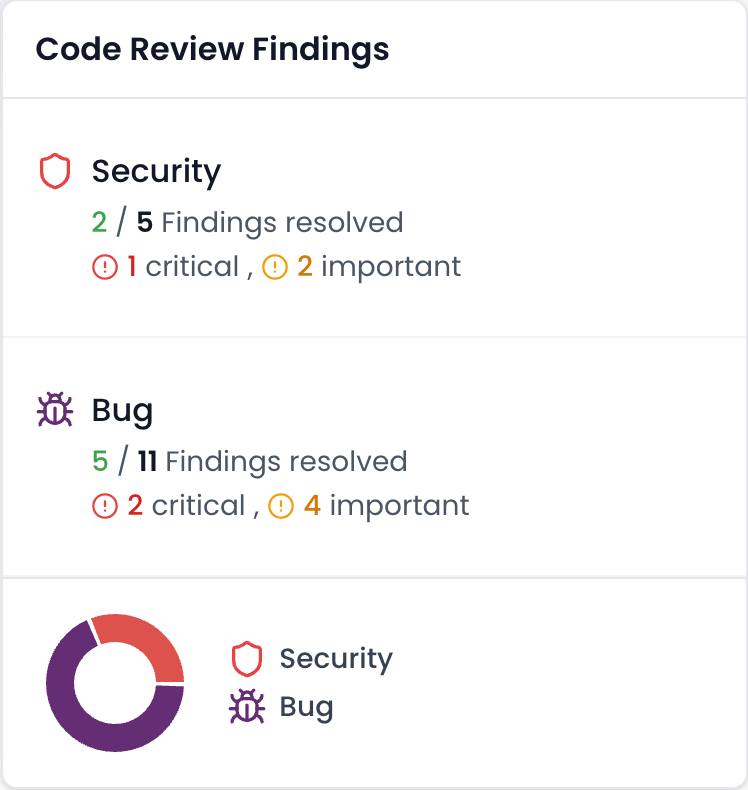
- Single updating dashboard comment that replaces noisy notification streams.
- Natural language rules defined through .gitar/rules/*.md files.
- 30-second GitHub App installation with zero configuration required.
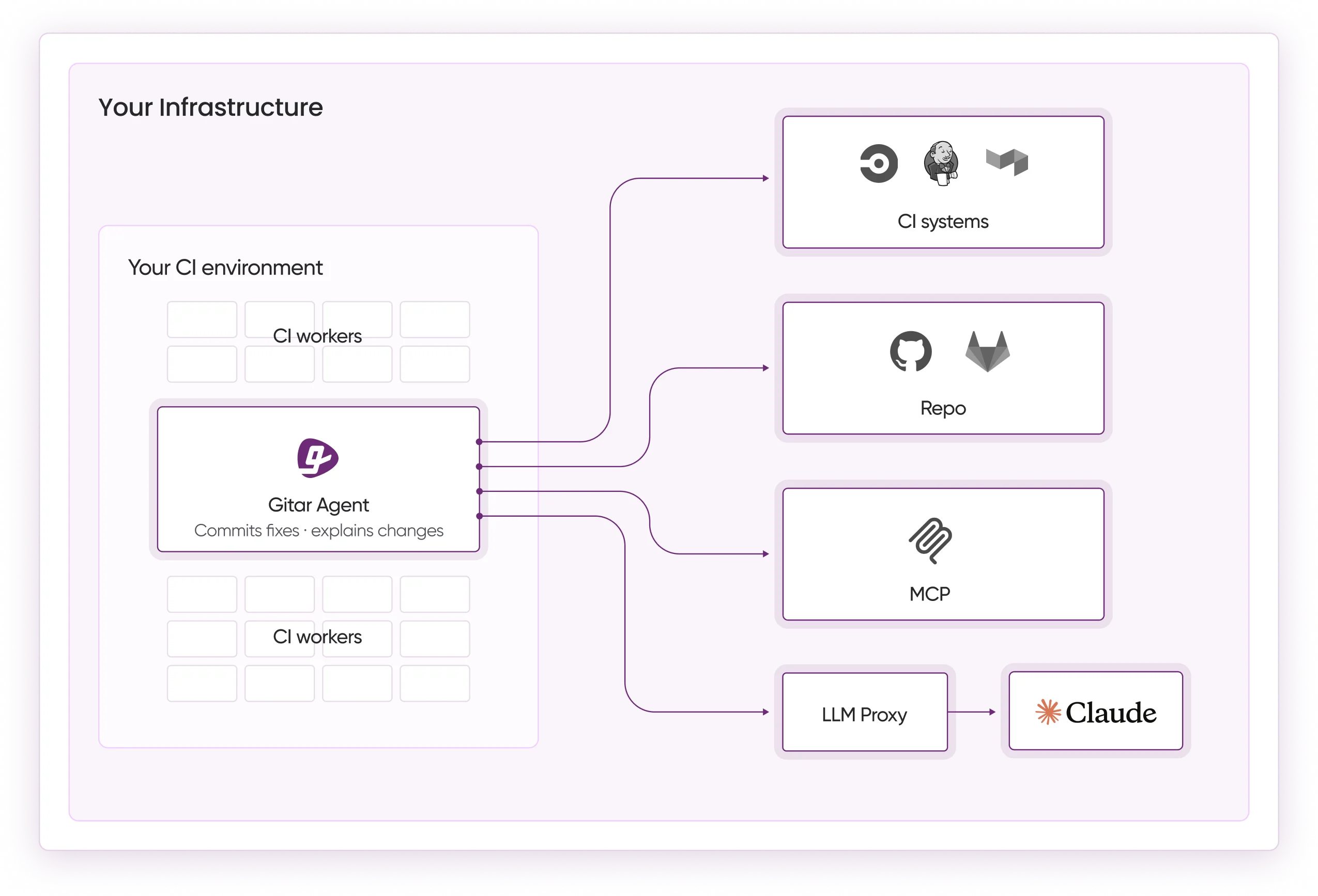
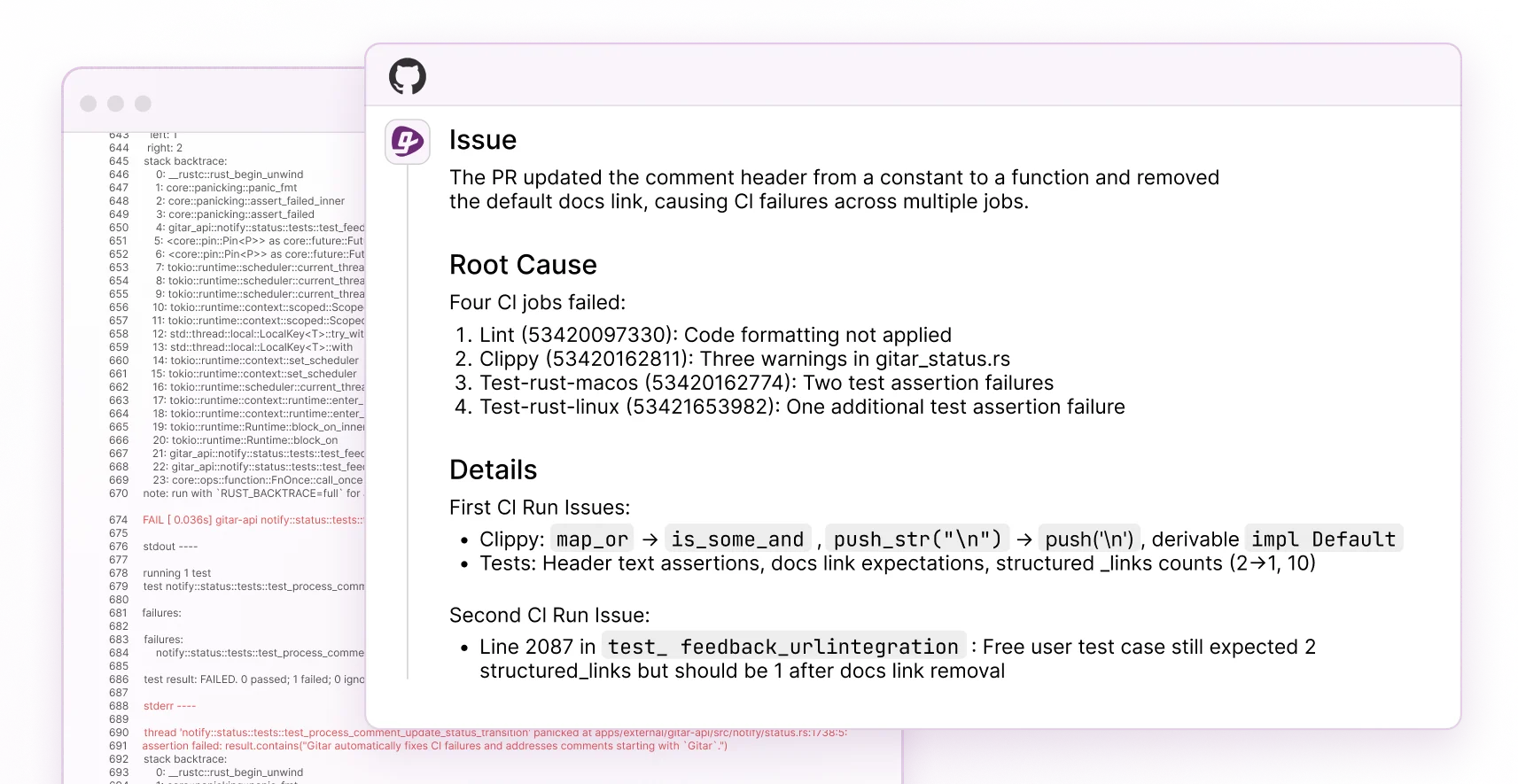
- Automatic CI failure analysis and fixing with validation before changes land.
- Cross-platform support for GitHub, GitLab, CircleCI, and Buildkite.
Gitar Scalability and Performance in Practice
Gitar supports enterprise-scale deployments with 50M+ lines of code and thousands of daily PRs. The platform has proven capability at Pinterest-scale operations while remaining free for unlimited repositories and users. Gitar documents scalability in detail for technical teams.
| Feature | Gitar | Greptile | CodeRabbit |
|---|---|---|---|
| PR Summaries | Yes (Free) | Yes ($30/dev) | Yes ($15/dev) |
| Auto-Apply Fixes | Yes (14-day trial) | No | No |
| CI Auto-Fix | Yes | No | No |
| Pattern Learning | Contextual | PR History | Robust |
Teams report that Gitar’s concise summaries reduce cognitive load compared to competitors’ scattered inline comments. The healing engine validates fixes against CI before committing, which keeps builds green and reduces rework.
Install Gitar now, automatically fix broken builds, start shipping higher quality software, faster
2. Greptile: Strong PR History Context for Suggestions
Greptile delivers robust PR history analysis at $30 per developer each month. The platform excels at understanding codebase context and long-lived repositories. It limits functionality to suggestions, so teams must apply every change manually.
Greptile Strengths and Tradeoffs
Greptile offers strong contextual understanding of large codebases, which helps with complex projects and legacy systems. The suggestion-only model increases manual effort because developers must implement all recommendations. GitHub and GitLab support enables multi-platform use. Premium pricing creates cost barriers for larger teams that want full coverage.
3. CodeRabbit: Traditional Review-Style Suggestions
CodeRabbit provides AI-powered code review suggestions at $15 per developer monthly. The platform focuses on traditional review workflows without CI integration or automated fixing. It fits teams that want AI comments but still prefer manual control over changes.
CodeRabbit User Experience
CodeRabbit generates many inline comments across PR diffs, which often creates notification fatigue. The lack of CI context prevents the tool from separating code issues from infrastructure problems. Feedback becomes less targeted, and developers spend more time filtering noise.
Install Gitar now, automatically fix broken builds, start shipping higher quality software, faster
4. Graphite: Hybrid AI and Static Analysis Feedback
Graphite combines AI feedback with traditional static analysis tools for a blended approach. The platform offers a free tier with usage caps and paid upgrades for advanced features. This model suits teams that want to experiment before committing budget.
Graphite Pattern Learning Depth
Graphite supports team-specific standards written in plain language and applied automatically to pull requests. This feature helps teams enforce style and safety rules consistently. It works well for groups that want both general code quality improvements and custom adaptations.
5. Bito: Custom Rule Generation for Reviews
Bito focuses on custom rule generation for code review automation. The platform can reflect team-specific patterns but requires significant setup and configuration. Teams must invest time before they see consistent results.
Bito Setup and Maintenance Effort
Heavy setup requirements and missing validation mechanisms make Bito challenging for teams that want quick deployment. The rule generation approach demands ongoing maintenance and tuning as codebases evolve. This overhead often suits only teams with dedicated tooling engineers.
6. Qodo: Open-Source Pattern Adaptation
Qodo offers open-source pattern adaptation with both free and paid tiers. The platform gives flexibility to teams comfortable with self-hosting and deep customization. It appeals to organizations that prefer full control over their infrastructure.
Qodo Scalability and Ownership
Open-source architecture enables customization for large deployments with continuous indexing and multi-repository support. Teams must manage infrastructure, scaling, and updates on their own. This tradeoff exchanges subscription fees for operational responsibility.
7. Swimm: Documentation-Centered Code Reviews
Swimm integrates documentation with code review workflows and keeps knowledge sharing close to the code. The platform targets teams that prioritize documentation maintenance alongside pattern learning. It fits engineering groups that want every change linked to clear docs.
Swimm Pattern Memory Limits
Swimm offers weaker PR pattern memory than dedicated code review tools. Its strength lies in documentation integration rather than sophisticated pattern learning. Teams often pair Swimm with other tools for deeper review automation.
Install Gitar now, automatically fix broken builds, start shipping higher quality software, faster
Side-by-Side Comparison of Gitar, Greptile, and CodeRabbit
| Capability | Gitar | Greptile | CodeRabbit |
|---|---|---|---|
| Pattern Learning | Contextual memory | PR history context | Review suggestions |
| Auto-Fix | Yes (validated) | No | No |
| Monthly Cost (20 devs) | $0 | $600 | $300 |
| CI Integration | Full pipeline | None | None |
| Scalability | 50M+ LOC proven | Limited | Limited |
Gitar delivers roughly four times the value by combining free access with actual fix implementation. Competing tools charge premium prices for suggestion-only functionality that still relies on manual work.
Key Buying Considerations and Tradeoffs
Free AI Code Review Tools That Adapt to Your Team
Budget-conscious teams gain the most from Gitar’s free tier, which saves $450-900 monthly compared to paid options. Pinterest-proven scalability and zero-setup migration lower implementation risk. This combination supports both small teams and large organizations.
Alternatives to CodeRabbit for Better ROI
Teams evaluating alternatives to CodeRabbit’s $15 per developer pricing often find stronger value in Gitar’s free offering with auto-fix capabilities. ROI calculations show potential savings of $375K annually for 20-developer teams at 50 percent effectiveness. Total cost of ownership favors free foundation platforms that allow growth without rising subscription costs.
Frequently Asked Questions
How these tools learn team patterns
AI code review tools learn patterns through different mechanisms. Gitar analyzes context at multiple levels, including individual lines, entire PRs, repository history, and organizational standards. This structure builds understanding of team preferences such as async and await usage, security requirements, and architectural decisions. Other tools usually analyze PR history in a linear way without building layered contextual memory.
Difference between free and paid AI code review tools
Free tools like Gitar provide comprehensive code review, security scanning, and bug detection without per-seat charges. Paid tools often charge $15-30 per developer for suggestion-only functionality that still requires manual implementation. The main differentiator is whether the tool fixes code or only identifies issues. Gitar’s free tier includes auto-fixing capabilities during a 14-day trial, while most paid competitors focus on suggestions.
Support for GitHub, GitLab, and CI platforms
Platform support varies across providers. Gitar supports GitHub, GitLab, CircleCI, and Buildkite with consistent behavior across platforms. Many competitors focus primarily on GitHub, which limits options for teams that rely on GitLab or other systems. Cross-platform support becomes crucial for organizations with diverse toolchains.
How to measure ROI from AI code review tools
Teams measure ROI by tracking time savings and productivity improvements. Key metrics include reduced CI failure resolution time, with a target of 15 minutes per day per developer, and shorter PR review cycles. Fewer manual fixes and higher build success rates also signal impact. The most tangible ROI comes from tools that fix issues directly instead of only flagging them.
Security and data retention practices
Security approaches differ between providers. Gitar’s free tier operates with zero data retention policies and processes code without persistent storage. Enterprise deployments can run agents inside existing CI infrastructure so code never leaves organizational boundaries. Paid tools often require data transmission to external servers, which creates security considerations for sensitive codebases.
Conclusion: Why Gitar Leads AI Code Review in 2026
Gitar leads the 2026 landscape for free AI code review tools while delivering automated fixes. The combination of contextual memory, CI integration, and zero-cost access creates strong value for engineering teams facing post-AI-coding review bottlenecks.
The market is shifting toward CI-agent platforms that validate fixes instead of only suggesting them. Teams gain the most by starting with proven free solutions like Gitar before committing to paid alternatives.
Install Gitar now, automatically fix broken builds, start shipping higher quality software, faster