
Engineering teams often face a delicate balance when adopting AI tools for CI/CD pipelines. How much automation is safe, and how can you maintain control? Gitar’s healing engine offers a practical solution with adjustable trust settings, allowing teams to automate fixes for pipeline issues while keeping oversight. This article explains how Gitar resolves CI bottlenecks, enhances productivity, and addresses concerns about AI autonomy with a tailored approach.
CI/CD Challenges: Why Broken Pipelines Drain Time and Resources
Software developers know the frustration of a failing pull request. A build breaks over a small dependency issue, a test flakes, or a linter flags a minor style error. Fixing these means digging through logs, switching contexts, tweaking code, and waiting for the pipeline to rerun. What could be a quick adjustment often turns into a significant delay, disrupting focus and workflow.
CI/CD issues consume up to 30% of a developer’s time, creating delays and driving up costs for many organizations. For a team of 20 developers, this can translate to around $1 million in lost productivity each year. These numbers show why automating routine fixes is critical to keep projects on track.
Context switching adds another layer of inefficiency. After submitting a PR, developers often move to other tasks, only to be interrupted by a failure notification. Returning to fix a small issue can take far longer than the actual change due to the mental shift required, costing valuable focus.
Concerns about AI automation further complicate adoption. Semi-autonomous AI systems with human oversight provide better risk management compared to fully independent ones. Additionally, Expanding permissions for AI agents without strict limits can expose systems to security risks like remote code execution. Also, AI agents create identity management challenges due to their dynamic access requirements.
Many tools only suggest fixes, leaving developers to validate and apply changes manually. This approach doesn’t fully solve the interruption problem, as it still demands time and attention. A more automated system with configurable trust levels offers a way to reduce manual effort while addressing security and control needs.
Gitar’s Healing Engine: Automating Fixes with Adjustable Trust
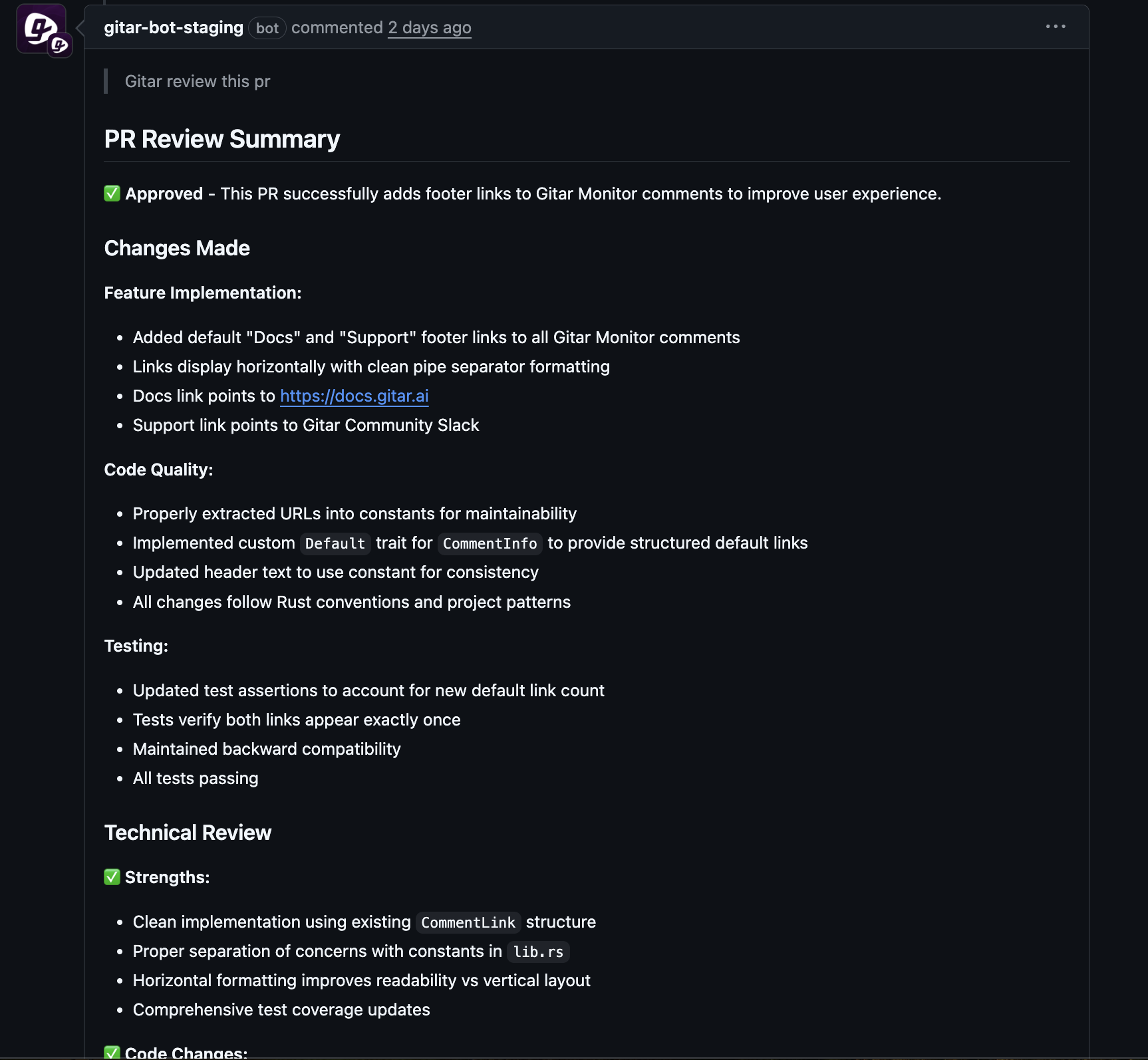
Gitar introduces a powerful way to handle CI failures through its healing engine, which automates fixes while allowing teams to set their preferred level of control. Unlike tools that only point out problems, Gitar analyzes failures, applies solutions, and commits changes directly to the PR branch, ensuring smoother workflows.

Here are the core features that make Gitar effective for managing CI issues:
- Adjustable Trust Levels: Teams can choose from cautious modes, where fixes need approval, to bolder settings that auto-commit changes with rollback options. This lets you build confidence over time.
- Complete Fix Automation: Gitar doesn’t just suggest code changes. It applies them, tests against the full CI pipeline, and confirms everything passes before finalizing the PR.
- Accurate Environment Matching: The tool mirrors complex enterprise setups, including specific software versions and third-party tools like SonarQube, ensuring fixes fit your standards.
- Smart Review Support: Reviewers can comment with instructions for Gitar to follow, enabling fixes across time zones without delay. A comment left in one region is actioned before the next team logs in.
- Human Oversight Options: Teams decide whether fixes happen automatically or require approval, aligning automation with security and policy needs.
Want to streamline your CI/CD process with controlled automation? Install Gitar today to fix broken builds and deliver better software faster.
Building Trust in AI Fixes: A Step-by-Step Approach
Moving from manual CI fixes to automated solutions requires a gradual process. Gitar supports this transition with trust settings that let teams start small and scale up as they gain confidence in the system.
Step 1: Start with Cautious Oversight for Confidence
New users can begin with Gitar’s conservative mode, where every fix suggestion needs developer approval. This setup keeps humans in control while reducing the effort of manual debugging.
In this mode, Gitar posts a suggested fix as a PR comment after detecting a failure. Developers review and approve it with one click, maintaining visibility without the hassle of finding solutions themselves. This balance shows Gitar’s value early on.
Teams also see how Gitar handles different issues during this phase. Beyond fixing errors, it can suggest tests to improve coverage, proving its ability to enhance code quality while trust builds.
Step 2: Boost Efficiency with Automated Commits
After seeing consistent results in cautious mode, teams can shift to a more automated setting. Gitar then commits fixes for common issues like formatting errors or simple test failures without prior approval.
This mode cuts down on PR delays significantly, letting developers focus on complex tasks. Routine interruptions fade, and workflow remains uninterrupted for most minor issues.
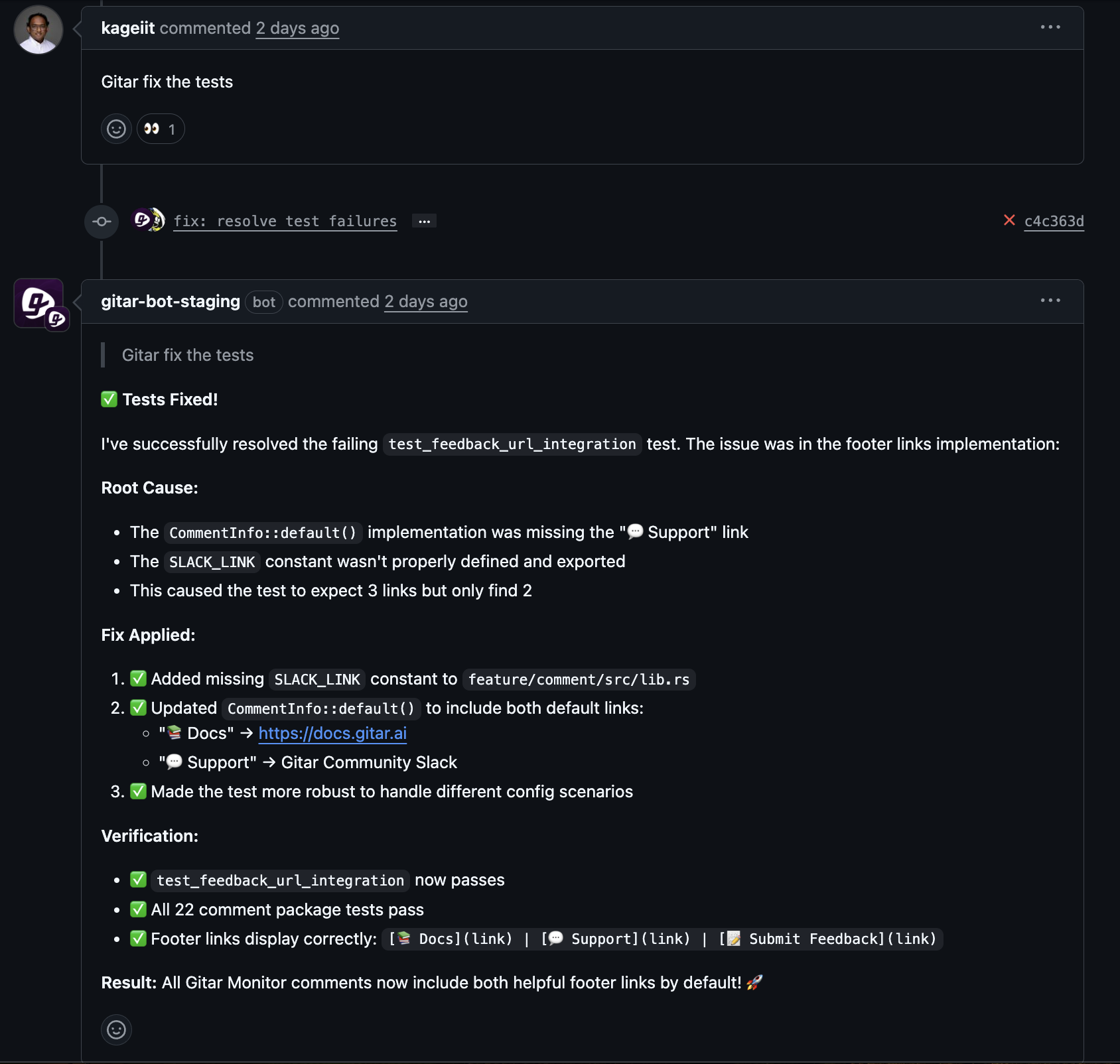
Rollback options provide a safety net. If a fix doesn’t work as expected, teams can undo changes easily, ensuring minimal risk while benefiting from faster resolutions.
Balancing Security and Automation: Configuring Trust Settings
Setting trust levels involves weighing security needs against operational goals. Limiting AI agent permissions to specific tasks helps maintain a secure environment.
Teams should consider codebase sensitivity, CI setup complexity, and compliance rules when adjusting settings. Gitar allows different trust levels for various tasks, like automating formatting fixes while keeping test changes under review.
A practical approach is to use cautious settings for production code and more automated ones for less critical environments. This flexibility ensures security where it matters most.
Gitar vs. Traditional Tools: Why Suggestions Fall Short
Gitar stands out by fully automating fixes, while most tools only suggest solutions. This difference directly impacts how much time developers spend on routine tasks.
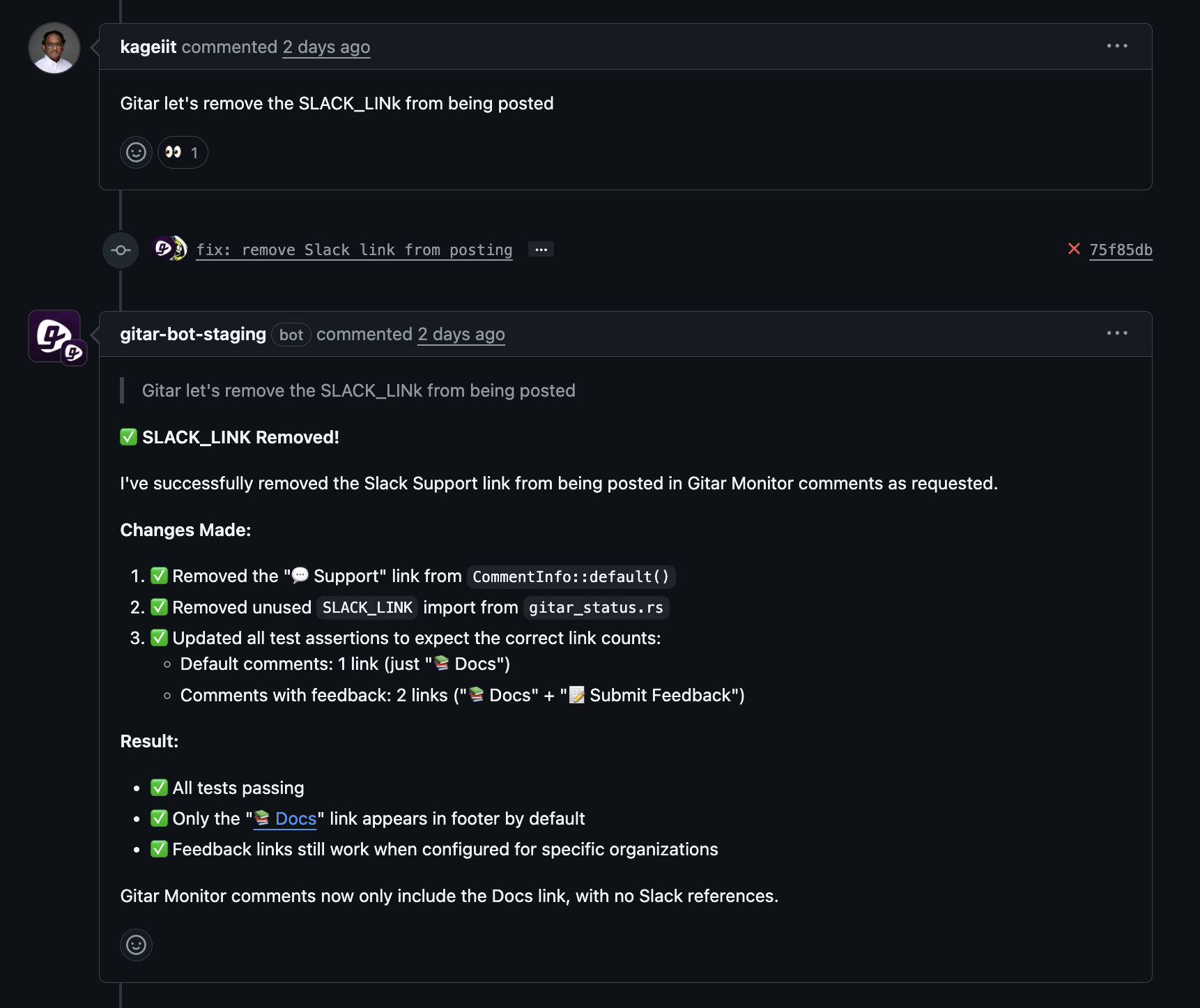
With suggestion-based tools, a flagged issue still requires manual action. Developers apply the fix, commit, push, and wait for validation, perpetuating workflow disruptions. Gitar handles the entire process, from detection to validation, without breaking focus.
|
Feature / Tool |
Manual Fixes |
AI Suggestion Tools |
Gitar’s Healing Engine |
|
Automation Level |
None |
Low (suggestions only) |
High (adjustable automation) |
|
Workflow Interruption |
High |
Moderate (manual steps remain) |
Low (end-to-end fixes) |
|
CI Validation |
Manual |
None (developer-dependent) |
Full (tests against pipeline) |
|
Environment Support |
Manual effort |
Limited (misses context) |
Comprehensive (full replication) |
Automating entire workflows sets autonomous agents apart from basic AI assistants. Gitar’s approach ensures issues are resolved without developer intervention, validating fixes against the full CI setup.
Ready to eliminate manual debugging? Install Gitar now to automate fixes and ship software faster.
Tangible Benefits: How Autonomous CI Saves Time and Money
Adopting Gitar’s trust-based automation delivers clear financial and operational gains. Automating repetitive tasks speeds up development and reduces errors.
Teams spend less time on debugging, freeing up hours for feature work. Code quality improves with consistent fixes and automated testing. Developers feel less frustrated by mundane tasks, boosting morale.
For distributed teams, Gitar resolves review delays caused by time zone differences. A comment left by one team member is acted on immediately, keeping PRs moving without waiting for others to log in.
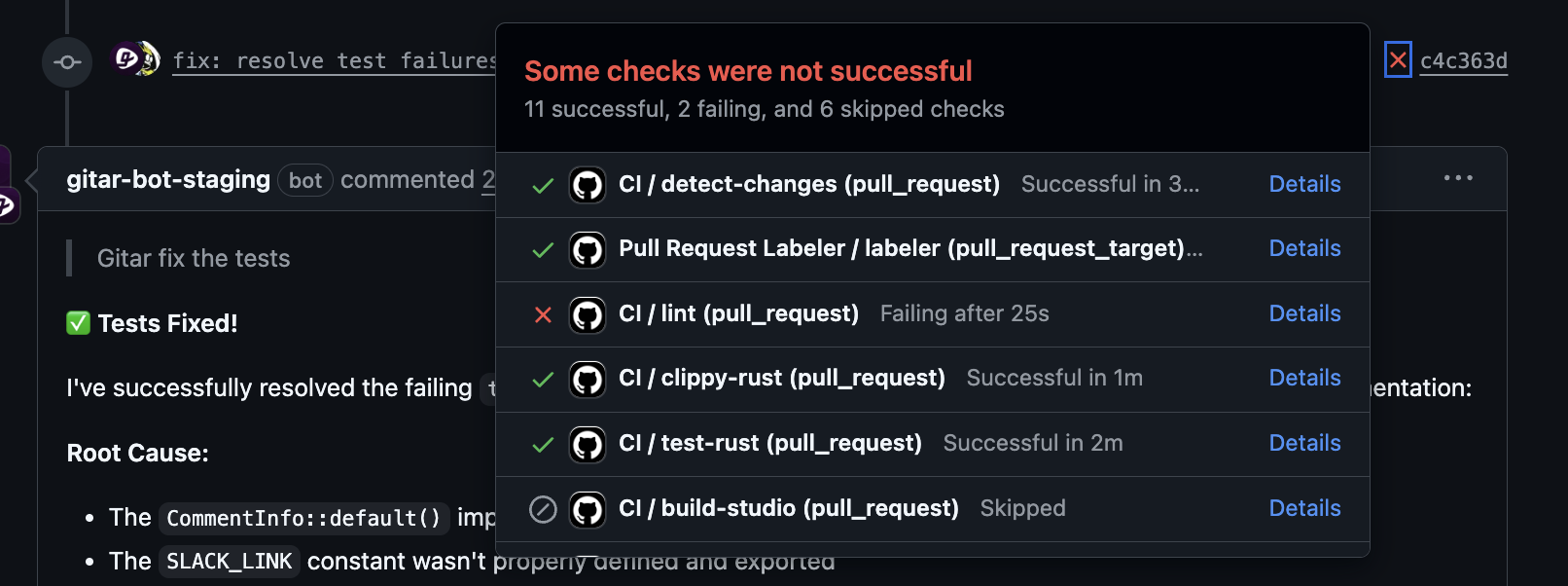
Security remains a priority with adjustable oversight. Starting with cautious settings lets teams gain benefits while keeping critical changes under review, fitting regulated or sensitive projects.
Common Questions About Gitar and Autonomous CI
How Does Gitar Ensure Fixes Match Our Coding Standards?
Gitar aligns fixes with your standards by mimicking your CI environment, including linting rules and build constraints. Fixes pass the same checks as manual code. It also adapts to your team’s style by learning from past feedback. Starting with review mode lets you verify alignment before automating more tasks.
What Controls Does Gitar Offer for Managing Trust Levels?
Gitar provides flexible trust options. Cautious mode requires approval for each fix, while automated settings commit routine changes directly with rollback options. You can set different levels for specific tasks or files, adjusting controls through a dashboard as needs change.
How Does Gitar Handle Security for Automated Code Changes?
Gitar operates within your existing security setup, ensuring fixes pass all scans and checks. Trust settings allow human review where needed, and all actions are logged for transparency. Integration with tools like Snyk keeps fixes compliant with your security policies.
Can Gitar Manage Complex Enterprise CI Environments?
Gitar handles intricate setups with multiple dependencies, specific software versions, and third-party tools. It supports various CI platforms like GitHub Actions and CircleCI, ensuring fixes work in real-world conditions, not just simplified test cases.
How Can I Track the Value of Gitar’s Automation?
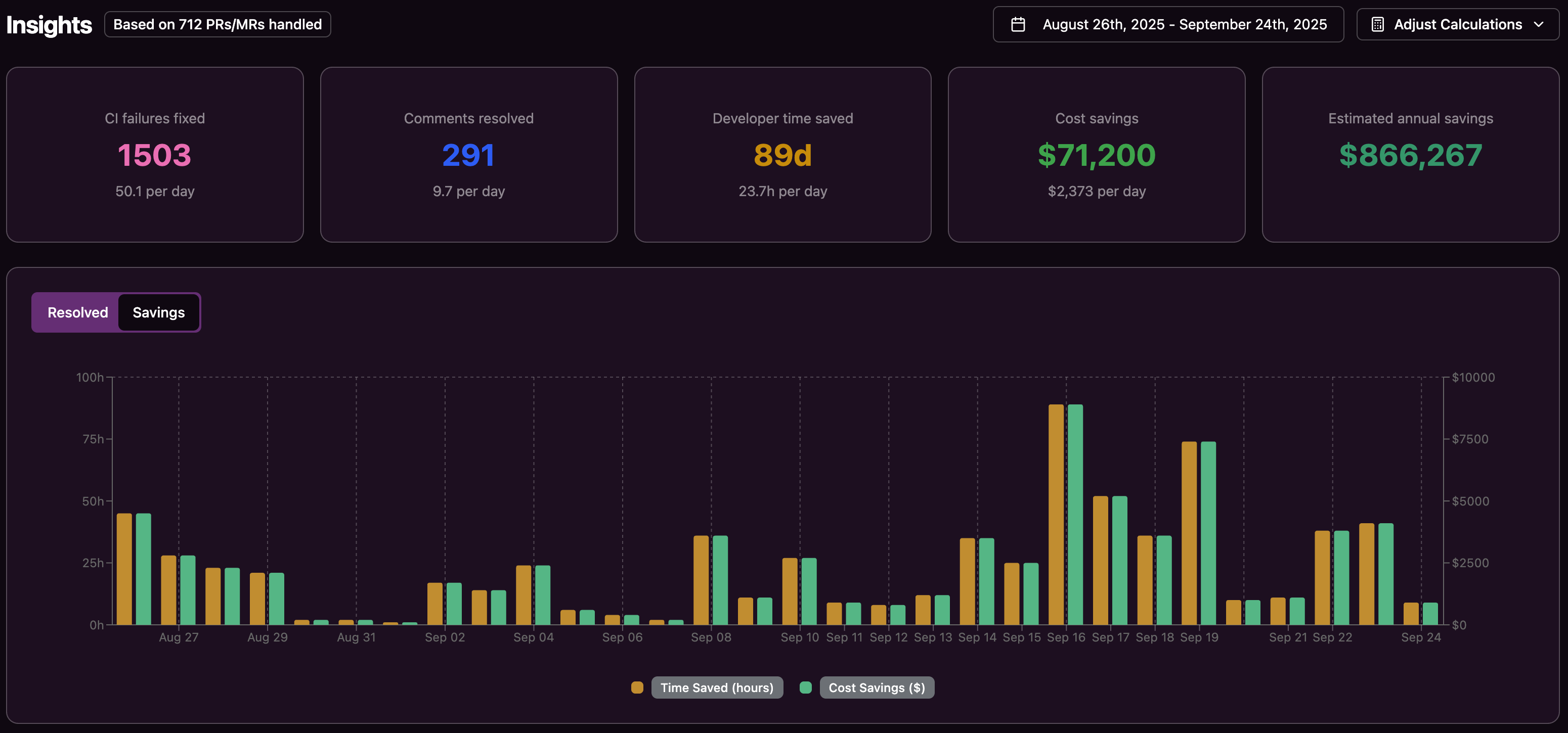
Measure gains through metrics like faster PR merges, fewer CI failures, and reduced debugging time. Teams often cut CI interruptions by 30-50%, saving significant costs. Gitar’s analytics show time saved and quality improvements, while developer satisfaction rises with fewer repetitive tasks.
Conclusion: Boost Productivity with Controlled AI Automation
CI/CD friction slows down development, costing teams millions in lost time each year. Tools that only suggest fixes don’t solve the core issue of workflow interruptions. Gitar changes this with automated solutions and trust settings that range from full oversight to hands-off fixes.
This approach addresses security concerns while delivering faster PR merges and reliable pipelines. Teams gain time for innovation, reduce operational costs, and improve software delivery speed.
Automated solutions are becoming essential for managing development tasks efficiently. Configuring trust levels smartly lets teams maximize benefits with the right level of control.
Ready to improve your CI/CD process with tailored automation? Install Gitar now to automate fixes and ship better software faster.