
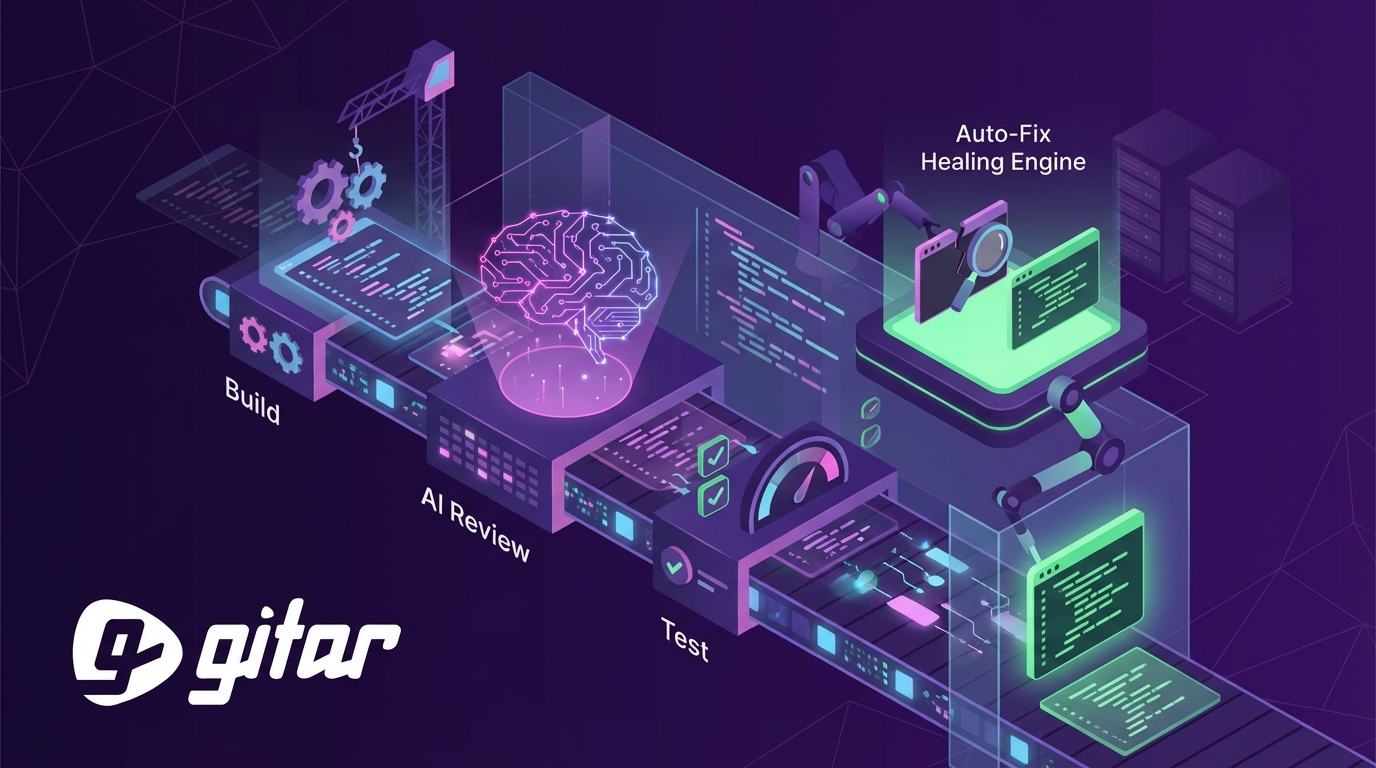
Written by: Ali-Reza Adl-Tabatabai, Founder and CEO, Gitar
Key Takeaways for AI-Driven CI/CD in 2026
- AI-generated code has surged 29% YoY, overwhelming traditional CI/CD review processes and causing $1M annual productivity losses for 20-dev teams.
- Gitar leads as the top free tool with auto-fix capabilities that heal CI failures, unlike competitors offering only suggestions.
- Paid alternatives like CodeRabbit ($24-30/user) and Greptile ($30/user) require manual fixes, which limits ROI for high-volume PR teams.
- Teams save 75-90% of CI time (up to $750K/year) with auto-healing pipelines supporting GitHub, GitLab, CircleCI, and Buildkite.
- Teams that want guaranteed green builds can try Gitar free for unlimited PR analysis and automatic fixes.
Quick Pick: 10 CI/CD Tools for AI-Driven Code Review in 2026
Our analysis focused on auto-fix depth, integration effort, and CI platform coverage to rank AI-driven CI/CD tools.
- Gitar – Free auto-fix healing engine with guaranteed green builds
- GitHub Actions + CodeRabbit – $15-30/developer suggestions-only platform
- GitLab CI + Greptile – $30/developer context-aware suggestions
- CircleCI + Amazon CodeGuru – ML-powered analysis with AWS integration
- Jenkins + Codacy – Plugin-based automation with static analysis
- Harness – ML verification with deployment automation
- Azure DevOps + Copilot – Integrated Microsoft toolchain
- Bitbucket Pipelines + Augment Code – Atlassian ecosystem integration
- Buildkite + Qodo – Scalable cloud-native pipelines
- Northflank – Cloud-native CI/CD with container optimization
Ranking Criteria for AI Code Review CI/CD Tools
Our evaluation methodology prioritized deployment details that matter to engineering teams. We assessed YAML setup complexity, depth of auto-fix beyond suggestions, cost efficiency ($0 versus $15-30 per developer monthly), platform compatibility across GitHub, GitLab, CircleCI, and Buildkite, and scalability for enterprise environments handling millions of lines of code.
The ranking incorporates 2026 CI/CD tool benchmarks, real-world feedback from teams managing large codebases, and ROI analysis showing potential 90% time savings on CI-related tasks. We prioritized tools that deliver measurable productivity gains instead of minor improvements to existing workflows.
Top 10 CI/CD Pipeline Tools for AI-Driven Code Review
1. Gitar: Free Auto-Fix Healing Engine for CI Failures
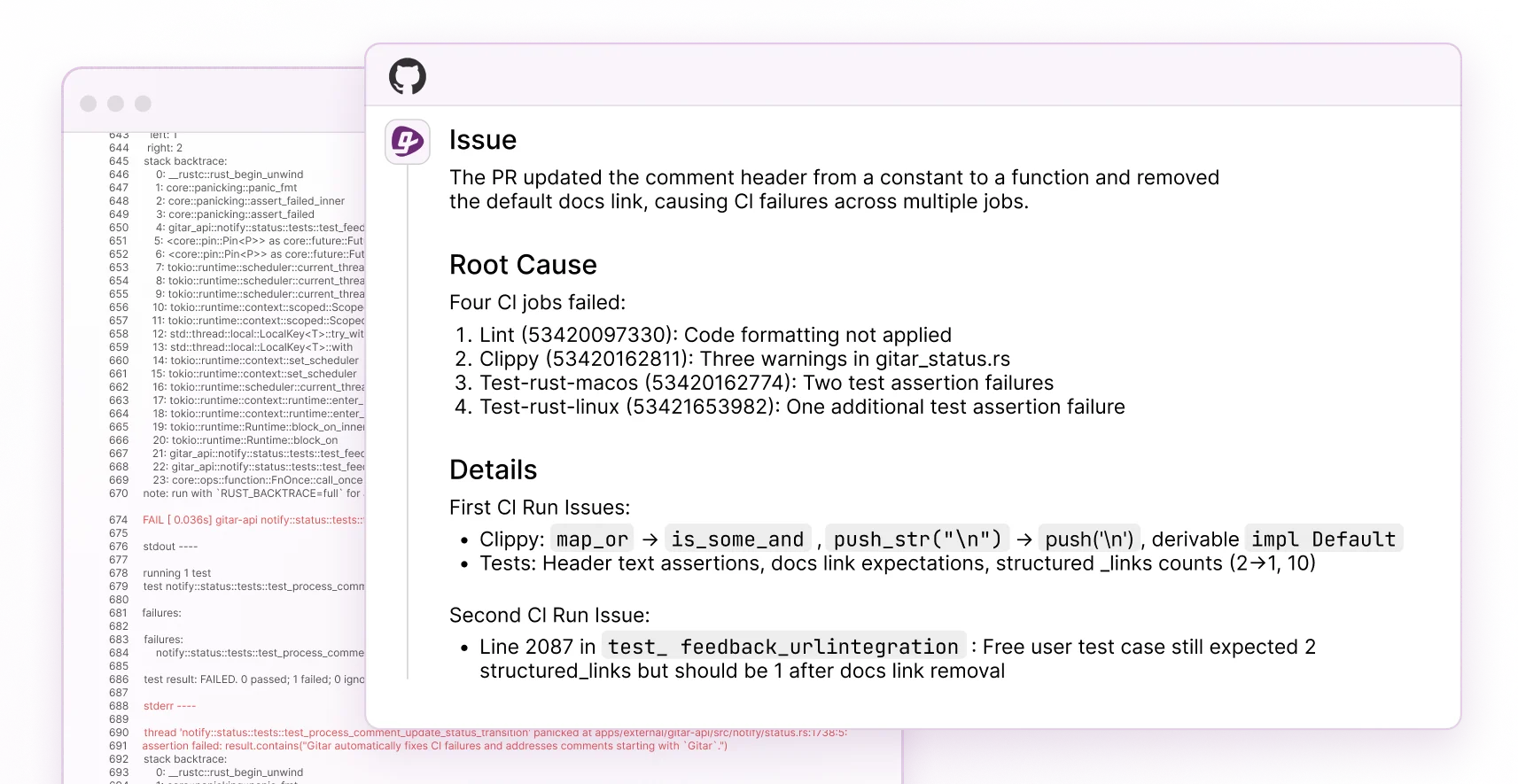
Gitar stands apart as a free AI code review platform that fixes code instead of only suggesting changes. When CI checks fail, including lint errors, test failures, or build breaks, Gitar analyzes failure logs, generates validated fixes, and commits them automatically. The platform consolidates all findings into a single dashboard comment that updates in place, which reduces notification noise.
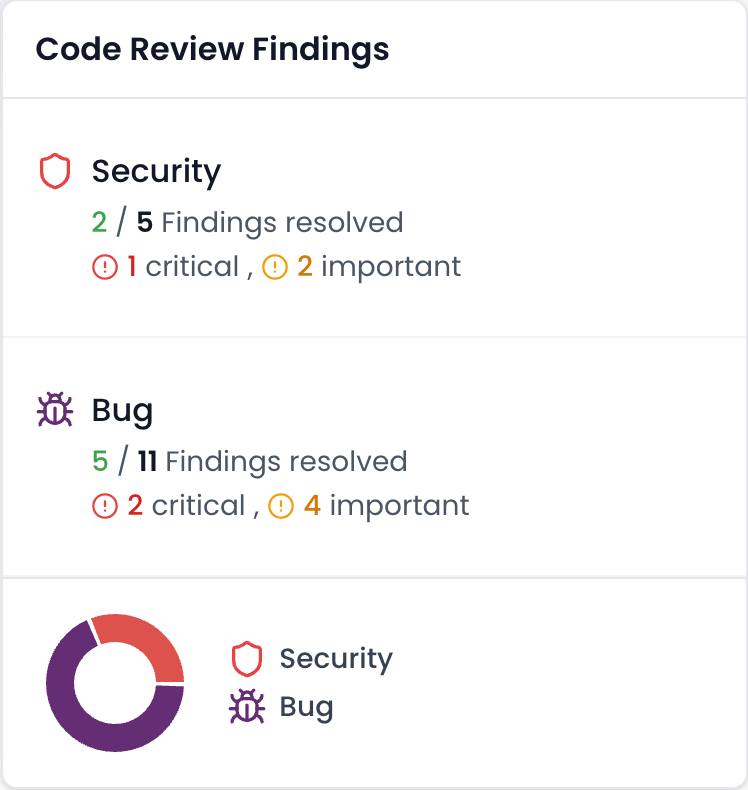
Key capabilities include unlimited PR analysis, security scanning, bug detection, and performance review for unlimited repositories with no seat limits. Auto-fix features run on a 14-day free trial, while code review remains permanently free. Integration takes 30 seconds and supports GitHub, GitLab, CircleCI, and Buildkite. See the Gitar documentation for complete setup details.
2. GitHub Actions with CodeRabbit Suggestions
CodeRabbit connects to GitHub Actions and provides AI-powered code review suggestions at $24-30 per user monthly. The platform analyzes pull requests and leaves inline comments with suggested improvements, and developers then apply changes manually. CodeRabbit offers broad analysis but lacks CI failure context and auto-fix capabilities, which limits its value for teams handling heavy PR volume.
3. GitLab CI with Greptile Context-Aware Review
Greptile delivers context-aware code review for GitLab CI pipelines at $30 per user monthly. The platform understands codebase structure and provides targeted suggestions, which helps reviewers navigate large repositories. However, Greptile stops at suggestions and does not implement fixes, so teams still handle all changes and CI validation manually.
4. CircleCI with Amazon CodeGuru Analysis
Amazon CodeGuru includes AI-assisted review that flags errors, performance issues, and security risks while suggesting fixes in pull requests. When teams pair CodeGuru with CircleCI, they gain ML-powered analysis inside the AWS ecosystem. The platform still requires manual fix implementation and does not provide full auto-healing for high-velocity teams.
5. Jenkins with Codacy Static Analysis
Codacy offers AI-assisted code analysis with automated suggestions for bugs, security vulnerabilities, and style inconsistencies. The Jenkins integration supports deep customization through plugins, which suits teams with complex legacy setups. Setup complexity and ongoing maintenance overhead make this stack less attractive for teams that want simple, low-touch automation.
6-10. Harness, Azure DevOps, Bitbucket, Buildkite, and Northflank
Harness provides machine learning-based pipeline tuning and automated deployment verification, which helps reduce failed releases. Azure DevOps integrates tightly with Copilot for Microsoft-centric teams that prefer a single vendor stack. Bitbucket Pipelines fits teams already invested in the Atlassian ecosystem, while Buildkite focuses on scalable cloud-native pipelines. Northflank emphasizes container optimization and modern deployment patterns. None of these tools combine free access with comprehensive auto-fix capabilities at the level Gitar offers.
Gitar vs Competitors: Auto-Fix CI/CD Comparison
| Tool | Capabilities | Pricing | Platforms |
|---|---|---|---|
| Gitar | PR summaries, inline suggestions, auto-apply fixes, CI auto-fix, green build guarantee | Free (14-day auto-fix trial) | GitHub, GitLab, CircleCI, Buildkite |
| CodeRabbit | PR summaries, inline suggestions | $24-30/user/month | GitHub-focused |
| Greptile | PR summaries, context-aware suggestions | $30/user/month | Limited integrations |
| Amazon CodeGuru | ML analysis, security scanning, suggestions | AWS pricing model | AWS ecosystem |
GitHub Actions Setup for Gitar AI Code Review
Teams can connect Gitar to GitHub Actions with minimal configuration. Install the Gitar GitHub App, and it begins analyzing pull requests without extra YAML changes. The platform fits into existing workflows and immediately starts automated CI failure analysis and fix generation. The complete setup documentation walks through advanced configuration options step by step.
GitLab and CircleCI Integration with Gitar
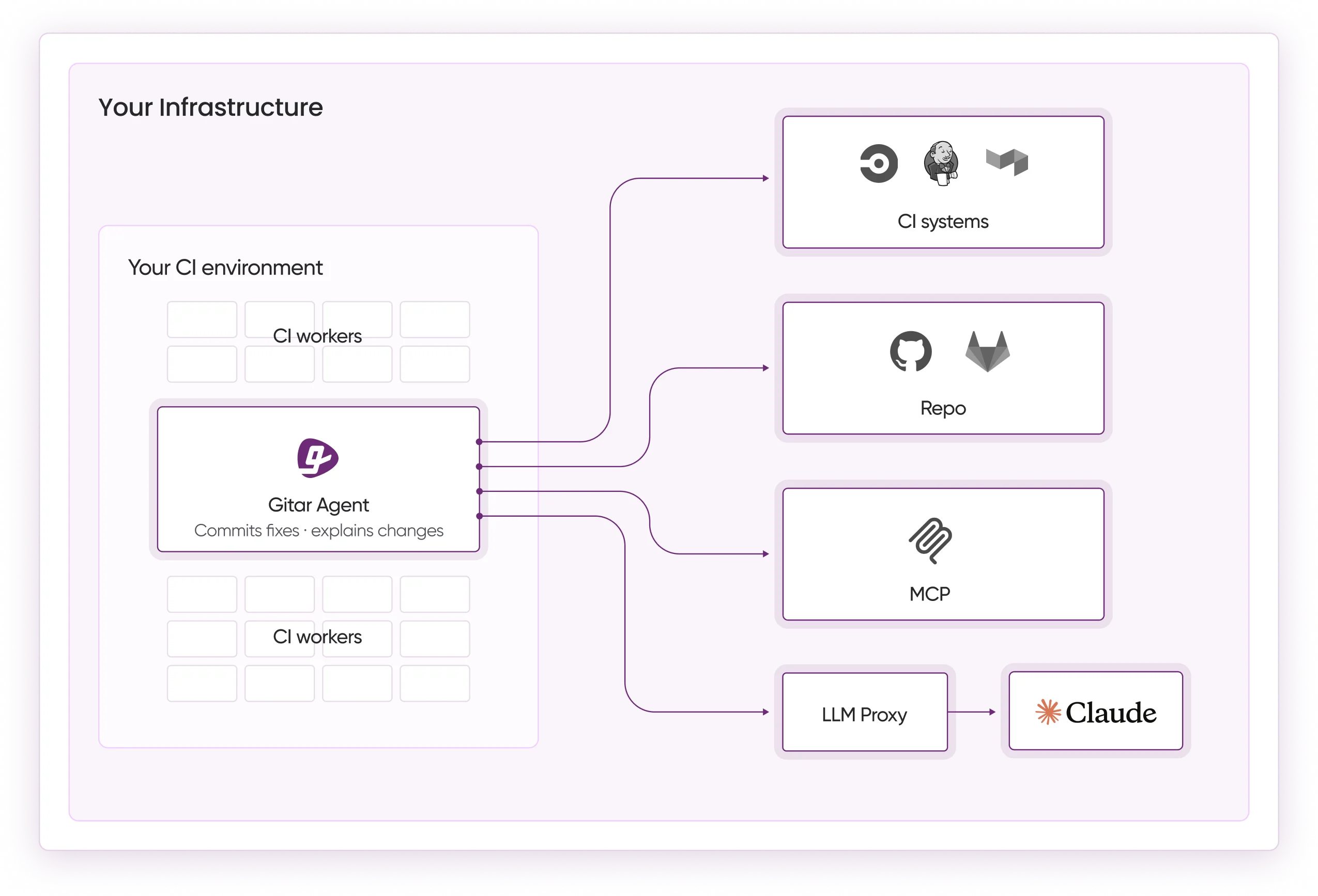
Gitar supports GitLab CI and CircleCI through native integrations that avoid complex setup steps. The platform automatically detects CI failures across environments and applies fixes that match the failure type and context. Teams can enable auto-commit for fully automated pipelines or keep manual approval workflows when they prefer tighter control.
Free AI Code Review Options for CI/CD Pipelines
The cost gap between free and paid AI code review tools has become significant. Commercial platforms like CodeRabbit cost $12-24 per user monthly, and some enterprise tools reach $40-50 per user. A 20-developer team pays $2,880 to $12,000 per year for suggestion-only tools that still require manual fixes.
Gitar’s free model removes these license costs while offering broader functionality. The ROI story stays simple. Teams save on tool spend and on time lost to manual CI fixes. A 20-developer team that spends one hour daily on CI issues loses about $1 million in annual productivity. Gitar cuts this to roughly 15 minutes per day, which saves around $750,000 per year and removes tool costs entirely. See the Gitar documentation for details on how Gitar fixes broken builds so teams ship higher quality software faster.
2026 Trends in AI-Driven CI/CD Automation
Adoption of coding review agents grew from 14.8% in January 2025 to 51.4% in October 2025, which shows that AI-powered review has entered the mainstream. Teams now move toward self-healing CI pipelines as they realize suggestion-only tools cannot keep up with AI-generated code volume.
Natural language workflow configuration has emerged as a key differentiator. Teams describe CI behaviors in plain language instead of writing complex YAML, which opens CI/CD automation to more engineers beyond dedicated DevOps specialists.
Frequently Asked Questions About Gitar and AI CI/CD
How does Gitar integrate with existing CI/CD pipelines?
Gitar connects to GitHub Actions, GitLab CI, CircleCI, and Buildkite through native apps and webhooks. Installation takes about 30 seconds and does not require changes to current pipeline configurations. The platform automatically detects CI failures and starts providing analysis and fixes right away. Teams can enable auto-commit or keep manual approvals based on their workflow.
What is the difference between free and paid AI code review tools?
Free tools like Gitar provide full code review, security scanning, and bug detection without per-seat charges. Paid tools usually charge $15-30 per developer monthly for suggestion-only features that still need manual work. Gitar fixes code and offers a green build guarantee through auto-fix features on a 14-day free trial, while many paid tools only leave comments that developers must implement.
How much ROI can teams expect from automated CI/CD code review?
Teams usually save 75-90% of the time they once spent on CI issues. A 20-developer team that spends one hour daily on CI problems loses about $1 million in productivity each year. Automated tools like Gitar reduce this to 10-15 minutes daily, which saves more than $750,000 annually. Removing paid tool licenses, which often cost $2,880-$12,000 per year, adds further budget relief.
Can AI code review tools handle complex enterprise CI environments?
Modern AI code review platforms support multi-dependency builds, specific SDK versions, and third-party integrations. Enterprise deployments can run agents inside existing CI infrastructure with access to secrets and caches, which ensures fixes work in production-like environments instead of isolated tests. Teams should choose platforms that emulate full CI environments rather than narrow testing setups.
How do teams build trust in automated code fixes?
Teams usually start with suggestion mode and review every fix manually. As confidence grows, they enable auto-commit for low-risk failures such as lint or formatting issues. Most teams reach full automation within 2-4 weeks once they see consistent fix quality and lower manual overhead. Configurable aggression levels let teams tune automation scope to match their risk tolerance.
Conclusion: Pick CI/CD Tools That Fix Code, Not Just Flag It
The strongest CI/CD pipeline automation tools for AI-driven code review in 2026 deliver real fixes instead of only comments. Many platforms charge premium prices for basic feedback that still demands manual work from developers. Gitar’s model of free, comprehensive code review with guaranteed auto-fixes points toward the next phase of CI/CD automation.
Teams facing heavy AI-generated PR volume need healing engines, not suggestion engines. The current productivity crunch from overwhelming review queues requires tools that resolve issues automatically instead of only identifying them. See the Gitar documentation for details on how Gitar fixes broken builds so teams can ship higher quality software faster.