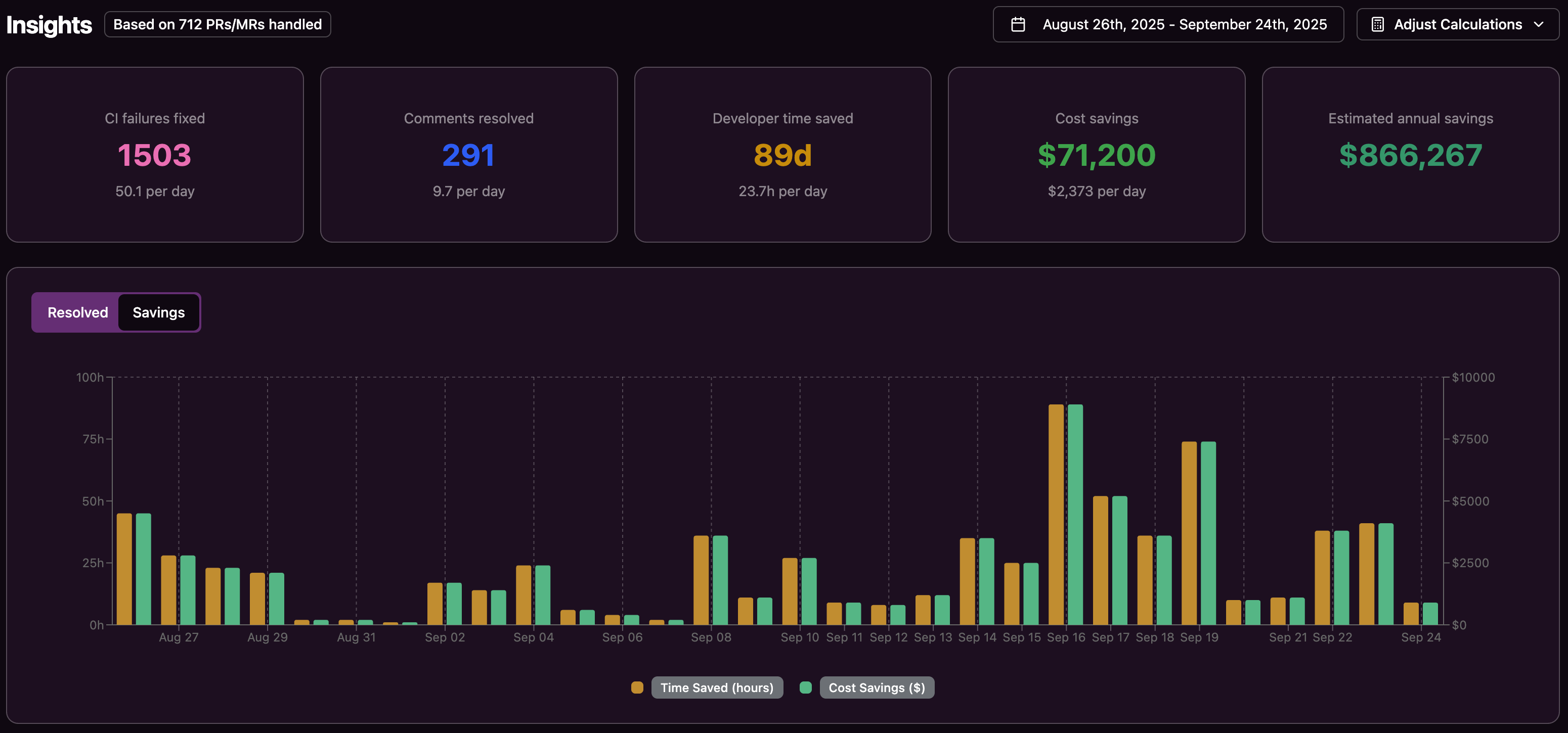
CI build failures are a constant frustration for software engineers. The red status, confusing logs, and forced context switching pull you away from meaningful work. These issues don’t just slow you down; they drain productivity and block code delivery. Let’s dive into the real costs of CI failures, the flaws in current fixes, and how Gitar, an autonomous healing tool, resolves failing pipelines automatically, saving time and boosting your team’s delivery speed.
Why CI Build Failures Hurt So Much
Facing Red Builds Every Day
CI/CD pipelines are vital for ensuring code quality, but they often create friction for developers. You push code expecting a smooth process, only to see a failed build. Then comes the tedious cycle of checking logs, switching focus, and debugging manually, turning small problems into time-consuming headaches.
Most CI monitoring tools point out issues like linting errors or dependency clashes but stop there. They leave the fixing to you, keeping you stuck in a loop of reaction rather than progress. This constant interruption breaks your focus, adds stress, and lowers job satisfaction as trivial issues pile up.
The Real Price of CI Failures
CI build failures cost more than just debugging time. For a team of 20 engineers, up to 30% of their workday can vanish into CI issues, adding up to about $1 million yearly in lost productivity when you account for full costs. This includes not only direct hours but also the impact of delayed features and sagging team morale.
Delays ripple across projects, pushing back launches and weakening your edge in the market. Slow feedback loops over 10 minutes cut down deployment frequency and overall software speed. On top of that, customer trust takes a hit when fixes for bugs or security gaps get stalled.
Main Causes of CI Build Issues
Understanding why builds fail helps highlight the challenge. Here are the common reasons pipelines break:
- Flaky Tests: Timing issues or inconsistent environments make tests pass locally but fail in CI. These unpredictable failures waste hours chasing false bugs.
- Build Errors: Outdated scripts or mismatched tool versions often stop builds cold. Environment drift adds to the problem.
- Dependency Conflicts: Inconsistent package versions across setups create hard-to-spot issues. Automated updates can worsen this by pushing incompatible changes.
- Pipeline Misconfigurations: Small errors in YAML or Jenkinsfiles can halt everything. Complex configs make mistakes easy.
- Environment Differences: Code working on your machine but failing in CI due to setup mismatches is a frequent headache.
- Security Issues: Hardcoded secrets or exposed logs trigger failures during security scans, creating risks and delays.
More Code, More Problems with AI Tools
AI coding assistants like GitHub Copilot speed up code creation, but they shift the workload to validation and merging. More code means more pull requests and CI builds, multiplying the chances for failures. This surge demands automated solutions, as manual fixes can’t keep pace with the growing volume and complexity of CI processes.
Want to stop CI failures from slowing you down? Install Gitar now to fix broken builds automatically and speed up delivery.
How Gitar Solves CI Failures with Autonomous Fixes
Moving from Alerts to Actual Fixes
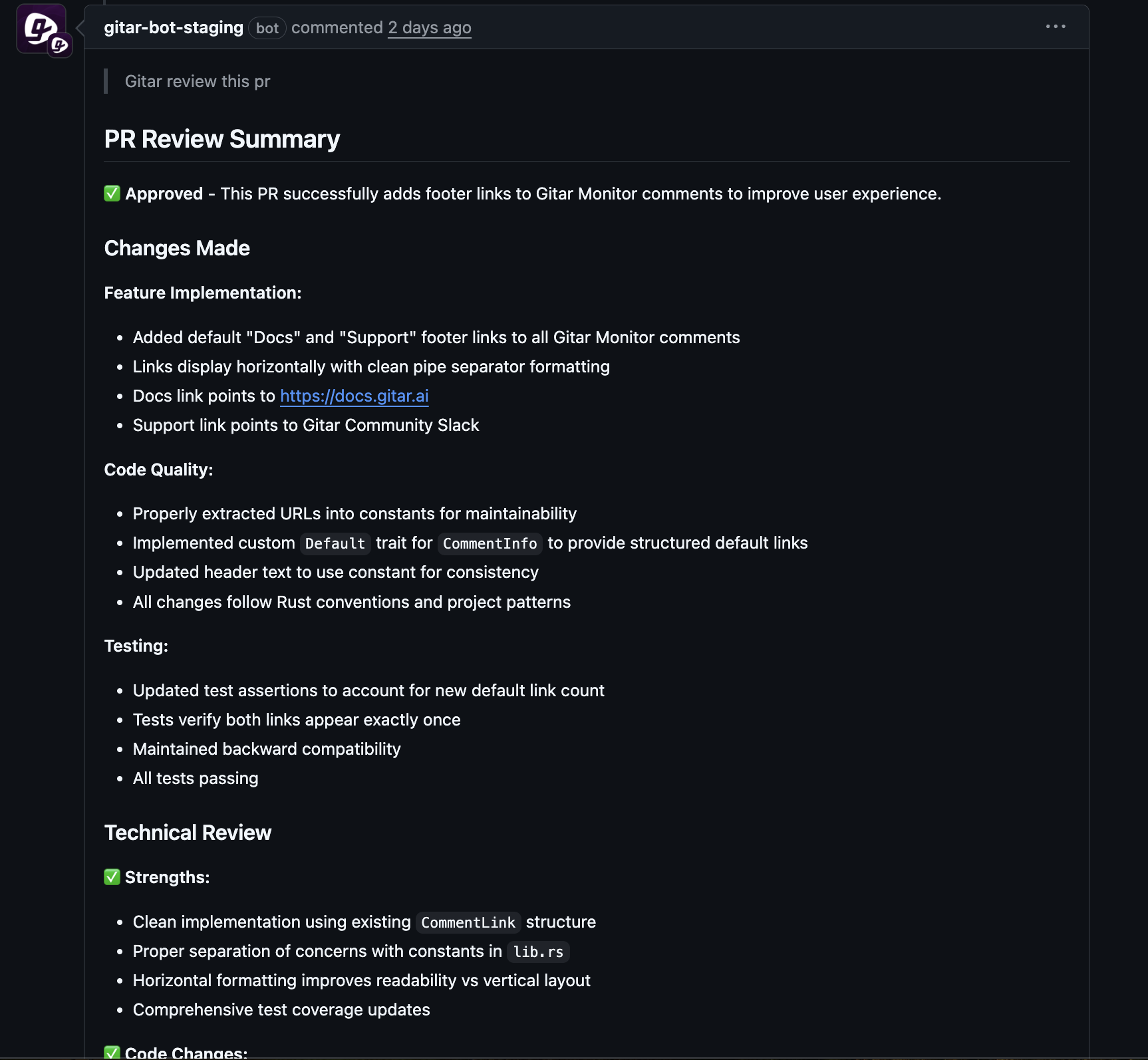
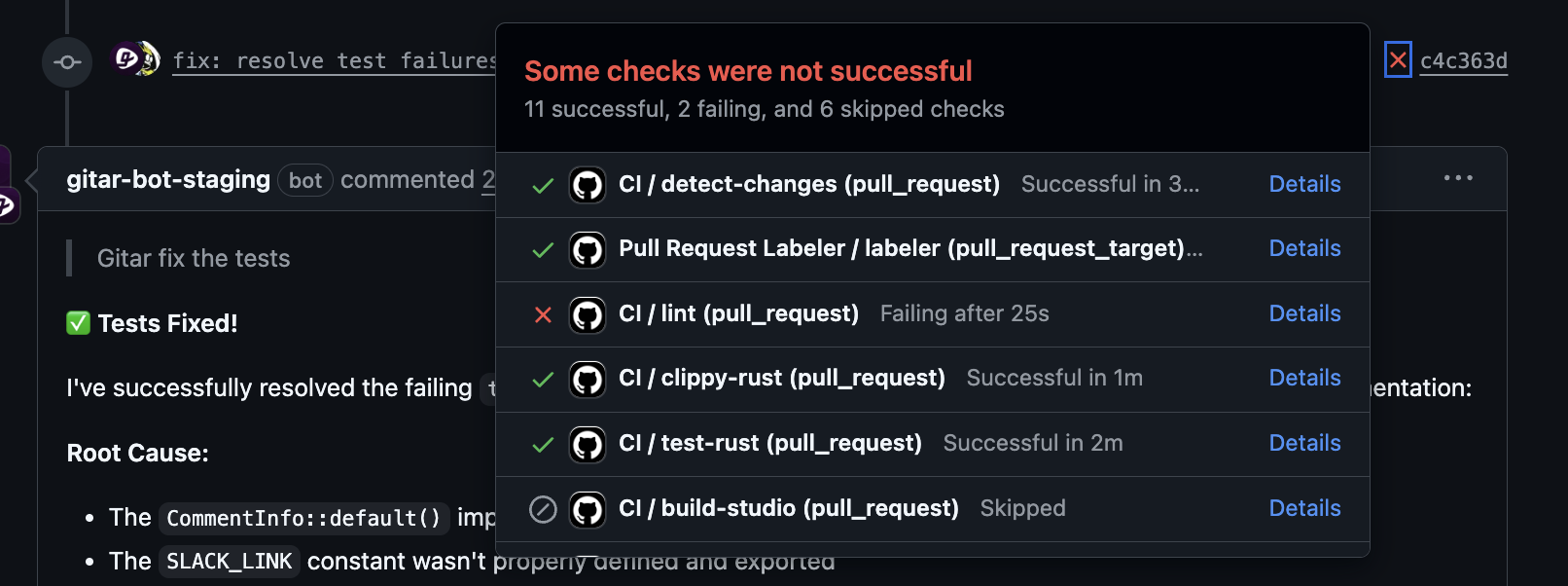
Standard CI tools notify you of problems but leave the hard part, solving them, to you. This keeps you stuck in a cycle of manual debugging. Gitar changes this by not just spotting issues but fixing them. Its AI analyzes failures, applies solutions, and updates pull requests, turning your pipeline into a self-healing system. This cuts out manual work and keeps your focus on coding.

What Gitar Offers for CI Challenges
Gitar brings specific benefits to streamline CI workflows. Here’s what it can do:
- Complete Fixes: Gitar doesn’t just suggest changes; it applies and tests them across full CI workflows to confirm everything passes.
- Accurate Environment Matching: It handles complex setups, like specific JDK versions or integrations with tools like SonarQube, ensuring fixes fit your context.
- Wide Platform Support: Gitar works with GitHub Actions, GitLab CI, CircleCI, and others, fitting into your existing tools without restriction.
- Adjustable Automation: Start with a cautious mode where fixes need approval, then move to full automation with rollback options as trust builds.
Ways Gitar Improves Your CI/CD Process
Cutting Out Manual Debugging Time
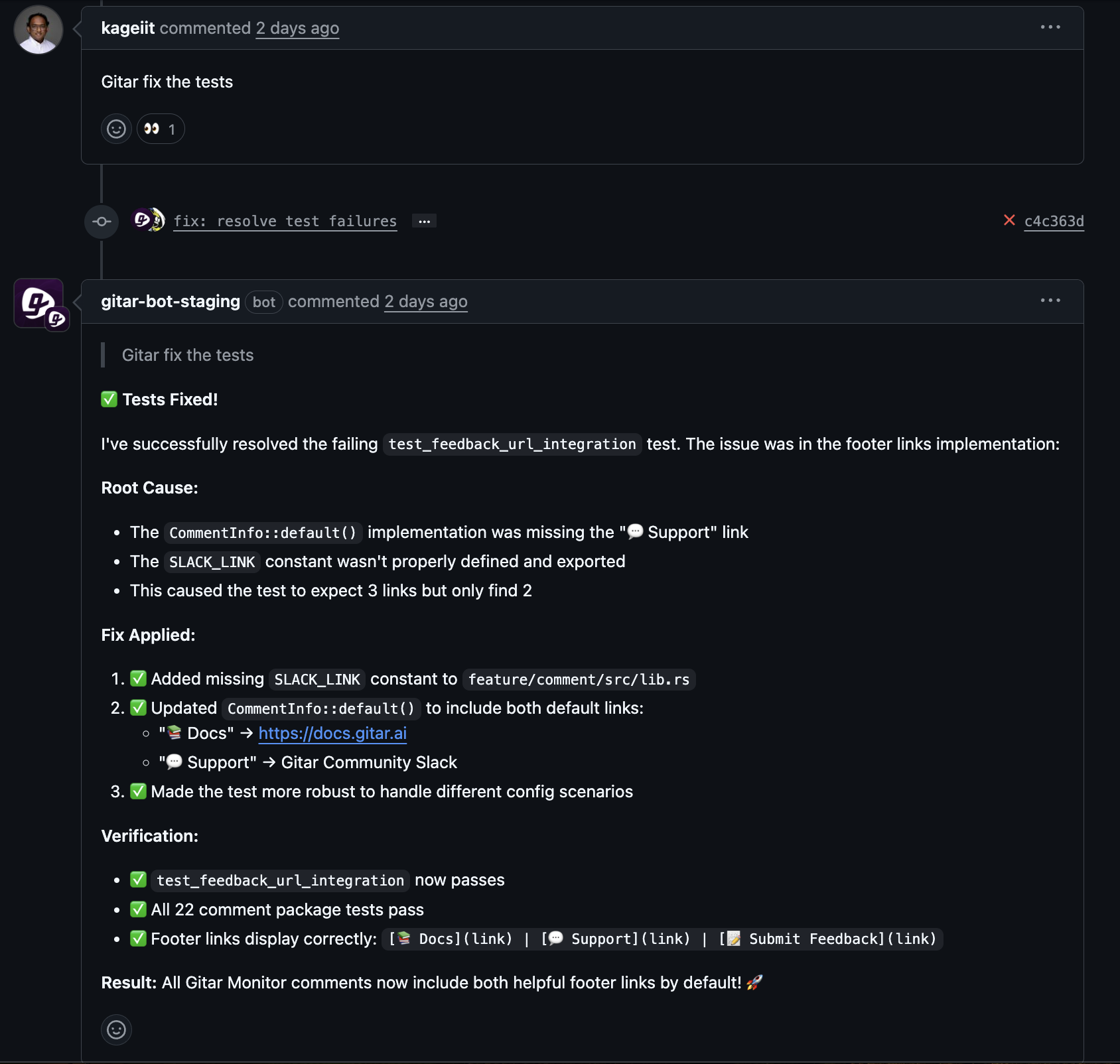
Normally, a CI failure means stopping your work to dig through logs, recreate the issue, and test a fix. This switch in focus can waste hours. Gitar steps in by automatically spotting patterns in logs and fixing issues like linting errors or outdated tests. You stay focused on coding while Gitar handles the background work, preserving your mental energy for creative tasks.
Ensuring Reliable Builds Every Time
Gitar stands out by validating every fix it applies. It runs changes through your full CI setup to confirm all tests and checks pass. When you see a green build after Gitar’s work, you can trust it’s ready to move forward. This reliability boosts confidence, encouraging more frequent commits and faster development cycles.
Speeding Up Merges and Team Output
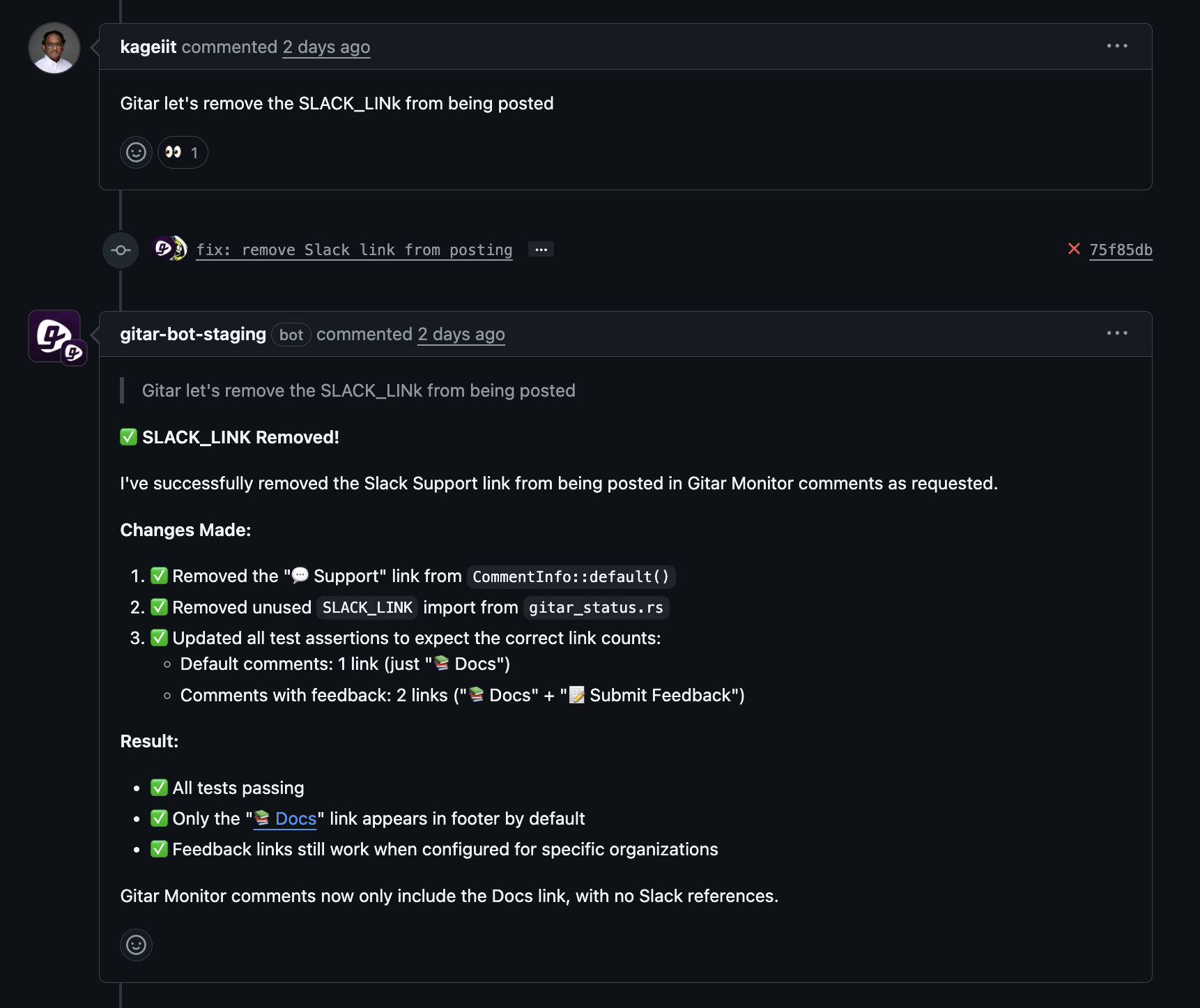
CI failures slow down merging code, creating delays that stack up across teams. Gitar clears these blocks by fixing issues fast, shortening feedback loops. This is especially helpful for remote teams across time zones, as fixes don’t wait on human input. Faster pipelines lead to more frequent deployments, improving software quality.
Handling Complex Enterprise Needs
Enterprise setups often involve varied languages, SDK versions, and integrations that generic tools can’t manage. Gitar adapts by understanding your specific dependencies and security tools. This makes fixes accurate for your environment. It also eases onboarding for new developers, letting them contribute without needing deep CI knowledge.
Ready to turn your pipeline into a self-healing system? Install Gitar now to fix builds automatically.
Why Gitar Beats Manual Fixes and Basic AI Tools
Flaws in Current CI Debugging Methods
Manual debugging eats up time as you stop coding to analyze errors and test fixes. It’s slow and prone to mistakes. Even AI tools that suggest fixes fall short, as they still need you to apply and verify changes. This doesn’t solve the core issue: you need CI pipelines that fix themselves, not just better error reports.
Comparing Gitar to Other Approaches
|
Feature/Tool |
Manual Debugging |
AI Code Reviewers (e.g., CodeRabbit) |
On-Demand AI Fixers |
Gitar (Autonomous CI Fixer) |
|
Fixes Builds |
Developer |
No (Suggestions Only) |
Yes (Manual Trigger) |
Yes (Autonomous) |
|
Environmental Context |
Developer |
Not Specified |
Limited |
Full Replication |
|
Validation |
Developer |
None |
Limited |
Full CI Workflow |
|
Automation Level |
None |
Low (Suggestion) |
Low (Triggered) |
High (Autonomous) |
|
Interruption |
High |
Medium |
Medium |
Low (Background) |
|
Platforms Covered |
Any |
Git Provider |
Not Specified |
Cross-Platform CI |
Common Questions About Gitar’s CI Fixes
How Does Gitar Keep Data Secure?
Gitar prioritizes security for enterprise needs. You can choose cautious settings where fixes need approval, ensuring oversight. For more automation, it offers full commits with rollback options. Gitar respects your security tools and policies, with on-premise options for strict control over code analysis.
How Is Gitar Different from AI Review Tools?
Unlike AI reviewers that only suggest code improvements, Gitar focuses on fixing CI failures. It applies solutions and validates them across your workflow, so you get working builds, not just ideas. Gitar also supports multiple CI platforms like GitHub Actions and Jenkins for broader coverage.
What If I Don’t Trust Automated Fixes?
Gitar builds trust gradually. Start with manual approval for every fix to see how it works. As you gain confidence, automate more tasks while keeping rollback options. This ensures you stay in control, even with full automation.
Can Gitar Manage Our Complex Setup?
Gitar is built for enterprise complexity. It understands specific SDK versions, dependencies, and security scans, creating fixes that match your environment. Whether you use custom tools or intricate setups, Gitar adapts to keep pipelines running smoothly.
Will Gitar Disrupt Our Workflow?
Gitar integrates without changing how you work. It fits into your Git and CI platforms, handling failures behind the scenes. For distributed teams, it cuts delays by fixing issues across time zones. New team members also benefit by avoiding CI setup struggles.
Ready to try automated CI healing? Install Gitar now and fix builds without effort.
Wrap-Up: Boost Productivity with Gitar
CI build failures remain a major hurdle, draining time as pipelines grow more complex. Manual fixes and basic AI suggestions only ease the pain without solving the problem. Costs pile up from lost focus, delayed releases, and missed opportunities.
Gitar shifts this dynamic by autonomously fixing CI issues and validating solutions. It turns pipelines into self-sustaining systems, fitting even complex enterprise needs across various platforms. This lets developers focus on coding, not debugging, while leaders redirect efforts to innovation.
For teams aiming to speed up delivery and maximize output, automated CI fixing is essential. Every hour spent on manual fixes is an hour lost to building value. Ready to move past debugging? Install Gitar today and turn your CI pipeline into a self-healing asset.