
CI/CD pipelines are essential for efficient software development, yet frequent failures and manual processes often slow down engineering teams. This article highlights the productivity challenges developers face, like broken builds and lengthy code reviews, and explains how Gitar, an autonomous AI tool, resolves these issues by automating fixes and reducing manual effort.
CI/CD Challenges: Why Productivity Suffers
Failing Pipelines Slow Down Development
Frequent CI/CD pipeline failures disrupt workflows significantly. Issues like missing dependencies, inconsistent tests, or formatting errors lead to hours of debugging and waiting for builds to complete. These delays pull developers away from coding and drain their focus.
For distributed teams, code review delays due to time zone differences can extend a quick task into days. Parsing complex error logs further compounds the frustration, impacting project timelines and team morale.
Context Switching Drains Developer Focus
Developers lose valuable time when they must pause their work to address CI failures or respond to review feedback. Switching tasks disrupts their flow, reducing productivity. Surveys indicate developers can lose up to 30% of their workday on such interruptions, creating delays that affect project deadlines and costs.
Limitations of Traditional CI/CD Tools
Many existing CI/CD tools only suggest fixes, leaving the actual implementation to developers. This manual process involves reviewing logs, writing code, and pushing updates, often taking hours. Even AI-driven tools frequently stop at suggestions, requiring developers to handle the final steps.
As AI coding assistants speed up code creation, the volume of CI failures and reviews increases. Yet, most tools lack the context to address complex enterprise setups, failing to account for specific dependencies or integrations.
Ready to automate CI fixes and save time? Install Gitar now to resolve broken builds and ship quality software faster.
Gitar: Autonomous AI for CI/CD Efficiency
Gitar shifts the approach from merely identifying CI/CD issues to actively resolving them. This autonomous AI tool detects problems, applies fixes, and validates them within your workflow, minimizing manual intervention and keeping development on track.

Here’s how Gitar improves your pipeline:
- Complete Fix and Validation: Gitar applies fixes and tests them against your full CI setup, turning time-intensive tasks into automated processes.
- Environment Awareness: It mirrors complex enterprise settings, including specific SDKs, dependencies, and third-party tools like SonarQube, ensuring fixes match your configuration.
- Customizable Trust Settings: Start with a mode where fixes need approval, or opt for fully automated commits with rollback options as trust builds.
- Code Review Support: Reviewers can request Gitar to handle feedback or fixes, cutting down on delays, especially for remote teams.
Want to simplify your CI/CD process? Book a demo with Gitar to see autonomous AI in action.
How Gitar Optimizes Your CI/CD Workflow
Full Environment Replication for Reliable Fixes
Gitar stands out by mimicking your exact CI/CD environment, including dependencies and integrations. This ensures fixes work under real conditions, avoiding the pitfalls of solutions that fail in complex setups. Every update is tested within a replica of your system for consistent, dependable results.
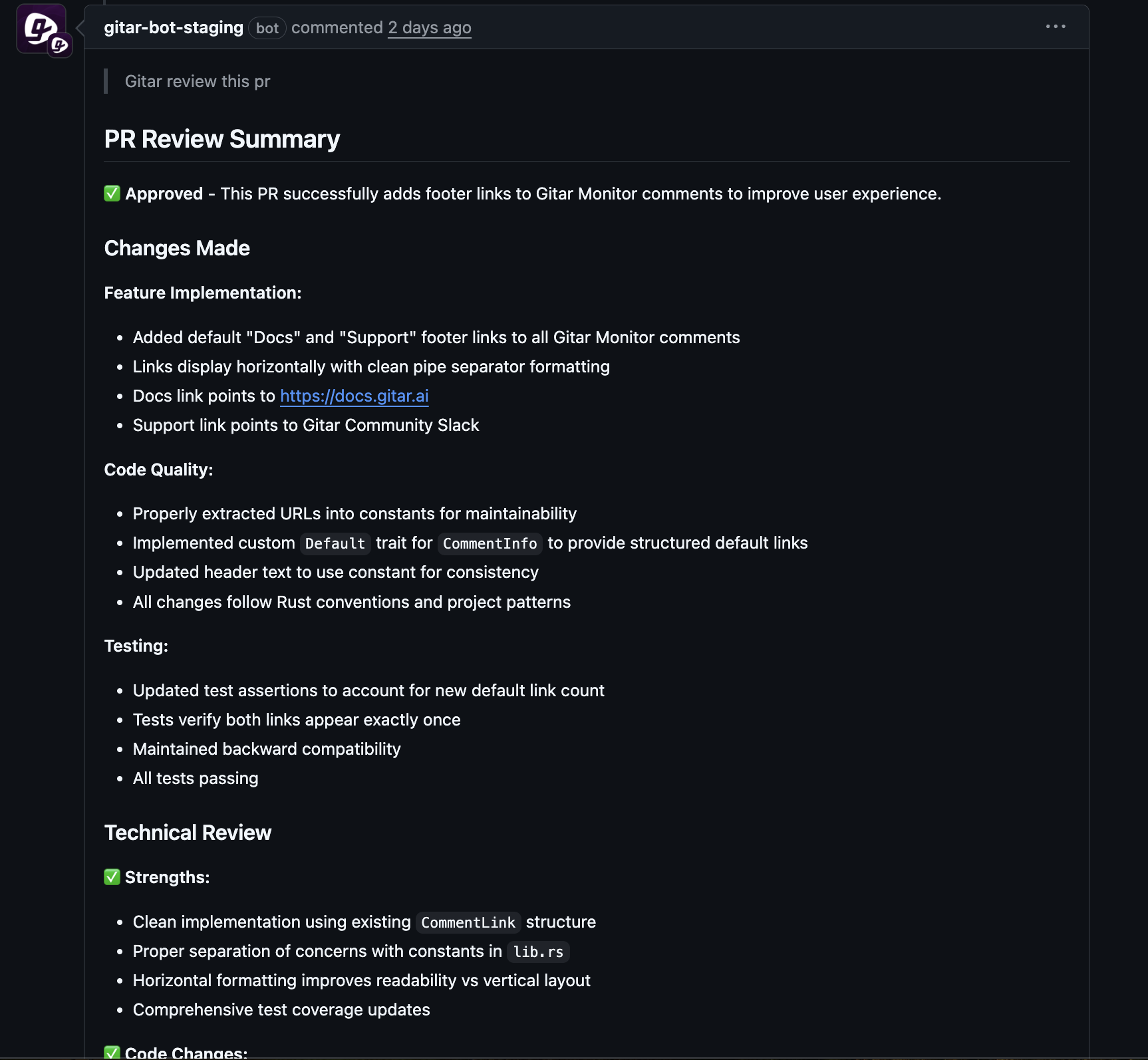
Addressing Common CI/CD Issues Automatically
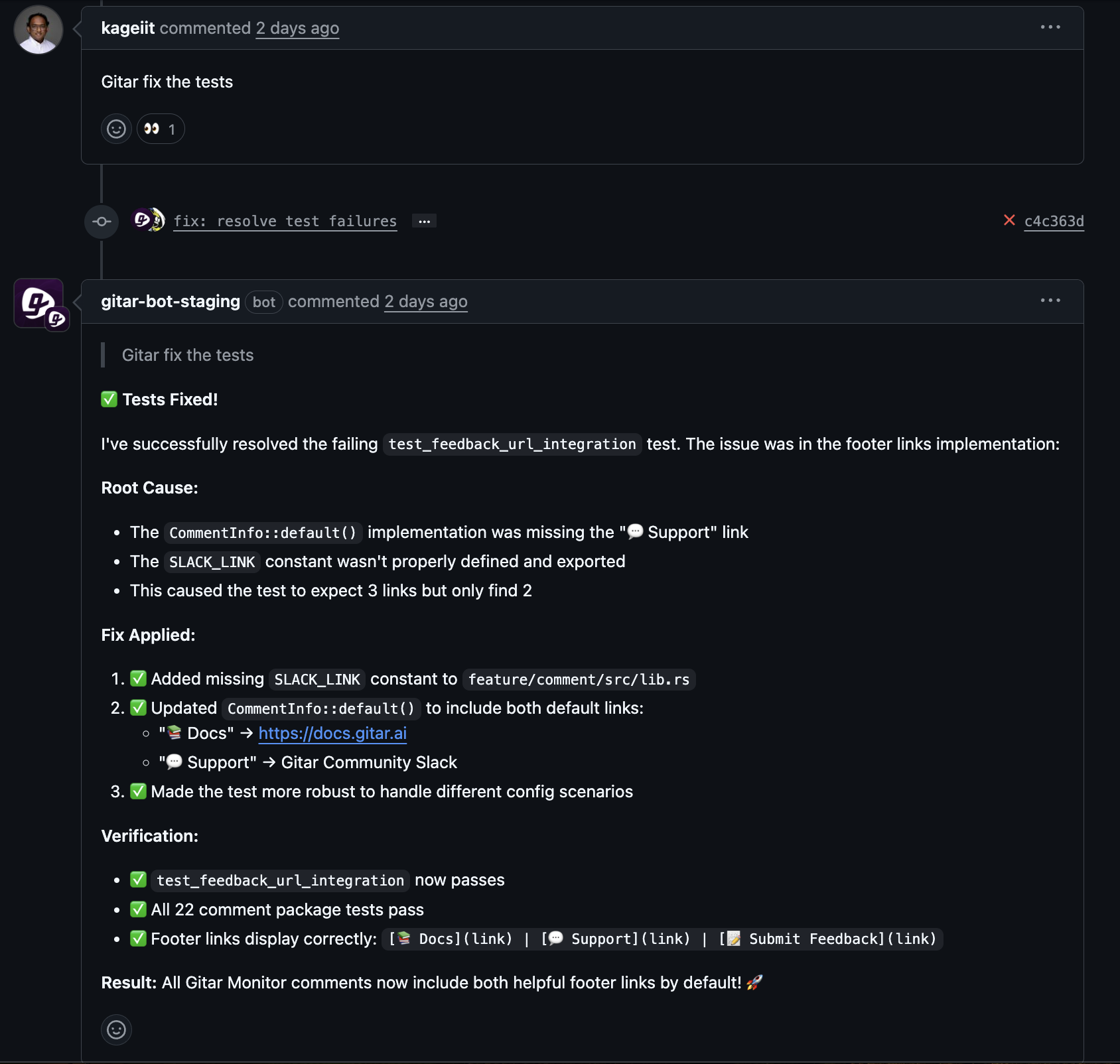
Gitar tackles frequent pipeline problems without developer input. Here are key areas it handles:
- Fixes formatting errors to avoid delays over minor violations.
- Resolves basic test failures, like outdated snapshots, saving debugging time.
- Corrects build issues, such as dependency conflicts, for smoother runs.
These automated fixes maintain workflow momentum by eliminating the need for manual fixes.
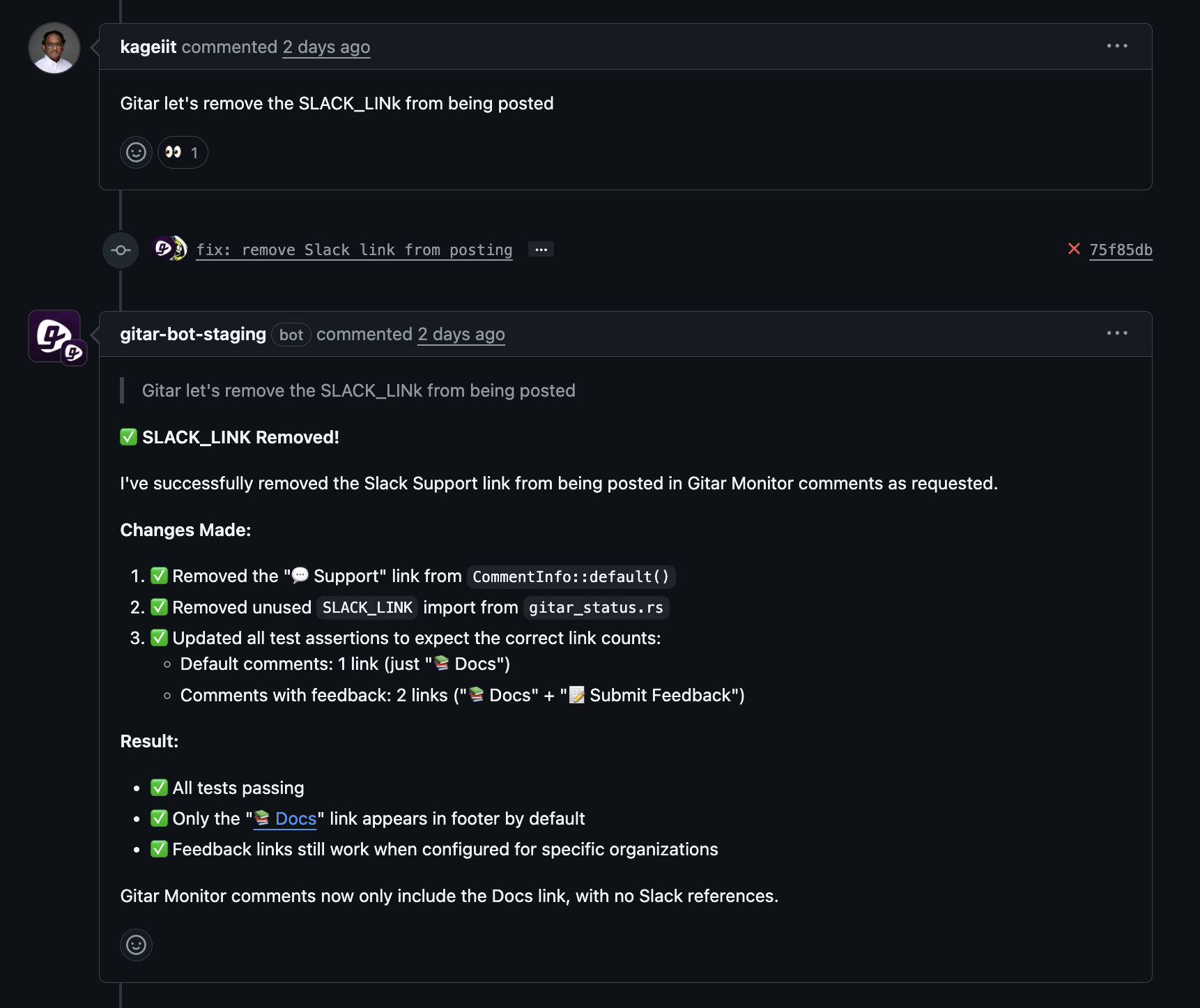
Speeding Up Distributed Team Collaboration
For teams across time zones, Gitar enables reviewers to request fixes via comments. These are implemented and ready for approval instantly, reducing wait times and improving merge speed. This setup helps maintain progress despite differing schedules.
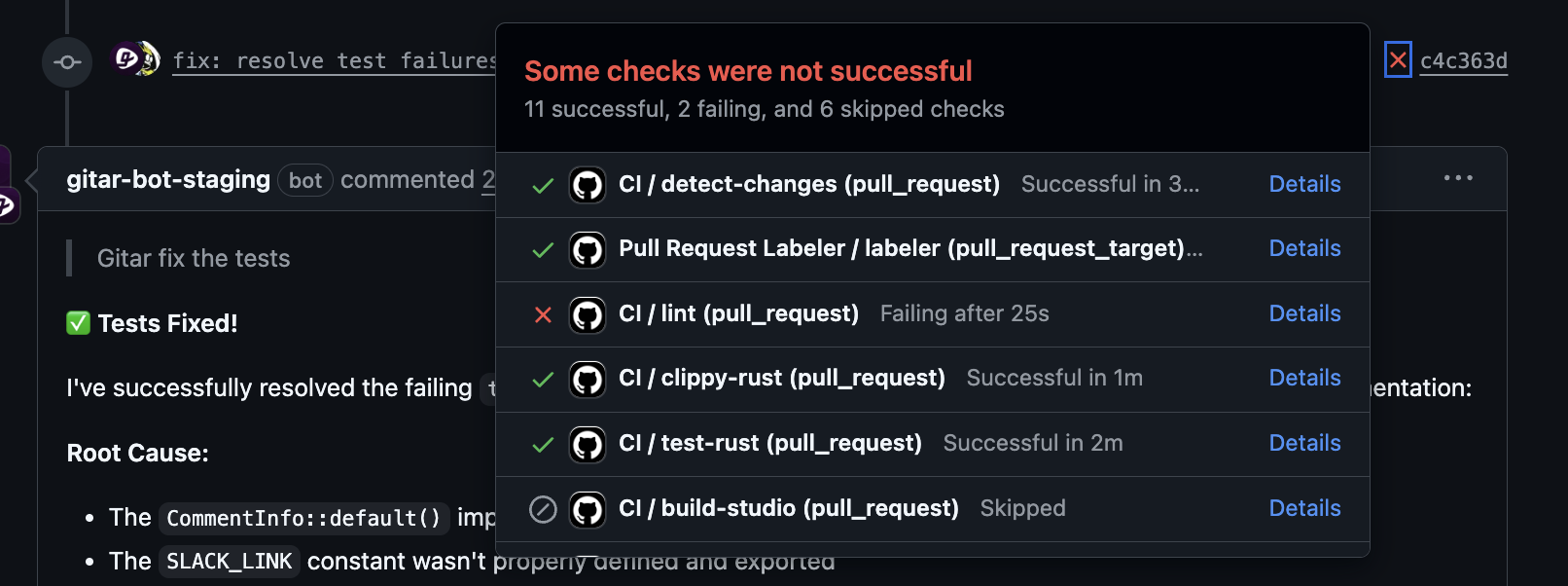
Keeping Developers Focused with Automation
Gitar prevents interruptions by automating CI fixes, allowing developers to stay immersed in their work. Its trust settings let teams review changes before applying them, or switch to full automation with rollback options, balancing control with efficiency.
Comparing Gitar to Traditional CI/CD Methods
|
Feature / Solution |
Manual Processes |
AI Suggestion Tools |
Gitar: Autonomous AI |
|
Fix Application |
Manual (developer) |
Manual (after suggestion) |
Automated (AI applies) |
|
Environment Validation |
Developer-dependent |
Limited (no testing) |
Full (exact replica) |
|
Issue Prevention |
Reactive only |
Reactive (flags issues) |
Proactive (part of fix) |
|
CI System Integration |
Manual effort |
Limited (no validation) |
Direct (tests fixes) |
|
Developer Workload |
High (frequent switching) |
High (requires action) |
Low (fully automated) |
|
Release Speed |
Slow |
Moderate |
Fast and automated |
Gitar automates the entire process from issue detection to resolution, unlike manual methods or suggestion tools that still rely on developer input. This end-to-end approach saves time and reduces workload.
Experience the benefits of automated CI/CD. Install Gitar today to fix builds and ship software faster.
Key Questions on CI/CD Automation with Gitar
Can Gitar Manage Complex CI/CD Pipelines?
Yes, Gitar is built for intricate enterprise setups. It mirrors your environment, including SDK versions and tools like Snyk, validating fixes against all components for reliable results tailored to your system.
How Does Gitar Handle Trust in Automation?
Gitar offers adjustable settings for automated fixes. Begin with a mode requiring approval for each change, or move to automatic commits with rollback options. This ensures control while building confidence in the system.
Does Gitar Support Distributed Teams?
Gitar aids remote teams by processing review comments and applying fixes instantly, ready for approval. This cuts delays caused by time zone gaps, speeding up code merges and collaboration.
How Does Gitar Fit Into Existing Workflows?
Gitar integrates with platforms like GitHub Actions and CircleCI, adding automation without disrupting your current setup. It reduces manual tasks while respecting your established processes.
What If a Gitar Fix Doesn’t Work?
Gitar tests fixes before applying them and includes rollback features if issues occur. Detailed logs provide insight into changes, allowing quick corrections without disrupting workflows.
Conclusion: The Future of CI/CD with Gitar
Managing CI/CD failures manually is no longer practical in today’s fast-moving development landscape. Gitar offers an autonomous solution that applies and validates fixes, easing the burden on teams and accelerating progress.
Moving from suggestion tools to full automation marks a significant step forward for CI/CD efficiency. With Gitar, teams can focus on coding rather than fixing, speeding up delivery cycles.
As AI drives faster code creation, validating and merging become the new bottlenecks. Gitar addresses this by automating fixes, reducing manual work, and boosting team output.
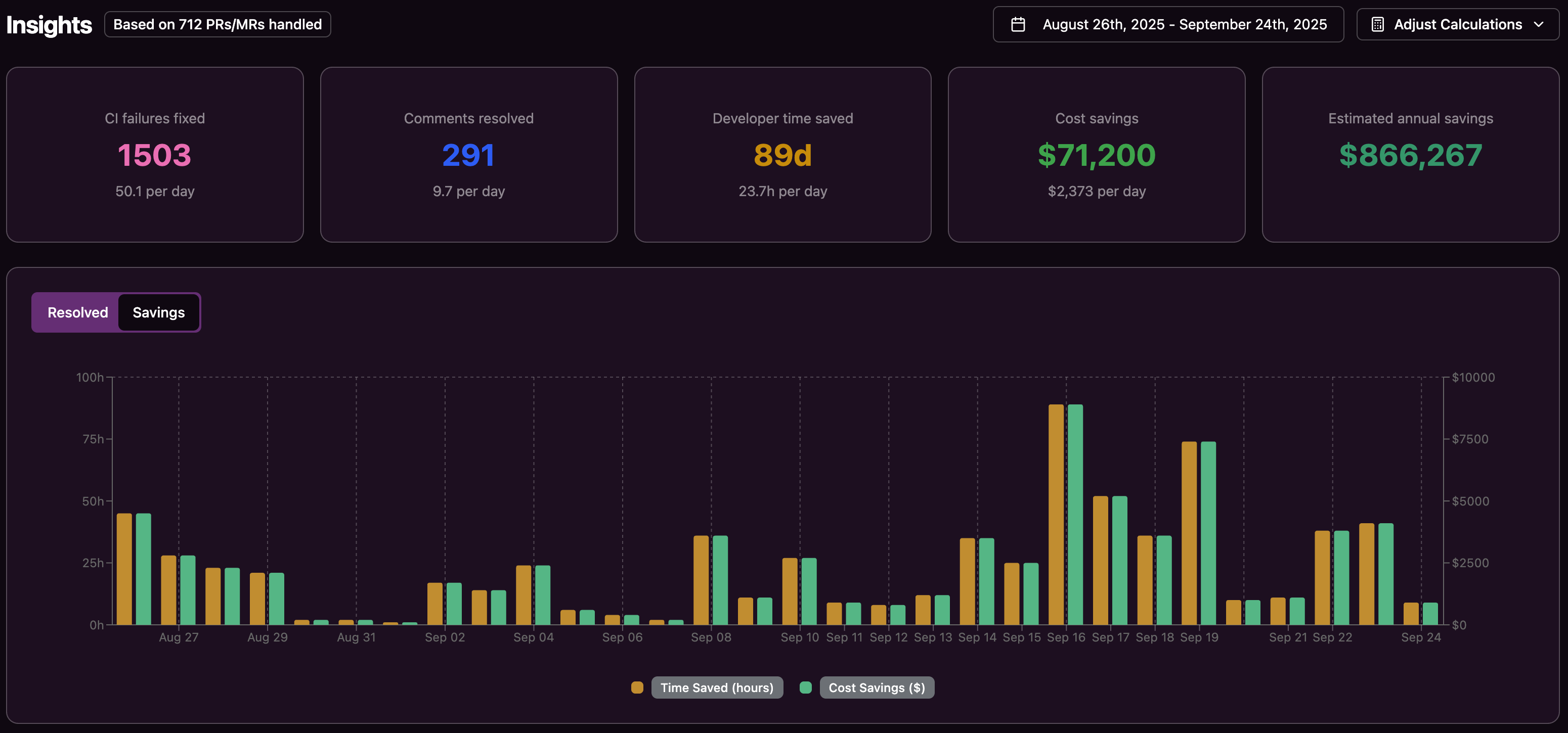
Ready to overcome CI/CD challenges? Book a demo with Gitar to explore autonomous AI for your pipeline.