
Written by: Ali-Reza Adl-Tabatabai, Founder and CEO, Gitar
Key Takeaways
- AI coding tools speed up development 3-5x but create review and CI bottlenecks that now require intelligent auto-fix, not just suggestions.
- Leading testing tools like Testim, Mabl, and Applitools deliver self-healing tests and visual checks, yet most start at $499/month or more.
- Gitar stands out as a free AI code review platform that auto-fixes CI failures, runs security scans, and applies reviewer feedback, unlike paid tools such as CodeRabbit at $15-30 per seat.
- Enterprise teams cut testing cycles by 50% and save about $375K per year when they choose tools with full CI integration and validated fixes across GitHub, GitLab, and CircleCI.
- Teams can start with Gitar’s 30-second GitHub app install for free unlimited reviews and a 14-day auto-fix trial at Gitar.ai to ship higher quality software faster.
How We Chose These AI Testing and Code Quality Tools
Our evaluation focused on automation depth, pricing access, CI coverage, scalability, measurable ROI, and setup simplicity. We compared self-healing and auto-fix capabilities against suggestion-only tools and prioritized platforms with free tiers or transparent pricing. CI integrations across GitHub Actions, GitLab CI, and CircleCI were required for inclusion. We also reviewed enterprise readiness, including performance at scale and build success guarantees. Sources include vendor documentation, community feedback from r/softwaretesting, TestGuild surveys showing 72.8% of testers prioritize AI-powered testing, and JetBrains developer ecosystem reports.
Best AI Tools for Automated Software Testing in 2026
Testim: ML-Powered UI Test Stability
Testim uses machine learning to keep UI tests stable with smart locators that adapt when the interface changes. The platform supports codeless test creation, parallel execution, and CI/CD integrations. Key AI features include self-healing tests that update when applications change, intelligent element identification, and root cause analysis for failures. Custom enterprise pricing is available with multiple enterprise tiers. Strengths include robust cross-browser testing and strong community support. Limitations include a noticeable learning curve and reliance on Testim’s proprietary infrastructure.
Mabl: End-to-End Intelligent Test Automation
Mabl delivers intelligent test automation with auto-healing and deep application monitoring. The platform combines functional testing, performance insights, and visual regression detection in one workflow. AI features include automatic test maintenance, intelligent test creation from user journeys, and anomaly detection across performance metrics. Case studies report $240K savings over 2 years versus Selenium, shrinking 2 weeks of work to 2 hours. Pricing starts around $499 per month. Mabl excels at end-to-end testing but requires significant upfront configuration effort.
Applitools: Visual AI for UI and Layout Quality
Applitools focuses on AI-powered visual testing and application monitoring using advanced computer vision. The platform detects subtle UI changes that humans might miss and supports cross-browser visual validation and automated accessibility checks. Core features include smart visual comparisons, layout validation, and integrations with popular testing frameworks. Enterprise pricing ranges from $10K to $50K annually depending on usage. Strengths include high visual testing accuracy and detailed reporting. Limitations include higher cost and extra complexity for teams with simple functional testing needs.
Try Gitar free for AI code quality automation and see auto-fixing that goes beyond visual testing suggestions.
Katalon: All-in-One Test Automation Suite
Katalon Studio offers broad test automation with AI support for web, mobile, and API testing. The platform includes codeless test creation, intelligent object recognition, and self-healing mechanisms. AI features cover smart test generation, automatic element updates, and predictive analytics that highlight risky areas in the test suite. Katalon supports multiple scripting languages and many third-party integrations. Pricing includes a free community edition plus paid enterprise features. Strengths include versatile testing coverage and strong documentation. Limitations include performance slowdowns on very large suites and occasional stability issues.
Rainforest QA: Hybrid AI and Human Testing
Rainforest QA blends AI-driven automation with human crowd testing for broader coverage. The platform supports no-code test creation, automatic maintenance, and intelligent execution prioritization. AI capabilities include smart test scheduling, failure pattern recognition, and automated regression suite optimization. Pricing follows usage-based models with enterprise tiers. Rainforest works well when teams need both automated and manual testing. It becomes less efficient for pure automation at scale and can grow costly with heavy usage.
Testsigma: Natural Language Test Creation
Testsigma delivers cloud-based test automation with natural language test authoring and AI-powered maintenance. The platform supports web, mobile, and API testing with intelligent element healing and automatic updates. AI features include natural language processing for test creation, smart element identification, and predictive analysis of likely failures. Pricing includes free tiers with usage-based scaling. Strengths include intuitive test creation and broad platform support. Limitations include reliance on cloud infrastructure and potential latency for complex or very large test scenarios.
Best AI Tools for Code Quality and Code Review in 2026
Gitar: Free AI Code Review with Auto-Fix
Gitar delivers free AI code review that actually fixes code instead of only suggesting changes. Competing tools charge $15-30 per developer for suggestion-only reviews, while Gitar provides full PR analysis, security scanning, bug detection, and performance review at no cost. Teams can use it across unlimited repositories with no seat limits and no credit card.
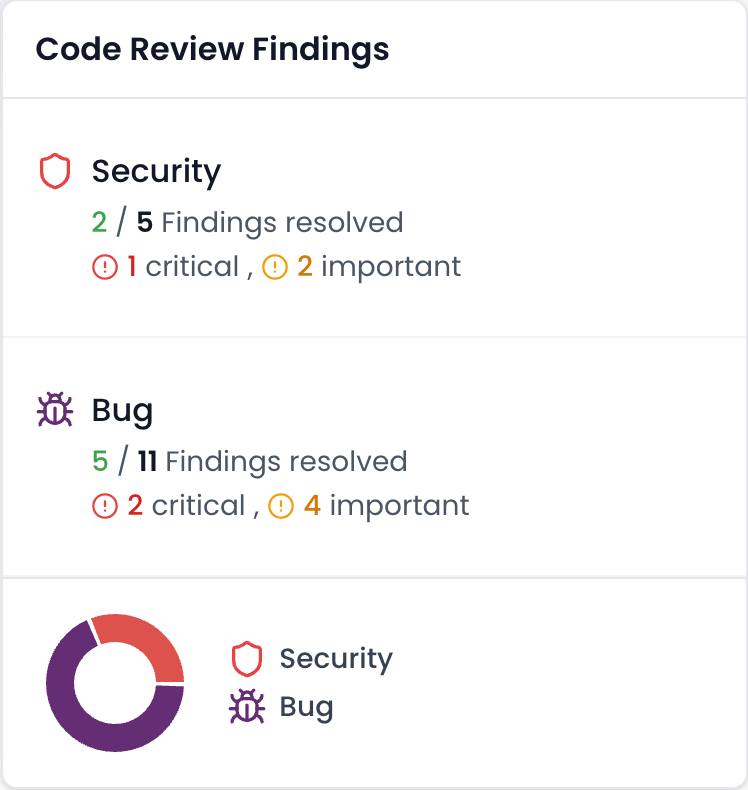
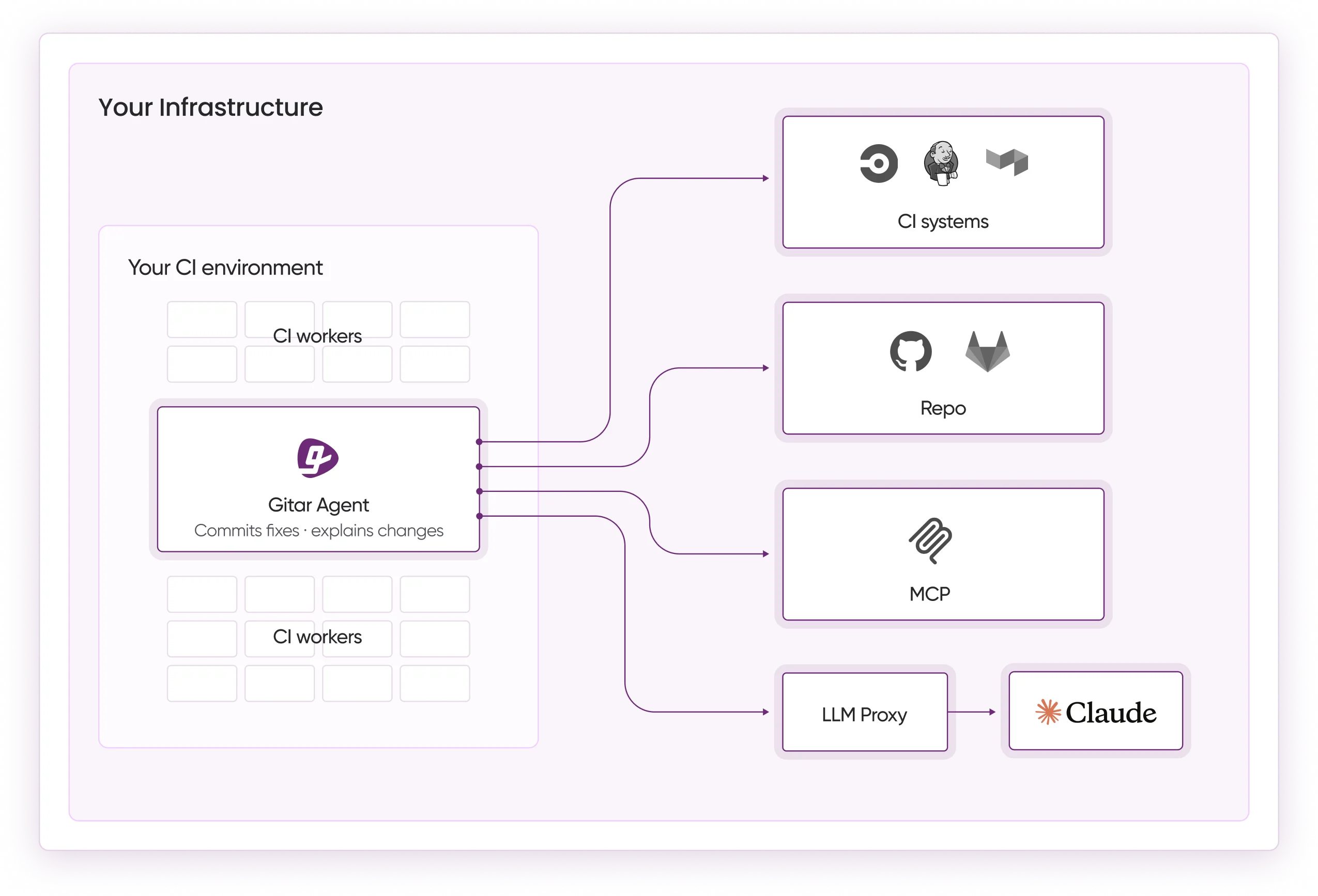
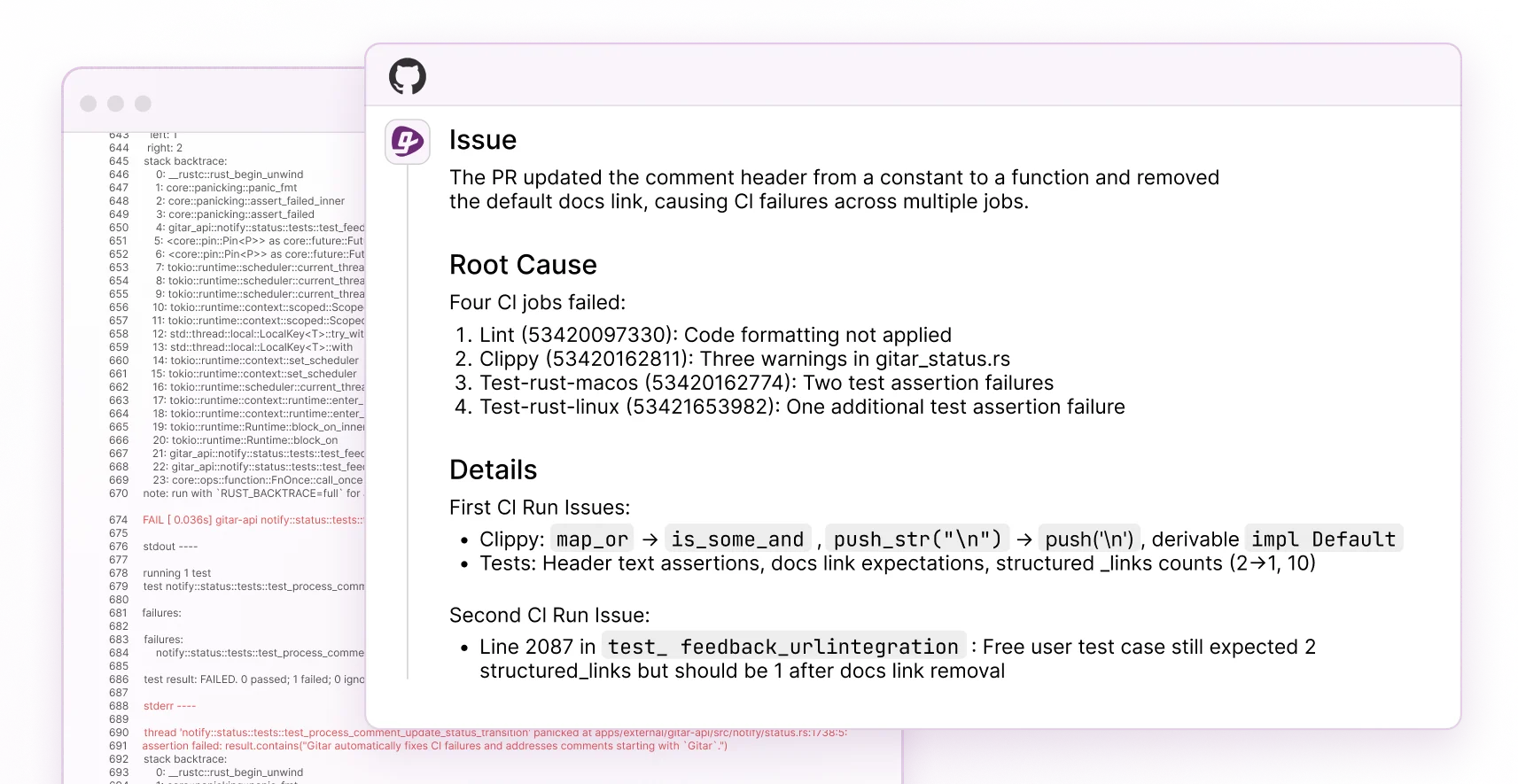
The healing engine resolves CI failures by reading failure logs, generating context-aware fixes, validating them in your CI environment, and committing working code directly to pull requests. When reviewers leave comments, Gitar applies the requested changes automatically instead of leaving developers to interpret and implement suggestions. This approach guarantees green builds where competitors only hope their suggestions succeed. Auto-fix features run on a 14-day free trial.
Key features include single-comment consolidation that prevents notification spam, natural language repository rules that avoid YAML, and hierarchical memory that learns team patterns over time. Gitar supports enterprise-scale workloads across 50+ million lines of code and thousands of daily PRs. Integrations cover GitHub, GitLab, CircleCI, and Buildkite with native Slack notifications and Jira ticket linking.
ROI models show large annual savings for 20-developer teams through reduced CI maintenance and faster reviews. The 14-day auto-fix trial highlights value quickly. Installation takes about 30 seconds through the GitHub app with no configuration required.
| Feature | Gitar | CodeRabbit | Greptile |
|---|---|---|---|
| Auto-Fix | Yes (Free trial) | No | No |
| CI Integration | Full validation | Limited | None |
| Pricing | Free review | $15-30/seat | $30/seat |
| Notification Style | Single comment | Inline spam | Multiple threads |
SonarQube: Static Analysis with AI CodeFix
SonarQube provides static code analysis with AI-enhanced vulnerability detection and quality metrics. The platform supports continuous inspection, security hotspot identification, and technical debt tracking. AI features include intelligent issue prioritization, fewer false positives, predictive quality gates, and AI CodeFix that generates automatic fixes. A free community edition covers many use cases, while enterprise features require licensing. Strengths include wide language support and detailed reporting. Limitations include complex setup and resource-heavy scans.
DeepSource: Automated Code Review Insights
DeepSource offers automated code review with AI analysis for bugs, security issues, and performance problems. The platform runs continuous monitoring, smart issue categorization, and integrates with common development workflows. AI capabilities include contextual explanations, automated fix suggestions, and quality trend dashboards. Pricing includes free tiers for open source and paid plans for private repositories. DeepSource excels at broad analysis coverage but does not validate or apply fixes automatically.
CodeRabbit: Comment-Driven AI Reviews
CodeRabbit delivers AI-powered code review that flags bugs, vulnerabilities, and code smells. The platform integrates with CI/CD pipelines to streamline review workflows and reduce manual effort. Features include contextual understanding, intelligent commenting, and workflow automation. Pricing ranges from $15-30 per developer monthly with enterprise tiers. Strengths include detailed analysis and solid integration support. Limitations include suggestion-only output that still needs manual implementation and potential notification overload.
Greptile: Codebase Understanding and Docs
Greptile focuses on deep codebase understanding with AI-assisted review and documentation generation. The platform performs repository-wide analysis, generates code explanations, and keeps documentation updated. AI capabilities include contextual understanding, cross-file relationship mapping, and intelligent search. Pricing starts at $30 per developer monthly with usage-based scaling. Greptile works well for comprehension and documentation but does not validate or apply fixes like healing engines do.
GitHub Copilot: In-Editor AI Coding Assistant
GitHub Copilot provides AI code completion and generation directly inside the IDE. The platform offers real-time suggestions, automated documentation, Copilot Autofix for security vulnerabilities, and integrations with popular editors. Key features include context-aware suggestions, multi-language support, and collaborative coding assistance. Pricing includes individual and enterprise tiers with usage-based billing. Strengths include seamless IDE integration and broad language coverage. Limitations include a focus on generation instead of full code review and quality assurance.
Experience the difference between suggestions and actual fixes with Gitar’s free AI code review.
Side-by-Side Comparison of Top AI Tools
| Tool | Auto-Fix | CI Integration | Pricing |
|---|---|---|---|
| Gitar | Yes (Free trial) | GitHub/GitLab/CircleCI | Free review |
| CodeRabbit | No | Limited | $15-30/seat |
| Testim | Self-healing | Yes | Custom enterprise |
| Mabl | Auto-maintenance | Yes | $499+/month |
| SonarQube | AI CodeFix (Enterprise) | Yes | Free/Enterprise |
| Applitools | Visual healing | Yes | $10K-50K/year |
| GitHub Copilot | Autofix (Security) | IDE-focused | $10-20/seat |
| Greptile | No | Limited | $30/seat |
What QA Leads and Dev Managers Should Weigh
QA leaders and dev managers need to balance productivity gains against noise, complexity, and cost. Many AI tools create notification fatigue with constant comments and alerts. Leadership teams worry about velocity as PR volumes grow and review queues expand. DevOps teams also face growing complexity when they manage multiple YAML-heavy configurations across tools. ROI studies show 50% testing cycle time reductions that translate to about $375K in yearly savings for mid-size teams. 2026 trends point to agentic quality control as the new standard, where AI agents handle large-scale code review and must validate fixes, not just suggest them.
How to Roll Out Gitar in Three Simple Steps
Teams can implement Gitar with a short, low-risk rollout. First, install the Gitar GitHub app in about 30 seconds without creating a separate account. Next, run in suggestion mode so developers can review and approve automated fixes while they build trust. Finally, enable auto-commit for specific validated fix types once the team feels confident. This practical flow answers the common concern of how to use AI in automation testing by delivering immediate value through applied fixes instead of manual suggestion handling.
Frequently Asked Questions
Is there a free AI tool for code quality?
Gitar provides completely free AI code review with full PR analysis, security scanning, bug detection, and performance review for unlimited repositories. Competing tools charge $15-30 per developer for suggestion-only reviews. Gitar keeps review free while offering a 14-day auto-fix trial that actually applies changes instead of leaving them as comments.
How does Gitar differ from CodeRabbit and other AI code review tools?
Gitar focuses on execution, not just analysis. CodeRabbit, Greptile, and similar tools analyze code and leave suggestions in comments, which developers must then implement and test. Gitar’s healing engine applies fixes, validates them in your CI environment, and commits working solutions. This closes the gap between suggestions and implementation while keeping analysis free.
What ROI can teams expect from AI code quality tools?
Teams usually see major reductions in CI maintenance time and review cycles. A 20-developer team that spends 1 hour per day on CI and review issues can reclaim significant annual productivity with Gitar. These gains arrive without the $450-900 monthly tool spend that competitors require, so teams see positive ROI from both time savings and direct cost reduction.
Which AI testing tools offer strong self-healing capabilities?
Self-healing strength varies by tool and focus area. Testim and Mabl perform well for UI test maintenance with smart locators that adapt to interface changes. Applitools offers visual healing for layout and appearance shifts. Gitar uniquely provides CI failure healing that fixes build errors, lint failures, and test issues across the pipeline, covering more than test script maintenance alone.
How do AI tools handle enterprise-scale codebases and security?
Enterprise environments demand scale, reliability, and strict security. Gitar supports more than 50 million lines of code and thousands of daily PRs while maintaining SOC 2 Type II and ISO 27001 certifications. Deployment options include managed cloud with zero data retention and on-premises agents that run inside your CI pipeline with full access to configurations and secrets. This flexibility supports growth without weakening security controls.
Conclusion: Why Healing AI Wins the Next Wave
Modern AI coding workflows require tools that heal problems, automate fixes, and deliver working builds. Many vendors still charge premium prices for suggestion engines that leave implementation to developers. Gitar changes this pattern by offering free, comprehensive code review with real auto-fixing. As 80% of software teams adopt AI-driven testing by 2026, the advantage goes to platforms that guarantee green builds instead of hoping manual fixes succeed. Install Gitar now, automatically fix broken builds, and start shipping higher quality software faster.