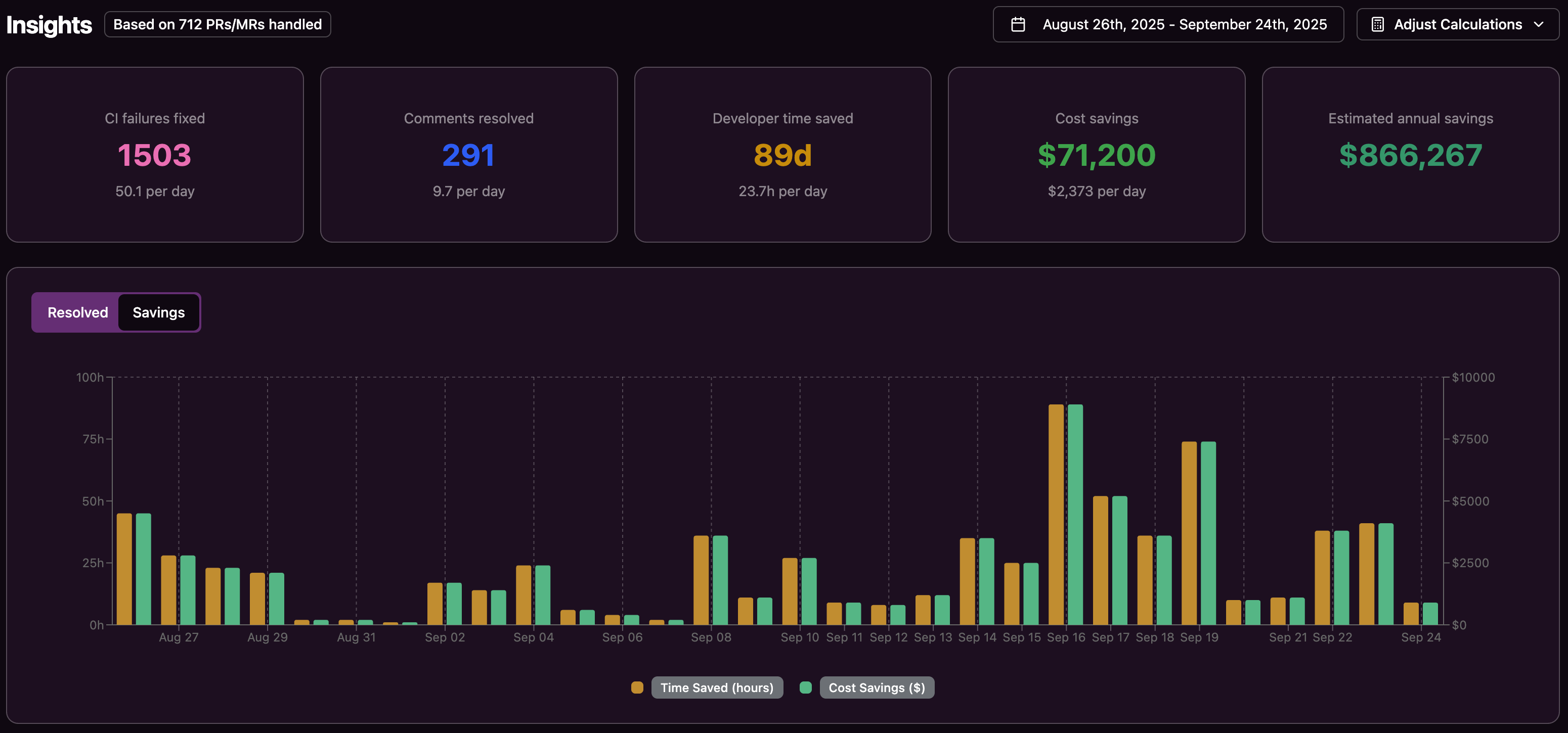
Software engineers know the frustration of a failing build. It halts progress, breaks focus, and delays releases. This article dives into the costly impact of CI build failures and explores how Gitar, an autonomous AI tool, detects and fixes these issues automatically. Discover how your team can keep moving forward without getting stuck on red builds.
Why CI Build Failures Hurt More Than You Think
CI build failures aren’t just annoying technical glitches. They sap productivity, slow down development cycles, and create hidden costs that add up fast across engineering teams.
Breaking Developer Focus with Constant Interruptions
Submitting a pull request should be straightforward, but CI failures often pull developers away from their work. This constant context switching, jumping from coding to debugging error logs, kills momentum. Regaining focus after an interruption can take 15 to 25 minutes, so even a quick 5-minute fix eats up far more time than it seems.
For developers tackling complex tasks, these disruptions make it hard to stay in a productive flow state. Instead of solving big problems, they’re stuck deciphering CI errors and losing valuable mental energy.
Slowing Down Releases and Raising Costs
Repeated build failures don’t just slow individual developers. They delay feature releases, disrupt product timelines, and impact business goals. Developers can spend up to 30% of their time on CI issues. For a team of 20 developers at $200 per hour, that’s roughly $1 million in lost productivity each year.
In larger teams, a single failing build can stall multiple projects, especially when dependencies or integration tests are involved. This amplifies the financial hit and creates bottlenecks across workflows.
Dealing with the “Works on My Machine” Problem
Environment mismatches, especially with language or runtime versions, often cause CI failures. Code might run fine locally but break in the pipeline due to differences in operating systems, dependencies, or configurations.
These parity issues between developer and CI environments lead to frustrating failures. In enterprise settings, added layers like SDK versions and security scans make debugging even tougher, as replicating the exact setup locally becomes nearly impossible.
Facing New Challenges After AI Coding Tools
AI coding assistants help developers write code faster, but they’ve shifted the bottleneck to validation and merging. More code means more pull requests, more tests, and more chances for CI failures. The backlog of PRs waiting for green builds grows, slowing down progress.
Maintenance tasks like dependency updates or bug fixes are more likely to trigger CI issues than new features. As codebases age, these failures become more frequent, adding to the workload.
Ready to stop these delays? Install Gitar to fix builds automatically and ship quality code faster.
What Is Self-Healing CI and How Does It Help?
Self-healing CI changes the game by using AI to automatically detect, diagnose, and fix build failures. Instead of developers pausing work to troubleshoot, these systems resolve issues without human input, keeping pipelines green and teams productive.
This isn’t just about suggestions. Autonomous AI agents analyze failure context, apply fixes, test them in the full CI environment, and confirm everything passes. Developers can focus on coding while the system handles routine build problems in the background.
For growing teams with complex pipelines, self-healing CI scales effortlessly. It manages multiple failures across repositories and environments, something manual debugging can’t keep up with. This approach minimizes interruptions and maintains development speed.
How Gitar Delivers Autonomous Fixes for CI Failures
Gitar is an AI-driven tool built to take the burden of CI failures off developers’ shoulders. It goes beyond flagging issues by autonomously fixing and validating solutions, ensuring builds stay green with minimal effort from your team.

Here’s what makes Gitar stand out:
- Complete Fixes: Applies solutions, tests them across full CI workflows, and ensures all jobs pass for ready-to-merge pull requests.
- Environment Matching: Replicates complex setups with specific JDK versions, multi-SDK dependencies, and tools like SonarQube or Snyk for accurate fixes.
- Flexible Trust Settings: Offers modes from suggestion-only to auto-commit with rollback options, fitting your team’s comfort level.
- Wide CI Compatibility: Supports GitHub Actions, GitLab CI, CircleCI, BuildKite, and more, covering most platforms.
- Team Control Options: Lets you choose between fully automated fixes or requiring approval before commits.
Want to see Gitar in action? Book a demo today.
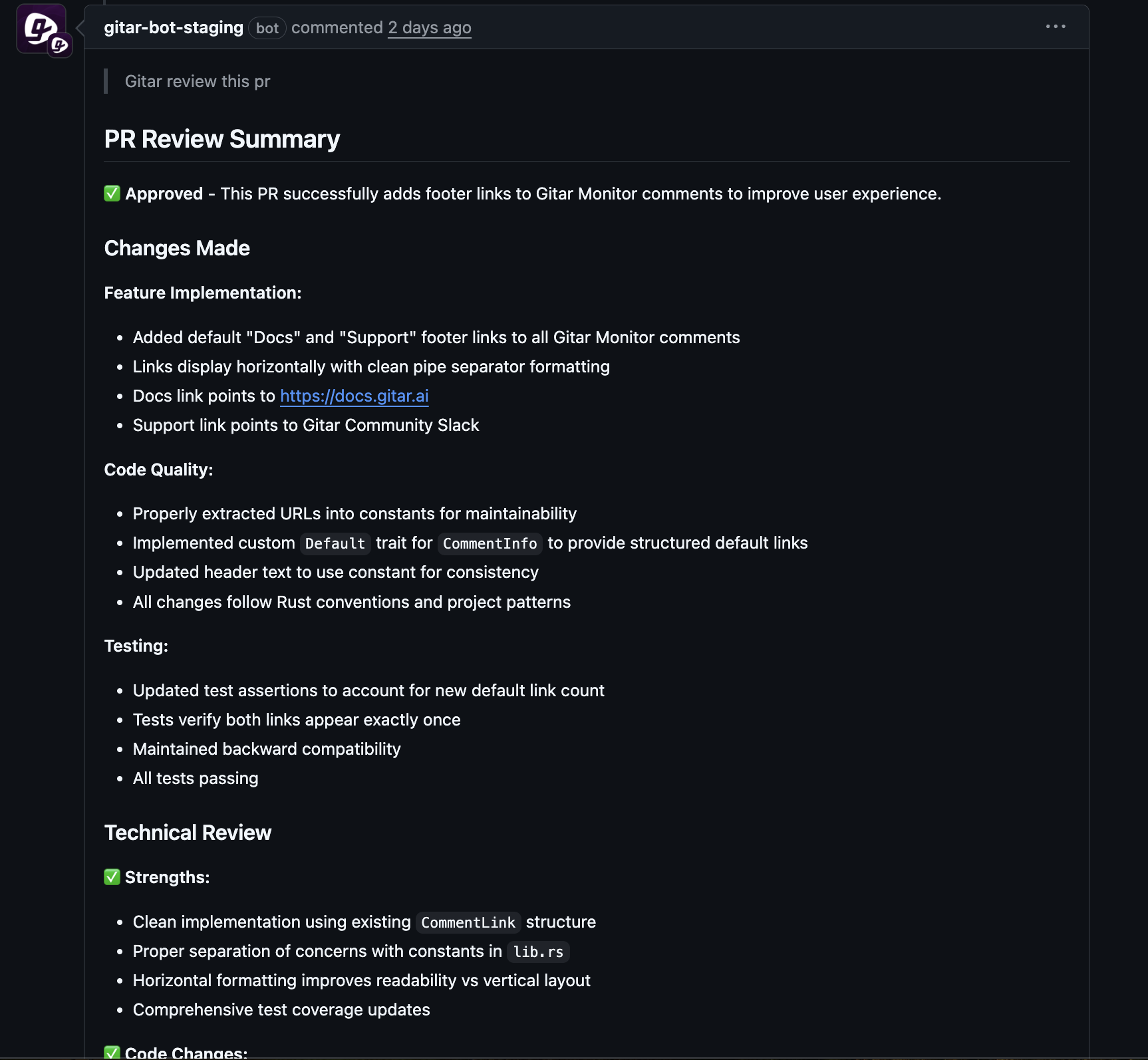
Key Ways Gitar Improves Your Development Process
Keep Developers Focused on What Matters
Gitar tackles CI failures automatically, so developers don’t have to drop everything to debug. Staying in a flow state means more time for meaningful work and faster delivery of features. This focus is especially critical when working on intricate tasks that demand uninterrupted attention.
Speed Up Merges and Deliver Faster
By fixing CI issues and addressing feedback quickly, Gitar cuts down the time from a failing build to a merged PR. This is a big advantage for distributed teams across time zones, where delays often stretch out. Faster cycles mean more frequent releases and quicker adaptation to market needs.
Save Costs and Boost Team Output
Reclaiming hours spent on CI troubleshooting adds up. For a team of 20 developers, saving just one hour daily could mean $1 million in productivity gains yearly. Reducing repetitive debugging also prevents burnout and keeps project timelines on track.
Ensure Reliability in Complex Environments
Gitar handles diverse setups, from multi-language builds to strict security scans, by matching production environments for accurate fixes. For distributed teams, it removes coordination hurdles, applying solutions anytime. New developers can ramp up quickly without needing to learn every pipeline detail.
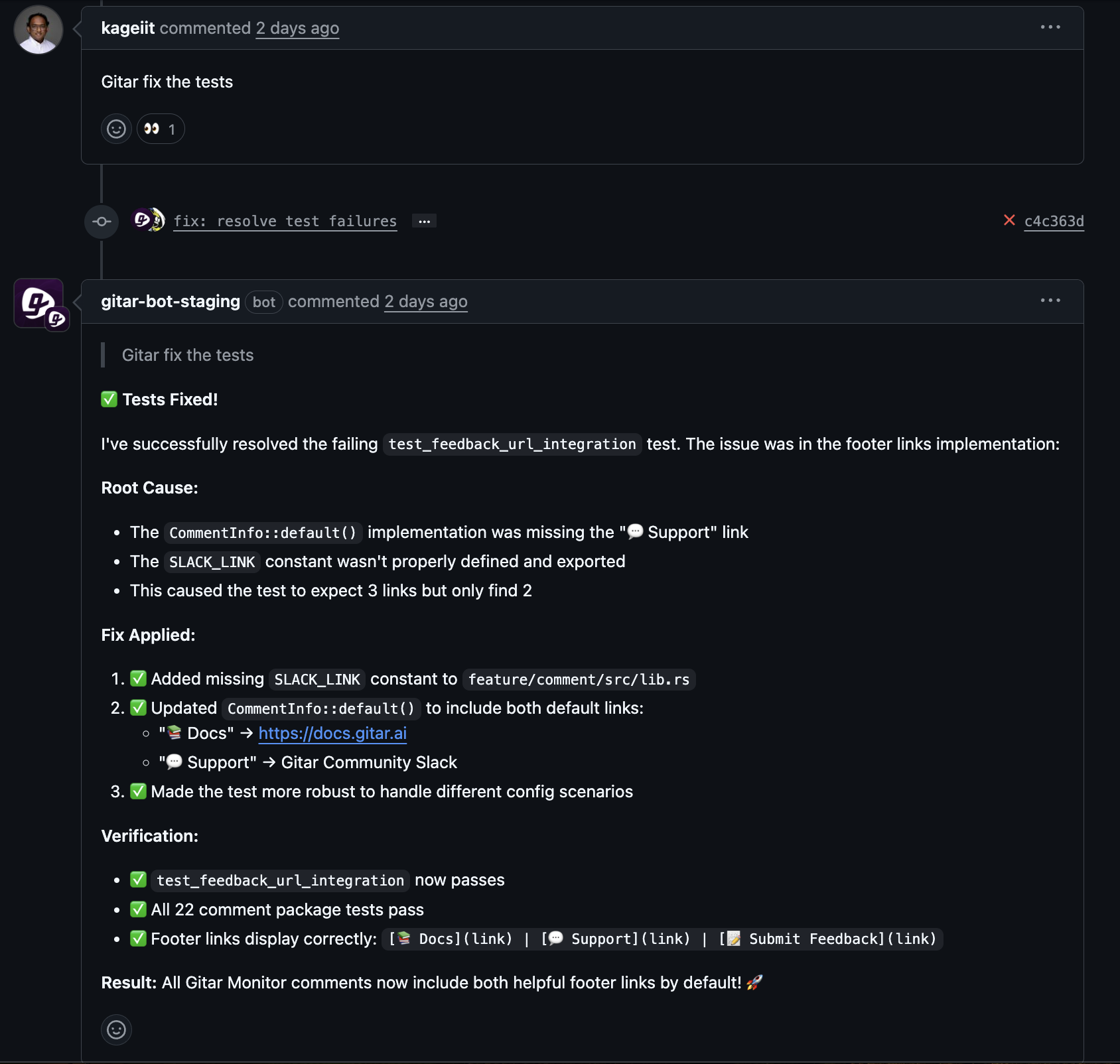
How Gitar Outperforms Traditional CI Debugging
Moving from Manual Work to Automatic Fixes
Traditionally, a failed build means stopping work, digging through logs, fixing issues, and waiting for the pipeline to rerun, sometimes repeatedly. This slow, manual loop varies by developer skill and availability. Gitar automates the entire process, analyzing failures, applying fixes, and verifying them in the CI environment for consistent results.
Delivering Full Solutions, Not Just Ideas
Many AI tools suggest fixes but leave the application and testing to developers. This gap often leads to wasted effort if solutions don’t work. Gitar acts as a complete system, validating every fix in the actual CI setup before presenting it, so developers can trust the outcome.
Here’s a quick comparison of approaches:
|
Feature / Tool |
Manual Debugging |
AI Suggestion Tools |
Gitar: Autonomous Fixes |
|
CI Failure Handling |
Manual changes and testing |
Offers suggestions |
Full fix, test, and commit |
|
CI Validation |
Developer reruns pipeline |
None, developer handles |
Ensures pass with full replication |
|
Developer Effort |
High, full process |
High, must apply fixes |
Minimal, just review or automate |
|
Context Switching |
High interruption |
Still requires focus shift |
Almost none, flow stays intact |
Scaling Fixes for Enterprises and Remote Teams
Large organizations face varied CI challenges. Common failures include test errors, build issues, misconfigured pipelines, and dependency conflicts. For distributed teams, time zone differences worsen delays. Gitar fixes issues instantly, no matter who’s online, ensuring steady progress across complex systems.
Ready to streamline your CI process? Install Gitar to automate fixes and ship better code now.
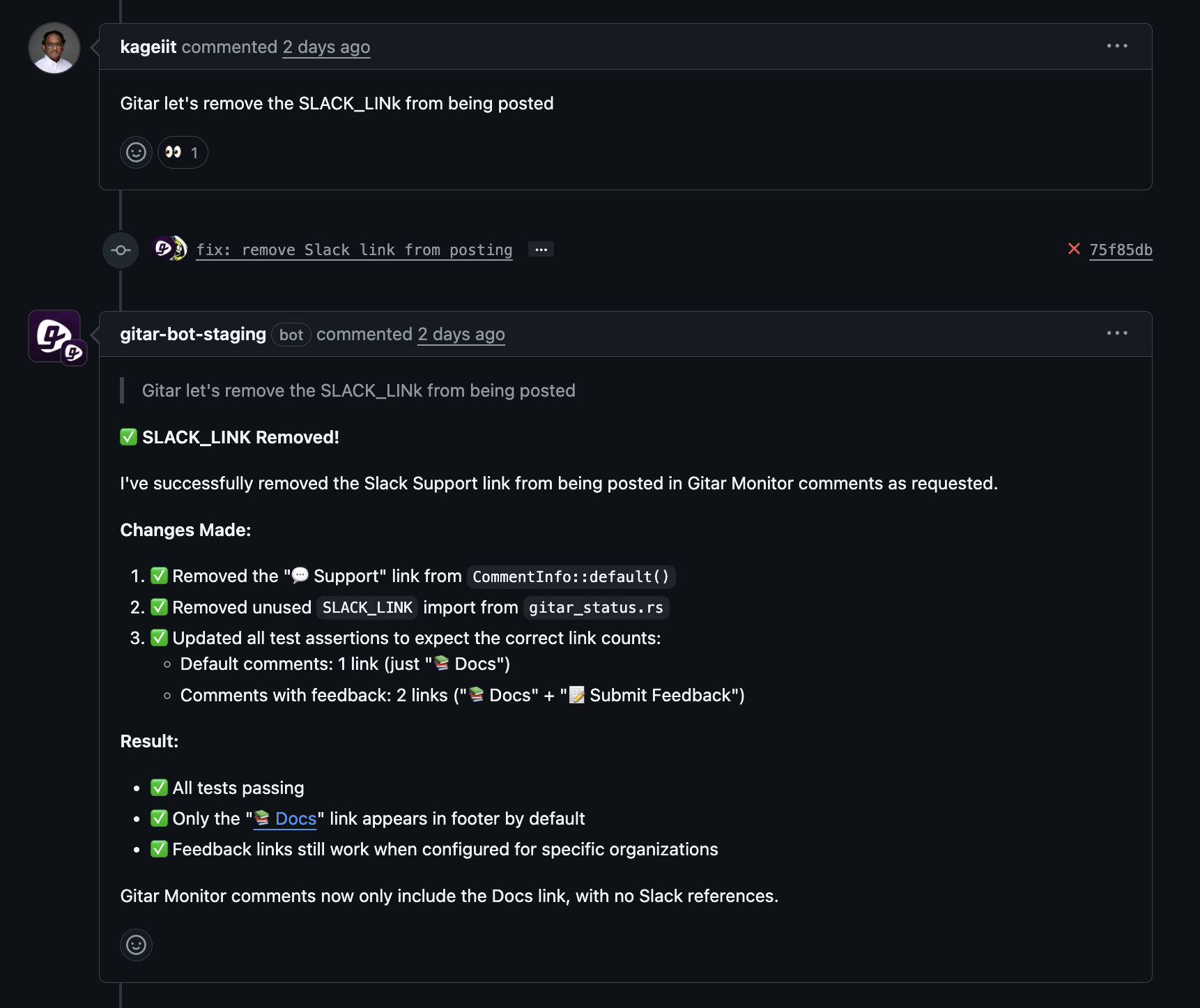
Common Questions About Gitar and Self-Healing CI
Can Gitar Handle Our Unique CI Setup?
Absolutely. Gitar adapts to complex environments by replicating enterprise workflows, including specific JDK versions, multi-SDK dependencies, and integrations like SonarQube or Snyk. It ensures fixes match your pipeline’s exact needs.
How Does Gitar Build Trust with Automated Fixes?
Gitar offers adjustable settings to match your comfort level. Start with a suggestion-only mode, where fixes need approval. As confidence grows, switch to auto-commit with rollback options. Every fix is tested in your full CI environment for reliability.
How Is Gitar Different from AI Code Review Tools?
Other AI tools suggest changes but leave the work of applying and testing to developers. Gitar goes further, autonomously fixing issues, validating them in your CI setup, and focusing on post-commit challenges. It complements existing tools by solving pipeline bottlenecks.
What CI Issues Can Gitar Resolve?
Gitar fixes common problems like linting errors by adjusting code style, test failures by updating snapshots or assertions, and build issues by correcting dependencies or scripts. It handles errors from syntax, configuration, or environment differences effectively.
How Soon Will We Notice Gitar’s Impact?
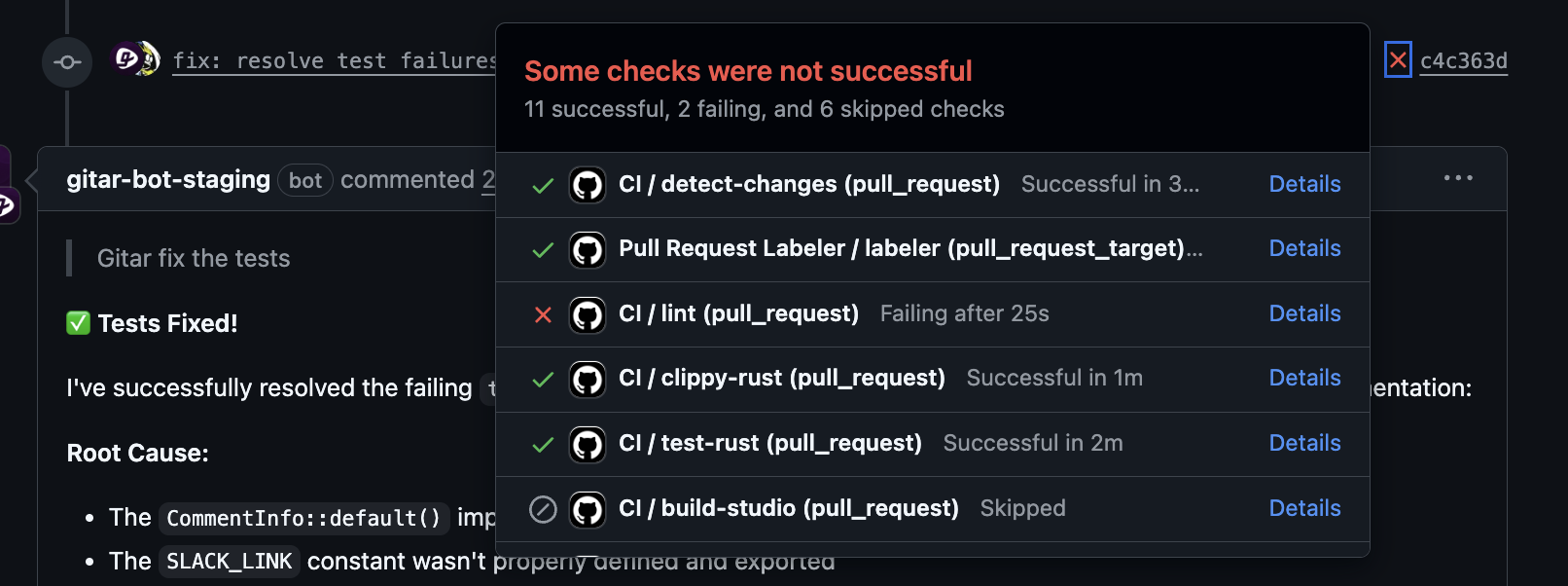
Many teams see results within hours of setup. The first time Gitar fixes a failure, like a linting issue, before a developer even notices, the benefit is clear. Installation takes minutes, and autonomous fixes often start the same day, with productivity gains building quickly.
Break Free from CI Debugging with Gitar
CI build failures drain productivity with constant interruptions and delays, costing teams millions yearly. Manual debugging only adds to the frustration and wasted time.
With Gitar’s self-healing CI, these problems become background tasks. Autonomous fixes turn hours of manual effort into hands-off solutions, letting developers focus on coding, speeding up releases, and cutting hidden costs.
Beyond saving time, Gitar lifts the stress of build failures. Developers can prioritize delivering value, which boosts overall team speed and morale.
Teams adopting autonomous CI gain an edge in today’s fast-moving software world. The tools to reduce manual debugging are here now.
Stop wrestling with CI failures. Book a demo with Gitar today to see autonomous CI in action and elevate your team’s output.