
Written by: Ali-Reza Adl-Tabatabai, Founder and CEO, Gitar
Key Takeaways
- Code review bottlenecks surged 91% in 2026 as AI coding tools generated 3-5x more PRs, outpacing manual reviewer capacity.
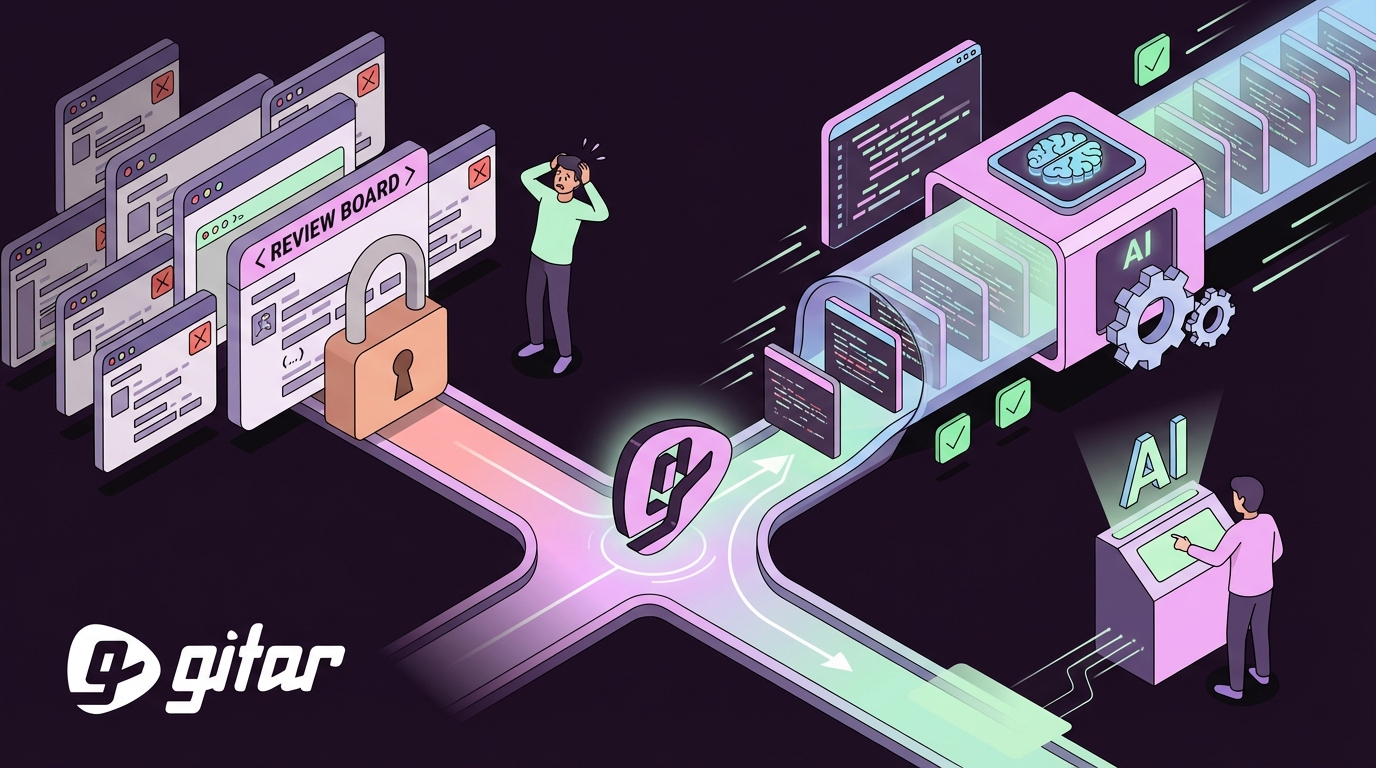
- Review Board offers control but breaks at AI scale with manual processes, dated UI, and no CI auto-healing.
- Paid AI tools like CodeRabbit and Greptile ($15-30/dev/month) provide suggestions but require manual fixes, so gains stay marginal.
- Gitar delivers free, validated auto-fixes, CI healing, consolidated feedback, and guaranteed green builds with superior ROI.
- Install Gitar now to escape PR bottlenecks and ship faster without costs or setup hassle.
Where Review Board Still Helps and Where It Now Falls Short
Review Board still delivers granular control over review processes, extensive customization, multi-SCM support beyond Git, and detailed audit trails. It also supports non-code artifacts such as PDFs and screenshots. These capabilities kept Review Board attractive for enterprise teams that need strict governance.
Today’s 2026 development reality exposes hard limits. Review Board consumes manual hours per PR while Codex users submit roughly 60% more Pull Requests each week. The platform cannot process AI-scale workloads across the 82 million monthly GitHub pushes. Setup friction slows modern Git workflows, and missing CI auto-healing means every failure still needs human attention.
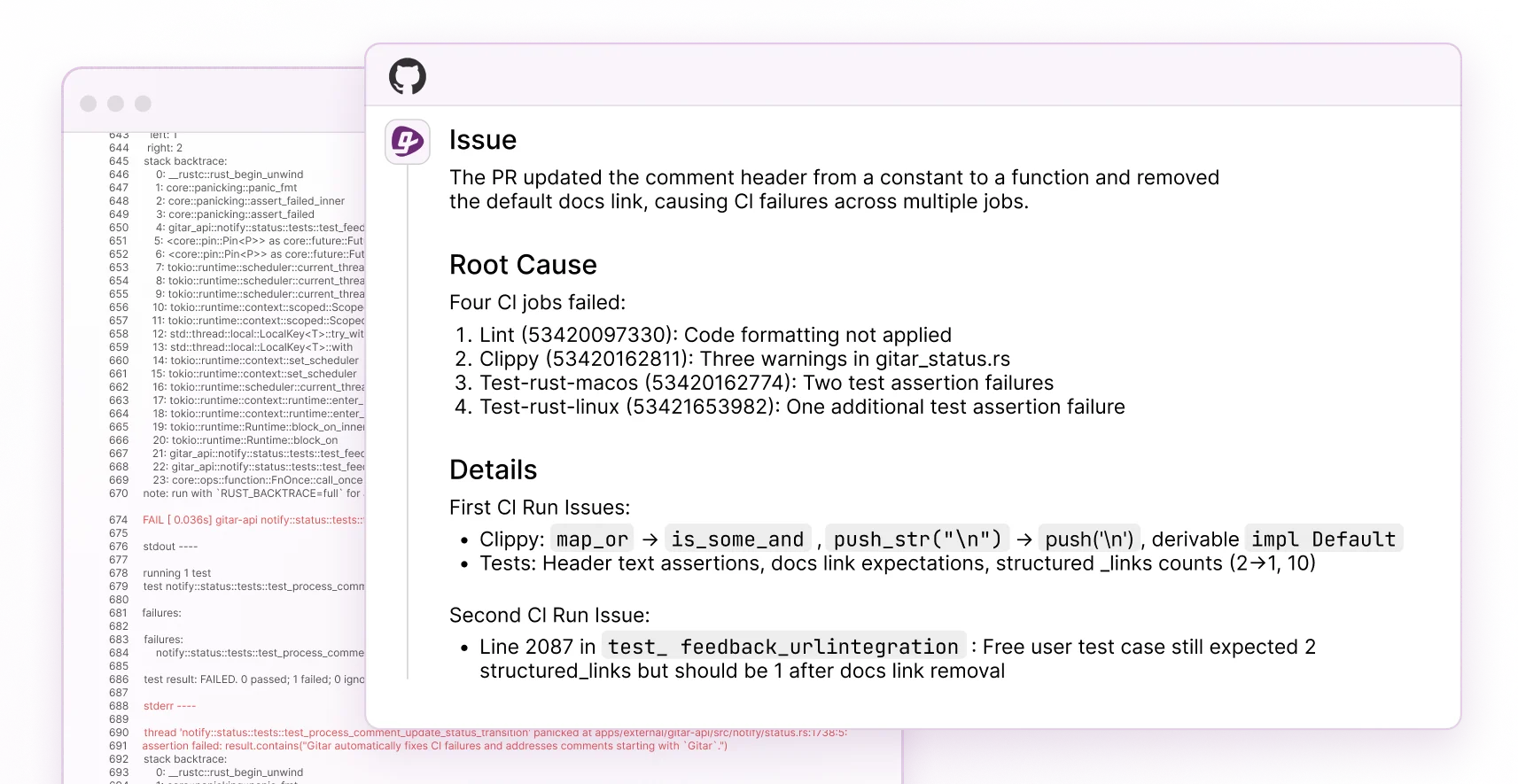
Sprint velocities stay flat even as coding speed jumps 3-5x. Teams see more code but not more shipped value. Review Board’s manual model cannot keep up with AI-generated volume. Users frequently complain about the dated UI, complex setup, and Git workflow friction, which now block adoption.
How Modern AI Code Review Tools Actually Work
Most AI code review tools in 2026 focus on suggestions instead of full fixes. CodeRabbit charges $15 per developer for automated scanning and moderate-detail reviews, while Greptile charges $30 per developer for deeper codebase context and analysis. These tools generate issue lists without prompts and offer auto-fixes for small items. Developers still handle substantial changes manually.
This suggestion-only pattern creates a trap. AI adoption produces 18% larger PRs, 24% more incidents per PR, and 30% higher change failure rates. When AI reviews AI-generated code with similar models, confirmation bias compounds. Teams pay premium prices for tools that still rely on manual work, so outcomes improve slightly instead of changing meaningfully.
AI can perform code reviews effectively when it closes the loop. Suggestion engines represent the first generation. The real dividing line is whether AI validates its own fixes against CI systems. That capability separates healing engines from comment generators.
Review Board vs Paid AI vs Gitar: Side-by-Side Comparisons
Pros and Cons by Speed, Depth, Cost, and Fixing Power
| Platform | Speed | Depth | Cost | Auto-Fixes |
|---|---|---|---|---|
| Review Board | Slow (manual) | High control | Free setup, $1M productivity loss | None |
| CodeRabbit/Greptile | Fast analysis | Moderate suggestions | $15-30/dev/month | Suggestions only |
| Gitar | Instant healing | Full CI context | Free | Validated auto-fixes |
Feature-Level Differences That Matter in Daily Work
| Capability | Review Board | Paid AI Tools | Gitar |
|---|---|---|---|
| Inline suggestions | Manual comments | AI-generated | AI-generated (free) |
| Auto-apply fixes | None | Limited | Full validation |
| CI failure analysis | None | None | Root cause + fix |
| Single comment interface | Threaded discussions | Notification spam | Consolidated dashboard |
Pricing and ROI for a 30-Developer Team
| Platform | Monthly Cost (30 devs) | Annual Productivity Impact | Net ROI |
|---|---|---|---|
| Review Board | $0 | -$1M (time loss) | -$1M |
| CodeRabbit | $450 | -$500K (partial fixes) | -$505K |
| Gitar | $0 | +$375K (automation) | +$375K |
Integration Coverage Across Code, CI, and Collaboration
| Platform | Version Control | CI Systems | Communication |
|---|---|---|---|
| Review Board | Multi-SCM | Jenkins, CircleCI & more | |
| Paid AI | GitHub primary | Basic | Slack |
| Gitar | GitHub, GitLab | GitHub Actions, GitLab Pipelines, CircleCI, Buildkite | Slack, Jira, Linear |
The hierarchy is clear: paid AI tools suggest, while Gitar heals. Gitar validates fixes against real CI environments before committing, so teams get guaranteed green builds instead of hoping suggestions work.
Try Gitar’s 14-day autofix trial to fix broken builds automatically and ship faster.
Why Gitar Beats Review Board as a Free AI Code Review Alternative
Gitar wins on architecture by using a healing engine instead of a comment engine. Competing tools analyze code and leave suggestions. Gitar analyzes CI failure logs, generates contextual fixes, validates them in the full build environment, and commits working solutions. This shift moves teams from incremental suggestions to end-to-end resolution.
Real-world usage proves the gap. At Pinterest, Gitar processes more than 50 million lines of code across thousands of daily PRs while remaining free. The platform caught high-severity security issues in Copilot-generated code that Copilot missed, showing that higher price does not guarantee better coverage. Collate’s engineering team praised Gitar’s “unrelated PR failure detection” for saving “significant time” by separating infrastructure flakiness from real code bugs.
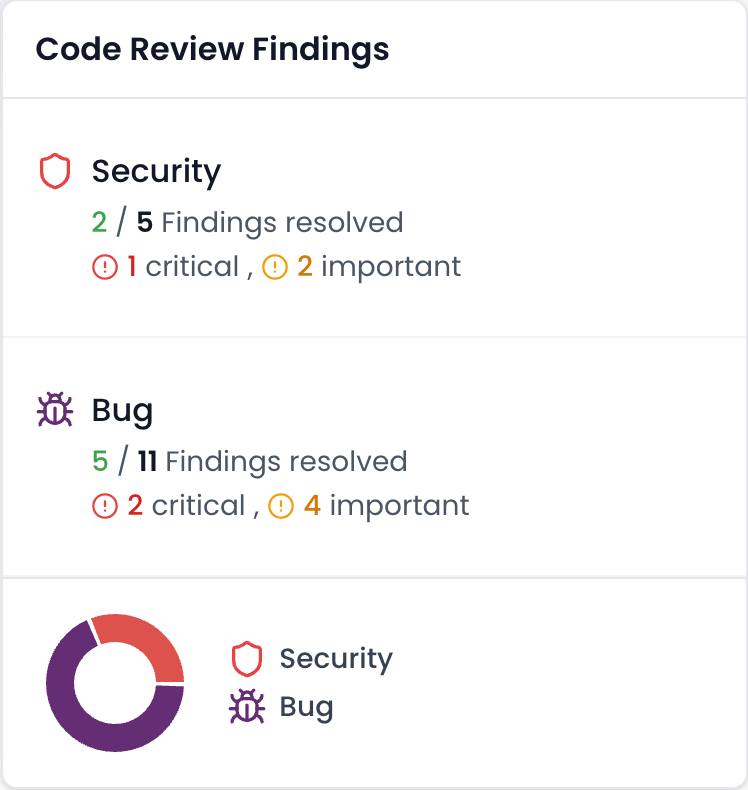
Teams also highlight Gitar’s concise PR summaries as “more concise than Greptile/Bugbot.” The single updating comment model cuts notification noise. Instead of scattering inline comments across diffs, Gitar gathers CI analysis, review feedback, and rule checks into one dashboard that updates as issues resolve.
Context memory compounds this advantage. Gitar tracks hierarchical context per line, per PR, per repo, and per organization, so it learns team patterns over time. Product context from Jira and Linear explains the “why” behind changes, not just the code-level “what.”
ROI, Everyday Use Cases, and Fast Migration to Gitar
Gitar delivers clear ROI for teams that feel stuck in review queues. Teams report 82% shorter review cycles when automated fixes remove manual implementation loops. For a 20-developer team spending 1 hour daily on CI and review issues, productivity loss can reach $1 million per year. Gitar cuts that to roughly $250,000 through automation, creating more than $375,000 in net savings while competitors charge $450-900 monthly for suggestion-only tools.
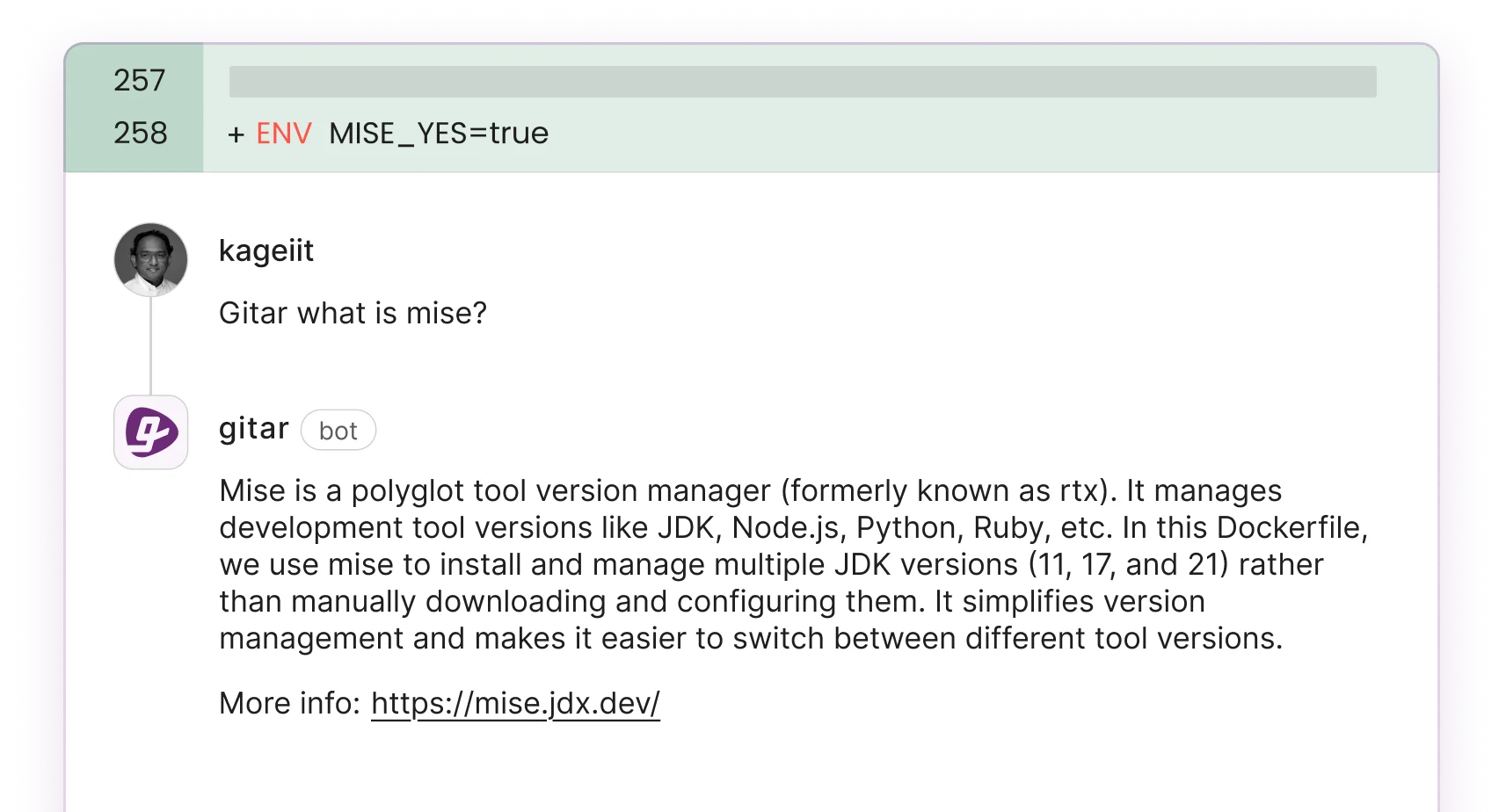
Different roles see different wins. Solo developers get quiet, focused reviews that emphasize logic instead of syntax nits. Engineering leaders gain higher velocity and clear ROI metrics from automated fixes. Platform and DevOps engineers gain self-healing CI that reduces rerun costs and removes complex YAML maintenance through natural language rules.
Migration stays lightweight for most teams. Install the GitHub App in about 30 seconds, with no account setup and no credit card. Gitar starts posting dashboard comments on new PRs immediately. Teams can begin in suggestion mode to build trust, then enable auto-commit for specific failure types as confidence grows. Repository rules use natural language instead of YAML, which lowers the barrier for CI workflow automation.
The “free equals inferior” concern misses Gitar’s strategy. Code review acts as the entry point that builds trust before teams adopt advanced platform features. By making review free, Gitar commoditizes basic review while earning revenue from enterprise analytics, custom workflows, and deep integrations.
Conclusion: Replace Review Bottlenecks with Gitar
Modern development in 2026 requires tools that match AI-scale code volume and speed. Review Board’s manual workflows cannot handle a 91% increase in PR volume. Paid AI platforms charge premium prices for suggestions that still demand manual work. Gitar offers free code review with validated auto-fixes, CI healing, and guaranteed green builds.
The decision comes down to incremental comments versus real fixes. Teams can keep paying for suggestion tools or move to a platform that actually repairs code. Competitors sell comments, while Gitar delivers working solutions.
Install Gitar now to fix broken builds automatically and ship higher quality software faster.
Frequently Asked Questions
How AI Code Reviews Compare to Human Reviewers
AI can perform code reviews effectively when implemented with a full feedback loop. First-generation AI tools such as CodeRabbit and Greptile provide suggestions but still rely on manual implementation, so improvements stay marginal. Advanced systems like Gitar go beyond suggestions, fix code, validate those fixes against CI systems, and deliver working solutions. Human reviewers still excel at architectural decisions and business logic checks, while AI handles syntax errors, security issues, and performance problems at scale.
Top Review Board Alternatives for Modern Teams
Modern Review Board alternatives fall into three main groups. Git-native platforms such as GitHub and GitLab provide integrated review workflows without Review Board’s setup overhead. AI suggestion tools such as CodeRabbit and Greptile offer automated analysis but charge $15-30 per developer each month for comments that still need manual fixes. Healing engines such as Gitar provide free code review with validated auto-fixes, CI integration, and guaranteed green builds. Teams that want scalability without premium costs increasingly choose platforms that fix issues instead of only flagging them.
How AI Code Review Agents Differ from Traditional Tools
AI code review agents change the architecture of the review process. Traditional tools like Review Board rely on humans to analyze code, write comments, and implement fixes. AI agents automate analysis but differ widely in depth. Basic AI tools generate suggestions that developers must still apply. Advanced agents like Gitar read CI failure logs, generate contextual fixes, validate them in the full build environment, and commit working solutions. Traditional tools and basic AI create more work, while advanced agents complete the cycle from detection to resolution.
Expected ROI from AI Code Review Automation
ROI from AI code review automation depends on how far the tool goes beyond suggestions. Teams using suggestion-only tools such as CodeRabbit see modest gains but continue paying $15-30 per developer monthly while still handling fixes manually. Teams using healing engines such as Gitar report 82% reductions in review cycle time and more than $375,000 in yearly savings for 20-developer teams by removing manual work. Strong ROI comes from auto-fixing issues, tight CI integration that prevents broken builds, and fewer context switches.
Steps to Migrate from Review Board to AI Code Review Platforms
Teams can migrate from Review Board to modern AI platforms with a staged approach. First, map current Review Board workflows to capabilities in the new platform. Install the new tool alongside Review Board and run parallel reviews to build confidence. Most modern platforms such as Gitar install through GitHub Apps in about 30 seconds with no account setup or credit card. Start in suggestion mode so teams can approve fixes manually, then enable auto-commit for trusted fix types. Move repository rules and integrations gradually, and train the team on Gitar’s consolidated comment interface instead of Review Board’s scattered threads. This approach builds trust through visible value before fully switching workflows.