
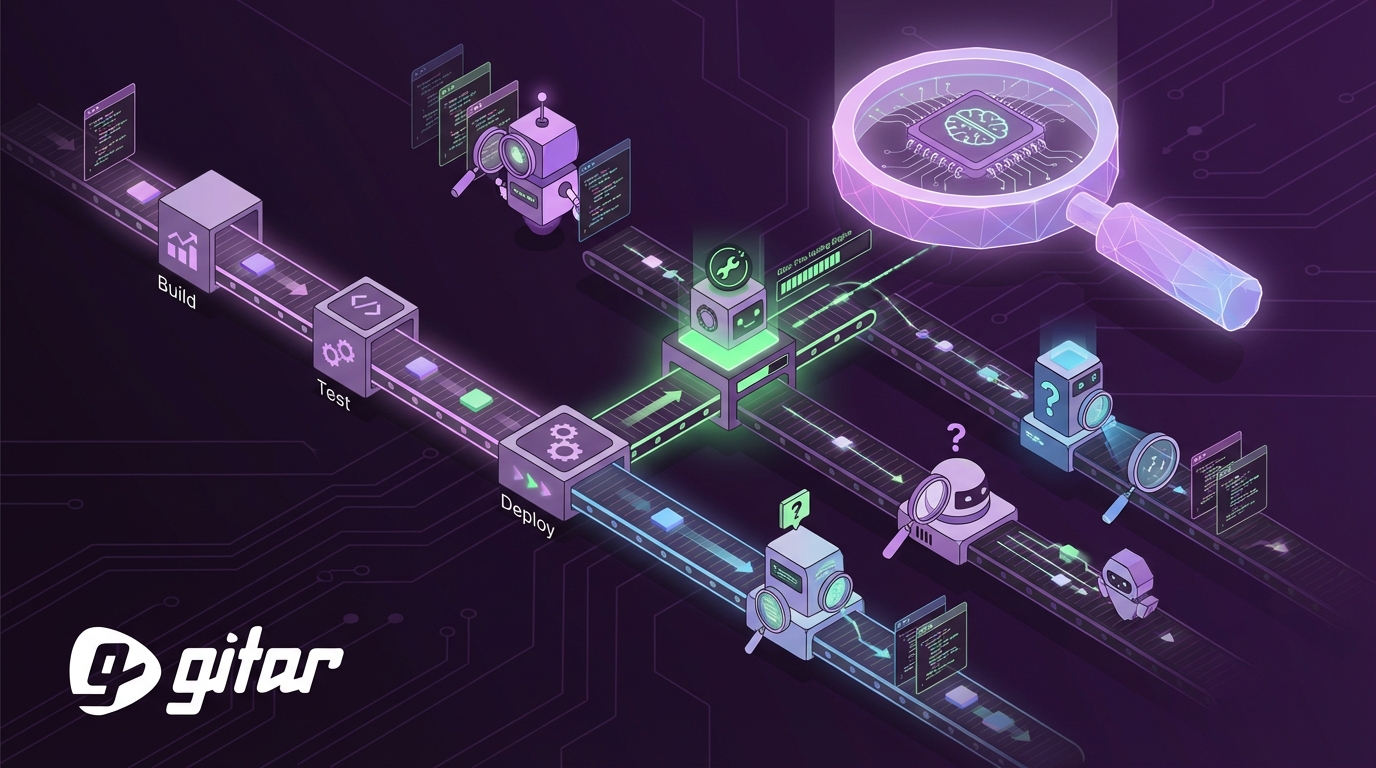
Key Takeaways for DevOps Teams
- AI code generation moves 3 to 5 times faster, but PR review time increased 91%, so DevOps teams now need auto-fix tools instead of suggestion-only bots.
- Gitar leads as a free AI code review platform with a healing engine that automatically fixes CI failures and commits changes to PRs, proven at Pinterest scale with 50M+ lines of code.
- Alternatives like Greptile and SonarQube provide strong analysis but do not match Gitar’s combination of full auto-fix coverage and free unlimited repositories.
- Top tools focus on GitHub Actions and GitLab CI integrations, and Gitar setup takes a single YAML line plus natural language rules.
- Teams save more than $1M per year in productivity, and installing Gitar free keeps builds green while removing most code review costs.
How We Evaluated CodeRabbit Alternatives for DevOps
This comparison focuses on DevOps-first criteria such as native CI/CD YAML integrations, auto-fix capabilities instead of comments, generous free tiers, and enterprise scalability to at least 50M lines of code. We also weigh security compliance, setup times under five minutes, and real-world performance in large organizations.
Our 2026 benchmarks draw from leading DevOps platform reports, vendor documentation, Reddit r/devops feedback, GitHub star trends, and case studies like Gitar’s deployment at Pinterest. We prioritize GitHub Actions and GitLab CI compatibility and favor tools with healing engines over suggestion-only models.
Top 7 DevOps-Friendly Alternatives to CodeRabbit
1. Gitar: Free Healing Engine for CI Failures
Gitar operates as a free AI code review platform that fixes code automatically through its healing engine. It analyzes CI failures, generates validated fixes, and commits them directly to pull requests, with auto-fix features available through a 14-day free trial. The platform supports enterprise workloads such as Pinterest’s 50M+ lines of code and thousands of daily PRs while keeping core code review free.
GitHub Actions integration uses a single line:
- uses: gitar-ai/action@v1 with: token: ${{ secrets.GITAR_TOKEN }} | Pros | Cons |
|---|---|
| Free unlimited repositories, CI failure guarantee, 50M+ LOC scale, single updating comment per PR | Auto-fix features require a 14-day trial |
A 20-developer team can save about $1M each year in productivity compared with CodeRabbit’s $450+ monthly pricing. Gitar’s natural language rules in .gitar/rules/*.md remove YAML complexity and still deliver full workflow automation. This setup fits teams facing CI bottlenecks and limited review capacity.
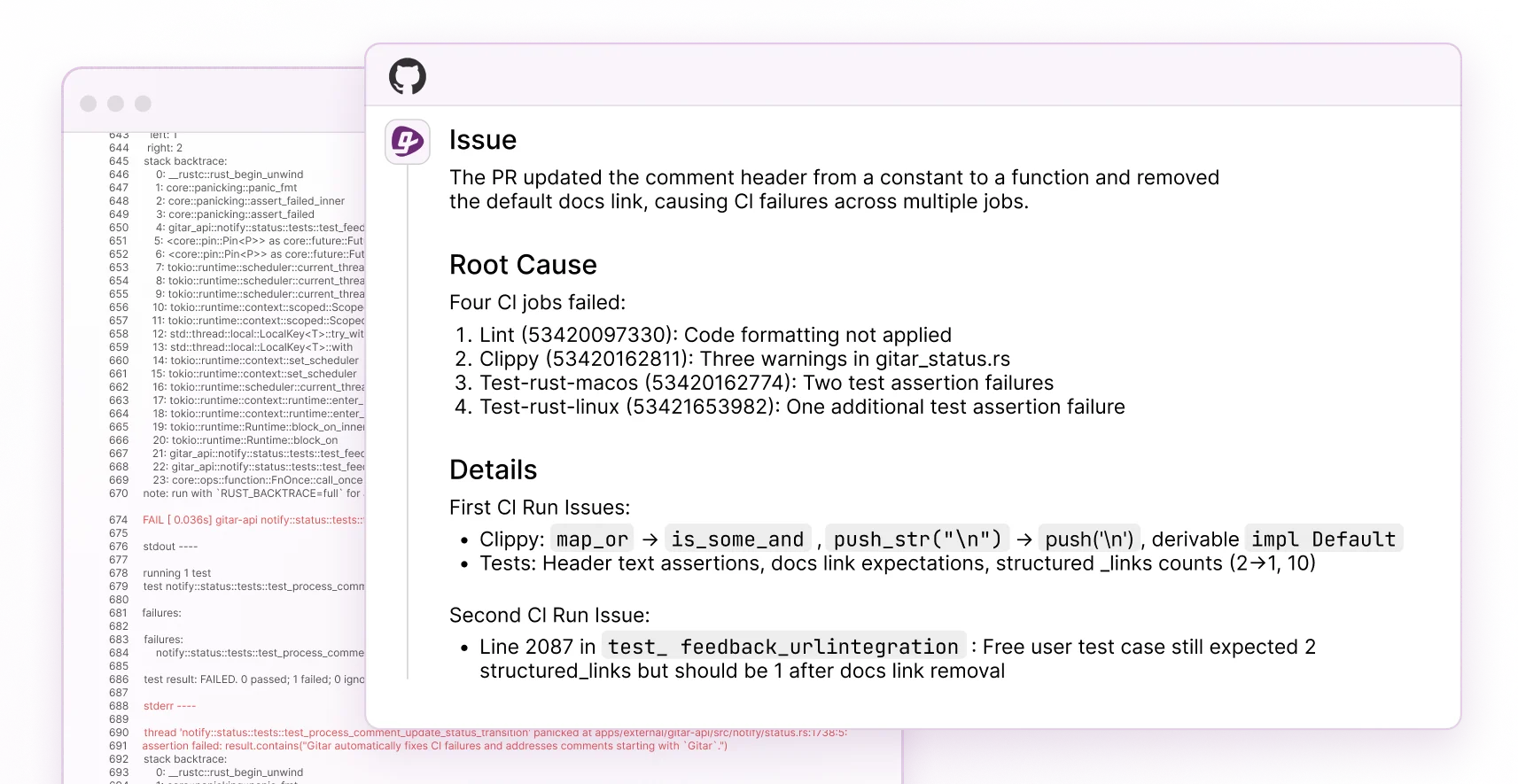
Try Gitar free and see the difference between suggestion-only tools and real automated fixes.
2. Greptile: Deep Context Without Auto-Fix
Greptile provides deep full codebase context for thorough bug detection and supports GitHub and GitLab integrations. Pricing starts at $30 per user each month and focuses on detailed analysis while skipping auto-fix features, so teams must implement every suggestion manually.
| Pros | Cons |
|---|---|
| Strong codebase awareness, thorough analysis | No automatic fixes, high cost at scale, suggestion-only workflow |
Ideal for: Teams that value exhaustive analysis and can afford manual remediation work.
3. SonarQube: Static Analysis With Optional AI Suggestions
SonarQube delivers a static code analysis foundation and includes AI-driven features such as AI CodeFix for suggested fixes. It supports many languages and integrates with CI/CD platforms, including simple setup paths for GitHub and GitLab. Some teams still prefer tools that apply fixes directly instead of only proposing them.
| Pros | Cons |
|---|---|
| Self-hostable, broad language coverage, AI fix suggestions, mature ecosystem | Automatic fix features require Enterprise edition, extra configuration in some environments |
Ideal for: Organizations that need on-premises deployment and traditional static analysis.
4. Qodo Merge: Multi-Agent Feedback With Limited CI Depth
Qodo delivers moderate performance with CI/CD support but restricts advanced security features to the Ultimate Plus tier. Its multi-agent architecture produces structured feedback, yet CI integration remains shallower than dedicated DevOps-focused platforms.
| Pros | Cons |
|---|---|
| Multi-agent design, organized feedback | Limited CI depth, security features tied to higher tiers |
Install Gitar for real fixes that keep builds green instead of relying on suggestions that may never be applied.
5. GitHub and GitLab Native AI Review
GitHub Copilot Code Review integrates directly into GitHub and adds inline comments with suggested fixes using LLMs and CodeQL, while GitLab Duo offers similar capabilities inside the GitLab ecosystem. These tools give existing platform users a no-extra-cost baseline for AI-assisted review.
| Pros | Cons |
|---|---|
| Native integration, strong contextual analysis, bundled with existing plans | Locked to a single platform, no cross-platform coverage |
Ideal for: Teams fully committed to GitHub or GitLab that want basic AI review support.
6. Kodus: Open-Source Self-Hosted Favorite
Kodus has become a popular open-source choice in Reddit r/devops discussions and supports Helm-based deployment for teams that require full control over infrastructure. The tradeoff comes from higher maintenance demands and more complex setup steps.
| Pros | Cons |
|---|---|
| Extensive customization, self-hosted security posture | Significant maintenance effort, complex installation |
Ideal for: Security-focused teams with dedicated DevOps staff to manage and maintain the platform.
7. Custom Semgrep Plus LLM: DIY Flexibility
Semgrep integrates easily into CI/CD pipelines and runs fast, rule-based scans on large repositories with AI-assisted rule creation. Teams that combine Semgrep with LLM APIs gain maximum customization and relatively simple initial setup, but advanced workflows require ongoing engineering time.
| Pros | Cons |
|---|---|
| Fully tailored rules, straightforward installation, AI-accelerated rule authoring | Continuous maintenance for custom LLM integrations |
Ideal for: Large engineering organizations with platform teams and strict compliance or policy needs.
Side-by-Side Comparison of CodeRabbit Alternatives
| Tool | GitHub Actions | GitLab CI | Auto-Fix | Pricing |
|---|---|---|---|---|
| Gitar | Yes | Yes | 14-day free trial | Free code review |
| Greptile | Yes | Yes | No | $30/user |
| SonarQube | Yes | Yes | Limited | Free/Paid |
| Qodo Merge | Yes | Yes | No | Varies |
Gitar leads in DevOps-focused capabilities by combining free code review with auto-fix features through a 14-day trial and broad CI/CD support. Zero-cost core review plus real healing of failing builds creates a strong value proposition for modern engineering teams.
Key Tradeoffs When Choosing an AI Code Review Tool
DevOps teams gain the most value from tools that heal CI pipelines instead of only posting comments. Teams using AI-assisted code review see about 35% higher quality improvements when tools apply fixes instead of leaving suggestions.
Budget-conscious teams benefit from Gitar’s free tier, which removes the $500+ monthly spend common with many CodeRabbit alternatives while still delivering stronger functionality. Organizations that require self-hosting often choose SonarQube or Kodus, although Gitar’s managed model usually scales better for most companies.
Total cost of ownership calculations frequently favor Gitar’s approach, which treats code review as a commodity and invests engineering effort into advanced healing and automation features.
Install Gitar now to remove code review bottlenecks and keep your builds consistently green.
Frequently Asked Questions
What is the best free CodeRabbit alternative for DevOps teams?
Gitar functions as a leading free alternative by offering full AI code review with auto-fix capabilities available through a 14-day trial. It resolves CI failures directly instead of only suggesting changes. Unlike CodeRabbit’s $15 to $30 per seat pricing, Gitar supports unlimited repositories, unlimited users, and healing capabilities at no cost for core review.
The platform also handles enterprise workloads and keeps noise low through a single updating comment on each pull request.
How does Greptile compare to Gitar for CI/CD integration?
Greptile delivers deep codebase context at $30 per user each month but does not validate or apply fixes automatically. Teams must still implement every suggestion by hand. Gitar, in contrast, generates, validates, and commits fixes directly to pull requests.
For CI/CD pipelines that require consistently green builds, Gitar’s healing engine offers more value than Greptile’s analysis-only approach.
Which AI code review tools support self-hosting?
SonarQube and Kodus both support self-hosting, with SonarQube offering Docker-based deployment and Kodus using Helm-based installation. Gitar’s managed service usually scales better for most organizations and supports 50M+ lines of code without internal maintenance.
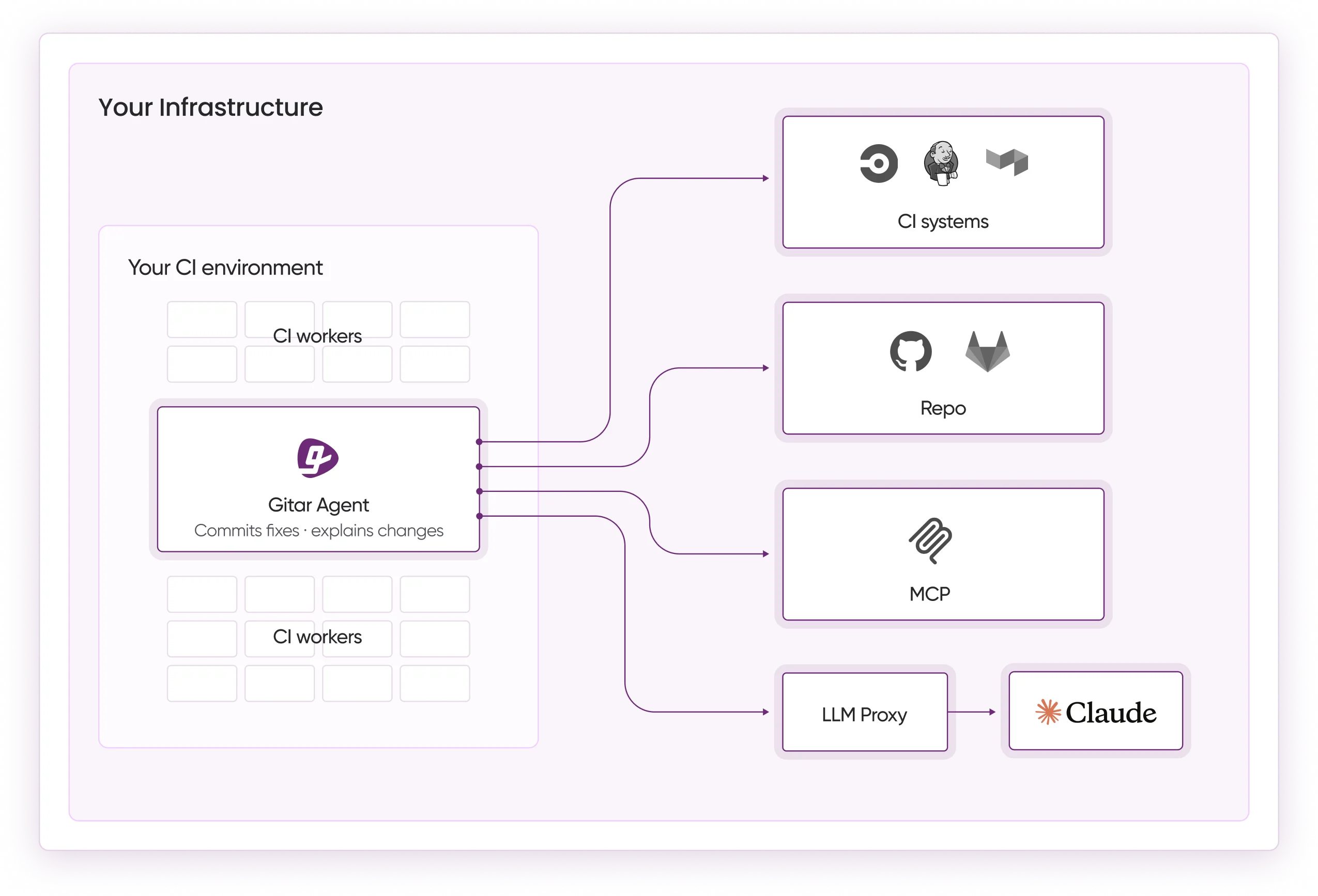
Enterprise customers that need on-premises options can use Gitar’s enterprise tier, which runs agents inside existing CI infrastructure and follows zero data retention policies.
How do teams calculate ROI for AI code review tools?
A 20-developer team often loses around $1M each year to CI and review friction, including one hour per day per developer on manual fixes and context switching. Gitar removes most of this cost through automated healing while staying free, compared with CodeRabbit’s $450+ monthly fees that still require manual work.
Even conservative models show about $375K in yearly savings after accounting for faster cycle times, fewer failed builds, and reduced tool spend.
What YAML configuration does Gitar need for CI setup?
Gitar needs minimal YAML configuration, often just a single line in GitHub Actions workflows. It uses natural language rules stored in .gitar/rules/*.md files instead of complex YAML pipelines, so developers without deep DevOps experience can manage rules.
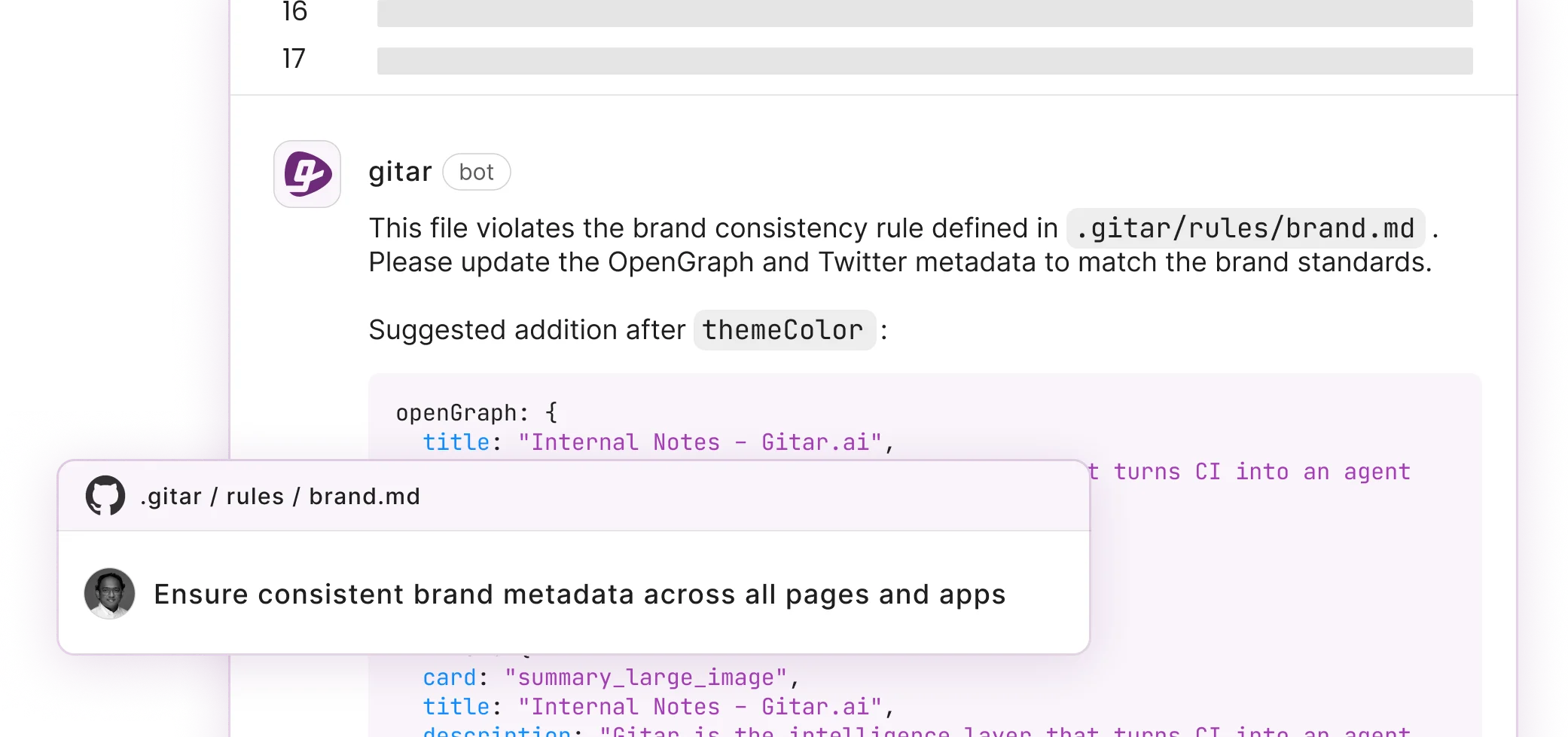
This approach contrasts with traditional tools that demand heavy pipeline changes and ongoing YAML maintenance.
Conclusion: Turn CI From Bottleneck to Advantage
Modern code review requires tools that fix code automatically instead of only suggesting improvements. Gitar’s free healing engine outperforms CodeRabbit’s suggestion-only model for DevOps teams that need guaranteed green builds and shorter cycle times.
Alternatives such as Greptile and SonarQube bring strong analysis and self-hosting options, yet they do not match Gitar’s mix of zero cost, full auto-fix coverage, and proven enterprise scale.
Install Gitar in 30 seconds. No credit card, unlimited repositories, and green builds guaranteed. Turn your CI/CD pipeline into a competitive advantage, and for deeper context on CI intelligence, explore Gitar’s view on the missing intelligence layer for CI.