
Key Takeaways
- AI-generated code speeds up development but often breaks CI and hurts coverage, with most teams stuck below 70%.
- Gitar leads as the #1 free tool, auto-fixing CI failures across GitHub Actions, GitLab CI, CircleCI, and more with unlimited usage.
- Diffblue Cover lifts Java coverage by 50-69% but costs $12K+ per year, while Copilot delivers only 5-29% uplift.
- Teams with 20 developers save about $750K per year by cutting CI debugging from 1 hour per day to 15 minutes with AI autofix.
- Install Gitar now to get immediate ROI from free, validated CI fixes and consistently green builds.
How AI Coverage Tools Fit Into CI Pipelines
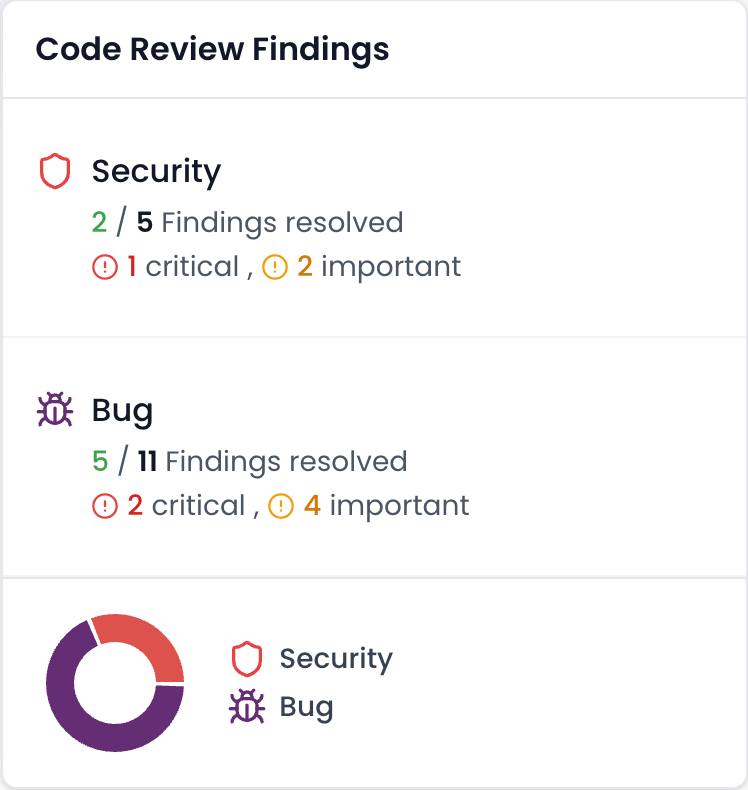
AI tools now generate tests, highlight coverage gaps, and fix CI failures to help teams reach 80% or higher coverage. Teams still struggle with flaky tests that break builds, strict quality gates that block deployments, and complex YAML configuration. Over 40% of code written in 2025 was AI-generated, and 60% of that code needed human intervention. The tools below fall into three groups: Test Generation, Coverage Analysis, and CI Autofix, with Gitar standing out as the only comprehensive free option.
#1 Gitar: Free CI Autofix and AI Code Review
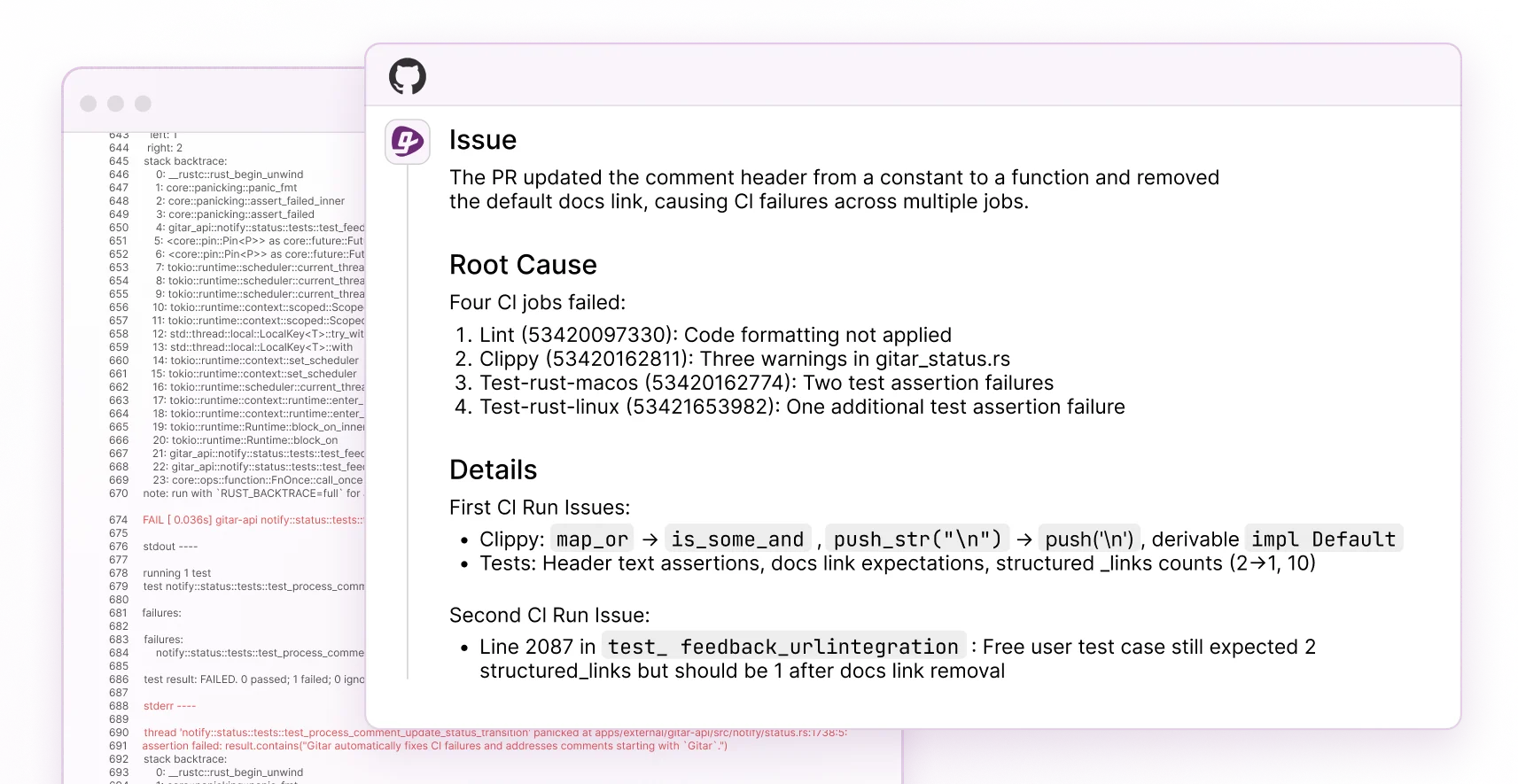
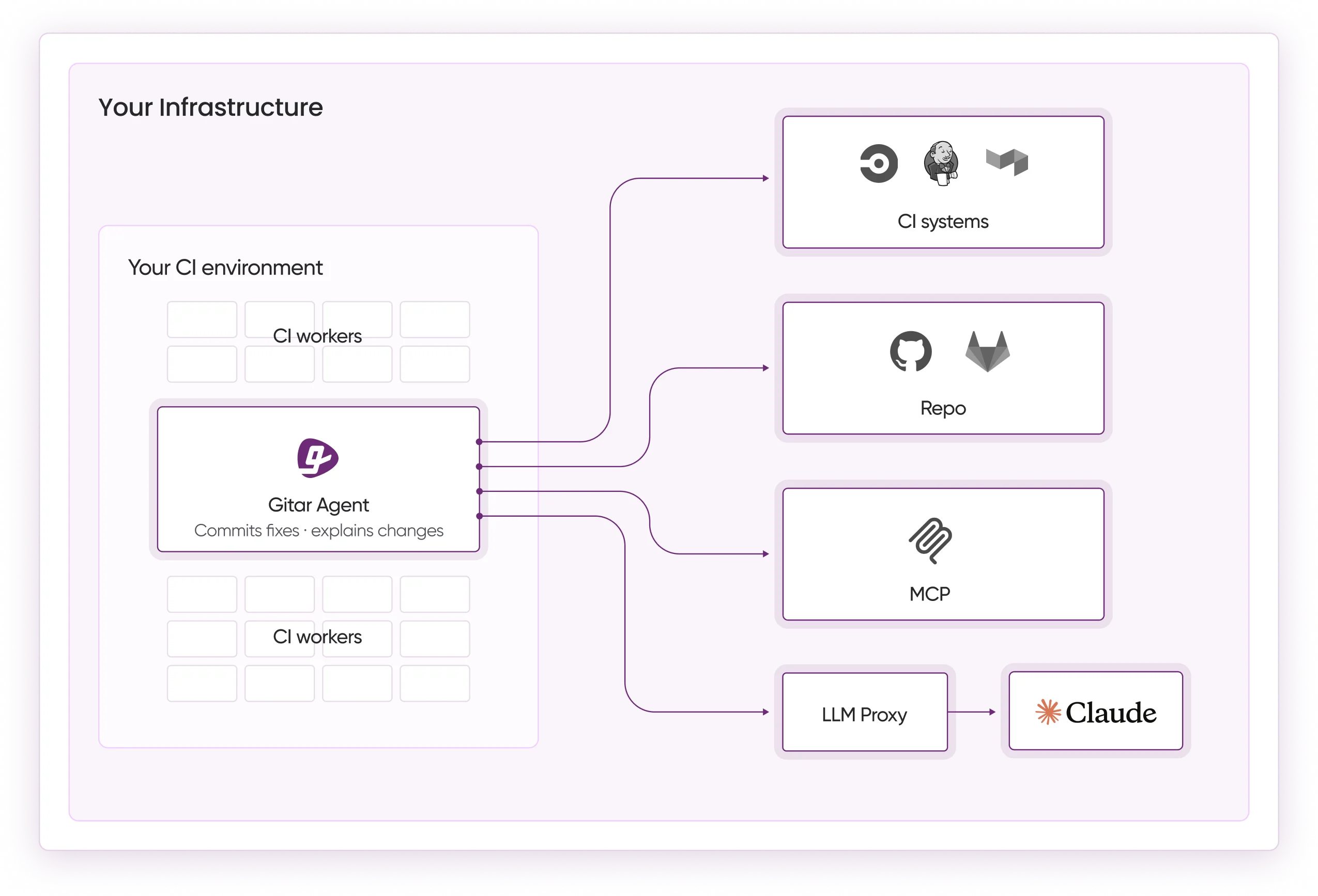
Gitar delivers free AI code review and automatic CI failure resolution for modern teams. The platform reads CI logs, generates validated fixes, and commits them without manual intervention. It handles lint errors, test failures, and build breaks across GitHub Actions, GitLab CI, CircleCI, and Buildkite.
GitHub Actions integration:
– name: Gitar Auto-Fix uses: gitar-ai/autofix-action@v1 with: token: ${{ secrets.GITHUB_TOKEN }}
Setup takes a single GitHub App installation and no extra configuration. Gitar posts one consolidated dashboard comment per run, which keeps notifications manageable. The free tier supports unlimited repositories and users, plus a 14-day autofix trial. Teams report faster CI pipelines and about $750K yearly savings for 20 developers by removing manual CI fixes.
Start shipping higher quality software faster with Gitar’s free AI code review.
#2 Diffblue Cover: Enterprise Java Test Generation
Diffblue Cover focuses on automated unit test generation for Java applications. It reaches 54% line coverage on complex codebases, compared to Claude Code at 17%, with 4.9 times higher coverage efficiency. It integrates directly with Maven and Gradle build systems.
GitHub Actions configuration:
– name: Diffblue Cover run: | diffblue cover –output-dir=src/test/java mvn test
Pricing starts at $12,000 per year and scales with usage. Its strengths include deep enterprise Java support and proven coverage metrics. It remains limited to Java ecosystems and requires a significant budget.
#3 Codecov AI: Smarter Coverage Reporting
Codecov AI extends traditional coverage reports with intelligent gap analysis and test suggestions. It plugs into existing Codecov workflows and highlights risky, uncovered code paths.
GitLab CI integration:
test: script: – pytest –cov=src –cov-report=xml – codecov-ai analyze –coverage-file=coverage.xml
The free tier covers public repositories, and team plans start at $29 per month. It works especially well for teams already using Codecov and needing stronger visualization and reporting.
#4 Qodo: AI Unit Tests With Edge-Case Focus
Qodo generates unit tests that emphasize edge cases and error handling. It offers IDE plugins and CI/CD support so teams can keep generating tests as code changes.
GitHub Actions setup:
– name: Qodo Test Generation uses: qodo-ai/generate-tests@v1 with: language: python test-framework: pytest
Pricing ranges from $10 to $20 per user each month, with a free plan for individuals. It produces broad test suites but still requires engineers to review and curate generated tests.
Use Gitar to automatically fix broken builds, without manual test review.
#5 Codacy: Static Analysis With Coverage Insights
Codacy blends static analysis with AI-driven quality insights, including coverage gap detection and automated quality gates in CI. It supports many CI platforms through webhook-based reporting.
The free tier covers open source projects, and team plans begin at $15 per user each month. It gives teams a broad view of code quality that extends beyond coverage alone.
#6 Mabl: AI-Powered End-to-End Testing
Mabl targets end-to-end test automation with AI-driven test creation and maintenance. Its Test Creation Agent and Auto TFA features help analyze failures and integrate smoothly with CI/CD pipelines.
Pricing follows a usage-based model and starts around $450 per month. It excels at UI and end-to-end coverage but offers limited support for unit test generation.
#7 Testim: Self-Healing UI Test Automation
Testim by Tricentis delivers AI-powered test automation with self-healing tests that adapt to UI changes. It integrates with common CI/CD tools so teams can run suites on every commit.
Pricing targets enterprise customers and includes strong Selenium support. It fits teams that need robust UI automation with AI-driven maintenance.
#8 CodiumAI (Legacy): Early-Stage AI Test Suggestions
The original CodiumAI platform still offers unit test suggestions and coverage analysis. It now lives inside the Qodo ecosystem but remains available as a standalone product.
The free tier supports individuals, and team pricing runs from $12 to $25 per developer each month. It works well for early experimentation with AI test generation but lacks modern CI autofix features.
#9 GitHub Copilot for Tests: Native GitHub Integration
GitHub Copilot for Tests adds test generation features directly inside GitHub workflows. It reaches 5-29% line coverage with an average mutation score of 60%, and it needs frequent human guidance.
Pricing is $10 per user each month for individuals and $19 per user for teams. It integrates naturally with GitHub but offers limited autofix support and lower coverage efficiency.
#10 Greptile: Code-Aware Analysis Without Autofix
Greptile provides codebase-aware AI analysis and can suggest tests based on deep project context. It focuses on insights and recommendations instead of automated CI fixes.
Pricing is $30 per user each month, with a small free tier. It delivers strong code understanding but becomes expensive for mid-sized teams and does not include CI autofix.
Side-by-Side Comparison of AI Coverage Tools
|
Tool |
CI Autofix |
Coverage Uplift |
Free Tier |
Pricing |
|
Gitar |
Yes (14-day trial) |
N/A |
Unlimited |
Free |
|
Diffblue Cover |
No |
50-69% |
Trial only |
$12K+/year |
|
Codecov AI |
No |
15-30% |
Public repos |
$29+/month |
|
Qodo |
No |
20-40% |
Individual |
$10-20/user |
|
GitHub Copilot |
No |
5-29% |
None |
$10-19/user |
Gitar stands out as the only free platform that offers full CI autofix with unlimited usage, which makes it ideal for teams that need immediate ROI without new budget approvals.
2026 ROI Benchmarks for AI Coverage and Autofix
|
Metric |
Before AI Tools |
After Implementation |
Gitar Advantage |
|
Time on CI issues |
1 hour/day/dev |
15 min/day/dev |
Free vs $450-900/month |
|
Code coverage |
<70% |
Improved |
CI autofix |
|
Annual productivity cost |
$1M (20 devs) |
$250K |
$750K savings |
Enterprises that adopt AI across the SDLC improve software outcomes by 30-45%. Gitar offers the most cost-effective route to those gains by providing a free autofix platform that plugs into existing CI.
Frequently Asked Questions
Best Free AI Tool for CI Code Coverage
Gitar delivers the most complete free option for CI coverage improvement. It provides unlimited code review, CI failure analysis, and autofix across major CI platforms. Competing tools often charge $15-30 per developer and stop at suggestions, while Gitar actually repairs broken builds automatically and keeps core features free.
Integrating AI Test Generation in GitHub Actions
Most AI tools integrate with GitHub Actions through marketplace actions or direct API calls. Gitar only needs a GitHub App installation and no extra YAML configuration. The platform scans CI failures and commits fixes automatically, with setup finished in under 30 seconds.
Realistic Coverage Gains With AI Tools
Coverage gains vary widely by tool and codebase. Diffblue Cover reaches 50-69% coverage on complex Java projects, while GitHub Copilot typically reaches 5-29%. Gitar focuses on fixing CI failures and keeping builds green, which supports high coverage through strong CI/CD testing practices instead of bulk test generation alone.
Safety of Automated Code Fixing in Production CI
Gitar validates each fix against the full CI environment before committing changes. All updates must pass existing tests and quality gates. The platform starts in suggestion mode so teams can review changes and build trust. Enterprise customers can also run the agent inside their own CI infrastructure for maximum security and control.
ROI for Mid-Sized Teams Using AI Coverage Tools
A team of 20 developers typically saves about $750K per year by cutting CI debugging time and shipping faster. Traditional paid tools often cost $450-900 per month and only provide suggestions. Gitar’s free autofix platform delivers immediate ROI with no license fees, which makes it the most cost-effective choice for teams that want faster CI pipelines.
Conclusion: Why Teams Standardize on Gitar
Free autofix platforms like Gitar deliver more value than expensive suggestion-only tools for CI improvement. Gitar’s deep GitHub Actions and GitLab CI integrations, combined with validated automatic fixes, create measurable ROI without new budget requests. Install Gitar in 30 seconds and start shipping higher quality software faster with consistently green builds.