
CI build failures disrupt your workflow, pulling you out of focused coding to debug errors. This context-switching slows down engineering teams, delays deployments, and increases costs. Autonomous CI maintenance offers a solution by automatically fixing issues, keeping your development flow uninterrupted, and speeding up the software development lifecycle.
Why CI Build Failures Hurt: The Cost of Context-Switching
CI failures create constant interruptions in the software development process. Pushing code often means risking a broken pipeline, forcing you to stop productive work and troubleshoot. This breaks your focus, draining efficiency with what developers call a “context-switching tax.”
Common CI issues affect teams every day. Flaky tests frequently fail due to timing problems or environmental differences. Inconsistent setups between development and production cause code to break in CI, even if it runs fine locally. Missing dependencies and configuration errors, like incorrect YAML files, add to the frustration, often halting progress completely. About 60% of companies face project delays from CI pipeline failures.
Each failure creates a ripple effect. You must stop your current task, analyze error logs, find the cause, apply a fix, push updates, and wait for the pipeline to rerun. A quick code change can turn into an hour-long distraction when you factor in the mental effort of refocusing.
These interruptions add up to significant time loss. Developers spend up to 30% of their time on CI issues. For a team of 20, this could mean around $1 million in lost productivity each year, not counting delays in feature releases or the frustration that builds over time.
Want to stop CI failures and costly interruptions? Install Gitar now to ship software faster.
How Autonomous CI Maintenance Works: Gitar Keeps Your Flow Intact
Autonomous CI maintenance shifts the focus from manual debugging to automated solutions. It detects, diagnoses, and fixes CI issues before they disrupt your day. This approach cuts down on manual work, letting you focus on coding instead of firefighting.
Gitar stands out as a tool that doesn’t just suggest fixes but applies them. Unlike other AI tools that offer recommendations, Gitar handles the entire process, validating fixes in your CI environment to ensure builds pass. Let’s look at what makes Gitar effective:
- Complete Fix Automation: Gitar applies fixes, tests them across your CI workflow, and delivers green pull requests.
- Environment Accuracy: It replicates complex setups, including specific JDK versions and third-party scans like SonarQube, for reliable solutions.
- Flexible Control: Choose between manual approval for fixes or automatic commits with rollback options, adapting to your team’s comfort level.
- Platform Compatibility: Supports GitHub Actions, GitLab CI, CircleCI, BuildKite, and more for wide-ranging use.
- Code Review Support: Assists with reviews by responding to feedback or providing initial assessments, helping distributed teams across time zones.

Ready to end CI failures and stay focused? Book a demo with Gitar today.
Key Benefits: How Gitar Improves Your Development Process
Protect Your Focus: Reduce Context-Switching
Deep focus, or “flow state,” is critical for productive coding but easily disrupted by CI failures. Fixing a small issue might take 30 minutes, yet regaining your mental momentum can double that time. Gitar handles failures like lint errors or test issues in the background, so you stay focused on your current task. Pull requests remain ready for review without pulling you away.
Boost Build Reliability: Keep Deliveries on Track
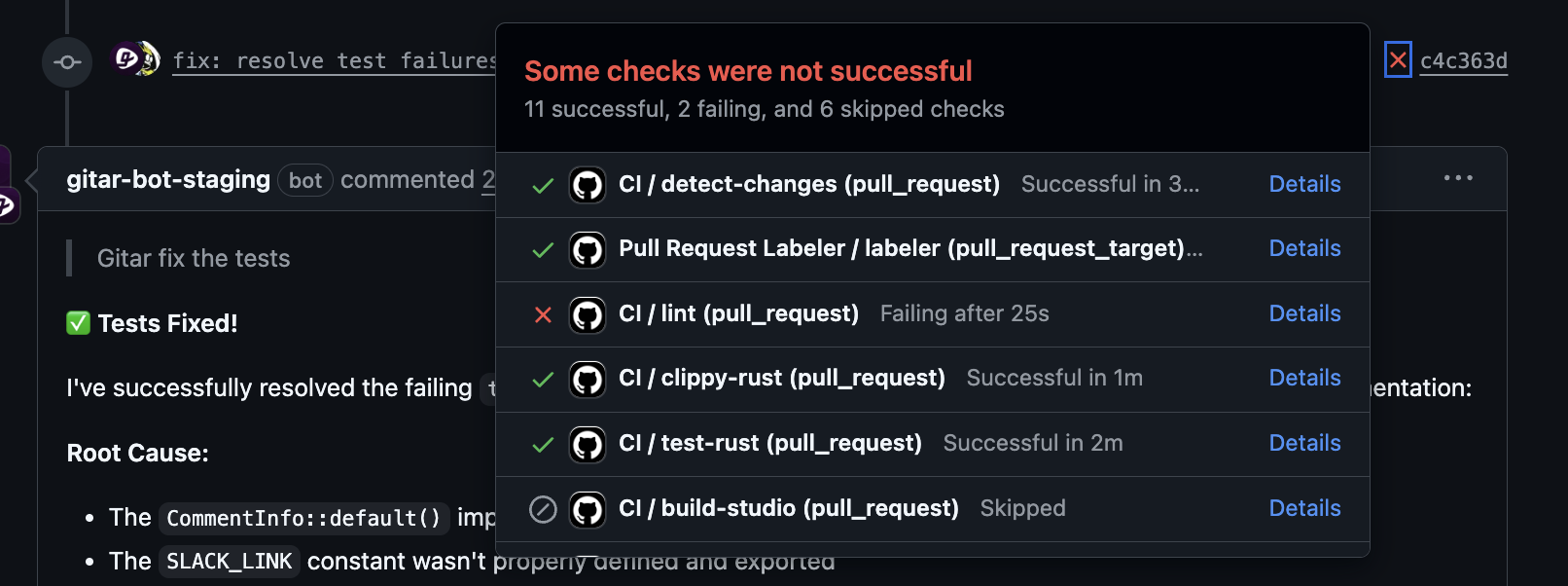
Traditional CI systems only report failures, leaving fixes to you. This setup often delays delivery. Gitar changes that by automatically resolving common issues like test failures or dependency conflicts. CI failures typically stop progress, but Gitar’s automated fixes help keep builds consistent and reduce delays.
Speed Up Merges: Cut Bottlenecks in Workflow
Tools like GitHub Copilot speed up coding, but reviewing and merging pull requests create new delays. Gitar shortens these feedback loops by automating fixes. For distributed teams, it acts on reviewer comments across time zones, so a fix is ready when the developer logs in, minimizing wait times.
Lower Costs and Stress: Save Time and Energy
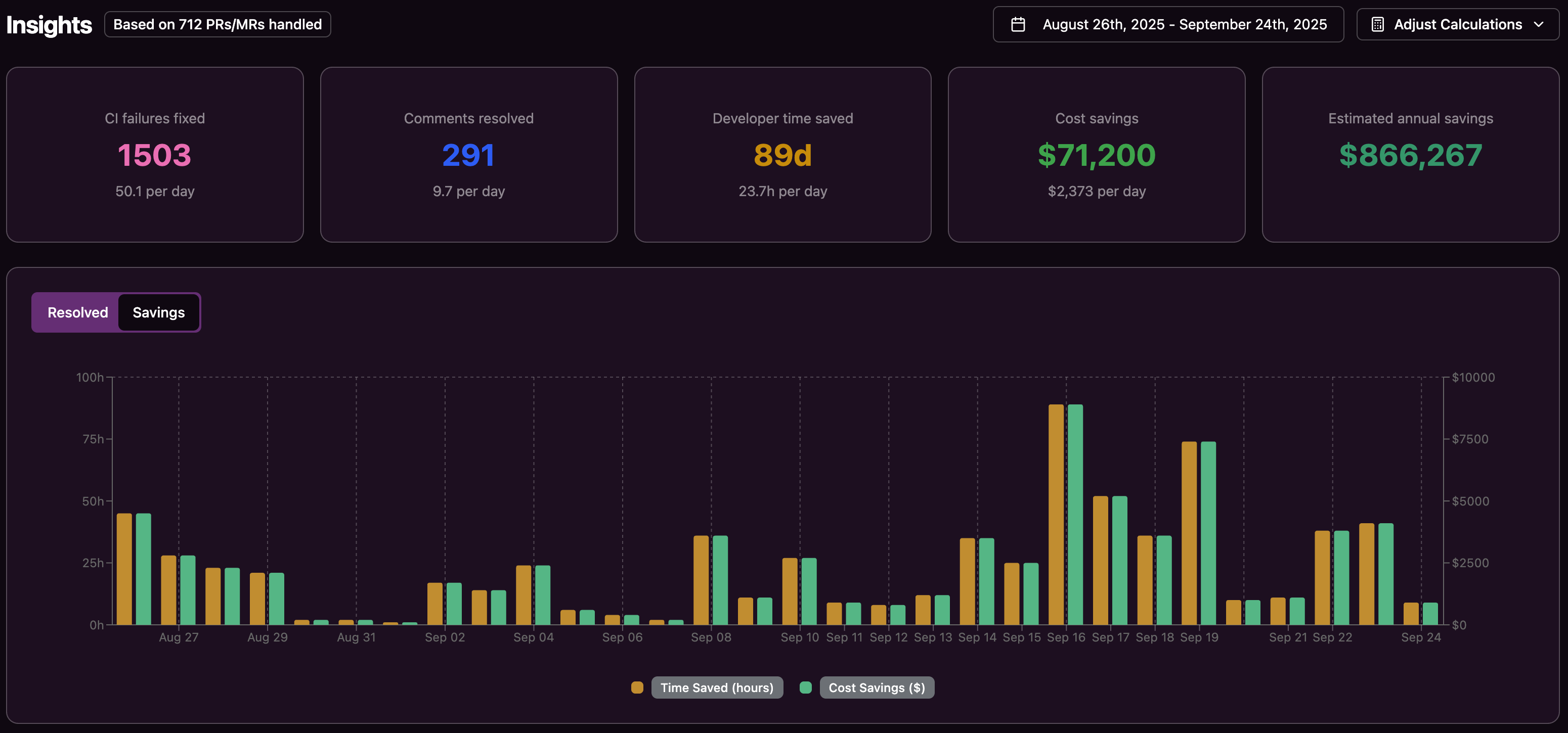
CI issues cost more than just time. For a 20-developer team, an hour per day on fixes and reviews adds up to roughly $1 million yearly in lost productivity. Gitar reduces this burden by automating routine tasks. It also cuts down on repetitive debugging, letting developers focus on meaningful work, which can improve morale and satisfaction.
Gitar vs. Other Tools: Automated Fixes vs. Suggestions
Different CI tools offer varying levels of help, from manual fixes to partial automation. The key difference lies in whether they suggest solutions or apply them fully. Here’s how Gitar compares to other approaches.
|
Comparison of CI Maintenance Approaches Feature |
Manual Work (Status Quo) |
AI Code Reviewers (e.g., CodeRabbit) |
On-Demand AI Fixers (e.g., Claude for CI) |
Gitar: Autonomous CI Solution |
|
Issue Resolution |
Fully manual |
Suggestions, some one-click fixes |
Suggestions, manual trigger |
Automatic, validated fixes |
|
Context-Switching Impact |
High, fully disruptive |
Reduced, but some manual effort |
Moderate, requires action |
Minimal to none |
|
Green Build Assurance |
None |
None, needs validation |
None, needs validation |
Yes, through testing |
|
Environment Replication |
Depends on setup |
Advanced, some mapping |
Limited, uses customer CI |
Full, enterprise-level |
|
Proactive/Reactive |
Reactive only |
Reactive |
Reactive |
Both proactive and reactive |
Manual fixes mean handling every failure yourself, from reading logs to pushing updates. AI reviewers like CodeRabbit suggest fixes and offer some automation, but complex issues still need your input. On-demand tools like Claude require you to trigger and validate fixes. Gitar automates the entire process, testing solutions in your environment to keep builds green with little to no interruption.
Stop spending time on manual CI fixes. Install Gitar now to ship software faster.
Common Questions About Autonomous CI Maintenance
Can Gitar Handle Our Complex CI Setup?
Gitar replicates your specific environment, including dependencies, SDK versions, and integrations like SonarQube. It manages complexity that other tools struggle with, ensuring fixes fit your unique workflow.
How Does Gitar Differ From AI Reviewers Like CodeRabbit?
Many AI reviewers suggest fixes and offer limited automation. Gitar goes further by applying fixes, validating them across your CI pipeline, and often resolving issues before you’re aware of them.
What If We’re Not Ready for Full Automation?
Gitar offers adjustable settings. Start with a suggestion-only mode for full control, requiring approval on pull requests. As confidence grows, you can shift to automatic commits with rollback options.
How Does Gitar Support Distributed Teams?
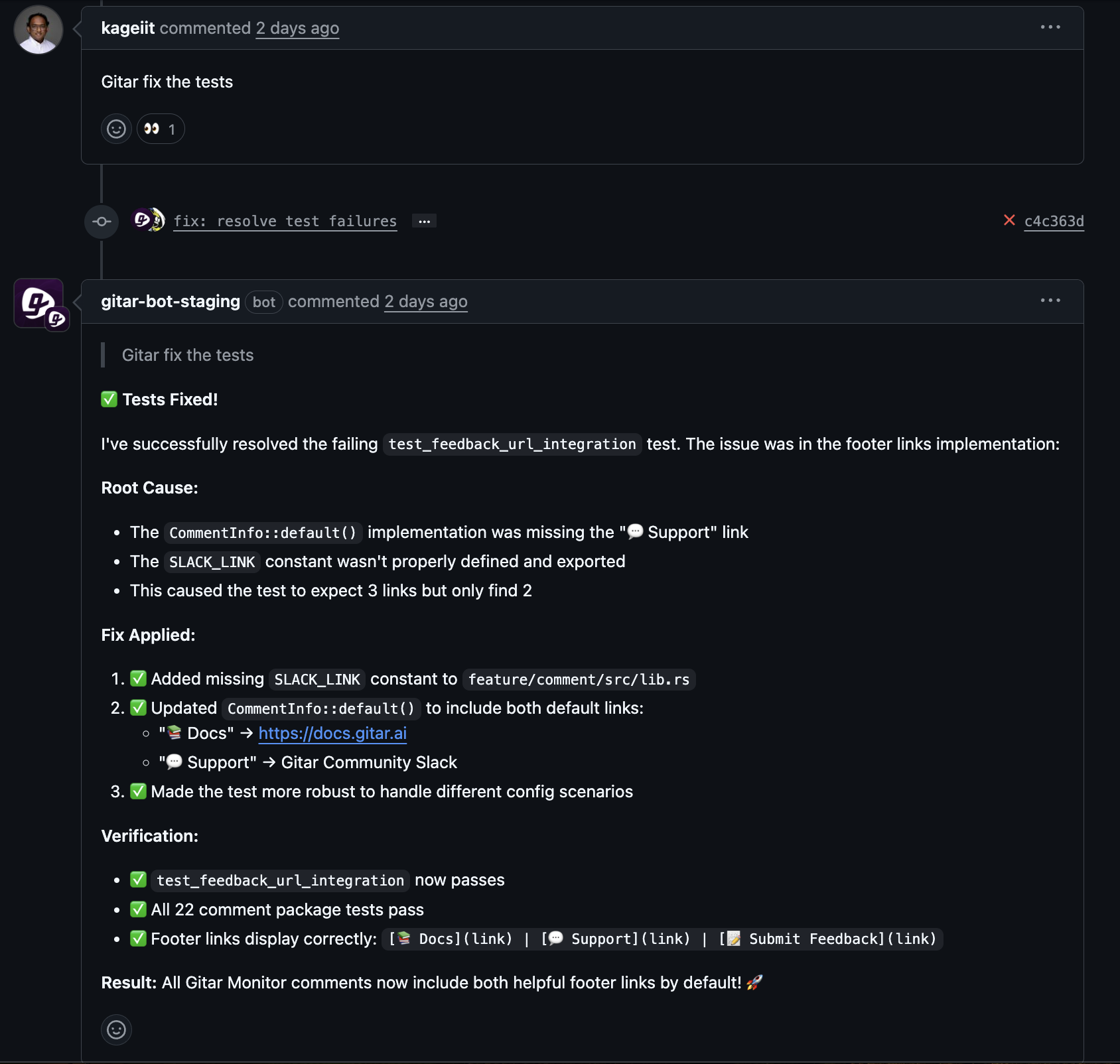
Gitar cuts delays for teams across time zones. A reviewer can leave feedback for Gitar to act on, and the fix is ready for approval when the developer starts their day, keeping workflows smooth.
Does Gitar Meet Security and Compliance Needs?
Gitar integrates with security tools like SonarQube and Snyk, ensuring fixes comply with your standards. It fits into existing approval processes and maintains clear records of all changes for audits.
Final Thoughts: Adopt Autonomous CI for Better Workflow
Manually debugging CI failures wastes time and energy. As coding tools speed up development, the challenge shifts to validating and merging code efficiently. Autonomous CI maintenance addresses this by reducing manual work and supporting steady progress.
Gitar automates fixes, tests them in your environment, and helps keep builds successful. This cuts interruptions, speeds up merges, lowers costs, and lets developers focus on creative tasks instead of repetitive fixes.
For engineering leaders, this means measurable savings in time and faster feature delivery. For developers, it’s about maintaining focus and reducing frustration. Teams adopting this approach can improve both speed and morale.
Stop losing time to CI failures. Book a demo with Gitar today to improve your engineering workflow.