
CI build failures often disrupt developers, pulling them away from focused work. This article covers how autonomous AI agents can address these interruptions by handling CI issues directly. Discover how Gitar brings self-healing CI to keep your team productive and speed up delivery.
CI Failures: A Hidden Drain on Productivity and Costs
What Causes CI/CD Pipeline Failures?
CI/CD pipeline issues slow down software development more than many realize. Syntax errors, failed tests from broken code, and environment misconfigurations often lead to CI/CD pipeline failures. These errors create delays that stop code from building, testing, or deploying on time.
In larger enterprise setups, the problems grow more complex. Issues like Infrastructure-as-Code errors, Kubernetes setup problems, and GitOps workflow glitches produce complicated error logs. Developers spend hours digging through these logs to find the root cause, wasting valuable time.
Environment settings add another challenge. Misconfigured environment variables, such as API keys or code signing credentials, frequently cause build failures. Also, version mismatches between tools like Capacitor and Ionic plugins create compatibility headaches.
Dependencies and build timeouts create further obstacles. Outdated or incompatible dependencies can break pipelines during updates. For large projects, timeouts on CI platforms often add to the delays.
Install Gitar now to fix broken builds automatically and speed up your delivery.
How CI Failures Affect Developers and Teams
CI failures take a real toll on developers, beyond just lost time. At Atlassian, 46% of developers found resolving CI issues very or extremely challenging, while only 13% saw it as easy. The effort to fix these issues cuts into productivity, turning debugging into a frustrating grind.
The financial cost hits hard as well. A 20-person team could lose up to $1 million annually if 30% of developer time goes to fixing CI issues and responding to review feedback. This loss affects not just individuals but the entire organization’s progress.
Context switching makes things worse. When developers stop their main tasks to debug CI problems, the mental effort to refocus adds up. This constant interruption drags down their efficiency far beyond the actual fix time.
At a broader level, these issues slow down software releases and create tension in teams, especially under tight deadlines. CI delays also expose knowledge gaps and unfamiliarity with projects, multiplying delays for distributed teams across time zones.
Self-Healing CI: A New Way with Autonomous AI Agents
Manually debugging CI failures no longer works in fast-paced development settings. As teams use AI tools to write code faster, the focus has shifted to CI validation and reviews, where bottlenecks pile up. More code means more potential issues, but fixing them by hand hasn’t changed.
Dedicating resources to CI problems offers a shift from reacting to preventing issues. Instead of seeing failures as unavoidable tasks for developers, forward-thinking teams treat them as systemic challenges needing structured solutions.
Autonomous AI agents fit this need perfectly. Unlike basic monitoring tools that only alert teams to problems, these agents diagnose issues, apply fixes, and confirm the results. They move past merely suggesting solutions to actually resolving problems on their own.
Self-healing CI changes how developers work. Failures stop being distractions that break focus and become background fixes. Teams can keep working on important tasks, maintaining code quality and reliable deployments without interruption.
Meet Gitar: Your AI Agent for CI Problem Solving
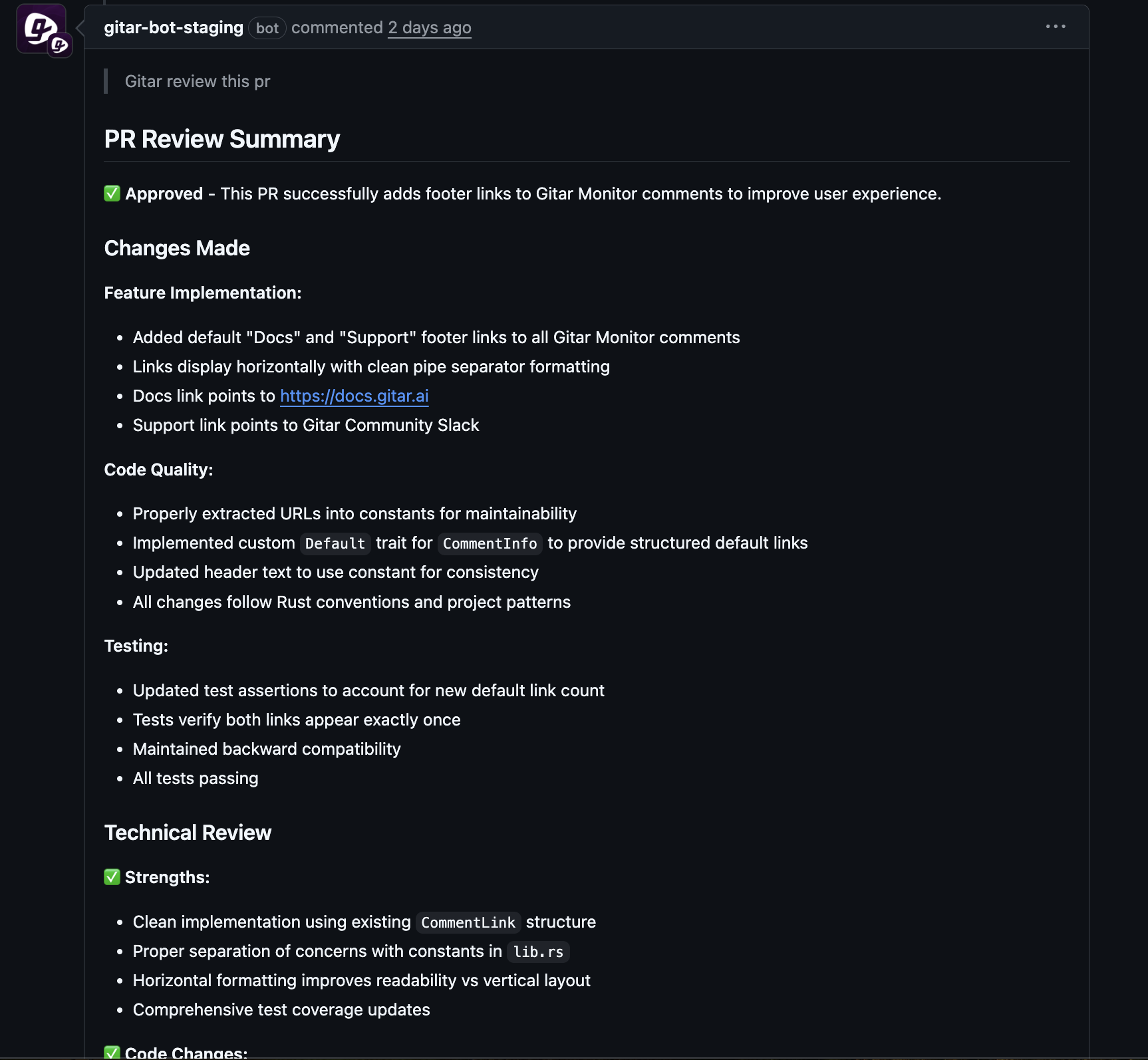
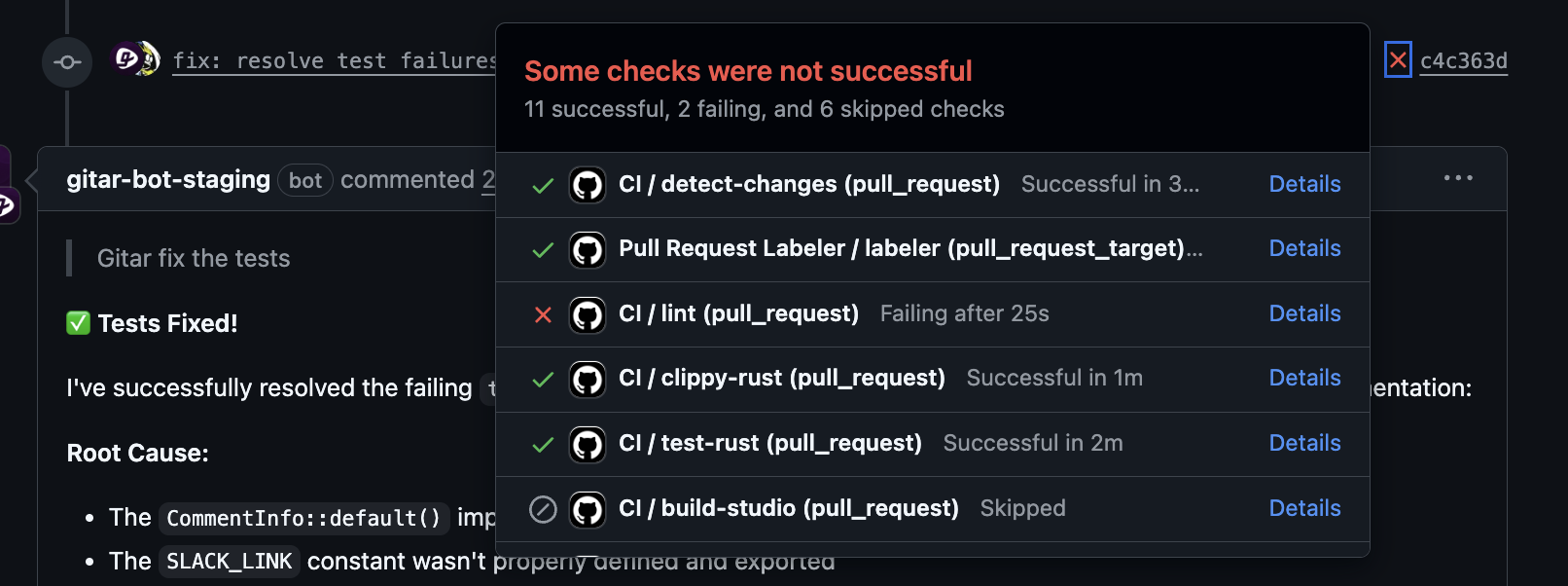
Gitar is an AI agent that automatically fixes failing CI pipelines and handles code review feedback. It saves developers hours each day spent on passing CI and review checks. When a pull request gets a comment or a CI pipeline fails, Gitar steps in, analyzes the problem, creates a fix, and updates the request with the solution.

Gitar stands out as a self-healing CI tool with features like:
- Complete Fixes: Applies solutions, validates them through full CI workflows, and delivers ready-to-merge pull requests.
- Environment Matching: Mirrors complex enterprise setups, including specific JDK versions and third-party scans like SonarQube, for accurate fixes.
- Flexible Trust Options: Offers a cautious mode for suggesting fixes and a direct mode for committing them with rollback options, building team confidence over time.
- Wide Platform Support: Works across GitHub Actions, GitLab CI, CircleCI, BuildKite, and more, adapting to various setups.
- Review Assistance: Acts on human feedback, like removing features or refactoring code, cutting delays for distributed teams.
Ready to boost productivity? Book a demo with Gitar today.
How Gitar Improves Focus and Speeds Up Delivery
Keep Developers Focused Without Interruptions
Gitar helps developers stay in their flow state. When they submit pull requests, they can move to the next task without stopping to fix CI issues. Gitar handles failures automatically, keeping engineers focused on their work.
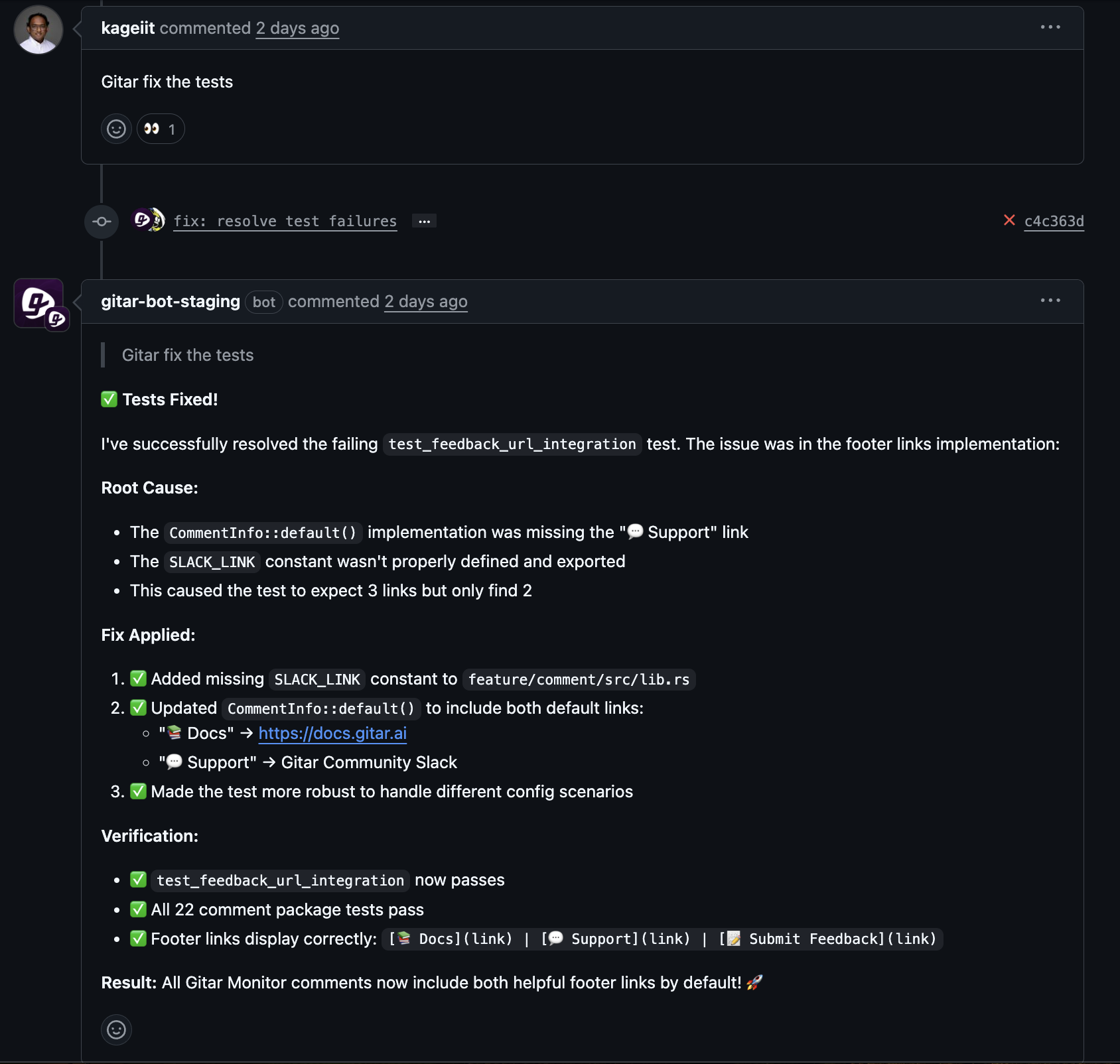
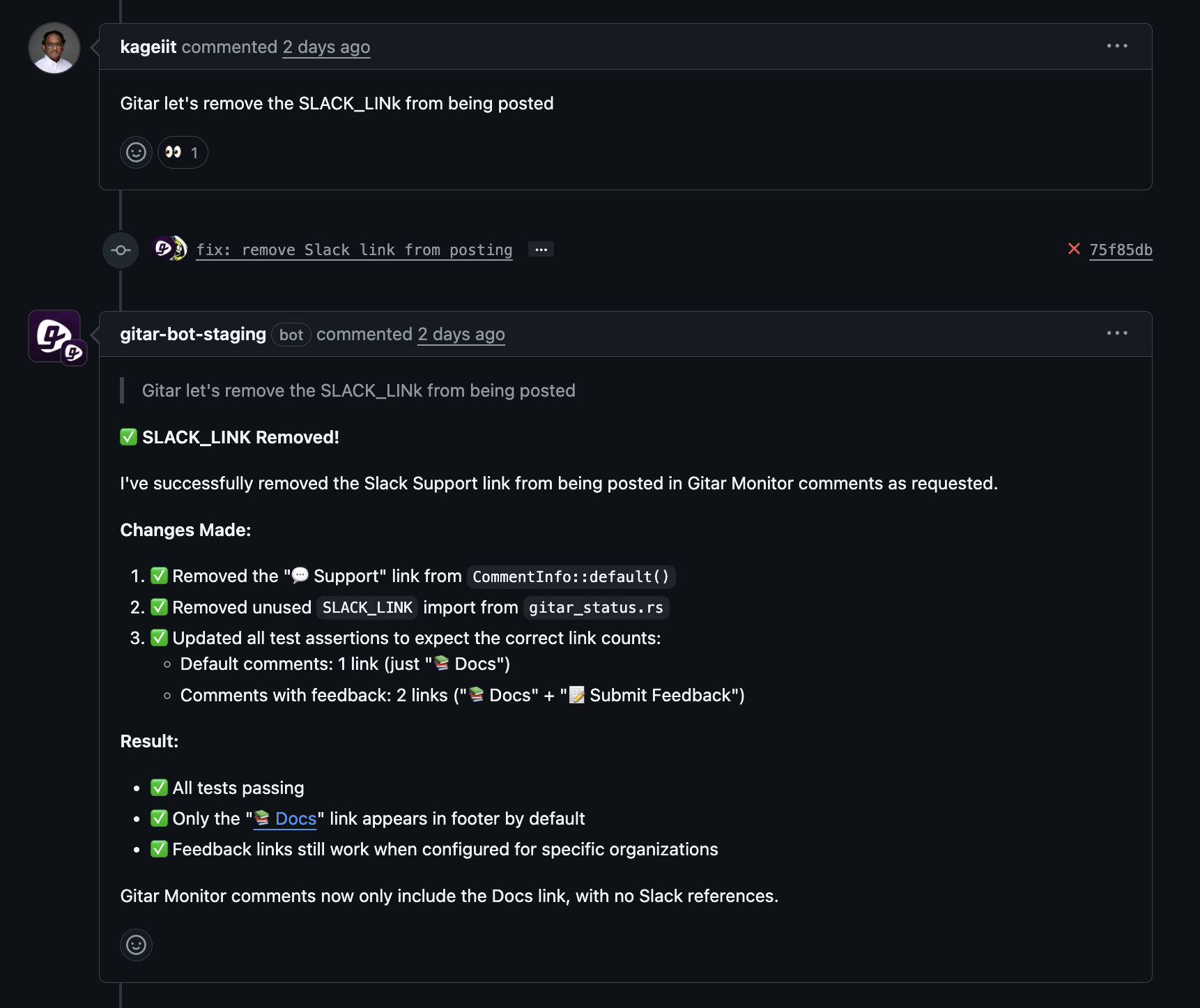
Seeing Gitar fix a simple issue like a lint error, with a new commit and clear explanation in the PR, often before the developer notices the failure, saves time. What could have been a lengthy distraction turns into an unnoticed background task.
This lack of interruption benefits developers in multiple ways. They keep momentum on complex projects, avoid mental fatigue from switching tasks, and plan their days knowing CI issues won’t disrupt them. The outcome is better work quality and higher job satisfaction from focusing on meaningful challenges.
Shorten Time-to-Merge and Cut Delays
Gitar reduces the wait from initial commit to final merge, a key measure of team speed. By delivering quick, verified fixes, pull requests move forward without the usual holdups from build issues or review loops.
In a common case, a pull request might fail due to a small error like formatting. Gitar automates the fix within minutes, removing the need for a developer to step in and resolve it manually.
For distributed teams, the impact is even greater. Feedback from a reviewer in another time zone no longer sits idle for hours or days. Gitar acts on it right away, preparing fixes for quick approval and turning long review cycles into same-day results.
Handle Complex CI Setups at Enterprise Scale
Enterprise CI systems often involve intricate setups that many AI tools can’t manage. Gitar replicates these environments, supporting specific SDK versions, multiple dependencies, and tools like SonarQube and Snyk. This ensures fixes align with complex configurations while meeting security and compliance needs.
Calculate the Real Value of Automated CI Fixes
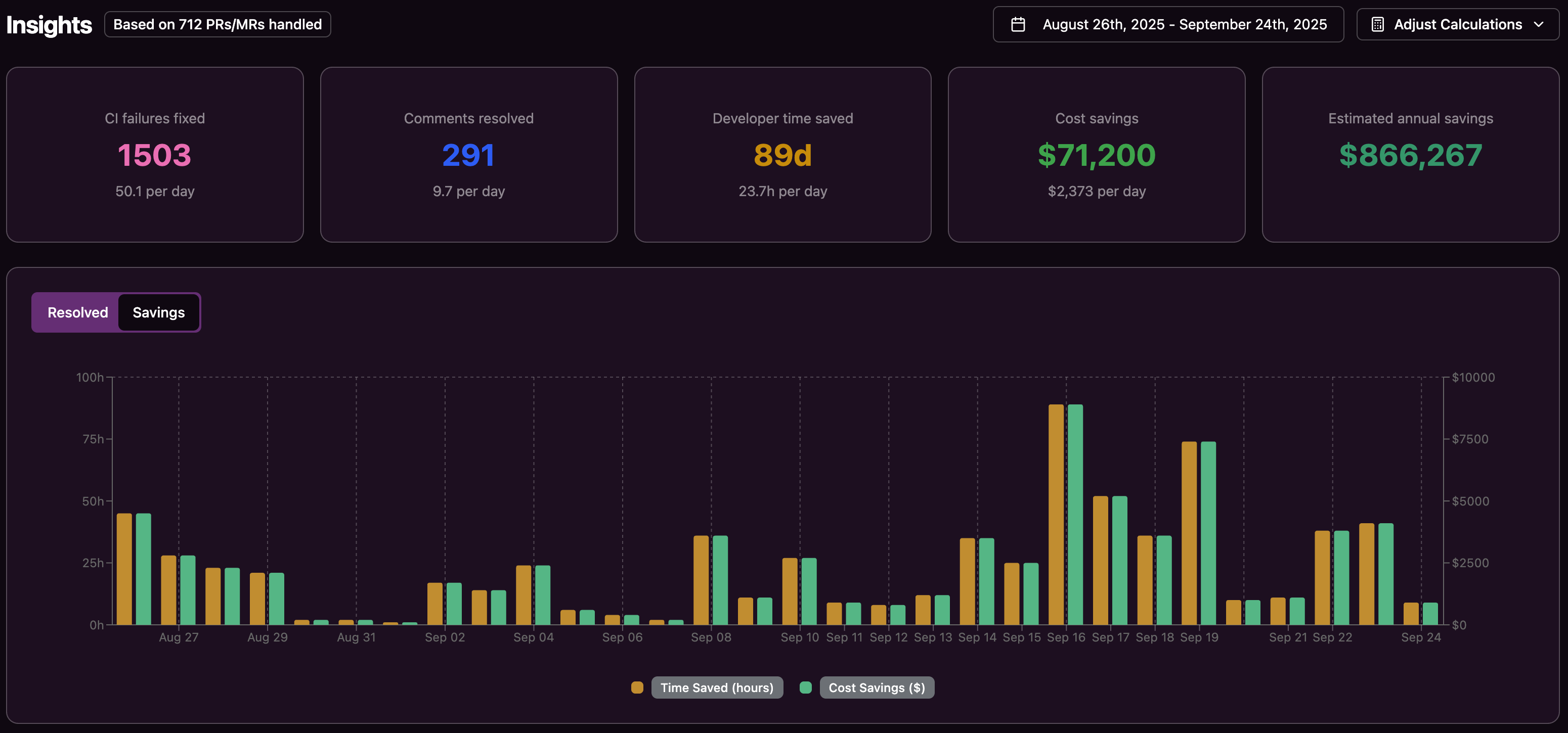
The cost savings from automating CI fixes become clear when viewed at scale. For a 20-developer team losing just one hour daily to CI and review issues, the yearly impact adds up:
- Time Loss: 20 developers x 1 hour/day x 250 days = 5,000 hours annually
- Financial Impact: 5,000 hours x $200/hour = $1 million in lost productivity
- Savings with Gitar: At 50% efficiency, teams save $500,000 yearly while improving satisfaction
Beyond dollars, Gitar boosts morale and gets features to market faster.
|
Feature / Approach |
Manual Debugging |
AI Suggestion Tools |
Gitar (Autonomous AI Agent) |
|
Fixing Process |
Manual search and coding |
Suggestions needing manual action |
Automatic application and checks |
|
Context Switching |
High and frequent |
Still needed for action |
Reduced or removed |
|
CI Validation |
Manual retries |
No built-in checks |
Verified through full CI workflows |
|
Environment Fit |
Limited to developer know-how |
Often lacks depth |
Matches full enterprise setups |
Install Gitar now to fix broken builds automatically and speed up delivery.
Common Questions About Automated CI Fixes
How Does Gitar Build Trust in Automated Fixes?
Gitar offers adjustable modes to build trust over time. Teams can start with a cautious mode, where fixes are suggestions for review and acceptance. As confidence grows, they can switch to a direct mode, where Gitar commits fixes with rollback options. This gradual approach keeps teams in control while gaining automation benefits.
Can Gitar Manage Complex CI Setups with Many Tools?
Gitar is built for complex enterprise environments. It mirrors full workflows, handling specific SDK versions, multiple dependencies, and integrations with tools like SonarQube and Snyk. Fixes match your exact setup, cutting down on guesswork common in manual debugging.
How Is Gitar Different from Other AI Review Tools?
Gitar acts as a complete fixer, not just a suggester like many AI tools. It analyzes issues, applies solutions, validates them against your CI system, and ensures successful builds. It also supports platforms like CircleCI and BuildKite, along with GitHub and GitLab, for broad compatibility.
What If Gitar Makes an Error or Causes a Problem?
Gitar includes safety features to handle mistakes. Fixes are tested against your full CI pipeline before commitment. Each change comes with detailed logs and explanations, and rollback options are available if issues arise. Teams can also use suggestion mode to approve changes manually, maintaining oversight.
How Does Gitar Fit Into Existing Workflows?
Gitar connects smoothly to your current tools with little disruption. It works with GitHub, GitLab, and CI systems like GitHub Actions, GitLab CI, CircleCI, and BuildKite via standard APIs. It fits into your pull request process, updates PRs with comments, and offers a web dashboard for easy setup without changing CI scripts.
Wrap-Up: End CI Frustrations with Gitar
CI build failures don’t have to slow your team down anymore. Gitar provides an autonomous AI solution to stop interruptions, letting developers focus on meaningful work and speeding up project timelines. It cuts engineering costs and delivers clear savings.
Don’t let failed builds hold you back. Book a demo with Gitar today.