
CI build failures disrupt development teams, stall progress, and delay product releases. Let’s explore the real costs of these issues and how AI Continuous Integration, specifically through Gitar, resolves them. This approach moves past basic tools by autonomously fixing problems, keeping your CI pipelines running smoothly and speeding up development.
Why CI Build Failures Hurt So Much
CI failures cost more than just time. They break focus, slow down teams, and drain budgets. Here’s a closer look at their impact on developers, leaders, and DevOps teams.
Developers Lose Focus from Constant Interruptions
Picture this: you submit a pull request, switch to another task, and then a CI failure pulls you back. This constant interruption kills your focus. Developers can spend up to 30% of their day on CI and code review issues. A quick fix for a linting error might take 30 minutes, but regaining focus can double that loss. These disruptions hurt both individual output and team progress.
Leaders Face Delays and Higher Costs
For engineering managers, CI failures mean delayed features and missed deadlines. Consider a team of 20 developers losing one hour daily to these issues. That adds up to 5,000 hours a year, or roughly $1 million in productivity losses based on typical developer costs. Beyond time, these delays strain budgets, push back releases, and risk customer trust.
DevOps Teams Struggle with Pipeline Complexity
DevOps engineers manage intricate CI/CD setups with multiple dependencies and integrations. Issues like build failures and dependency conflicts often complicate maintenance. Each problem, from misconfigurations to environment mismatches, demands specialized effort, slowing down entire teams with recurring bottlenecks.
Faster Code Generation Creates New Bottlenecks
AI tools like GitHub Copilot speed up code writing, but validation and merging remain manual. More code means more pull requests and potential failures. While coding is quicker, debugging CI issues and reviewing changes still consume significant time, offsetting the gains from faster development.
What Is AI Continuous Integration?
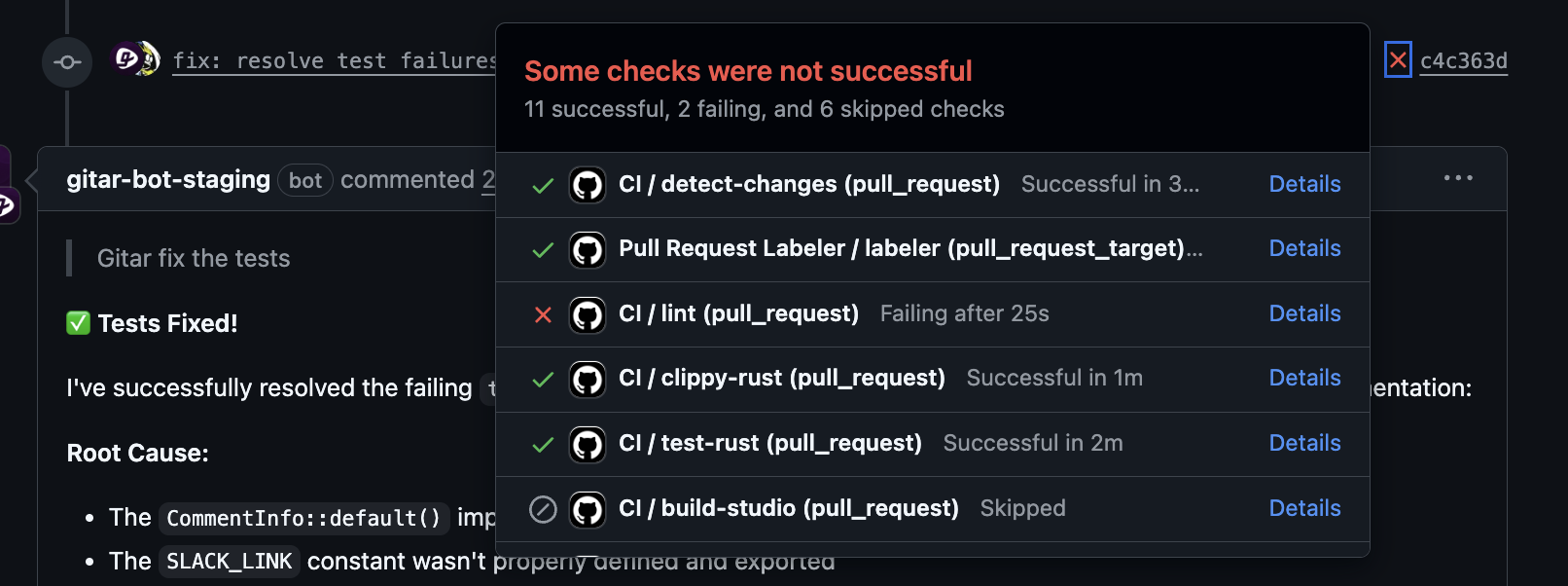
AI Continuous Integration uses artificial intelligence to detect, diagnose, and fix CI issues automatically. Some tools identify problems and offer fix suggestions. However, true AI Continuous Integration, as with Gitar, goes further by applying solutions and verifying results without human input, ensuring builds stay green.
Install Gitar to fix broken builds automatically and ship better software faster.
How Gitar Solves CI Failures with Autonomy
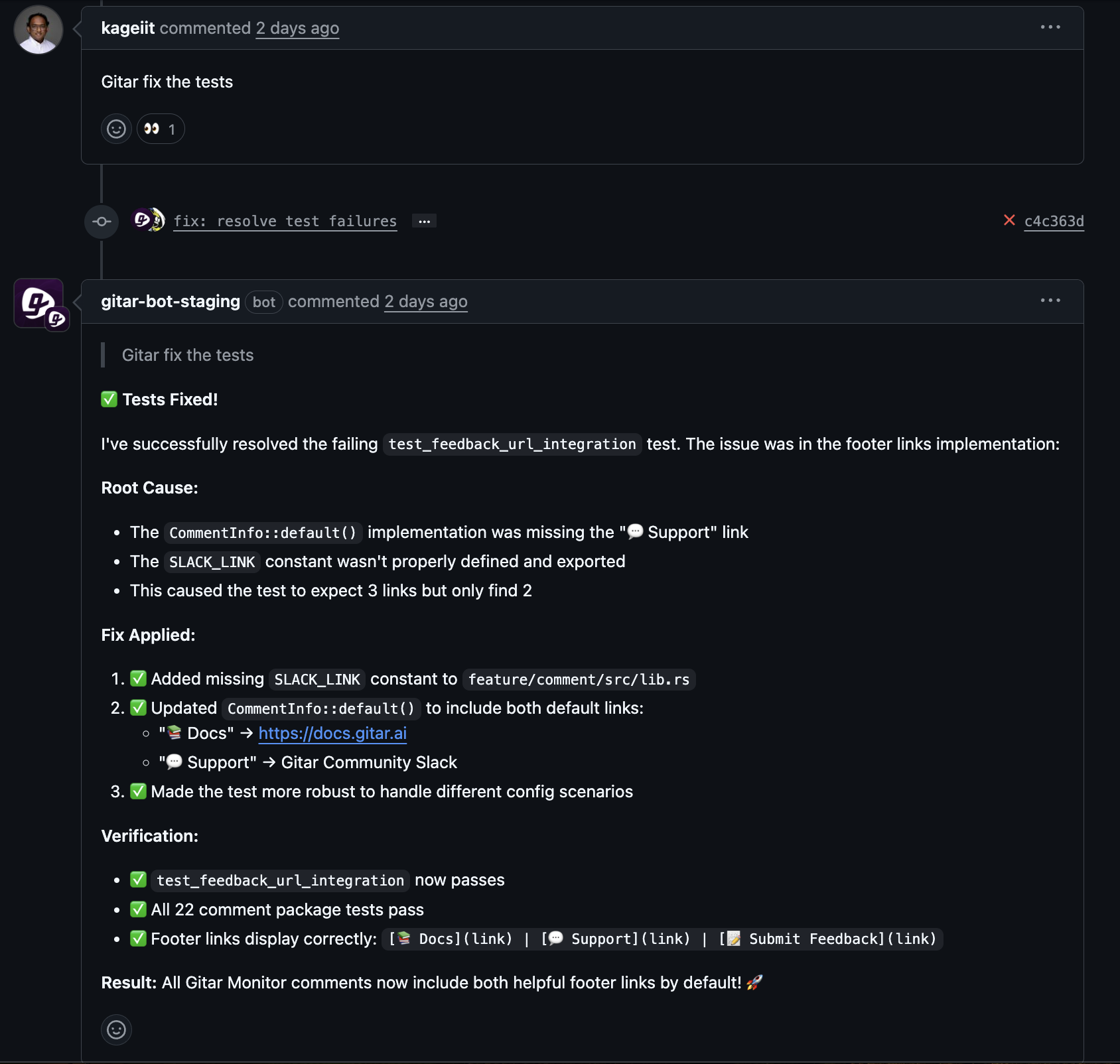
Gitar leads in AI Continuous Integration with a healing engine that fixes issues independently, unlike tools that only suggest solutions. It handles the entire process, from identifying problems to applying and validating fixes, so developers can focus elsewhere.

Key Features That Fix CI Issues
Gitar offers practical solutions for common CI challenges. Here are its standout capabilities:
- Complete Fix Automation: Gitar analyzes failure logs, creates a code change, applies it, and commits the fix to the pull request branch for issues like linting errors or test failures.
- Environment Matching: It replicates complex setups, including specific SDK versions and third-party tools like SonarQube, ensuring fixes fit your workflow.
- Code Quality Boost: Gitar can add tests to improve coverage when instructed, enhancing overall code reliability.
- Platform Flexibility: It works across GitHub Actions, GitLab CI, CircleCI, and more, supporting diverse toolsets.
- Adjustable Trust Settings: Start with fixes as suggestions for approval, then shift to automatic commits with rollback options as trust grows.
- Agent Connectivity: Gitar links local AI tools with CI environments for better context and more accurate solutions.
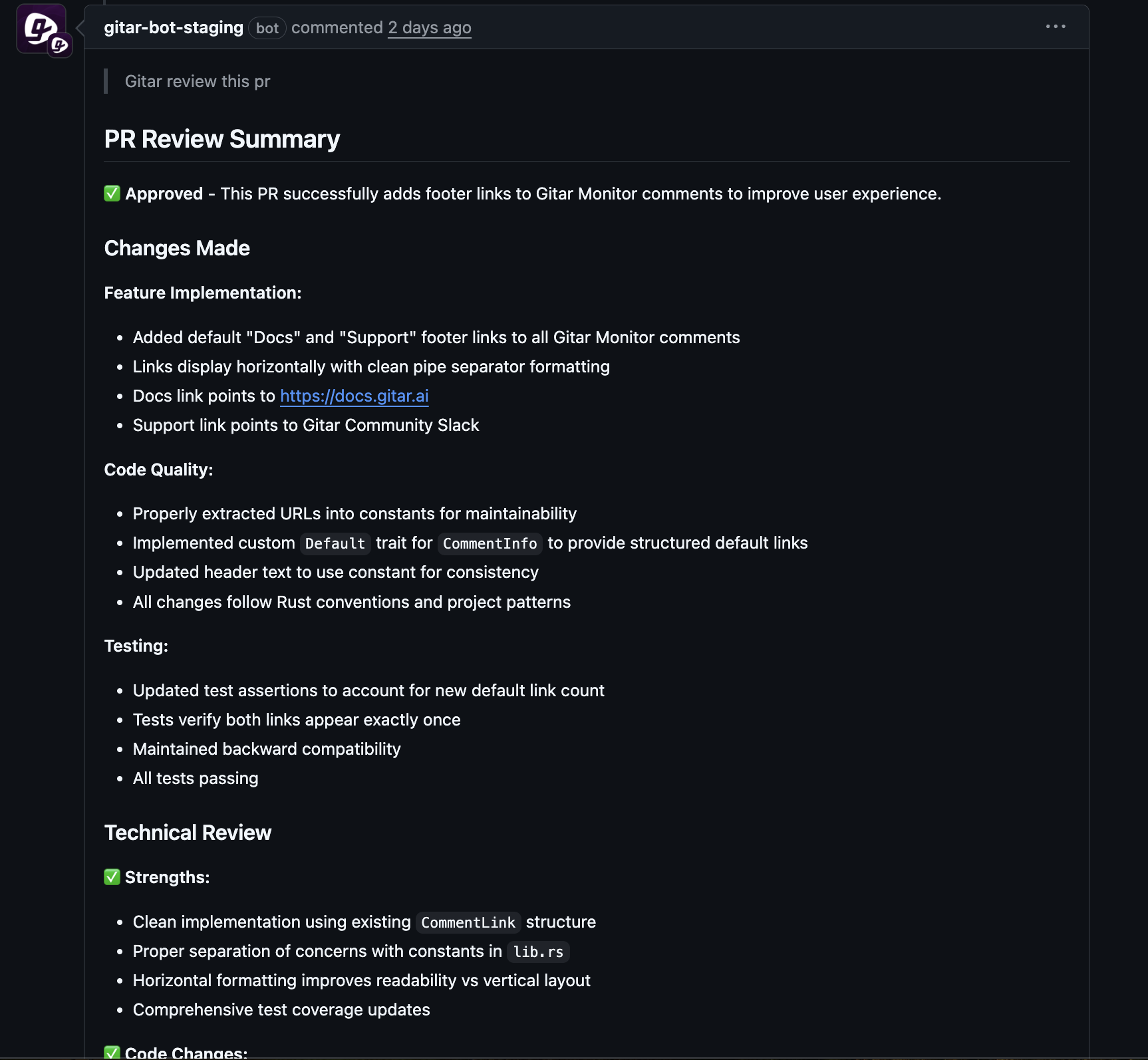
Smarter Code Reviews with Gitar
Gitar also streamlines code reviews by acting on feedback automatically. When reviewers comment with requests, Gitar applies changes and prepares them for final approval. This cuts delays, especially for distributed teams facing time zone gaps, moving reviews forward without waiting.
See how Gitar reduces CI toil and speeds up releases.
Gitar’s Healing Engine Compared to Suggestion Tools
Many tools suggest fixes for CI failures, leaving the work to developers. Gitar’s healing engine takes full control, applying and validating solutions independently for reliable results.
How Gitar Fixes Issues Automatically
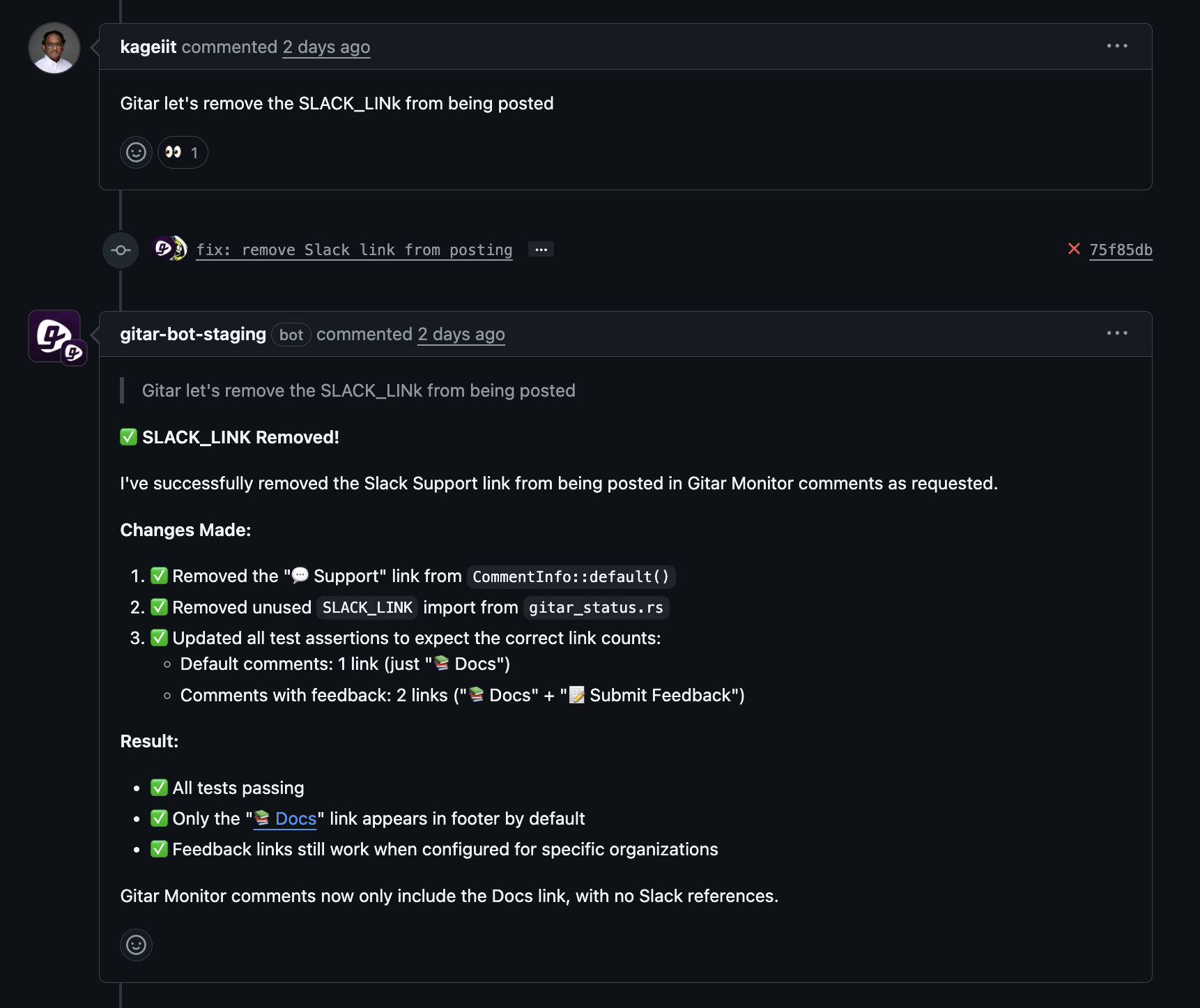
When a CI failure occurs, Gitar steps in. It reviews logs to pinpoint the cause, crafts a fix tailored to your setup, applies it, and confirms the solution works across your pipeline. This validation step sets it apart. Poor CI/CD setups often lead to fixes that cause new issues. Gitar avoids this by ensuring compatibility with your environment.
Comparison: Gitar vs. Manual and Suggestion-Based Tools
|
Feature/Tool |
Manual Work |
AI Code Reviewers (e.g., CodeRabbit) |
Gitar (Healing Engine) |
|
Fixes CI Failures |
Fully manual |
Offers suggestions |
Applies and validates fixes |
|
Resolves Code Review |
Manual changes |
Provides ideas |
Applies requested updates |
|
Environmental Context |
Relies on humans |
Minimal |
Matches full setup |
|
Automation Level |
None |
Suggestions only |
Full, with options |
Suggestion tools keep developers involved in every step. Gitar handles fixes in the background, freeing up time unless human input is needed for complex cases.
Measurable Benefits of AI Continuous Integration
Adopting autonomous CI solutions like Gitar delivers clear value across productivity, cost, and team well-being. Let’s break down the gains.
Boosted Developer Focus
Gitar minimizes CI interruptions, letting developers stay in their flow state for creative work. Knowing builds are handled automatically builds confidence to move to the next task after submitting code, enhancing output beyond just time saved.
Lower Costs and Faster Releases
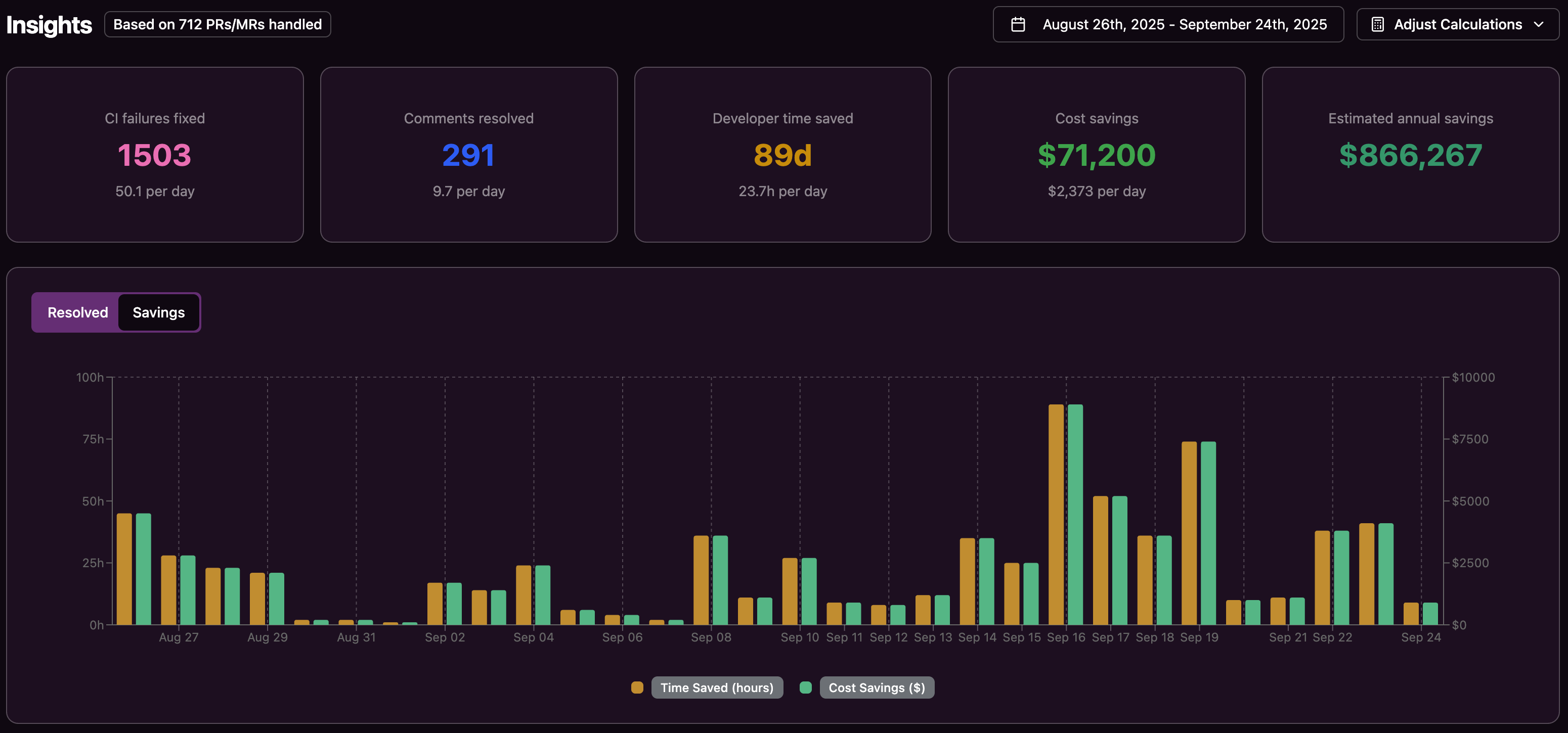
The financial impact is real. For a 20-developer team losing one hour daily to CI issues, that’s 5,000 hours yearly, or $1 million at $200 per hour. Gitar cuts this waste, speeds up merges, gets features to market sooner, and reduces delays during key launches.
Better Team Morale
Repetitive CI debugging frustrates developers and risks burnout. Gitar eases this daily grind, improving the work experience. Teams iterate faster, knowing fixes happen automatically, creating a cycle of efficiency and satisfaction.
Install Gitar to fix builds automatically and improve software delivery.
Common Questions About Fixing CI Failures
How Does Gitar Differ from Other AI Review Tools?
Tools like CodeRabbit suggest fixes but don’t apply them. Gitar goes further by autonomously fixing issues, validating them in your full CI setup, and ensuring builds pass before you notice a problem.
Is Gitar Safe for Critical Codebases?
Trust is key. Gitar offers settings to require approval before merging fixes, giving you control. You decide how much autonomy to grant based on your comfort level.
Can Gitar Handle Complex CI Environments?
Yes, Gitar is built for complexity. It mirrors your unique setup, including custom dependencies and integrations like Snyk, delivering fixes that work within your specific pipeline.
How Does Gitar Ensure Security and Compliance?
Gitar prioritizes security with options like on-premise deployment for strict requirements. It respects your pipeline’s security scans and compliance rules when applying fixes, maintaining standards.
What If Gitar Can’t Fix an Issue Automatically?
For complex failures, Gitar provides a detailed breakdown and actionable next steps. Even without a full fix, it supports developers by narrowing down the problem for quicker resolution.
Conclusion: Streamline Development with Autonomous Fixes
AI has changed how we write code, but CI failures and review delays still slow us down. Gitar’s autonomous approach tackles these bottlenecks by fixing and validating issues without manual effort, saving time and reducing stress.
With options to adjust trust levels and support for varied platforms, Gitar helps teams maintain consistent CI pipelines. The cost of delays isn’t just hours lost, it’s missed opportunities. For a 20-developer team, CI issues can waste over $1 million yearly. Gitar turns this into an advantage with faster, reliable delivery.
Ready for smoother CI pipelines? Request a demo of Gitar today.