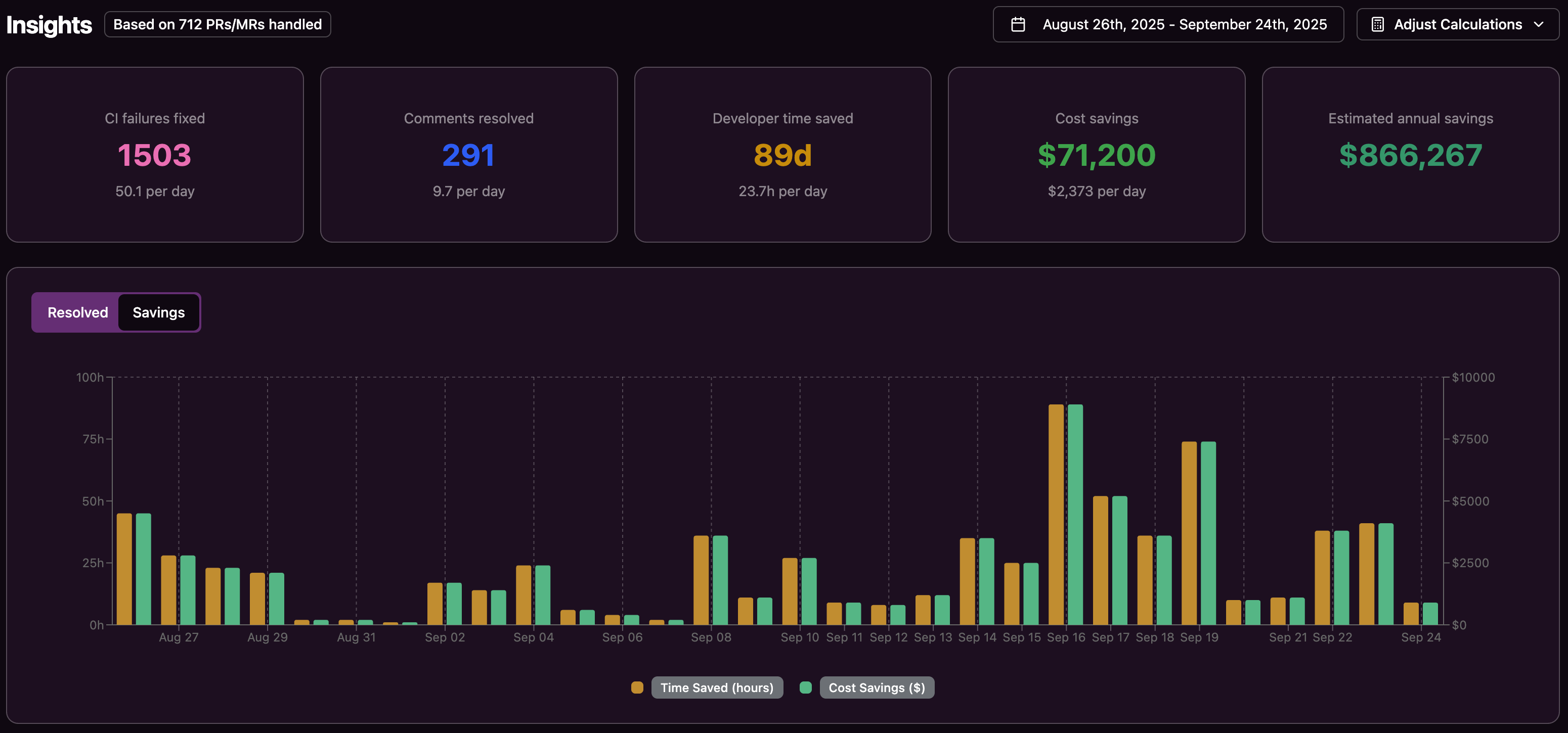
Continuous Integration (CI) build failures slow down engineering teams, causing delays and pulling focus away from core tasks. This article dives into the drawbacks of manually fixing CI issues or relying on suggestion tools. It also explains how autonomous AI solutions, like Gitar, turn CI/CD pipelines into self-correcting systems. With these tools, teams save time, speed up releases, and cut costs significantly.
Why CI Build Failures Hurt Developer Productivity
CI build failures disrupt workflows in a frustrating loop. You submit a pull request, expecting a smooth process, only to see errors pop up. Maybe a dependency is missing, a test fails inconsistently, or a style rule isn’t met. Fixing these means digging through logs, switching back to your local setup, making changes, and waiting for the pipeline to rerun. This cycle eats up time and breaks your focus, often turning a quick task into a major delay for the whole team.
Loss of Focus and Rising Burnout from CI Issues
CI failures cost more than just debugging time. When developers stop their current work to address a failed build, they lose their flow, that mental state where ideas come easily. Up to 30% of a developer’s time can go to handling CI/CD problems. The real damage, though, comes from the mental effort needed to refocus after each interruption.
This pattern builds frustration over time. A developer might move on to a new task after submitting a PR, only to get pulled back by a failure or feedback. A small fix, like a formatting error, might take 30 minutes but cost an hour of useful work due to lost focus. Repeated daily, these disruptions lead to burnout, as developers feel stuck fixing issues instead of creating value.
The emotional toll adds up too. Each failed build feels like a setback, breaking the satisfaction of delivering code. Across a large team with frequent commits, these small frustrations harm morale and can impact retention.
How CI Failures Delay Releases and Affect Business Goals
CI issues don’t just annoy developers; they slow down business progress. About 60% of companies face project delays due to pipeline problems. These delays mean missed chances in the market, late features, and longer development cycles, often costing significant revenue.
Picture this: a critical update is ready, but a flaky test or setup error blocks deployment. A process that should take hours stretches into days. Meanwhile, competitors might release first, customer issues linger, and trust from stakeholders drops.
For teams using continuous deployment, the impact is even clearer. When CI becomes a roadblock, teams either skip quality checks or accept slower delivery. Both choices carry risks, from releasing flawed code to losing ground in fast-moving markets.
Main Causes of CI Failures: Tests, Dependencies, and Setup Errors
CI failures often stem from a few common issues that are tough to fix manually. Flaky tests, dependency conflicts, and misconfigured builds are frequent culprits. Each creates distinct challenges that waste time and effort.
- Flaky tests pass on your machine but fail in CI due to timing, environment differences, or subtle issues. They’re hard to pin down, often taking days to diagnose.
- Dependency conflicts arise in projects with many external libraries. A small version update can break builds unexpectedly, forcing developers to untangle complex compatibility issues.
- Setup mismatches happen when local and CI environments differ. Variables, tools, or settings that work on your system might fail in CI, requiring deep system knowledge to resolve.
Ready to tackle these issues? Install Gitar now to fix broken builds automatically and ship better software faster.
Meet Gitar: Autonomous Fixes to Streamline Your CI Pipeline
Older methods for handling CI failures, like manual fixes or AI suggestions, still demand human effort to apply and verify solutions. Gitar changes the game by handling everything on its own. It finds issues, fixes them, and confirms they’re resolved, turning your CI pipeline into a system that corrects itself without slowing you down.

How Gitar Solves CI Problems with Hands-Off Fixes
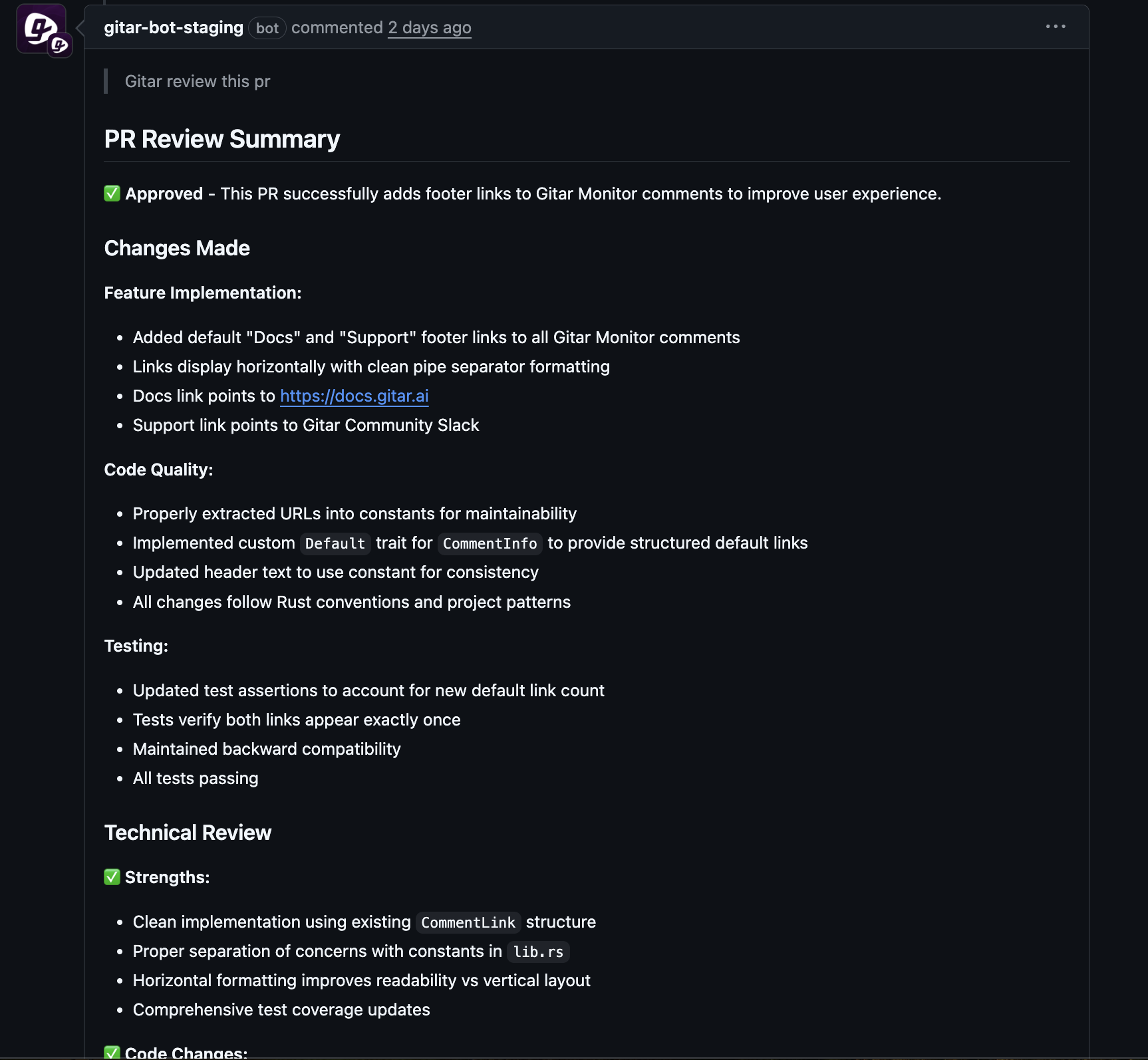
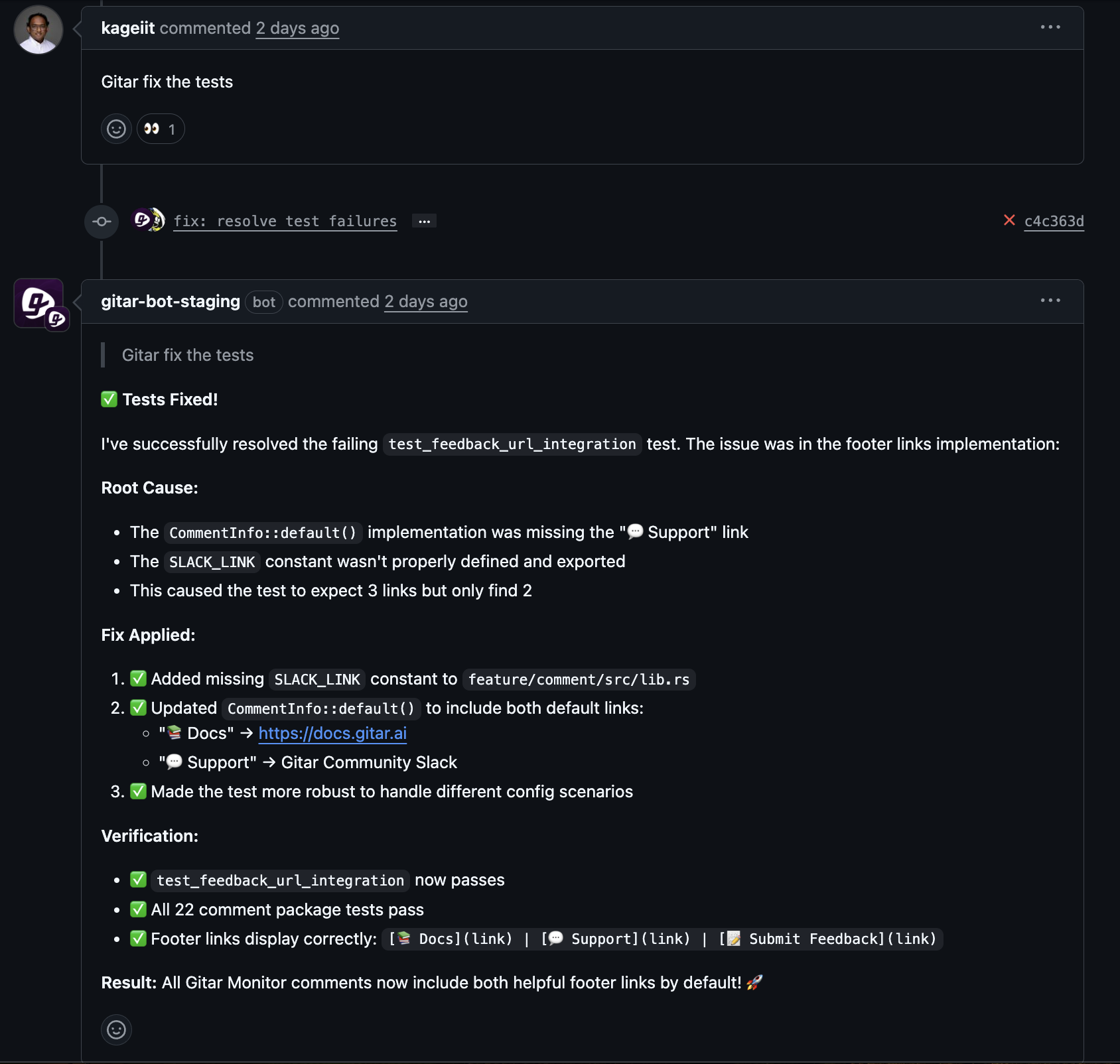
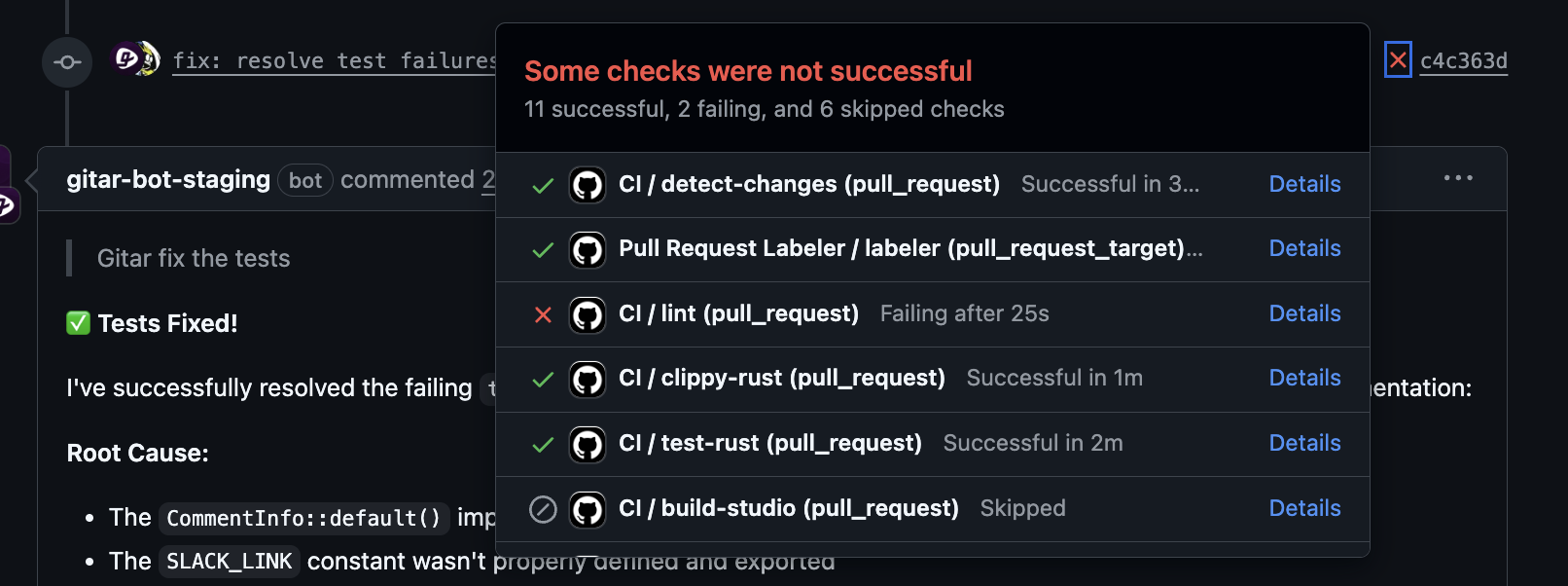
Gitar doesn’t just spot issues; it takes care of them completely. If a CI check fails due to a coding error, test issue, or setup problem, Gitar reviews the logs, identifies the cause, applies a fix, and checks that everything passes. This means builds go from broken to working without any input from you.
It also handles complex setups well. Gitar mirrors enterprise environments, including specific software versions and tools like SonarQube or Snyk, ensuring fixes fit your exact system.
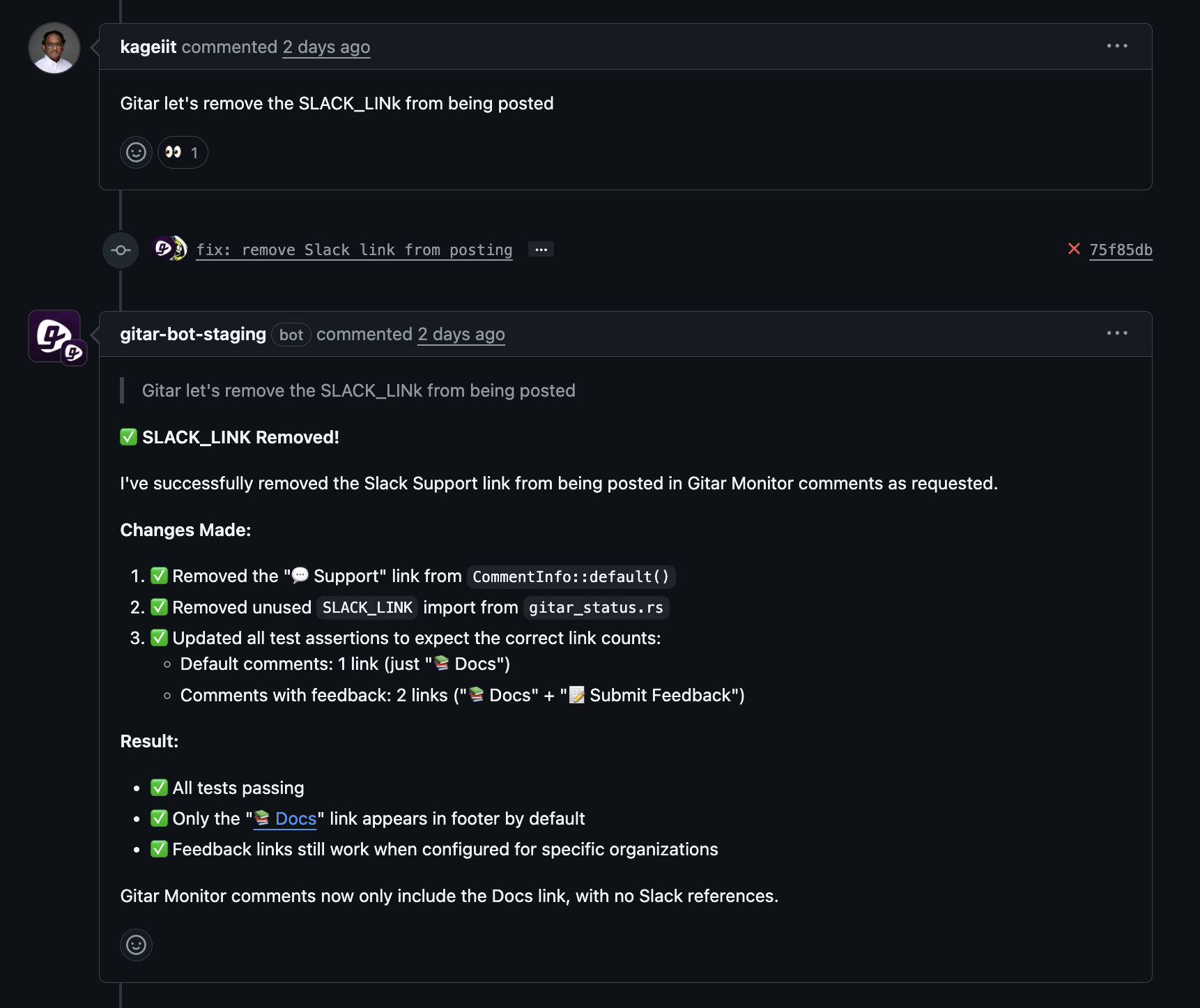
Beyond CI, Gitar helps with code reviews. Reviewers can ask Gitar to check code or make changes by leaving comments. Gitar follows the instructions, commits the updates, and explains what it did, cutting down delays for teams across time zones.
Teams wary of full automation can start slow. Gitar offers a mode where it suggests fixes for review, letting you approve them easily. As confidence grows, you can switch to full auto-fixes, with the option to undo changes if needed.
Plus, Gitar works with many platforms like GitHub Actions, GitLab CI, CircleCI, and BuildKite. No matter your tools, it fits right in.
Want to stop wasting time on builds? Request a Gitar demo today to see automatic CI fixes in action.
Why Gitar Beats Manual Fixes and Suggestion Tools
Current ways to handle CI failures don’t meet the speed needs of today’s development teams. Manual fixes take too long, and even AI suggestion tools leave key steps to developers. Gitar’s fully autonomous approach stands out by cutting these delays entirely.
Manual Debugging: A Slow and Costly Process
Finding and fixing CI issues by hand follows a repetitive cycle. You check logs, guess at solutions, test changes locally, commit them, and wait for CI results. This manual work eats up hours and creates delays, especially with tricky issues involving multiple systems.
Intermittent problems, like flaky tests, make it worse. Reproducing these failures can take days, pulling developers away from other priorities. The ripple effect slows down entire projects.
Manual fixes also rely on specific expertise. Not everyone knows enough about CI systems, so senior team members often get stuck handling these tasks, while others wait for help.
AI Suggestion Tools: Helpful but Incomplete
AI tools that suggest fixes, like CodeRabbit, save time over manual work but still fall short. They point out issues and offer ideas, yet you must apply the changes, check for side effects, and wait for CI to confirm them.
This means the suggestion is just the first step. Most of the effort, from coding to validation, stays on your plate. A quick suggestion for a simple error still leads to a longer process of making it work.
Additionally, these tools often miss the full picture of your CI setup. A fix that looks good on paper might not match the specific versions or settings in your pipeline.
Moving Past Code Writing to Focus on Validation
AI has sped up coding, shifting the challenge to validating and merging code. Writing isn’t the main hurdle now; it’s making sure code fits into complex delivery systems.
Gitar tackles this directly. It automates fixes for CI failures and handles review feedback, ensuring code passes all checks and integrates smoothly into your pipeline without extra effort.
Comparing Gitar to Manual and Suggestion-Based Tools
|
Feature / Tool |
Manual Fixes |
AI Suggestion Tools |
Gitar (Autonomous Fixes) |
|
Resolution Method |
Human Debugging |
AI Suggestions, Human Action |
AI Fixes and Validates |
|
CI Validation |
Manual Retries |
No Validation, Human Task |
Full Validation, Works Every Time |
|
Context Switching |
High |
High (Manual Steps) |
None (Fully Automated) |
|
Time-to-Fix |
Hours or Days |
Minutes (Suggestions) + Hours (Action) |
Minutes (All Automated) |
Key Gains from Self-Correcting CI with Gitar
Switching to autonomous CI fixes brings clear benefits for development teams. From faster workflows to happier developers, the impact touches every part of the process.
Speed Up Releases with Automatic Fixes
Autonomous fixes cut out the delays of manual debugging. When issues resolve in minutes instead of hours, code moves from commit to deployment much faster. This is especially valuable for teams aiming for frequent releases, where CI delays directly slow down delivery.
Immediate fixes help maintain a steady pace. Teams can focus on building features, not fixing pipelines, leading to more reliable planning and schedules.
Improve Team Morale by Cutting Repetitive Tasks
CI failures frustrate developers with constant interruptions. Removing these tasks through automation reduces daily stress and lets teams focus on meaningful work.
Repetitive debugging is a form of toil, urgent but draining. Automating it lifts a major burden, helping prevent burnout and freeing up time for innovation and learning.
Save Costs with Measurable Returns
CI issues add up financially for engineering teams. A 20-person team losing one hour daily to CI problems could cost around $1 million yearly, based on typical developer rates. Automating fixes recaptures much of this time, saving hundreds of thousands for even mid-sized groups.
Savings go beyond direct hours. Less debugging means more focus on features and less reliance on senior staff for escalations, plus lower costs from fewer failed CI runs.
Handle Complex Enterprise Needs with Ease
Enterprise setups often involve diverse languages, dependencies, and tools, making CI issues harder to solve. Gitar is built to manage these, replicating specific environments and ensuring fixes work in context.
As teams grow, the consistency of automated fixes helps maintain quality across projects. It also reduces the need for every developer to master every system detail.
Ready to see the difference? Install Gitar now to fix builds automatically and ship better software.
Common Questions About Autonomous CI Fixes
How does Gitar manage complex CI setups with unique needs?
Gitar handles intricate enterprise systems by mirroring workflows, including specific software versions and tools like SonarQube or Snyk. It ensures fixes are tailored to your exact environment for reliable results.
My team isn’t ready for full automation. How does Gitar build trust?
Gitar offers adjustable settings to ease teams into automation. Start with suggestions you can review and approve. As confidence builds from seeing accurate fixes, switch to full automation with rollback options for safety.
What CI issues can Gitar fix on its own?
Gitar resolves many common failures, like formatting errors, basic test issues, and build problems from dependencies or scripts. It analyzes logs to pinpoint causes and makes precise changes to fix them.
How does Gitar help distributed teams with code review delays?
Gitar speeds up reviews for teams in different time zones. Reviewers leave feedback, and Gitar applies changes overnight. By the next workday, updates are ready for final checks, keeping projects moving.
Does Gitar fit into existing development processes?
Gitar works with platforms like GitHub, GitLab, CircleCI, and BuildKite. It runs quietly in the background, fixing issues without changing how your team already works.
Conclusion: Step into Better CI with Gitar’s Autonomous Fixes
Software development today moves fast, and old CI fix methods can’t keep up. Build failures drag down productivity and delay critical business goals.
Manual fixes are too slow for modern demands, and suggestion tools still leave work unfinished. Gitar’s autonomous approach fully resolves CI issues, turning pipelines into systems that heal themselves.
With support for complex setups, adjustable trust levels, and easy integration, Gitar helps teams deliver faster while saving costs. Don’t let broken builds hold you back. Request a Gitar demo today to automate CI fixes and boost your team’s output.