
Written by: Ali-Reza Adl-Tabatabai, Founder and CEO, Gitar
Key Takeaways
- AI coding tools speed up code generation but slow PR reviews by 91%, which creates CI/CD bottlenecks that free tools like Gitar.ai can clear with auto-fixing.
- Gitar.ai leads as the top free option with unlimited repos and users, validated CI autofix, deep code review, and 30-second integrations with GitHub Actions and GitLab CI.
- Other strong free tools include SonarQube for code quality scanning with 15-20% defect reduction, GitHub Actions AI for native flake prediction, and Snyk for vulnerability detection.
- Reliable pipelines rely on parallel execution, caching, quality gates, and clear separation of flaky tests from real failures using AI-powered retry and fix workflows.
- Teams can overcome AI CI/CD cost and security concerns with Gitar.ai’s free core features, zero data retention, and validated fixes that scale to enterprise workloads.
How We Evaluated Free AI CI/CD Reliability Tools
Our evaluation focused on real reliability gains, not marketing claims. We scored each tool on free tier strength, AI auto-fix depth, GitHub Actions and GitLab CI integration, documented flake reduction, setup effort, and ability to handle large codebases such as Pinterest’s 50+ million lines of code.
We used data from 2026 CI/CD platform benchmarks, ThinkSys quality improvement metrics, developer forums, and vendor docs. We prioritized tools with measurable ROI and real case studies over theoretical features.
Quick Comparison: 9 Free AI Tools That Improve CI/CD Reliability in 2026
|
Rank/Tool |
Free Tier Limits |
Key Reliability Feature |
Flake Reduction Est. |
|
1. Gitar.ai |
Unlimited repos/users |
CI autofix with validation (14-day free trial) |
Not specified |
|
2. SonarQube |
Public repos free; private with paid plans |
Code quality scanning |
15-20% defect reduction |
|
3. GitHub Actions AI |
2,000 minutes/month |
Native flake prediction |
Variable by workflow |
|
4. Snyk |
200 tests/month |
Vulnerability detection |
Security-focused |
Try Gitar.ai free to see the difference between AI suggestions and automated fixes that keep builds green.
1. Gitar.ai: Auto-Fixing CI Failures at Scale
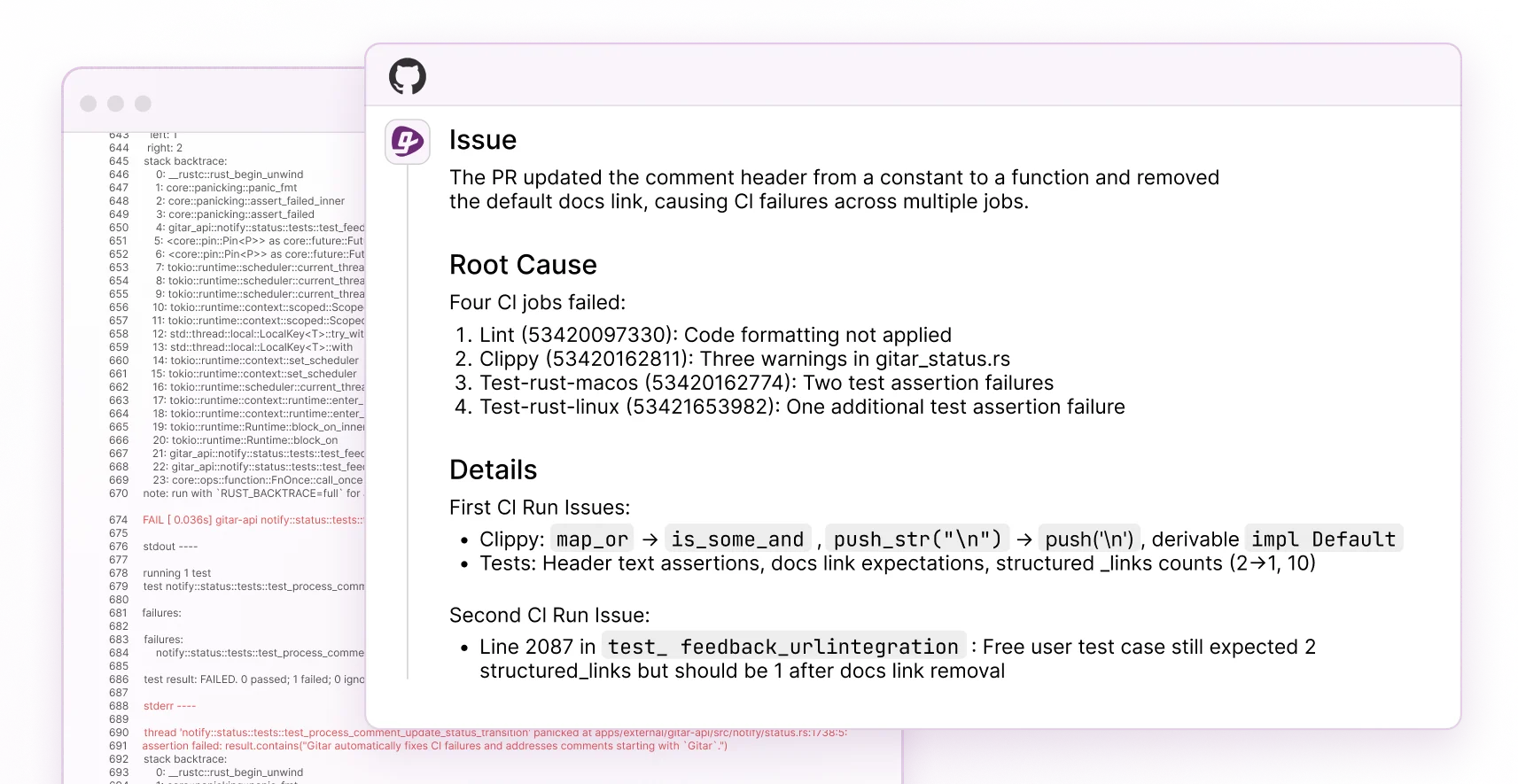
Gitar.ai acts as a free AI code review platform that actually fixes CI failures by using a healing engine with a 14-day free trial for autofix. When lint errors, test failures, or build breaks appear, Gitar analyzes logs, generates validated fixes with full codebase context, and commits working changes directly to your pull request through a single comment thread.
The platform connects to GitHub Actions, GitLab CI, CircleCI, and Buildkite with a 30-second install. Competing tools often charge $15-30 per developer for suggestion-only engines, while Gitar delivers full code review, PR analysis, security scanning, bug detection, and performance review free for unlimited repositories and users. Natural language rules in .gitar/rules/*.md files let teams automate workflows without complex YAML. Autofix features run under a 14-day free trial.
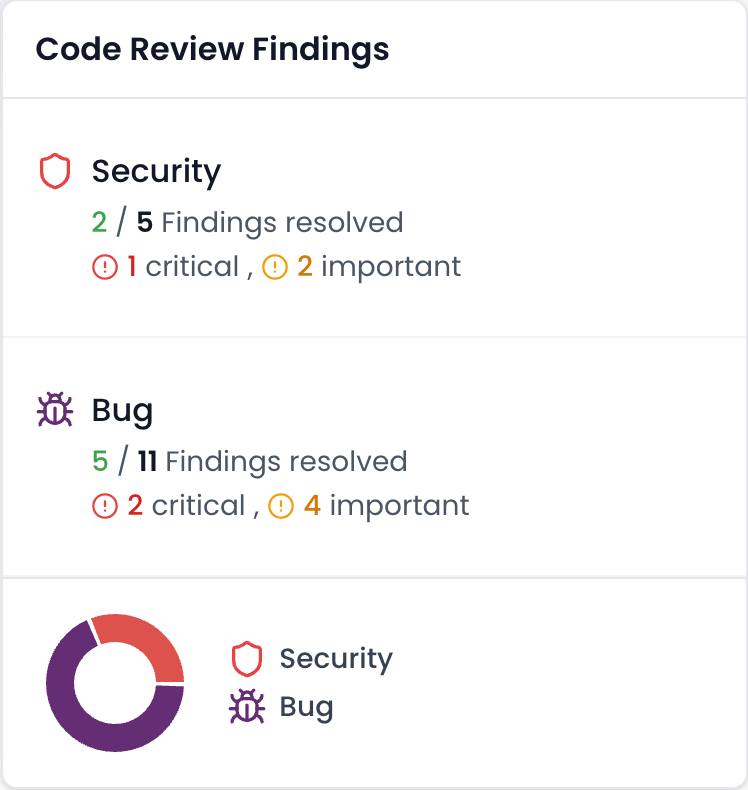
ROI data shows a typical 20-developer team saves about $1 million per year by reclaiming the average hour per day lost to CI and review friction. The healing engine validates fixes in your own CI environment, which ensures that changes actually pass.
# .github/workflows/gitar.yml name: Gitar CI Healing on: [push, pull_request] jobs: gitar-autofix: runs-on: ubuntu-latest steps: – uses: gitar-ai/autofix@v1 with: github-token: ${{ secrets.GITHUB_TOKEN }}
Install Gitar.ai now to automatically fix broken builds and replace manual debugging with guaranteed working solutions.
2. SonarQube: AI-Enhanced Code Quality and Security
SonarQube Community Edition offers free static analysis for public repositories and uses AI-assisted detection to flag code quality issues, security risks, and maintainability problems before release. It integrates with GitHub Actions and GitLab CI through official actions and supports more than 25 languages.
SonarQube focuses on detection instead of auto-fixing. Organizations using AI across the SDLC see 31-45% better software quality, and SonarQube contributes through deep analysis and quality gates that block risky merges.
The free tier mainly targets public repositories, while private repo support requires paid plans. This model works well for open-source projects and smaller teams but limits large enterprises without upgrades.
# .github/workflows/sonarqube.yml – name: SonarQube Scan uses: sonarqube-quality-gate-action@master env: SONAR_TOKEN: ${{ secrets.SONAR_TOKEN }}
3. GitHub Actions AI: Native Flake Prediction and Test Selection
GitHub Actions now includes AI features that predict flaky tests, select tests intelligently, and suggest workflow improvements. The free tier offers 2,000 minutes per month for private repositories and unlimited minutes for public repositories, with AI features available on all tiers.
Native integration gives GitHub projects instant access, as AI reviews historical build data, predicts likely failures, and recommends better parallelization. These features remain advisory and do not apply fixes directly.
Matrix builds and conditional workflows increase stability by testing across environments and skipping jobs when files do not change, which cuts runtime and resource use.
# .github/workflows/ai-optimized.yml strategy: matrix: os: [ubuntu-latest, windows-latest] node: [16, 18, 20] fail-fast: false
4. Snyk: Security-Focused Vulnerability Detection
Snyk’s free tier includes 200 vulnerability tests per month for open-source projects and focuses on dependency scanning inside CI/CD pipelines. It integrates with GitHub Actions and GitLab CI through official actions and CLI tools that scan package.json, requirements.txt, and similar files.
Snyk identifies vulnerabilities and license issues and also supports remediation with one-click fixes and automatic pull requests. Its AI-backed vulnerability database ranks issues by exploit likelihood and impact.
The free tier limits monthly tests and reporting depth, yet still delivers strong value for teams that prioritize supply chain security over general CI reliability.
# .github/workflows/snyk.yml – name: Run Snyk to check for vulnerabilities uses: snyk/actions/node@master env: SNYK_TOKEN: ${{ secrets.SNYK_TOKEN }}
Install Gitar.ai now to automatically fix broken builds and pair security scanning with full CI failure resolution.
5. BuildBuddy: CI Analytics and Bottleneck Detection
BuildBuddy’s open-source edition gives teams build analytics and performance insights that reveal CI/CD bottlenecks. It supports Bazel builds natively and connects to other systems through remote execution, with detailed timing and resource metrics.
These analytics help teams see where builds consume time and compute, which supports data-driven tuning. BuildBuddy acts as an observability layer rather than an automated reliability engine, so teams must implement changes manually.
The free tier includes core analytics and caching, while remote execution and advanced dashboards require paid plans.
6. ArgoCD: Reliable GitOps-Based Deployments
ArgoCD delivers free GitOps-style continuous deployment with health checks, rollbacks, and declarative configuration. It monitors running applications and can sync configurations or roll back when health checks fail.
ArgoCD focuses on deployment reliability and configuration drift, not on build and test stability. The GitOps model keeps desired and actual states aligned but does not fix upstream CI failures or flaky tests.
CI integration happens through Git commits instead of direct CI APIs, which makes ArgoCD a complement to build-focused reliability tools.
7. Applitools: Stable Visual Testing for Frontends
Applitools Eyes offers free visual testing for open-source projects and uses AI to detect visual regressions while reducing false positives. It integrates with major testing frameworks and CI tools through SDKs and plugins that capture and compare visual snapshots.
Its AI comparison engine cuts flaky visual tests by ignoring acceptable differences and flagging real regressions. It supports end-to-end testing with Selenium, Cypress, and Playwright, although the free tier limits use to open-source work.
Improved visual stability reduces pipeline flakiness for frontend-heavy apps, while backend and API checks still require other tools.
8. DeepCode: AI Bug Detection Inside Snyk Code
DeepCode, now merged into Snyk, introduced AI-powered static analysis that finds bugs early. The engine trains on millions of repositories to detect bugs, security issues, and performance problems.
The standalone service ended, but its AI now powers Snyk Code and extends beyond rule-based checks to catch complex logic and security flaws.
This approach emphasizes prevention and catches issues before they hit CI/CD pipelines instead of repairing failures later.
9. GitLab Duo: AI Insights for GitLab Users
GitLab Duo provides AI features such as code suggestions, vulnerability explanations, and pipeline insights for Premium and Ultimate plans, with limited trials for Free users who upgrade to Ultimate temporarily. These features improve code quality before CI runs.
GitLab users with access benefit from native integration and no extra setup. The base Free tier does not include these AI capabilities and focuses on development help more than automated CI reliability.
Pipeline insights highlight bottlenecks and tuning options, while teams still apply changes manually.
Install Gitar.ai now to automatically fix broken builds and move from passive insights to active CI healing.
Practical Ways to Improve CI/CD Pipeline Performance
Teams improve CI/CD performance fastest by combining automated fixes, smart analytics, and continuous monitoring. Start with tools like Gitar.ai that resolve common failures such as lint errors, flaky tests, and broken builds without manual effort. AI in DevOps reduces incident resolution time by 30-50% through predictive monitoring and automated remediation.
Use parallel execution with matrix builds and intelligent test selection to shorten pipeline duration. Add caching for dependencies and build artifacts to avoid repeated work across runs. Track pipeline metrics to find bottlenecks, focusing on the slowest jobs and most frequent failure sources.
Set clear quality gates that block risky code while preserving speed. Combine static analysis, security scans, and automated tests with AI-based failure prediction so teams catch issues earlier when fixes cost less.
How to Handle Failing Automated Tests in CI/CD
Effective handling of failing automated tests starts with separating real failures from flaky ones. Flaky tests often fail due to timing, environment drift, or external services. TestResults.io provides 3x faster testing and eliminates flakiness through AI stability, which shows the impact of AI-based test management.
Configure automatic retries for tests that show intermittent failures and log retry patterns to flag tests that need refactoring or removal. Use AI tools such as Gitar.ai to analyze failures and generate fixes for assertion errors, timeouts, and environment setup issues.
Keep tests isolated so they avoid shared state and fragile external dependencies. Review test suites regularly, remove obsolete checks, and update assertions that no longer match current behavior.
Key Challenges of AI-Powered CI/CD and How Gitar.ai Helps
Cost remains a major barrier for AI-enhanced CI/CD solutions, and many teams also worry about security, code integrity, and data privacy. These concerns slow adoption in larger organizations, even when AI offers clear benefits.
|
Challenge |
Impact |
Gitar.ai Solution |
Benefit |
|
High costs |
Limited adoption |
Free core features |
Universal access |
|
Security concerns |
Compliance issues |
Zero data retention |
Enterprise-ready |
|
Integration complexity |
Setup barriers |
30-second install |
Immediate value |
|
False positives |
Developer fatigue |
Validated fixes only |
Guaranteed reliability |
Teams succeed with AI-powered CI/CD when they choose tools that deliver real automation instead of commentary. Gitar.ai leads this shift by applying and validating fixes instead of leaving developers with a backlog of suggestions.
Frequently Asked Questions
What is the best free AI tool for fixing GitHub CI flakes?
Gitar.ai stands out as the strongest option for fixing GitHub CI failures and flaky tests automatically. It analyzes logs, generates validated fixes, and commits working changes directly to pull requests, with autofix features available through a 14-day free trial. The platform handles lint errors, test failures, and build breaks while offering full code review free for unlimited repositories and users.
How do free AI CI/CD tools compare to paid options?
Free AI CI/CD tools often match or exceed paid tools for smaller teams and open-source projects. Gitar.ai, for example, offers more capability in its free tier than many tools that charge $15-30 per developer. Paid platforms usually add advanced analytics, support, and higher limits. Teams should focus on tools that deliver real automation instead of simple suggestions, regardless of price.
Is Gitar.ai’s autofix feature safe for production code?
Gitar.ai’s autofix feature includes several safeguards that protect production code. All fixes run against your actual CI environment before commit, which confirms they work with your configuration. The platform starts in suggestion mode, so teams can review and approve changes before enabling automatic commits. You can tune autofix behavior per repository and failure type to keep full control while you build trust in the automation.
Can these tools integrate with CircleCI and other CI platforms?
Most modern AI CI/CD tools support multiple CI platforms beyond GitHub Actions and GitLab CI. Gitar.ai integrates with GitHub Actions, GitLab CI, CircleCI, and Buildkite through standard APIs and webhooks. Setup usually involves installing a GitHub or GitLab app or adding configuration files to your repository. This cross-platform support lets teams keep consistent AI-driven reliability across CI providers.
How do you measure ROI from AI CI/CD reliability tools?
Teams measure ROI by tracking time saved, fewer manual interventions, and faster delivery. Useful metrics include mean time to resolution for CI failures, first-pass build success rate, and developer hours saved through automated fixes. A 20-developer team can save about $1 million per year by cutting CI and review friction from one hour per day to 15 minutes per developer. Additional gains include less context switching, quicker feature releases, and higher developer satisfaction.
The AI shift in CI/CD reliability has started, and tools like Gitar.ai now move beyond suggestions to true healing platforms. Traditional tools often charge premium prices for commentary, while the future belongs to platforms that deliver automation and guaranteed results. Install Gitar.ai now to automatically fix broken builds and experience the difference between AI hints and working solutions that keep pipelines green.