
Written by: Ali-Reza Adl-Tabatabai, Founder and CEO, Gitar | Last updated: December 30, 2025
Key Takeaways
- CI/CD pipelines now represent a primary attack surface, with poisoned builds, dependency abuse, and weak runner configurations exposing organizations to supply chain risk.
- Most CI/CD security tools stop at detection and reporting, which leaves developers with manual remediation work that slows delivery and increases the chance of missed or partial fixes.
- Autonomous CI/CD security tools close this gap by analyzing failures, generating fixes, validating them in full environments, and applying changes with traceability and control.
- Engineering teams that adopt autonomous remediation reduce mean time to resolution, improve compliance evidence, and free developers to focus on product work instead of CI/CD toil.
- Gitar provides autonomous CI/CD security fixes, full-environment validation, and configurable trust modes so teams can safely let the system fix broken builds and security issues at https://gitar.ai/fix.
Why Traditional CI/CD Security Tools No Longer Keep Up
Modern CI/CD Pipelines Create New Attack Paths
CI/CD pipelines now tie together source control, artifact registries, cloud infrastructure, and production deployment. This interconnected surface gives attackers more places to gain a foothold.
Gartner predicted 45% of organizations would suffer a supply chain attack by the end of 2025, and the SolarWinds incident showed how attackers can use CI/CD systems for poisoned pipeline execution, inserting malicious code into trusted builds.
The risk grows further in self-managed setups. About 35% of enterprises rely on self-hosted runners with weaker configurations, which often lack strong hardening and monitoring. These gaps leave room for lateral movement and long-lived access.
Top CI/CD Risks Extend Beyond Code Vulnerabilities
The OWASP Top 10 CI/CD Security Risks highlights frequent pipeline weaknesses, including:
- CICD-SEC-1: Insufficient flow control, where pipelines run without proper validation gates or approvals.
- CICD-SEC-2: Weak identity and access management that grants excessive permissions.
- CICD-SEC-3 and CICD-SEC-4: Dependency chain abuse and poisoned pipeline execution, where compromised components or build steps introduce malicious behavior.
- CICD-SEC-6: Poor credential hygiene, with hardcoded keys and mismanaged Kubernetes secrets leaking into repos and logs.
Unvalidated dependencies and over-provisioned access control add more openings that simple scanners can flag but not fix.
Manual Security Fixes Drain Time and Budget
Detection-only tools leave remediation work to developers. Each alert forces context switching, diagnosis, research, code changes, and validation.
Developers can lose up to 30% of their time to CI/CD issues, including security failures that demand manual investigation. For a 20-person team, that wasted effort can approach $1M per year in lost productivity, before counting breach costs or delayed features.
How Gitar Adds Autonomous Security Fixes To Your Pipeline
From Suggestion Engines To Healing Engines
Traditional scanners identify security issues but stop at reports. Teams still need to interpret results and implement safe fixes.
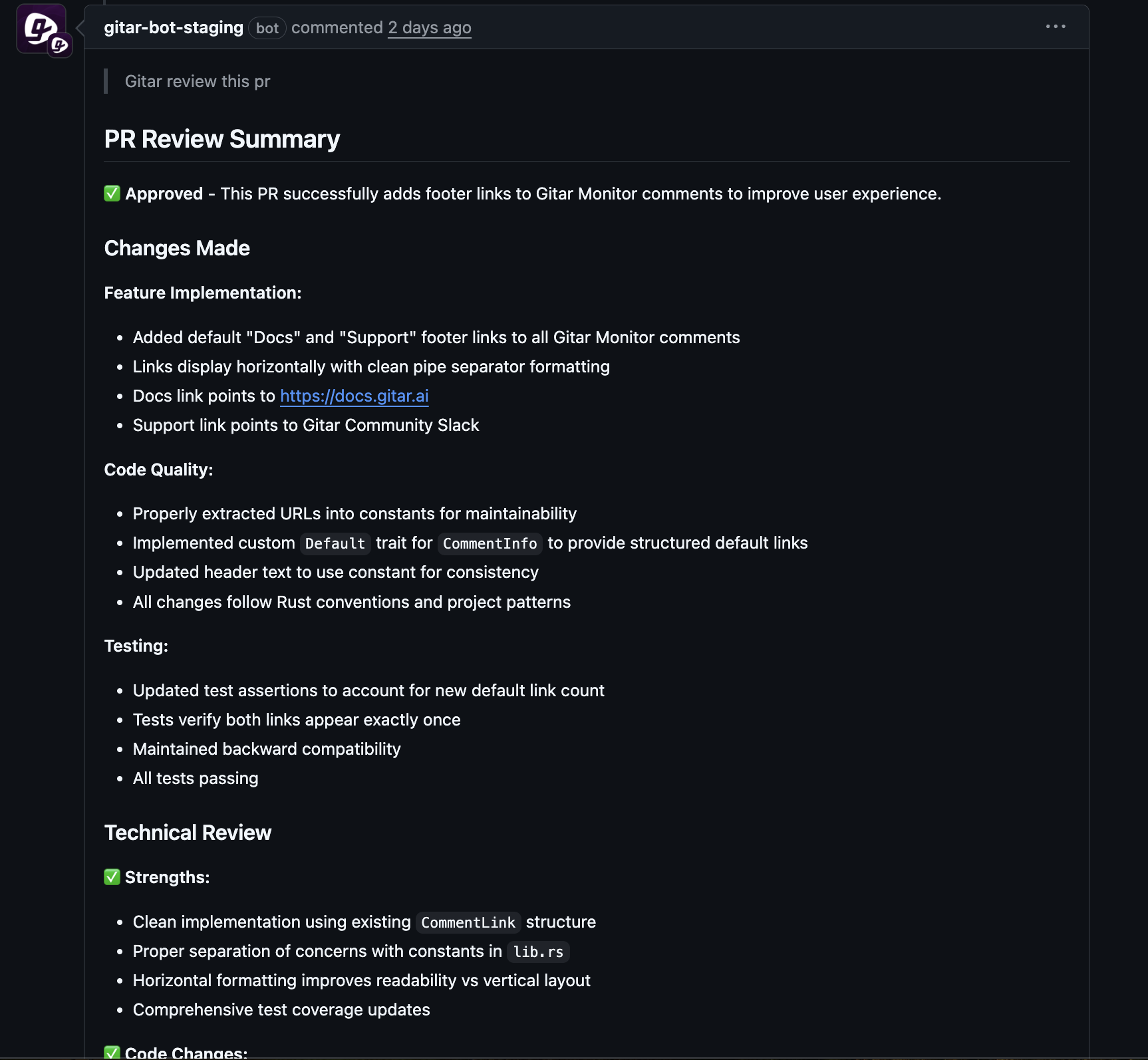
Gitar takes a different approach. It operates as a healing engine that:
- Analyzes security-related CI failures, including SAST, DAST, and dependency scan results.
- Generates concrete code or configuration changes to address the issue.
- Replays your CI environment, including third-party tools like SonarQube and Snyk, to validate the fix.
- Applies the change back to the pull request with a clear explanation.
This end-to-end loop turns CI/CD into a self-correcting system instead of a stream of tickets.
Core Capabilities That Matter For Security
Gitar focuses on practical capabilities that reduce risk and toil:
- End-to-end security fixes. Gitar does more than raise alerts. It updates code, pipeline configs, or dependencies, then reruns checks so pull requests pass with all security gates green.
- Full environment replication. Gitar recreates complex enterprise CI environments, including specific SDK versions, multi-SDK builds, and custom security scanners, to avoid fixes that only work in theory.
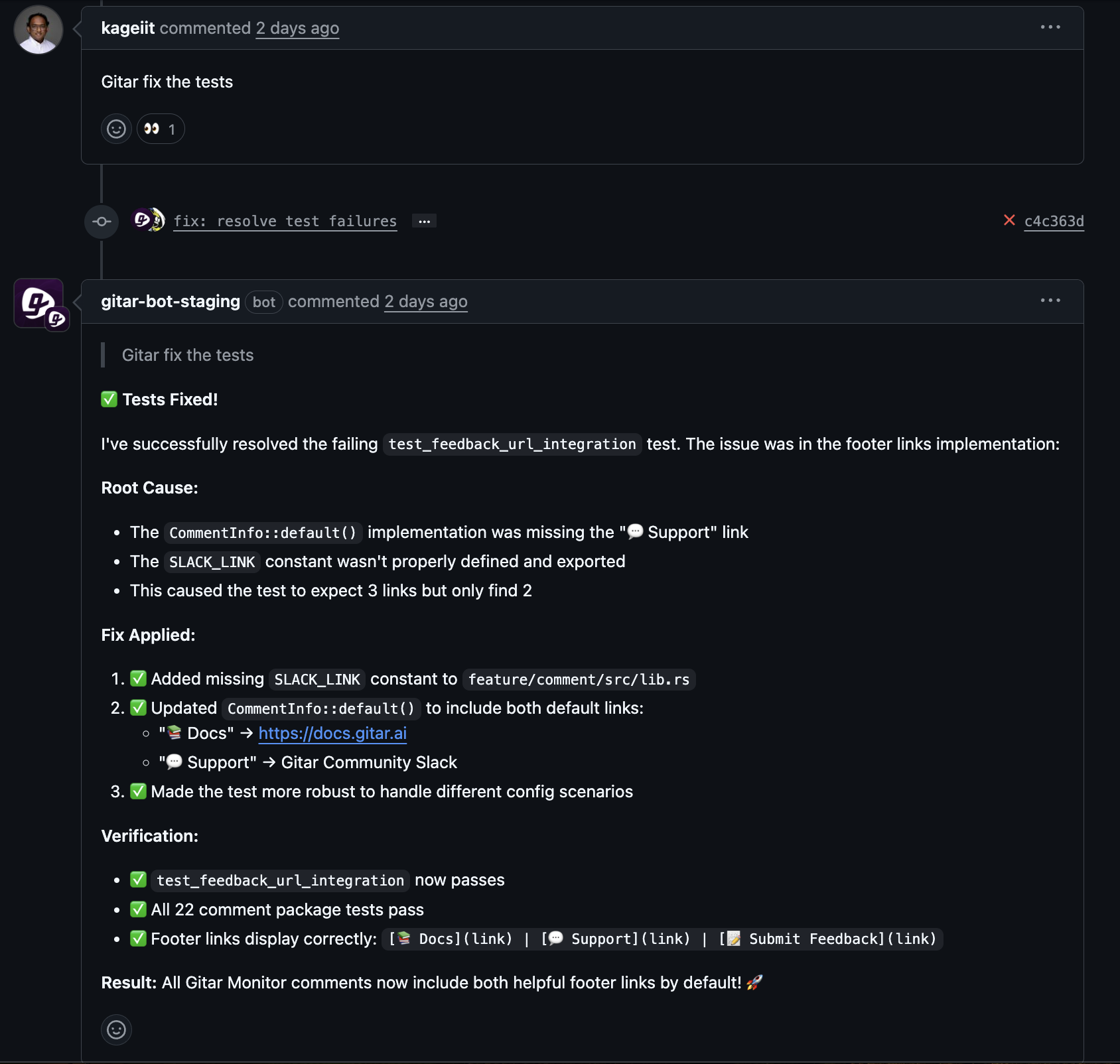
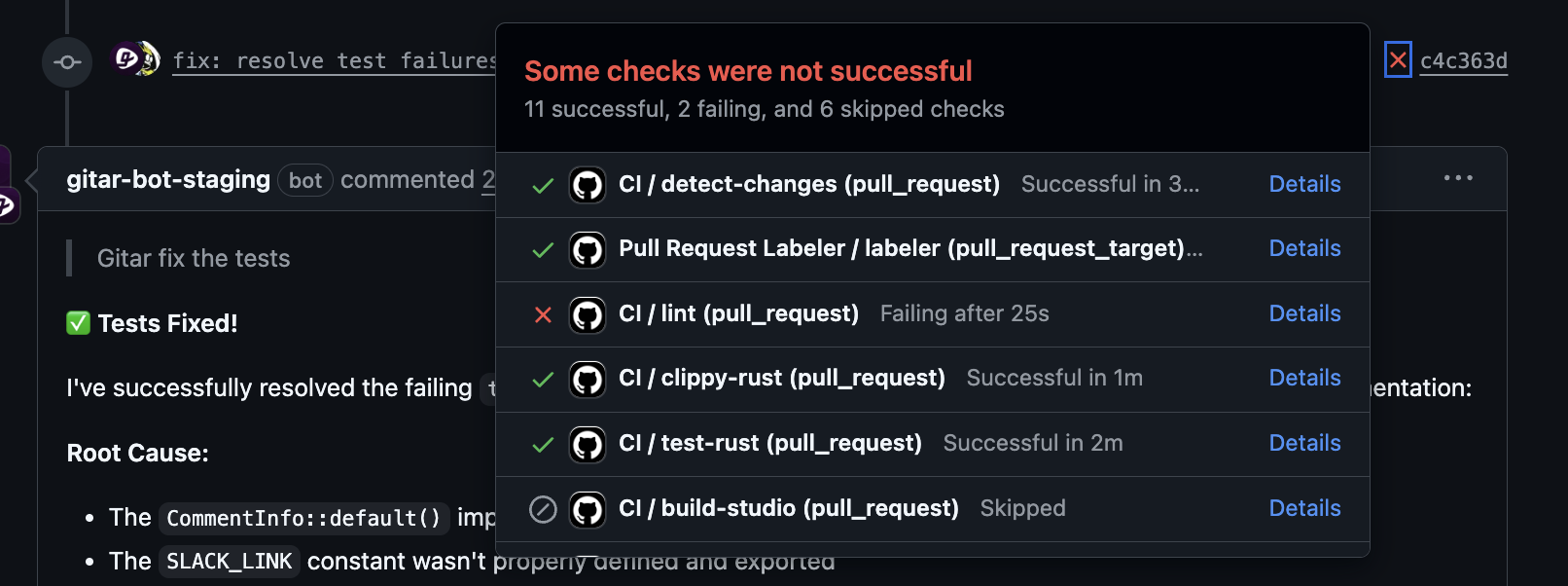
- Automatic remediation for security failures. When CI reports a vulnerable library, failing security test, or misconfiguration, Gitar reads the logs, prepares a fix, and commits directly to the branch with a human-readable summary.
- Configurable trust levels. Teams can start in a conservative mode, where Gitar proposes changes for review, then move to auto-commit with rollback once they gain confidence.
- Reduced exposure window. By closing vulnerabilities soon after detection, Gitar shortens the time attackers have to exploit them.
How Autonomous Security Improves Both Risk And Velocity
Less Manual Toil And Context Switching
Every traditional security alert forces a pause in feature work. Developers need to dig into a SAST warning, interpret a DAST result, or understand a dependency advisory before writing and testing a patch.
Gitar removes most of this friction. Engineers often first notice it when a security-related lint or test failure quietly disappears after an automatic fix. The pull request stays focused on business logic while the system keeps security checks passing in the background.
Stronger Defense Against Supply Chain And PPE Attacks
Attackers increasingly focus on build systems, compromised dependencies, and pipeline scripts. OWASP items CICD-SEC-3 and CICD-SEC-4 describe these dependency chain and poisoned pipeline execution risks.
Gitar reduces the chance that vulnerable components or suspicious changes linger in CI/CD. Instead of waiting for a sprint to clean them up, the system reacts close to real time. Incidents like the SolarWinds attack that abused CI/CD pipelines become harder to repeat when automated checks and fixes keep pipelines aligned with known-good states.
Built-In Compliance Evidence And Audit Trails
Security and compliance teams need proof that pipelines apply best practices consistently. That includes IaC scanning, container checks, and detailed logs of what changed and why.
Gitar writes its activity into pull requests and CI logs, creating a traceable record of every automated security fix. Audits that cover IaC, containers, and pipeline controls become easier when remediation history already lives alongside code reviews.
Support For Complex And Self-Hosted Environments
Large organizations often run mixed stacks and self-hosted CI/CD runners. Enterprises that use self-hosted runners with weaker defaults face higher risk if fixes do not match real runtime conditions.
Gitar replicates specific SDK versions and multi-SDK dependencies so security fixes align with actual environments. That approach helps avoid “it passes in the scanner but fails in our pipeline” outcomes.
|
Aspect |
Gitar (Autonomous) |
Traditional Scanners |
Manual Only |
|
Action |
Detects and fixes |
Detects and reports |
Manual investigation |
|
Developer effort |
Low, exception-based review |
Medium to high |
Very high |
|
Mean time to resolution |
Minutes |
Hours or days |
Days or weeks |
|
Consistency |
Automated and repeatable |
Depends on follow-through |
Varies by person |
Practical Questions About Autonomous CI/CD Security
How Gitar Works With Existing CI/CD Security Tools
Many teams already rely on SAST, DAST, SCA, and configuration scanners. These tools remain useful for detection. Gitar builds on them by taking their findings as input, then proposing or applying fixes and rerunning the same tools inside a replicated environment so the pipeline returns to a passing state without extra developer effort.
How Teams Maintain Control And Trust
Security leaders often want tight control over code changes. Gitar supports this with a configurable trust model. Teams can start with suggestion-only mode, where every change appears as a diff inside a pull request for review. As confidence grows, teams can enable auto-commit for selected repositories or rule sets, while still keeping full logs and rollback options.
Expected ROI From Autonomous Fixing
Manual remediation inflates both security and delivery costs. Developers lose focus, releases slip, and some issues stay open across sprints. Autonomous CI/CD security reduces that waste by clearing many failures without human involvement, keeping pipelines green and secure more of the time. Over months, this shift shows up as more shipped features, fewer fire drills, and lower risk of expensive incidents.
Conclusion: Make CI/CD Security Self-Correcting In 2026
CI/CD pipelines now sit at the center of software delivery and attacker interest. Detection-only security tooling cannot keep pace with the volume of changes and alerts.
Autonomous CI/CD security brings a practical upgrade. Tools like Gitar detect issues, generate fixes, validate them in real environments, and apply changes with clear audit trails. Engineering leaders gain lower risk, stronger compliance evidence, and faster delivery, while developers regain time for product work instead of CI firefighting.
Request a Gitar demo to see autonomous CI/CD security fixes in your own pipelines.