
CI build failures can turn the promise of Continuous Integration into a frustrating cycle of manual debugging for engineering teams. While CI aims to speed up software delivery, issues like automated test errors, misconfigured scripts, and dependency conflicts often slow developers down. A practical way forward is adopting an autonomous, self-healing CI system that handles these issues without constant human effort.
Why CI Build Failures Hinder Continuous Integration Adoption
How Context Switching Drains Developer Productivity
CI failures disrupt workflows daily for many developers. Picture this: you submit a pull request, only to see a failed build. You stop your current task, dig through error logs, pinpoint the issue, whether it’s a flaky test or a missing dependency, and switch back to fix it locally. This process can eat up to 30% of a developer’s time.
The real cost isn’t just debugging time. Switching tasks adds mental strain, breaking focus and slowing momentum. A 30-minute fix can stretch into an hour of lost productivity. For distributed teams, delays grow when reviews span time zones, turning a quick check into days of waiting.
Ready to stop this cycle? Install Gitar to fix broken builds automatically and ship better software faster.
Common Issues in CI Pipelines
CI failures often come from recurring problems that affect even experienced teams. Here are some key challenges:
- Monolithic pipelines running all jobs per commit cause widespread failures.
- Hardcoded secrets create security risks and deployment issues.
- Pipelines taking over 10 minutes delay feedback, discouraging frequent commits.
- Differences between development, testing, and production environments lead to unexpected errors.
- Flaky tests create inconsistent results, hard to replicate or fix.
These issues hit businesses hard. Around 60% of companies report project delays due to CI problems, slowing the journey from commit to merge. For a team of 20 developers, this can add up to $1 million in lost productivity each year.
How Self-Healing CI Solves Build Failures
Shifting from Manual Fixes to Automated Solutions
Self-healing CI changes the game by moving from manual debugging to automated problem-solving. Instead of developers spending time on error logs and fixes, these systems detect issues, find the root cause, apply solutions, and verify them, all without human input.
This approach doesn’t just suggest fixes. It completes the process end-to-end, ensuring the build passes before notifying developers. Gone are the days of testing one fix only to face another failure. Developers stay focused, while issues resolve in the background.
Discover Gitar: Your Tool for Automated CI Fixes
Gitar acts as an AI-driven agent that tackles failing CI pipelines and code review feedback on its own. When a build breaks due to a linting error or test failure, Gitar examines the logs, creates a fix, commits it to the pull request branch, and ensures a self-healing CI process.

Here’s what makes Gitar stand out:
- Complete Automation: Fixes issues, validates them across CI workflows, and delivers passing builds without manual checks.
- Environment Accuracy: Matches complex setups with specific JDK versions, multi-SDK dependencies, and third-party tools like SonarQube.
- Platform Flexibility: Works with GitHub Actions, GitLab CI, CircleCI, BuildKite, and more.
- Customizable Automation: Offers modes from suggestions for approval to full auto-commits with rollback options.
- Review Support: Handles human feedback on pull requests, reducing delays for distributed teams.
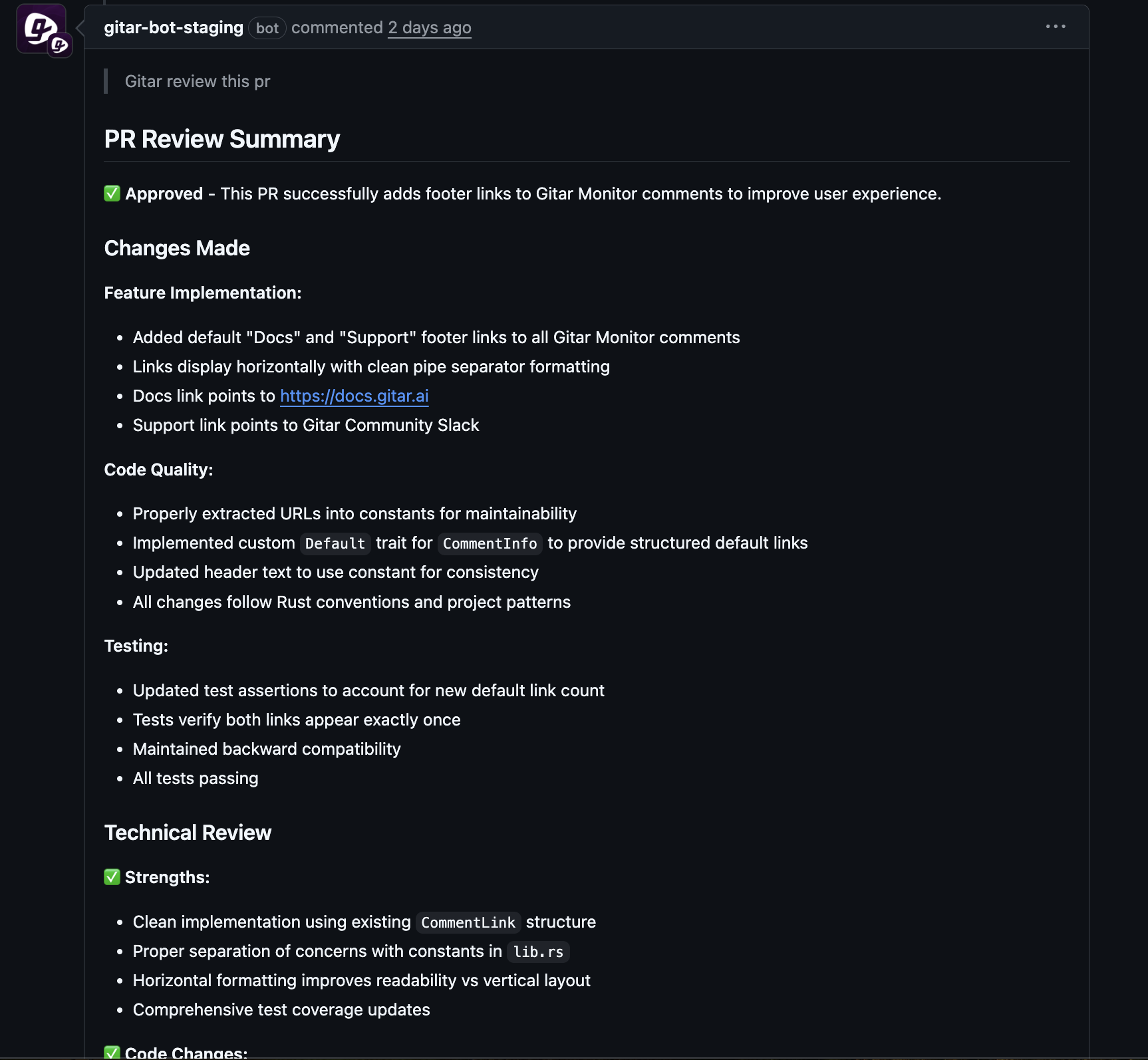
Want to simplify CI? Install Gitar and turn failing builds into ready-to-merge pull requests.
Steps to Strengthen CI Adoption with Automated Fixes
Practical Ways to Prevent CI Issues
While automated fixes help after failures, proactive steps can reduce how often they happen. Start with basics like using lock files, managing secrets securely, and conducting pre-merge reviews.
Break large pipelines into smaller, independent jobs to limit failure impact and speed up feedback. Teams keeping build times under 10 minutes deploy twice as often. Using Docker for containerization ensures consistency across environments, and solid dependency management cuts down on version conflicts. Even so, failures will occur, making automated fixes a key piece of the puzzle.
Speeding Up Merges and Development
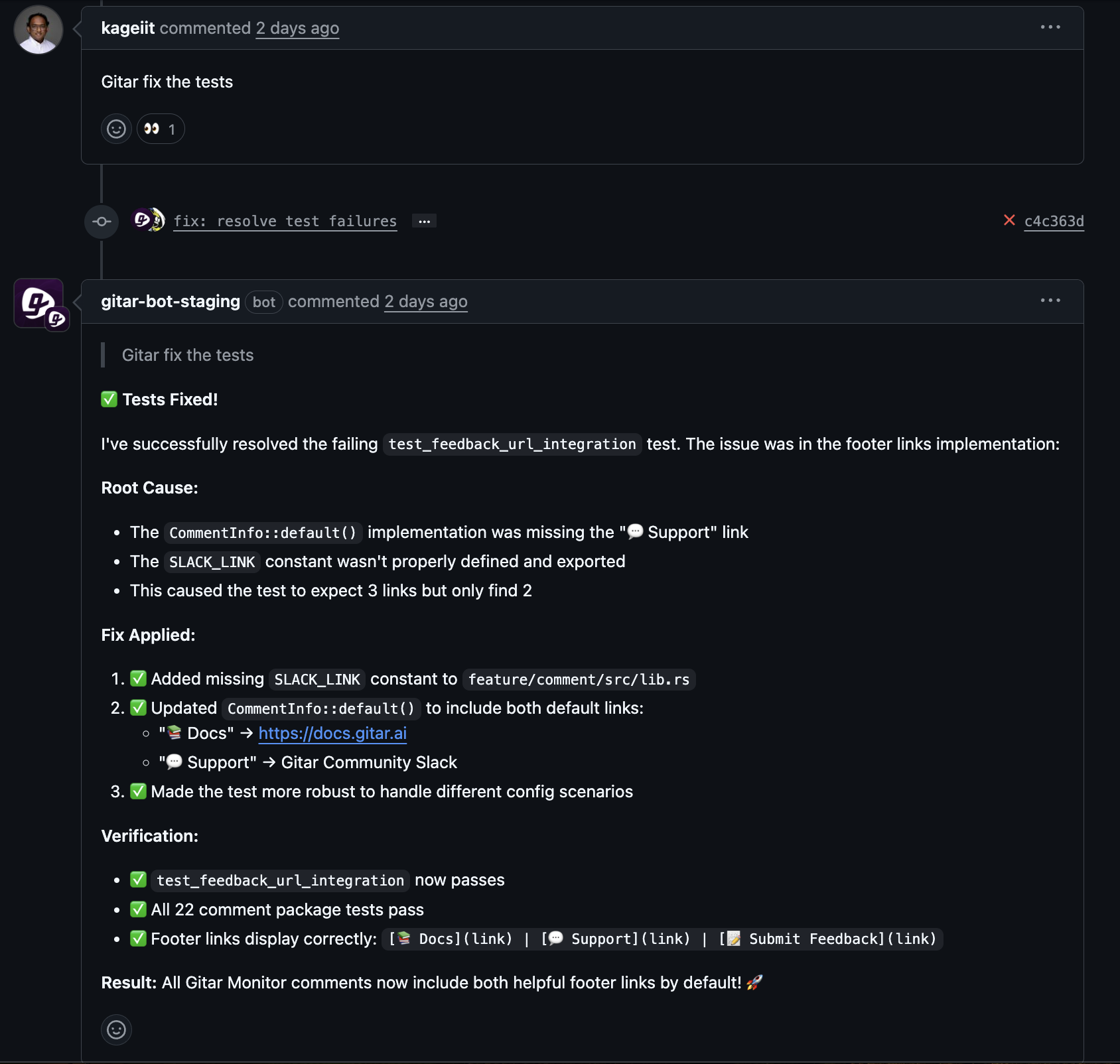
Automated CI fixes streamline the path to merging code. When Gitar resolves a linting error or test issue, the pull request moves forward without pulling developers away from their work. Faster fixes mean quicker feedback loops, letting teams iterate rapidly. Code reviews shift focus to design and logic, not minor errors.
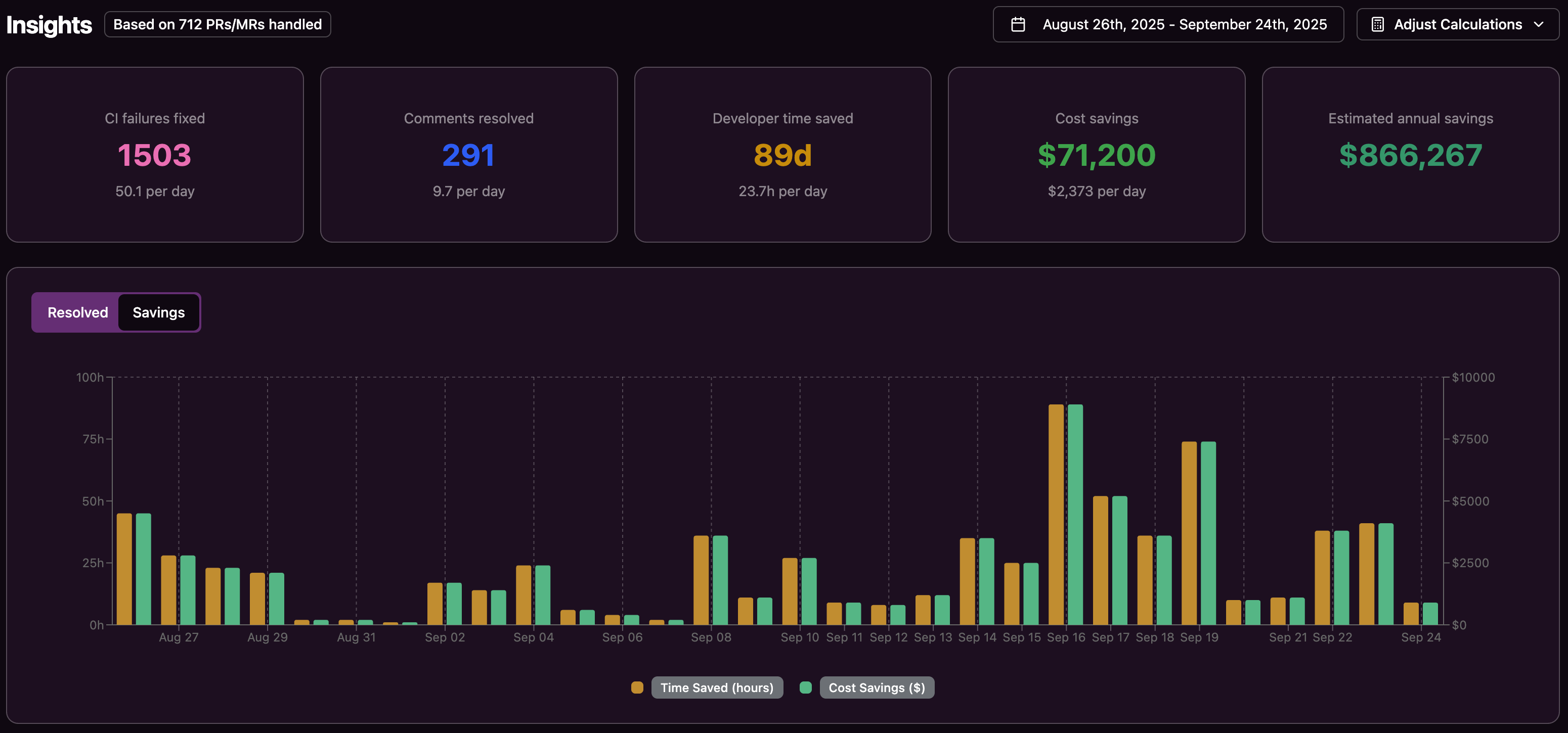
The time savings add up. A 20-developer team cutting just one hour of daily CI troubleshooting reclaims 5,000 hours yearly, roughly $1 million in productivity. Even at half that impact, the return on investment is clear, alongside happier developers.
Boosting Developer Focus and Satisfaction
Dealing with CI failures manually frustrates developers, breaking their focus with repetitive tasks. When Gitar automates these fixes, developers can stick to meaningful work like designing features or solving tough problems. Seeing a failure fixed before they even notice it creates a positive shift. CI becomes a helpful tool, not a hurdle, improving both workflow and morale.
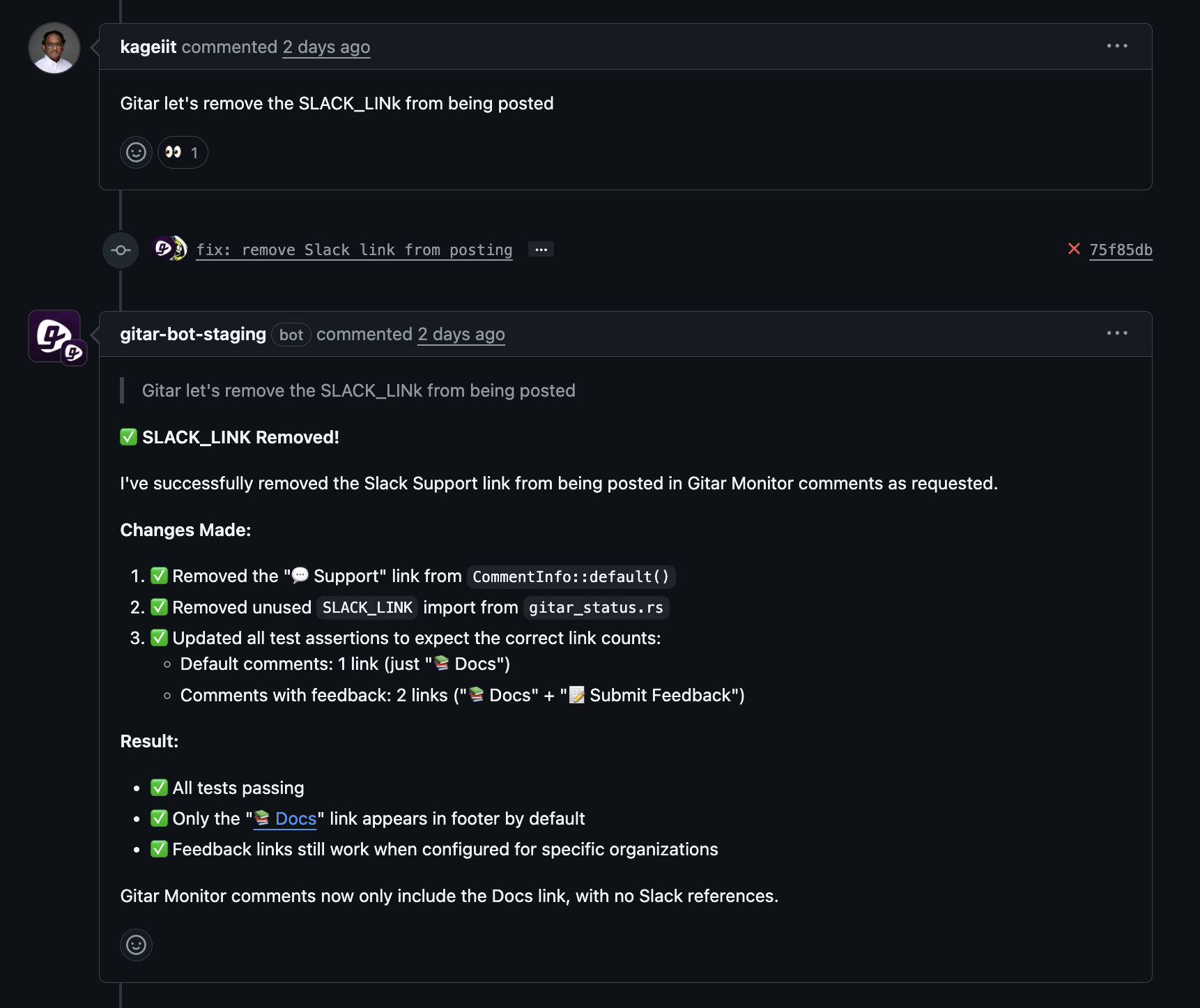
Comparing Gitar to Other CI Approaches
|
Feature |
Gitar (Automated Fixes) |
AI Suggestion Tools |
Manual Debugging |
|
Problem Resolution |
Automatic Fix and Validation |
Offers Suggestions Only |
Full Manual Effort |
|
CI Pipeline Context |
Replicates Full Environment, Multi-Platform |
Limited CI Support |
Depends on Developer Knowledge |
|
Developer Interruption |
Minimal, with Positive Updates |
Needs Manual Action |
High, Breaks Workflow |
|
Build Success Assurance |
Yes, After Validation |
No, Relies on User |
Only After Manual Fixes |
Ready for a better CI experience? Install Gitar to eliminate toil from CI failures.
Common Questions About Fixing CI Build Failures
Can Gitar Handle Our Complex CI Setup?
Gitar is built for intricate, enterprise-level CI environments. It mirrors your setup, including specific dependencies, SDK versions, and tools like SonarQube. Whether dealing with multi-language projects or complex dependencies, Gitar delivers fixes that fit your unique context.
How Does Gitar Address Flaky Tests?
Flaky tests pose a real challenge in CI. Gitar tackles deterministic cases tied to timing or environment issues by identifying and fixing root causes. By automating other failures like linting errors, it frees your team to focus on trickier flaky test issues that need human input.
What Sets Gitar Apart from AI Review Tools?
Unlike AI tools that suggest fixes for manual application, Gitar takes full action. It applies solutions, validates them across your CI pipeline, and ensures builds pass. Gitar also integrates deeply with platforms like GitHub Actions or CircleCI to address environment-specific failures.
How Can We Trust Automated CI Fixes?
Gitar offers a flexible trust model. Start with a cautious mode where fixes are suggestions for review. As confidence grows, shift to auto-commit for certain issues, with rollback options always available. This lets teams build trust at their own pace.
What If Gitar Applies a Wrong Fix?
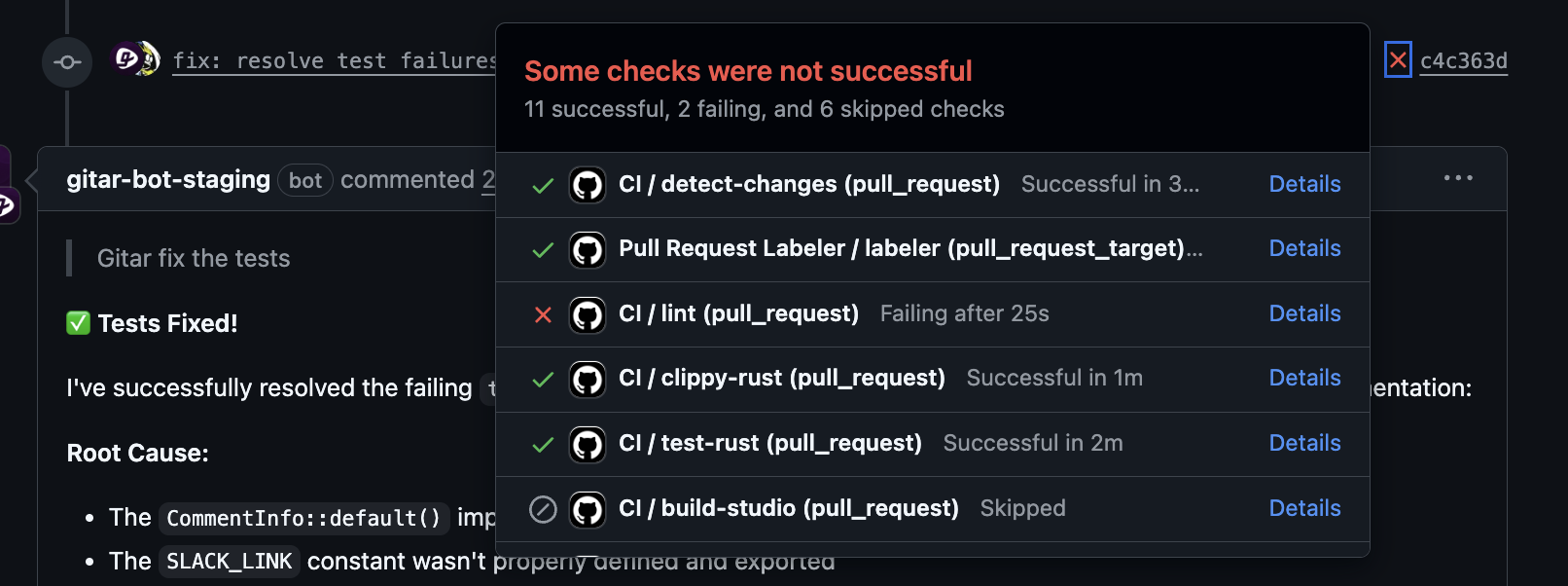
Gitar has safeguards in place. Fixes are tested against the full CI pipeline before application. Detailed commit messages explain changes for easy review. Auto-commit users can rollback via Git, and teams can set manual approval for complex fixes while automating simpler ones.
Conclusion: Achieve True Continuous Integration with Automated Fixes
Continuous Integration promises fast, automated software delivery, but build failures often slow teams down, disrupt focus, and delay projects. Standard methods focus on better tools or practices, yet they don’t solve the core issue of time lost to manual fixes.
Even well-designed CI systems face issues from dependency updates, environment shifts, or evolving code. The answer lies in building resilience with automated solutions.
Gitar turns CI into a background asset by detecting and fixing failures without developer input. This cuts down on wasted time and lets teams focus on creating great software.
If your team wants to maximize CI benefits, it’s time to move past manual troubleshooting. Request a demo of Gitar today and start fixing CI build failures automatically.