
Coding standards help engineering teams maintain consistency and improve code quality. Yet, without automation to enforce and resolve issues, they often lead to long code review cycles and repeated CI failures. This article explores how pairing clear coding standards with an autonomous AI tool like Gitar can streamline development by automatically fixing problems, reducing developer workload, and speeding up PR merges.
Why Manual Processes Disrupt Coding Standards and Team Consistency
Developer Workload and Costly Context Switching
Modern development tools have sped up code creation, but validating and merging that code remains a challenge. Many developers spend considerable time addressing CI and code review issues, often losing focus due to frequent interruptions. Up to 30% of their workday may go toward resolving such problems.
Picture a developer submitting a pull request, only to get a CI failure notification hours later while working on something else. Switching back to fix a small issue, like a formatting error, can disrupt their flow and waste valuable time. These small interruptions add up, slowing down the entire team.
Install Gitar now to automatically fix broken builds and ship quality software faster.
Long Code Review Cycles and Inconsistent Feedback
Code reviews are vital for quality, but they drag on when standards aren’t applied evenly or enforced automatically. Issues like syntax errors or dependency mismatches often cause delays in the review process. This creates repetitive feedback loops that frustrate everyone involved.
For distributed teams, a minor style issue can extend a review across days due to time zone differences. Each cycle of identifying a problem, giving feedback, waiting for a fix, and reviewing again adds unnecessary delays to merging code.
Inconsistency in feedback worsens the problem. If reviewers prioritize different aspects of coding standards, developers receive mixed messages about what makes code acceptable, leading to confusion and wasted effort.
Persistent CI Failures That Slow Progress
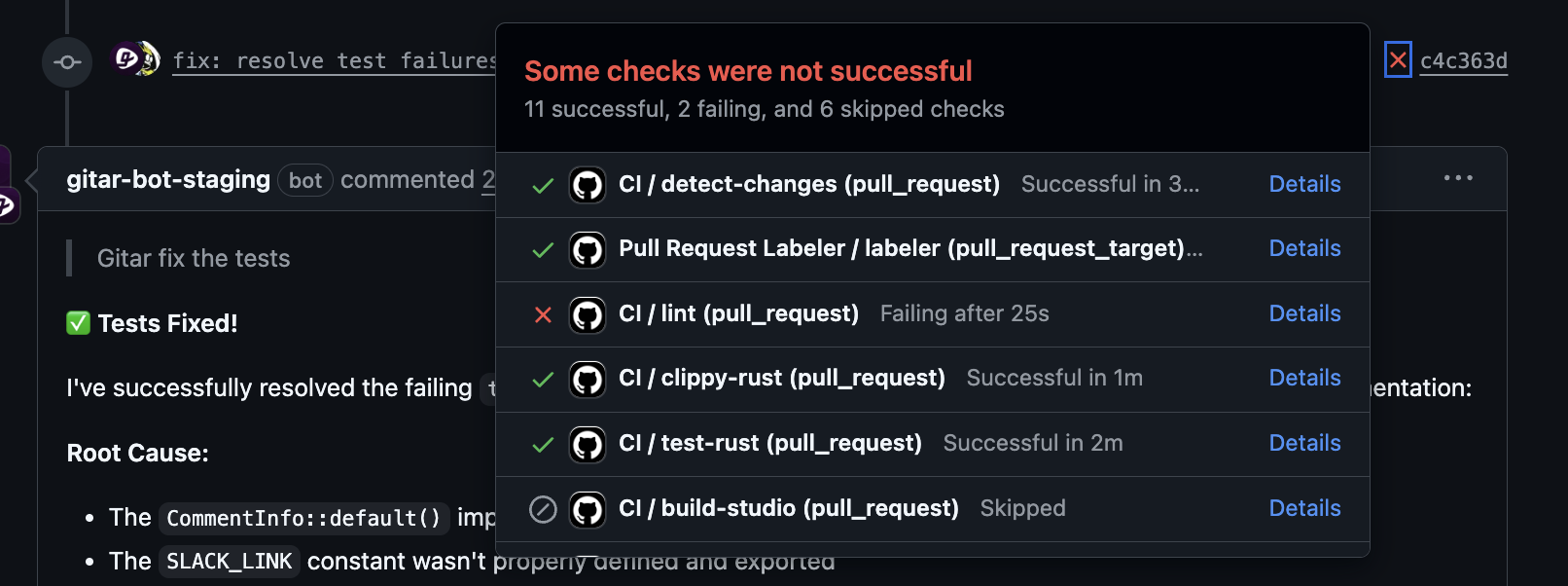
CI failures create significant hurdles for developers, ranging from small formatting errors to complex dependency issues. These problems often take hours to resolve, especially when a test passes locally but fails in CI due to environment differences.
The unpredictability of these failures adds to the frustration. A “works on my machine” situation can shake confidence in the deployment process. Additionally, build errors from missing dependencies or script misconfigurations require developers to dig through error logs or consult with other teams for solutions that should be straightforward.
Shifting Bottlenecks from Code Creation to Validation
AI coding tools have made writing code faster, but they’ve shifted the slowdown to validating and integrating that code. More generated code leads to more pull requests, tests, and chances for CI failures.
This shift means teams can create code quickly but get stuck in the later stages of debugging and reviewing. The mismatch between fast code generation and slow validation processes creates inefficiencies that hinder overall progress.
How to Boost Team Consistency with AI and Clear Standards
Setting Up Effective Coding Standards
Strong coding standards build a foundation for team alignment. They should cover not just style and naming but also testing requirements and quality checks. Clear guidelines on formatting, documentation, and error handling help maintain a uniform codebase.
However, standards only work if enforced automatically. Tools like linters, formatters, and CI checks can catch issues early and provide specific feedback. Standards must be part of the workflow, not just a document developers might overlook, to reduce friction and ensure consistent application.
Meet Gitar: Your Solution for Automatic CI Fixes and Code Reviews
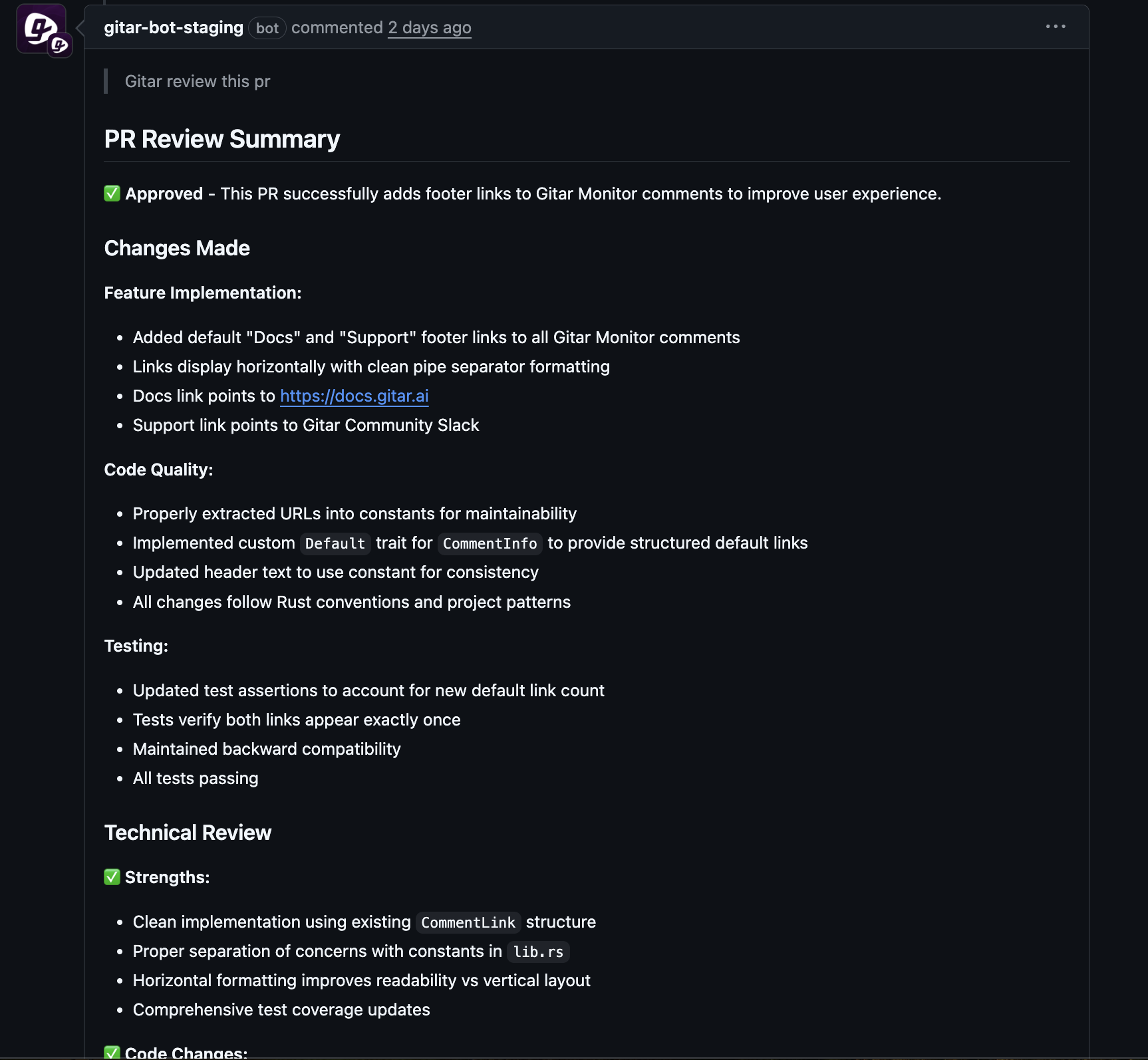
Gitar changes the game by moving from manual CI troubleshooting to automatic issue resolution. Unlike tools that only suggest fixes, Gitar acts independently, addressing CI failures and code review comments by applying solutions directly to the branch.
When a pull request hits a snag, Gitar steps in to analyze the problem, create a fix, and commit it, turning lengthy debug sessions into a hands-off process. This self-fixing approach saves time and keeps development moving forward.

What Gitar Offers for Consistent Development
- Complete Fix Automation: Gitar doesn’t just suggest solutions, it applies fixes and runs them through CI checks to confirm a successful build.
- Accurate Environment Matching: For complex setups, Gitar mirrors the exact CI environment, including specific dependencies and tools, to ensure fixes work as intended.
- Code Review Support: Reviewers can request Gitar to handle specific changes, like refactoring code, and it executes them while explaining the updates.
- Adjustable Automation Levels: Teams can start with Gitar suggesting fixes for approval and later move to fully automatic commits with rollback options.
- Wide Platform Compatibility: Gitar works across GitHub, GitLab, CircleCI, BuildKite, and more, supporting consistency no matter the tools in use.
Book a demo with Gitar to set up coding standards for your team.
Key Advantages of Using Gitar for Consistency and Speed
Cut Developer Workload and Speed Up PR Merges
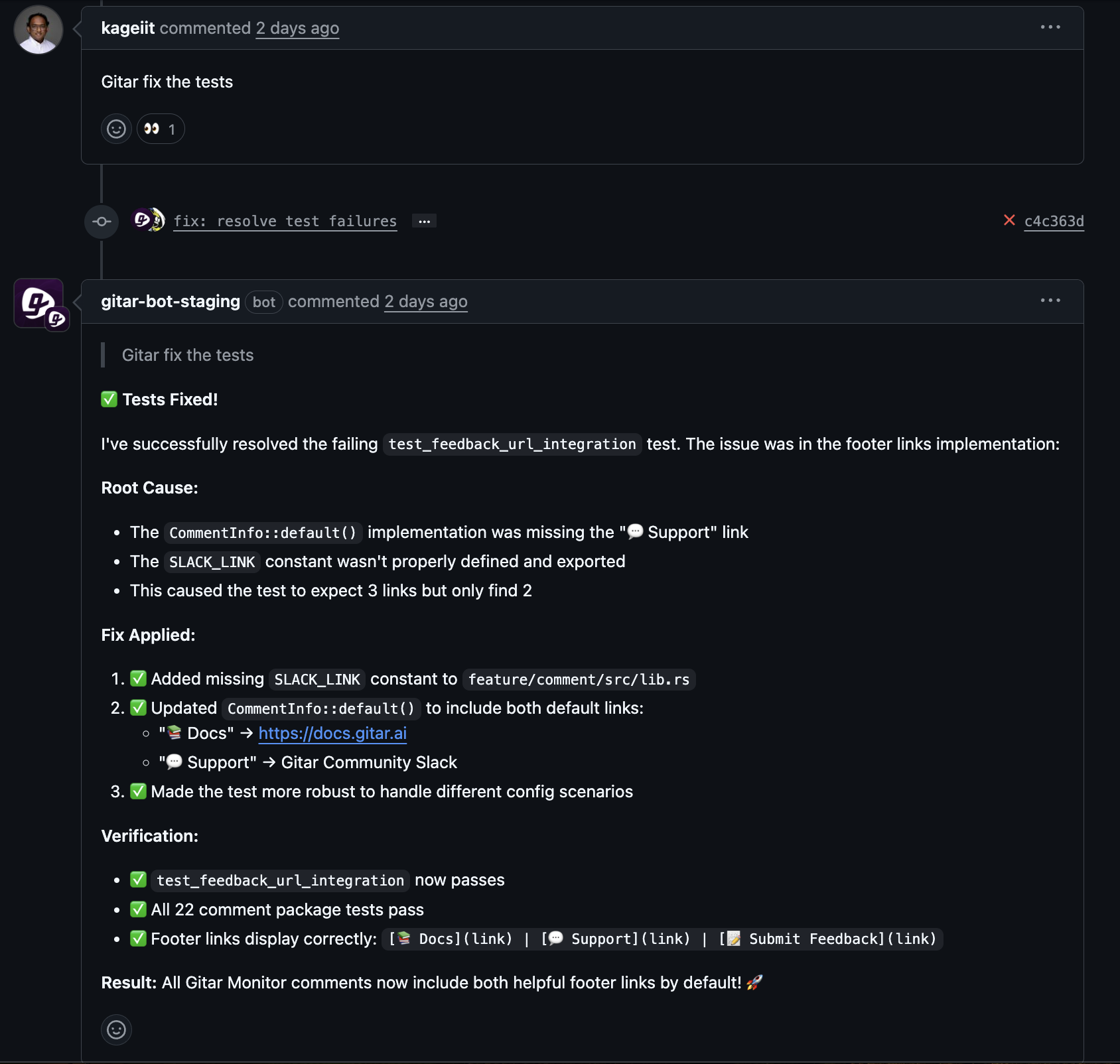
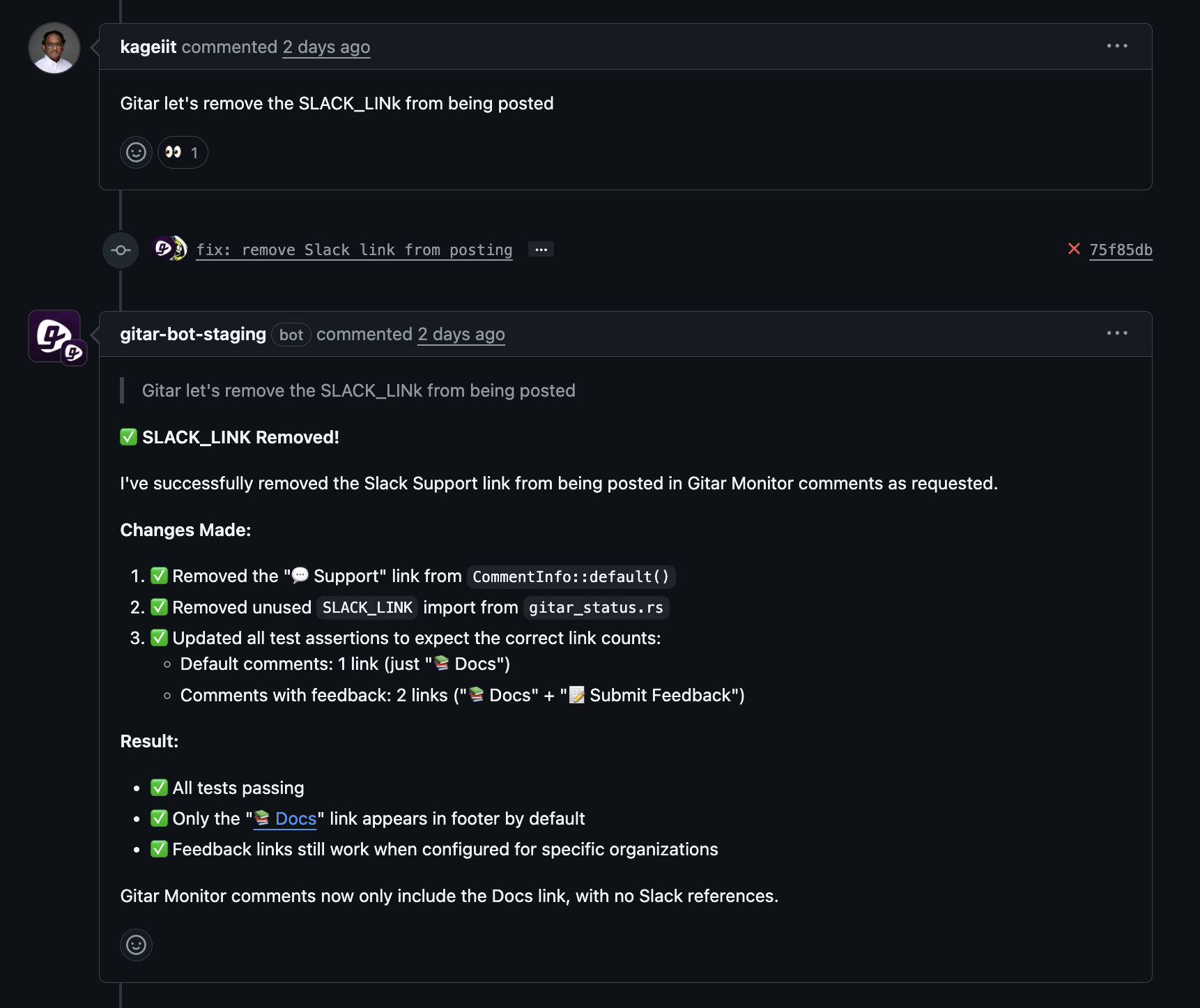
With Gitar, developers no longer face constant CI failure alerts requiring manual fixes. Instead, issues like formatting errors get resolved in minutes, often before they’re even noticed. This keeps developers focused on their tasks without disruptive context switches.
Faster PR merges come from removing the repetitive cycle of debugging and waiting. Gitar handles routine fixes automatically, cutting down the time from PR submission to merge, especially for teams spread across different regions.
Improve Code Quality with Uniform Standards
Consistent coding standards make codebases easier to read and maintain. When every file follows the same rules, new team members onboard faster, and knowledge sharing becomes simpler. Gitar ensures these standards are applied evenly by handling fixes as part of the workflow, preventing quality from slipping over time.
Boost Team Output and Morale
Gitar saves teams time lost to CI and review delays, leading to noticeable cost savings. More importantly, removing daily frustrations improves job satisfaction. Developers can focus on solving complex problems instead of fixing mundane issues.
Collaboration also benefits. With faster, more focused code reviews, feedback becomes more meaningful. Reviewers spend time on significant insights, and developers get guidance that truly helps improve their work.
Handle Complex Enterprise CI Environments Effectively
Enterprise setups often involve unique dependencies, security tools, and custom processes that generic tools struggle to address. Gitar replicates these specific environments, including precise tool versions and configurations, to create reliable fixes.
This capability ensures solutions work in real production contexts, not just simplified test scenarios. Gitar stands out by managing the intricacies of large-scale development, offering consistency where other tools fall short.
Install Gitar now to fix broken builds and deliver quality software faster.
Comparing Gitar with Manual Fixes and AI Suggestion Tools
Different approaches to handling CI issues and maintaining code consistency offer varying levels of support. Here’s how Gitar stands out compared to manual methods and suggestion-based AI tools.
|
Feature/Attribute |
Gitar (Autonomous AI Healing Engine) |
Manual Work (Status Quo) |
AI Code Reviewers (e.g., CodeRabbit) |
|
Fixes Issues Directly |
Yes (Automated commits & validated) |
Yes (Developer performs) |
No (Provides suggestions only) |
|
Validates with Full CI |
Yes (Ensures green builds) |
Yes (Requires full rerun) |
No (Developers must validate) |
|
Automation Level |
Fully Autonomous to One-Click Accept |
Manual |
Suggestion-Based |
|
Environment Handling |
Full Replication (Enterprise-grade) |
Varies (Local vs. CI) |
Limited (Contextual analysis) |
Gitar’s strength lies in taking full responsibility for fixes, from identifying issues to applying and validating solutions. Suggestion tools, while helpful, still require developers to step in, maintaining the same interruptions that slow progress. Gitar eliminates this gap with a fully automated process.
Common Questions About Coding Standards and AI Assistance
How Does Gitar Differ from AI Review Tools Like CodeRabbit?
AI review tools often provide suggestions for code improvements, but they leave the application and validation to developers. Gitar goes further by automatically applying fixes, running them through your CI pipeline, and ensuring a successful build. This saves time and enforces coding standards directly.
Can Gitar Manage Complex CI Setups Across Different Projects?
Gitar handles intricate environments by fully replicating your setup, including specific software versions, dependencies, and security scans like SonarQube. This ensures fixes are accurate and consistent, even across varied and complex projects.
Is Gitar Safe for Automating Fixes in Critical Systems?
Gitar offers a flexible trust model. Start with a cautious setting where fixes are suggested for approval, building confidence over time. Later, shift to automatic commits with rollback options, giving you control while maintaining standards.
What Coding Standard Issues Can Gitar Fix Automatically?
Gitar addresses many common issues, including formatting errors, linting violations, test failures, and dependency conflicts. It also responds to reviewer comments by making requested code changes, ensuring alignment with team guidelines.
How Does Gitar Fit into Existing Workflows and Tools?
Gitar integrates easily via a GitHub or GitLab app, working with systems like GitHub Actions and CircleCI. It operates quietly in the background, updating pull requests with fixes and status messages without disrupting your current processes.
Wrap-Up: Achieve Consistent Coding Standards with Gitar
Coding standards lay the groundwork for effective development, but their real value comes from automatic enforcement. Manual methods create delays that hurt productivity and code quality over time.
Gitar changes this by turning CI failures and review cycles into automated, hassle-free tasks. Developers can focus on creative work while Gitar handles routine fixes, ensuring consistency across the codebase without extra effort.
Moving to automated issue resolution isn’t just about saving time, it’s about rethinking how teams approach software quality. With Gitar, standards become a natural part of the process, not a burden.
Teams using Gitar see faster merges, lower CI costs, and happier developers. Removing daily frustrations lets engineers tackle the challenging, rewarding parts of their jobs.
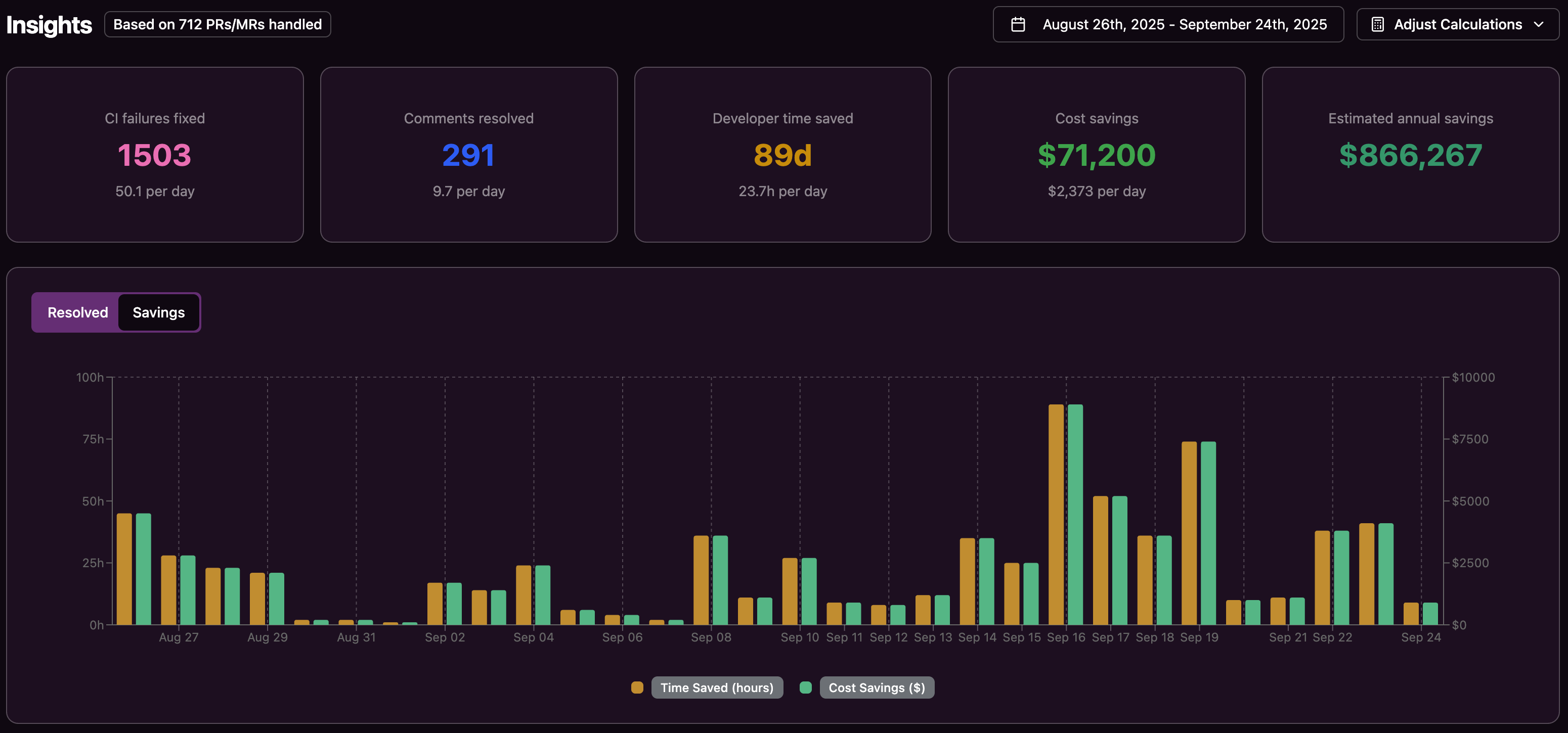
Ready to set up coding standards and speed up development? Request a demo with Gitar today.