
CI pipeline failures can disrupt a developer’s day. You push a pull request, expecting a smooth merge, only to see a red build due to a flaky test or a linting error. What should take minutes turns into hours of debugging, breaking your focus and slowing down the entire team. This issue affects not just individuals but entire engineering organizations, costing significant time and resources.
Developers often spend up to 30% of their time on CI and code review issues, creating delays for 60% of companies. Manual fixes and long review cycles hinder software delivery. Gitar, an AI-powered agent, steps in to automate these processes, resolving issues without constant human intervention and helping teams maintain momentum.

Ready to streamline your workflow? Install Gitar now to fix broken builds automatically and deliver quality software faster.
Why CI/CD and Code Reviews Slow Down Development
Red Builds Drain Time and Energy
CI/CD pipelines often fail for various reasons, creating a frustrating cycle for developers. Flaky tests frequently cause issues due to timing or external dependencies, while build errors often result from misconfigured scripts or incompatible tools. Each failure means decoding error logs, switching contexts, fixing the issue, and waiting for the pipeline to rerun.
The real impact comes from constant interruptions. A small linting error might take just minutes to fix, but the mental shift can cost half an hour of productivity. For a team of 20 developers facing multiple failures daily, this adds up to thousands of lost hours each year.
In setups with monolithic pipelines, a single test failure can halt an entire release. These delays affect not only individual developers but also feature timelines, stakeholder expectations, and team morale.
Context Switching Hinders Deep Work
Submitting a pull request rarely means you’re done. CI failure notifications often pull developers out of focus, preventing sustained periods of deep work. Each interruption, even for a quick fix, disrupts your flow.
Studies in cognitive psychology indicate it takes about 23 minutes to refocus after a distraction. A five-minute CI fix can easily lead to an hour of lost productivity due to this mental reset. With CI failures popping up unpredictably, maintaining focus on complex tasks becomes nearly impossible, leaving developers stuck in a reactive mode.
More Code, More Validation Challenges
AI coding tools have sped up code creation, but they also increase the volume of pull requests and CI runs. This shift often moves bottlenecks from writing code to validating and reviewing it. Teams producing code quickly can find traditional CI/CD processes struggling to keep up.
When a feature takes hours to build but CI debugging adds extra time, the mismatch feels frustrating. Faster code generation highlights the need for automated solutions to match the pace of development with validation.
Distributed Teams Face Review Delays
With teams spread across time zones, code reviews can stretch over days. A developer in one region might wait hours for feedback from a colleague elsewhere, especially if CI failures require back-and-forth fixes.
This delay worsens with slow CI operations that impede quick releases. Even AI review tools often leave manual tasks for developers to complete, extending wait times across different regions and stalling progress.
How Gitar Automates CI/CD Fixes for Better Focus
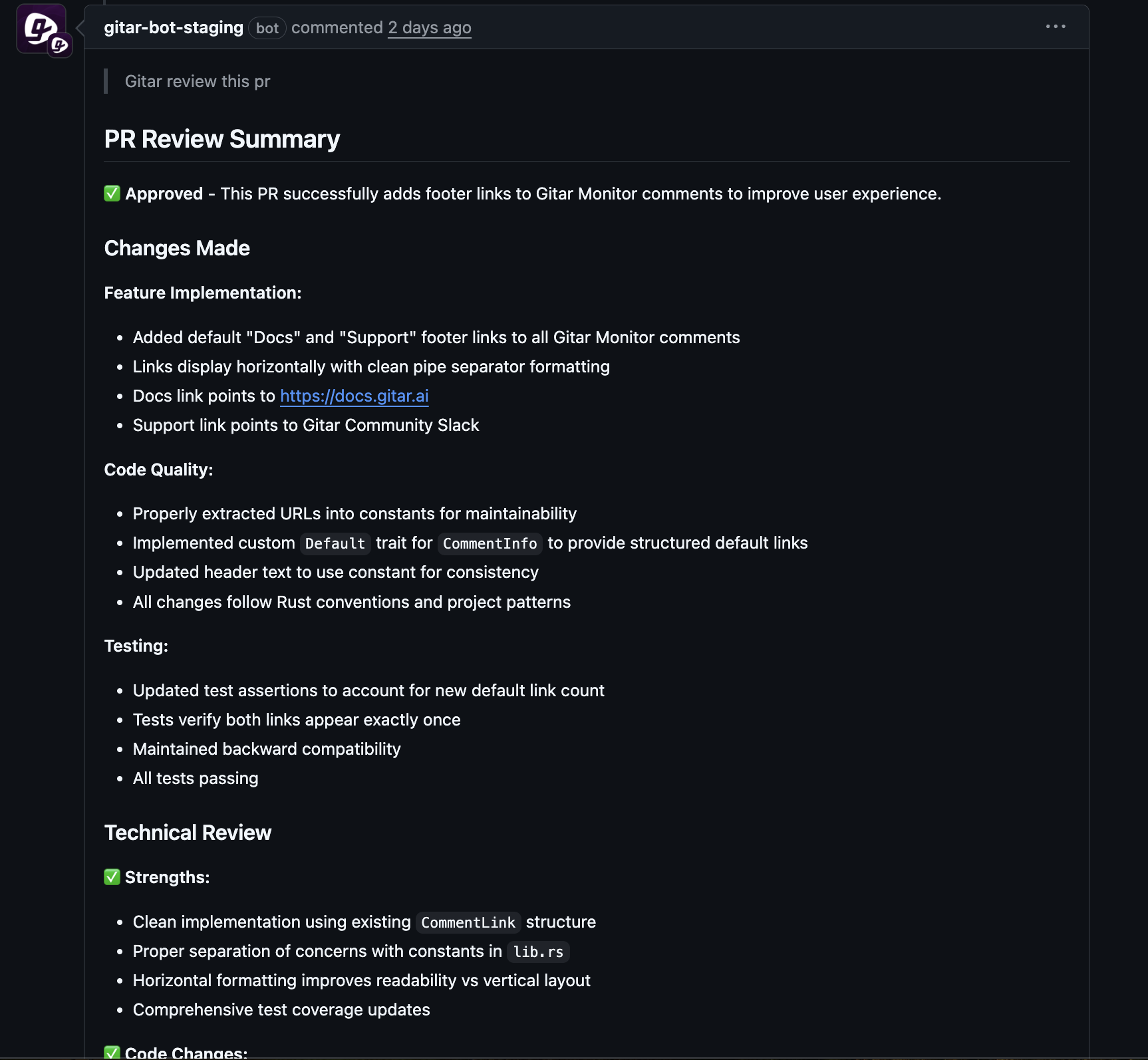
Gitar changes the game by automating CI failure resolution. Instead of developers manually tackling each issue, this AI agent detects problems, creates fixes, and updates pull requests independently. This approach minimizes interruptions and keeps workflows moving.
Unlike tools that only suggest fixes, Gitar handles the entire process. It applies solutions, tests them in the CI environment, and commits changes, turning frustrating failures into background tasks that resolve without derailing your day.
What Gitar Offers to Streamline Workflows
Gitar’s capabilities focus on saving time and reducing manual effort. Here are the key features that help developers stay productive:
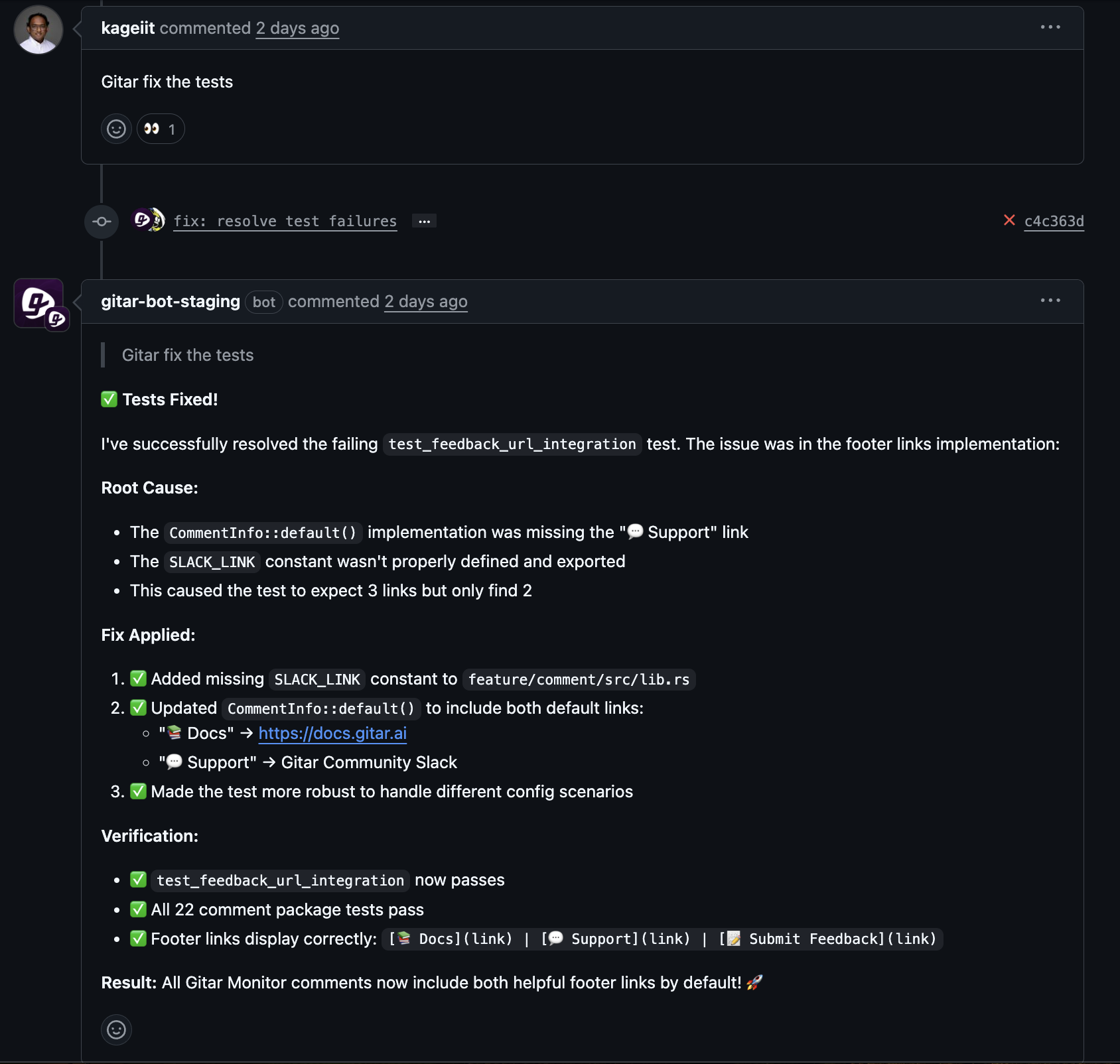
- Complete Fix Process: When a CI pipeline fails, Gitar analyzes logs, creates a fix, applies it, and validates the result. Developers often learn about an issue only after it’s already fixed.
- Environment Matching: Gitar mirrors your specific setup, including JDK versions and integrations like SonarQube, ensuring fixes fit your context.
- Code Review Support: Reviewers can request Gitar’s input on pull requests or ask for specific changes, speeding up feedback cycles.
- Platform Compatibility: Gitar works with GitHub Actions, GitLab CI, CircleCI, and others, fitting into your existing tools.
- Customizable Automation: Start with suggestion-only mode for manual approvals, then scale to full automation as trust grows.
Want to reduce CI headaches? Install Gitar today to automate fixes and ship software faster.
How Gitar Differs from Other Tools
Many AI tools offer suggestions for CI or code review issues, but they still require manual follow-up. Gitar focuses on full resolution, applying fixes and confirming they work in your CI setup, saving developers from extra steps.
Gitar Compared to Alternatives
|
Aspect |
Gitar |
AI Code Reviewers |
Manual Fixes |
|
Focus Area |
CI failures and review delays |
Code review quality |
All issues by hand |
|
Automation |
High, with adjustable settings |
Suggestions only |
Fully manual |
|
Environment Awareness |
Replicates CI setup |
Code-focused only |
Local developer setup |
|
Testing Fixes |
Validates in CI pipeline |
No CI validation |
Manual testing |
|
Impact on Focus |
Low disruption |
Needs manual effort |
High disruption |
|
Outcome |
Updated pull requests |
Suggestions to act on |
Long debug cycles |
Why Validated Fixes Matter for Flow
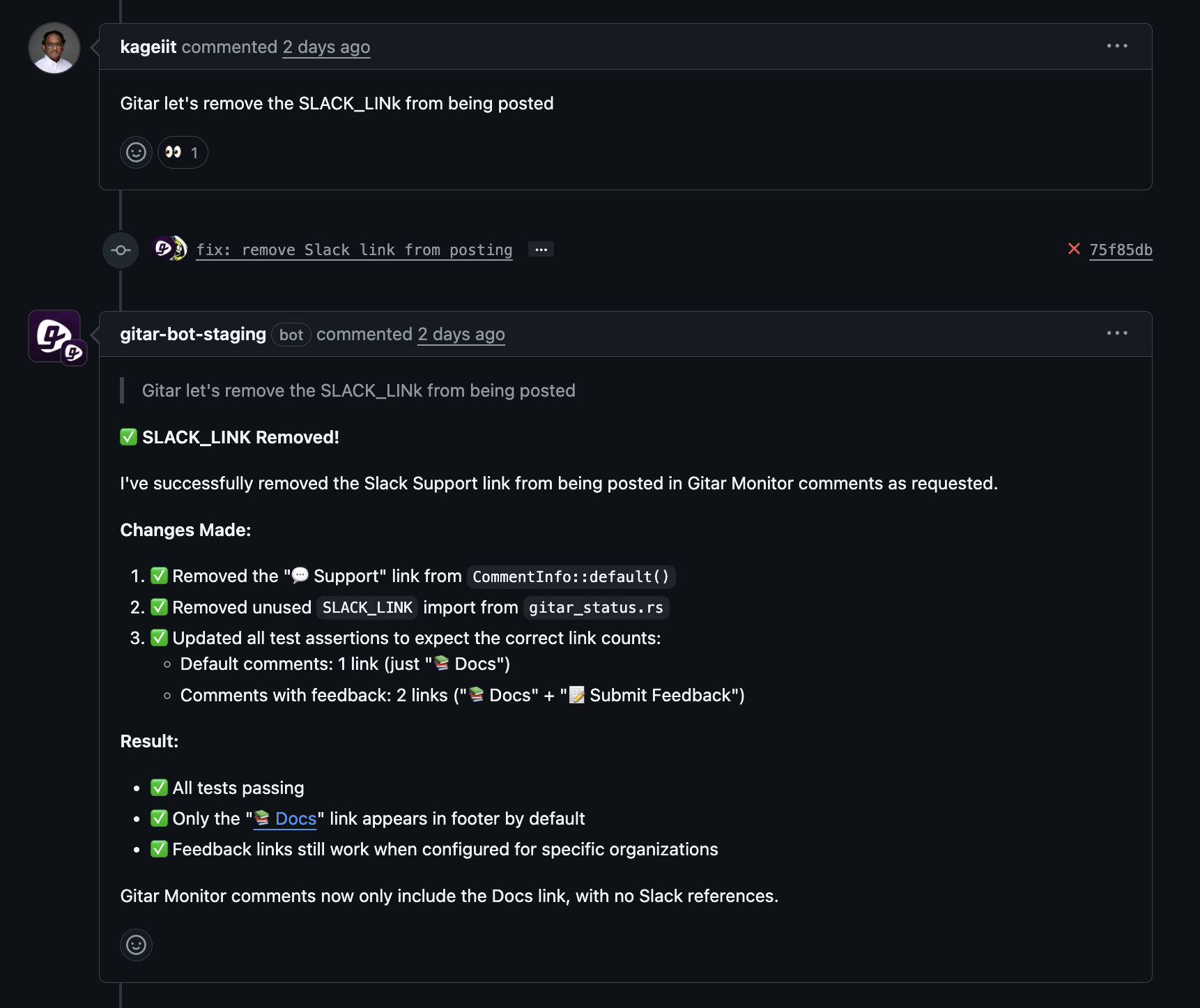
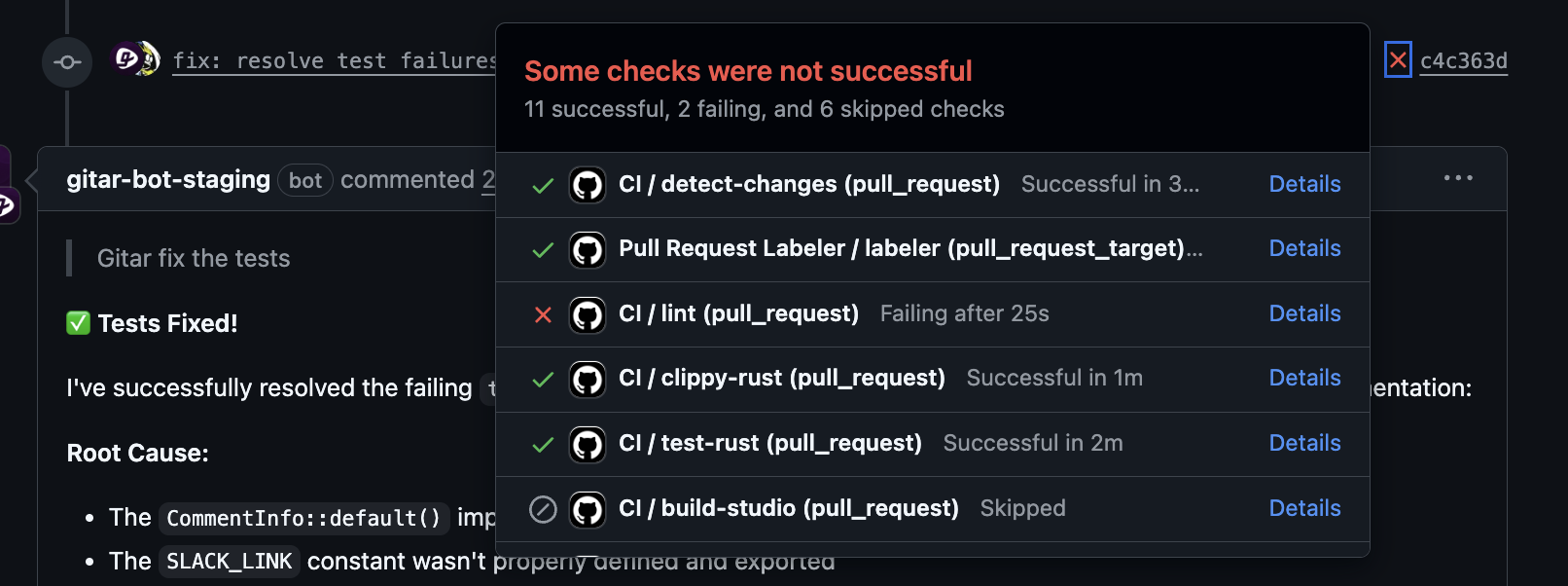
Gitar stands out by ensuring fixes work in your specific CI environment. It detects issues, applies solutions, tests them, and commits changes only if they pass. Developers often receive updates on resolved problems instead of new tasks, helping maintain focus on coding over troubleshooting.
Getting Started with Gitar for Immediate Gains
Steps to Integrate Gitar into Your Workflow
Adopting Gitar happens in clear phases, building trust and efficiency over time:
- Initial Setup: Install Gitar as a GitHub App on chosen repositories via a simple dashboard. Start in suggestion mode to review fixes before they apply.
- First Impact: See Gitar resolve a CI failure with a fix ready for approval. This quick resolution often shifts team perceptions of automation benefits.
- Advanced Use: Move to auto-commit for trusted fixes. Use Gitar for review tasks like refactoring, easing delays in distributed teams.
Measuring Cost and Time Savings
CI issues and review delays have a tangible financial impact. For a team of 20 developers losing one hour daily to these tasks, the annual cost is significant:
- Total Hours: 20 developers, 1 hour per day over 250 days equals 5,000 hours lost yearly.
- Financial Loss: At $200 per hour, that’s $1,000,000 in productivity costs.
If Gitar resolves half of these issues, savings could reach $500,000 annually, alongside faster delivery and improved team morale. Reduced frustration and quicker onboarding for new hires add further value.
Ready to see these benefits? Install Gitar now to automate builds and save valuable time.
Common Questions About Gitar’s Impact on Productivity
How does Gitar manage unique CI setups? It replicates your exact environment, including specific versions and integrations, testing fixes to match your constraints.
What sets Gitar apart from other AI reviewers? Unlike tools offering suggestions, Gitar applies and validates fixes in your CI pipeline, updating pull requests directly to minimize manual tasks.
Can you trust automated fixes? Gitar allows control with adjustable settings, from manual approvals to full automation, letting teams build confidence gradually with full visibility and rollback options.
Will Gitar fit into existing workflows? Yes, it supports platforms like GitHub and GitLab, and CI tools like CircleCI, integrating seamlessly without altering your setup.
How does Gitar ensure fix quality and security? Every fix runs through your CI pipeline, including security checks. Changes commit only if they pass, with detailed explanations and audit trails for transparency.
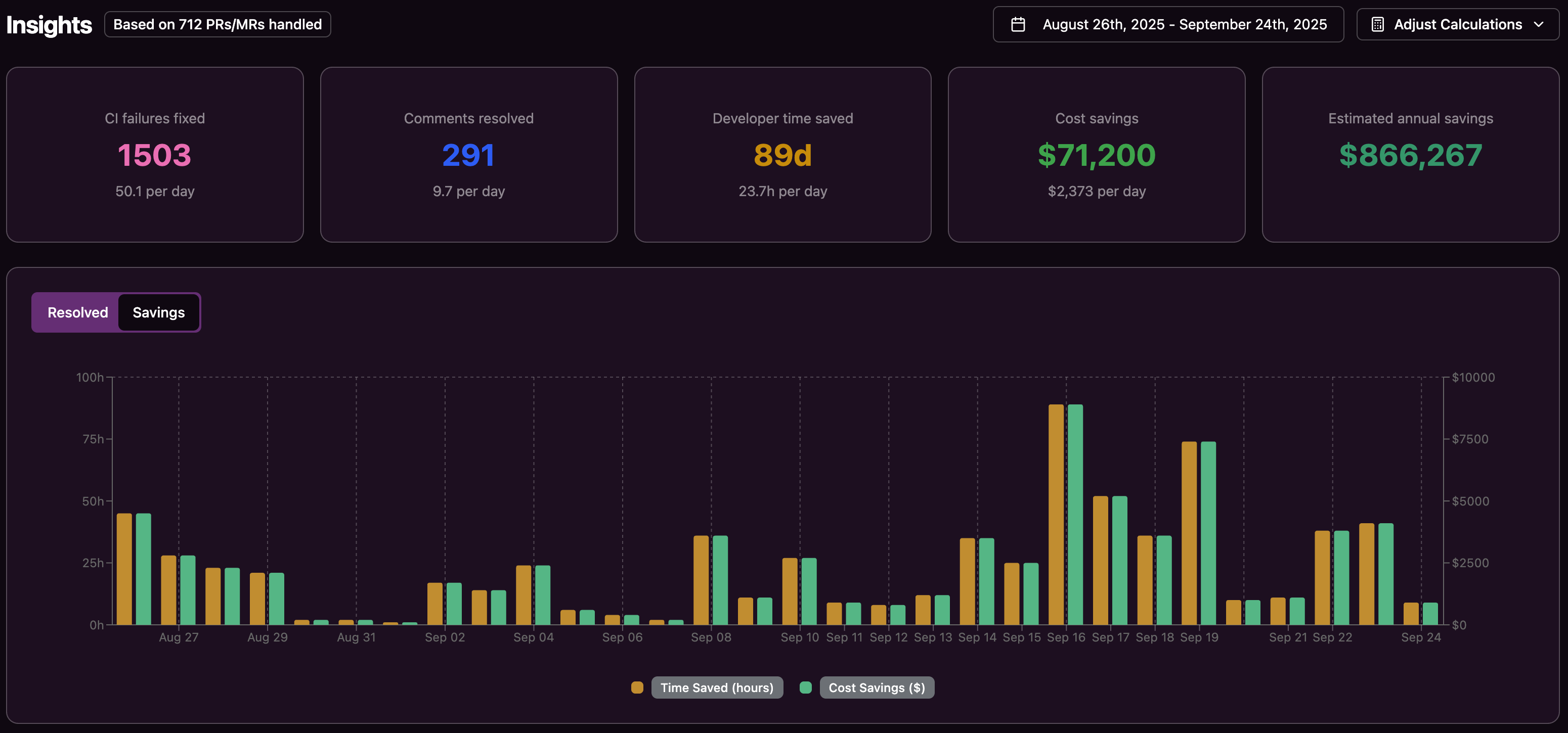
Final Thoughts on Improving Development Efficiency
CI/CD and code review challenges slow down software delivery as teams grow and AI tools accelerate coding. These delays cost time, money, and focus. Gitar addresses these pain points by automating fixes and feedback loops, helping developers stay on track.
Limited visibility and slow CI operations often hinder release speed and team efficiency. Tools like Gitar offer a way to overcome these hurdles, enabling faster cycles and better satisfaction.
Teams that adopt automation can keep pace with development demands. Sticking to manual processes may lead to ongoing struggles as efficiency becomes critical.
Ready to enhance your team’s output? Install Gitar now to fix builds automatically and let your developers focus on creating, not debugging.