
Key Takeaways
- AI code generation now overwhelms review capacity, with PR review times up 91% and 82M+ monthly GitHub pushes, so teams need faster tools.
- Codeant charges $10-20 per developer for suggestions that still require manual fixes, while leading alternatives focus on auto-fix and clear pricing.
- Gitar ranks #1 as a free powerhouse with unlimited PR analysis, security scanning, and a 14-day auto-fix trial that commits validated fixes directly.
- Competitors like CodeRabbit ($12-30/dev) and Greptile ($30/dev) provide analysis but lack Gitar’s CI auto-healing and single-comment UX, which increases costs and notification noise.
- Teams that switch to Gitar see up to 75% less CI and review time, $0 unlimited access, and consistently green builds across unlimited repositories.
Why Codeant Falls Short and How We Evaluated Alternatives
Codeant’s core limitation is a suggestion-heavy design that charges premium prices while still demanding significant manual implementation. With Basic plans at $10-20 per user monthly, teams spend hundreds each month on tools that flag issues but often leave developers to implement and validate fixes themselves.
Our evaluation focuses on platforms that deliver real solutions instead of only pointing out problems. We compare auto-fix depth, pricing transparency, CI integration across GitHub, GitLab, and CircleCI, scalability across repositories, notification control, and measurable ROI. High-performing teams achieve 42-48% better bug detection with AI code review when tools provide actionable fixes instead of suggestions alone.
Try Gitar, the leading free Codeant alternative, at https://gitar.ai/ to automatically fix broken builds and ship higher quality software faster.
#1 Gitar: Free Auto-Healing for CI and PRs
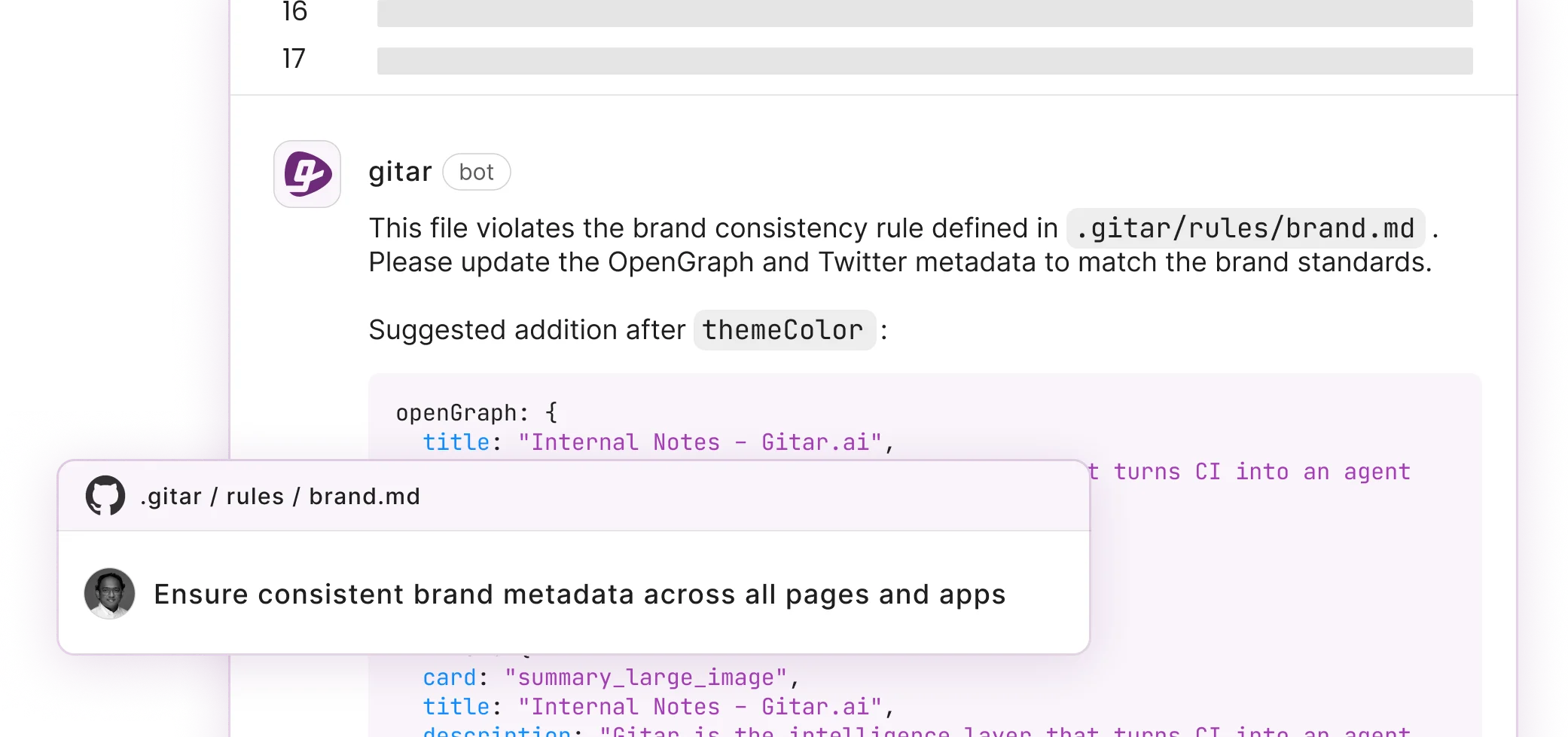
Gitar transforms code review by pairing comprehensive free analysis with auto-fix capabilities that go far beyond one-click suggestions. Unlike Codeant’s one-click fix model, Gitar’s healing engine automatically resolves CI failures, addresses review feedback, and commits validated fixes directly to pull requests. Teams receive unlimited free PR analysis, security scanning, bug detection, and performance review across unlimited repositories with no seat limits.
|
Capability |
Codeant |
CodeRabbit |
Gitar |
|
PR Summaries |
Yes (Paid) |
Yes (Paid) |
Yes (Free) |
|
Inline Suggestions |
Yes (Paid) |
Yes (Paid) |
Yes (Free) |
|
Auto-Apply Fixes |
One-Click |
CLI Agents |
Yes (14-day trial) |
|
CI Auto-Fix |
Limited |
Limited |
Yes (14-day trial) |
Gitar’s main advantages include $0 unlimited access, a single updating comment that prevents notification spam, native Jira and Slack sync, natural language workflow rules, and a 30-second GitHub app installation. The ROI impact for a 20-developer team shows clear savings.
|
Metric |
Before Gitar |
After Gitar |
Annual Savings |
|
Productivity Loss |
$1M |
$250K |
$750K |
|
Tool Costs |
$450-900/month |
$0 |
$5,400-10,800 |
|
CI/Review Time |
1 hour/day/dev |
15 min/day/dev |
~75% reduction |
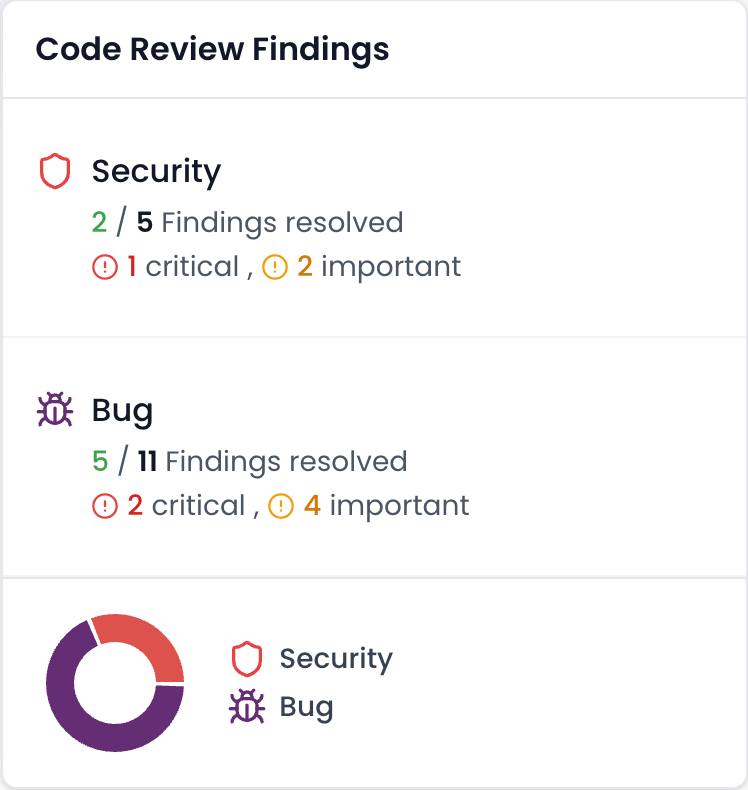
Teams usually start by installing the GitHub app, reviewing Gitar’s single-comment summaries, then enabling auto-commit for trusted fix types before expanding to workflow automation. The Tigris engineering team reported that “Gitar’s summaries are more concise than Greptile/Bugbot,” which reflects Gitar’s focus on signal over noise.
Install Gitar now at https://gitar.ai/ to automatically fix broken builds and ship higher quality software faster.
Top 10 Codeant Alternatives Ranked
#2 CodeRabbit charges $12-30 per developer monthly for detailed PR analysis with line-by-line comments and summaries. Its auto-fix depends on CLI integrations and often increases notification noise in GitHub-centric workflows.
#3 Greptile offers deep codebase context through RAG technology at $30 per user monthly. It understands full repositories but remains suggestion-only without fix validation or strong CI integration.
#4 SonarQube provides AI-enhanced static analysis with Claude Code integrations and AI CodeFix features. It focuses on code quality metrics and security scanning, with most auto-fix features centered in IDE workflows instead of PRs.
#5 Snyk Code delivers security-focused SAST with Agent Fix features. It excels at vulnerability detection but offers limited general code review and CI failure resolution.
#6 Bugbot specializes in critical bug detection with low false-positive rates for logic and security issues. Its narrow focus restricts full code review coverage compared to broader platforms.
#7 Qodo (formerly Codium) adds context-aware analysis and automated test generation with CI/CD integration and quality automation. It still lacks Gitar’s end-to-end healing engine.
#8 Sourcery focuses on refactoring and readability with strong auto-fix across 30+ languages, broad bug detection, and CI/CD integrations.
#9 GitHub Copilot includes advanced code review with full project context, CodeQL and ESLint integration, and handoff to a coding agent for fix suggestions, which delivers strong analysis depth.
#10 Open Source Options such as Pylint, Semgrep, and DIY Claude integrations provide customization but demand heavy engineering effort and lack seamless auto-fix or CI healing.
|
Rank/Tool |
Auto-Fix Score /10 |
Pricing |
CI Support |
|
1. Gitar |
10/10 |
$0 |
Full |
|
2. CodeRabbit |
5/10 |
$12-30/dev |
Limited |
|
3. Greptile |
4/10 |
$30/dev |
Basic |
|
4. Sourcery |
7/10 |
$12+/dev |
Full |
|
5. Others |
3-6/10 |
$10-40/dev |
Variable |
Free vs Paid ROI: Side-by-Side Comparison
This comparison shows Gitar as the only platform that combines free access with robust auto-fix capabilities. CodeRabbit delivers strong PR analysis at $12-30 per user monthly, yet teams still absorb implementation overhead. For a 20-developer team, Codeant-style alternatives cost about $450 monthly, while Gitar’s $0 base plus 75% faster velocity from automated fixes creates a clear ROI advantage.
|
Tool |
Auto-Fix |
CI Integration |
Pricing/Noise Level |
|
Gitar |
Full |
Complete |
$0/Low |
|
CodeRabbit |
CLI Agents |
Basic |
$12-30/High |
|
Greptile |
None |
Limited |
$30/Medium |
|
Others |
Variable |
Mixed |
$10-40/Variable |
Best Free Alternatives to Codeant AI Code Review
Teams that want free alternatives to Codeant’s paid suggestions find that Gitar is the only option with full code review and no cost barrier. Open source tools such as Semgrep and Pylint provide basic analysis but lack AI-powered insight and auto-fix features that keep pace with today’s AI-generated code volume.
Coderabbit vs Gitar: Architectural Differences
The direct comparison shows a clear architectural split. CodeRabbit charges $15-30 per developer for suggestion-based reviews that still require manual implementation. Gitar delivers free review plus auto-fix that validates and commits working solutions directly to pull requests.
Key Considerations When Switching From Codeant
Different roles care about different switching triggers. Developers want less context switching and fewer noisy notifications. Engineering leaders focus on higher velocity and clear ROI, while DevOps teams want simple CI integration without complex YAML maintenance.
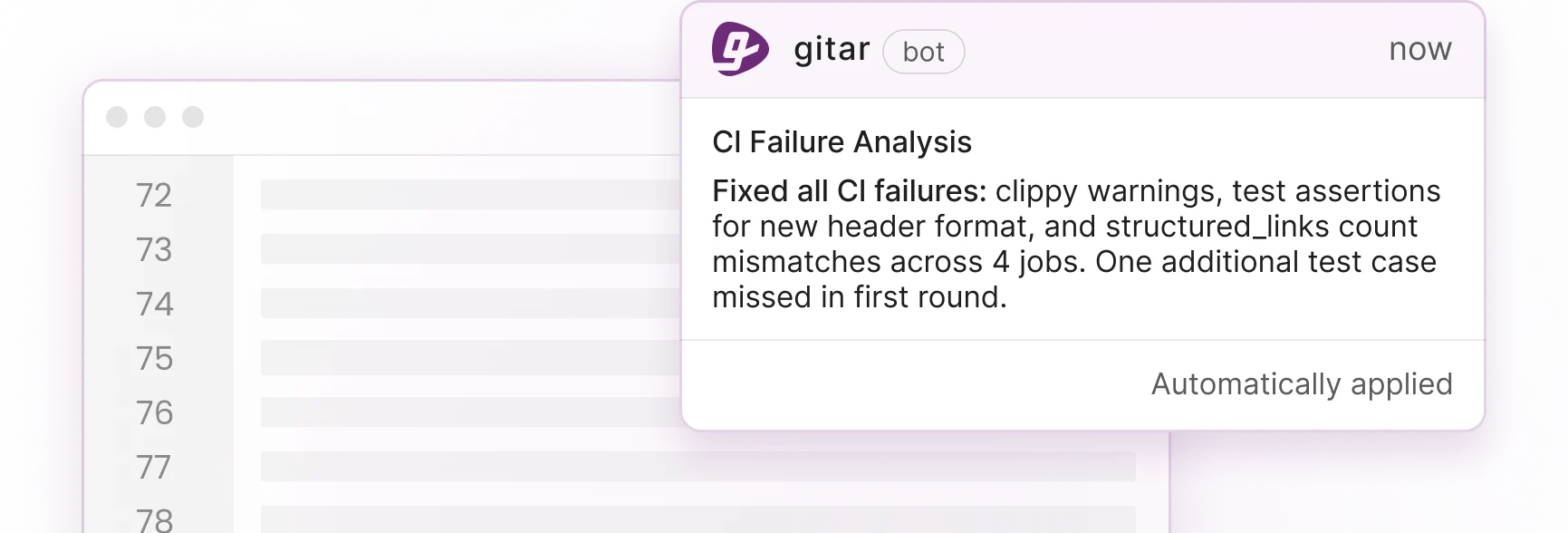
Common concerns include free service sustainability, migration complexity, and automated commit safety. Gitar funds itself through advanced platform features rather than basic review, uses a zero-setup GitHub app for migration, and supports fully configurable approval workflows for automation.
Best Free Codeant Alternative
Gitar stands out as the most complete free alternative, with unlimited repositories, unlimited users, and advanced features that often replace or augment competitors’ paid tiers.
Auto-Fix Safety and Control
Gitar addresses auto-fix safety with configurable automation levels. Teams can start in suggestion mode, then enable auto-commit for specific failure types while keeping full approval control.
Conclusion: Why Gitar Leads Codeant Alternatives in 2026
Codeant-style tools that focus on suggestions and charge premium prices do not remove the main bottleneck of AI-generated code validation. Gitar leads this category by offering free, comprehensive review with auto-fix that keeps building green and cuts the manual work that competitors bill for.
Install Gitar now at https://gitar.ai/ to automatically fix broken builds and ship higher quality software faster.
Frequently Asked Questions
What is the best free alternative to Codeant AI code review?
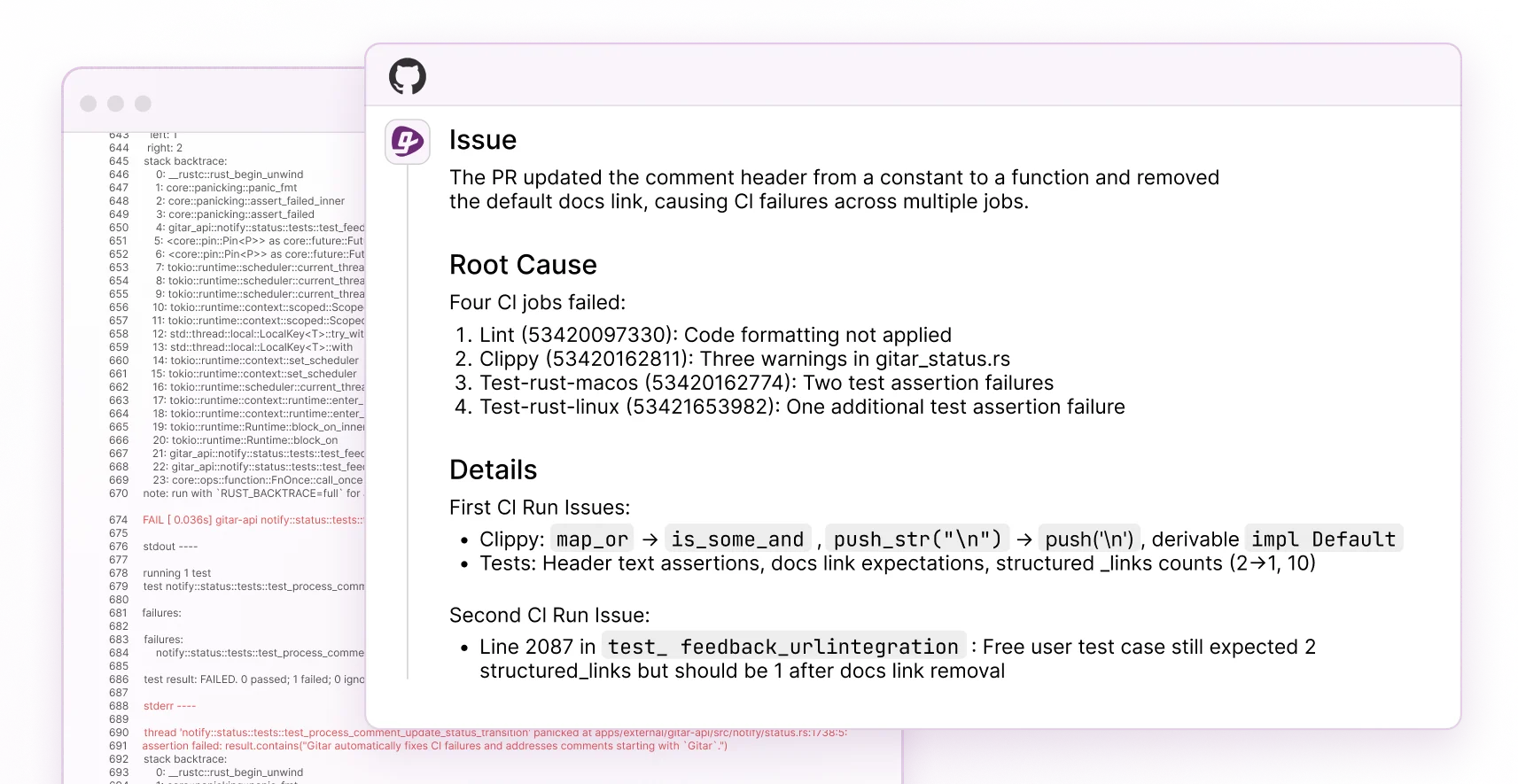
Gitar is the most comprehensive free alternative to Codeant. It offers unlimited code review, PR analysis, security scanning, and bug detection across unlimited repositories with no seat limits. Gitar also includes a 14-day free trial of auto-fix that resolves issues instead of only suggesting changes.
How safe are auto-fix features in AI code review tools?
Auto-fix safety depends on how tools validate changes and how teams configure automation. Gitar supports fully configurable automation levels, so teams can begin with suggestion-only mode, then gradually enable auto-commit for trusted failure types such as lint errors and simple test fixes. The platform validates all fixes against CI before committing, which helps prevent new issues.
Do AI code review platforms support GitLab and other CI systems?
Modern AI code review platforms increasingly support more than GitHub. Gitar integrates with GitHub, GitLab, CircleCI, and Buildkite, while competitors such as CodeRabbit focus mainly on GitHub workflows. Enterprise teams gain more flexibility when they choose platforms with broad CI and CD integration.
How do you measure ROI from AI code review tools?
Teams measure ROI through time saved, fewer context switches, and lower tool costs. A 20-developer team that moves from paid tools costing $450-900 monthly to Gitar’s free platform, while cutting review time, can save significant productivity plus $5,400-10,800 in direct costs each year. Helpful metrics include time spent on CI failures, review cycles per PR, and how often developers get interrupted.
What are the best open-source AI code review options?
Open-source options include Semgrep, Pylint, ESLint, and custom LLM integrations. These tools offer strong customization but require substantial engineering effort to build and maintain. They also lack the auto-fix depth, CI integration, and polished user experience that dedicated platforms such as Gitar provide out of the box.