
Repetitive code review patterns slow down development teams, waste time, and drain resources. This article explains what these patterns are, their impact on your workflow, and how autonomous AI can help. Gitar’s unique approach goes beyond pointing out issues; it automatically fixes and validates common code review and CI problems, freeing developers to focus on meaningful work and speeding up the merge process.
Why Repetitive Code Review Patterns Hurt Your Team’s Efficiency
Calculating the Real Cost of Repeated Feedback
Repetitive code review patterns steal valuable time from every development team. Feedback often repeats on style issues, syntax errors, logic flaws, and naming conventions, forcing engineers into a loop of minor fixes instead of solving bigger challenges.
The numbers reveal a stark reality. For a team of 20 developers, spending just one hour daily on repetitive feedback adds up to 5,000 hours yearly. At typical loaded costs, that’s $1 million in lost productivity, a tangible hit to business outcomes that grows with team size.
Large pull requests make this worse. They increase low-value comments and exhaust reviewers, raising the risk of missing critical issues. When reviews focus on formatting or minor syntax errors, there’s less attention for deeper design or architecture problems.
Tools like ESLint, SonarQube, and CodeClimate catch basic errors, but they don’t integrate fully into the development process. While they address repeatable issues like linting or simple patterns, they miss business logic and complex architectural needs. Developers still need to step in manually to validate and apply fixes, creating inefficiencies.
Install Gitar to automatically fix broken builds and ship better software faster.
Breaking Focus and Lowering Developer Morale
Repetitive code reviews cause more than just time loss; they take a mental toll. Constant feedback on routine issues pulls developers out of focus, leading to frustration and disengagement. This disruption of deep work is a hidden but costly problem.
Picture this: you submit a pull request, proud of your work, only to get comments about missing semicolons or inconsistent spacing. Switching focus to fix these small issues breaks your momentum. A quick correction turns into a much longer delay as you rebuild your mental context.
Feedback that feels redundant or overly critical can also strain team dynamics. This kind of input slows progress and can create tension among team members. When developers face constant minor critiques instead of valuable discussions, their skills feel underutilized.
Over time, this turns code reviews into a dreaded hurdle rather than a chance to improve together. Developers may rush through reviews to avoid long feedback loops or play it safe to dodge comments, often at the expense of code quality.
How CI/CD Delays Stack Up from Repetitive Issues
AI coding tools like GitHub Copilot have sped up code creation, but they’ve shifted the bottleneck to validation and merging. More code means more pull requests, more tests, and more CI failures, amplifying the need for efficient review processes.
This shift creates new challenges. Generated code often doesn’t match existing CI setups, causing style violations, test failures, and dependency issues that demand manual fixes. As code volume grows, repetitive CI failures disrupt far more commits than before.
For 60% of companies, CI pipeline issues are a top reason for delayed projects, directly affecting the time from commit to merge. A single linting error can halt a deployment, creating ripple effects across teams, release schedules, and customer timelines.
Distributed teams face even greater delays. A formatting error pushed by a developer in one timezone might not get fixed for 24 hours if their reviewer is offline in another. These small issues become major roadblocks due to timing alone, not complexity.
Meet Gitar: Your AI Solution for Code Reviews and CI Fixes
Gitar changes the game by moving past suggestions to take direct action. Unlike tools that only flag issues, Gitar acts as a “healing engine,” fixing problems, validating them against your full CI setup, and ensuring builds pass without human input.
What sets Gitar apart is its complete automation. If a CI check fails or a reviewer posts feedback, Gitar doesn’t just identify the issue. It creates the fix, applies it to the branch, tests it against the entire CI pipeline, and commits the change with clear notes. This turns a manual process into a hands-off solution.

Here’s what makes Gitar stand out for tackling repetitive patterns:
- Complete Fix Automation: Applies and validates fixes on its own, ensuring builds pass without manual steps.
- Full Environment Match: Mirrors complex setups, including specific SDKs, dependencies, and tools like SonarQube or Snyk.
- Smart Review Handling: Responds to human feedback instantly, even across time zones, keeping progress steady.
- Custom Trust Levels: Offers control from suggestions needing approval to full auto-commits with rollback options.
- Wide CI Compatibility: Supports GitHub Actions, GitLab CI, CircleCI, BuildKite, and more, unlike single-platform tools.
Stop wasting time on repetitive code reviews. Book a demo with Gitar to solve these issues.
How Gitar Solves Code Review and CI Challenges
Automating Routine Fixes to Free Up Developers
Gitar tackles the most time-heavy parts of code reviews head-on. Many review comments, especially on style or simple errors, can be handled by automated solutions. Gitar not only spots these but also fixes them without waiting for input.
For a linting issue like missing semicolons or unused imports, Gitar reviews the failure logs, crafts the fix, and commits it to the pull request within minutes. Often, this happens before the developer even sees the error, creating a smooth, uninterrupted workflow.
This automation covers various CI issues, from linting to test failures. Human reviewers excel at complex problems but lose efficiency on repetitive tasks. By automating these, Gitar lets reviewers zero in on design and logic discussions.
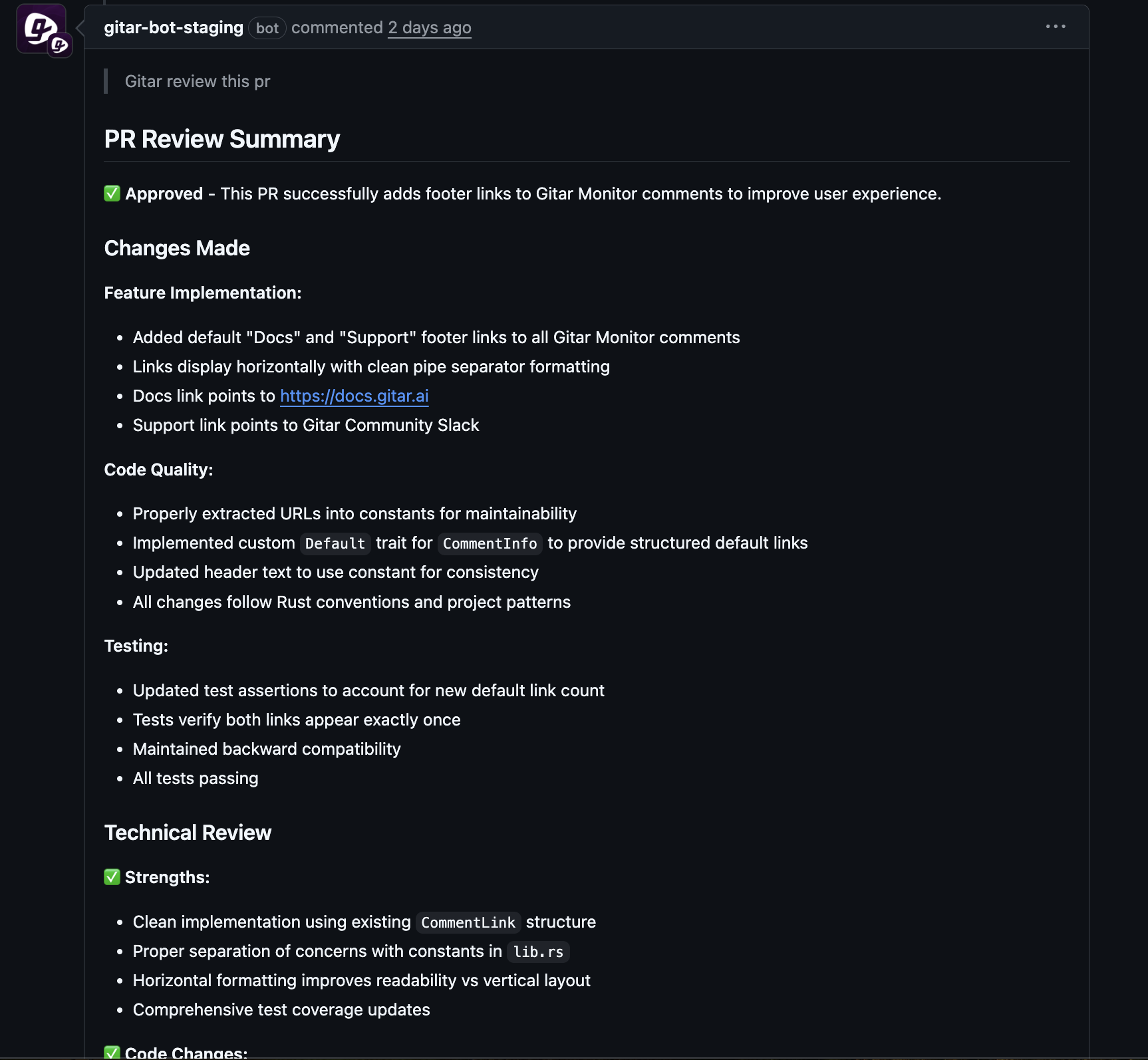
Take this scenario: a reviewer comments to remove a feature from a PR. Gitar interprets the request, edits the code, and commits the change with a clear update, saving the developer from extra steps.
Speeding Up Merges by Reducing Context Switches
The biggest cost of repetitive reviews isn’t fixing issues; it’s the mental effort of switching tasks. Automating routine feedback shortens review cycles, improves issue spotting, and reduces reviewer fatigue. Gitar cuts out this mental overhead by handling fixes while developers stay focused.
In typical workflows, developers must check CI results, debug failures, apply fixes, and re-test. This fragments their day, making deep work difficult. Gitar acts as a background helper, letting developers submit pull requests and move to the next task, knowing routine issues will be fixed.
Teams often notice the difference within days. A developer triggers a linting failure, keeps working, and soon sees Gitar’s commit with an explanation of the fix. This preserves focus and upholds code standards.
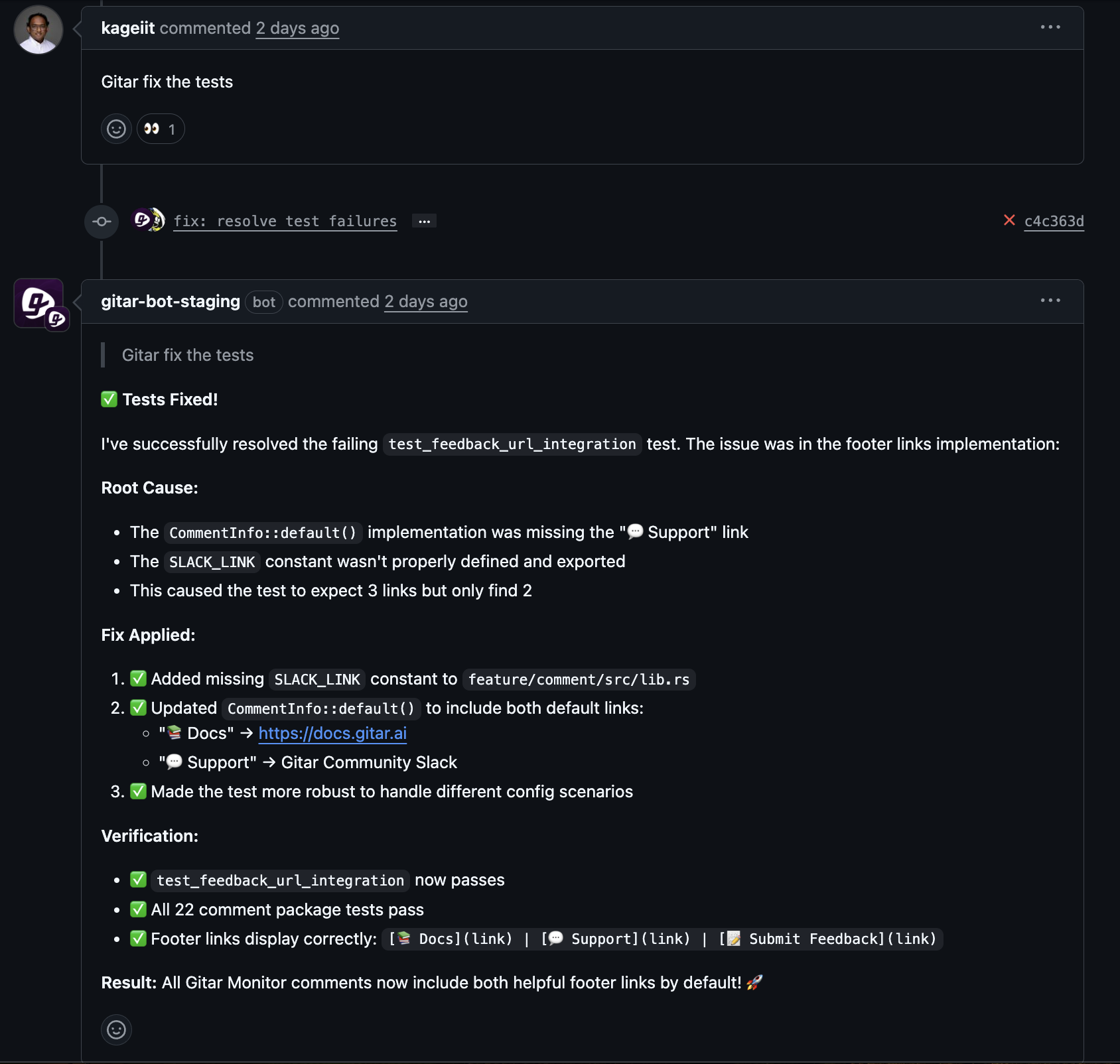
Success metrics for code reviews include defect rates, merge times, coverage, and developer satisfaction. Gitar users often see faster merges and happier teams as repetitive frustrations disappear.
Connecting Distributed Teams with Instant AI Fixes
Distributed teams struggle with delays from repetitive feedback due to time zone differences. A comment from a reviewer in Berlin might take a day to resolve for a developer in California. Gitar removes this barrier by acting on feedback right away, no matter the hour.
Its autonomous system supports async collaboration. A reviewer in one location can comment, and Gitar applies the fix, ready for review by the time the developer in another timezone logs in. This eliminates unnecessary waiting.
This approach turns reviews into a continuous process instead of a blocking step. Faster resolutions improve code quality and team speed as Gitar manages the details.
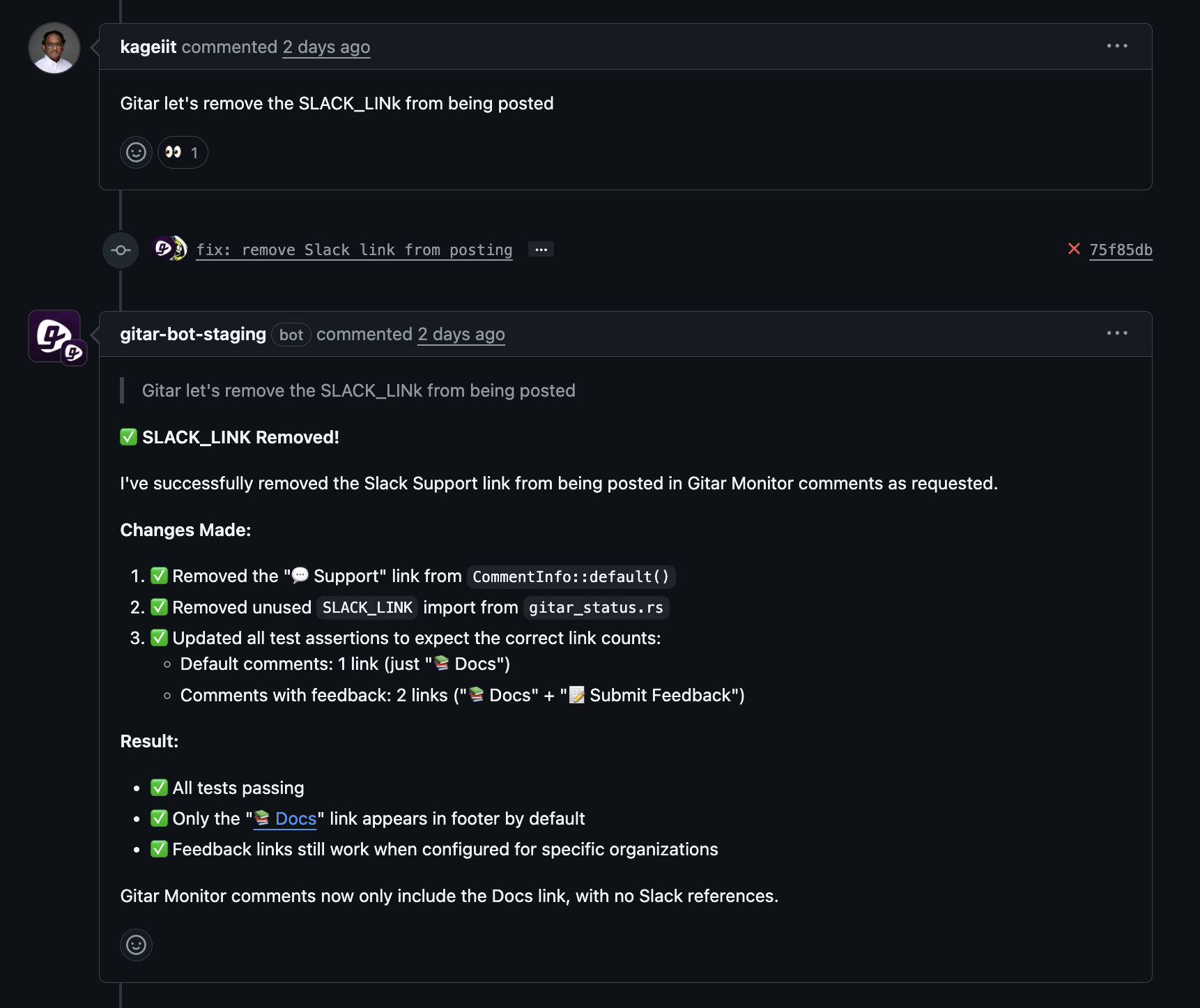
Gitar’s ability to replicate full environments ensures fixes pass CI checks, avoiding delays from failed changes, even across diverse setups.
Healing vs. Suggesting: How Gitar Stands Apart
Gitar’s core difference from other AI tools is its “healing engine” design. While most tools suggest fixes, Gitar resolves issues and validates them on its own, taking action where others stop at advice.
|
Feature |
Gitar (Healing Engine) |
CodeRabbit (Suggestion Engine) |
Manual Work (Status Quo) |
|
Problem Resolution |
Automatic fix and validation |
Suggests fix, needs manual effort |
Fully manual debugging |
|
CI Integration |
Replicates full environment, supports multiple platforms |
Focused on Git providers |
No integration |
|
Trust Model |
Adjustable from suggestions to auto-commit |
Only suggestions |
Relies on human decisions |
|
Context Switching |
Almost fully eliminated |
Still requires switching for fixes |
High switching cost |
This design boosts productivity significantly. Suggestion tools still demand developer time to apply and check fixes, keeping the focus disruption. Gitar’s hands-off method removes this friction for a smoother experience.
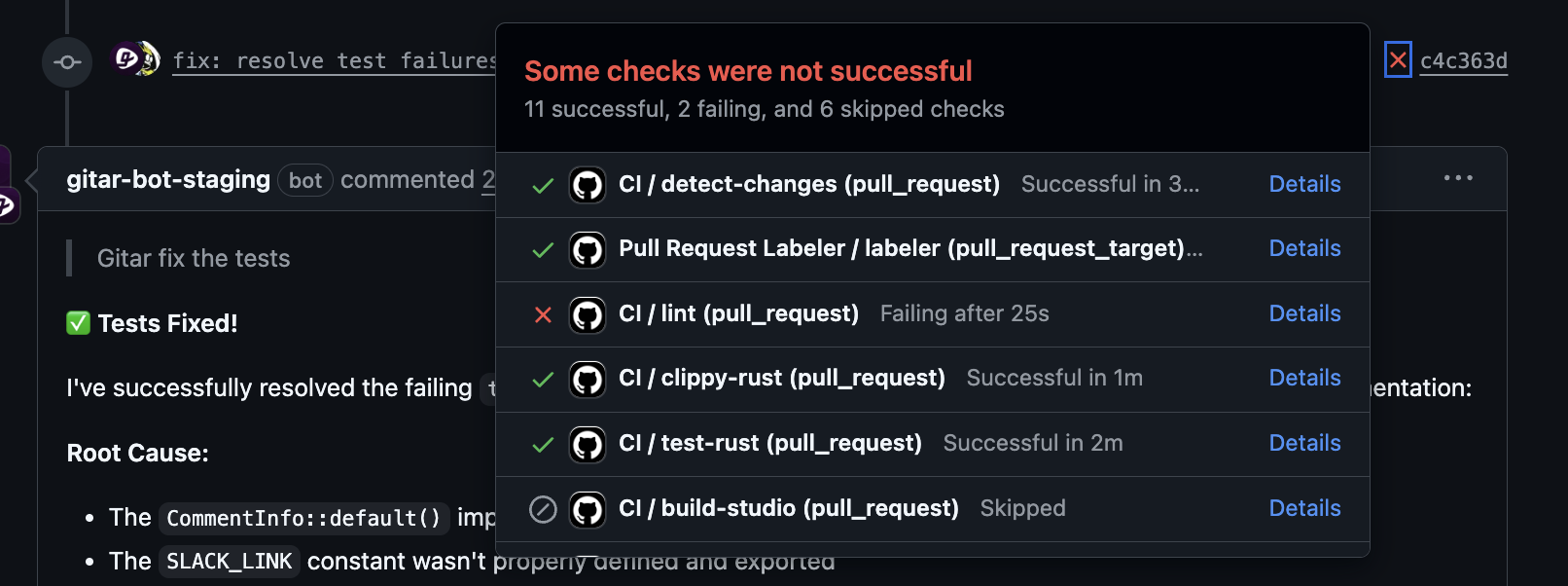
Ready to end repetitive code review delays? Install Gitar to fix builds automatically.
Common Questions About Solving Repetitive Code Reviews
What Makes Gitar Different from Other AI Review Tools?
Gitar operates as a “healing engine,” going beyond suggestions to apply fixes, validate them against full CI pipelines, and ensure builds pass. Unlike tools like CodeRabbit or IDE helpers like Copilot that focus on suggestions or pre-commit edits, Gitar works post-commit to handle issues across various CI platforms without manual steps. It completes the entire cycle from issue detection to resolution.
Gitar also mirrors complex enterprise setups, understanding specific SDKs, dependencies, and integrations. This ensures fixes fit your exact context, unlike generic tools that rely on assumptions.
Can Gitar Work with Our Complex CI Setup?
Yes, Gitar is built for complexity. It replicates your full environment, including unique dependencies, SDK versions, and tools like SonarQube or Snyk, ensuring fixes are accurate for your workflow. It tests changes in your specific CI context before applying them, avoiding generic errors.
How Does Gitar Handle Trust Concerns for Automated Fixes?
Gitar offers adjustable automation levels to build trust over time. Start with a cautious mode where fixes are suggestions for approval, letting your team see its accuracy. As confidence grows, switch to full auto-commit with rollback options, keeping you in control of the process.
How Does Gitar Fit into Our Current Workflow?
Gitar integrates easily with GitHub and GitLab, needing little setup. It posts status updates in pull requests as it works, supporting major CI platforms like GitHub Actions, GitLab CI, CircleCI, and BuildKite without altering pipelines. Developers interact via simple comments, making Gitar feel like a team member, while a web dashboard offers deeper settings and insights.
What Financial Benefits Can Gitar Bring to Our Team?
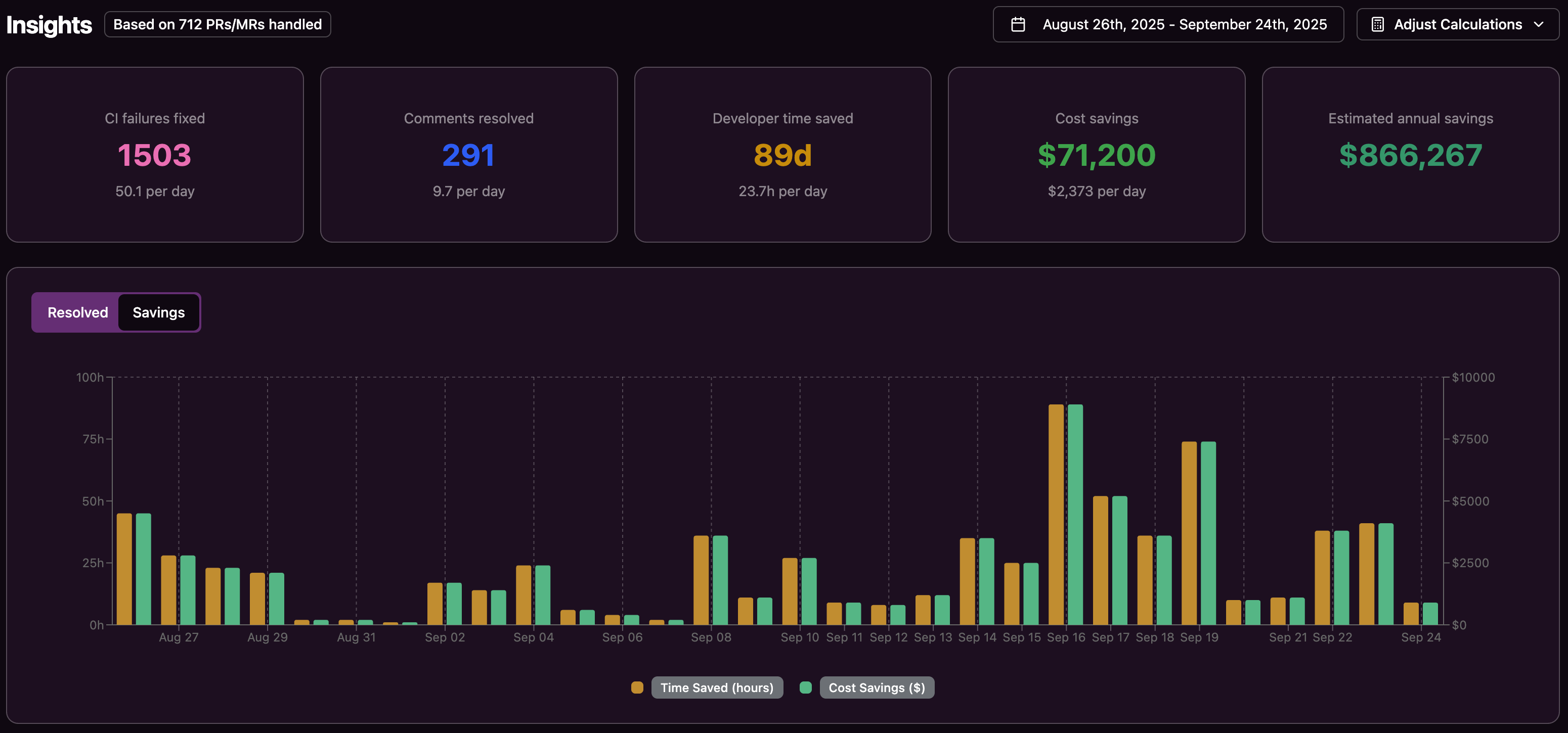
For a 20-developer team, Gitar can save around $500,000 yearly by cutting half of the estimated daily hour spent on routine fixes. Beyond time savings, it boosts morale, shortens time-to-market, and reduces delays from CI issues.
Final Thoughts: Boost Productivity and Speed with Gitar
Repetitive code reviews and CI failures don’t have to slow down your software development. Manual fixes and suggestion-only tools create bottlenecks that grow with team size and code volume. Gitar offers a better way, turning these obstacles into an automated, background process within your existing tools.
By handling tedious tasks, protecting focus, and cutting merge times, Gitar lets teams prioritize innovation over maintenance. Its healing approach redefines workflows, making CI issues and feedback automatic resolutions instead of interruptions.
Teams adopting autonomous AI for repetitive reviews see clear gains in productivity and release speed. The future of development involves automation, and choosing Gitar positions your team to stay ahead.
Ready to remove repetitive code review hurdles? Book a Gitar demo to automate fixes today.