
Inconsistent test environments often slow down software development teams, especially in AI-assisted workflows. Non-containerized setups vary in dependencies and configurations, causing the frustrating ‘it works on my machine’ issue. Containerization solves this by ensuring consistency and isolation. When paired with Gitar’s AI-driven fixes, it turns CI into a self-healing process, saving developers hours of troubleshooting CI and code review issues daily.
Why Fragile Test Environments Disrupt AI-Assisted CI/CD
Unreliable test environments create major hurdles in software development. Developers often face failing builds in CI, even when tests pass locally, due to setup differences. Non-containerized systems lack consistency, leading to dependency mismatches and configuration errors.
These failures ripple through team productivity. A failing build means diving into logs, switching back to local setups, making fixes, and waiting for pipelines to rerun. A small issue can drain hours, breaking focus and momentum.
AI-assisted coding tools like GitHub Copilot speed up code creation, but they increase the volume of changes needing validation. This shifts the bottleneck from writing code to merging it efficiently through CI/CD pipelines.
The financial cost adds up. Developers may spend up to 30% of their time on CI and review problems, resulting in productivity losses of around $1 million annually for a 20-person team. For 60% of companies, CI failures delay projects, impacting market delivery timelines.
Context switching worsens the issue. Once a pull request is submitted, developers rarely move on cleanly. CI failures or feedback pull them back, costing mental energy. A 30-minute fix can take an hour when factoring in refocusing time.
Distributed teams feel this delay even more. A US-based developer waiting for feedback from a teammate in Bangalore might see hours turn into days due to time zones. Traditional AI tools often suggest fixes but still require manual effort to apply and validate them.
How Containerization Ensures Consistent, Isolated Testing
Containerization tackles test inconsistencies by creating isolated, repeatable environments for uniform application behavior across development stages. Containers package applications with all dependencies, ensuring identical performance in development, testing, staging, and production.
The value lies in removing environmental variables that cause test failures. By bundling code, dependencies, and configurations into one unit, containers guarantee tests run under the same conditions on any system.
Isolation for Reliable Test Results
Containerized environments prevent host system differences from affecting tests. This isolation cuts down on flaky tests and setup-specific errors by separating the application from external processes.
Isolation works on multiple levels. Containers are lightweight, sharing the host kernel while using mechanisms like Linux namespaces for strict process separation. Each test runs independently, free from interference.
Consistency extends to reproducibility. With all dependencies packaged, applications behave the same across environments, from local setups to CI or production. A passing test locally will likely pass elsewhere.
Install Gitar now to fix broken builds automatically and ship quality software faster.
Speeding Up Test Cycles with Efficiency
Fast feedback loops are essential in AI-assisted coding, where code changes happen rapidly. Containers start and stop quickly, unlike virtual machines, enabling efficient test cycles and flexible setup management.
This speed directly boosts productivity. Containerized setups can be ready in seconds, compared to minutes for virtual machines. Quick feedback is critical when validating AI-generated code changes.
Containers also enable advanced testing. Teams can run parallel test environments, test against multiple dependency versions, and handle large test suites without the heavy resource demands of older methods.
Scaling Test Infrastructure with Reliability
Managing complex dependencies and tool integrations is a challenge for enterprise teams. Container orchestration tools like Kubernetes automate deployment and scaling, ensuring reliable test environments in CI/CD pipelines.
Orchestration simplifies complex needs. Kubernetes handles resource allocation, recovery, rollbacks, and health monitoring, streamlining container management.
Reliability includes version control. Container registries store image versions, making rollbacks easy and maintaining stability during testing and deployment. Teams can manage evolving setups without sacrificing consistency.
Meet Gitar: AI-Powered Fixes for CI Challenges
Containerization builds a solid foundation for consistent testing, but Gitar takes it further with AI-driven automation. Gitar acts as an independent agent that fixes failing CI pipelines and addresses code review feedback, turning manual debugging into an automated, self-healing system.

Gitar functions as a complete CI repair tool, applying fixes and validating them for successful builds. Its key features include:
- Comprehensive Fixing: Applies and tests fixes across full CI workflows, ensuring pull requests are ready to merge.
- Environment Matching: Replicates complex enterprise setups, including specific SDKs and dependencies, for accurate solutions.
- Adjustable Automation: Offers modes from manual approval of suggestions to automatic commits with rollback options as confidence grows.
- Platform Compatibility: Integrates with GitHub Actions, GitLab CI, CircleCI, and BuildKite for flexible use.
- Contextual Awareness: Works with local developer tools to understand code changes, delivering relevant fixes.
Book a demo with Gitar to experience self-healing CI processes.
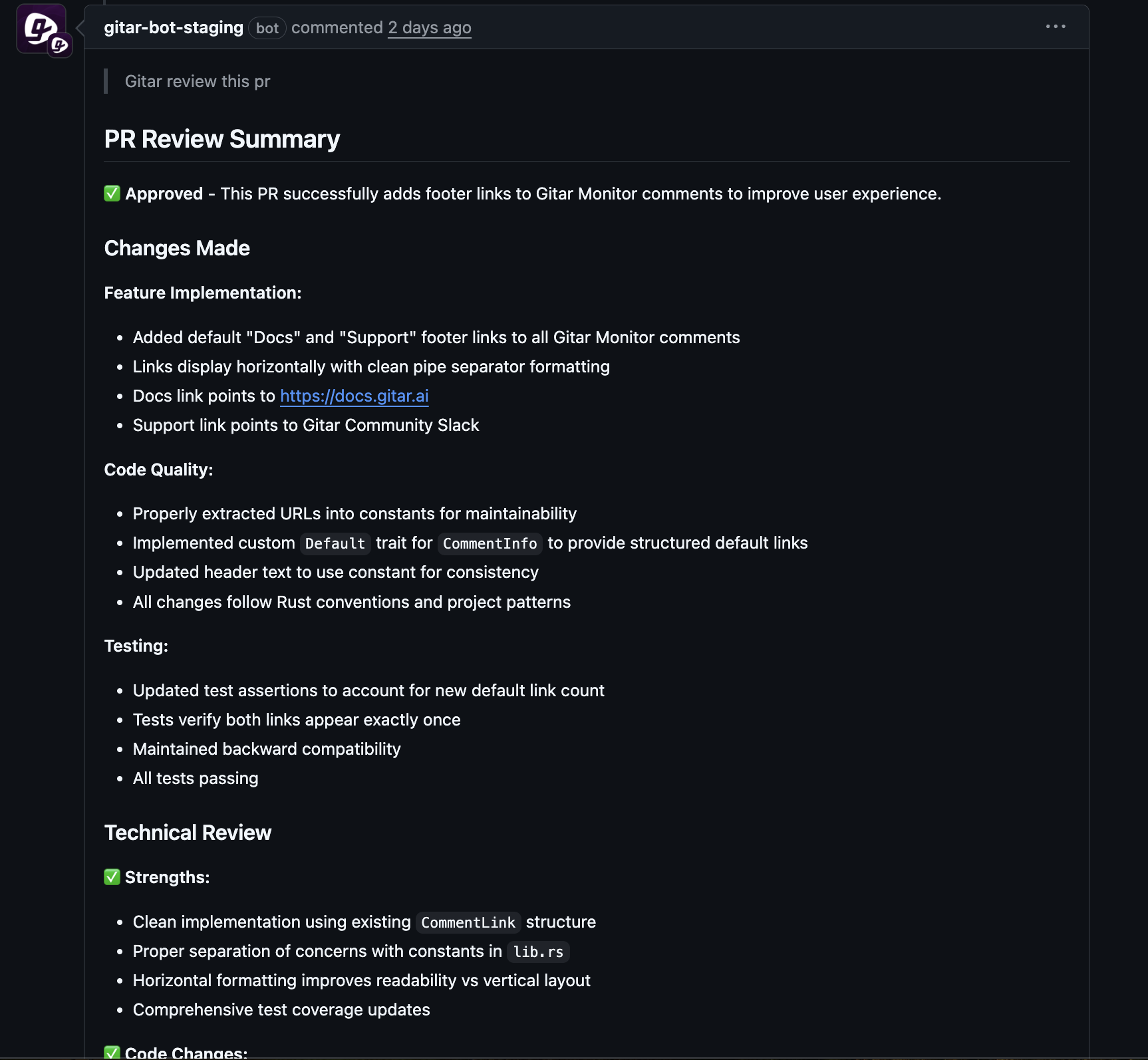
How Gitar Boosts CI in AI-Assisted Development
Combining containerized testing with Gitar’s automated fixes addresses key pain points in software development. This synergy shifts CI/CD from a reactive struggle to a proactive, self-correcting system.
Stopping CI Failures Before They Slow You Down
Containers minimize environmental differences for consistent testing. They provide isolated setups for unit, integration, and end-to-end tests, delivering reliable results.
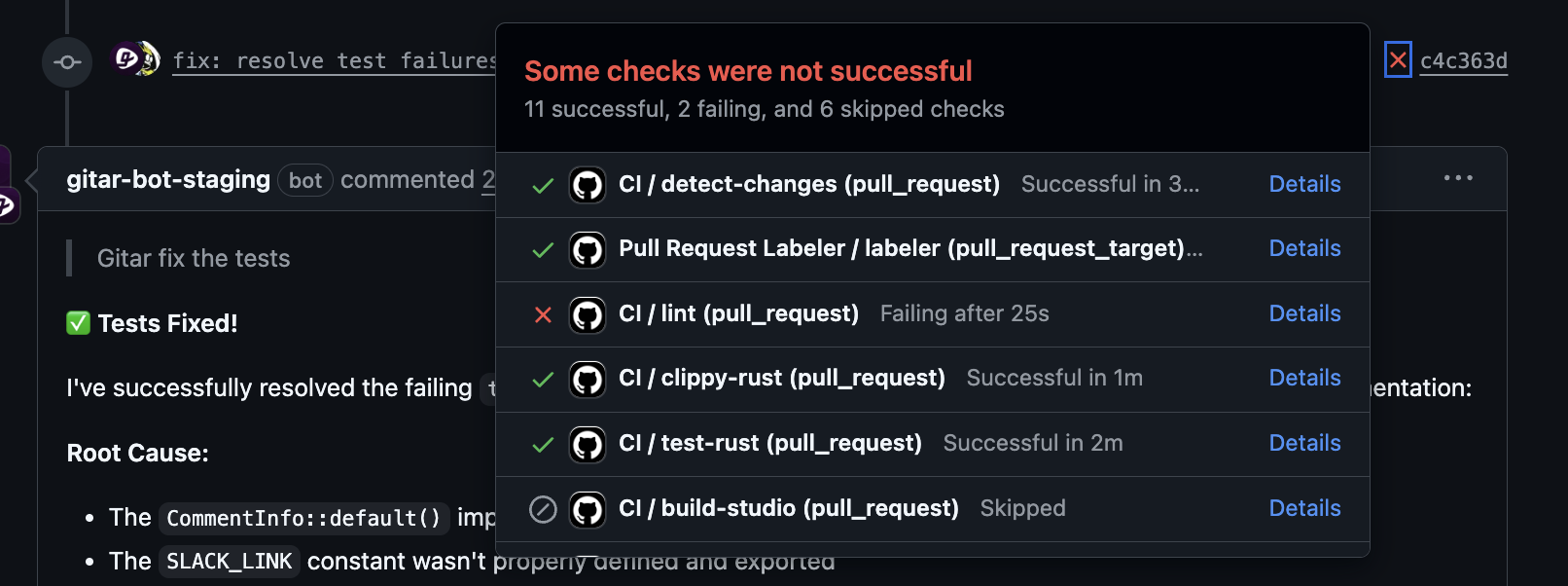
Gitar builds on this by automatically resolving CI failures within these stable environments. It identifies issues, applies fixes, validates them, and ensures pull requests are merge-ready, keeping pipelines dependable.
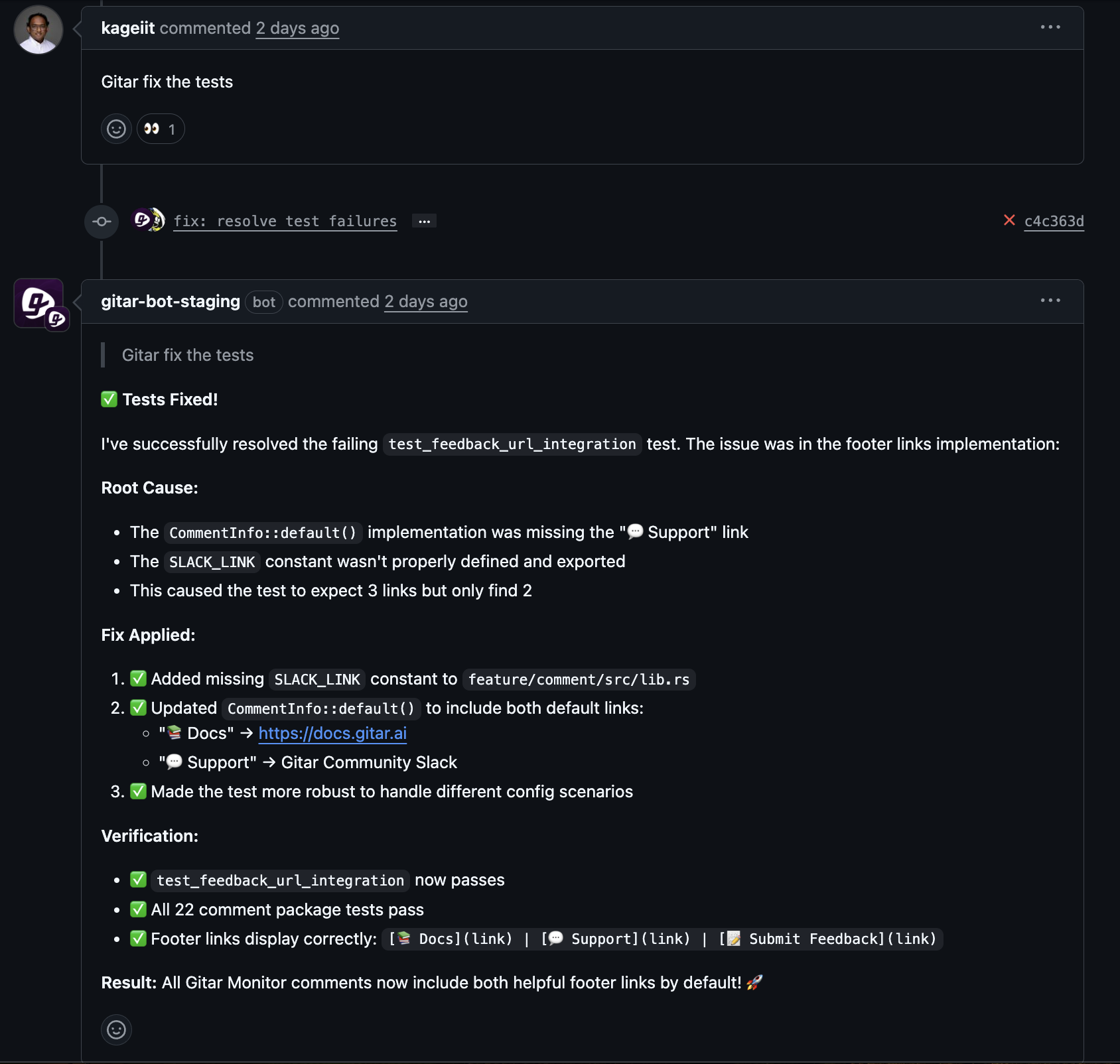
Keeping Up with Fast-Paced AI Workflows
AI-driven development requires quick validation to match its speed. Containers in CI/CD enable automated, production-like testing for every commit, speeding up release cycles.
Gitar matches this pace with instant fixes. Developers can submit code without worrying about CI failures derailing their work, preserving focus and maximizing AI tool benefits.
Container efficiency helps here too. Their quick startup and teardown support rapid test cycles compared to slower virtual machines. Gitar uses this speed to test fixes and deliver solutions promptly.
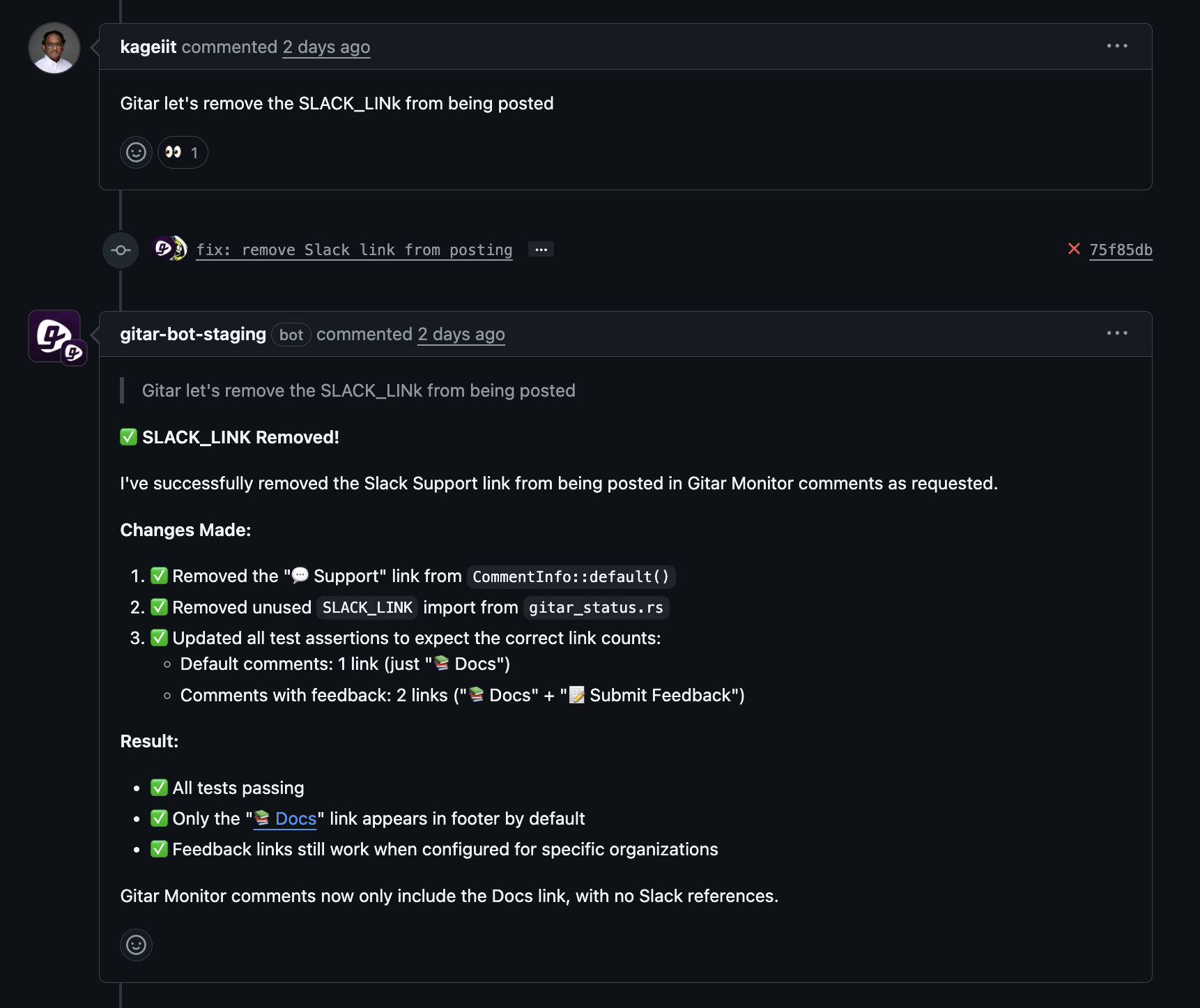
Handling Complex Enterprise Needs with Ease
Enterprise setups often involve tricky dependencies and custom tools. Containerization improves unit, integration, and performance testing by enabling faster, scalable cycles.
Gitar’s environment replication feature handles this complexity. It works within specific workflows, supporting unique SDK versions and multi-SDK builds, ensuring fixes fit seamlessly into existing systems.
Gitar Compared to Manual and Suggestion-Only AI Tools
|
Feature |
Manual Fixing |
Suggestion-Only AI |
Gitar (Autonomous CI Fixer) |
|
Test Environment Consistency |
Vulnerable to setup mismatches |
Vulnerable to setup mismatches |
Improved by full replication |
|
Issue Resolution |
Manual debugging and fixes |
Suggests fixes for manual application |
Automatic fixes with validation |
|
CI Pipeline Impact |
Disrupts work, delays merges |
Requires context switching, causes delays |
Self-correcting, speeds up merges |
|
Environmental Context |
Limited to local environment |
Limited context available |
Replicates full environment |
Install Gitar now to fix broken builds and ship quality software faster.
Answers to Common Questions About Autonomous CI
How Containers Support Testing in AI-Assisted Coding
Containers create isolated, repeatable environments that ensure AI-generated code tests reliably, regardless of local or CI setup. With rapid code generation, they reduce environmental errors, so issues reflect code logic, not setup differences, enabling quick iteration.
Fixing Complex CI Failures in Custom Setups
Gitar handles complex CI failures effectively with its environment replication feature. It understands specific SDK versions, dependency setups, and enterprise configurations, delivering fixes that work within all pipeline checks.
Addressing Concerns About Automated Fixes
Gitar offers a flexible automation model to build trust. Teams can start with a cautious approach, reviewing suggested fixes before approval. Over time, as reliability is proven, they can shift to automatic commits with rollback options for added safety.
Additional Ways Gitar Improves CI Processes
Beyond fixing failures, Gitar enhances CI by tackling issues like linting errors and test failures automatically. It identifies root causes, applies solutions, and commits changes to the PR branch, ensuring smooth builds without manual effort.
Maximize AI-Assisted Development with Self-Healing CI
Pairing containerized testing with autonomous CI fixes advances software development significantly. Containers provide consistent, isolated environments to eliminate setup drift. To optimize them, keep containers lightweight, use multi-stage builds, version-control Dockerfiles, update for security, and orchestrate with Kubernetes.
Containers alone don’t address CI failures or manual debugging time. Gitar complements this by automating issue resolution, turning CI into a self-correcting process that frees up developer focus.
Together, containerization and Gitar let teams fully leverage AI-assisted coding. Developers can create code confidently, knowing CI hiccups won’t slow them down. This reduces workflow friction and prioritizes value delivery.
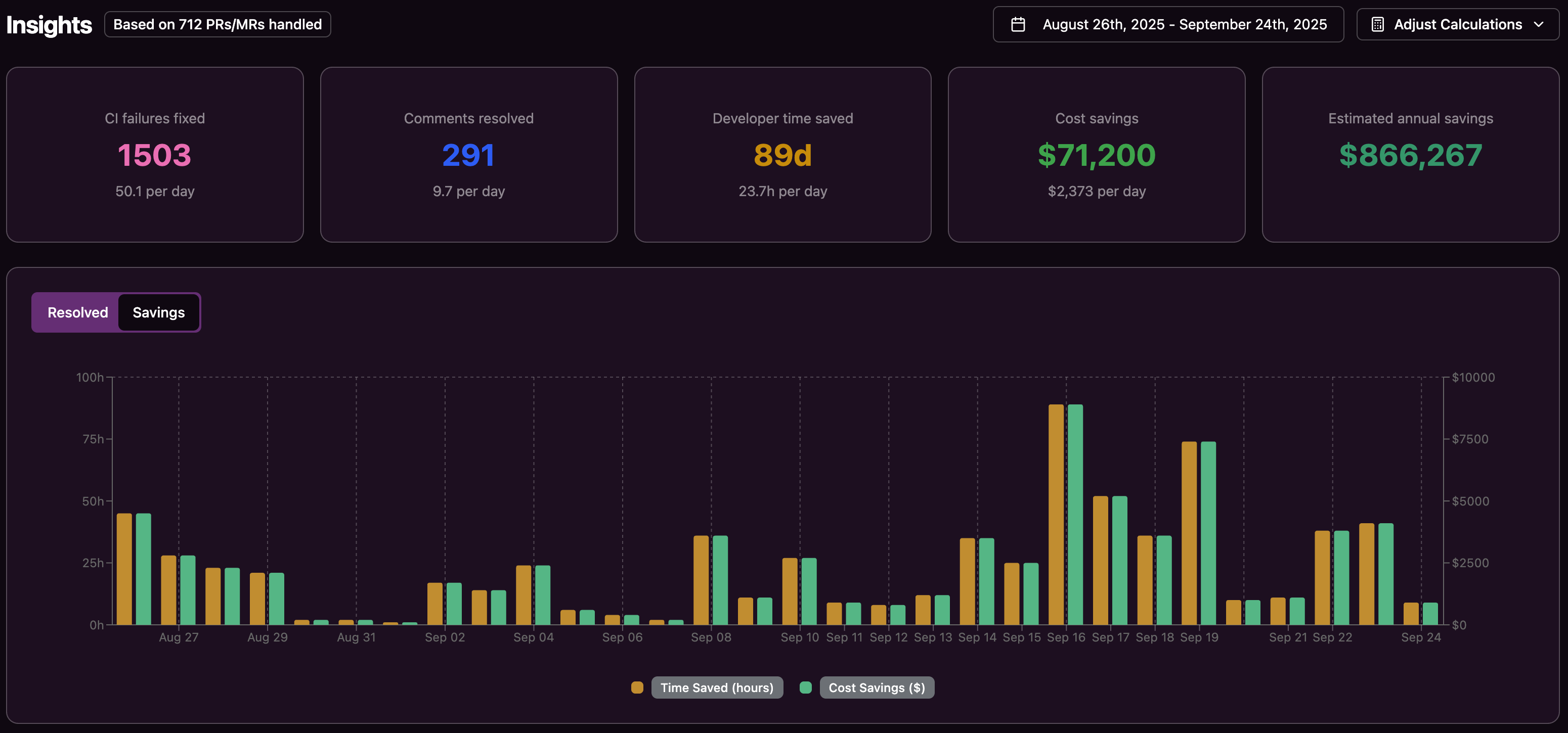
For team leaders, the measurable benefits stand out. Automated fixes recover lost productivity, letting engineers stay in a focused, creative state instead of debugging repeatedly.
Stop wasting time on manual fixes and request a Gitar demo to explore autonomous CI today.