
Key Takeaways
- AI coding tools generate code 3-5x faster, but they also create PR review bottlenecks with 91% longer review times and $1M annual productivity losses per 20-dev team.
- Gitar offers free AI code review that auto-fixes CI failures, while many paid competitors only provide suggestions that still require manual work.
- Follow this 7-step roadmap: integrate AI review, shift-left testing, predictive analytics, quality gates, auto-fixes, overcome AI limits, and measure ROI for 75% less CI toil.
- Teams using Gitar achieve 50% faster merges, near-zero context switching, and $750K+ savings with proactive DevOps automation.
- Teams can implement these strategies today with Gitar’s free auto-healing platform for consistently green builds.
The Gitar Advantage: Free AI Code Review That Auto-Fixes for Green Builds
Gitar replaces expensive suggestion-only tools with a free platform that actually fixes code. Competitors often charge $15-30 per developer and still rely on engineers to apply every change. Gitar goes beyond comments and suggestions, automatically resolving CI failures, addressing review feedback, and driving green builds with minimal manual effort.
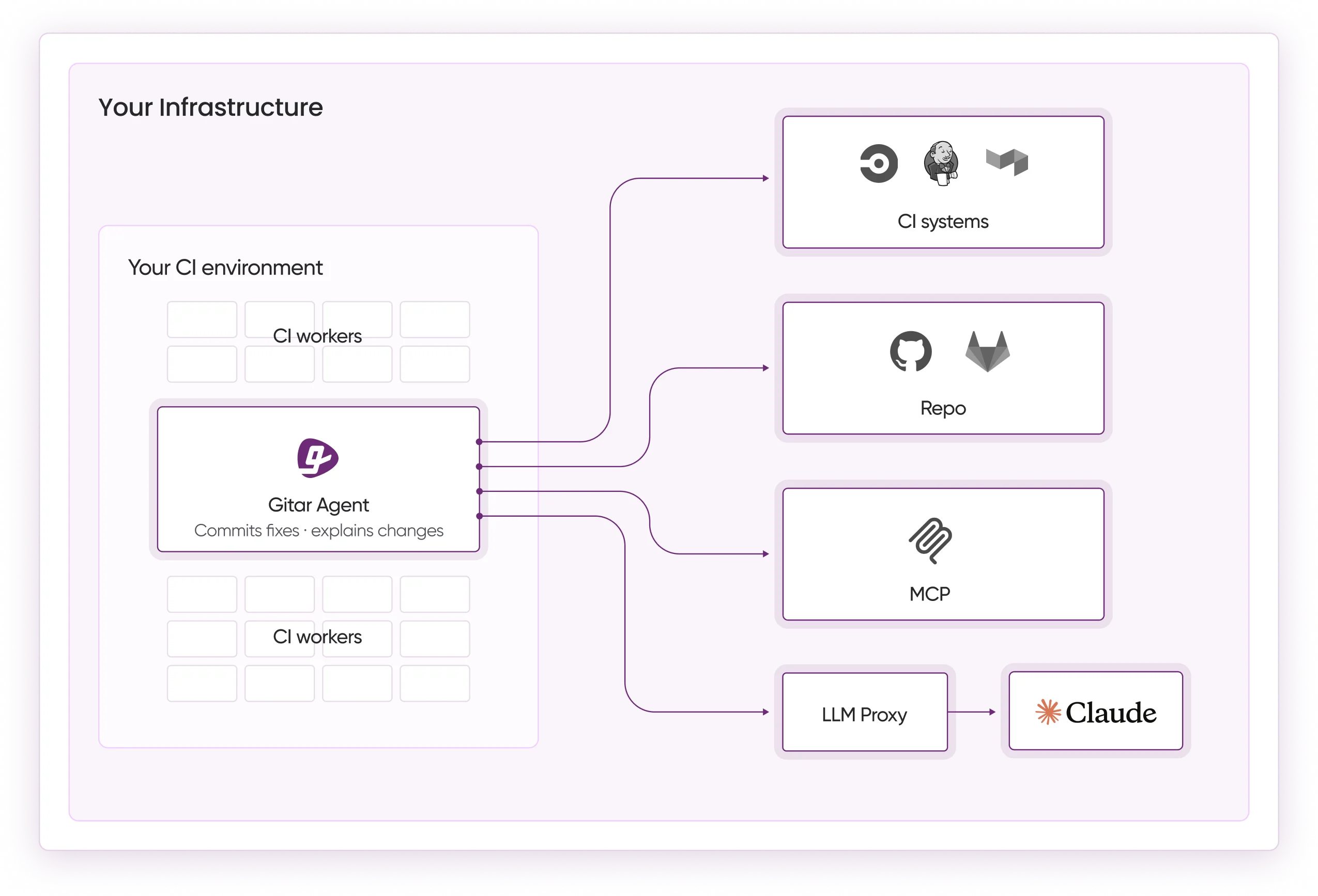
Gitar’s core capabilities include:
- Free unlimited PR analysis and security scanning
- Automatic CI failure detection and fixing
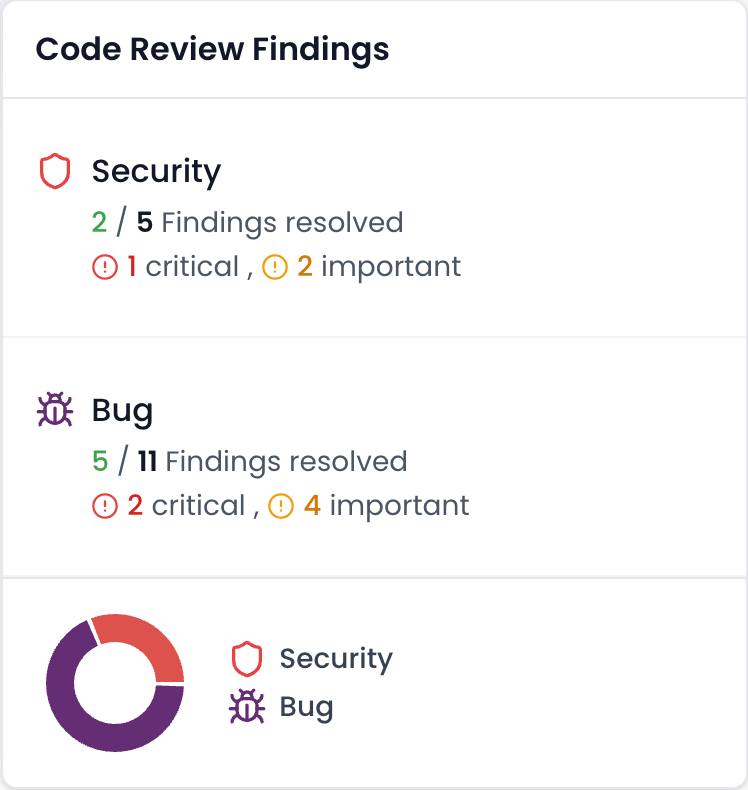
- Single dashboard comment that updates in place
- Natural language workflow rules
- Full integration with GitHub, GitLab, CircleCI, and Buildkite
|
Capability |
CodeRabbit/Greptile |
Gitar |
|
Pricing |
$15-30/seat |
Free (unlimited) |
|
Fixes |
Suggestions only |
Auto-fixes/validates |
|
CI Healing |
None |
Full auto-commit |
|
Scale |
Seat-limited |
Pinterest-scale |
Teams report that Gitar’s summaries are “more concise than Greptile/Bugbot” because the platform consolidates all findings into a single, clean interface. The Collate engineering team highlighted “unrelated PR failure detection” as saving “significant time” by separating infrastructure flakiness from actual code bugs.
Install in 30 seconds with no credit card required and experience the difference between suggestion engines and healing engines.
Step 1: Integrate AI Code Review into Every Pull Request
Gitar replaces noisy, fragmented reviews with a single, consolidated AI code review. Traditional tools flood developers with inline comments and notifications that are hard to track. Gitar instead posts one dashboard-style comment that updates as issues are resolved, so developers always see the latest state.
The platform provides free PR summaries, inline suggestions, security scanning, and bug detection for unlimited repositories with no seat limits. Installation takes about 30 seconds. Add the GitHub App or GitLab integration to your repositories, and the AI immediately starts analyzing PRs and posting consolidated feedback.
Step 2: Use Shift-Left Intelligent Testing on PRs
Shift-left testing improves quality by catching issues earlier in the development cycle. Gitar supports this approach with comprehensive AI code review that includes security scanning, bug detection, and performance review directly on pull requests. Teams identify problems before they reach production while still maintaining development speed.
This early feedback loop reduces rework, shortens review cycles, and keeps developers focused on feature delivery instead of late-stage firefighting.
Step 3: Apply Predictive Failure Analytics to CI
Predictive analytics reduce firefighting by flagging risky changes before they break builds. Instead of reacting to CI failures after they happen, teams can anticipate them. Teams with AI-driven tools see 30-40% faster mean time to recovery by analyzing failure logs and infrastructure patterns.
Gitar’s failure analytics separate code-related issues from infrastructure flakiness so developers avoid chasing unrelated problems. The system learns from historical failures and predicts which changes are likely to break builds, which helps teams prioritize attention on high-risk PRs.
Step 4: Enforce Natural-Language Quality Gates in CI/CD
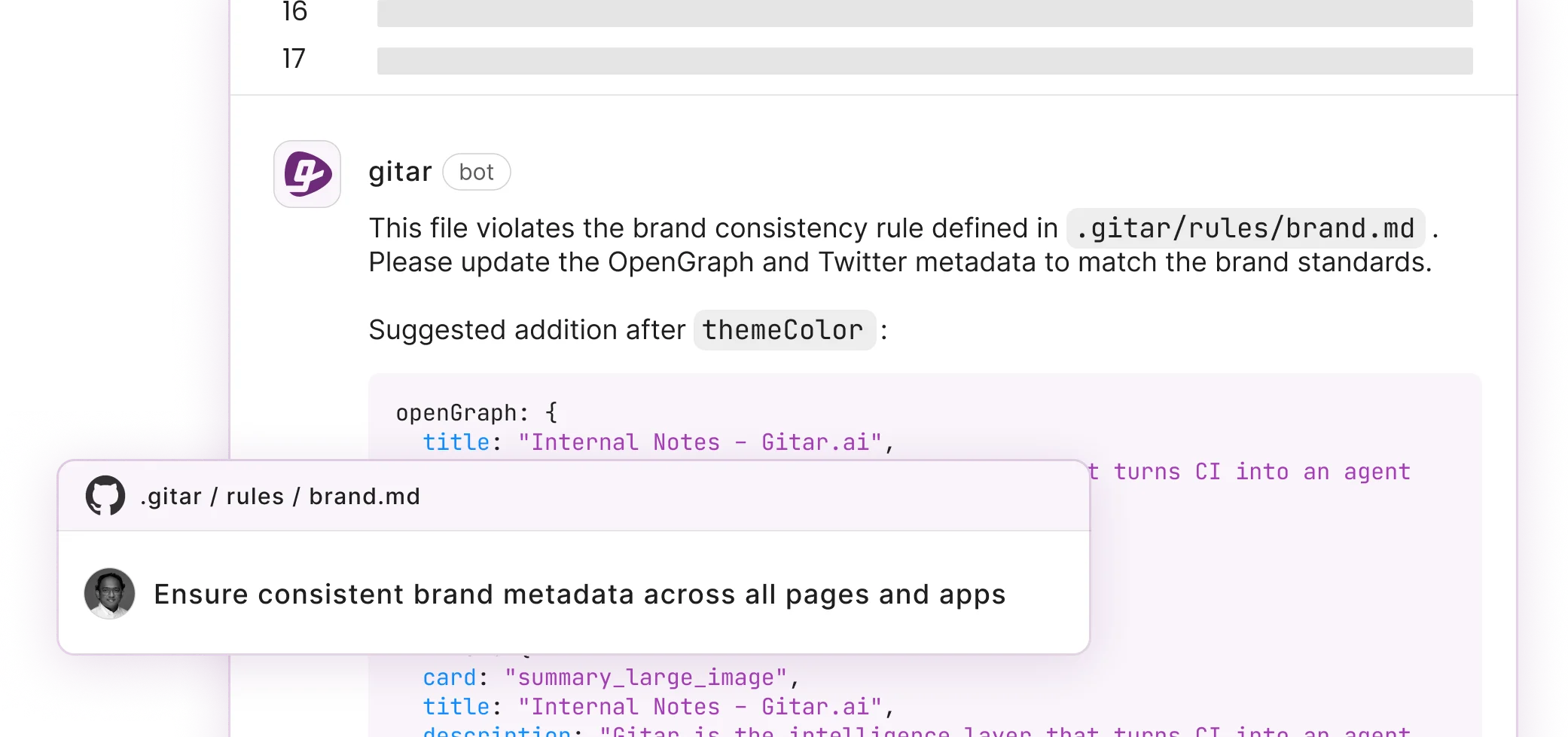
Quality gates protect production by blocking risky code, and Gitar makes them simple to manage. Traditional gates often rely on complex YAML configuration that only DevOps specialists can maintain. Gitar replaces that complexity with natural language rules that any engineer can write and understand.
Create a .gitar/rules.md file with specifications such as “PRs modifying authentication code require security team review.” Gitar then automatically enforces these policies across your pipelines. This approach democratizes CI/CD configuration while preserving strict quality standards and reducing configuration errors.
Step 5: Turn On Auto-Fix Workflows for CI Failures
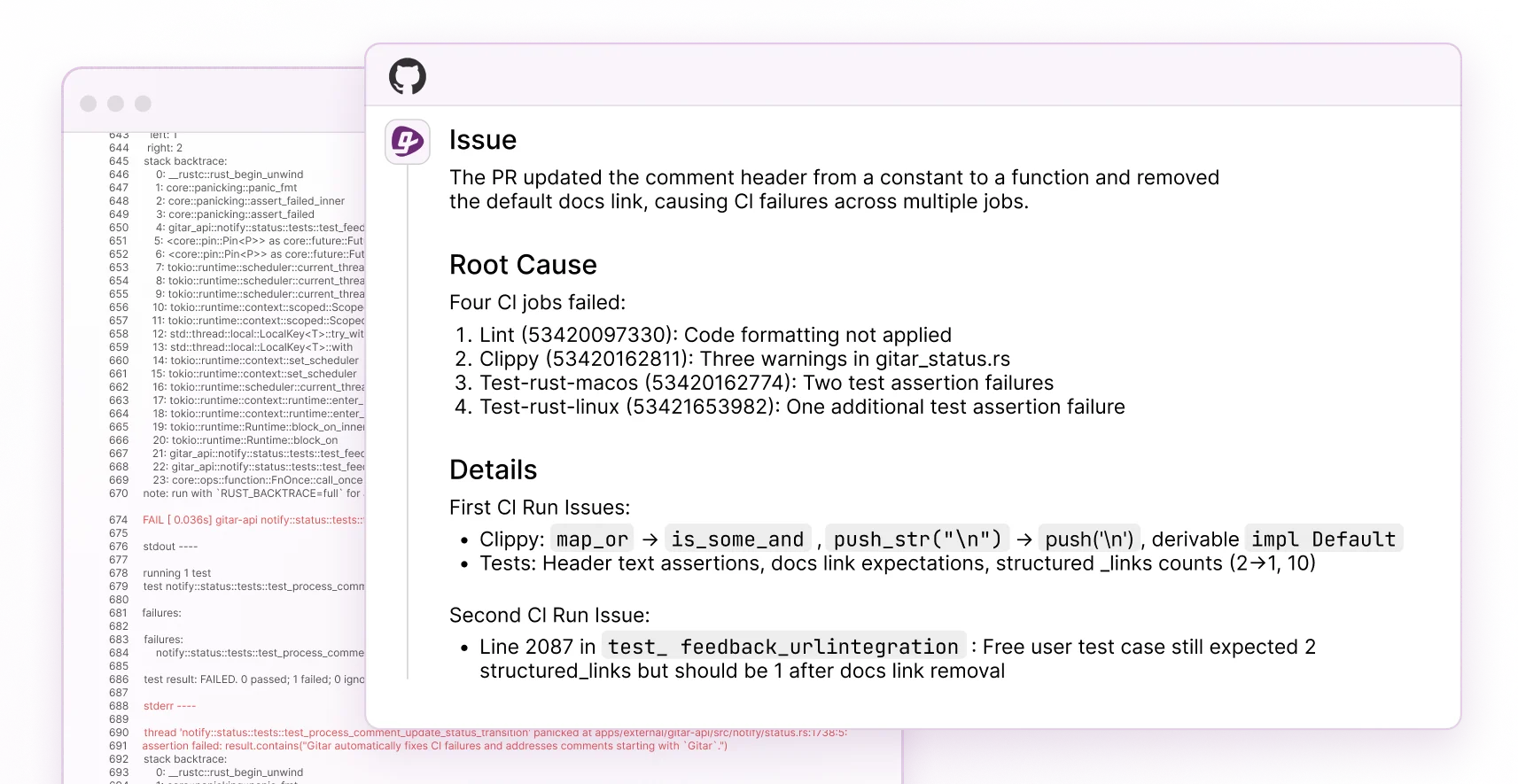
Auto-fix workflows remove the manual grind of chasing red builds. The critical difference between Gitar and suggestion engines is that Gitar applies fixes directly. When CI fails due to lint errors, test failures, or build breaks, Gitar analyzes the failure logs, generates a validated fix, and commits it to the PR.
The healing engine does more than suggest solutions. It implements changes, re-runs checks, and verifies that the fix works. This approach keeps builds green without constant developer intervention and eliminates the cycle of failed builds, manual fixes, and repeated re-runs that drain productivity.
Step 6: Address AI Limitations with Context and Memory
AI in DevOps can generate incorrect or suboptimal solutions because models rely on historical data that may not reflect full real-world complexity. Gitar tackles these limitations with hierarchical memory systems that maintain context per-line, per-PR, per-repo, and per-organization. This structure gives the AI a richer understanding of how your team actually works.
The platform learns team patterns, coding standards, and architectural preferences over time, which improves fix quality and reduces bias. Competitors often start fresh on every PR, but Gitar builds institutional memory that prevents repeated mistakes and adapts to evolving team practices.
Step 7: Measure ROI and Scale Proactive Automation
Measuring ROI helps teams justify and expand proactive code quality investments. Gitar users typically see dramatic improvements across key productivity and cost metrics.
|
Metric |
Before Gitar |
After Gitar |
|
Time on CI/review issues |
1 hour/day/dev |
15 min/day/dev |
|
Annual productivity cost |
$1M |
$250K |
|
Tool cost |
$450-900/month |
$0 |
|
Context switching interrupts |
Multiple/day |
Near-zero |
Even at 50% effectiveness, the productivity gains deliver about $375K in annual savings while removing tool subscription costs. DORA metrics also improve, with higher deployment frequency and shorter lead time as automated fixes reduce manual intervention and review friction.
Frequently Asked Questions
How can teams use AI to improve code quality?
Teams improve code quality with AI through automated code review, intelligent testing, and predictive failure analytics. The strongest results come from combining AI-driven detection with automatic fix application. Gitar’s 7-step process starts with free AI code review integration, then adds shift-left testing, predictive analytics, quality gates, auto-fix workflows, limitation mitigation, and ROI measurement. The key shift moves teams from suggestion engines to healing engines that implement fixes and validate outcomes.
Which AI tool works well for DevOps teams?
Gitar stands out as a powerful free AI DevOps platform because it fixes code instead of only suggesting improvements. GitHub Copilot focuses on code generation, and CodeRabbit or Greptile operate as expensive suggestion engines. Gitar instead delivers comprehensive CI healing, automatic failure resolution, and workflow automation at no cost. The platform integrates with GitHub, GitLab, CircleCI, and Buildkite and supports enterprise-scale environments with 50+ million lines of code and thousands of daily PRs.
What are the main limitations of AI in DevOps?
AI limitations in DevOps include bias from training data, suboptimal solutions caused by limited real-world context, and confirmation bias when AI reviews AI-generated code. High implementation costs and skills gaps also slow adoption. Gitar addresses these issues with hierarchical memory systems that learn team patterns, institutional memory that avoids repeated mistakes, and validation engines that test fixes against real CI environments before applying them.
How can DevOps teams apply AI in their workflows?
DevOps teams apply AI through predictive failure analytics, automated code review, intelligent testing, and workflow automation. High-impact use cases include CI failure prediction and auto-fixing, natural language policy enforcement, and cross-platform integration that connects code changes to project context from Jira and Linear. Gitar demonstrates this approach by combining free code review with automatic fix application so teams get both detection and resolution in one platform.
Conclusion: Move from Reactive Fixes to Proactive Quality with Gitar
The 2026 AI-coding bottleneck, with 91% PR review spikes despite 3-5x faster code generation, demands a proactive quality strategy. The seven-step roadmap in this guide shifts development from manual fix cycles to predictive, auto-healing pipelines that keep builds healthy.
Teams that adopt this approach see 50% or more faster merge rates, a 75% reduction in CI toil, and over $750K in annual savings. The crucial decision is to choose tools that fix problems, not just point them out. While competitors charge premium prices for suggestion engines, Gitar delivers comprehensive AI DevOps automation for free.
Install Gitar now, automatically fix broken builds, and start shipping higher quality software faster. The platform installs in about 30 seconds with no credit card required and immediately begins healing your CI pipeline so your team can focus on building features instead of chasing failures.