
HTML and XML syntax errors often stall CI/CD pipelines, costing software development teams valuable time. Simple problems like unescaped characters or encoding mismatches can turn a smooth deployment into hours of manual fixes. These errors frequently cause pipeline failures, pulling developers away from their work to sift through logs and correct issues.
Autonomous CI fixing offers a practical solution. It automates the process of detecting and resolving HTML and XML errors directly in the pipeline. This approach saves developer effort, keeps focus on core tasks, and speeds up delivery. Moving from manual fixes to automated resolution marks a significant shift, reducing build failures and daily stress.
Why HTML & XML Syntax Errors Slow Down Your CI/CD Pipeline
HTML and XML syntax issues, like encoding mismatches or unescaped ampersands, create bigger problems than just failed builds. Common errors include inconsistent UTF-8 versus ISO-8859-1 encodings and schema violations. About 30% of XML pipeline failures stem from mismatched character sets, and up to 40% involve invalid characters, often disrupting automated processes.
These errors hit developer productivity hard. A failed CI pipeline forces team members to stop their current work, analyze logs, fix the issue, and wait for another run. Manually troubleshooting syntax errors breaks concentration and adds mental strain as developers switch between tasks.
The impact spreads across the organization. Relying on manual fixes delays pipeline recovery, slowing down delivery and reducing deployment frequency. Teams often adopt cautious habits, like excessive local testing or delayed commits, which further hinder progress.
Fix CI Issues Instantly with Gitar’s Self-Healing Technology
Gitar changes how teams handle HTML and XML syntax errors in CI pipelines by automating fixes without developer input. This AI-driven tool reads logs, identifies the problem, applies a solution, and commits the change to the pull request branch, all while preserving focus on other tasks.

Gitar stands out with several key features for tackling syntax issues:
- Detects and fixes HTML/XML errors, including encoding problems and schema issues, with full context awareness.
- Replicates complex environments, supporting specific JDK versions, multi-SDK setups, and third-party tools like SonarQube.
- Validates fixes against CI workflows to ensure pull requests pass all checks before completion.
- Offers flexible settings, from manual approval of suggestions to automatic commits with rollback options.
- Integrates with platforms like GitHub Actions, GitLab CI, CircleCI, and BuildKite for broad compatibility.
Unlike manual debugging, Gitar works silently in the background. It spots HTML and XML issues as they happen and resolves them before developers notice, creating a system that heals itself without extra effort.
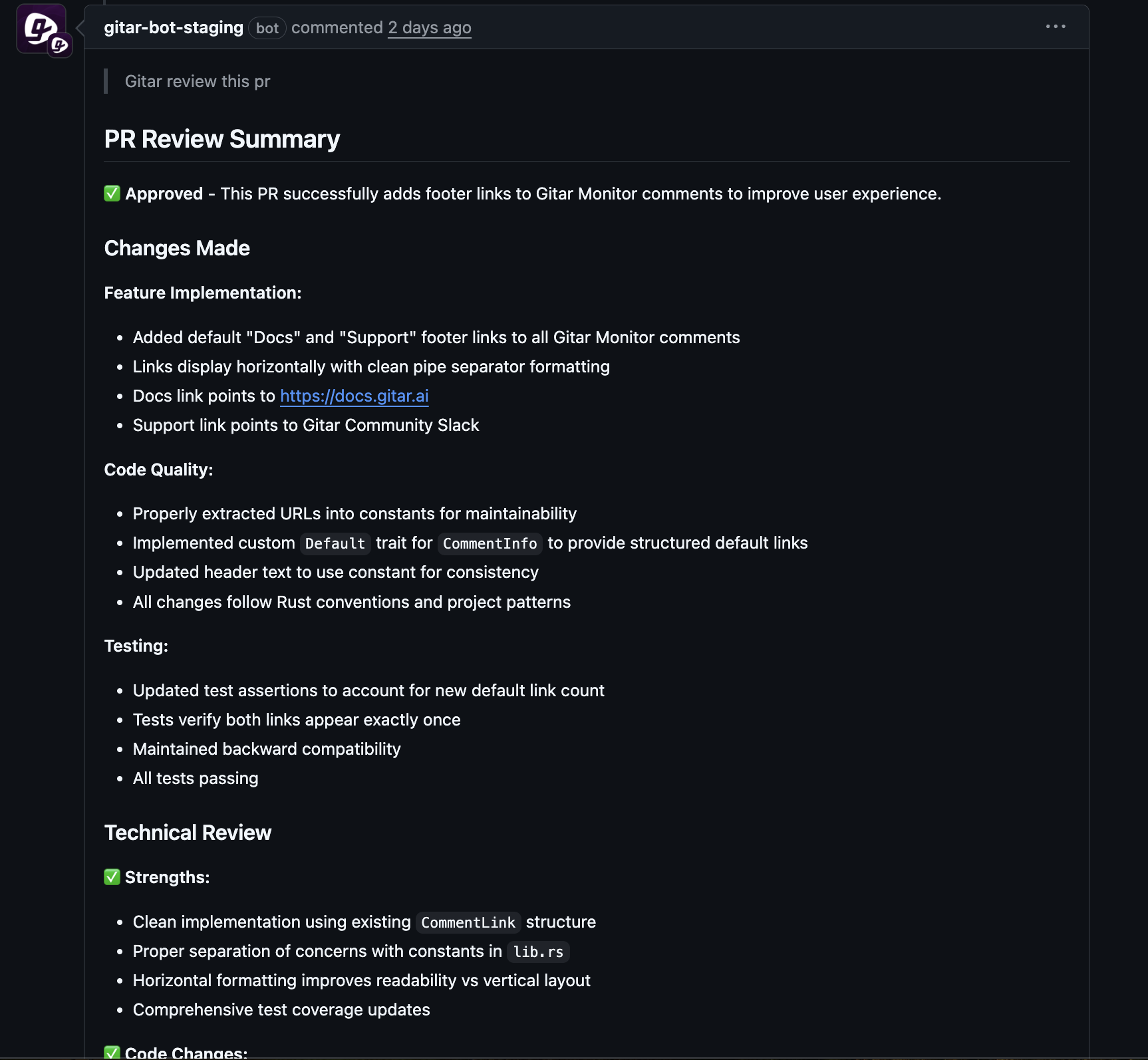
Schedule a demo to see Gitar automate HTML & XML fixes in your CI pipeline.
How Manual Debugging Drags Down Modern Development Teams
Manually fixing HTML and XML syntax errors wastes time across engineering teams. On average, developers spend an hour daily on CI failures, with syntax issues making up a large share. The process of reading logs, finding the cause, testing locally, and validating fixes eats into schedules and delays projects.
Even tools that suggest fixes fall short. They offer ideas but still require developers to apply changes, verify results, and rerun pipelines. This means interruptions and extra work persist despite the assistance.
Software Engineers: Constant Interruptions and Frustration
For engineers, HTML and XML errors mean frequent pauses in work. After submitting a pull request, a CI failure notification pulls them away from their next task. This shift from focused coding to debugging disrupts deep concentration.
Deciphering unclear error messages from parsers or validators adds to the challenge. Engineers often spend more time figuring out the problem than solving it. Repeating fixes for similar issues across files becomes tedious and draining.
Engineering Leaders: Team Delays and Rising Costs
Leaders see the wider impact of syntax errors through slowed team progress and missed deadlines. When developers are tied up with failed builds, feature work lags, and sprint goals slip. For a 20-person team, these delays can add up to $1M yearly in lost productivity, factoring in full costs and delayed releases.
Syntax issues also complicate planning. Unpredictable debugging time makes it hard to estimate delivery dates accurately, affecting commitments to stakeholders and customers.
DevOps Specialists: Pipeline Instability and Extra Work
For DevOps engineers, HTML and XML errors create cost overruns from failed CI runs, especially in cloud setups where compute time adds up. Late-stage failures waste resources after long test phases.
These errors also destabilize complex CI workflows. Teams may reduce validation steps to avoid failures, compromising quality. Onboarding new staff becomes harder when pipelines are prone to syntax issues, requiring more training and guides.
Gitar’s Edge: Automated Fixes Over Manual or Suggested Solutions
Gitar differs from traditional tools by acting as a healing engine, not just a suggestion provider. Healing engines analyze root causes and apply fixes directly, unlike suggestion tools that rely on user action. This approach shifts debugging from a hands-on task to a background process.
Manual methods and suggestion tools still need developers to handle fixes and validation. Gitar, however, resolves HTML and XML errors independently, ensuring builds succeed without interruption. This leads to self-healing pipelines with minimal downtime.
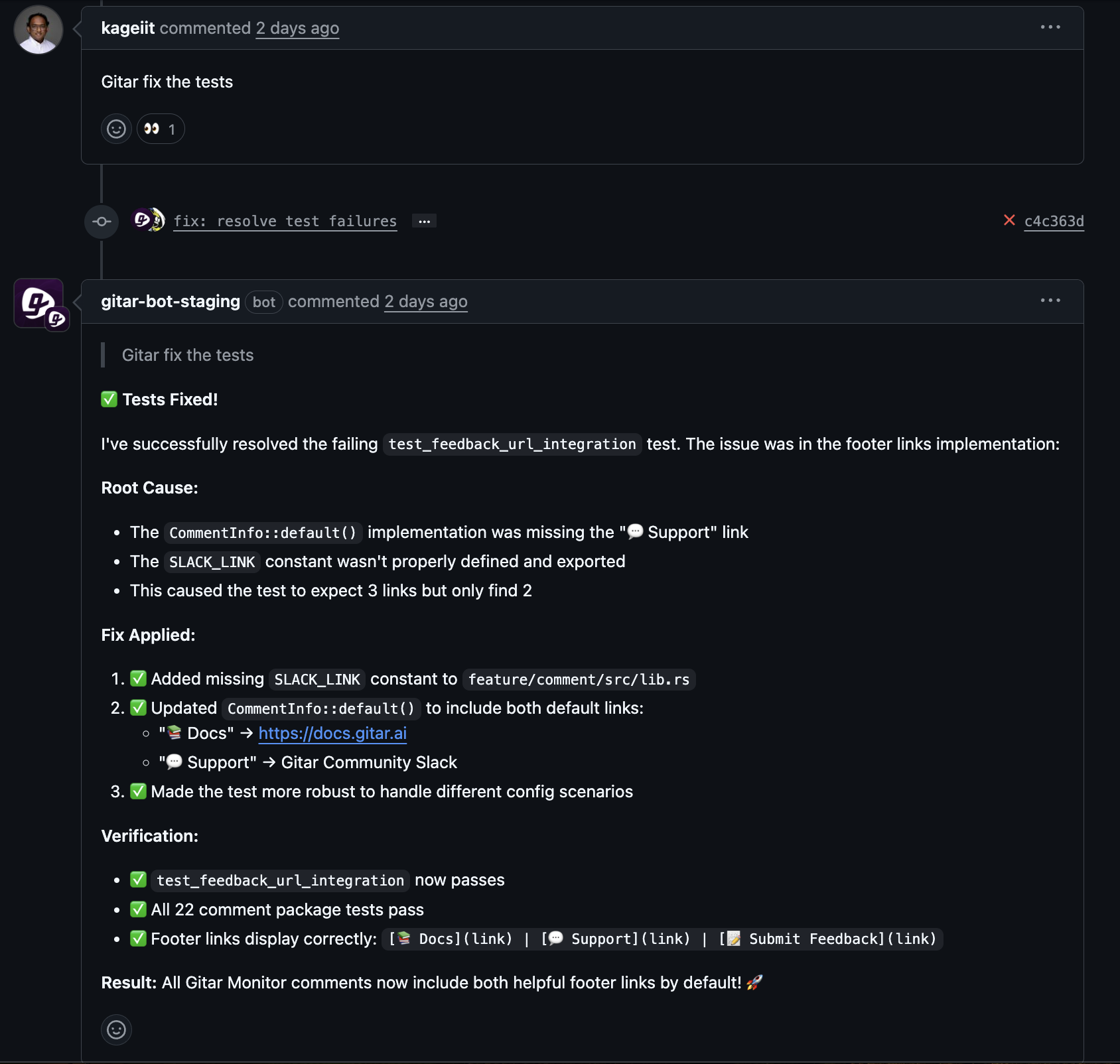
Comparing Automated Fixes to Manual and Suggestion Tools
|
Feature |
Manual Debugging |
AI Suggestion Tools |
Gitar (Automated Healing) |
|
HTML/XML Syntax Fixes |
Developer writes fix |
Developer applies suggestion |
Gitar applies and validates |
|
CI Pipeline Integration |
Low, manual reruns |
Medium, requires action |
High, fully automated |
|
Context Switching |
High, frequent interruptions |
Medium, needs review |
Low, runs independently |
|
Time to Resolution |
Slow, manual process |
Moderate, review needed |
Fast, instant fixes |
Gitar’s biggest advantage is guaranteed successful builds. While other methods leave validation to developers, Gitar tests every fix against the full CI workflow, ensuring HTML and XML corrections don’t cause new problems downstream.
Business Benefits of Automated HTML & XML Syntax Fixes
Automating HTML and XML syntax repairs brings measurable gains to software development. Key metrics like recovery time, failure rates, and manual effort improve quickly with automation, with lasting effects as teams adjust to reliable pipelines.
Boost Developer Focus and Satisfaction
Automated fixes remove a major frustration for developers. By handling encoding errors and schema issues, Gitar lets engineers focus on coding and innovation. Beyond saving time, this shift improves morale, as repetitive debugging offers little growth value.
Over time, trust in CI systems grows. Developers feel free to test new ideas, commit changes often, and explore creative solutions, knowing syntax issues won’t derail progress.
Speed Up Delivery and Meet Deadlines
Automation cuts down delays in code reviews and pull request merges caused by HTML and XML errors. Faster cycles mean quicker feature releases, helping teams respond to customers and stay competitive.
Reliable pipelines also improve planning. Leaders can estimate timelines more accurately with fewer unexpected delays, supporting confident commitments to market goals and client needs.
Cut Costs from CI Failures
Manual debugging carries a high price tag. For a 20-developer team, an hour daily on CI issues can cost $500K yearly in productivity losses, even at partial effectiveness with tools like Gitar. This accounts for full compensation and delayed features.
Additional savings come from lower CI infrastructure costs. Late-stage build failures waste cloud resources. Automated fixes prevent these, reducing monthly expenses and optimizing development investments.
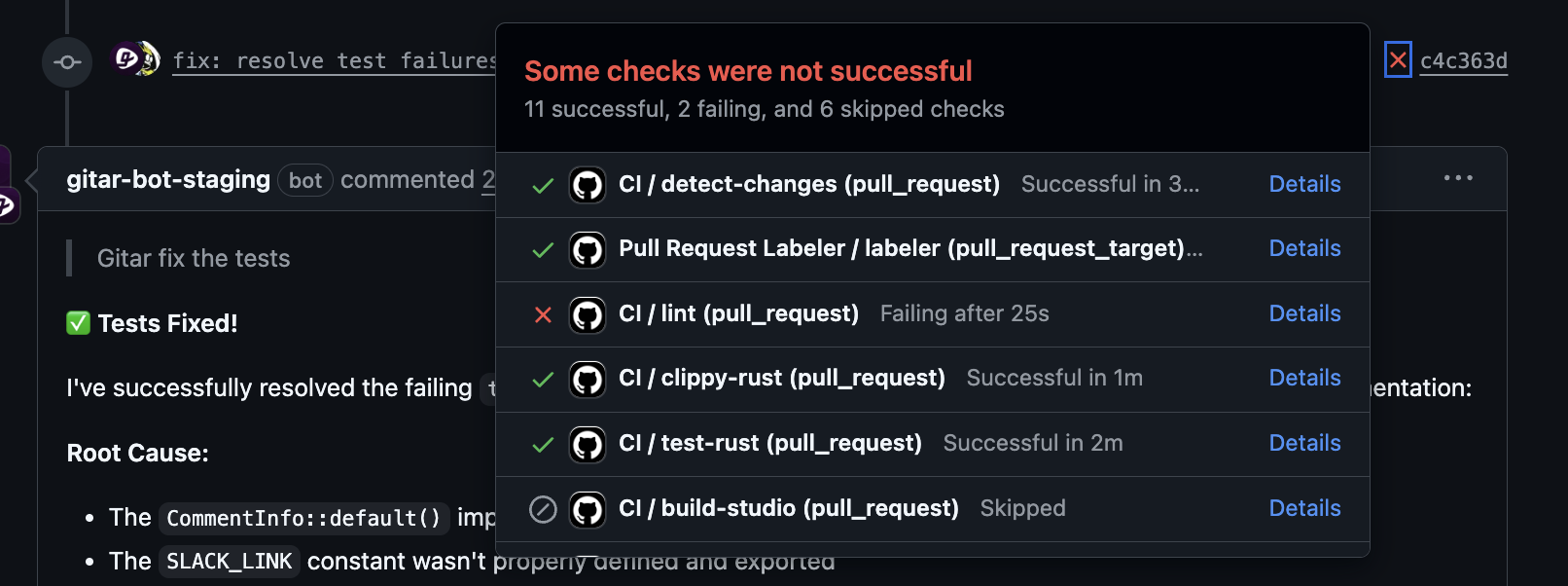
Deliver better software faster with Gitar’s automated HTML & XML syntax fixes.
Common Questions About Automated HTML & XML Fixes
How Does Gitar Manage Complex HTML/XML Schemas?
Gitar’s engine handles intricate HTML and XML schemas, including custom DTDs and XSD rules. It reviews project context, schema files, and CI validation setups. When fixing errors, Gitar ensures compliance with these rules, avoiding new issues while resolving existing ones.
Can Gitar Fix Character Encoding Issues in CI Pipelines?
Yes, Gitar detects and corrects encoding mismatches, such as differences between declared and actual content. It handles invalid sequences, mixed encodings, and standardizes files to prevent future errors. This includes resolving complex cases like byte-order marks or locale-specific characters.
What Security Features Protect Gitar’s Automated Code Changes?
Gitar prioritizes security with signed commits for full tracking of changes. It runs in isolated environments to block unauthorized access. Teams can start with manual approval settings before moving to full automation. Fixes are tested against CI workflows, including security checks, to prevent vulnerabilities.
How Does Gitar Prevent New Issues from Syntax Fixes?
Gitar tests fixes in a full CI environment replica, covering dependencies and custom validations. It checks XML configs with consuming apps and HTML templates with rendering pipelines. If a fix fails any test, Gitar rolls back and tries other solutions, ensuring only reliable changes are applied.
End HTML & XML Syntax Issues for Good
HTML and XML syntax errors slow down development at every level. Developers lose focus, leaders face unpredictable timelines, and the hidden costs pile up. Manual fixes or suggestion tools don’t solve the core issue: routine problems shouldn’t interrupt meaningful work.
Gitar changes this with automated fixes that handle HTML and XML errors directly in the CI pipeline. Teams gain reliable systems, spend less time on failures, and deliver faster. Moving to automated resolution is the next step for CI/CD, turning build issues into rare events.
The value goes beyond time saved. Companies adopting this approach ship products quicker, cut costs, and let engineers focus on innovation instead of fixes.
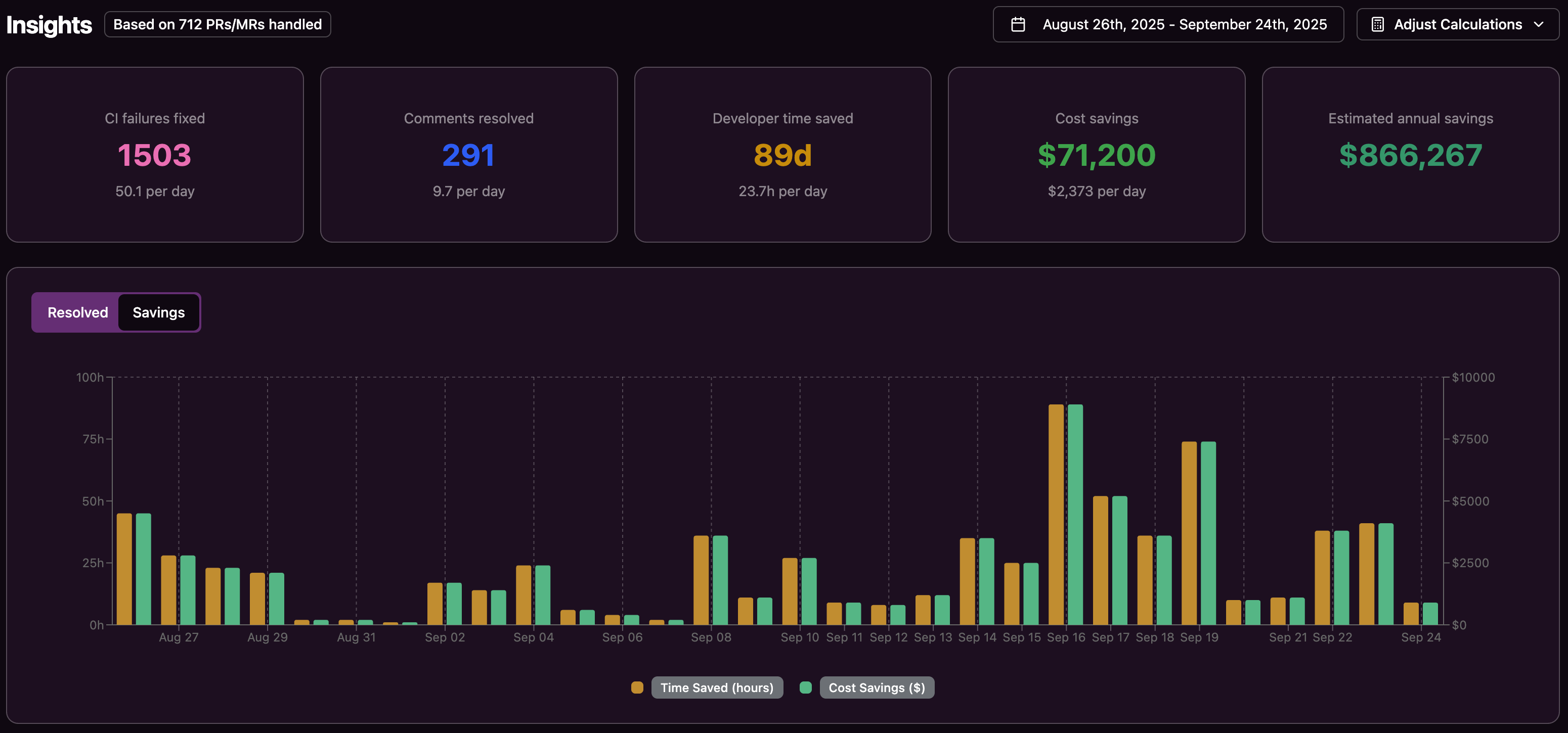
See Gitar in action: Request a demo to eliminate HTML & XML syntax issues now.