
Software engineers often struggle with CI failures and code review delays, costing valuable time and slowing down releases. This article highlights the real financial and productivity impact of these manual processes. It also explains how autonomous CI fixes, powered by Gitar, help teams deliver faster and achieve measurable returns for engineering leaders focused on developer efficiency.
The Challenge: Financial and Productivity Costs of Manual CI Fixes
Developers can lose up to an hour each day tackling CI issues and code reviews, leading to significant productivity drops. This section breaks down the widespread effects and costs of these manual hurdles in software development.
CI Failures: A Major Drain on Developer Time
Many developers push a pull request expecting success, only to face a failed build. Issues like missing dependencies, flaky tests, or minor style errors pop up. This starts a frustrating loop of reading error logs, switching to a local setup, making small changes, committing, and waiting for the pipeline to rerun.
Common CI failures include automated test issues like flaky results, build errors from tool mismatches, deployment failures due to incorrect variables, dependency conflicts, and version control problems. Each failure disrupts workflows, pulling developers away from their main tasks.
The mental cost of switching tasks adds up. A low success rate in CI pipelines ties directly to wasted time and slower delivery. A quick 30-minute fix can turn into an hour of lost focus when accounting for regaining momentum.
This process doesn’t just take time. It breaks concentration, stretching a small issue into a major productivity loss with effects rippling across the team.
Code Review Delays: Slowing Down the Process
Code reviews create bottlenecks, especially for distributed teams. A developer in one timezone might wait days for feedback from a colleague halfway across the world. A simple exchange can drag on due to time differences. Traditional AI tools offer suggestions but still leave the implementation to developers, adding extra steps.
As AI coding tools speed up code creation, the focus shifts to challenges in validating and merging that code. Tools like GitHub Copilot increase code volume, making efficient review and integration the new hurdle.
Manual reviews slow down progress. Each round of feedback means more delays and context switching, especially if the developer has already moved on to other work and needs to revisit past code.
Financial Impact: Lost Revenue from Delays
CI failures and review delays carry a heavy financial toll. Sixty percent of companies face slower launches, revenue losses, and higher costs due to CI/CD issues. These losses grow over time.
For a team of 20 developers losing one hour daily to these tasks, the numbers are clear:
- Time Cost: 20 developers × 1 hour per day × 250 work days = 5,000 hours yearly
- Financial Cost: 5,000 hours × $200 per hour average cost = $1 million annual productivity loss
This figure excludes indirect costs like delayed features, missed market windows, developer frustration, and team morale impacts. CI/CD issues also cause indirect losses from context switching and delayed deliveries.
These delays hurt competitiveness too. When teams focus on fixing CI issues instead of building new features, they can’t keep up with market demands or customer needs.
Ready to save time and reduce costs? Install Gitar now to automate fixes for failed builds.
The Solution: Speed Up Development with Gitar’s Autonomous Fixes
Autonomous CI fixes offer a practical way for teams to regain lost time and deliver faster. Gitar stands out by automating the resolution of CI issues, turning manual debugging into a hands-off process that keeps workflows moving.
How Gitar Works: Automating Fixes for CI Issues
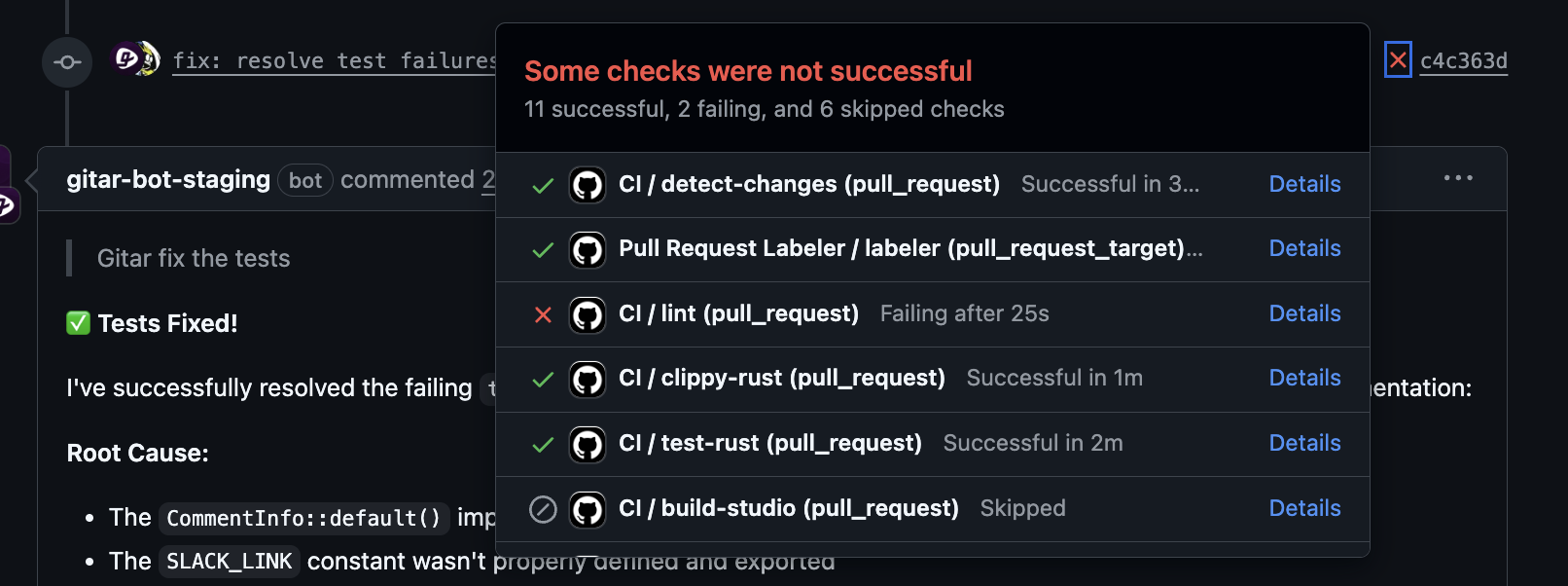
Gitar acts as an automated fix engine. When a pull request gets a review comment or a CI pipeline fails, Gitar’s AI steps in. It analyzes the problem, creates a solution, and updates the request with the fix, all without developer input.
This automation prevents hours of manual debugging and context switching. Unlike tools that only suggest changes, Gitar applies fixes, tests them against your full CI setup, and ensures everything passes before marking the request as ready.

Gitar handles many common issues automatically, including:
- Linting and formatting errors by adjusting style violations
- Simple test failures like updating snapshots or fixing assertions
- Build errors caused by dependency conflicts or script issues
Key Benefits: Improve Quality and Delivery Speed
Gitar automates the entire fix process. It applies changes, tests them across your CI pipeline, and confirms everything works before marking builds as ready. This removes the guesswork tied to manual fixes or suggestion-only tools.
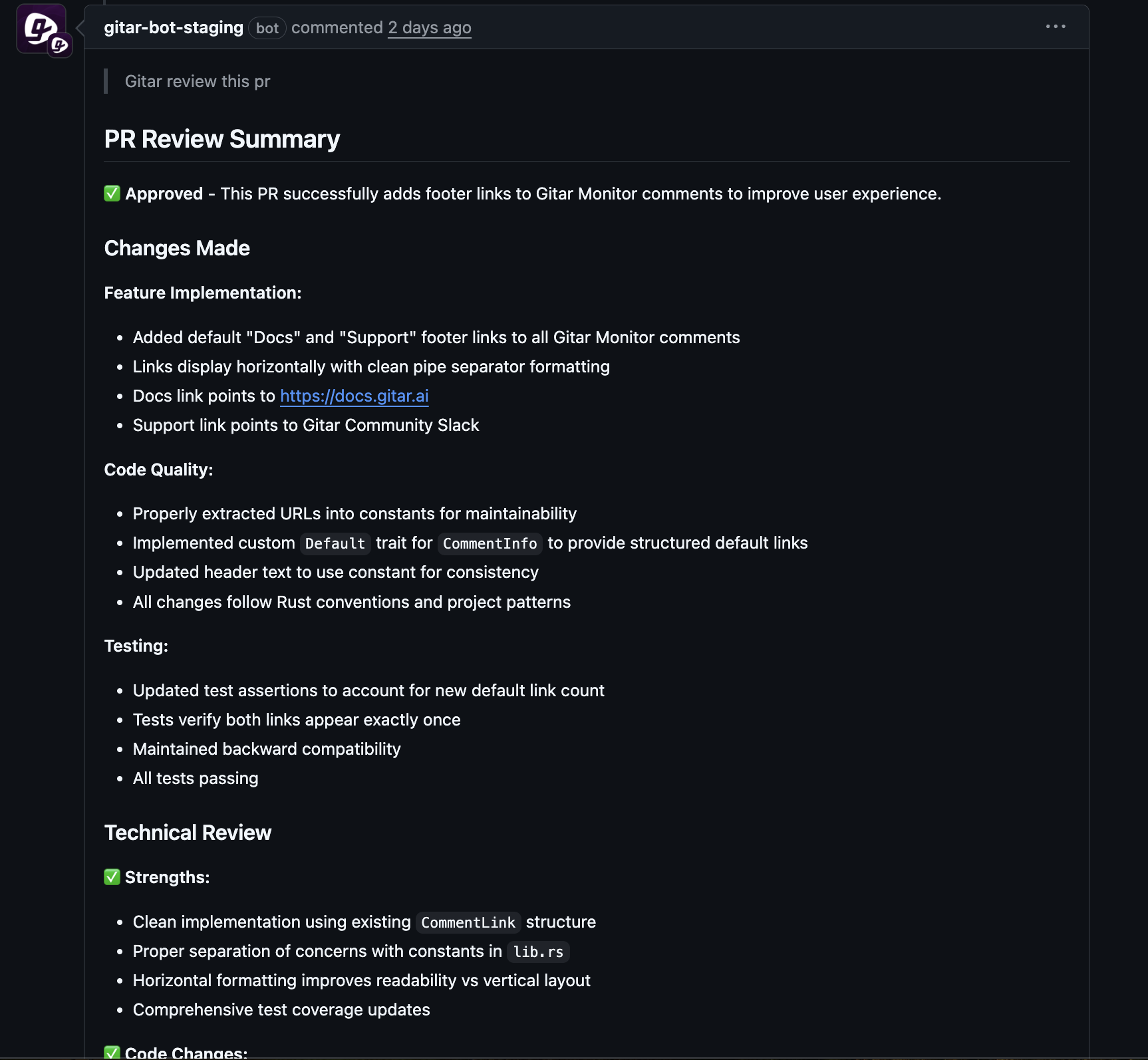
It also mirrors complex enterprise setups, matching specific software versions and dependencies. This ensures fixes fit your exact environment. Beyond CI, Gitar helps with code reviews. Reviewers can comment with instructions, and Gitar makes the changes, pushing commits with clear notes on what was done.
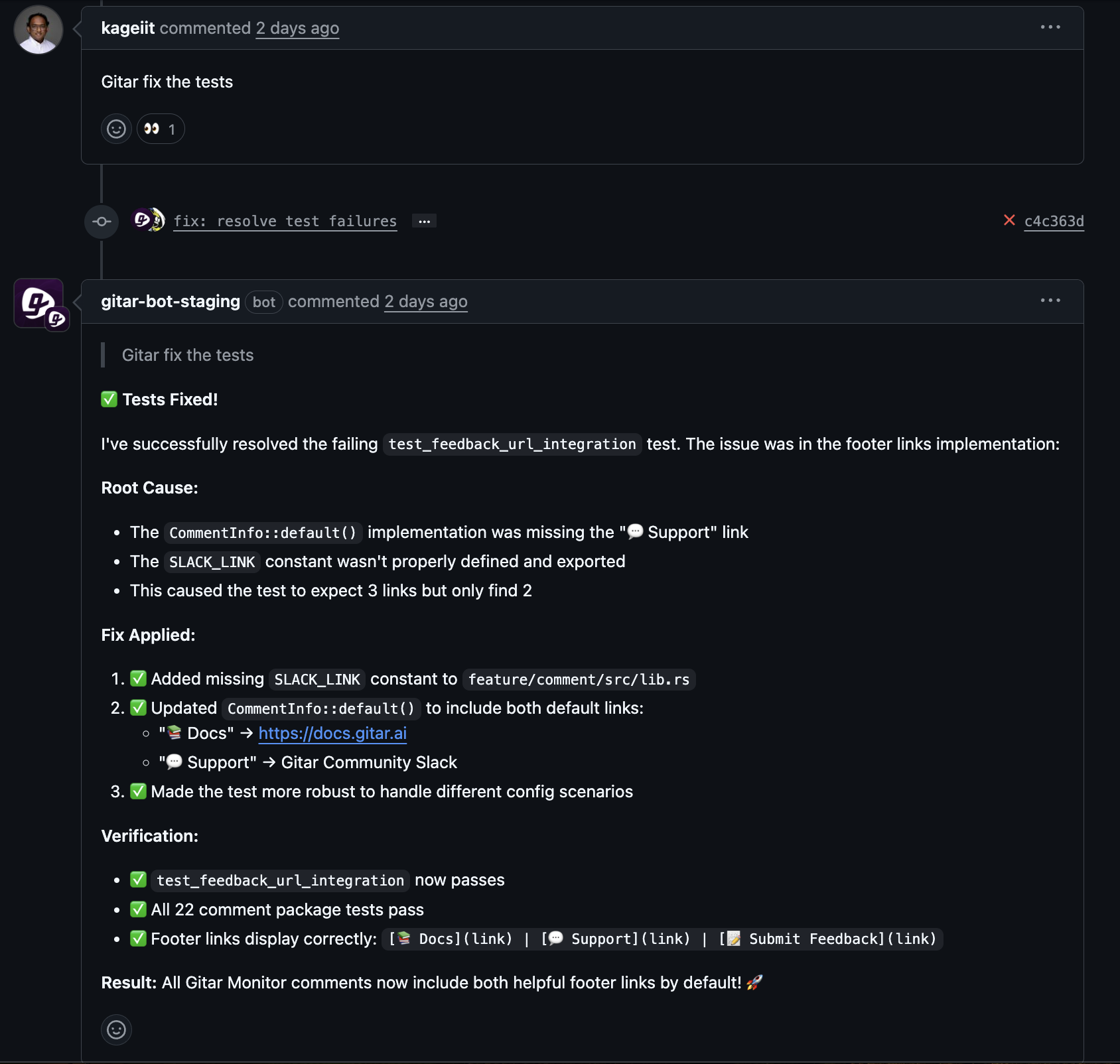
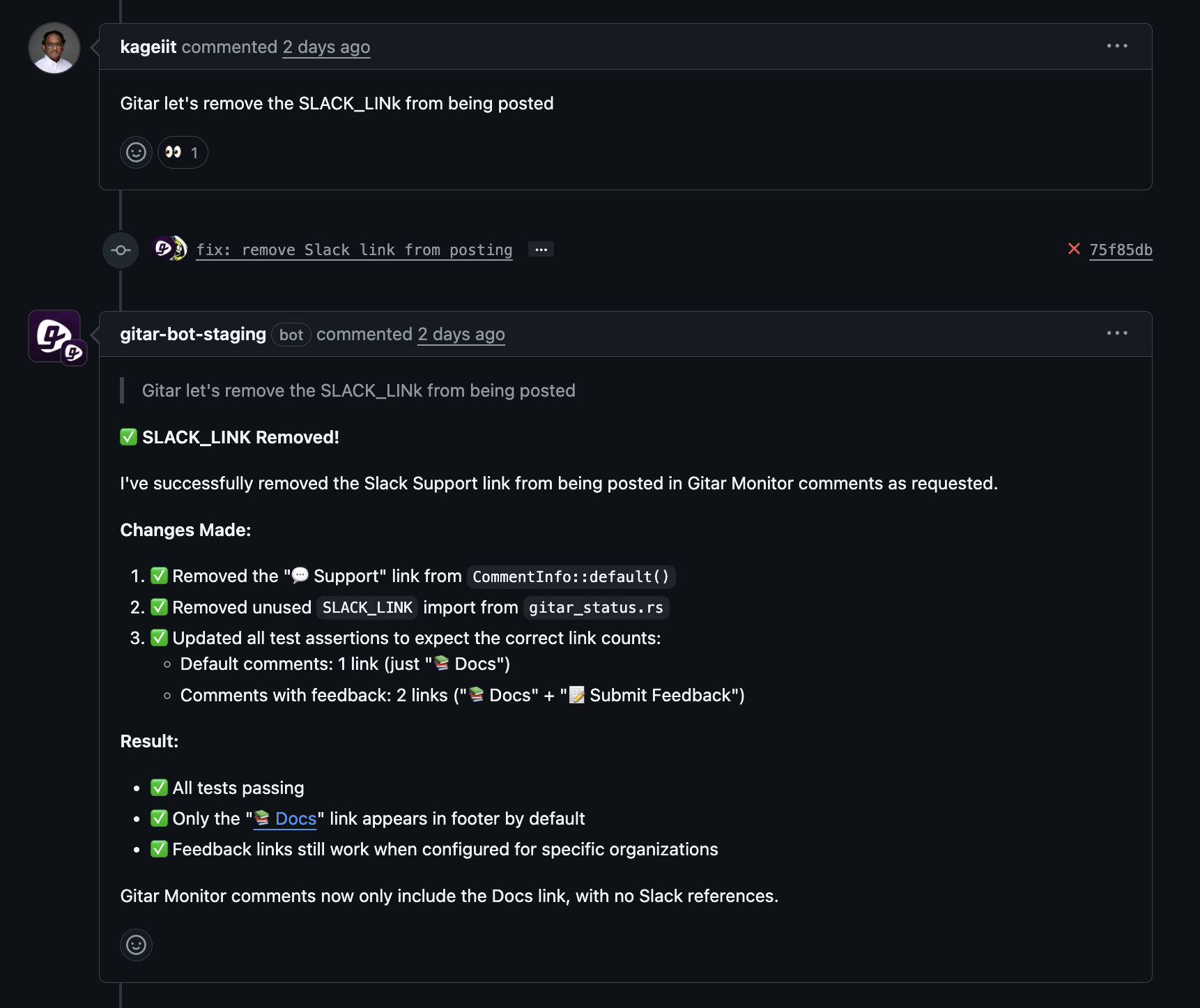
Teams can adjust Gitar’s automation level. Start with a cautious mode where fixes are suggestions for review. As trust grows, switch to direct commits with rollback options. Gitar also supports multiple platforms like GitHub Actions, GitLab CI, CircleCI, and BuildKite, fitting diverse setups.
Ready to streamline your workflow? Install Gitar now to automate fixes for failed builds.
Measurable Returns: How Gitar Saves Time and Money
Adopting autonomous CI fixes with Gitar brings clear financial savings and additional benefits that grow over time, helping teams work smarter.
Save Developer Time and Cut Costs
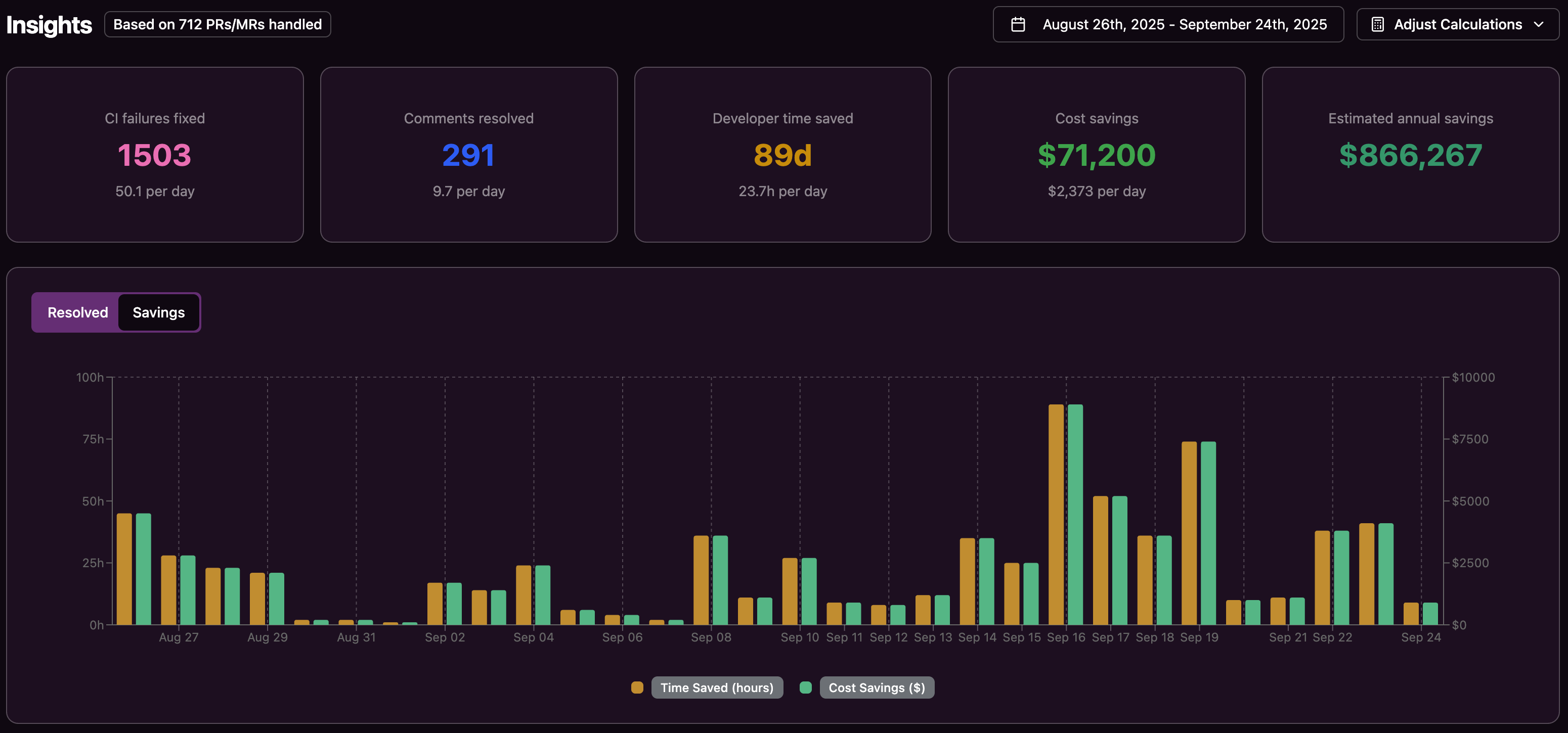
For a 20-developer team losing one hour daily to CI and review tasks, the yearly cost at $200 per hour reaches $1 million. If Gitar resolves just half of these issues, it saves $500,000 annually while boosting developer morale and speed.
Time gains are immediate. Instead of spending 30 to 60 minutes on a failed build, developers stay focused on their core work as Gitar handles fixes. Preserving focus amplifies productivity beyond raw time saved.
Faster Delivery and Market Response
Automating fixes cuts delays in code reviews and speeds up merging, helping teams respond quicker to market needs. Resolving CI issues in minutes instead of hours builds up to faster overall delivery.
For distributed teams, the benefit is bigger. Feedback from one timezone gets addressed by Gitar, so fixes are ready when the developer logs in, avoiding multi-day waits for simple changes.
Faster merges lead to more frequent updates, quicker customer input, and rapid responses to bugs or market shifts. This flexibility offers a direct edge over competitors.
Improve Developer Satisfaction and Retention
Removing repetitive debugging tasks lets developers focus on creative work, enhancing job satisfaction. Automating CI fixes reduces burnout from constant interruptions, helping engineers stay engaged.
Higher satisfaction means better retention. Keeping talent saves on the high costs of hiring and training new staff, adding another layer of value to Gitar’s impact.
How Gitar Stands Out: Automation vs. Suggestions
|
Feature |
Gitar (Autonomous Fixes) |
Manual Workflow |
AI Reviewers (Suggestions) |
|
Issue Resolution |
Automatic fix and validation |
Manual diagnosis and retry |
Suggests fixes for manual action |
|
Context Switching |
Eliminates interruptions |
High, disrupts focus |
Reduced but still present |
|
Build Validation |
Ensures builds pass |
Manual retries until success |
No validation after suggestion |
|
Environment Context |
Matches enterprise setups |
Needs local configuration |
Limited awareness |
Gitar’s strength lies in taking action. While AI reviewers suggest possible fixes, they leave the work to developers. Gitar automates the fix, tests it across your CI pipeline, and confirms success. Manual approaches cost the most in time and delays. Other AI tools need manual triggers and lack deep environment understanding. Gitar also works across platforms like GitHub, GitLab, CircleCI, and BuildKite, unlike tools tied to specific systems.
See the impact of full automation. Install Gitar now to automate fixes for failed builds.
Common Questions About Autonomous CI Fixes
How Does Gitar Differ from AI Review Tools?
AI review tools suggest fixes but leave the final steps to developers. Gitar automates the process, applying fixes, testing them in your CI setup, and ensuring builds succeed. It moves past guidance to deliver complete solutions tailored to your environment.
Can Gitar Fit Sensitive Enterprise Needs?
Gitar builds trust with adjustable settings. Start with a mode where fixes are suggestions for review. As confidence grows, enable automatic commits with rollback options. It mirrors enterprise setups for accurate fixes and offers on-premise deployment for added security.
What CI Issues Can Gitar Resolve?
Gitar fixes common problems like linting errors, test issues such as snapshot mismatches, and build failures from dependencies or scripts. It addresses frequent CI disruptions across simple and complex setups.
Does Gitar Handle Unpredictable Test Failures?
Gitar resolves certain test issues by fixing causes like snapshot errors or broken assertions. While truly random failures might need deeper analysis, it tackles straightforward problems to keep pipelines moving.
How Does Gitar Fit Into Existing Workflows?
Gitar integrates easily via GitHub or GitLab app setup. It adds a status comment on pull requests to track actions like fixing CI issues or addressing feedback. It works with platforms like GitHub Actions, GitLab CI, CircleCI, and BuildKite without changing your setup. Teams can adjust settings via a dashboard, starting with suggestion mode before moving to full automation.
Conclusion: Speed Up Delivery with Gitar
Manual CI fixes and drawn-out code reviews drain time, delay features, and cut revenue. For leaders managing teams slowed by these issues, autonomous fixes are a necessary step to stay competitive.
Gitar shifts development from manual AI assistance to full automation, directly tackling key slowdowns. Unlike tools that only point out issues, Gitar fixes them, tests solutions across your CI pipeline, and delivers ready builds without developer input.
The savings are clear: up to $500,000 yearly for a 20-person team at half effectiveness, faster launches, and reduced mental strain from task switching. Beyond numbers, it boosts team morale and keeps engineers focused on innovation, not troubleshooting.
Autonomous CI fixes let leaders improve delivery speed and free up teams for impactful work. The tools to turn CI issues into automatic fixes are available now.
Want to save time and empower your team? Install Gitar now to automate fixes for failed builds.