
Written by: Ali-Reza Adl-Tabatabai, Founder and CEO, Gitar
Key Takeaways
- AI coding tools now generate code 3-5x faster, yet PR review times increased 91%, so teams urgently need CI healing automation that delivers real fixes instead of suggestions.
- CI healing platforms automatically analyze failures, generate validated fixes, and commit them to keep builds green, unlike $15-30 per developer suggestion engines that stop at comments.
- Gitar ranks #1 with free code review, a 14-day autofix trial, a green build guarantee, and integrations across GitHub, GitLab, CircleCI, and Buildkite.
- Teams save about $1M annually for 20-developer teams by cutting CI friction from 1 hour to 15 minutes per developer each day.
- Teams can start healing CI pipelines today with Gitar’s free installation for automatic fixes and higher quality software delivery.
How We Compared CI Healing Automation Platforms
Our evaluation criteria focused on platforms that move beyond suggestions and deliver actual fixes. We assessed auto-fix validation capabilities, CI integration depth across GitHub, GitLab, CircleCI, and Buildkite, pricing models, and scalability for enterprise codebases exceeding 50 million lines. Vendor documentation, GitHub repositories, Reddit discussions, and real-world deployment case studies highlighted platforms that deliver measurable ROI through reduced developer toil.
Top 10 CI Healing Automation Platforms for Code Review 2026
| Platform | Key Features | Pricing/Integrations | Pros/Cons |
|---|---|---|---|
| 1. Gitar | PR summaries, inline suggestions, auto-apply fixes, CI auto-fix, validate fixes against CI, green build guarantee | Free code review/$0 seats, autofix 14-day free trial, GitHub/GitLab/CircleCI/Buildkite/Jira/Slack | Pros: Green guarantee, single-comment UI. Cons: Trial required for full autofix. |
| 2. CodeRabbit | PR summaries, inline suggestions only | $15-30/dev, GitHub | Pros: Inline comments. Cons: No fixes or CI integration. |
| 3. Greptile | Suggestions with codebase context | $30/dev, limited integrations | Pros: Codebase awareness. Cons: No validation. |
| 4. Testim (Tricentis) | Self-healing UI tests | Paid, CI general | Pros: UI locator healing. Cons: Test-only focus. |
TestSprite leads autonomous testing platforms with AI-powered self-healing tests that raise pass rates from 42% to 93%. Most platforms still focus on testing rather than full CI healing that covers build errors, lint failures, and code review implementation.
The distinction between suggestion engines and healing platforms becomes critical when teams evaluate self-healing CI pipelines and auto-fix CI failure capabilities. Only platforms like Gitar provide validated commits that guarantee green builds instead of relying on manual implementations that may fail.
Why Gitar Ranks #1 for Auto-Fixing Failing Builds
Gitar’s implementation process shows why it leads CI healing automation platforms.
- Install GitHub App: Use zero-configuration setup with immediate PR analysis.
- Enable suggestion mode: Review and approve fixes to build trust.
- Activate 14-day autofix trial: Experience automatic CI failure resolution.
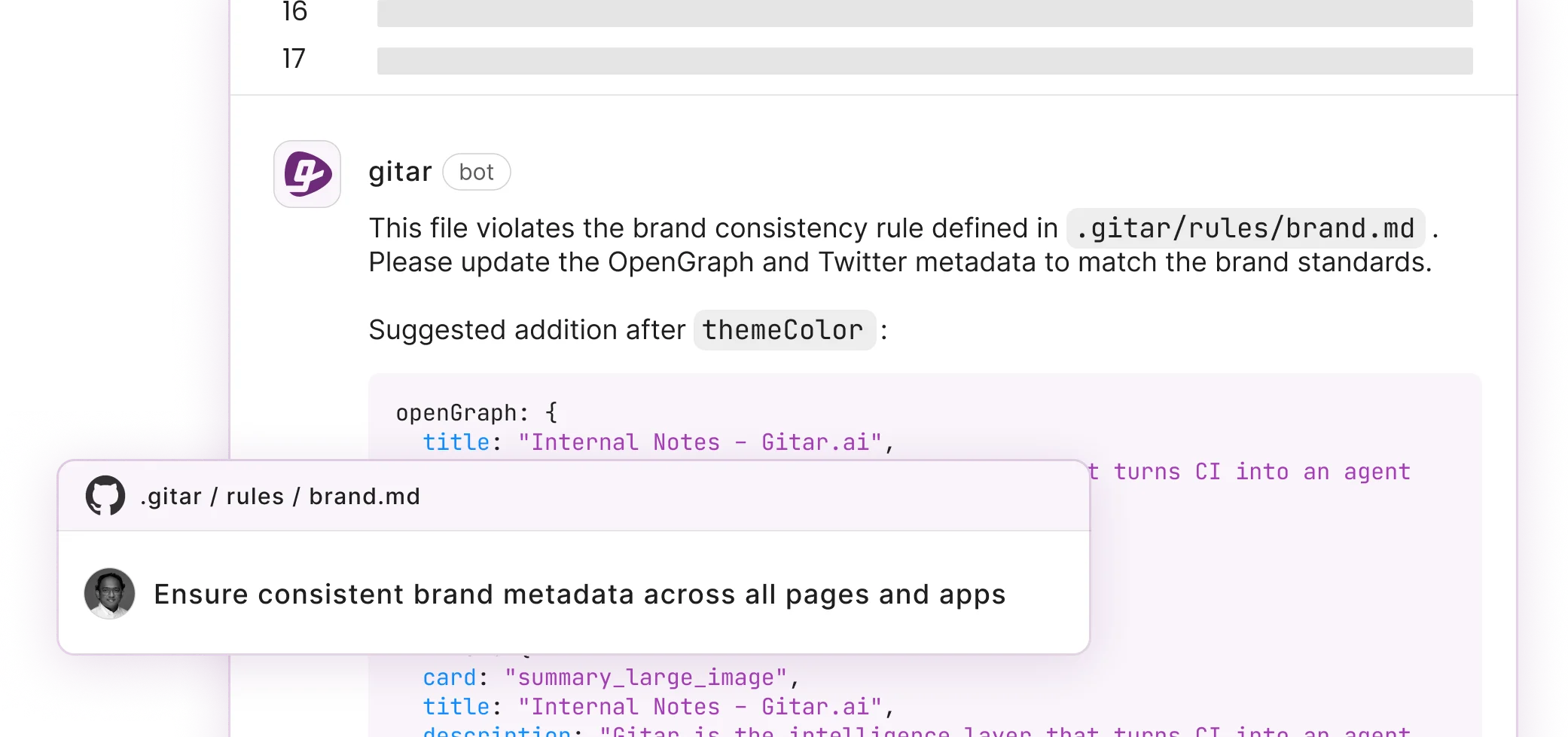
- Add .gitar/rules: Describe workflows in natural language for automation.
- Integrate Slack/Jira: Share context and notifications across tools.
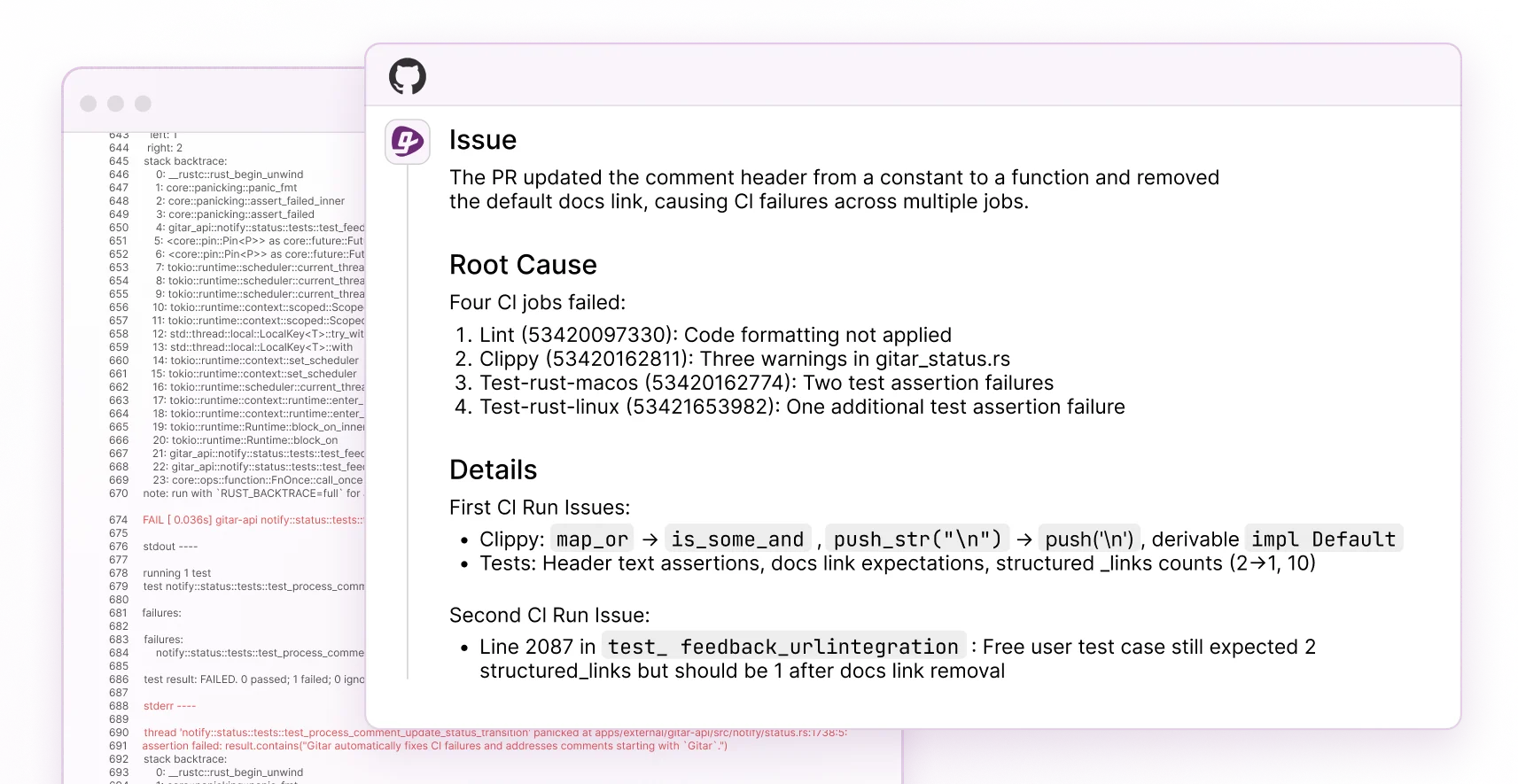
Common use cases include flaky test stabilization, lint error correction, build dependency resolution, and automated review feedback implementation. Enterprise organizations achieve $1M annual savings for 20-developer teams by cutting CI friction from 1 hour daily to 15 minutes per developer.
Competitive Matrix: Gitar vs. CodeRabbit, Greptile and DIY LLMs
| Capability | Gitar | CodeRabbit/Greptile | DIY LLMs |
|---|---|---|---|
| Auto-commits | Yes (14-day free trial) | No | Manual implementation |
| Green build guarantee | Yes | No | Hope-based |
| Cost per developer | Free code review | $15-30/month | Engineering time |
| CI integration | Full platform support | Limited or none | Custom development |
Best Practices for Managing Failing Automated Tests in CI/CD
AI-powered tools automatically diagnose pipeline failures and suggest fixes, which reduces resolution time from hours to minutes. Suggestion-based approaches still require manual implementation and validation. Gitar advances this approach by automatically implementing root cause fixes instead of only identifying them, and it separates infrastructure flakiness from real code issues through comprehensive CI context analysis.
How to Fix CI Build Errors with AI and Self-Healing Tests
Modern CI healing combines root cause analysis with validated fix implementation. Self-healing pipeline trends highlight a shift from simple retry mechanisms to intelligent failure resolution. Gitar’s approach analyzes build logs, generates contextual fixes, validates them against the full CI environment, and commits working solutions. This process turns reactive debugging into proactive healing.
2026 Trends in CI Healing Automation Platforms
AI agents that manage natural language CI workflows represent the next frontier. Post-Copilot bottlenecks increase demand for platforms that not only generate code but also ensure it integrates successfully through automated review and CI processes.
Frequently Asked Questions
What is the difference between CI healing and code review automation?
CI healing automation platforms like Gitar combine both capabilities by automatically fixing code review feedback and CI failures with validated commits. Traditional code review tools only provide suggestions, while CI healing platforms implement and validate fixes to guarantee green builds. This integration removes the manual work that usually follows review comments or build failures.
Are free CI healing platforms as effective as paid alternatives?
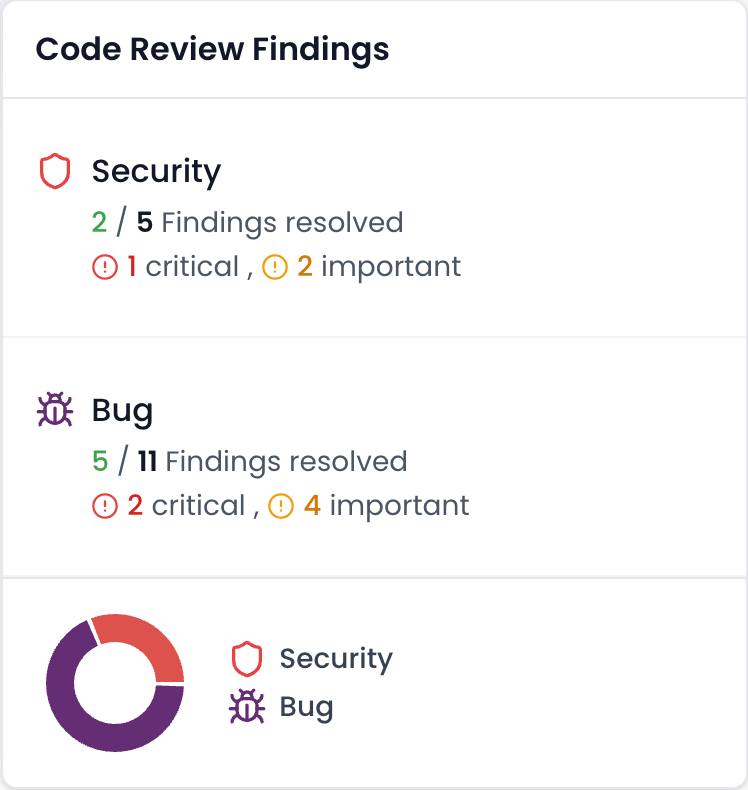
Gitar’s free tier provides comprehensive code review analysis, security scanning, and bug detection that matches or exceeds paid alternatives charging $15-30 per developer. Autofix features include a 14-day free trial. The main advantage is not only cost savings but also the healing engine that actually fixes code instead of leaving suggestions. Paid platforms often provide slightly better analysis but still require manual implementation, while Gitar’s free platform delivers end-to-end automation.
How can teams trust automated commits to their codebase?
Teams build trust through configurable automation levels. They start in suggestion mode and review each fix, which shows Gitar’s accuracy on lint errors, test failures, and build issues. The platform validates fixes against the full CI environment before committing, which ensures changes actually work instead of hoping they resolve issues. Teams can enable auto-commit for specific failure types and keep manual approval for complex changes.
Do CI healing platforms work with complex enterprise CI environments?
Modern platforms like Gitar support GitHub, GitLab, CircleCI, and Buildkite with enterprise-grade features such as agent deployment within customer CI pipelines. This setup provides access to private dependencies, custom configurations, and security contexts that cloud-based solutions cannot reach. The platform scales to more than 50 million lines of code while keeping enough context for accurate fixes in complex environments.
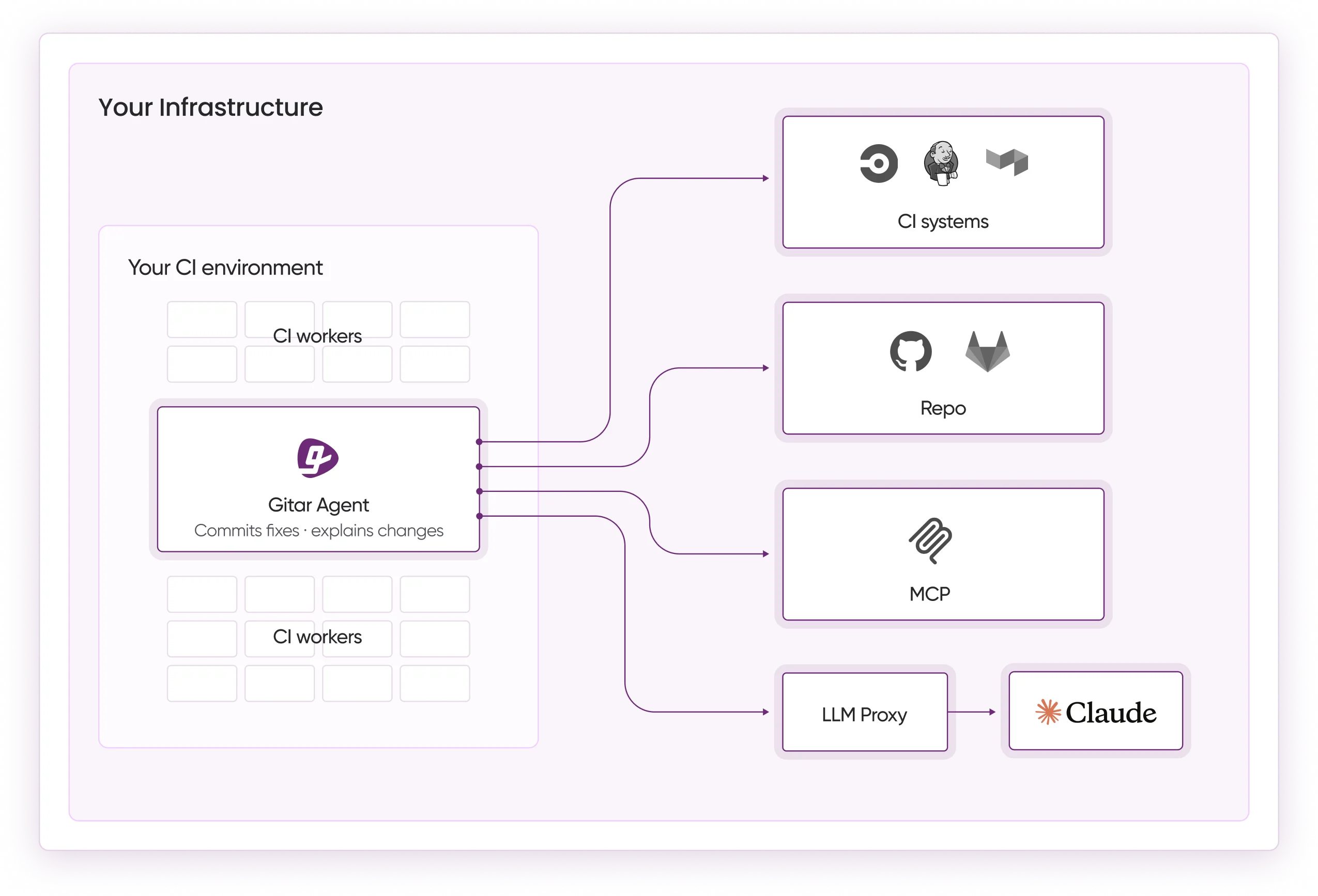
How do teams measure the 75% toil reduction from CI automation?
ROI measurement focuses on time saved from CI friction, usually tracked as developer hours spent on build failures, flaky tests, and review cycles. Teams measure baseline time on these activities, often 1 hour daily per developer, and compare it with post-implementation metrics, typically 15 minutes daily. Additional metrics include fewer context switches, faster PR merge times, and lower infrastructure costs from fewer CI reruns caused by preventable failures.
Conclusion: Start Healing Your CI with Gitar Today
The shift from suggestion engines to healing platforms represents the next stage of CI automation. Competitors charge premium prices for basic commentary, while Gitar provides free code review with real fixes that guarantee green builds. The platform’s comprehensive approach to CI healing automation, combined with cross-platform support and enterprise scalability, positions it as a practical solution for teams facing post-AI coding bottlenecks.