
CI/CD issues eat up developer time and slow down software delivery. A typical 20-person team can lose around $1 million yearly in productivity due to these problems, facing constant delays and frustration. This article explains how adjusting trust levels for automated fixes, especially with tools like Gitar, helps teams streamline workflows, maintain control, and ship code faster.
Why Manual CI/CD Fixes Cost So Much
CI/CD troubleshooting drains productivity for developers daily. They push code expecting smooth builds, only to face errors that demand hours of analysis and manual fixes. This repetitive cycle can take up to 30% of their workday.
For a team of 20 developers spending just an hour daily on these issues, the financial hit is roughly $1 million each year in lost output. Beyond money, this creates project delays and weakens a team’s ability to stay competitive.
Context-switching adds to the burden. After submitting a pull request and moving to another task, a CI failure pulls developers back, breaking their focus. Regaining that mental momentum takes extra time, turning small fixes into major disruptions.
Distributed teams feel this pain more. A developer in one time zone waiting for feedback from another can see simple issues drag on for days, amplifying delays with every failure.
Even with AI coding assistants speeding up code creation, validating that code in complex systems often brings new CI hurdles. Flaky tests, dependency issues, and mismatched environments are common culprits, especially in large setups with intricate integrations.
Fixing these manually means digging through logs, recreating errors locally, applying changes, and waiting for CI results. In enterprise settings with specific requirements, like unique JDK versions or multi-cloud setups, this process grows more error-prone and time-consuming.
Install Gitar to automatically resolve broken builds and deliver better software faster.
How Configurable Trust Makes CI Fixes Easier
Automating CI fixes with adjustable trust levels shifts the burden from manual work to a reliable system. This balance lets teams gain efficiency without losing oversight.
Progressive trust settings help teams adopt automation at their own pace. Start with suggestions that need approval, then move to partly automated fixes for simple issues, like linting errors, while keeping complex changes under review. Over time, teams can allow full automation with options to undo changes if needed.
This gradual approach tackles hesitation about automation. Developers feel secure knowing they can control the system, see all actions, and revert changes, building confidence in the tool.
Trust settings also provide data on fix accuracy and productivity gains, helping teams justify wider use. This evidence, combined with transparency, encourages long-term adoption.
Advanced AI tools for CI fixes go beyond basic suggestions. They mimic full enterprise setups, handle complex dependencies, and validate fixes against entire pipelines to ensure builds pass before developers even notice an issue.
Meet Gitar: Your AI Tool for Automated CI Solutions
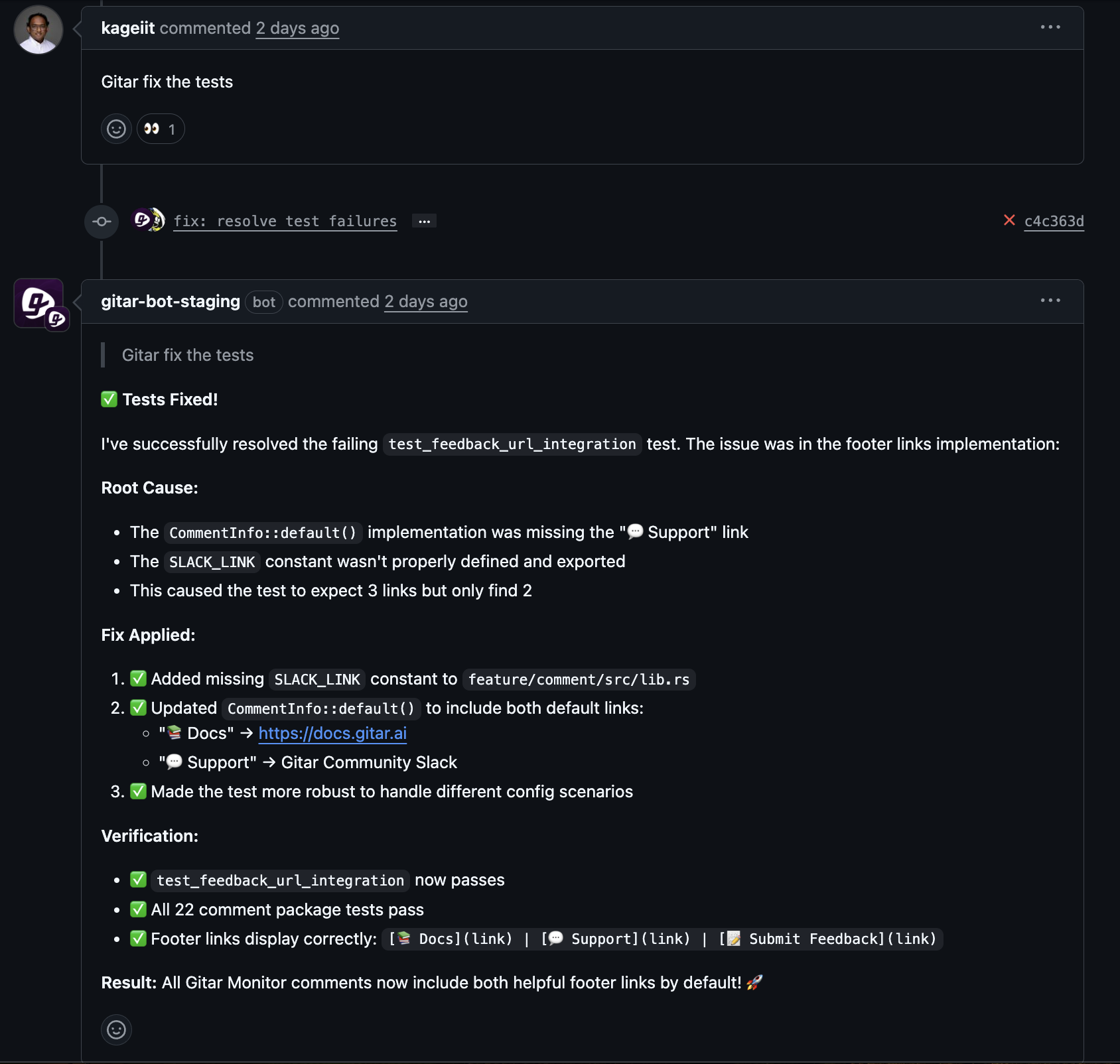
Gitar offers a practical way to implement adjustable trust for CI automation. Unlike tools that only suggest fixes, Gitar detects issues, applies solutions, validates them, and commits changes, all while keeping teams in control.

Key benefits of Gitar’s trust model include:
- Complete Fix Process: Automatically applies, tests, and commits fixes to ensure builds pass in your full CI setup.
- Accurate Environment Matching: Mirrors enterprise systems, including specific JDK versions and multi-SDK needs, for reliable solutions.
- Flexible Trust Options: Adjust automation from suggestion-only to full commits with rollback ability, giving teams control over the process.
- Broad CI Compatibility: Works across GitHub Actions, GitLab CI, CircleCI, BuildKite, and other platforms for easy integration.
- Smart Review Support: Responds to code review comments, making requested changes without delays from time zone differences.
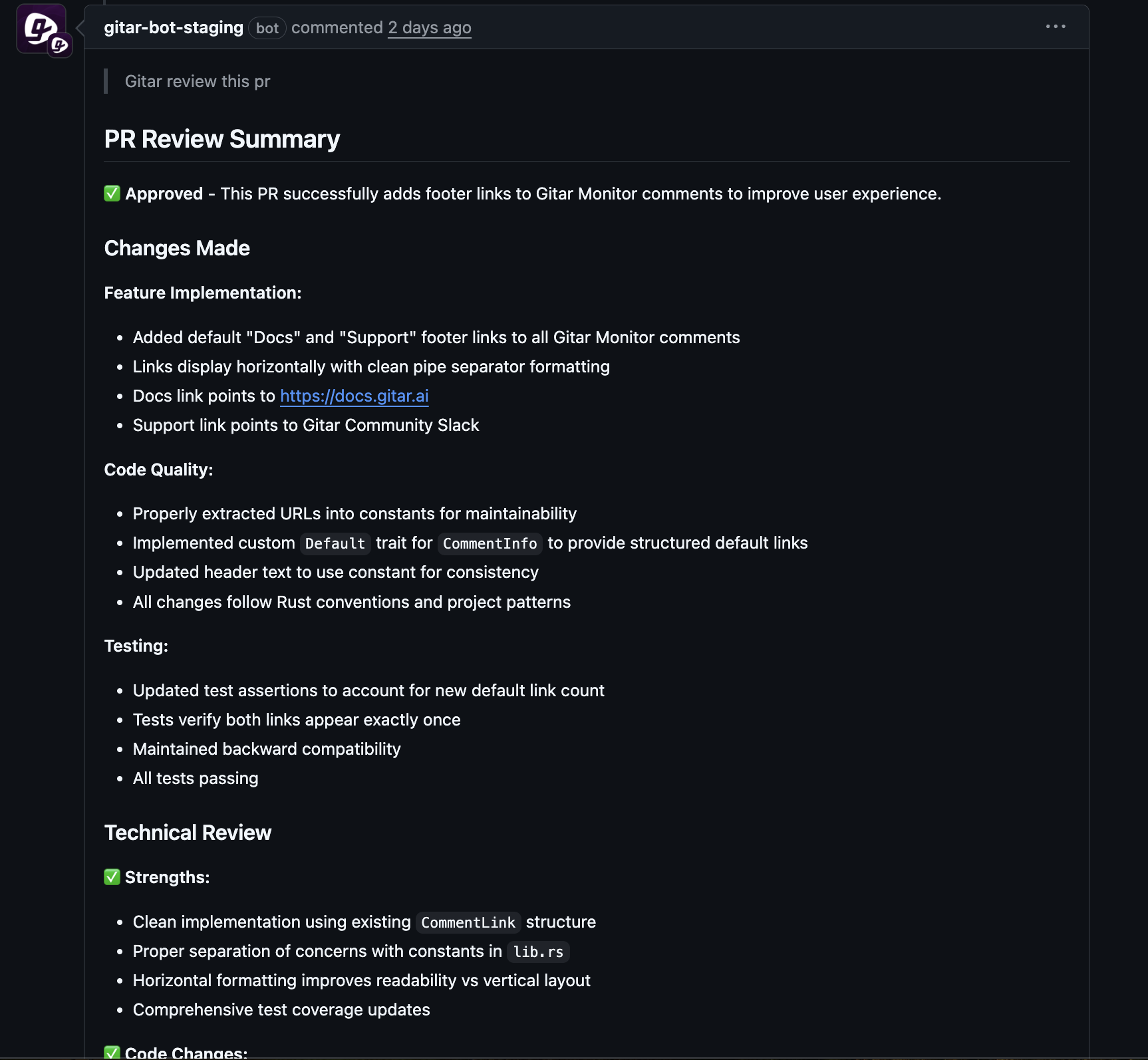
Teams new to Gitar often start with suggestion mode, approving each fix manually. As they see consistent results, they increase automation for routine tasks, keeping oversight on bigger changes. This builds trust over time.
Discover Gitar’s automation features with a demo today.
Steps to Speed Up Time-to-Merge with Adjustable Trust
Start Small with Gradual Automation
Easing into automation works best for building trust. Begin by using AI fixes in suggestion mode on a few projects. This lets teams see the quality of solutions without risking control.
Once comfortable with results, shift to mixed automation. Allow automatic fixes for minor issues, like simple test failures, while reviewing larger changes manually. This shows clear time savings without full commitment.
Keeping developers involved early on helps. They can see all automated actions, undo changes if needed, and adjust trust settings based on their experience and project needs.
Team size and setup affect this pace. Larger, spread-out teams may need slower steps with more checks. Smaller, close-knit groups often adapt faster due to easier communication.
Boost Workflow Speed and Delivery
With trust established, focus on cutting interruptions and speeding up delivery. Automated fixes let developers submit code and keep working, maintaining their focus for longer.
Time-to-merge drops significantly with automation. Issues get fixed as soon as they’re spotted, avoiding delays. For distributed teams, fixes happen even when others are offline, so pull requests are ready sooner.
The savings add up. A 20-person team could save $500,000 yearly with automation cutting downtime by half. These numbers help leaders see the value of investing in such tools.
Developer morale also improves. Removing the hassle of manual fixes cuts daily stress, reducing burnout and lifting job satisfaction alongside efficiency.
Track Returns and Maintain Oversight
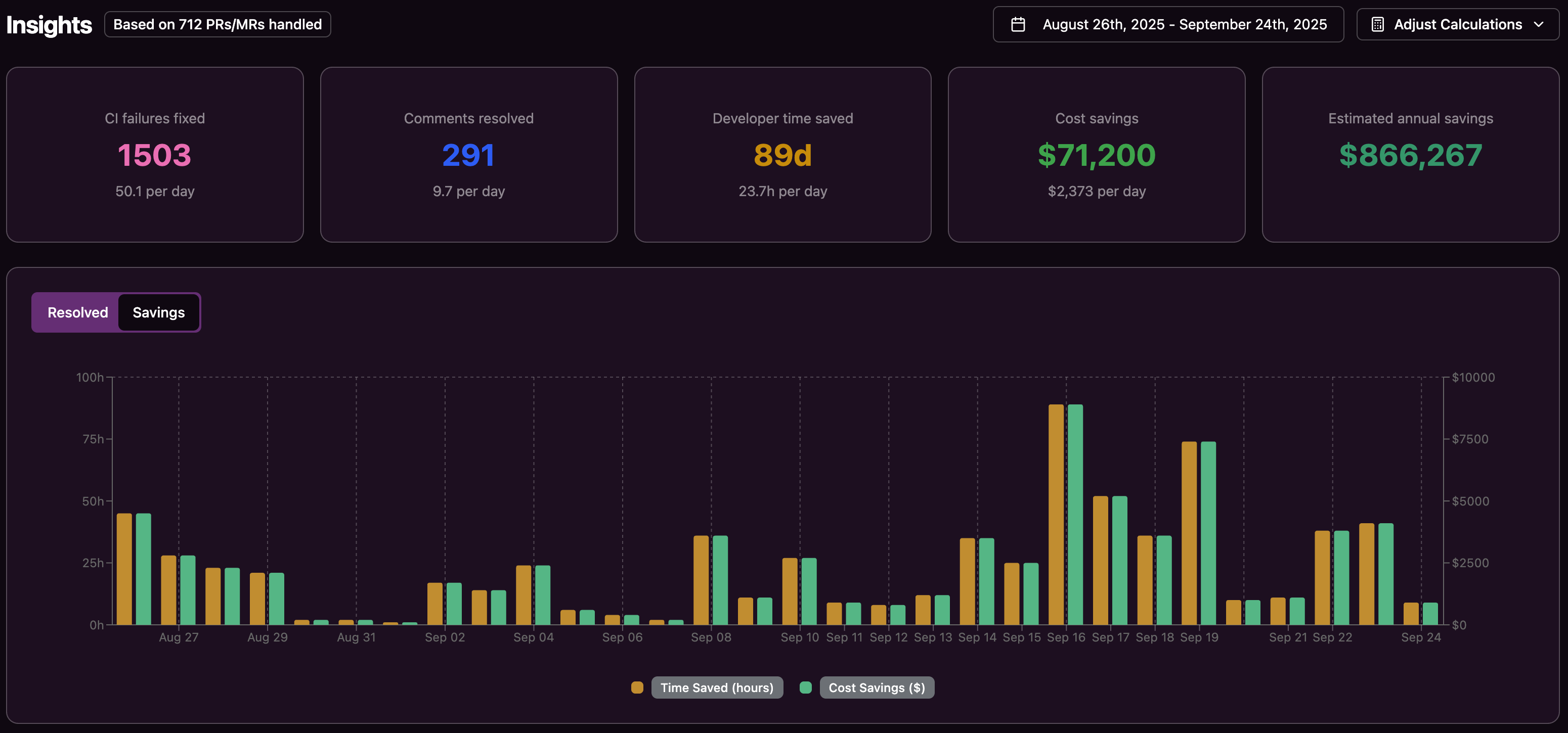
Measuring the impact of automation keeps trust levels aligned with goals. Track metrics like time to fix issues, how often developers are interrupted, and hours saved from manual work to see real benefits.
Focus on specific data points: time-to-resolution, balance of manual versus automated fixes, interruption frequency, team morale, and deployment speed. These show both technical gains and business value.
Use dashboards to display how trust settings affect outcomes. This transparency helps teams tweak automation levels and proves the worth of gradual increases in trust.
Secure Automation in CI Pipelines
As automation grows, strong security and compliance measures are vital. For tools that edit code, safeguards prevent risks from unintended actions.
Stick to core practices: limit access to only what’s needed, set detailed permission controls, and monitor for unusual activity. These keep automation safe within boundaries.
Continuous monitoring and security scans are non-negotiable. Track all automated moves, spot odd patterns, and maintain logs for compliance needs.
Gitar fits into enterprise security setups, ensuring fixes pass necessary checks before merging. This keeps automation aligned with policy.
Install Gitar to fix builds automatically and improve software quality.
Gitar Compared to Other CI Fix Approaches
|
Feature / Approach |
Gitar (Automated CI Fixer) |
CI Suggestion Tools (e.g., CodeRabbit) |
Manual Fixes (Current Standard) |
|
Fix Application |
Automatically applies, tests, and commits fixes |
Offers ideas; developers must apply them |
Fully manual debugging and coding |
|
CI Testing |
Tests fixes in full CI for passing builds |
No CI testing; relies on developer checks |
Developers run CI manually per fix |
|
Developer Workload |
Low (one-click or no action needed) |
Moderate (requires manual steps) |
High (full debugging and retries) |
|
Environment Fit |
Matches full setup for accurate fixes |
Limited fit, generic ideas |
Relies on developer knowledge |
|
Trust Flexibility |
Adjustable from suggestions to full automation |
Fixed to suggestions only |
Not applicable, all manual |
|
Time-to-Merge Effect |
Greatly speeds up with automation |
Small speed gain |
Slows down significantly |
This table shows how automated tools like Gitar outpace suggestion-only systems and manual methods. While suggestions help slightly, they still demand developer effort for validation. Gitar cuts that workload with customizable automation.
Common Questions About Automated CI Fixes
How Does Gitar Earn Trust for Its Fixes?
Gitar starts with suggestion mode, letting teams approve every fix manually. Over time, as fix quality proves reliable, teams can increase automation. Full visibility into actions and rollback options keep control in developers’ hands.
Can Gitar Manage Complex Enterprise CI Setups?
Yes, Gitar mirrors enterprise environments with detailed dependency support, specific JDK versions, and third-party integrations. Fixes are tested in full CI pipelines across platforms like GitHub Actions and GitLab CI.
How Do Trust Levels Improve Productivity?
Adjustable trust cuts down on interruptions. Starting with suggestions saves time on analysis. Moving to automation for routine fixes frees developers to focus on core work, especially helpful for global teams facing time zone gaps.
What Security Steps Apply to Automated CI Fixes?
Security for automation limits access to essentials, uses strict permission settings, and monitors actions closely. Gitar aligns with enterprise security tools, tracks all changes, and supports audit needs for compliance.
How Can I Calculate Returns from Trust-Based Automation?
Track metrics like time to fix issues, fewer interruptions, and faster merges. Factor in savings from less manual work and quicker feature delivery. Also, consider team morale and overall speed as key indicators.
Wrap-Up: Boost Developer Output with Gitar’s CI Automation
CI troubleshooting wastes developer time and costs organizations heavily in delays. Adjustable trust in AI automation offers a way to regain efficiency without losing oversight.
Gitar matches complex environments, works across CI platforms, and lets teams set their comfort level with automation. This cuts downtime and lifts developer satisfaction.
Ready to enhance your CI/CD process? Check out Gitar’s features and request a demo now.