
CI build failures and code review feedback often slow down developers, creating friction between development and operations teams. Gitar, an autonomous AI tool, tackles these issues by automatically fixing problems, improving collaboration, speeding up delivery, and boosting team morale. Let’s explore how it works.
Why CI Failures and Context Switching Hurt Teams
CI failures and constant interruptions drain productivity for software teams. When a developer’s pull request fails due to flaky tests or build issues, it sets off a chain of disruptions that affect workflows and strain team dynamics.
These interruptions cut into developer focus. Up to 30% of a developer’s time can go to debugging and manual fixes. Imagine working on a complex feature, only to stop and spend an hour troubleshooting a failed CI pipeline over a small error. That mental shift costs valuable time and energy.
Operations teams feel the impact too. Instead of focusing on infrastructure improvements, they get pulled into pipeline troubleshooting. This reactive cycle deepens silos and fuels miscommunication between dev and ops, slowing everyone down.
The financial cost adds up fast. For a team of 20 developers, lost productivity can hit $1 million yearly. That’s before factoring in delayed releases, lower morale, higher turnover, and missed opportunities from time spent debugging instead of building.
Modern tools like AI coding assistants speed up code creation, but older CI/CD systems often can’t keep up, leading to more pull requests, tests, and failures. Autonomous AI offers a way to break this cycle by handling issues directly, letting teams focus on delivering quality work.
Meet Gitar: AI That Fixes Issues and Improves Collaboration
Gitar shifts how teams handle CI failures and code reviews, moving from manual fixes to automatic solutions. Unlike tools that only flag problems or suggest changes, Gitar acts on its own to resolve issues without pulling developers away from their work.
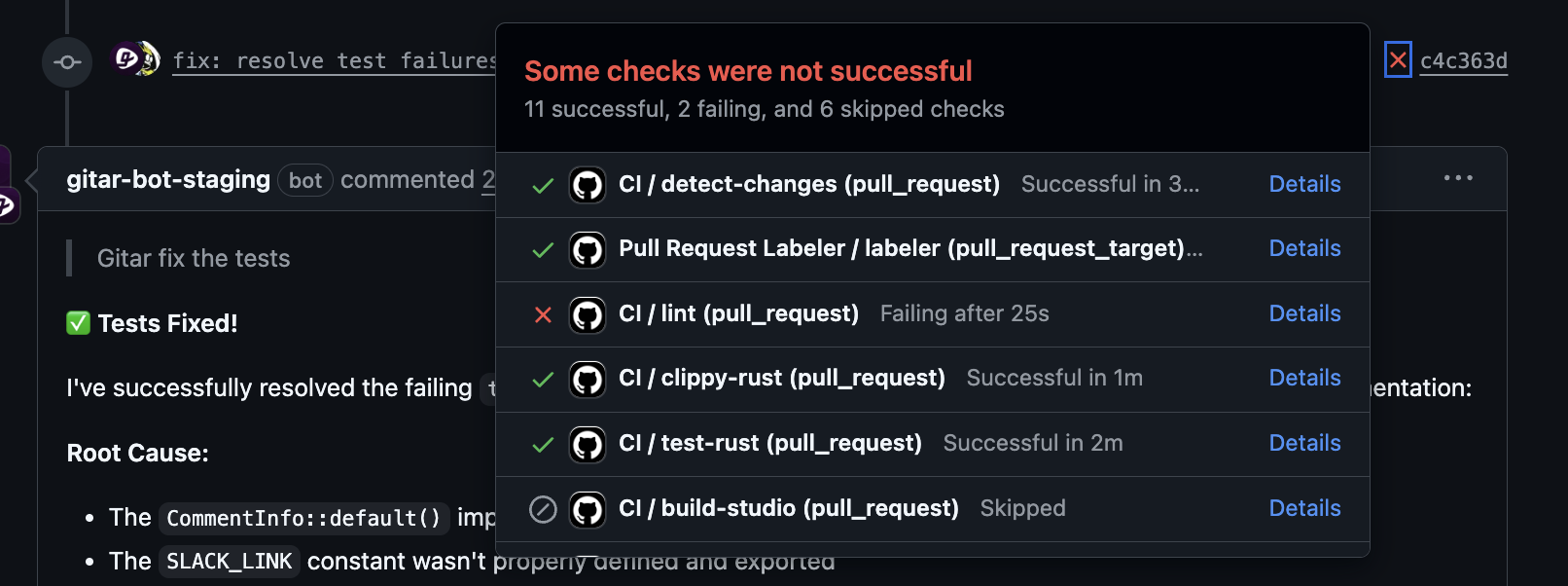
At its heart, Gitar works as a healing engine. If a CI pipeline fails due to a linting error or test issue, Gitar analyzes the problem, creates a fix, applies it to the branch, checks that it works, and commits the solution. This keeps developers focused while issues get resolved in the background.

Here’s how Gitar addresses common pain points for dev and ops teams:
- Complete Fixes: Gitar doesn’t stop at suggestions. It applies fixes and validates them across the full CI workflow, handling linting errors, test failures, and build issues to ensure a passing build.
- Environment Awareness: Gitar mimics complex enterprise setups, including specific SDKs, dependencies, security scans, and build configs, ensuring fixes fit your unique system.
- Code Review Support: For distributed teams, Gitar acts on reviewer feedback by implementing changes and committing them, bridging time zone gaps.
- Adjustable Automation: Teams can start with Gitar suggesting fixes for approval, then move to automatic commits as trust builds. Rollback options are always available.
- Platform Compatibility: Gitar works with GitHub Actions, GitLab CI, CircleCI, BuildKite, and other major systems, offering flexibility across tools.
Ready to streamline your workflow? Install Gitar now to fix broken builds and ship quality software faster.
How Gitar Cuts Friction and Speeds Up Work
Keep Developers Focused by Eliminating Interruptions
Maintaining focus is key for developers solving tough problems. Yet, up to 30% of their time often goes to debugging. A failed build, like one caused by a minor formatting issue, can pull a developer out of deep work for nearly an hour.
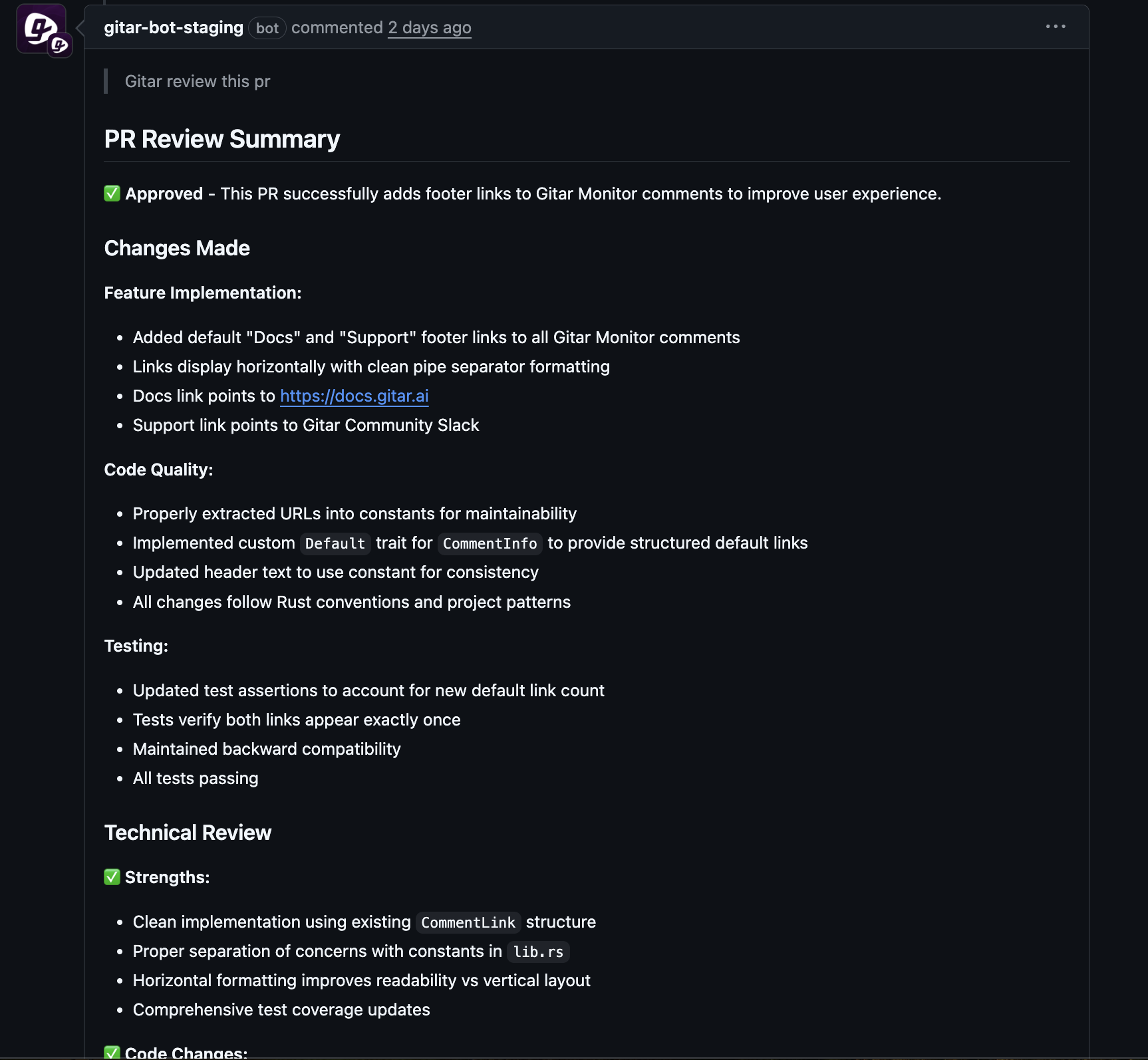
Gitar stops this disruption. It catches failures like linting errors, applies fixes, and commits them automatically. Developers stay in their flow state while their code moves forward. This also eases pressure on ops teams, who spend less time fielding urgent requests and more on improving systems, strengthening team alignment.
Speed Up Delivery with a Smoother CI/CD Process
CI failures slow down projects for many organizations. 60% of companies face delays from pipeline issues. Each failure stalls progress, pushing delivery dates back.
Gitar shortens these delays by fixing issues immediately and validating solutions. A sequence of errors that might normally take multiple tries gets resolved in one automated step. This reliability helps ops teams plan better and lets developers commit to timelines with confidence, reducing stress across the board.
Bridge Time Zones for Distributed Team Collaboration
Time zone differences can stretch a simple code review into days. Delays in feedback and coordination often increase wait times for distributed teams.
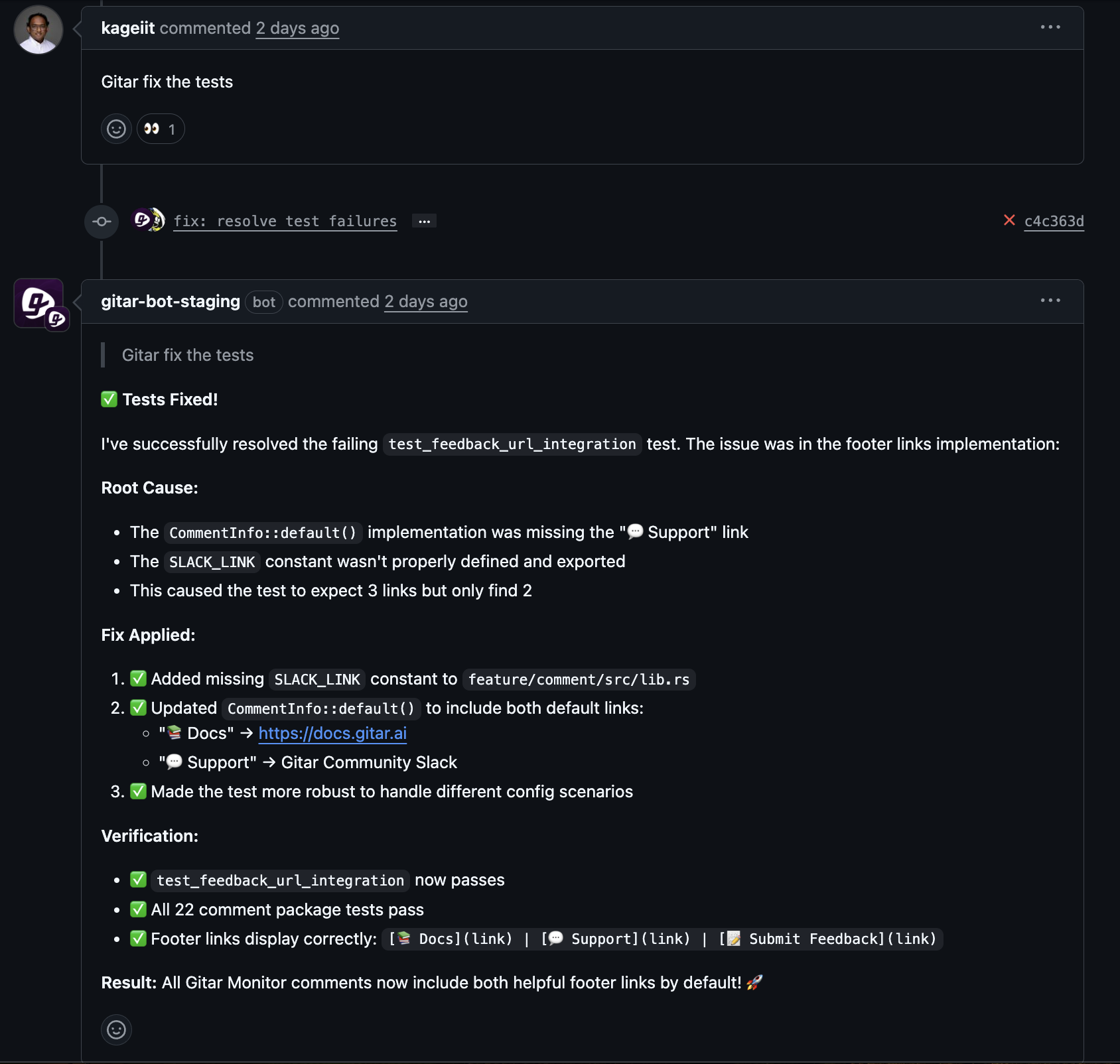
Gitar changes this by acting on reviewer comments instantly. If a team member in one region requests a code change, Gitar applies it and validates the result before the original developer starts their day. This cuts down on back-and-forth, making time zones less of a barrier and allowing reviews to be more thorough without slowing progress.
Boost Pipeline Reliability and Control Costs for Ops
Ops teams juggle maintaining CI/CD reliability while managing budgets. Brittle pipelines slow delivery and raise context switching costs. Failed builds waste compute resources, and late failure notifications add to delays.
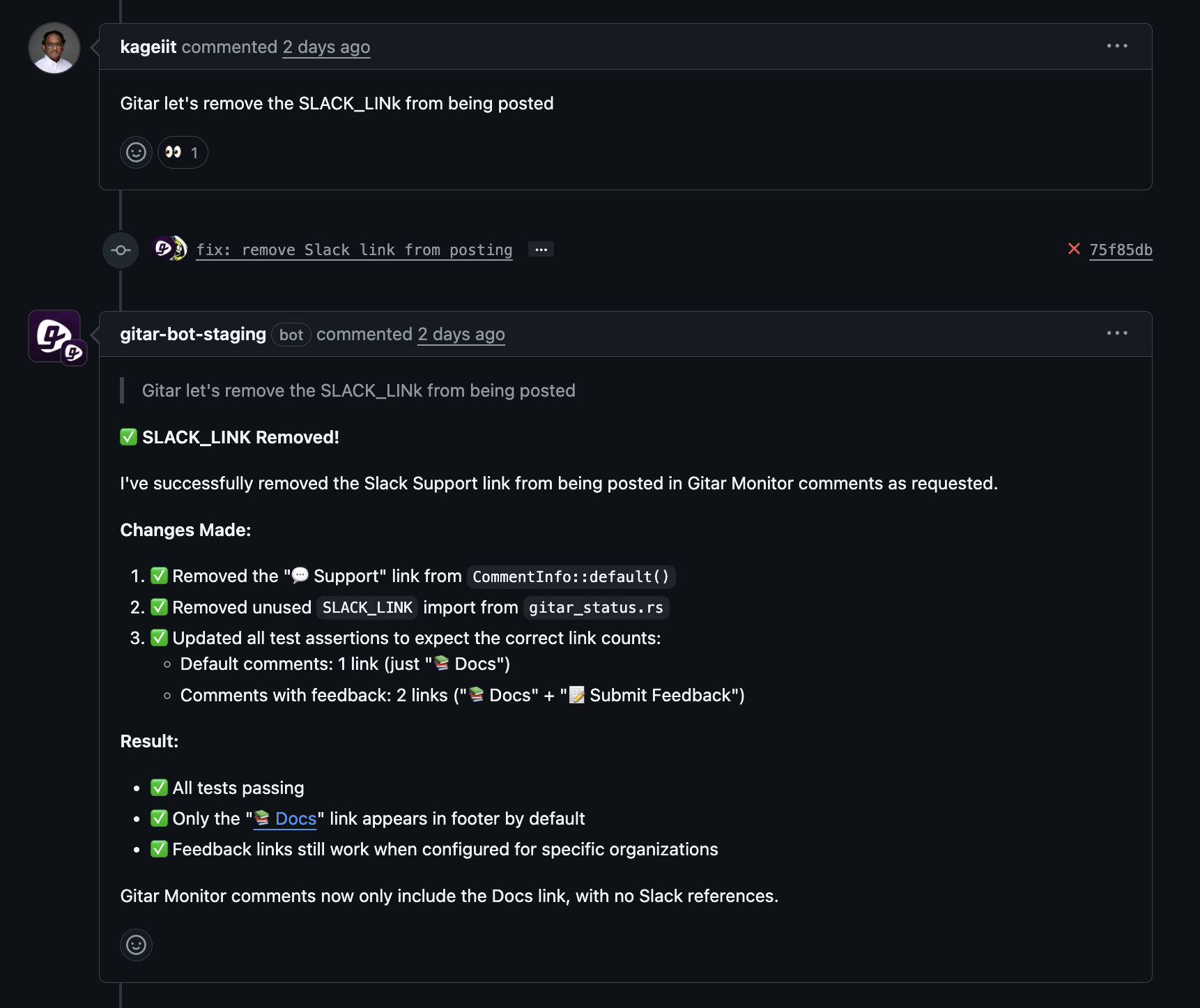
Gitar’s self-healing approach cuts these issues by fixing failures on the first try, reducing resource waste and speeding up pipelines. This lets ops focus on complex challenges and strategic projects like security or performance upgrades, rather than routine troubleshooting.
Want to make your pipeline more reliable? Install Gitar now to fix builds and deliver better software quicker.
Gitar vs. Traditional and Suggestion-Based Tools
|
Feature |
Gitar (Healing Engine) |
Manual Process |
AI Suggestion Tools |
|
CI Failure Resolution |
Automatic fixes and validation |
Manual debugging, high distraction |
Suggestions need manual application |
|
Code Review Feedback |
Automatic changes and validation |
Manual updates, repeated cycles |
Suggestions require manual effort |
|
Developer Focus |
Preserves focus, no interruptions |
Disrupts focus, high cost |
Still breaks focus for manual steps |
|
DevOps Collaboration |
Reduces friction, aligns teams |
High friction, isolated efforts |
Little change to friction |
Gitar stands out by taking full action, not just offering advice. Manual processes drag developers through time-consuming debugging. Suggestion tools help identify issues but still need manual work. Gitar handles everything from detecting problems to committing verified fixes, keeping teams moving forward.
Ready for a better approach? Install Gitar now to automate fixes and improve delivery speed.
Common Questions About Gitar
How Does Gitar Minimize Developer Interruptions?
Gitar turns CI failures into a background task. It detects issues like linting or test errors, finds the root cause, applies a fix, validates it, and commits the change. This skips the usual hour-long distraction of manual debugging, letting developers stay focused and productive.
Can Gitar Manage Complex Enterprise CI/CD Systems?
Yes, Gitar handles intricate enterprise setups. It replicates specific SDKs, dependencies, security scans, and build configurations, ensuring fixes match your environment. From Docker setups to custom scripts, Gitar validates solutions across your full workflow for accurate results.
How Does Gitar Enhance Dev and Ops Teamwork?
Gitar reduces tension by automating fixes for common CI issues. This frees ops teams from constant debugging, letting them focus on infrastructure upgrades. Developers face fewer pipeline problems, cutting down on escalations and fostering smoother collaboration.
Is It Secure to Let AI Fix My Code?
Gitar builds trust with adjustable settings. Start in a mode where it suggests fixes for approval, then shift to automatic commits as confidence grows. Every change comes with detailed explanations and rollback options, plus full audit trails for transparency, all while respecting your review processes.
How Does Gitar Support Distributed Teams?
Gitar enables seamless work across time zones. When a reviewer leaves feedback, Gitar implements the changes and validates them instantly. A team member’s request in one region is ready for review by the next person’s workday, avoiding multi-day delays.
Strengthen Team Collaboration with Gitar’s AI
CI failures and code review delays create ongoing challenges for software teams. They slow delivery, raise costs, and weaken collaboration between dev and ops. Manual fixes can’t keep up with today’s demands.
Gitar’s autonomous healing engine addresses these issues directly. It removes the need for manual fixes, letting developers focus on creative work while ops teams improve systems. The result is better morale, faster delivery, lower costs, and stronger teamwork.
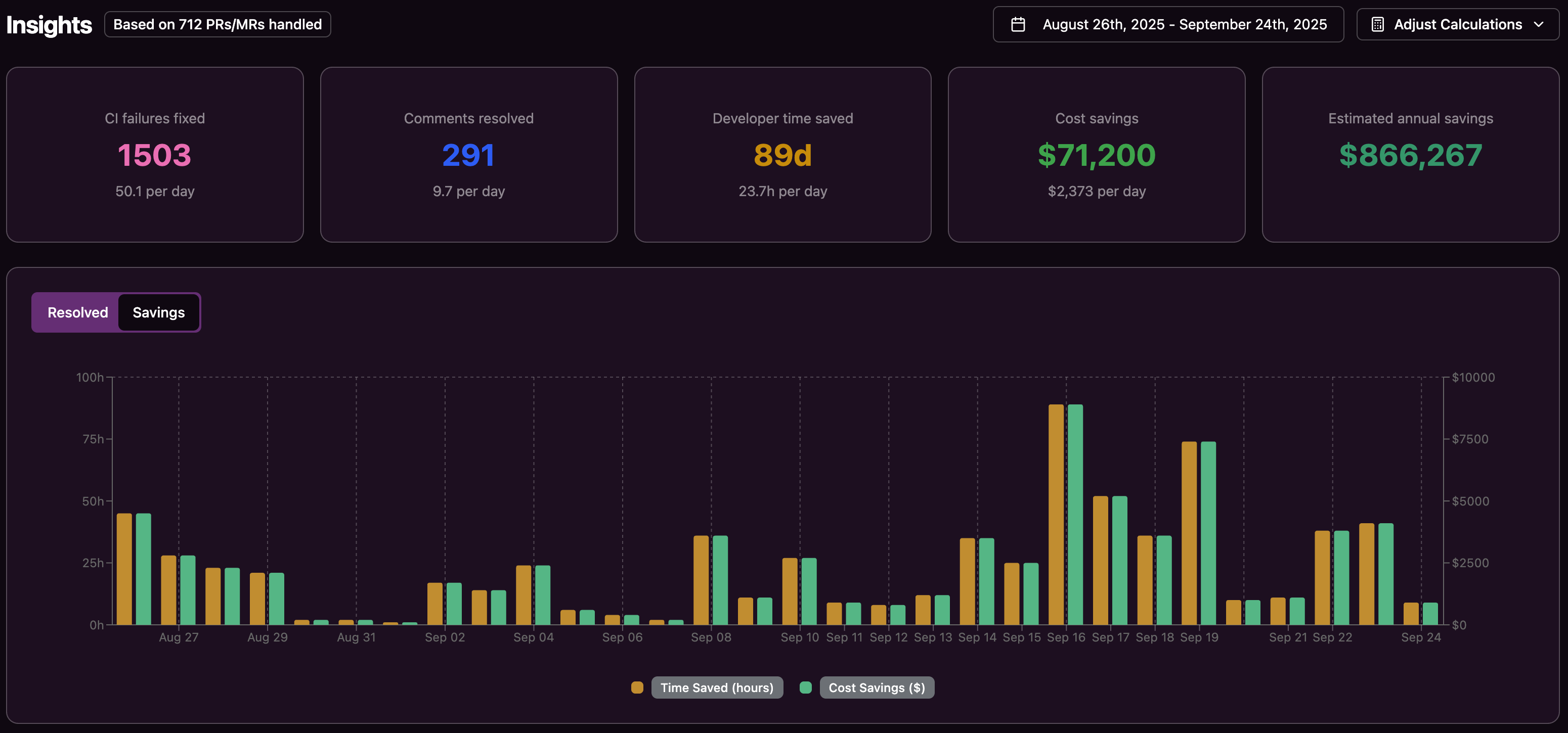
In a time when AI speeds up coding, having a tool to manage pipelines is critical. Teams adopting Gitar gain an edge in productivity and delivery speed. Install Gitar now to automate fixes and turn your CI/CD process into a foundation for success.