
CI build failures drain engineering budgets and slow down developers, often wasting up to 30% of their time on manual debugging and fixes. This cycle of context switching delays releases and frustrates teams. While manual approvals and basic AI suggestions try to help, they often fall short of solving the core issue.
Gitar changes this with an AI agent that doesn’t just suggest fixes, it applies them, validates them in your CI environment, and ensures builds pass. This creates a self-healing pipeline, saving time and money for teams. For a 20-developer team, this could mean recovering around $1 million in lost productivity each year. Install Gitar now to fix broken builds and ship better software faster.
Why CI Failures Hurt Teams: Productivity Loss and Business Impact
CI build failures disrupt workflows. When a build goes red due to a missing dependency or a minor style error, a quick fix can turn into an hour of lost focus for developers.
The cost adds up fast. A team of 20 developers spending one hour daily on CI issues loses about $1 million yearly, based on a loaded cost of $200 per hour. This doesn’t even include delayed projects or technical debt from hurried fixes.
Beyond money, these failures force developers into long debugging sessions, sometimes rebuilding environments just to pinpoint why code fails in CI.
How Current CI Approval Methods Fall Short
Manual approval processes slow down as teams grow. Managers get bogged down reviewing failures, and developers wait for clearance to fix or retry builds, causing delays and errors.
Even AI suggestion tools miss the mark. They offer ideas but leave the real work of applying and testing fixes to developers. If a suggestion doesn’t work, time is wasted twice, first reviewing it, then finding a real solution.
Long, monolithic CI pipelines make things worse. A single failure can halt everything, and even when AI spots the issue, it often can’t fix deeper problems, stretching delays further.
Gitar: Your Autonomous AI for Self-Healing CI Approvals
What Makes Gitar a Healing Engine?
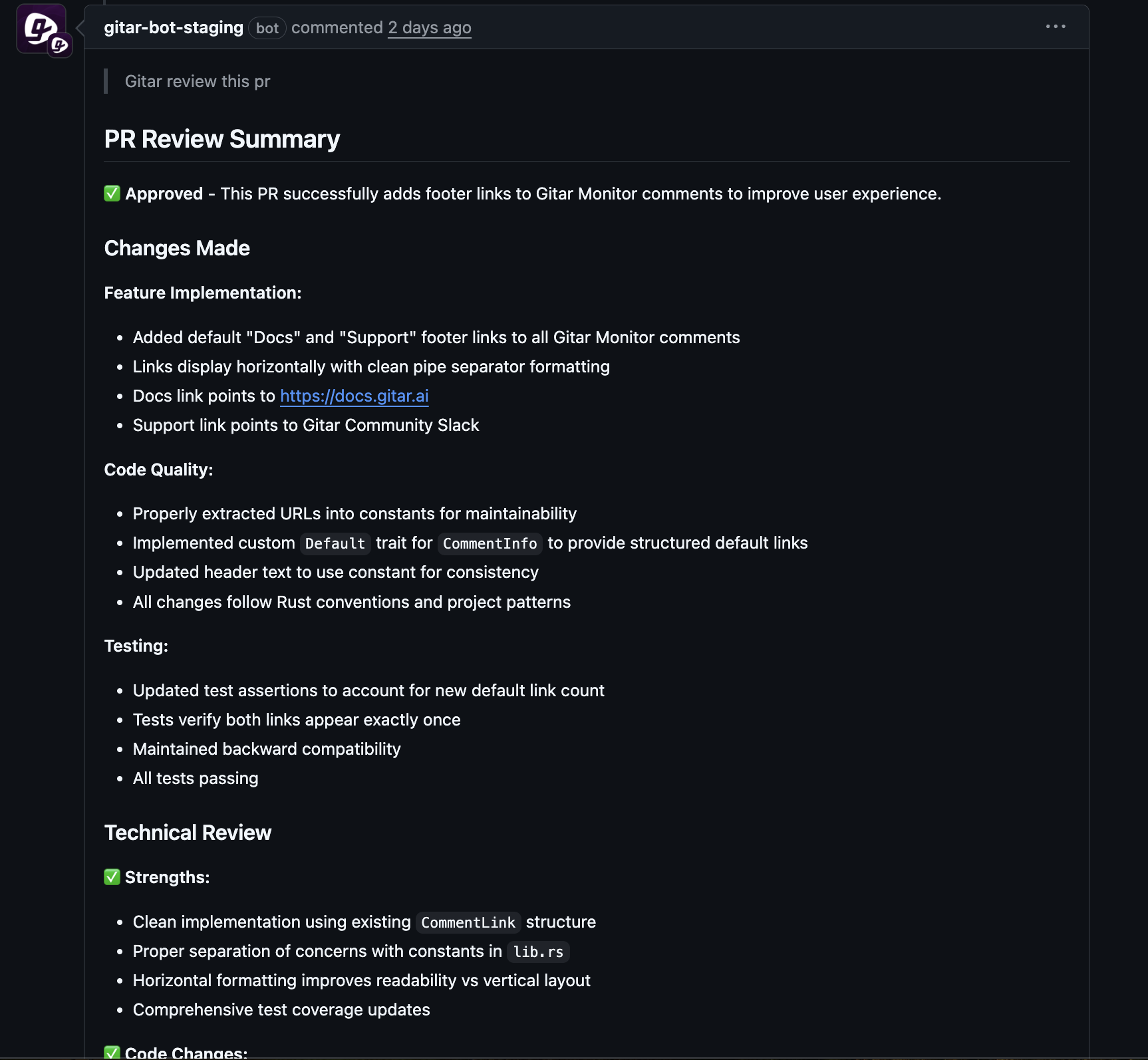
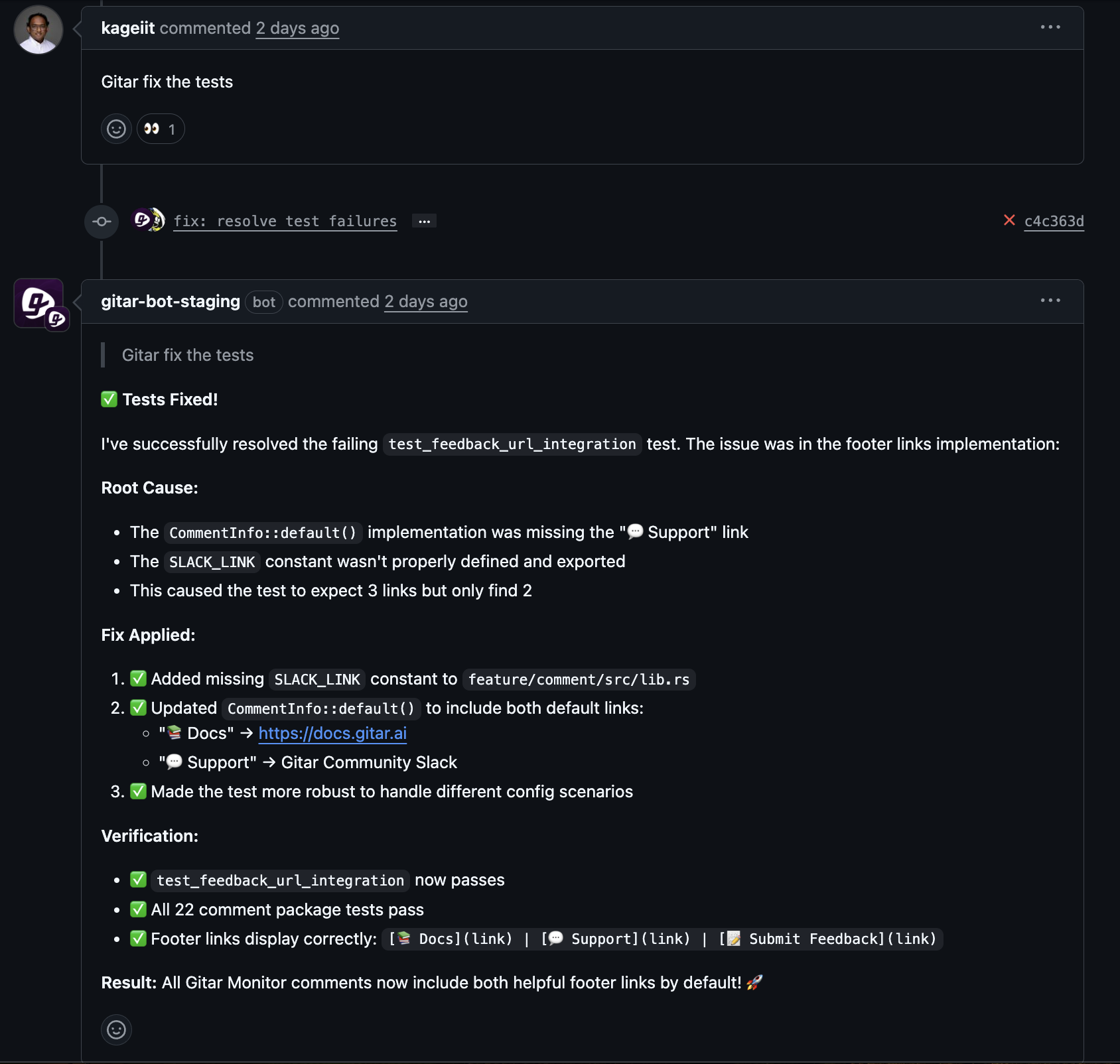
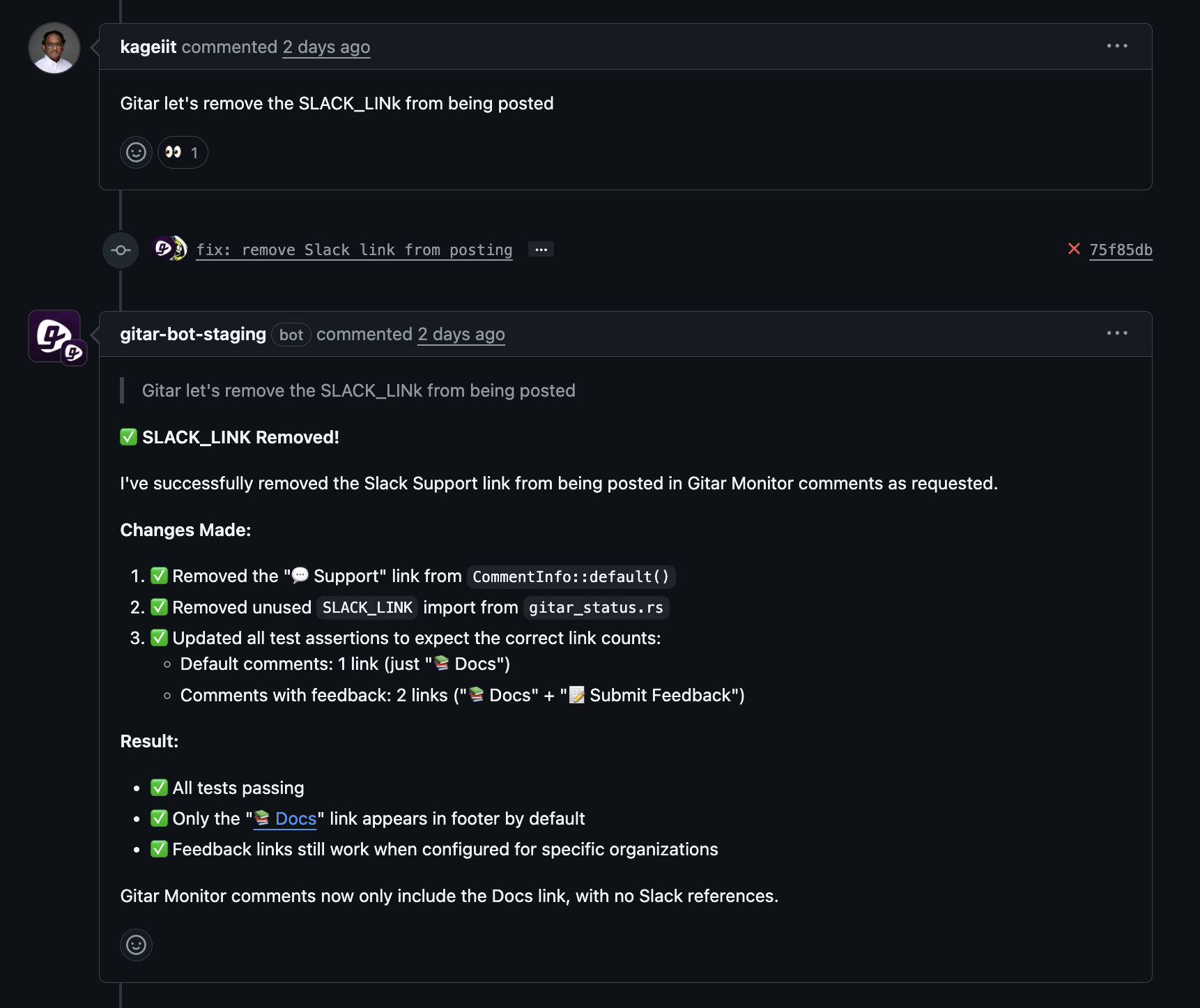
Gitar shifts CI from constant firefighting to automatic problem-solving. Unlike tools that only suggest fixes, Gitar finds issues, applies code changes, commits them to your pull request, and confirms they work in your CI setup. This turns failures into background tasks you don’t need to touch.
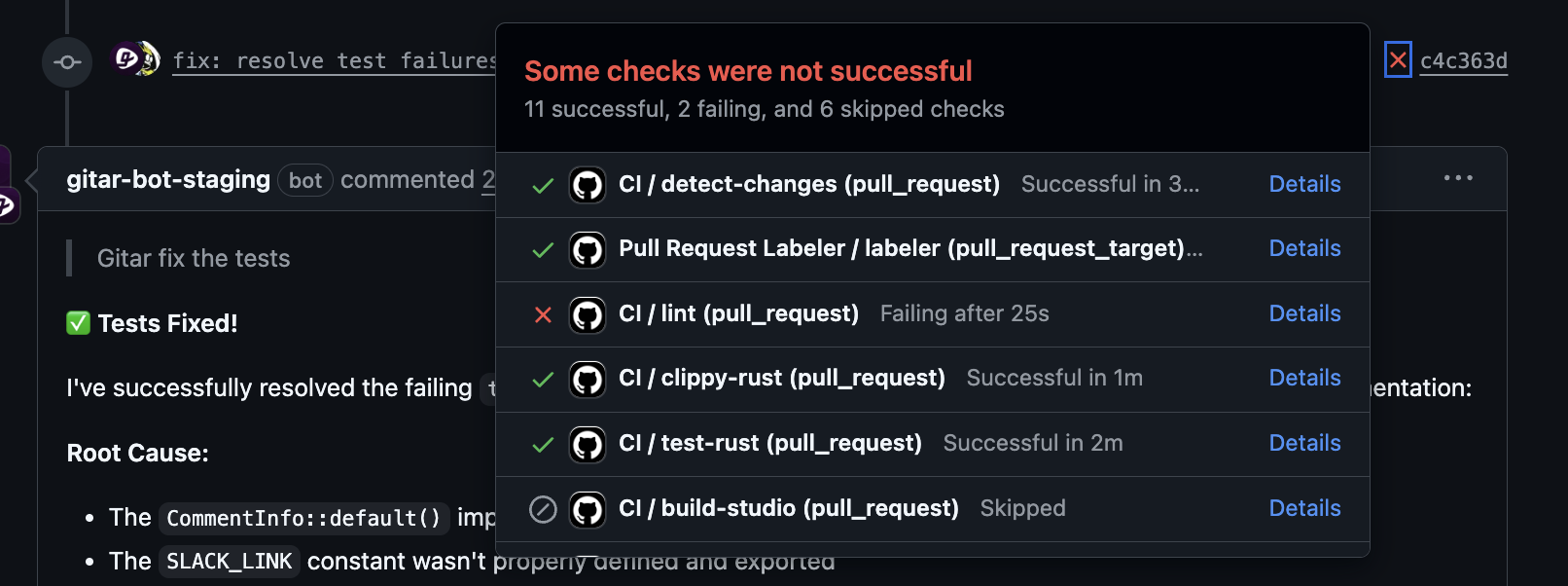
The key is full automation. If a build fails due to linting or test errors, Gitar reviews logs, identifies the cause in your specific context, fixes the code, and ensures all checks pass. You go from red to green without any effort.

How Gitar Fixes CI Failures for You
Gitar acts the moment a CI check fails, whether it’s a linting error or a test issue. It digs into failure logs, understands the error in your codebase context, and crafts a working solution.
- Environment accuracy: Gitar mimics your CI setup, including SDK versions and dependencies, so fixes match your real environment.
- Trust options: Start with a cautious mode where fixes are suggested for your approval, then move to full automation as confidence grows, with rollback options for safety.
- Team coordination: For distributed teams, Gitar applies reviewer feedback across time zones, keeping code ready for approval without delay.
- Tool compatibility: Works with GitHub Actions, GitLab CI, CircleCI, or BuildKite, fitting into your current setup without changes.
Install Gitar now to automate fixes and improve your software delivery.
Key Benefits of Automating CI Approvals with Gitar
Restore Developer Focus and Increase Output
Gitar brings back uninterrupted workflow for developers. Constant interruptions from CI failures double the time to fix simple issues due to mental context switching.
With Gitar, failures resolve automatically. Developers keep coding while routine issues get handled, saving time for meaningful work like building features or improving code.
Speed Up Merges and Software Releases
CI failures slow down feedback loops, but Gitar fixes issues before they stall progress. Pull requests move to merge faster since there’s no waiting to spot or resolve problems manually.
This speed impacts the whole pipeline. Quicker merges allow frequent updates, simplify rollbacks, and let teams deploy often with confidence, iterating on user feedback rapidly.
Cut Costs and Boost Return on Investment
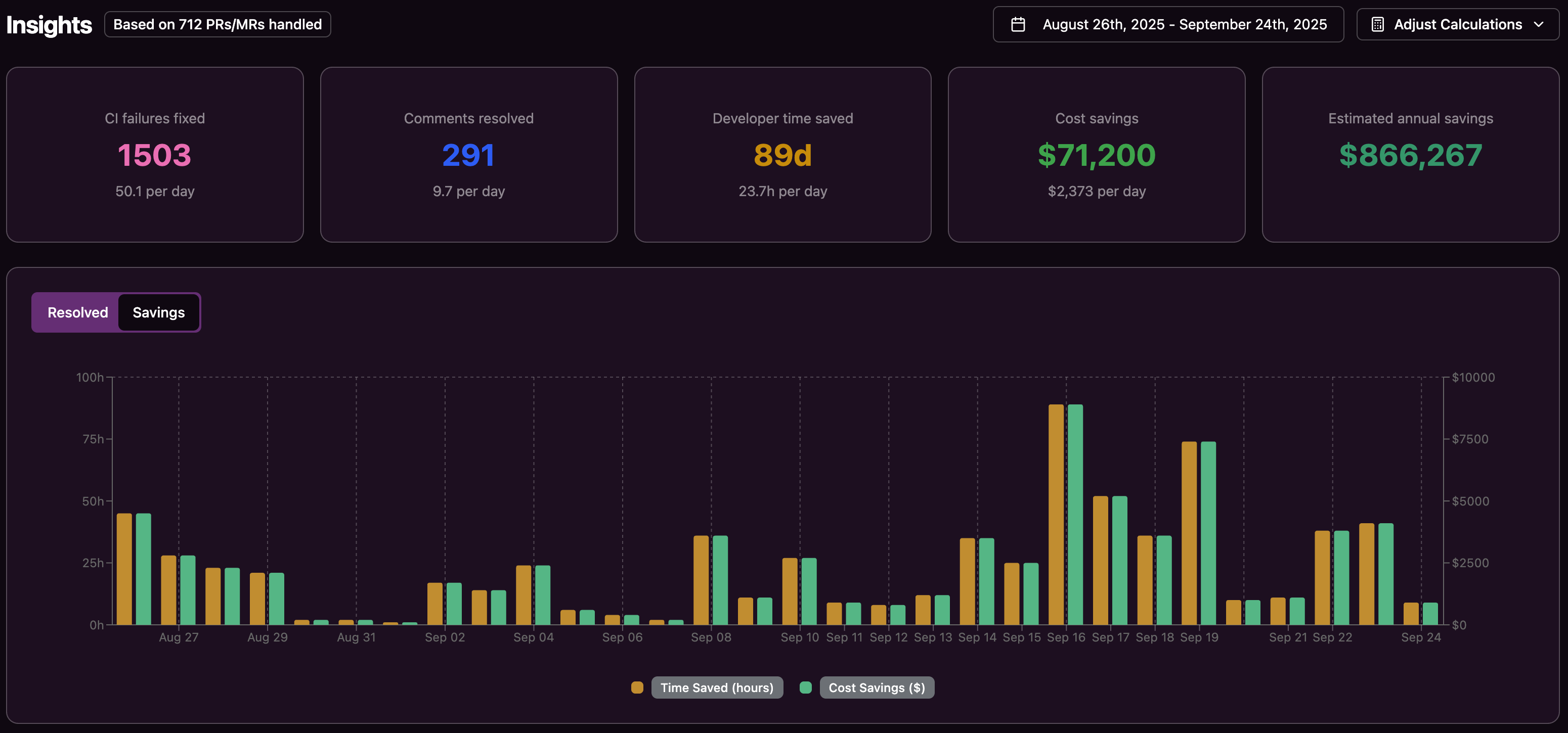
Automated CI fixes save money right away. For a 20-developer team, cutting just one hour of daily CI work per person saves about $1 million yearly in productivity costs.
Gitar also lowers infrastructure expenses. Repeated failed builds waste CI minutes and resources, but automatic fixes reduce retries, making usage more efficient.
Improve Code Quality and Reliability
Gitar’s fixes tackle root causes, not just symptoms. Linting errors get corrected for better readability, and test failures are updated to maintain functionality.
Consistent automated fixes prevent technical debt. Gitar follows coding standards, keeping quality high even during tight deadlines.
Ease Onboarding and Simplify CI Challenges
New developers often struggle with complex CI setups. Gitar reduces this hurdle by automatically fixing common issues, letting new hires focus on learning the codebase instead of debugging tools.
Gitar Compared to Traditional CI Methods
Gitar’s self-healing approach stands out from manual workflows and suggestion-only AI tools. The table below highlights the differences.
|
Feature/Capability |
Gitar (Autonomous Healing) |
Manual Workflow |
AI Suggestion Tools |
|
Problem Identification |
Automatic, real-time |
Manual log review needed |
Automatic, may need manual start |
|
Fix Generation |
Automatic, context-aware |
Developer codes manually |
AI offers ideas |
|
Fix Application |
Commits directly to PR branch |
Developer codes and commits |
Developer must apply fix |
|
Validation in CI |
Full CI check, ensures green build |
Manual CI rerun, developer waits |
No validation, developer checks |
Common Concerns About Automated CI Fixes
Some teams worry about trusting automated fixes. Gitar offers a gradual trust model, starting with suggestions for review and moving to full automation only when you’re ready.
Others think their CI setup is too complex. Gitar excels here by replicating your exact environment, handling specific versions and dependencies effectively.
Common Questions About Gitar and CI Approvals
How Does Gitar Manage Test Failures?
Gitar analyzes test failures to adjust code or assertions as needed. It also resolves other CI issues quickly to avoid piling up problems.
Does Gitar Stop Cascading Failures in Long Pipelines?
Gitar prevents cascading failures by fixing issues in individual pipeline stages. This stops a single error from blocking the entire process.
How Does Gitar Handle Dependency or Environment Issues?
Gitar mirrors your CI environment, including SDK versions and configurations. It crafts fixes for dependency conflicts that work reliably in your setup.
Will Gitar’s Automation Limit Developer Learning?
Gitar automates repetitive tasks, not learning opportunities. It frees developers to focus on complex challenges where their skills matter most.
What CI/CD Issues Does Gitar Solve?
Gitar fixes build errors from configuration or dependency mismatches. It cuts deployment delays by removing manual debugging steps.
Conclusion: Empower Your Team with Self-Healing CI Approvals
CI approvals often waste millions in productivity and frustrate developers with delays. Manual methods don’t scale, and suggestion tools stop short of real solutions.
Gitar goes further by automating fixes and validating them in your CI environment. This creates self-healing pipelines that save time, speed up delivery, cut costs, and maintain code quality.
Teams gain speed, ship features faster, avoid burnout, and build reliable processes. Leaders see clear financial benefits from higher productivity and quicker market delivery.
Ready to turn your CI pipeline into a smooth process? Install Gitar now to automate fixes and unlock your team’s potential.