
Written by: Ali-Reza Adl-Tabatabai, Founder and CEO, Gitar
Key Takeaways
- AI code generation has surged 70% in pull requests, which overwhelms teams with CI failures costing $1M annually for 20-developer teams.
- Gitar leads as the best overall platform with free unlimited code review and auto-fix capabilities that validate against actual CI pipelines.
- Most competitors like CodeRabbit, Greptile, and Snyk offer suggestion-only tools without auto-apply fixes or CI validation, so teams still implement changes manually.
- Key evaluation criteria include auto-detection accuracy, CI fix validation, multi-platform support (GitHub, GitLab, CircleCI), and enterprise scalability.
- Teams reach green builds faster with Gitar’s healing engine; install Gitar now to automatically fix broken builds.
How We Ranked AI Code Quality and Auto-Fix Platforms
We ranked platforms that move beyond suggestion-only approaches and deliver validated, working fixes. We focused on real outcomes, not just clever comments.
- Auto-detection accuracy: Ability to identify bugs, security vulnerabilities, and performance issues.
- CI fix validation: Whether fixes are tested against actual CI pipelines before application.
- Auto-apply capability: Direct code commits versus manual implementation requirements.
- Pricing accessibility: Free tiers and cost per developer for scaling teams.
- Integration breadth: Support for multiple CI systems, version control platforms, and workflow tools.
- Scalability: Performance with enterprise codebases of 50M+ lines of code.
- User experience: Notification management and interface design.
1. Gitar: Free Auto-Fix Leader for CI Failures
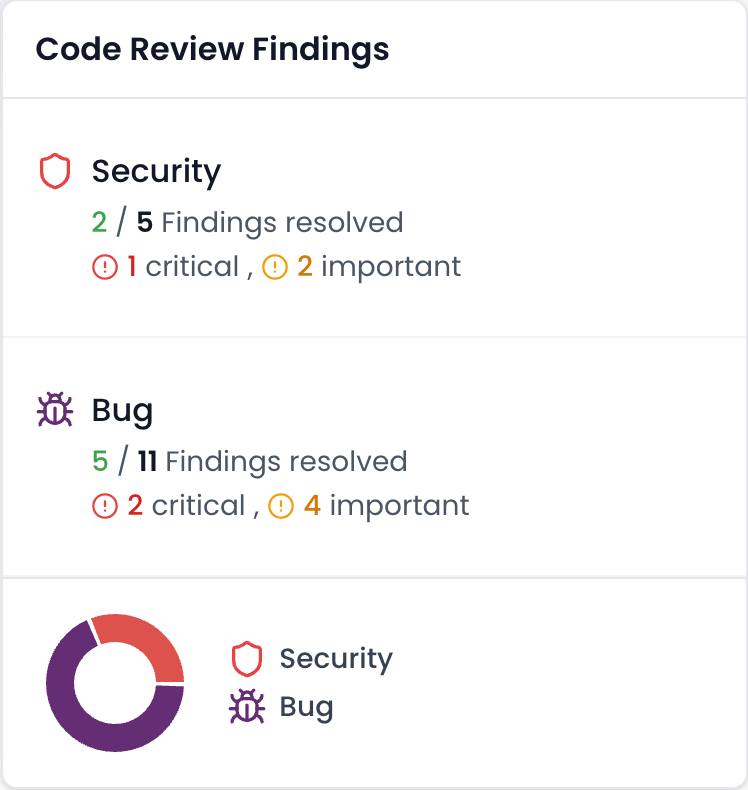
Gitar stands apart as the only platform offering comprehensive code review completely free, with a healing engine that automatically resolves CI failures instead of only suggesting fixes. Competing tools often charge $15 to $30 per developer for basic suggestions, while Gitar delivers unlimited PR analysis, security scanning, bug detection, and performance review at no cost.
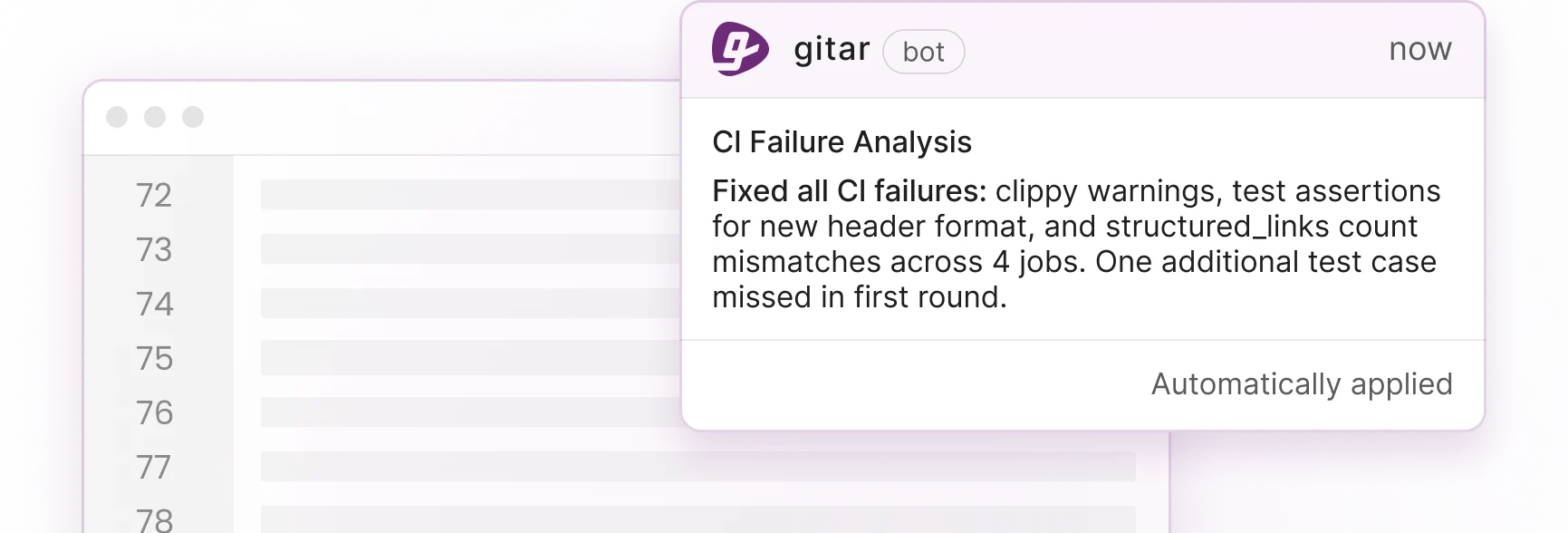
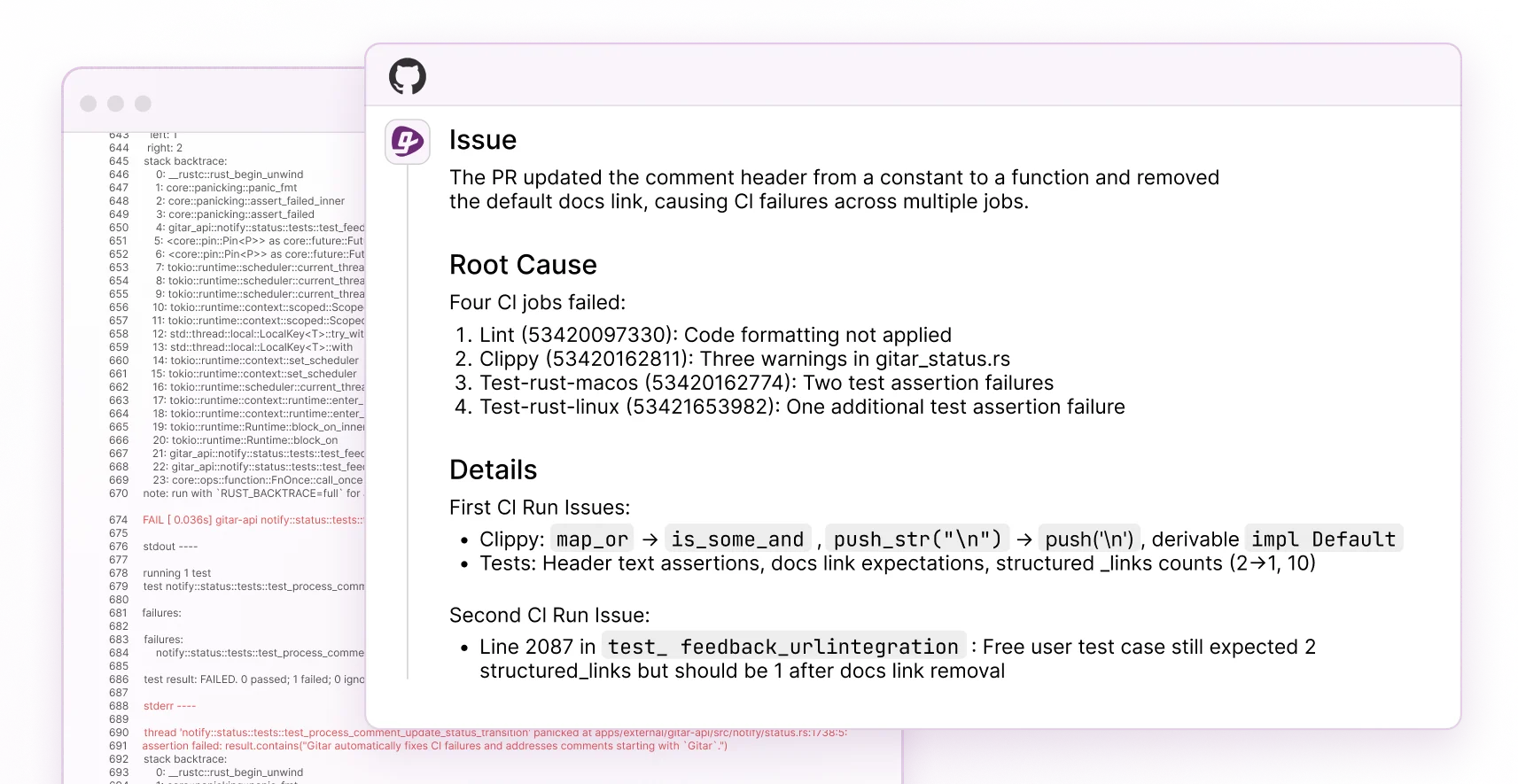
The healing engine analyzes CI failure logs, generates fixes with full codebase context, validates solutions against the actual CI environment, and then commits working code directly to pull requests. Auto-apply fixes come with a 14-day free trial. This model already works at Pinterest-scale deployments that handle more than 50 million lines of code and thousands of daily PRs.
Gitar uses a single updating dashboard comment instead of scattered inline notifications, which cuts noise compared to traditional tools. The platform supports natural language workflow rules so teams can automate processes without complex YAML files. Integrations cover GitHub, GitLab, CircleCI, and Buildkite, plus Jira, Slack, and Linear for end-to-end workflow coverage.
|
Capability |
Gitar |
CodeRabbit |
Greptile |
|
Auto-apply fixes |
14-day free trial |
No |
No |
|
CI failure analysis |
Yes |
No |
No |
|
Green build guarantee |
Yes |
No |
No |
|
Free tier |
Full code review |
Limited |
Trial only |
Pros: Free comprehensive code review, automatic CI failure resolution, single clean comment interface, multi-platform support, enterprise scalability.
Pricing: Free code review, 14-day free trial for auto-fix features.
Ideal for: Teams overwhelmed by CI failures, engineering leaders seeking clear ROI, developers tired of manual fix implementation.
Install Gitar now, automatically fix broken builds, start shipping higher quality software, faster
2. CodeRabbit: Detailed AI Review Without Auto-Fix
CodeRabbit provides AI-powered code review with contextual line-by-line feedback and PR summaries. The platform learns from user interactions and offers detailed walkthroughs of pull requests with support for more than 40 linters. It still operates as a suggestion engine, so developers must manually implement recommended changes and then hope they pass CI.
Pros: Detailed contextual analysis, learning capabilities, comprehensive linter support.
Cons: No auto-fix capability, expensive at $12 to $30 per user monthly, GitHub-focused, generates notification noise.
Pricing: $12 to $30 per user per month.
Ideal for: Teams that want deep analysis and are comfortable handling fixes manually in GitHub-centric workflows.
3. Greptile: Deep Context, Manual Fixes
Greptile emphasizes deep codebase context using retrieval-augmented generation to understand code relationships and dependencies. The platform delivers comprehensive code analysis with strong context, yet still limits itself to suggestion-only functionality, so teams must implement every recommended fix by hand.
Pros: Strong contextual understanding, detailed codebase analysis.
Cons: High cost at $30 per user monthly, no automated fix application, limited CI integration.
Pricing: $30 per user per month.
Ideal for: Teams needing deep code context analysis and organizations with flexible budgets.
Install Gitar now, automatically fix broken builds, start shipping higher quality software, faster
4. Qodo: Fast Scans and CI-Aware Automation
Qodo ranks highest for speed and detail level in 2025 comparisons, completing codebase scans in under 2 minutes while categorizing issues by severity. The platform offers context-aware analysis, automated test generation, and CI/CD integration for issue resolution, including agentic code reviews and verified code updates.
Pros: Fast scanning, detailed issue categorization, test generation capabilities, CI/CD integration.
Cons: May require configuration to unlock full auto-fix capabilities, pricing varies by plan.
Pricing: Varies by plan.
Ideal for: Teams that prioritize speed, comprehensive analysis, and CI-integrated automation.
5. Mobb: AI Fixes for Security Vulnerabilities
Mobb focuses on security vulnerability remediation with AI-generated fixes for common security issues. The platform offers some automated patching capabilities, yet it targets security-specific use cases instead of broad CI failure resolution.
Pros: Security-focused, some automated patching.
Cons: Limited scope, expensive for comprehensive coverage, narrow use case.
Pricing: Enterprise pricing.
Ideal for: Security-focused teams and compliance-driven organizations.
6. Veracode: Enterprise Security Scanning
Veracode delivers security-centric code analysis with some AI-powered remediation suggestions. The platform excels at security vulnerability detection but offers limited support for general CI failures, build errors, or performance issues that frequently break development workflows.
Pros: Strong security focus, enterprise-grade compliance.
Cons: Security-only scope, high cost, no general CI failure resolution.
Pricing: Enterprise pricing.
Ideal for: Enterprise security teams and heavily regulated industries.
7. Codacy: Custom Rules Without Auto-Fix
Codacy provides automated code quality checks with customizable rules and integrations across GitHub and GitLab. The platform offers AI-assisted analysis for bugs, security issues, and style violations, yet teams still need to implement every suggested improvement manually.
Pros: Customizable quality checks, multi-platform support.
Cons: No automated fixes, suggestion-only approach, limited CI integration.
Pricing: Varies by plan.
Ideal for: Teams focused on code quality metrics and organizations that need fine-grained rules.
8. Sonar AI: Static Analysis With Limited Fixing
SonarQube ranks #1 as best automated code review tool with AI-powered code fixes in 2026, offering comprehensive static analysis and quality gates. Its AI features still focus mainly on suggestions and lack the CI integration required for fully validated automatic fixes.
Pros: Comprehensive static analysis, quality gates, industry recognition.
Cons: Complex setup, expensive licensing, limited auto-fix capabilities.
Pricing: Enterprise licensing.
Ideal for: Large enterprises and teams with dedicated DevOps resources.
9. Snyk: Security-First Dependency Protection
Snyk specializes in security vulnerability detection and remediation with AI-powered fix suggestions for dependency issues and security flaws. It works well for security-specific problems but does not cover the broader spectrum of CI failures that affect daily development workflows.
Pros: Strong dependency security, rich vulnerability database.
Cons: Security-focused only, expensive at scale, no general CI failure resolution.
Pricing: Starts free and scales to enterprise pricing.
Ideal for: Security-conscious teams and organizations focused on dependency management.
Install Gitar now, automatically fix broken builds, start shipping higher quality software, faster
Side-by-Side Comparison Matrix
|
Platform |
Auto-Apply Fixes |
CI Failure Analysis |
Free Tier |
Multi-CI Support |
|
Gitar |
14-day free trial |
Yes |
Full code review |
Yes |
|
CodeRabbit |
No |
No |
Limited |
Limited |
|
Greptile |
No |
No |
Trial only |
Limited |
|
Others |
No |
Limited |
Varies |
Varies |
Best Free AI Code Fixers for 2026
Most AI code review platforms offer limited free tiers with restricted features or user counts. Gitar provides the most comprehensive free option, including unlimited PR analysis, security scanning, and bug detection without seat limits or credit card requirements.
The 14-day free trial for auto-fix features lets teams experience validated CI failure resolution before they commit to paid plans. GitHub Copilot offers a free plan but focuses on code generation instead of review and fixing. Snyk provides free vulnerability scanning with project limits and without full CI coverage.
GitHub-Integrated Auto-Fix Tools
GitHub integration quality varies widely across platforms. Gitar offers native GitHub Apps integration with real-time PR analysis and automated commit capabilities that directly repair failing builds.
CodeRabbit provides GitHub-focused features but lacks the auto-fix functionality that makes integration truly valuable. Graphite is an AI code review platform that fixes CI failures directly from the PR page, although its scope remains narrower than Gitar’s full healing engine.
Real-World Results: AI and Green Builds
AI code review tools regularly find subtle problems but also complain about theoretically possible yet practically impossible issues, which leads users to ignore some feedback. This pattern highlights the gap between suggestion engines and platforms that validate fixes inside real CI environments.
Nx’s Self-Healing CI achieves about 60% fix acceptance rates even in large-scale monorepos, which shows the potential of automated resolution when implemented correctly. Runtime-powered AI achieves fixes that work first time and reduces mean time to remediate vulnerabilities by 87%.
Gitar validates fixes against the full CI environment before committing, which directly addresses the problem of AI-generated solutions that fail in production contexts.
Frequently Asked Questions
What is the difference between AI suggestions and auto-fixes?
AI suggestion tools analyze code and provide recommendations in comments, so developers still implement changes manually. Auto-fix platforms like Gitar generate code changes, validate them against CI pipelines, and automatically commit working solutions.
This approach removes the manual implementation step and ensures that fixes actually resolve the underlying issues.
Which platform offers the best free AI code review?
Gitar provides the most comprehensive free AI code review, including unlimited PR analysis, security scanning, bug detection, and performance review without seat limits. Most competitors restrict free tiers or limit trials, while Gitar’s free offering matches or exceeds many paid alternatives.
How do teams measure ROI from AI code review tools?
Teams measure ROI through time savings and productivity gains. A 20-developer team typically loses $1 million annually to CI failures and review bottlenecks.
Effective auto-fix platforms can cut this to about $250,000 by reducing resolution time from 1 hour per day per developer to 15 minutes. Teams also see less context switching, faster deployment cycles, and higher developer satisfaction.
What are the main CI integration challenges?
Traditional AI review tools lack CI context, which makes their suggestions unreliable in production environments. Effective platforms must understand build configurations, dependency versions, test suites, and deployment pipelines.
Gitar addresses this by running fixes against the actual CI environment so solutions work in the exact context where they will be deployed.
Should teams choose free or paid AI code review tools?
Free tools like Gitar often deliver better value than expensive suggestion engines. Paying $15 to $30 per developer each month for tools that still require manual implementation rarely makes sense when free alternatives provide deeper automation.
Teams should prioritize platforms that actually fix code instead of tools that only identify problems.
Can AI tools automatically fix security vulnerabilities?
Security-focused platforms like Mobb, Veracode, and Snyk provide vulnerability-specific fixes, yet they often lack the broader CI context needed for reliable implementation. Platforms that understand both security requirements and build environments deliver more dependable automated remediation.
How long does Gitar setup take?
Gitar installation takes about 30 seconds through the GitHub App or GitLab integration. No account creation, credit card, or complex configuration is required.
The platform immediately begins analyzing PRs and posting dashboard comments, with auto-fix capabilities available through the 14-day free trial.
Conclusion: Move From Suggestions to Free Auto-Fix
The shift from suggestion engines to automated fix platforms marks the next evolution in AI-powered development tools. Traditional tools charge premium prices for commentary, while platforms like Gitar show that comprehensive code review can be free and that real value comes from resolved issues.
Teams evaluating AI code quality platforms should prioritize auto-fix capabilities, CI integration, and validated solutions over expensive suggestion engines that keep manual workflows in place. The productivity gains from automated issue detection and resolution support immediate adoption, especially when superior solutions are available at no cost.
Install Gitar now, automatically fix broken builds, start shipping higher quality software, faster