
Written by: Ali-Reza Adl-Tabatabai, Founder and CEO, Gitar
Key Takeaways for AI Code Review in 2026
- AI code generation now outpaces review capacity, creating bottlenecks despite 85% developer adoption and surging pull requests.
- Gitar leads as a free AI code review tool with validated auto-fixes for CI failures, unlike suggestion-only competitors charging $15-30 per seat.
- Top tools like CodeRabbit, Greptile, and GitHub Copilot provide analysis but require manual implementation, which slows AI-accelerated workflows.
- Key evaluation criteria include auto-fix capabilities, total cost including time savings, and seamless CI/CD integration for consistently green builds.
- Teams can start with Gitar’s free auto-fix engine to remove manual reviews and ship higher-quality software faster.
The Top 9 AI Code Review and Automation Tools
1. Gitar – Free AI Code Review with Auto-Fix Engine
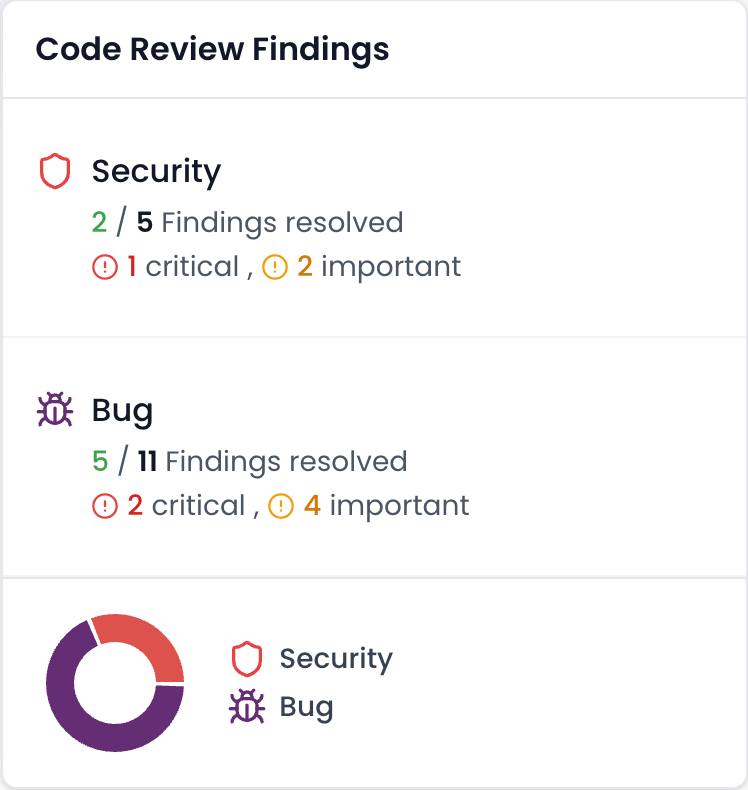
Gitar stands out as a free AI code review platform that actually fixes your code. Competing tools charge $15-30 per developer for suggestion-only reviews, while Gitar delivers full PR analysis, security scanning, bug detection, and performance review for unlimited repositories with no seat limits. Autofix features are available with a 14-day free trial.
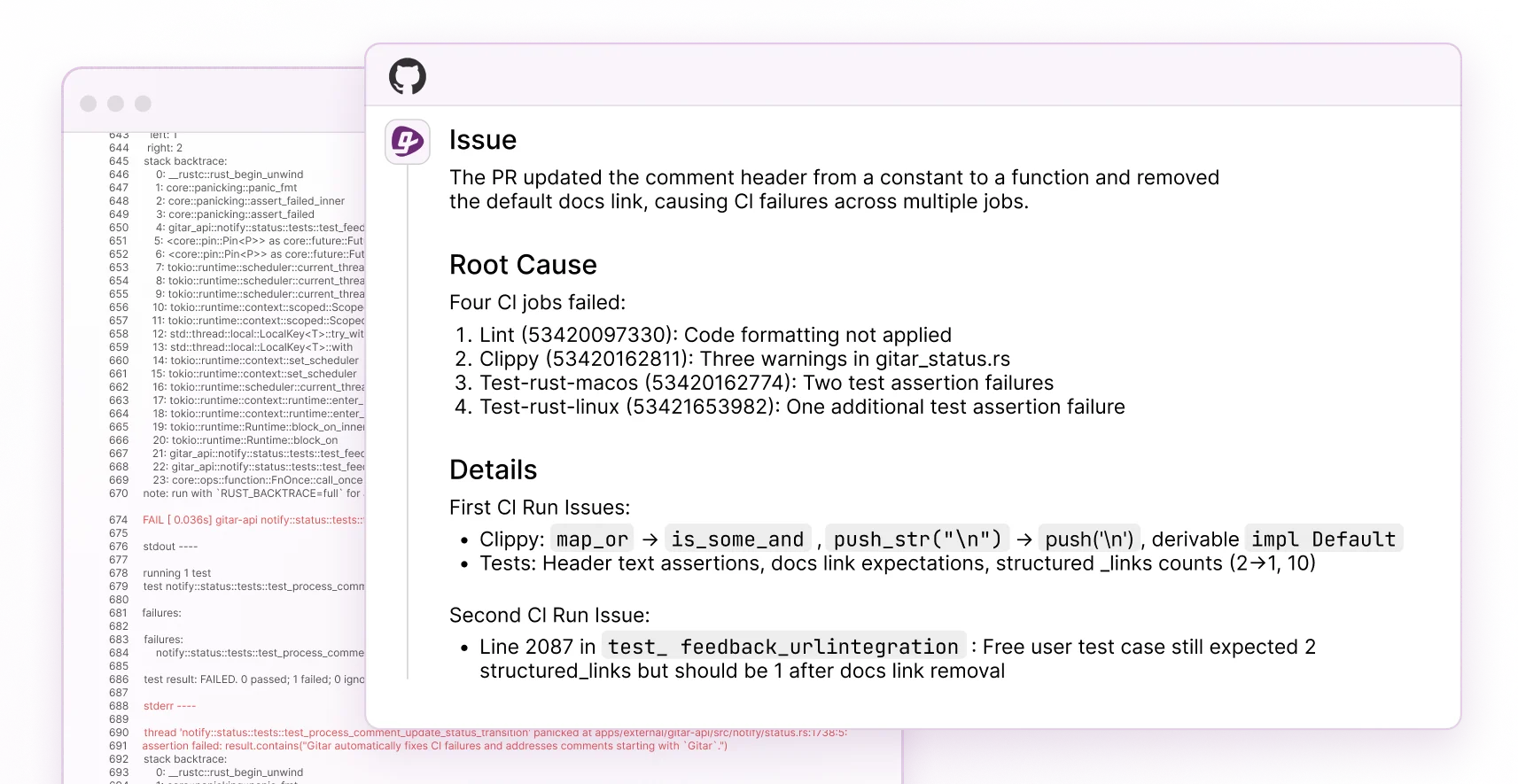
The platform’s healing engine automatically analyzes CI failures, generates validated fixes, and commits them directly to pull requests. When reviewers leave feedback, Gitar implements the requested changes automatically. This platform does more than suggest improvements. It delivers validated fixes that work in your actual CI environment and consistently move builds to green.
| Feature | Gitar | Competitors | Winner |
|---|---|---|---|
| Pricing | Free code review (autofix 14-day trial) | $15-30/seat | Gitar |
| Auto-Fix CI | Yes | No | Gitar |
| Validated Fixes | Yes | No | Gitar |
| Single Comment UI | Yes | Notification spam | Gitar |
For a 20-developer team, Gitar can save about $750,000 annually in productivity costs. It also removes the $450-900 monthly fees that competitors charge for basic review. Setup takes about 30 seconds and does not require a credit card.
2. CodeRabbit – AI-Powered PR Suggestions
CodeRabbit delivers AI-driven code review with inline suggestions and PR summaries. The tool operates as a suggestion-only system, so developers must manually implement every recommendation. Pricing ranges from $15-30 per developer each month, which becomes expensive for larger teams while still leaving a heavy manual workload.
3. Greptile – Codebase Context Analysis
Greptile focuses on deep codebase context through RAG-based analysis at $30 per developer each month. The platform offers strong code understanding and context-aware insights. It does not provide auto-fix capabilities or CI integration, so teams still need to implement suggested changes manually.
Try Gitar’s free auto-fix engine and eliminate manual code review work
4. Qodo (formerly Codium) – Enterprise Test Generation
Qodo specializes in automated test generation and context-aware PR analysis through a multi-agent framework. The platform offers reasonable pricing for enterprise teams. It does not handle CI failure resolution, which many modern teams now expect for AI-generated code workflows.
5. GitHub Copilot – Integrated AI Assistant
GitHub Copilot provides inline suggestions and AI-assisted PR review at $10-39 per user each month. It integrates deeply with GitHub workflows and supports everyday coding tasks. The tool still functions mainly as a suggestion engine without automated fix application or CI failure resolution.
6. GitLab Duo – Native MR Integration
GitLab Duo offers native merge request analysis and suggestions within the GitLab ecosystem. It is available as an add-on to GitLab subscriptions and fits naturally into existing GitLab workflows. The platform does not include auto-fix capabilities, which limits its value for high-velocity AI coding environments.
Install Gitar for free and experience automated CI healing
7. SonarQube – Quality Gate Automation
SonarQube delivers comprehensive code quality analysis with customizable quality gates. The platform offers both free and enterprise tiers and excels at static analysis across many languages. Teams still need to remediate identified issues manually.
8. Snyk Code – Security-Focused Analysis
Snyk Code focuses on security vulnerability detection with a freemium pricing model. It performs very well for security scanning and risk identification. The tool does not provide broad code review capabilities or automated fix application for non-security issues.
9. Amazon Q Developer – AWS-Integrated Review
Amazon Q Developer offers AI-assisted code review that is optimized for AWS environments. The service includes a free tier and a $19 per month pro option. It integrates well with AWS but has limited cross-platform support and no automated fix application.
Side-by-Side Comparison of Leading Tools
| Tool | Auto-Fix CI Failures | Pricing | Platform Support |
|---|---|---|---|
| Gitar | Yes (validated) | Free | GitHub, GitLab, CircleCI |
| CodeRabbit | No | $15-30/seat | GitHub-focused |
| Greptile | No | $30/seat | GitHub, GitLab |
| Qodo | No | Custom pricing | Multi-platform |
| GitHub Copilot | No | $10-39/user | GitHub native |
Gitar emerges as the clear leader with free pricing, validated auto-fixes, and broad platform support. The platform focuses on delivering green builds instead of simply suggesting improvements.
Choosing the Right AI Tool for Your Team
Teams should evaluate AI code review tools on three main factors. First, compare fix automation with suggestion-only capabilities. Second, calculate total cost of ownership, including developer time and review delays. Third, review integration depth with your existing CI/CD pipeline.
Engineers gain the most value from tools that reduce context switching and notification fatigue. Engineering leaders need clear ROI from reduced manual work and faster merge cycles. DevOps teams benefit from seamless integration that avoids complex YAML configuration and fragile pipelines.
Teams that experience the productivity loss where development teams lose nearly two-thirds of their time waiting on code review feedback should treat automated fix application as essential. The market is shifting from suggestion engines to healing engines, which marks the next evolution in AI-assisted development workflows.
Getting Started with Gitar for Automated Fixes
Gitar offers a comprehensive free solution for AI code review and deployment automation in 2026. The platform combines validated auto-fixes, CI failure resolution, and simple setup to remove the bottleneck created by AI-accelerated code generation. Teams gain these benefits without paying the premium prices of suggestion-only alternatives.
Frequently Asked Questions
What is the best free AI code review tool in 2026?
Gitar provides the most comprehensive free AI code review platform in 2026. It offers unlimited PR analysis, security scanning, and bug detection for unlimited repositories without seat limits or credit card requirements. Autofix features are available with a 14-day free trial. Unlike paid alternatives that only suggest fixes, Gitar’s healing engine automatically implements and validates corrections.
Which AI tools actually fix code instead of just suggesting changes?
Most AI code review tools operate as suggestion engines and leave developers to implement recommendations manually. Gitar’s healing engine stands apart by automatically analyzing CI failures, generating validated fixes, and committing working solutions directly to pull requests. This approach removes the manual implementation step that often creates bottlenecks in AI-accelerated development workflows.
How does Gitar compare to CodeRabbit for code review automation?
CodeRabbit charges $15-30 per developer for suggestion-only code review. Gitar provides free comprehensive analysis plus automated fix application. CodeRabbit requires manual implementation of all suggestions. Gitar’s healing engine validates fixes against your actual CI environment and delivers green builds through automatic commits.
Can AI tools automatically resolve CI failures and build breaks?
Traditional AI code review tools do not integrate deeply with CI systems and cannot resolve build failures automatically. Gitar’s platform analyzes CI failure logs and identifies root causes across different failure types, including lint errors, test failures, and build breaks. It then generates appropriate fixes with full codebase context and validates solutions before committing them, which keeps builds passing.
What are the key trends in AI deployment automation for 2026?
The major trend in 2026 is the move from suggestion engines to healing engines that actually fix code. Teams now expect natural-language CI rules instead of complex YAML configuration. They also prefer single-comment interfaces that reduce notification spam and validated auto-fixes that deliver working solutions instead of hopeful suggestions. The focus has shifted from generating more suggestions to providing fewer, higher-quality automated fixes that remove manual work.