
Written by: Ali-Reza Adl-Tabatabai, Founder and CEO, Gitar
Key Takeaways
- AI-generated PRs contain 75% more errors and 24% more incidents, overwhelming teams even though code ships 3-5x faster.
- Gitar ranks #1 as the only free tool that automatically fixes CI failures, lint errors, and review feedback instead of only suggesting edits.
- Most free tiers like CodeRabbit, PR-Agent, and Graphite limit usage, require manual fixes, or demand complex setups without true auto-healing.
- Gitar supports unlimited repositories, GitHub and GitLab, and installs in 30 seconds while avoiding notification spam.
- Transform your PR workflow with Gitar’s free auto-fix capabilities so your team ships higher quality software faster.
How We Ranked the Top Free AI Code Review Tools
Our 2026 evaluation focuses on practical automation, not hype. We prioritized auto-fix functionality, CI integration depth, installation simplicity, notification quality, unlimited repository support, and measurable time savings. We tested GitHub and GitLab integrations, reviewed vendor documentation, studied developer feedback from Reddit and DEV.to, and checked GitHub stars and community adoption as of February 2026.
Top 8 Free AI Code Review Tools for 2026
#1 Gitar: Only Free Tool That Actually Fixes Your Code
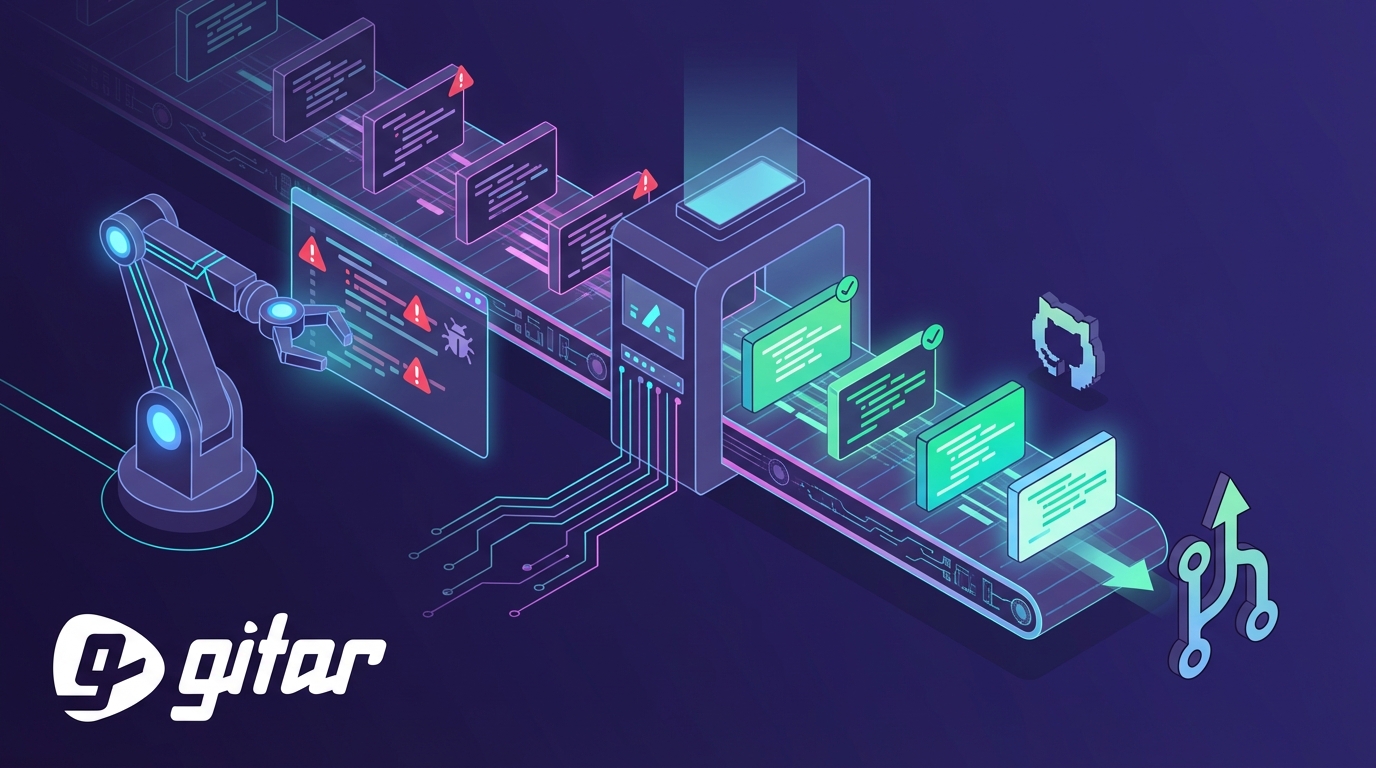
Gitar stands apart as the only free platform that fixes code instead of only suggesting changes. When CI fails from lint errors, test failures, or broken builds, Gitar analyzes failure logs, generates validated fixes, and commits them to your PR. The healing engine works across your entire codebase context, not just the diff.
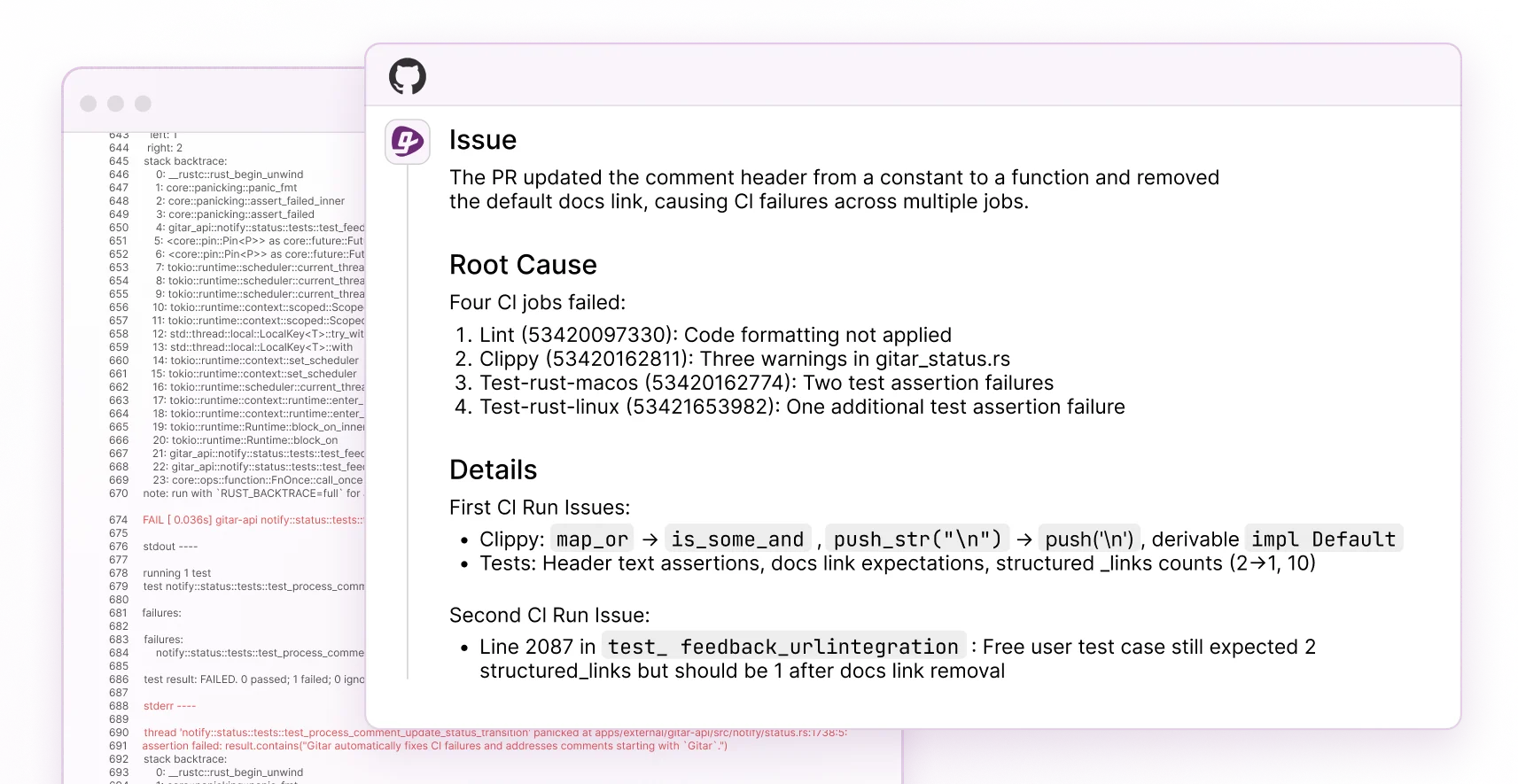
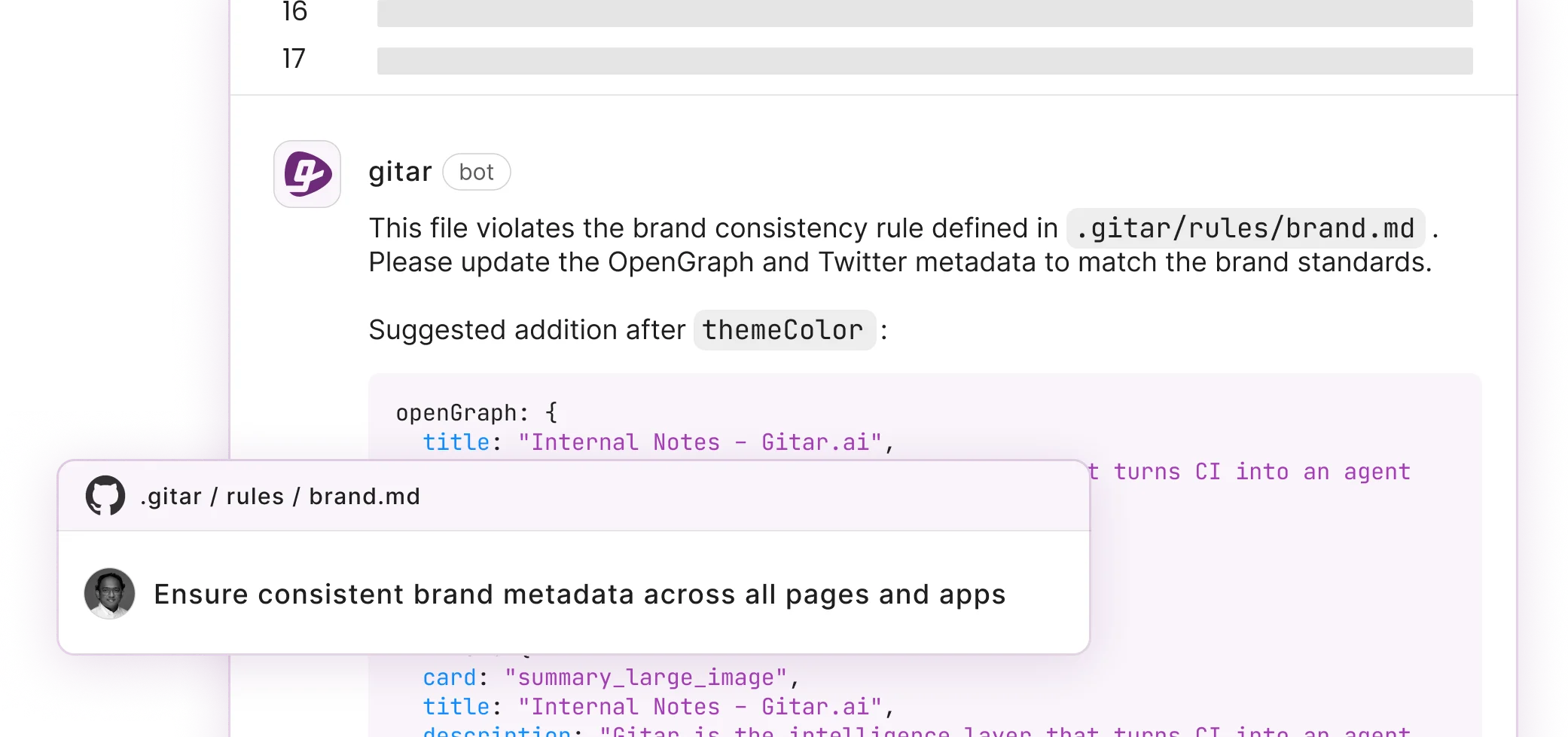
The platform consolidates findings into a single dashboard comment that updates in place, which prevents notification spam. When reviewers leave feedback, Gitar applies changes directly. Natural language rules in .gitar/rules/*.md files automate workflows and avoid complex YAML configuration.
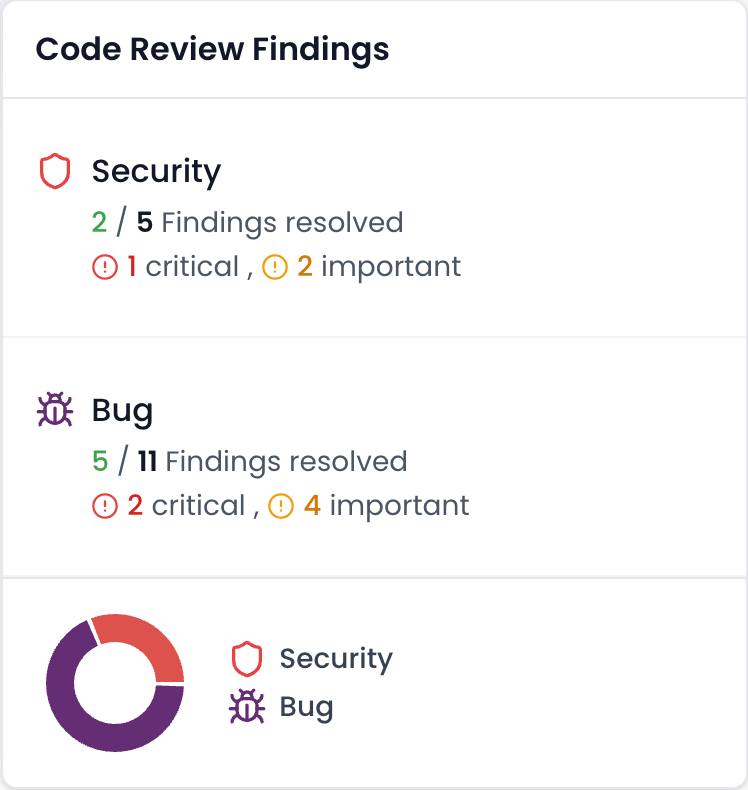
Setup finishes in about 30 seconds through a GitHub App installation with no credit card required. The free tier includes unlimited repositories, users, PRs, full PR analysis, security scanning, and bug detection for GitHub and GitLab. Auto-fix features run on a 14-day free trial. CI systems such as CircleCI and Buildkite receive support in the Team Plan. For a 20-developer team, Gitar can save up to $1M annually by cutting context switching and shrinking CI failure resolution from hours to minutes.
Strengths: Guaranteed green builds, automatic implementation of review feedback, cross-platform support, and minimal notification noise. Gitar is the only tool in this list that turns suggestions into working code automatically.
#2 CodeRabbit Free Tier: Strong Suggestions, No Auto-Fix
CodeRabbit cuts review time and bugs with VS Code, Cursor, and Windsurf integration, providing detailed PR summaries and inline comments. The tool supports GitHub, GitLab, and Azure DevOps with contextual learning.
However, CodeRabbit’s free tier is limited and requires a subscription for full features. The platform focuses on suggestions instead of automated fixes. Developers still implement changes manually and then wait to see whether CI passes.
Strengths: High-quality line-by-line feedback and multi-platform support. Limitations: Suggestion-only workflow, restricted free tier, and no CI auto-healing.
#3 PR-Agent OSS: Open Source With Manual Maintenance
PR-Agent delivers open-source AI code review that teams can self-host with models like Ollama, which preserves complete data sovereignty. The tool generates PR summaries and review comments without external dependencies when configured correctly.
Setup requires repository installation and configuration management. The open-source model allows unlimited usage, yet similar tools face strict daily LLM call limits that restrict real-world throughput. PR-Agent does not integrate deeply with CI for automatic failure resolution and focuses mainly on GitHub workflows.
Strengths: Data sovereignty and unlimited self-hosted usage. Limitations: Complex setup, no CI healing, GitHub-only focus, and fully manual fix implementation.
#4 Qodo (formerly Codium): System-Aware but Credit-Based
Qodo provides system-aware AI code review with multi-repo indexing and dependency graphs, which helps detect breaking changes in large enterprise codebases. The platform supports GitHub and GitLab with cross-service impact analysis.
The tool emphasizes code quality checks and dependency tracing while running on a credit-based free tier. Qodo delivers high precision analysis with advanced multi-agent architecture and offers automated resolutions with precise code suggestions.
Strengths: Multi-agent analysis and strong dependency awareness. Limitations: Credit-limited free tier and potentially constrained usage for active teams.
#5 Graphite Free: Workflow Innovation With Hard Limits
Graphite Agent supports GitHub Cloud and GitLab for PR history-aware review that learns from feedback, giving teams a more adaptive workflow. The platform rethinks traditional review processes with AI-driven insights.
The free plan allows 100 PRs per month. Graphite focuses on workflow improvements but remains GitHub-centric and still requires manual implementation of suggested fixes. The platform does not provide CI integration for automatic failure resolution.
Strengths: Workflow innovation and learning from reviewer feedback. Limitations: GitHub-only emphasis, manual fix workflows, and strict monthly PR limits.
#6 Bito: IDE-Centric Reviews With Light CI Support
Bito delivers inline AI suggestions through IDE extensions and integrates with GitHub, GitLab, and Bitbucket for PR workflows. It offers codebase-aware code reviews and automation features inside the tools developers already use.
The free tier includes basic functionality with PR review capabilities for team workflows. Bito supports pull request automation such as code reviews, issue detection, and one-click fixes that speed up merges.
Strengths: Deep IDE integration, PR workflow support, and team automation. Limitations: Limited CI integration depth and usage restrictions on the free tier.
#7 Swimm: Documentation-First Reviews Without Auto-Fix
Swimm focuses on documentation-aware code review and captures knowledge and context during the review process. The platform helps teams maintain shared understanding of code while they enforce quality checks.
The free tier centers on documentation generation with limited broader functionality. Swimm works as a suggestion-focused tool without automated fix implementation or robust CI integration.
Strengths: Knowledge capture and documentation integration. Limitations: Suggestion-only approach, constrained free tier, and no automated fixes.
#8 CodiumAI: Test Generation With Limited Free Access
CodiumAI targets test generation and code quality reviews, providing automated test creation alongside PR analysis. The platform emphasizes quality gates and strong test coverage.
The free tier supports open-source projects with basic capabilities. CodiumAI, now part of Qodo, offers context-aware AI code review with CI/CD integration through Qodo Merge and includes auto-fix features for tests and logic errors.
Strengths: Automated test generation, quality gates, and dynamic workflows. Limitations: Free tier limited to OSS and likely paywalled advanced features.
Side-by-Side Comparison of Free AI Code Review Tools
| Feature | Gitar | CodeRabbit | Others |
|---|---|---|---|
| Auto-Apply Fixes | 14-day Free Trial | No | No |
| CI Failure Auto-Fix | 14-day Free Trial | No | No |
| Free Tier Scope | Unlimited | Limited | Varies |
| Platform Support | GitHub, GitLab (Free); Multi-CI (Team) | GitHub/GL | Limited |
Best Free AI PR Reviewers for GitHub and GitLab
CodeRabbit supports GitHub, GitLab, and Azure DevOps but restricts free tier capabilities. Graphite Agent supports GitHub Cloud and GitLab with limited free usage. Many alternatives focus on a single platform or apply heavy restrictions. Gitar’s zero-setup approach gives multi-platform teams broad coverage without those limits.
Open Source AI Code Review Options vs Gitar
PR-Agent excels at data sovereignty for teams that require complete control over their review pipeline. The complexity of self-hosting and maintaining open-source infrastructure often outweighs benefits for small or fast-moving teams. Gitar’s free hosted platform delivers enterprise-grade capabilities without infrastructure overhead or complex setup.
Free vs Paid AI Code Review Plans
Free tiers usually provide suggestion-only functionality that still forces manual implementation work. CodeRabbit’s limited free tier requires a subscription for full features, and paid plans cost $15-30 per developer each month. Gitar’s free tier includes real auto-fixes, which often delivers more value than many paid alternatives.
What Matters Most When Automating PR Workflows
Teams with tight budgets and heavy fix volume should choose platforms that resolve issues instead of only flagging them. Zero-setup onboarding and clear ROI matter more than long feature lists. With incidents per PR up 24% due to AI coding, automated resolution capabilities now count as essential, not optional.
FAQ
What is the best free AI code review tool for CI automation?
Gitar delivers the most complete CI automation among free tools by analyzing and fixing build failures, lint errors, and test issues. Unlike suggestion-only alternatives, Gitar validates fixes against your actual CI environment and commits working solutions directly to pull requests.
How do you install an AI PR reviewer on GitLab?
Gitar supports GitLab integration with a simple flow. Connect your GitLab account, authorize the integration, and Gitar immediately starts analyzing merge requests without extra configuration.
Which free tools can auto-fix code?
Gitar stands alone with unlimited free code review and a 14-day trial of auto-fix capabilities. Most alternatives such as CodeRabbit and PR-Agent only suggest changes, which still require manual implementation and validation by developers.
How do free AI code review tools compare to paid plans?
Gitar’s free tier often surpasses paid alternatives in practical impact. CodeRabbit charges $15-30 per developer for suggestion-only features with repository limits, while Gitar offers unlimited repositories, unlimited users, and real code fixes without a subscription.
What is the best tool for improving development efficiency?
Gitar reduces review time by about 75% through automated fix implementation and consolidated notifications. The platform removes context switching between review comments and fix implementation, which directly addresses the bottleneck created by higher AI-generated code volume.
Are there open source AI code review options?
PR-Agent provides open-source self-hosting for teams that require strict data control. Gitar’s free hosted platform offers broader functionality without infrastructure management, which makes it more practical for most development teams.
Conclusion: Gitar Fixes the PR Bottleneck Created by AI
AI coding tools increased development speed but also created new bottlenecks in code review and CI. Free AI code review tools like Gitar solve this problem by fixing issues instead of only identifying them. While competitors charge premium prices for suggestion engines, Gitar delivers comprehensive automation that reshapes workflows instead of offering small incremental gains.