
Written by: Ali-Reza Adl-Tabatabai, Founder and CEO, Gitar
Key Takeaways
- AI coding tools speed up code generation 3-5x, but PR review times have jumped 91% because CI validation now creates bottlenecks.
- Gitar leads as the #1 free AI code review tool, with a healing engine that guarantees green builds through full CI validation.
- Traditional tools like CodeRabbit and Greptile charge $15-30 per developer each month for suggestions that still need manual fixes.
- Teams report 91% less PR review effort and 4x faster delivery using Gitar’s natural language rules and cross-platform support.
- Teams that want to eliminate CI failures and ship faster can install Gitar now for free, with unlimited repositories and measurable ROI.
1. Gitar: Free Healing Engine That Guarantees Green Builds
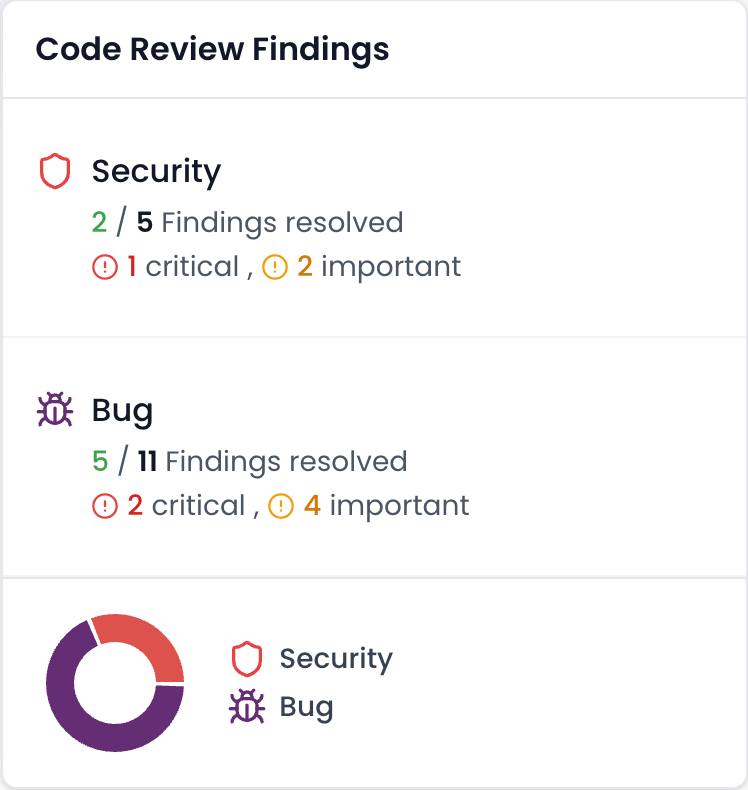
Gitar is the only free AI code review platform that fixes code instead of only suggesting changes. Competitors charge $15-30 per developer for comment-based reviews, while Gitar delivers full PR analysis, security scanning, and bug detection at no cost for unlimited repositories.
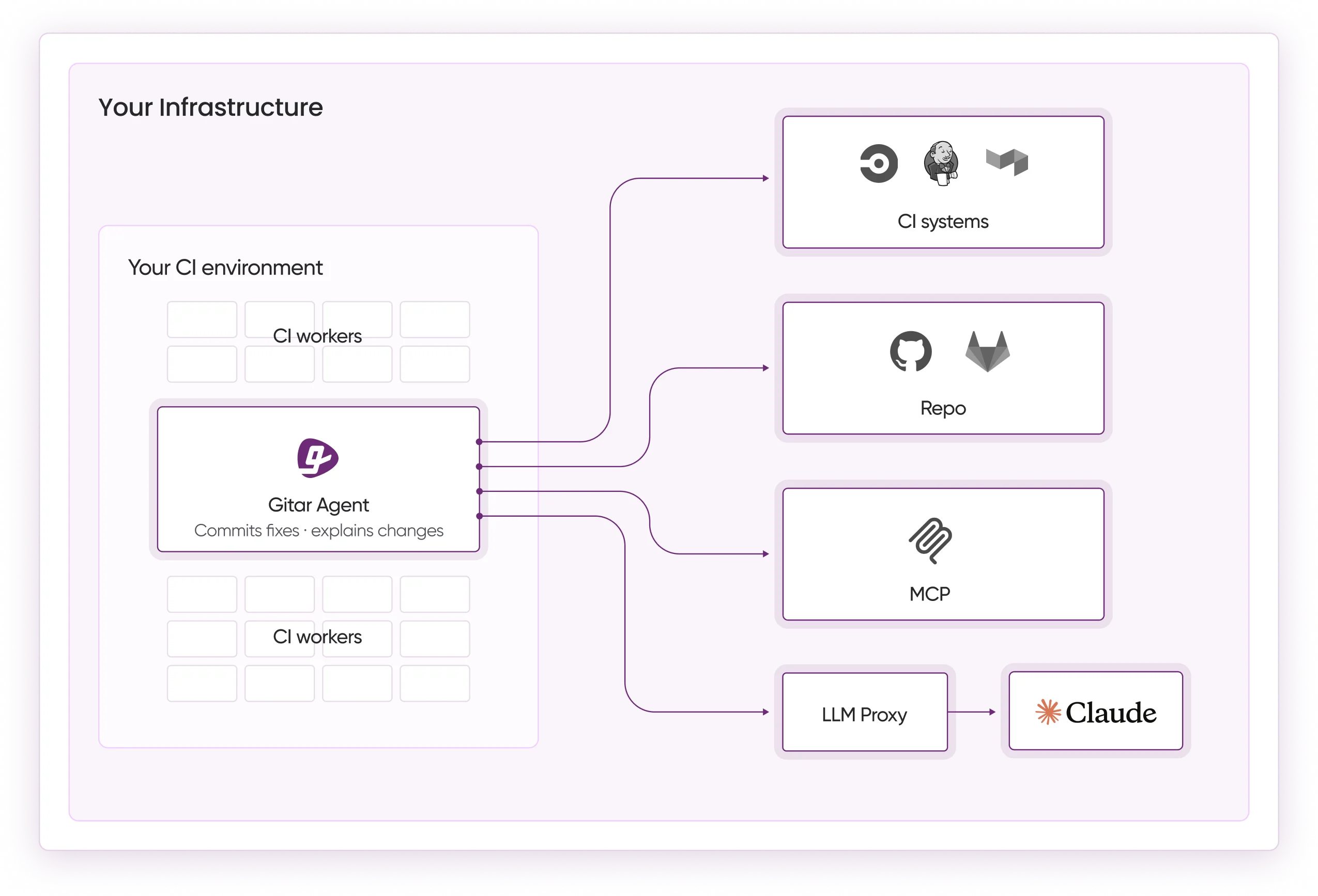
The healing engine analyzes CI failures, generates validated fixes, and commits them directly to pull requests. When lint errors, test failures, or build breaks appear, Gitar identifies the issue, applies the fix, and validates it against your CI pipeline to guarantee green builds. Teams can enable auto-apply fixes during a 14-day free trial.
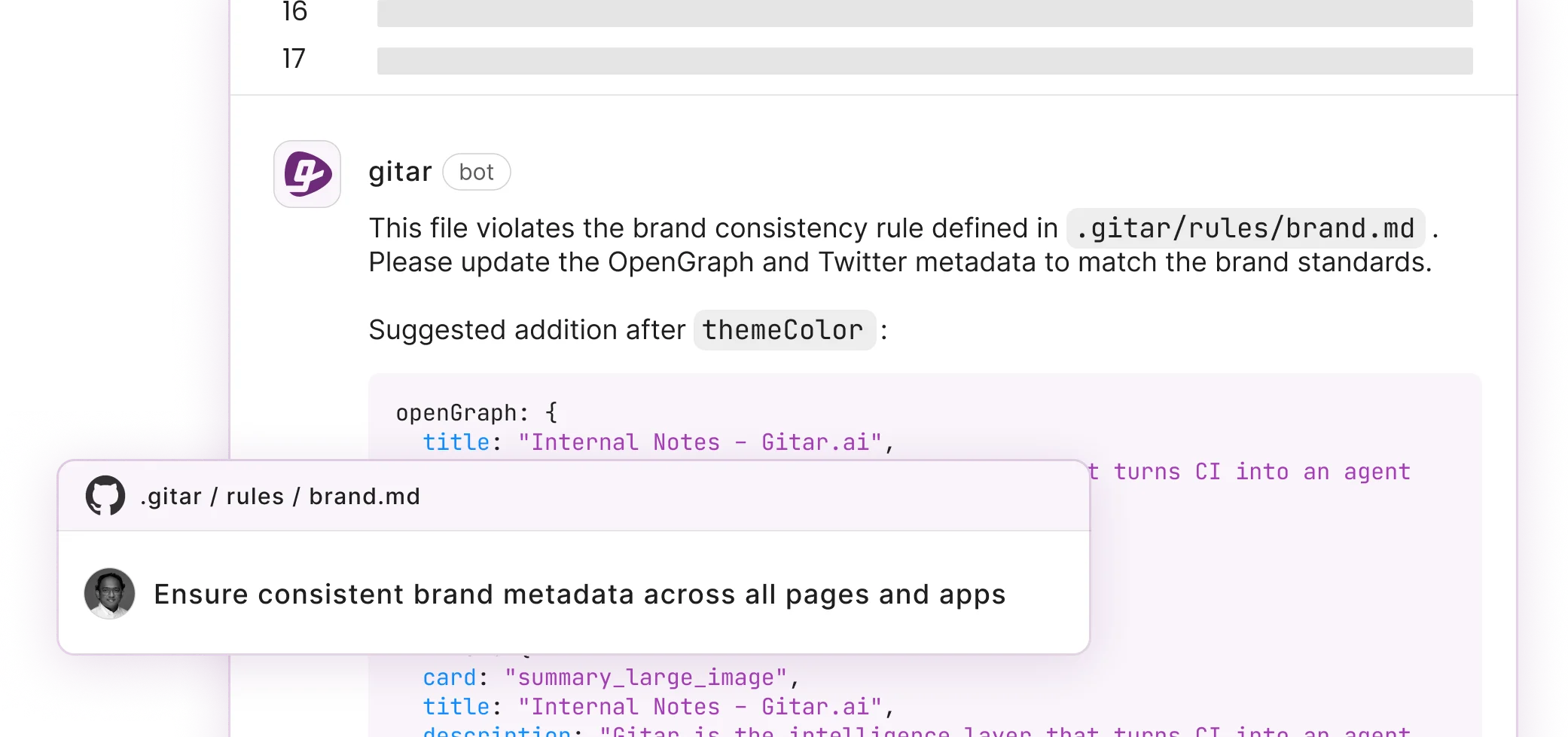
Gitar includes natural language workflow rules, a single updating dashboard comment that reduces notification noise, and integrations with Jira, Slack, and Linear. The platform has been proven at Pinterest scale, handling more than 50 million lines of code and thousands of daily PRs while maintaining enterprise-grade security.
|
Pros |
Cons |
|
Free unlimited repositories and users |
Auto-fix requires 14-day trial |
|
Guaranteed green builds with CI validation |
Newer platform compared to long-standing tools |
|
Single clean comment instead of notification spam |
Advanced enterprise features require paid plans |
|
Cross-platform support for GitHub, GitLab, CircleCI |
Natural language rules introduce a short learning curve |
Teams can implement Gitar in five steps. Install the GitHub or GitLab app, enable auto-fix features, configure natural language rules, connect workflow tools, and then monitor analytics. Teams report a 91% reduction in PR review overhead and $1M annual savings for 20-developer teams.
Install Gitar now to automatically fix broken builds and ship higher quality software faster.
2-10: Leading AI Code Review Automation Platforms
2. CodeRabbit: Comment-First AI Reviews for GitHub
CodeRabbit leads the suggestion-based AI code review market and ranks highest in 51% of 309 PRs in RevEval benchmarks. The platform delivers detailed PR analysis and inline suggestions, but developers must still apply fixes manually. Pricing starts at $20 per developer monthly for Pro features, with enterprise plans beginning at $15 per user.
CodeRabbit shines in GitHub integration and contextual learning across a codebase. However, it does not provide CI auto-fix capabilities, and fix acceptance rates stay near 30% because every change requires manual implementation.
3. Greptile: Deep Context for Complex Codebases
Greptile focuses on codebase context analysis, especially for ML and AI-heavy repositories. Pricing starts at $25 per developer monthly for Pro and reaches $30+ for Enterprise. The platform delivers about 85% actionable reviews and improves as it learns from the codebase.
Greptile supports cross-file impact analysis and real-time PR suggestions. It still requires manual fix implementation and does not offer full CI healing or guaranteed green builds.
Install Gitar now to automatically fix broken builds and ship higher quality software faster.
4. Qodo: Agentic Workflows With One-Click Fixes
Qodo provides agentic workflows that analyze security, CI signals, and test impact before generating remediation patches. Team plans cost $19 per user monthly, and Business plans cost $29 per user. The platform offers one-click fixes that align with coding conventions, such as rewriting JWT validation with stronger cryptography.
Qodo improves security and reliability but does not guarantee fully green builds across every CI run. Its CI validation remains partial compared to a full healing engine.
5. Mobb: Targeted Security Auto-Remediation
Mobb specializes in security vulnerability auto-remediation and charges $22 per developer monthly for Professional plans. The platform generates automatic fix PRs for security issues and integrates with GitHub Actions, GitLab CI, and Jenkins.
Mobb excels at vulnerability-specific fixes but offers limited coverage for general CI failures, test flakiness, and broader code quality problems.
6. Snyk: Security-First Auto-PR Fixes
Snyk delivers comprehensive security scanning and auto-PR fixes for vulnerabilities. Team plans start at $25 per user monthly, with enterprise options at $32 or more. The platform supports more than 30 programming languages and integrates with GitHub Actions, GitLab CI, CircleCI, and Jenkins.
Snyk performs strongly for security-focused auto-fixes but does not fully address general code quality issues or non-security CI failures.
Install Gitar now to automatically fix broken builds and ship higher quality software faster.
9. Codacy: IDE Guardrails for Quality Gates
Codacy delivers AI-driven quality gates through Guardrails that fix security and quality issues in real time inside IDEs. The platform connects to CI/CD pipelines and enforces customizable quality standards that can block PRs failing code quality metrics.
Codacy focuses on IDE-based fixes and quality enforcement rather than full CI validation and healing for failing builds.
8. Graphite: PR-Aware Reviews Without CI Healing
Graphite Agent offers PR history-aware reviews and Starter plans at $20 per user monthly and Team plans at $40. The platform understands PR context and delivers intelligent suggestions that respect prior changes.
Graphite lacks deep CI integration and does not provide auto-fix validation, so teams still handle CI failures manually.
11. SonarQube: Static Analysis With Manual Fixes
SonarQube identifies issues using customizable quality gates that block PRs failing code quality standards. The platform integrates with CI/CD platforms such as GitHub Actions and GitLab CI for automatic PR analysis.
SonarQube focuses on static analysis and still requires manual fixes. It does not match the dynamic CI failure resolution that modern healing engines provide.
Install Gitar now to automatically fix broken builds and ship higher quality software faster.
10. Aikido and CodeAnt: Security-Focused Autofix
Aikido Security offers AI Autofix that generates pull requests for vulnerabilities and includes strong accuracy and compliance features. CodeAnt AI provides Basic plans at $10 per user monthly and Premium at $20.
Both platforms deliver strong security coverage and accurate fixes but cover a narrower scope than full CI healing engines.
Comparison Table: How AI Code Review Tools Stack Up
|
Tool |
Auto-Apply Fixes |
CI Validation |
Pricing |
Platforms |
|
Gitar |
Yes (14-day Free Trial) |
Yes/Guarantee |
Free (Review), Trial (Auto-fix) |
GitHub/GitLab/CircleCI/Buildkite |
|
CodeRabbit |
No |
No |
$20/dev |
GitHub |
|
Greptile |
Partial |
Partial |
$25/dev |
GitHub/GitLab |
|
Qodo |
Yes |
Partial |
$19/dev |
Multi-platform |
This comparison shows Gitar as the only free platform that offers guaranteed green builds through full CI validation and auto-fix capabilities.

Key Buying Factors and 2026 AI Review Trends
Teams should evaluate AI code review tools based on total cost of ownership, not just subscription price. Free platforms like Gitar remove the $450-900 monthly cost for a 30-developer team while still providing advanced auto-fix features. Enterprises may prefer on-premise deployment, while startups often choose zero-configuration cloud setups.
Natural language rule configuration now replaces complex YAML files and reduces DevOps bottlenecks. Teams report 4x velocity improvements when CI failures resolve automatically instead of waiting for manual intervention.
2026 trends point toward agentic CI systems where AI agents handle the full failure-to-fix loop. Auto-fix rates reaching 74% for security vulnerabilities show how healing engines now outperform suggestion-only tools. The market is consolidating around platforms that deliver working fixes instead of hopeful comments.
FAQs: Choosing AI Code Review Acceleration Tools
What are the best free AI code review tools available in 2026?
Gitar leads the free AI code review category with unlimited repositories, full PR analysis, and auto-fix capabilities during a 14-day trial. Competing tools charge $15-30 per developer monthly, while Gitar delivers enterprise-grade features at no cost. This model suits startups and cost-conscious teams that want clear ROI without recurring subscription fees.
Which AI tools can automatically fix CI failures and validate the fixes?
Gitar stands out by providing guaranteed green builds through CI failure analysis, automatic fix generation, and validation across the full CI pipeline. Tools such as Qodo and Mobb offer limited auto-fix support for specific cases, but only Gitar’s healing engine verifies that fixes work in production-like environments before committing changes.
Do AI code review tools integrate with GitLab CI and CircleCI beyond GitHub?
Cross-platform coverage differs widely across tools. Gitar offers native integration with GitHub, GitLab, and CircleCI, while many competitors focus mainly on GitHub Actions. Enterprise teams that run diverse CI systems gain value from Gitar’s broad platform support and consistent behavior across environments.
How do teams measure ROI from AI code review acceleration tools?
Teams track metrics such as PR review time, CI failure resolution speed, developer context switching, and sprint velocity. Gitar’s analytics dashboard surfaces fix efficacy, time savings, and productivity gains. Teams report a 91% reduction in review overhead and cost savings that exceed typical tool subscription expenses.
What is the difference between AI suggestion engines and healing engines for code review?
Suggestion engines like CodeRabbit and Greptile analyze code and leave comments that require manual work. Healing engines like Gitar apply fixes automatically and validate them against CI systems. This difference determines whether teams pay for commentary or for real problem resolution, with healing engines driving measurable productivity gains.
Conclusion: Ship Faster With Gitar’s Free Healing Engine
The 2026 AI code review landscape splits into expensive suggestion engines and comprehensive healing platforms. Traditional tools charge premium prices for comments that still demand manual effort, while Gitar offers free code review and auto-fixes that pass CI checks.
Teams struggling with PR backlogs and recurring CI failures despite AI coding tools can switch to a platform that actually fixes code. Gitar’s healing engine moves teams beyond suggestion-only tools and into true development acceleration.