
Modern engineering teams often struggle with managing CI/CD pipelines across diverse programming languages and frameworks. This complexity can slow down development and create bottlenecks. Gitar offers a solution with its autonomous approach, supporting multiple languages and frameworks to streamline CI processes and fix issues proactively. Let’s explore how it addresses these challenges and improves development workflows.
Understanding the Challenge: Managing Diverse Tech Stacks in CI/CD
Today’s software development involves working with various languages and frameworks, from Python and React to Go and Java. While this flexibility allows teams to pick the best tools for each task, it complicates CI/CD pipelines and introduces maintenance hurdles.
How Complexity Builds Technical Debt
Handling multiple languages in CI/CD pipelines adds layers of complexity. Different build tools, dependency managers, and testing setups for each language increase the risk of integration issues and fragile pipelines. A pipeline that starts simple can quickly become a tangle of toolchains, each prone to unique failures.
Legacy code makes this even tougher. Old codebases often cause frequent build breaks in mixed-language environments. For instance, a security update to a shared library might work in Python but create conflicts in Node.js and errors in Java, turning a quick fix into days of debugging across teams.
Navigating Dependency Management Issues
Dependency management poses a major hurdle in diverse tech stacks. Each language uses distinct tools like Maven, pip, or npm, leading to version mismatches and unstable builds. These differences in tooling create inefficiencies and risks, especially when versions drift unnoticed.
Such discrepancies can leave security gaps. A patched vulnerability in one language might remain unresolved in another due to separate dependency systems, exposing systems to potential threats. Manually coordinating updates across ecosystems is error-prone and time-consuming.
Maintaining Reliable Testing Across Languages
Testing in mixed-language environments adds another layer of difficulty. Each language has unique testing tools and formats, making it hard to standardize practices across teams. Failures in one area can ripple through integrations, delaying progress.
Beyond unit tests, integration and end-to-end testing require careful coordination. Debugging across language boundaries often demands expertise in multiple areas, slowing down resolution and impacting timelines.
Easing the Burden of Context Switching
Developers face significant mental strain when CI pipelines fail in diverse environments. Switching between languages, tools, and debugging methods disrupts focus. A React developer might need to debug a Python test, requiring a complete shift in approach and mindset.
This cognitive load grows when failures span multiple domains. Resolving issues often demands knowledge of various systems, contributing to stress and reducing productivity over time.
Want to simplify CI challenges in diverse setups? Install Gitar to automate fixes and ship quality software faster.
Meet Gitar: Autonomous CI Fixes for Diverse Tech Stacks
Gitar shifts CI management from manual troubleshooting to automated problem-solving. Unlike tools that only suggest fixes, Gitar acts as a self-healing system, addressing failures across various languages and frameworks without requiring constant input.

Gitar stands out by understanding how different tech components interact in CI/CD pipelines. It tackles issues holistically, ensuring fixes apply across the entire stack. Key features include:
- Complete fixing across languages like Python, Go, JavaScript, Java, Rust, and more, resolving issues in connected systems during a single action.
- Accurate replication of complex setups, including specific SDKs and third-party tools, to ensure reliable fixes in varied environments.
- Compatibility with platforms like GitHub Actions, GitLab CI, and CircleCI, supporting teams regardless of their chosen CI system.
- Flexible automation levels, from suggestions to full auto-fixes, letting teams build trust at their own pace across tech stacks.
Curious to see Gitar in action? Book a demo to explore autonomous CI fixes.
How Gitar Streamlines Development Across Languages
Gitar’s strength lies in managing interactions across diverse tech stacks. It addresses root causes, not just surface issues, ensuring comprehensive solutions that improve workflow efficiency.
Simplifying Dependency Updates
Gitar handles dependency management with an architecture built for asynchronous updates. It coordinates changes across languages to prevent version drift and build instability. For a security update, Gitar ensures consistency across Python, Node.js, and Java, avoiding failures from manual updates.
By understanding cross-language dependencies, Gitar predicts and mitigates impacts. It transforms risky, manual updates into automated processes, freeing teams from complex coordination.
Ensuring Consistent Testing
Gitar boosts testing reliability across languages by replicating environments accurately. This prevents defects and slow debugging caused by inconsistent test setups. A database issue in Python gets fixed with consideration for Go or Java components sharing the same resource.
It also maintains consistency across testing frameworks, ensuring behaviors align between tools like Jest and pytest, reducing integration issues during testing.
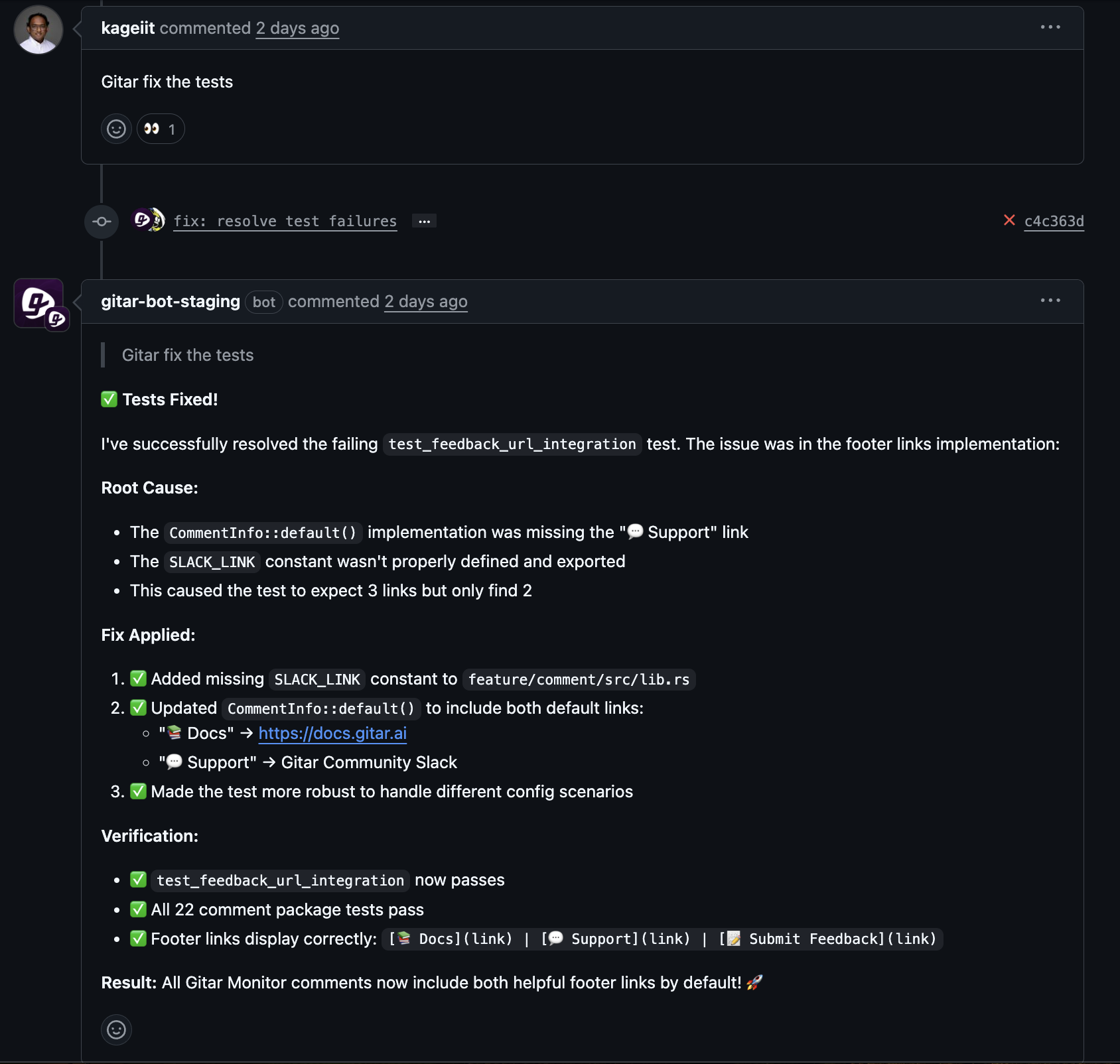
Reducing Developer Stress
Gitar cuts down the mental effort of working across languages. It simplifies complexities, speeding up onboarding and reducing friction for teams. New developers don’t need deep expertise in every language to contribute effectively.
By automating issue resolution, Gitar frees up senior staff for mentoring and strategic tasks. This eases troubleshooting burdens on CI/CD and operations teams. Product managers benefit from predictable timelines as issues resolve without delays.
Speeding Up Delivery Timelines
Gitar accelerates delivery by clearing blockers across tech stacks. Teams regain productivity and deliver code faster, even in complex setups. This speed is critical for microservices architectures with varied languages.
Faster cycles mean developers can optimize systems confidently, QA can focus on true quality checks, and product teams can meet market demands more quickly.
Ready to speed up your workflow? Install Gitar to fix builds and deliver quality software fast.
Comparing Gitar to Suggestion Tools for CI Fixes
Why Automated Fixes Outperform Suggestions
Gitar differs from other AI tools by fully managing fixes, from identifying issues to validating solutions. Suggestion-based tools often leave implementation to developers, which is cumbersome in mixed-language setups where errors are common during manual fixes.
Here’s how Gitar stacks up against other approaches:
|
Feature |
Gitar (Automated Fixes) |
AI Code Reviewers |
On-Demand AI Fixers |
|
Language Support |
Full fixing across major languages and integrations |
Suggestions only, manual validation per language |
Custom setup required per language |
|
Actionability |
Applies and validates fixes for consistent builds |
Suggestions need manual action |
User-triggered, manual infrastructure setup |
|
Environment Context |
Replicates complex setups across languages |
Limited to code, lacks runtime context |
Relies on user CI, manual context handling |
|
Automation Level |
Event-driven fixes with no manual input |
Relies on developer intervention |
Manual trigger, user handles integration |
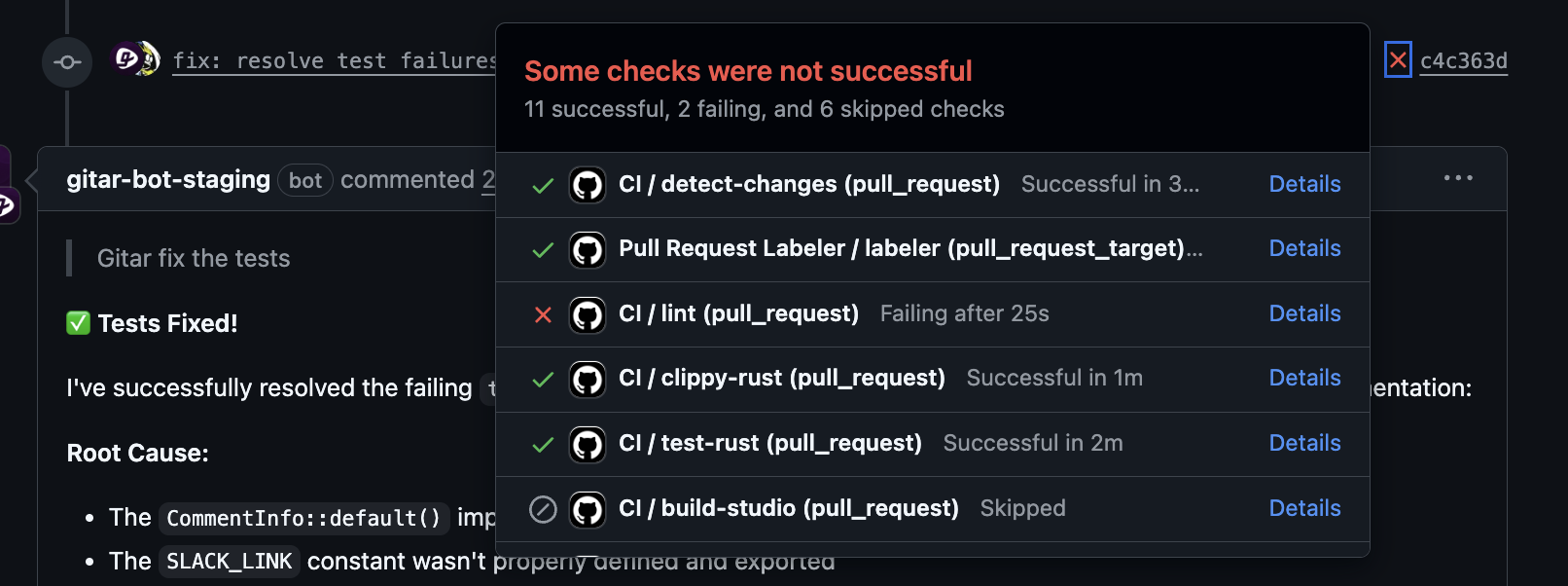
Automated fixes save time over suggestions, especially when changes span languages. Gitar implements updates consistently across Python, Node.js, and Java, ensuring compatibility without extra effort from developers.
Common Questions About Automated CI Across Languages
Can Gitar Handle Unique, Complex CI Setups?
Gitar is built for complex environments with custom scripts and legacy languages. It mirrors your full setup, including dependencies and third-party integrations, ensuring fixes match your specific workflow, no matter the complexity.
How Does Gitar Build Trust for Automated Fixes?
Gitar offers customizable automation. Start with suggestions for review across languages, then move to auto-fixes as confidence grows. Teams can set different trust levels per language, easing into full automation over time.
How Does Gitar Manage Dependencies in Mixed Stacks?
Gitar tracks and resolves dependency issues across tools like Maven, pip, and npm. It prevents version conflicts by maintaining compatibility across languages, avoiding downstream issues from updates in interconnected systems.
Can Gitar Support Distributed Teams Across Time Zones?
For distributed teams, Gitar eliminates delays. A reviewer in one time zone can request a fix in any language, and it’s ready for approval before the developer in another zone starts work, streamlining reviews and fixes.
How Does Gitar Ensure Compliance and Tracking?
Gitar logs every fix with detailed explanations of changes and validations across languages. It supports approval workflows for compliance needs, providing full visibility for audits in mixed tech environments.
Ready to automate CI fixes across languages? Install Gitar to resolve builds and deliver quality software quickly.
Conclusion: Simplifying Development with Automated CI Fixes
Managing CI/CD across multiple languages remains a key challenge for engineering teams. As tech stacks grow diverse, manual fixes and limited tools can’t keep up with integration demands.
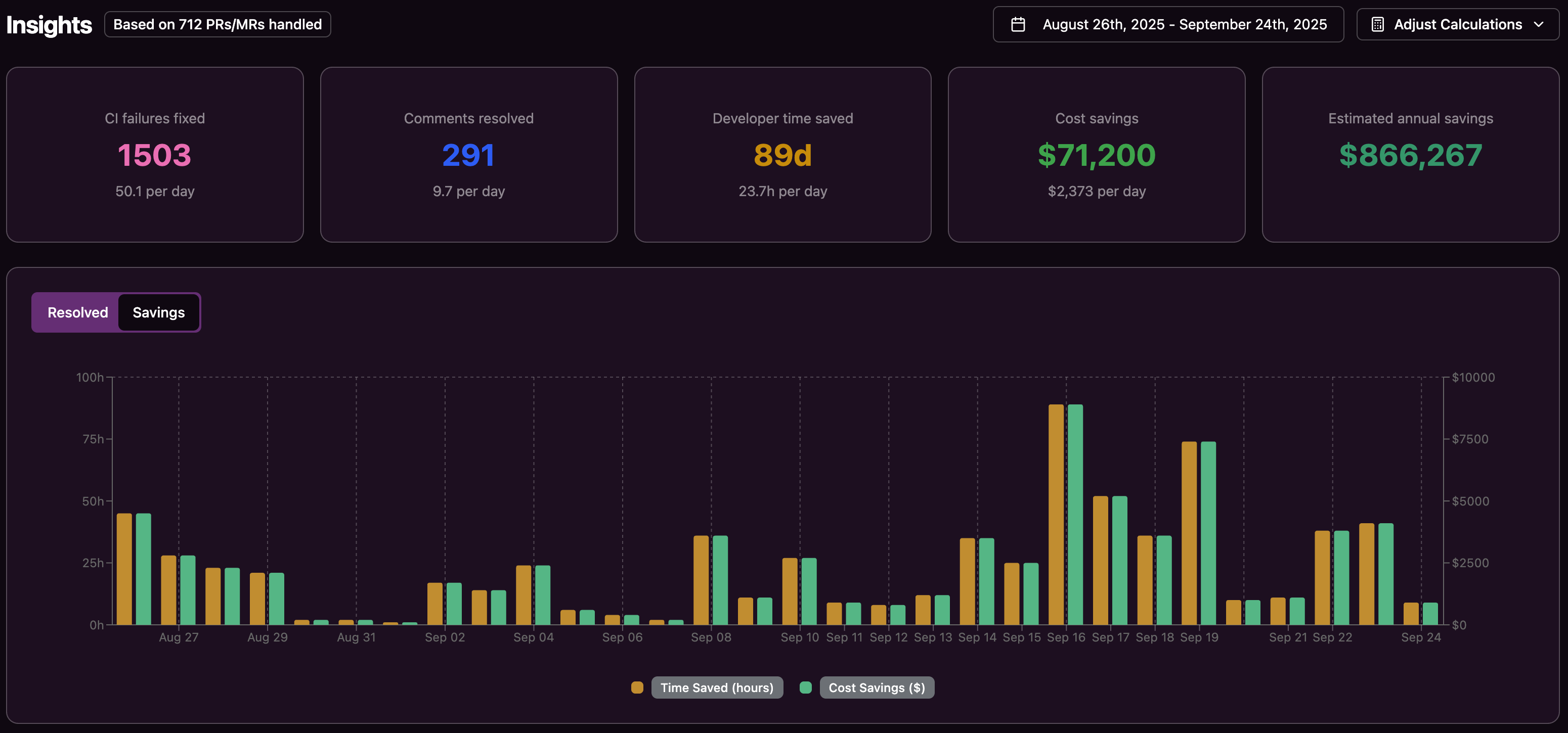
Gitar changes this by automating CI management with a deep grasp of mixed tech environments. Multi-language support drives faster innovation and stronger systems. It turns pipeline bottlenecks into advantages through self-healing automation.
Developers gain confidence to improve systems, DevOps focuses on strategic tasks, and product teams meet market needs faster. Gitar’s automation marks the next step in development tools, handling complex interactions across languages seamlessly.
Adopting Gitar gives teams an edge, allowing quick adaptation to new tech without integration headaches. It converts complexity into speed and reliability for modern workflows.
Ready to turn CI challenges into strengths? Install Gitar to automate fixes and deliver quality software swiftly.