
Broken CI pipelines drain productivity from engineering teams, turning the promise of continuous integration into a cycle of frustration with failed builds and endless debugging. This article explores why manual fixes and basic AI tools often fall short, and how an autonomous AI agent like Gitar can detect, repair, and validate CI failures. By automating these tasks, teams save hours and speed up software delivery without the constant interruptions that disrupt developer focus.
Why Broken CI Pipelines Hurt Engineering Teams
Daily Frustration for Developers
Submitting a pull request often feels like a gamble. You push your code, confident it’s solid, only to face a failed build due to a missing dependency, a flaky test, or a minor style error. Then begins the draining process of sifting through logs, switching back to your local setup, fixing the issue, committing changes, and waiting for the pipeline to rerun.
This cycle doesn’t just waste time. It breaks your concentration, turning a quick fix into a major distraction. For many developers, moving on to the next task is impossible when a CI failure or review feedback pulls you back. The mental cost of constant context switching adds up, often stretching a 30-minute fix into an hour of lost focus.
Delays and Costs Across the Organization
CI pipeline failures don’t just impact developers. They slow down entire projects. For 60% of companies, these issues are a key reason for delayed releases, affecting everything from meeting deadlines to staying competitive.
The financial hit is real. If a team of 20 developers, each costing $200 per hour, spends one hour daily on CI and review issues, that’s a $1 million yearly loss in productivity. Beyond numbers, slower releases mean missed market opportunities, while the grind of debugging contributes to burnout and can even erode customer trust with inconsistent delivery.
Main Causes of CI Pipeline Failures
CI pipelines break for many reasons, and understanding these helps highlight the problem’s scope. Common issues include syntax errors, failed unit or integration tests, misconfigured pipelines or environments, and complex Kubernetes or GitOps errors.
Other frequent problems persist year after year. These include flaky tests, build errors from outdated tools, missing environment variables, dependency conflicts, and poorly defined YAML files. Flaky tests are especially tough as apps rely more on third-party APIs, leading to unpredictable failures.
Certain practices also worsen the situation. Running every test on every commit, embedding secrets in configs, or lacking pipeline modularity often slows things down and frustrates teams. Add to that inconsistent environments between local setups and CI, and you’ve got countless chances for mismatches that break builds.
How AI-Powered CI Healing Solves the Problem
Managing CI pipelines is changing. Manual debugging and even AI tools that only suggest fixes struggle with the demands of today’s workflows. A better approach, AI-powered CI healing, focuses on autonomously resolving issues, not just pointing them out.
Unlike tools that leave the hard work to developers, CI healing systems detect failures, analyze root causes, apply fixes, and confirm everything works. This automation cuts down on context switching and lets developers focus on impactful tasks. It’s a move from merely assisting to fully handling CI challenges.
This technology digs deep into build logs, error patterns, and environmental details to create and validate fixes. It goes beyond simple code suggestions, requiring a strong grasp of CI systems and engineering practices to deliver reliable results.
Gitar: Your AI Agent for Fixing CI Failures
Gitar leads in AI-powered CI healing by autonomously fixing broken pipelines and addressing code review feedback. Instead of just suggesting changes, it takes action to turn failing builds into successful ones, often without any input from developers.
Install Gitar today to automatically fix broken builds and ship quality software faster
How Gitar Fixes Issues in Real Time
When a CI check fails, whether it’s a linting error, a test issue with pytest, or a build script problem, Gitar jumps in. It analyzes failure logs to pinpoint the cause, using AI to decode complex errors and trace them to specific code.
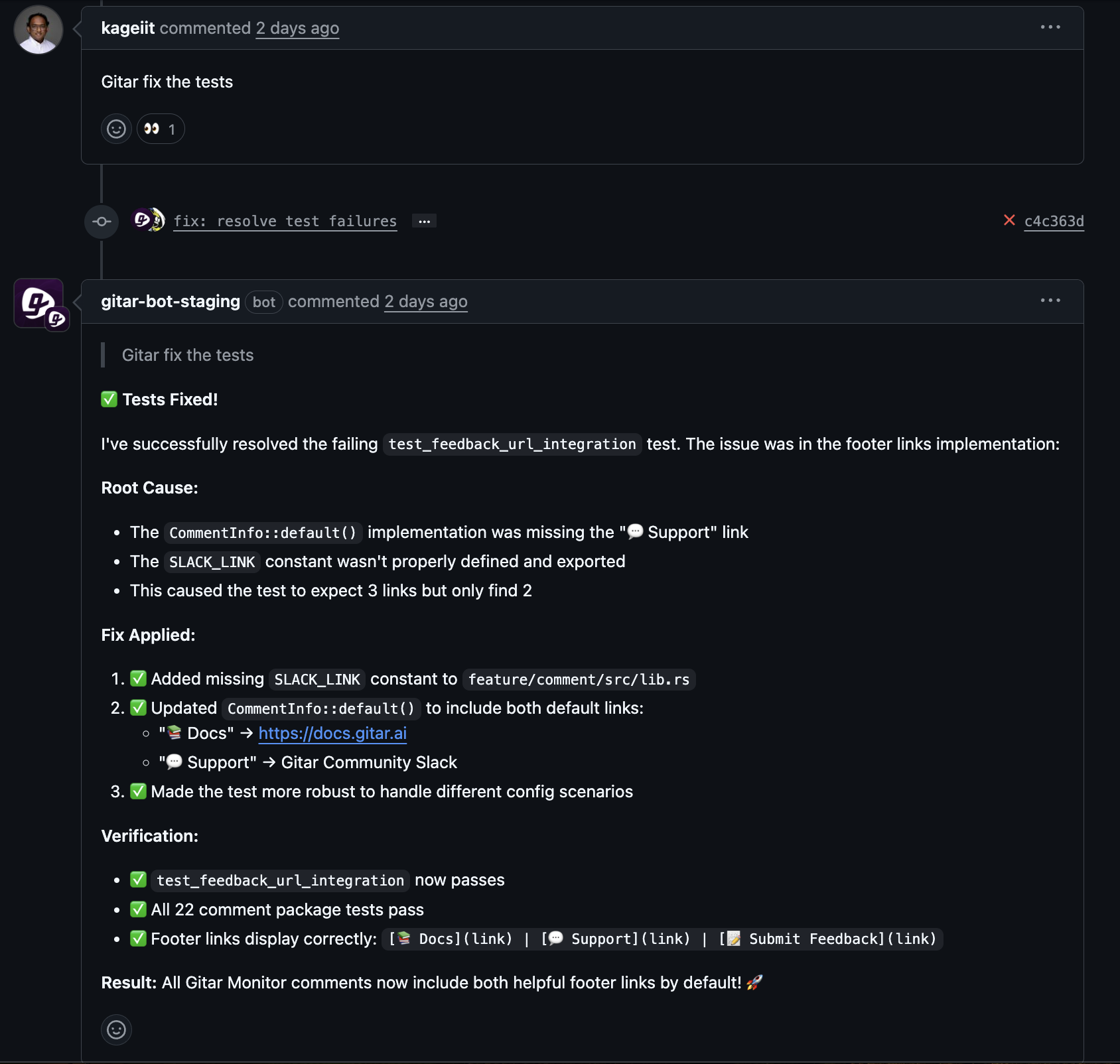
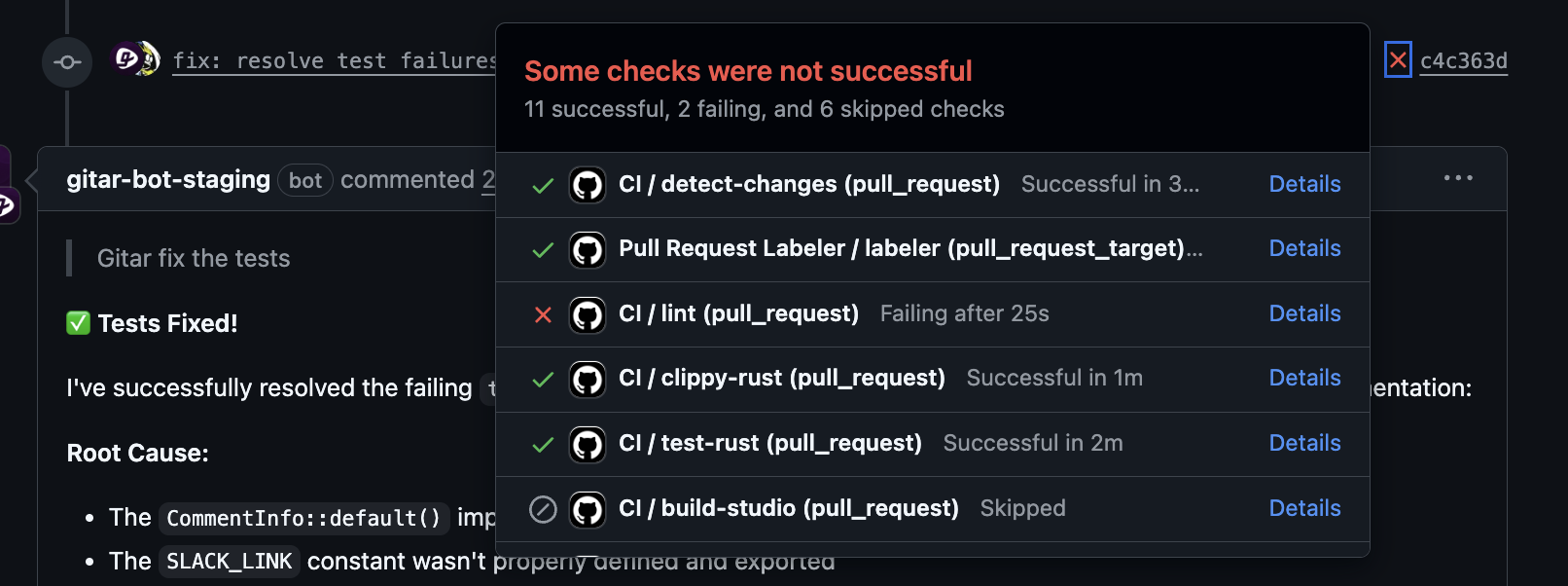
After identifying the issue, Gitar crafts a fix tailored to the code and CI environment. It applies the change directly to the pull request branch, commits it, and explains what was updated. This process often wraps up in minutes, turning a red build green before the developer even notices a problem.

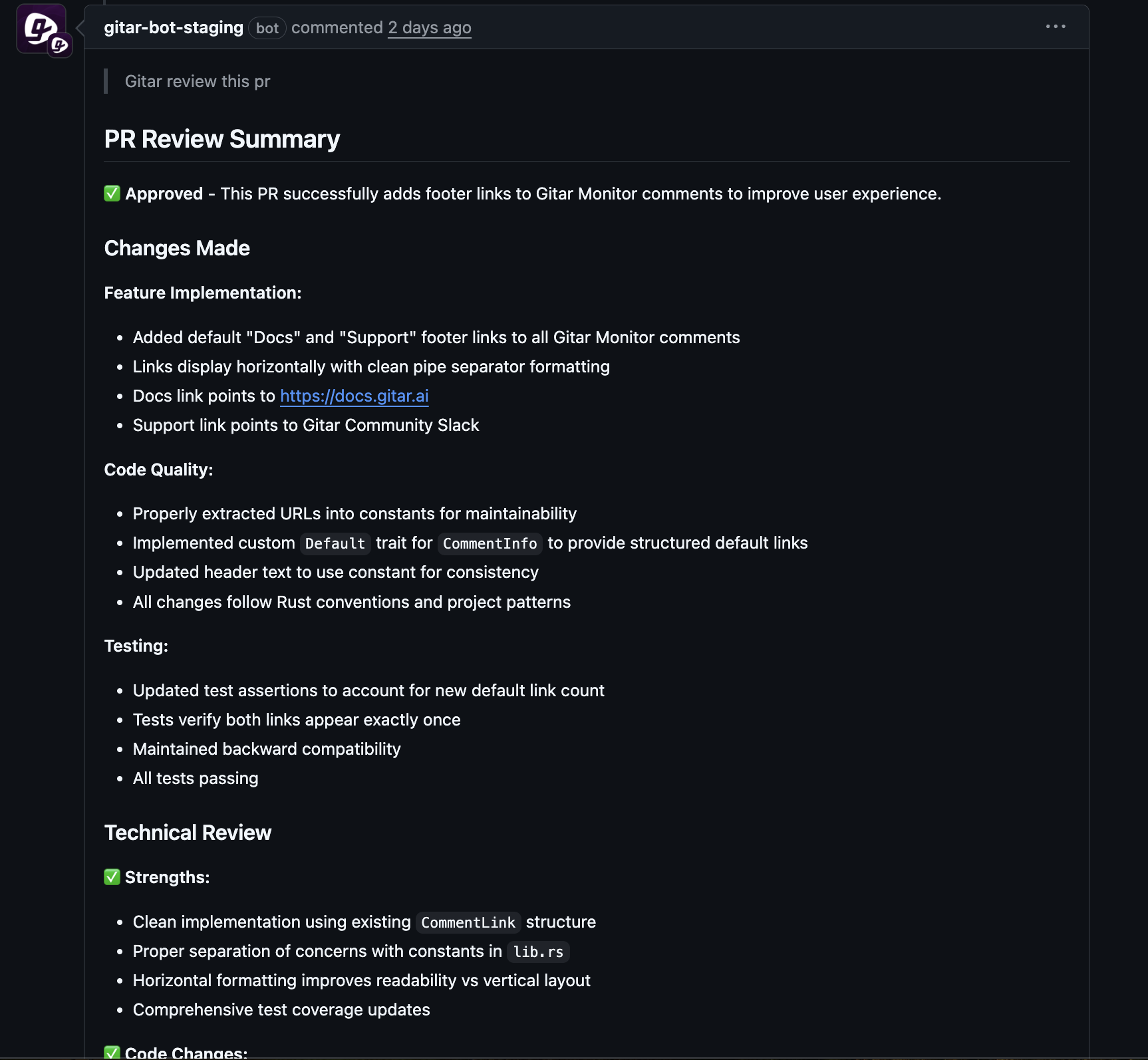
Key Features for Resolving CI Failures
Gitar offers a range of capabilities to tackle CI issues effectively:
- Complete Automation: It doesn’t stop at suggestions. Gitar applies fixes, runs them through the full CI process, and confirms everything passes, delivering ready-to-merge pull requests.
- Environment Accuracy: Gitar mirrors complex CI setups, handling specific JDK versions, multiple SDKs, and tools like SonarQube or Snyk, ensuring fixes fit the real workflow.
- Platform Flexibility: It works across GitHub Actions, GitLab CI, CircleCI, BuildKite, and more, adapting to your existing tools without forcing a switch.
- Adjustable Trust Levels: Teams can start with a cautious mode, reviewing fixes before applying them, then shift to full automation with rollback options as trust builds.
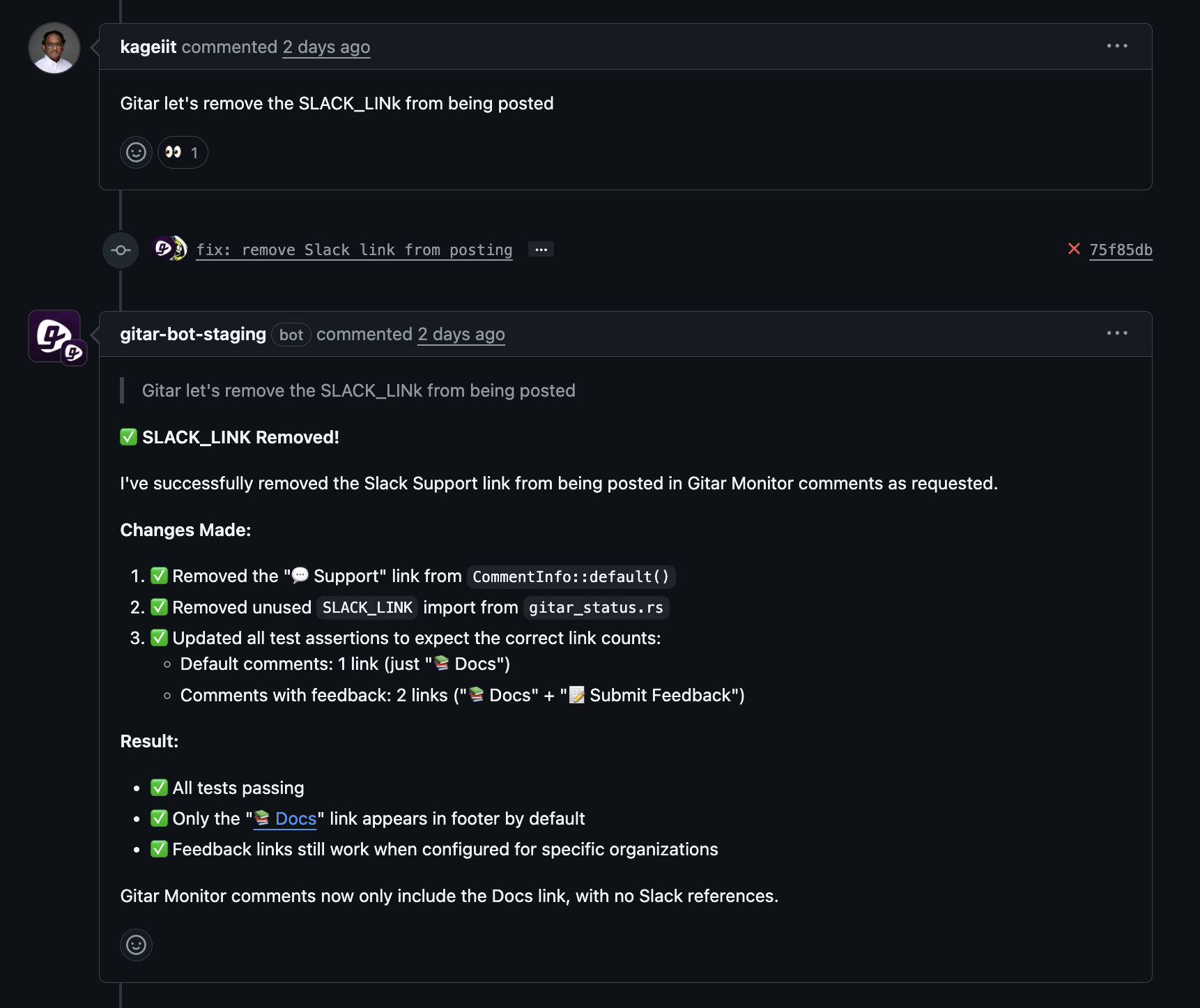
- Code Review Support: Beyond CI fixes, Gitar acts on reviewer feedback. A comment like “remove this feature from the PR” prompts Gitar to update the code and explain the change, saving the developer from switching tasks.
Clear Benefits of Using Gitar for CI Healing
Enhanced Developer Focus and Productivity
Gitar’s biggest impact is reducing distractions. By handling CI failures automatically, it lets developers stay in their flow, focusing on creative coding rather than fixing minor issues.
The time saved adds up fast. A 20-developer team losing one hour daily to CI problems wastes $1 million yearly at $200 per hour. If Gitar cuts that by half, that’s $500,000 saved, plus happier developers with less stress and burnout.
Faster Merges and Release Cycles
Gitar shrinks the gap between commit and merge. Traditional debugging drags on with multiple steps: spotting a failure, investigating, fixing, pushing, and waiting. Gitar condenses this into minutes by understanding the CI environment and applying accurate fixes. For distributed teams, it’s even more valuable, cutting delays from time zone differences.
Reliable Pipelines for Growing Teams
As teams and codebases expand, CI reliability gets harder to maintain. Gitar handles this by replicating full CI environments with specific SDKs and integrations. It resolves test failures, dependency issues, and configs, stabilizing pipelines over time. This means less operational hassle for DevOps and lower costs from failed runs.
Streamlined Workflows for Distributed Teams
Distributed teams face delays from time zone gaps during code reviews. Gitar bridges this by acting on feedback instantly. If a reviewer in one region requests changes, Gitar applies them, so the code is ready when the original developer logs in, keeping projects moving without wait times.
What Sets Gitar Apart from Other Tools
Many tools offer CI and code review help, but there’s a key difference between suggesting fixes and fully resolving them. Gitar acts as a healing engine, autonomously fixing and validating issues, while most competitors are suggestion engines that still require developer effort.
|
Solution Type |
Problem Detection |
Fix Application |
Validation Process |
|
Manual Work |
Developer analyzes logs |
Developer writes code |
Developer reruns CI |
|
AI Suggestion Tools |
Automated analysis |
Developer applies fix |
Developer hopes CI passes |
|
Gitar (Healing Engine) |
Real-time automated analysis |
Autonomous code update |
Automated CI validation for green builds |
Suggestion tools ease some workload but leave implementation and testing to developers. Gitar handles the full cycle, ensuring a passing build. Compared to AI reviewers like CodeRabbit, which focus on code quality suggestions, Gitar validates fixes across CI workflows. Unlike large model integrations requiring custom setup, Gitar works out of the box with your existing systems.
Install Gitar now to fix broken builds automatically and ship quality software faster
Common Questions About Fixing CI Pipelines with Gitar
Can Gitar Manage Complex Enterprise CI Setups?
Yes, Gitar adapts to intricate CI environments by mimicking your setup, including specific JDK versions, multiple SDKs, and tools like SonarQube. It ensures fixes match your exact workflow, unlike generic AI tools with limited context.
How Does Gitar Differ from AI Code Reviewers?
AI reviewers like CodeRabbit suggest improvements for code quality. Gitar, however, goes further by automatically fixing CI failures, validating them across your pipeline, and delivering a passing build without extra steps.
How Does Gitar Reduce Developer Interruptions?
Gitar tackles CI failures and feedback on its own, often resolving issues before developers notice. This keeps focus on coding new features, avoiding breaks in concentration from pipeline problems.
What Financial Gains Can Teams Expect with Gitar?
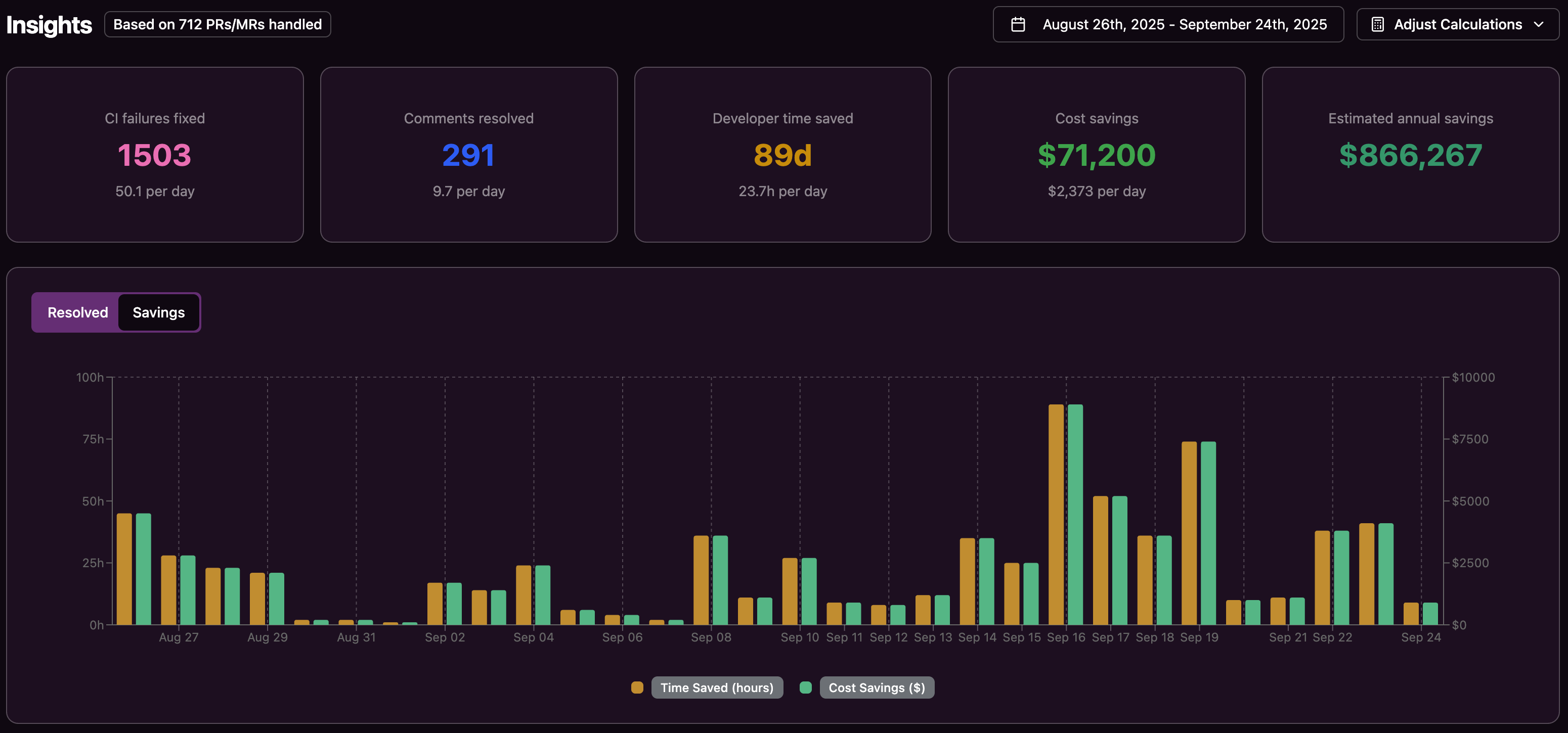
For a 20-developer team spending one hour daily on CI issues, the yearly productivity loss at $200 per hour is $1 million. With Gitar cutting this by at least 50%, savings can reach $500,000 annually, alongside better morale and less burnout.
Does Gitar Address Specific CI Failure Types?
Gitar covers a wide array of CI issues, from linting errors and test failures to build script problems and dependency conflicts. It grasps how different pipeline parts interact, providing fixes that work across your system.
Shift from Firefighting to Building with AI
Manually fixing CI pipelines and losing hours to interruptions is becoming outdated. The cost, both in productivity and business outcomes, is too steep for today’s teams. Growing team sizes and codebase complexity make it critical to solve these inefficiencies before CI becomes a major bottleneck.
Gitar offers a direct solution as an AI agent that fixes CI issues, confirms the results, and delivers passing builds without developer input. This shift to automated healing lets teams focus on creating software and delivering value.
For leaders, the value is obvious: cutting major productivity losses, boosting developer satisfaction, and speeding up releases. For developers, it means reclaiming time daily and enjoying coding without constant pipeline headaches.
The future of development prioritizes automation and human creativity over manual fixes. Gitar brings that future to your workflow now, turning broken builds into resolved issues automatically.