
CI build failures can frustrate any software engineer. You submit a pull request, expecting a smooth merge, only to see the pipeline fail. What should take minutes turns into hours of debugging, breaking your focus and slowing down your team. These failures cost millions in lost productivity each year, delaying projects across entire organizations.
Manually fixing CI issues is no longer practical as teams grow and code output increases. Modern developers need smarter continuous integration practices that automate solutions and keep builds running smoothly. This guide shows how to turn your CI/CD process into a self-fixing system, so you can focus on delivering quality software faster. Ready to simplify your workflow? Let’s dive in.
Install Gitar now to fix broken builds automatically and ship better software faster.
Why CI Build Failures Hurt Your Team and Bottom Line
CI build failures drain productivity in software development, and their impact goes far beyond a single missed merge. Grasping the full cost of these issues is the first step to fixing them.
Breaking Focus and Causing Burnout
CI failures disrupt developers’ focus with constant interruptions. Switching tasks to address CI issues wastes valuable time as developers struggle to regain their momentum. This cycle makes engineers hesitant to tackle complex work, knowing they might be pulled away by a failing build. Over time, frustration builds, reducing creativity and job satisfaction.
Adding Up Financial Losses
The cost of CI failures hits hard when you look at the numbers. A team of 20 developers losing one hour daily to CI problems can rack up losses near $1 million each year, based on a $200 hourly rate with benefits included. That’s just direct time lost, not counting delayed releases or extra infrastructure expenses from repeated builds. For larger organizations, a single failure in a shared library can block multiple teams, multiplying the financial impact. Even small CI setup errors can lead to annual losses in the tens of thousands.
Slowing Down Releases
Failed builds create bottlenecks that delay projects and hurt your market position. About 60% of companies say CI issues cause project setbacks, directly affecting revenue. For distributed teams, time zone differences make things worse, often stretching a quick fix into days of waiting. CI failures can delay solutions as team members in different regions wait for feedback.
Common CI Failure Types
Knowing what causes CI failures helps you address them. Here are the most frequent issues:
- Flaky Tests: These fail unpredictably due to timing issues or inconsistent dependencies. Tests can behave differently in CI compared to local setups because of race conditions or network delays.
- Environment Gaps: Tests pass locally but fail in CI due to version mismatches. Differences between local and CI environments often cause unexpected errors.
- Dependency Problems: Updates to external libraries can break builds without warning. Conflicts arise when packages require incompatible versions.
- Configuration Errors: Small mistakes in setup files can halt entire builds. Syntax errors in CI scripts often stop the process.
How Self-Healing CI Keeps Your Development on Track
Traditional debugging can’t keep up with today’s fast-paced coding. AI tools speed up code creation, but CI bottlenecks can stall progress if not managed well. Self-healing CI offers a better way by automatically detecting and fixing issues, saving time and effort.
This approach cuts down on manual work, resolving failures without pulling developers away from their tasks. Feedback loops tighten, with issues fixed in minutes instead of hours or days. Plus, it boosts morale by removing the grind of repetitive debugging, letting your team focus on meaningful coding.
Install Gitar now to automate build fixes and deliver quality software faster.
Meet Gitar: Your AI Partner for CI Fixes
Gitar changes how teams handle CI challenges. As an autonomous AI agent, it doesn’t just spot problems, it fixes them, ensuring your builds stay green without constant oversight.
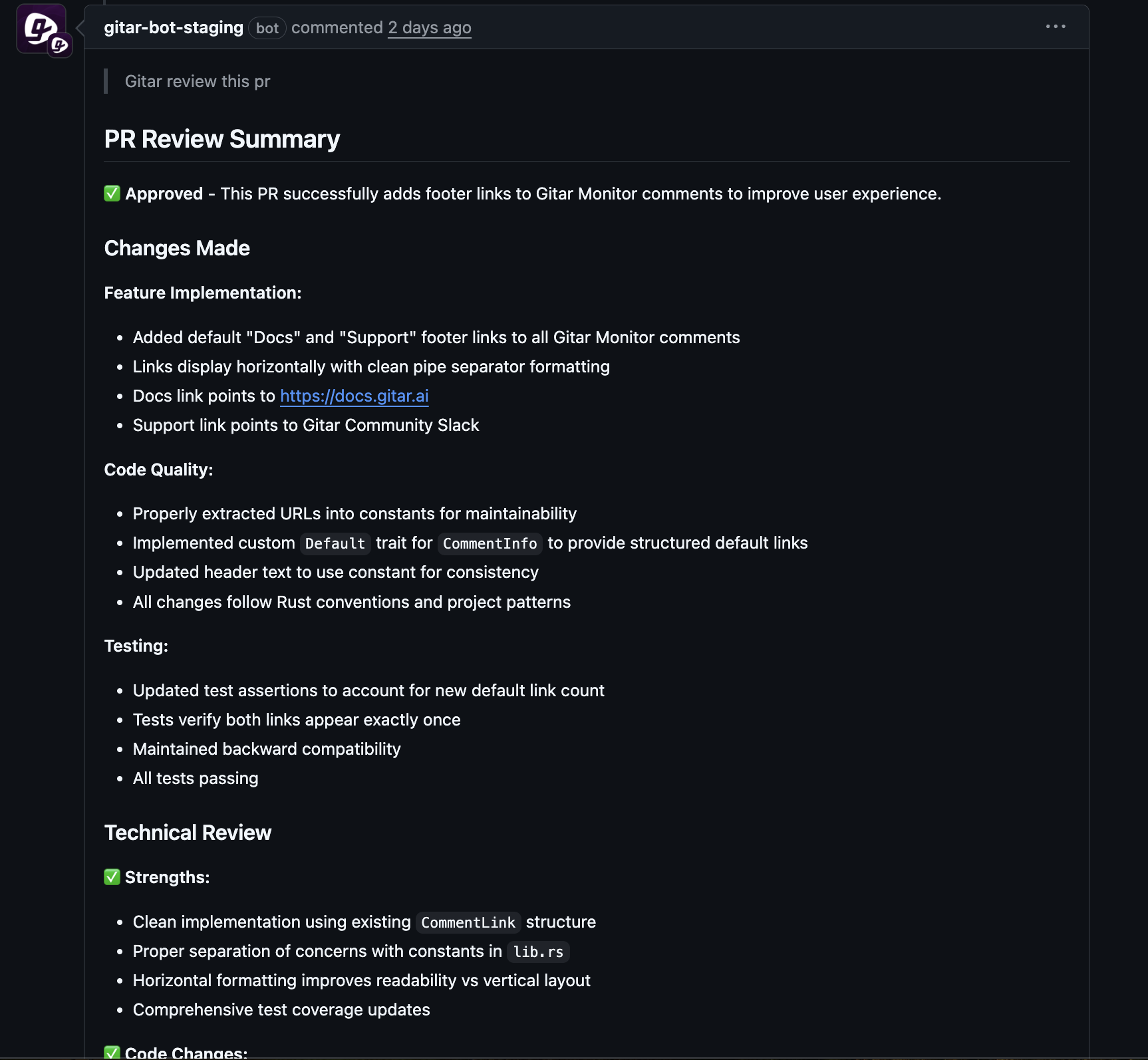
Gitar watches your CI pipeline in real time. When a pull request fails due to linting errors or test issues, it analyzes the logs, finds the cause, creates a fix, and commits it to the branch. Often, developers don’t even notice a problem before it’s solved.

What Makes Gitar Stand Out
- Complete Fixes: Gitar doesn’t just suggest solutions. It applies fixes for issues like linting errors, test failures, and build problems, then commits them to your branch.
- Environment Matching: It mirrors your exact CI setup, including SDK versions and integrations, so fixes work in your specific context.
- Flexible Settings: Start with a cautious mode where fixes are suggestions for review. As trust grows, switch to full automation with rollback options for safety.
- Platform Support: Gitar works with GitHub Actions, GitLab CI, CircleCI, and others, fitting into your existing tools.
- Code Review Help: Beyond CI fixes, Gitar handles review feedback, making changes and committing them with clear notes, perfect for distributed teams.
Key Practices to Prevent and Fix CI Failures
Strong CI processes combine prevention with quick fixes. Pairing these practices with tools like Gitar builds a reliable, self-healing pipeline.
Catch Issues Early
Stop problems before they hit the pipeline. Pre-commit checks can spot errors locally, avoiding costly CI failures later. Use fast hooks for linting and simple tests to keep local development smooth while catching common mistakes.
Keep Environments Consistent
Matching environments reduces surprises. Lock files like package-lock.json ensure everyone uses the same dependency versions. Containers also help by creating identical setups for CI and production, cutting down on “works on my machine” issues.
Analyze Failures Smartly
Understanding why builds fail is key to fixing them. Not all failures are equal, some point to real bugs while others are just flaky tests needing different handling. Track patterns with detailed logs to prioritize fixes and improve your CI system over time.
Measure Pipeline Performance
Track metrics to spot weak points in your CI process. Monitor build times, test pass rates, and deployment success to gauge health. Focus on data like time to detect and fix failures to guide improvements.
Automate Fixes Where Possible
Let tools handle routine failures. Systems like Gitar fix common issues like linting or dependency conflicts without manual input, freeing your team for bigger challenges. Over time, these tools learn and get better at solving problems independently.
Why Gitar’s Full Automation Beats Basic Suggestions
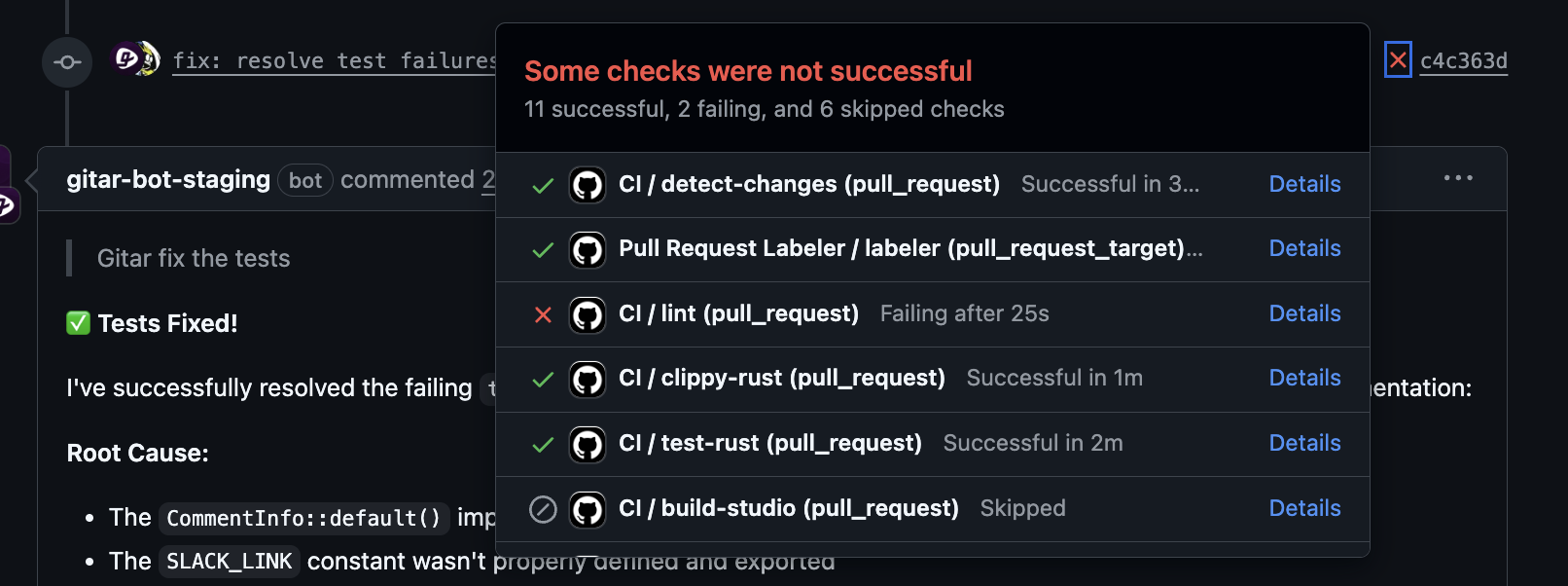
Many tools claim to solve CI issues, but not all deliver real time savings. Suggestion-based tools offer ideas for fixes, yet still require you to apply and test them. Gitar, as a self-healing system, does the full job, from creating fixes to validating them in your CI setup.
This difference matters for your workflow. Suggestion tools interrupt your day with decisions and extra steps. Gitar handles everything quietly, so you stay focused on coding.
|
Feature |
Manual Debugging |
AI Suggestion Tools |
Gitar (Autonomous AI) |
|
Addresses CI Failures? |
Yes, with developer effort |
Suggests fixes for some issues |
Yes, fully automates solutions |
|
Provides Actual Fixes? |
You write the code |
No, just offers ideas |
Yes, applies fixes itself |
|
Validates Fixes in CI? |
You rerun builds |
No, needs manual check |
Yes, confirms fixes work |
|
Impact on Focus |
High interruption |
Still disrupts workflow |
Keeps you coding |
For complex enterprise setups, self-healing tools like Gitar shine. They understand your unique environment, ensuring fixes fit your specific needs, unlike suggestion tools that often miss the mark.
Install Gitar now to automate build fixes and ship quality software faster.
How to Roll Out Self-Healing CI in Your Team
Adopting automated CI fixes works best with a step-by-step plan. This builds trust while showing quick wins.
Start Small and Build Confidence
Kick off with Gitar on a few projects, focusing on frequent issues like formatting errors. Set it to suggest fixes first, so your team reviews and approves changes. This lets everyone see the tool’s accuracy without altering workflows right away.
Expand Automation Gradually
Once you’re comfortable, automate more fixes, starting with low-risk tasks like linting. Keep rollback options handy for peace of mind, and use team feedback to adjust the pace of automation.
Go Fully Hands-Off
With proven results, let Gitar handle most failures independently. Developers often find issues fixed before noticing them. Complex problems still get flagged for human input, with details on what was tried. Distributed teams especially benefit, as fixes happen anytime, cutting delays across time zones.
Common Questions About CI Automation
What Are the Real Costs of CI Failures for My Team?
CI issues cost more than just debugging time. Constant interruptions kill productivity as developers lose focus. For a team of 20, losing one hour daily can mean $1 million in annual losses. Tools like Gitar fix issues without breaking your stride, saving time and cutting these costs.
Can Automation Handle Complex Enterprise Setups?
Yes, advanced tools like Gitar are built for enterprise needs. They replicate your exact CI environment, including specific versions and integrations, ensuring fixes match your setup perfectly.
How Do We Keep Control Over Automated Changes?
Gitar offers adjustable settings. Start with suggestions you review and approve. As you see reliable results, increase automation, always with options to undo changes and full transparency on what was done.
How Does This Help Distributed Teams?
For teams across time zones, CI failures often mean waiting days for fixes. Gitar resolves issues instantly, so feedback or failures get handled right away, keeping everyone in sync without delays.
Which Failures Can Gitar Fix Automatically?
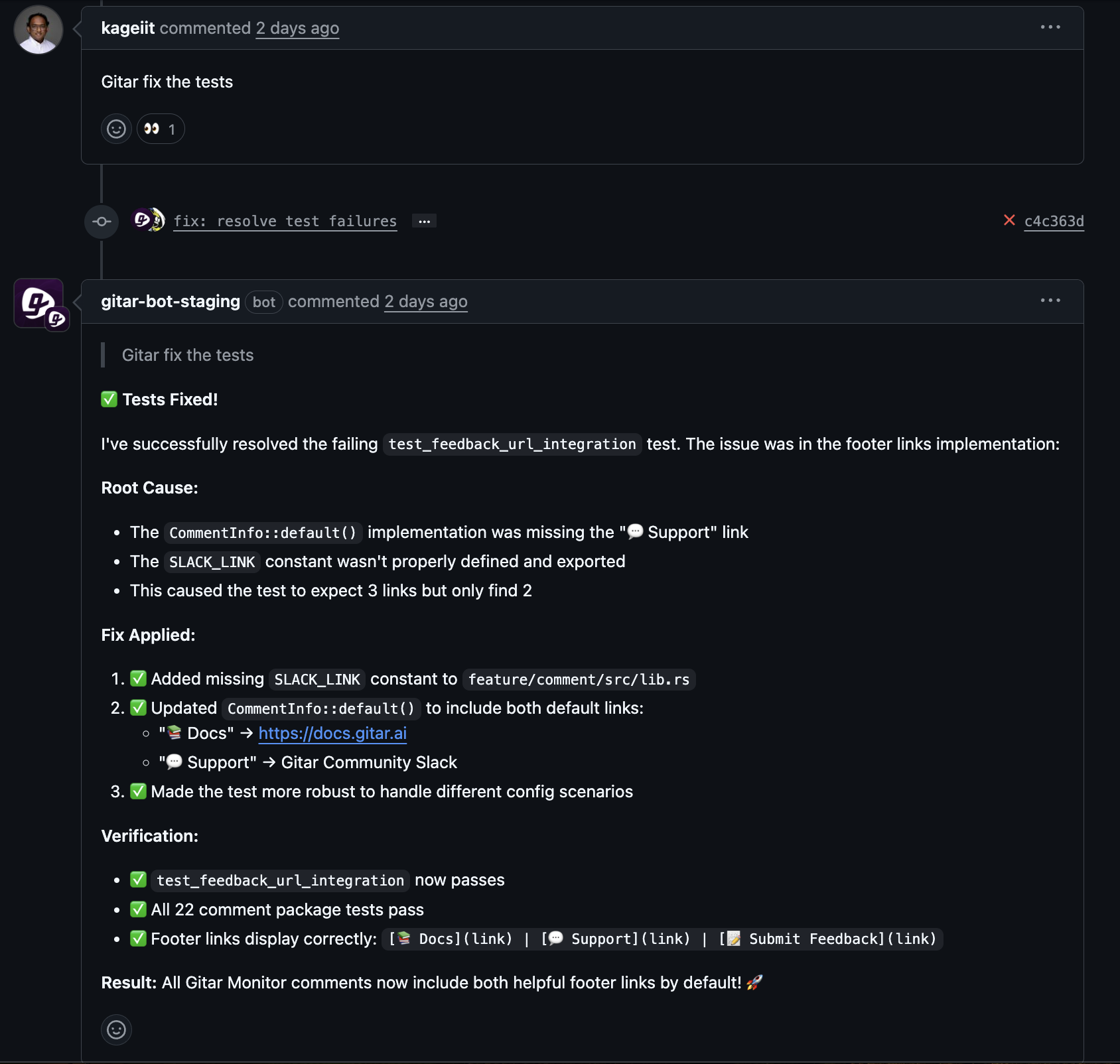
Gitar tackles common issues like linting errors, test failures, and dependency conflicts on its own. For deeper problems involving business logic or design choices, it flags them for your input, providing context on what couldn’t be solved automatically.
Wrap-Up: Transform Your CI with Self-Healing Tools
CI build failures don’t have to slow you down. By adopting smart continuous integration practices with autonomous AI, your team can stop wasting time on manual fixes. Self-healing CI shifts the focus from frustration to innovation, letting developers code without interruption.
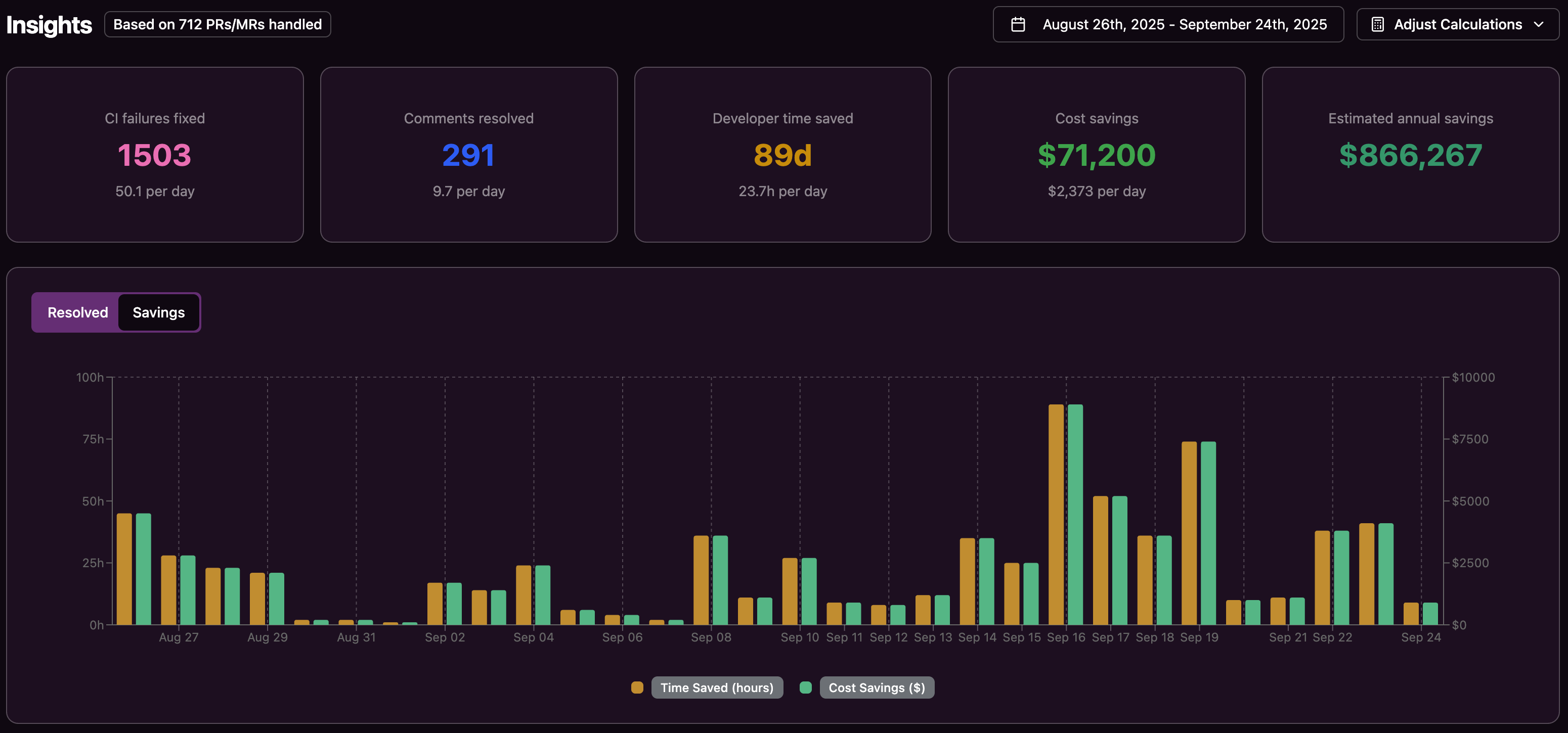
The gains go beyond saving time. Teams using automated fixes see happier developers, quicker releases, and lower costs from reduced debugging. As coding speeds up with AI tools, those who use self-healing CI will stay ahead by delivering reliable software faster.
The tech to fix CI pain points is here now. With Gitar, many teams find failures resolved before they’re even noticed, making development smoother than ever. Don’t wait to streamline your process, start automating today.
Install Gitar now to fix broken builds automatically and ship better software faster.