
CI build failures slow down developers and create costly delays for engineering teams. By focusing on four essential software development metrics and using an AI tool like Gitar, you can build a system that fixes itself and boosts productivity. Let’s explore how these metrics help spot issues and how automation can solve them for good.
Why CI Failures Hurt Your Team’s Productivity
CI build failures are a major drain on developer time. When a build fails, you have to drop what you’re doing, dig through confusing error logs, fix the problem, and restart the process. What might seem like a quick task often turns into hours of lost focus for you and your team.
The cost adds up fast. For a team of 20 developers, spending just one hour a day on CI failures and code review feedback means 5,000 hours lost each year. At typical rates, that’s around $1 million in wasted productivity. Beyond time, delays in releases, developer frustration, and growing technical debt make the problem worse.
Distributed teams face even bigger challenges. If a developer in one time zone pushes a failing build and a reviewer in another isn’t available, a simple fix can stretch into days, slowing down critical work and creating frustration across the board.
How Gitar Fixes CI Failures Automatically
Gitar turns the hassle of CI troubleshooting into a hands-off process. This AI tool detects failing builds, figures out the root cause, applies the right fix, and updates the pull request, all without needing your input.
Here’s what makes Gitar different:
- Automatically fixes linting errors, test failures, and build issues with tested solutions.
- Replicates your full setup, including specific SDKs, dependencies, and integrations.
- Offers flexible options, from suggestions for cautious teams to automatic commits for confident ones.
- Supports multiple platforms like GitHub Actions, GitLab CI, CircleCI, and BuildKite.
- Keeps work moving for distributed teams by handling fixes across time zones.
Want to save time and stop CI bottlenecks? Install Gitar now to fix broken builds and deliver quality software faster.

1. Build Success Rate: Track Your CI Health
Build Success Rate shows the percentage of CI pipeline runs that finish without issues. It’s a core measure of how healthy your CI system is and ties directly to how fast your team can work. Top engineering teams target a success rate above 95% as their standard.
A dropping success rate points to deeper problems in your process. Issues like weak test coverage, unreliable tests, untested real-world cases, or ignored dependencies often cause failures. Each failed build pulls developers away from their tasks, costing time to investigate and retry until it passes.
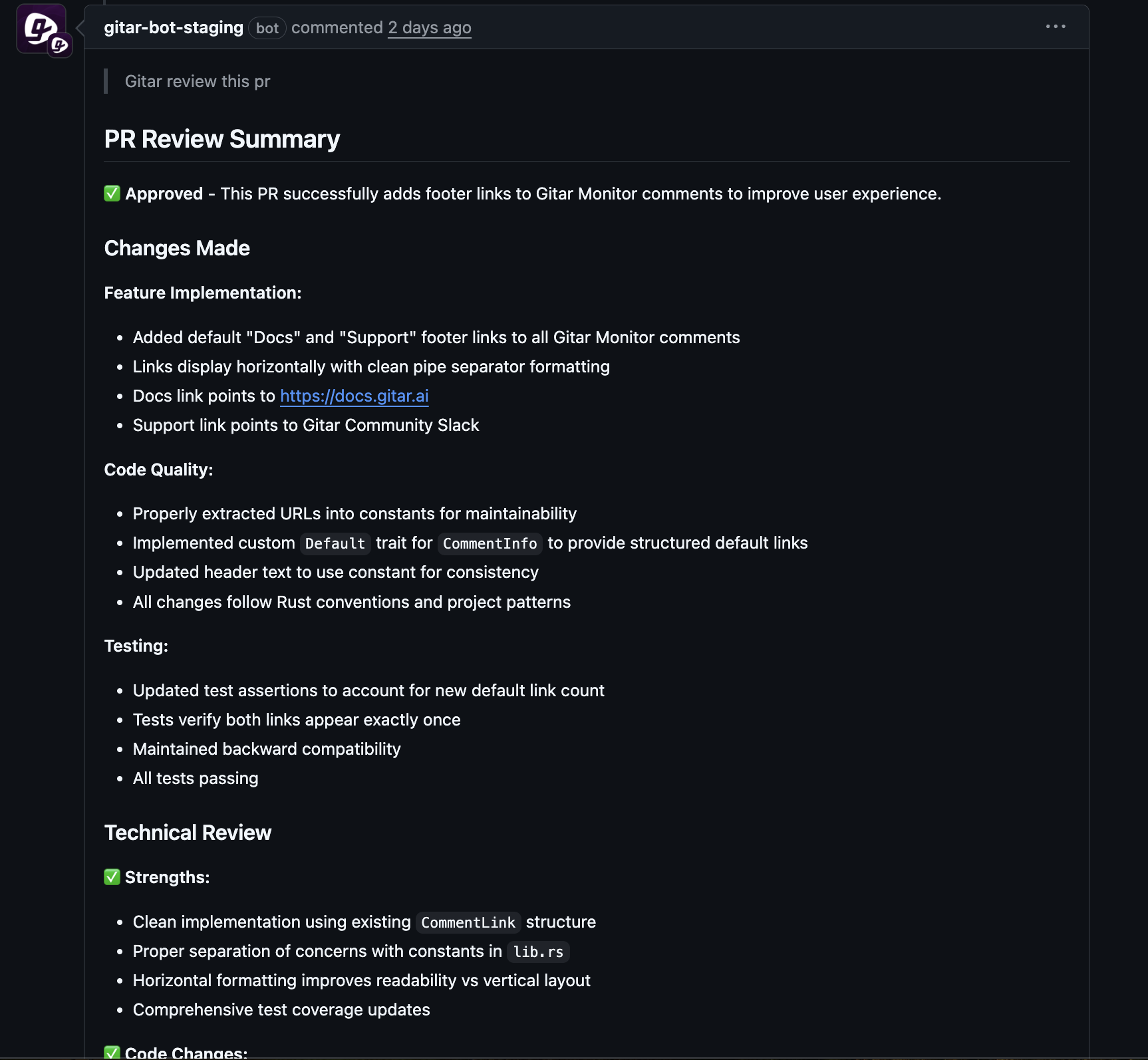
Gitar boosts this metric by fixing common issues before they affect you. When linting errors or test failures break a build, Gitar steps in, analyzes the problem, makes the change, and commits the fix to the pull request. This cuts out manual effort and keeps your success rate high.
Ways to Improve Build Success Rate
Analyze test coverage and build strong test suites. Focus on real-world scenarios and keep tests up to date with your code to avoid hidden issues. Dynamic analysis helps spot gaps in testing that could lead to failures.
Set up branch protection rules and automate dependency checks. These steps stop problematic code from reaching main branches and catch version conflicts or security flaws early. Automation prevents builds from failing due to oversight.
2. Build Duration: Speed Up Feedback for Developers
Build Duration tracks how long it takes for a CI pipeline to finish. Faster builds mean quicker feedback, which keeps developers productive. Top teams aim for builds under 10 minutes while still running thorough tests.
Long build times bog down progress. Waiting 30 to 45 minutes for results often leads to task-switching, breaking focus and adding overhead. Common causes include limited resources, slow task execution, or poor allocation in your CI setup.
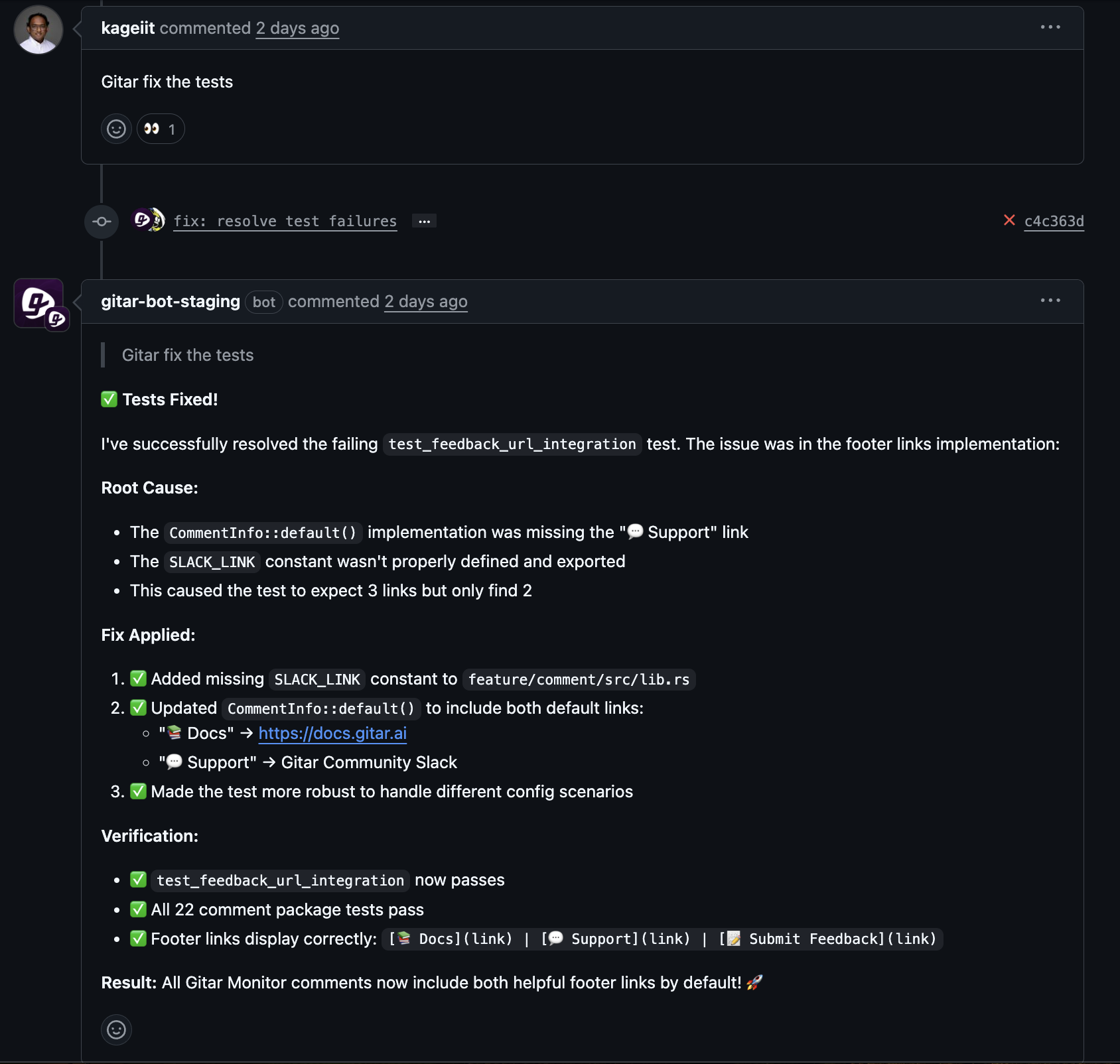
Gitar helps shorten build duration by stopping repeated failed runs that clog up resources. When a build fails, multiple retries slow everyone down. Gitar fixes issues on the first try, freeing up CI capacity and speeding up feedback for the whole team.
Tips to Reduce Build Duration
Adjust CI resources to fit your team’s needs and use caching for dependencies and test results. Optimized allocation cuts wait times during busy periods.
Run tests in parallel and choose only the relevant ones to speed things up. Prioritize tests based on recent code changes and use past data to streamline the process across runners.
3. Test Effectiveness: Strengthen Quality Checks
Test Effectiveness goes beyond coverage numbers to show how well your tests catch bugs and confirm functionality. It includes reliability and the challenge of spotting flaky tests that give inconsistent results. Good tests build trust in your code, while flaky ones waste time.
Flaky tests are a hidden productivity killer. They pass or fail randomly, leading to pointless investigations or missed real issues. Isolating these tests is key to keeping your suite reliable.
Gitar improves test effectiveness by handling common failures automatically. If a snapshot test needs an update or an assertion breaks, Gitar fixes it in context. This keeps your tests as a dependable checkpoint without slowing you down.
Steps to Boost Test Effectiveness
Use static code analysis tools to catch issues early. Tools like SonarQube spot problems before they fail at runtime, easing the load on dynamic testing.
Set up systems to detect and isolate flaky tests. Track patterns over time to fix root causes like environment issues or test design flaws instead of manually addressing failures repeatedly.
4. Lead Time for Changes: Get Code to Production Faster
Lead Time for Changes measures how long it takes from committing code to deploying it live. It reflects your entire delivery process and shows how quickly you can meet user needs. Top teams keep this under 24 hours, with the best often deploying in just hours.
Long lead times point to delays in your workflow. CI failures add extra time with each manual fix and retry cycle. Code review waits, especially for spread-out teams, make this worse by stalling progress.
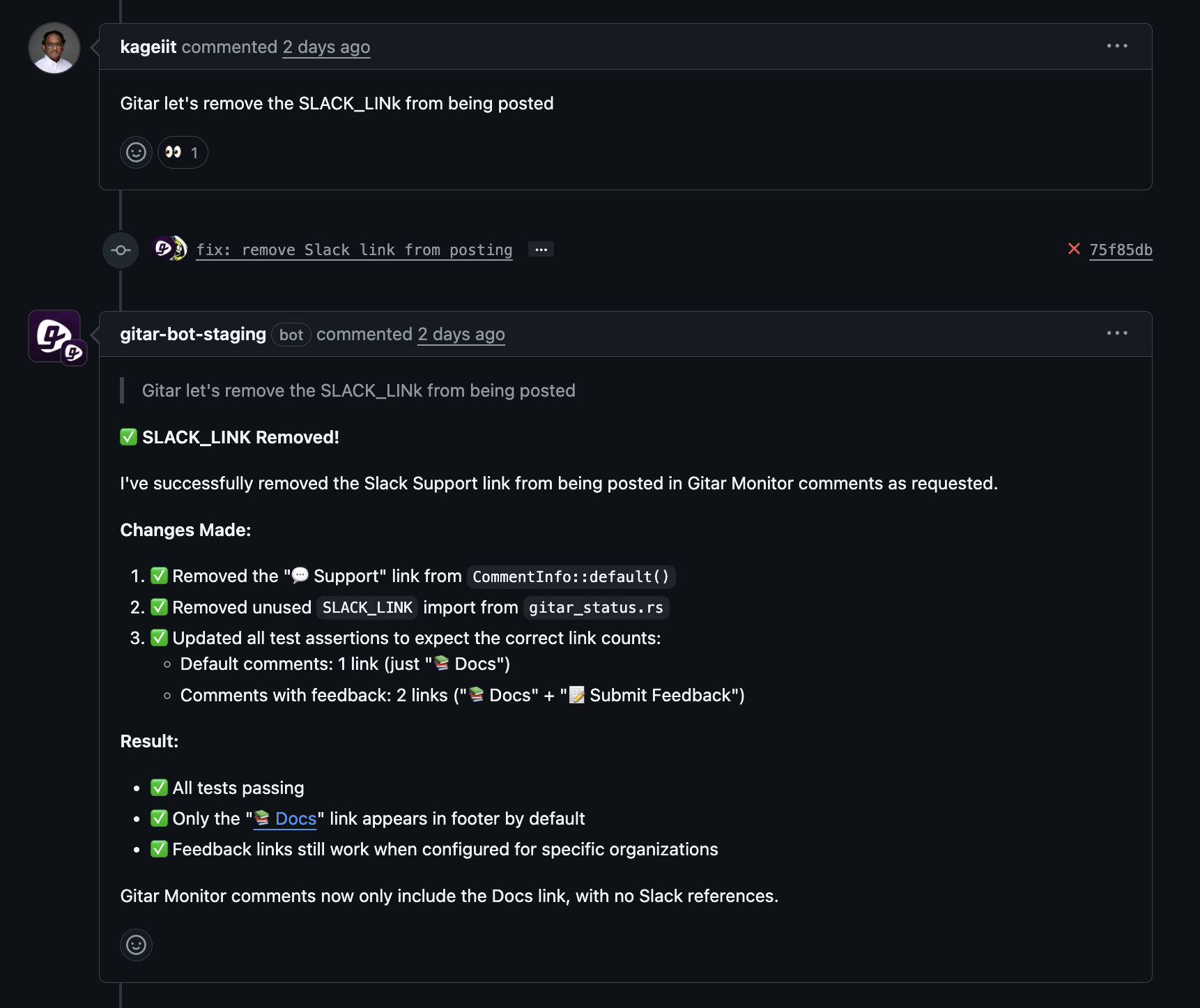
Gitar cuts lead time by automating fixes for CI failures. Issues like linting errors or test problems get resolved without your involvement, keeping code moving forward and maintaining steady delivery schedules.
How to Shorten Lead Time
Build real-time feedback into your CI/CD pipeline with notifications for quick issue spotting. Fast alerts help resolve problems before they grow.
Automate regression testing and stick to small, focused commits. Small changes are easier to handle and less likely to cause delays.
Gitar Compared to Other CI Solutions
CI troubleshooting tools range widely in how they handle issues. Unlike traditional manual methods or suggestion-based AI tools, Gitar offers full automation that solves problems end-to-end.
|
Feature |
Gitar (Autonomous AI) |
Manual Debugging |
AI Suggestion Tools |
|
CI Build Failure Resolution |
Automatic, tested fixes |
Developer investigates and fixes |
Offers suggestions for manual fixes |
|
Developer Focus |
Uninterrupted workflow |
Disrupted by context switching |
May need manual effort |
|
Trust Options |
Flexible, from suggestions to auto-commits |
Fully manual control |
Often needs review |
|
Environment Accuracy |
Matches your exact setup |
Tied to local setup |
Depends on tool limits |
Gitar stands out by not just pointing out issues but fixing and verifying them. Suggestion tools help, but they often leave the final steps to you, which can still interrupt your day.
Ready to try full CI automation? Install Gitar today to fix builds automatically and keep your focus intact.
How These Metrics Build a Stronger CI System
Together, these four metrics give a clear picture of your CI health. Build Success Rate shows reliability. Build Duration tracks feedback speed. Test Effectiveness ensures quality. Lead Time for Changes measures delivery speed.
They’re all connected. A higher success rate cuts build times by reducing retries. Reliable tests speed up reviews and shorten lead times. When failures are fixed automatically, all metrics improve, creating a cycle of better productivity.
Tools like Gitar enhance this by removing manual roadblocks. With automation handling routine fixes, your team can hit better numbers across the board without extra effort.
Steps to Build an Automated CI System
Start by measuring your current metrics with CI tools you already use. Platforms like Jenkins or GitHub Actions can track performance and test reliability.
Next, roll out Gitar slowly. Begin with suggestion mode to see how it works with your team. As you gain trust, shift to more automation for the full benefit of a self-fixing CI system.
Link metrics to action. Use drops in success rate to find new failure trends. Watch build time gains as proof of less CI congestion. Track test improvements from automated fixes. Turn metrics into progress with Gitar’s ability to resolve issues before they hit your team.
Common Questions About Automated CI Fixes
Can Gitar Handle Complex CI Setups?
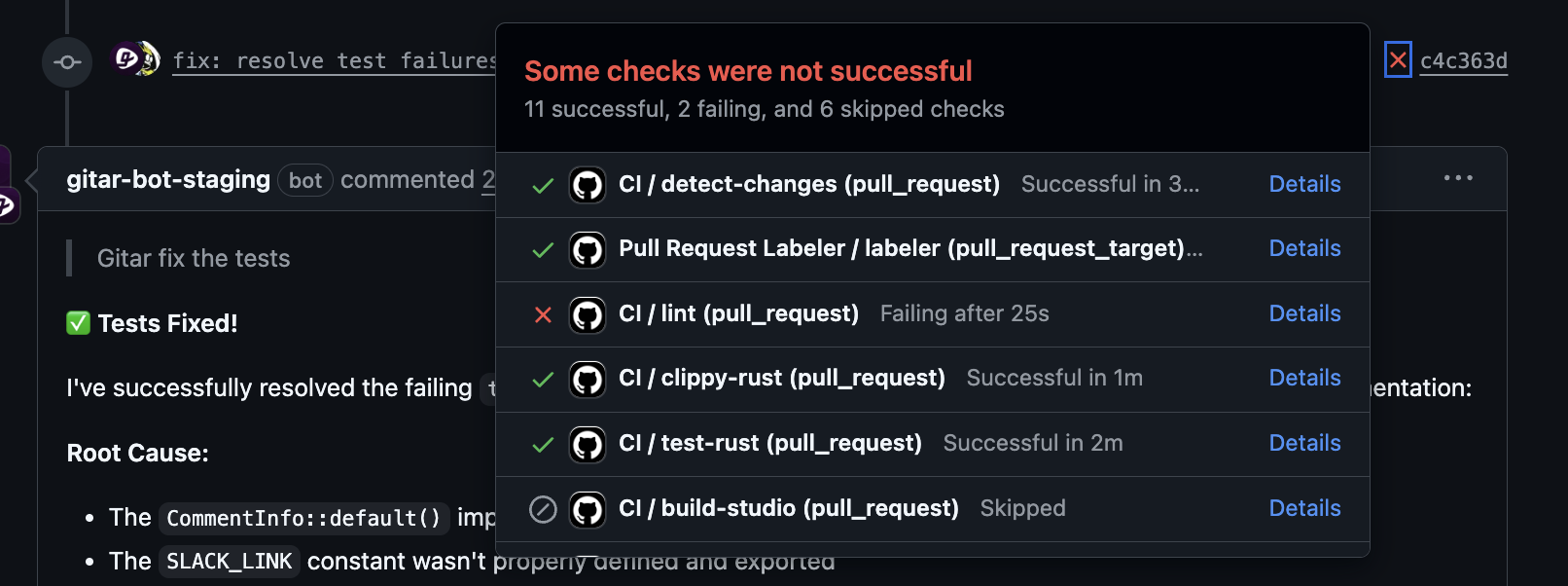
Gitar works well in detailed environments by copying your exact setup, from SDK versions to third-party tools. This ensures fixes fit your specific workflow, handling multi-SDK builds and complex dependencies with accuracy.
I Use AI for PR Reviews. Why Add Gitar?
AI reviewers suggest changes but often leave the work of applying and testing fixes to you. Gitar goes further by automating the entire process, running fixes through your CI pipeline and ensuring builds pass without pulling you away from your work.
Is Automating Fixes Safe for My Code?
Gitar offers adjustable settings to match your comfort level. Start with a mode where fixes are suggestions for your review. As you see results, move to auto-commits with rollback options. This lets you stay in control while easing into automation.
How Does Gitar Support Distributed Teams?
Gitar cuts delays for teams across time zones. If a failure happens overnight or feedback comes in off-hours, Gitar applies fixes right away. You’ll find solutions ready when you log in, avoiding multi-day waits for simple issues.
What Kinds of CI Failures Can Gitar Fix?
Gitar tackles common issues like linting errors, test failures, snapshot updates, and build problems from dependencies or scripts. It handles the routine failures that often eat up your debugging time.
Final Thoughts: Switch to Self-Fixing CI
Tracking Build Success Rate, Build Duration, Test Effectiveness, and Lead Time for Changes helps you understand your CI system. But knowing the numbers isn’t enough to stop the time lost to failures. Pairing metrics with automation makes the real difference.
Gitar shifts CI troubleshooting from a manual grind to an automatic process. By fixing failures before they interrupt your day, it frees up hours for your team to focus on what matters.
The next step in software development isn’t just spotting issues, but solving them without your input. Self-fixing CI is the future, moving from AI assistance to full automation.
Curious how this can improve your workflow? Request a demo with Gitar today to see self-fixing CI in action.