
Key Takeaways
- Manual CI/CD troubleshooting and code review delays create persistent bottlenecks that slow open source and enterprise projects.
- Context switching between feature work, failing pipelines, and review feedback reduces developer focus and wastes a significant share of engineering time.
- Autonomous CI fixing tools such as Gitar can automatically diagnose, repair, and validate many CI failures, which reduces manual effort.
- Teams that adopt autonomous CI support gain faster time-to-merge, more predictable delivery timelines, and lower burnout risk as projects grow.
- Gitar provides autonomous CI fixes and code review support that fit into existing workflows; you can explore it at Gitar.
The Problem: Manual Intervention Slows CI/CD and Project Delivery
Most software teams experience a CI/CD gauntlet where commits trigger red builds, failed tests, and lint errors that interrupt planned work. Even small fixes can expand into long detours once developers stop feature work, study logs, patch code, and rerun pipelines.
Traditional project management tools track these delays but do not remove the underlying friction. They show which tasks are blocked, yet they still depend on engineers to handle every CI failure and code review change by hand.
This “context switching tax” is a major productivity drain. Developers waste up to 30% of their time on CI and code review issues, repeatedly shifting between deep work and firefighting build breaks. Distributed teams feel this even more when time zones stretch a simple review cycle across days.
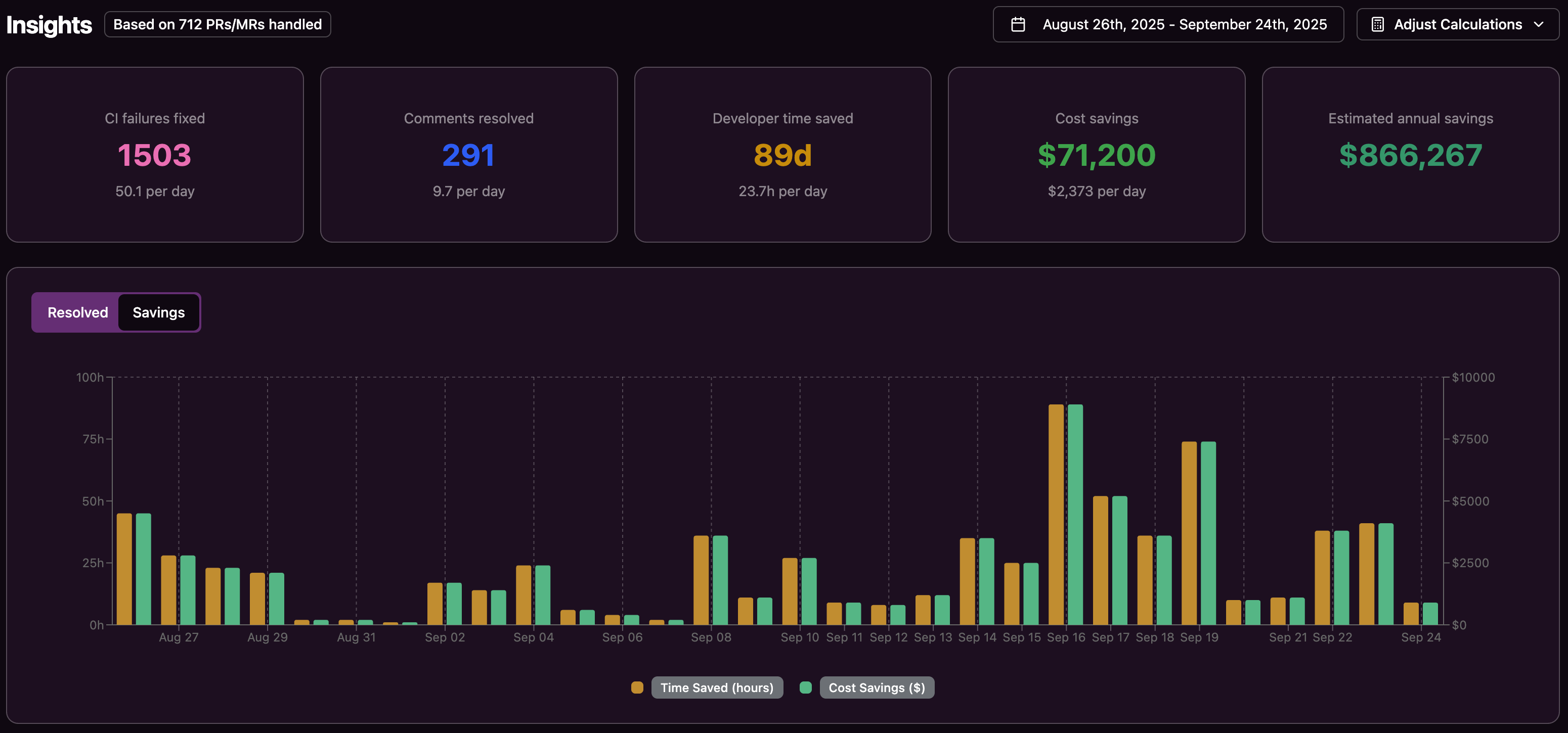
The financial impact adds up quickly. A 20-developer team can lose roughly $1M per year in productivity to these interruptions and delays. Without automation that addresses the root causes, teams keep paying this cost as projects scale.
The Solution: Gitar for Autonomous CI Fixes in Existing Pipelines
Gitar introduces autonomous problem resolution into existing CI/CD workflows. It monitors pipelines, reads logs, proposes code changes, applies fixes, and validates the result, all within your normal tools and repositories.
Key capabilities that support project management and engineering teams include:
- End-to-end autonomous fixes that implement and validate code changes for many CI failures, so builds can pass without extra manual work.
- Environment replication that mirrors real CI setups, including specific SDK versions, multi-platform dependencies, and tools such as SonarQube and Snyk.
- Code review assistance that applies requested changes, addresses comments, and reduces the back-and-forth between authors and reviewers.
- A configurable trust model that supports suggestion-only output, required approvals, or direct auto-commits with rollback options.
- Compatibility with common CI/CD platforms such as GitHub Actions, GitLab CI, CircleCI, and Buildkite.

Teams can adopt Gitar in a conservative mode first, using it to propose fixes that humans quickly review, then move toward more automation as trust grows.
Benefits of Autonomous CI Fixes for Project Management
Protect Developer Focus and Reduce Interruptions
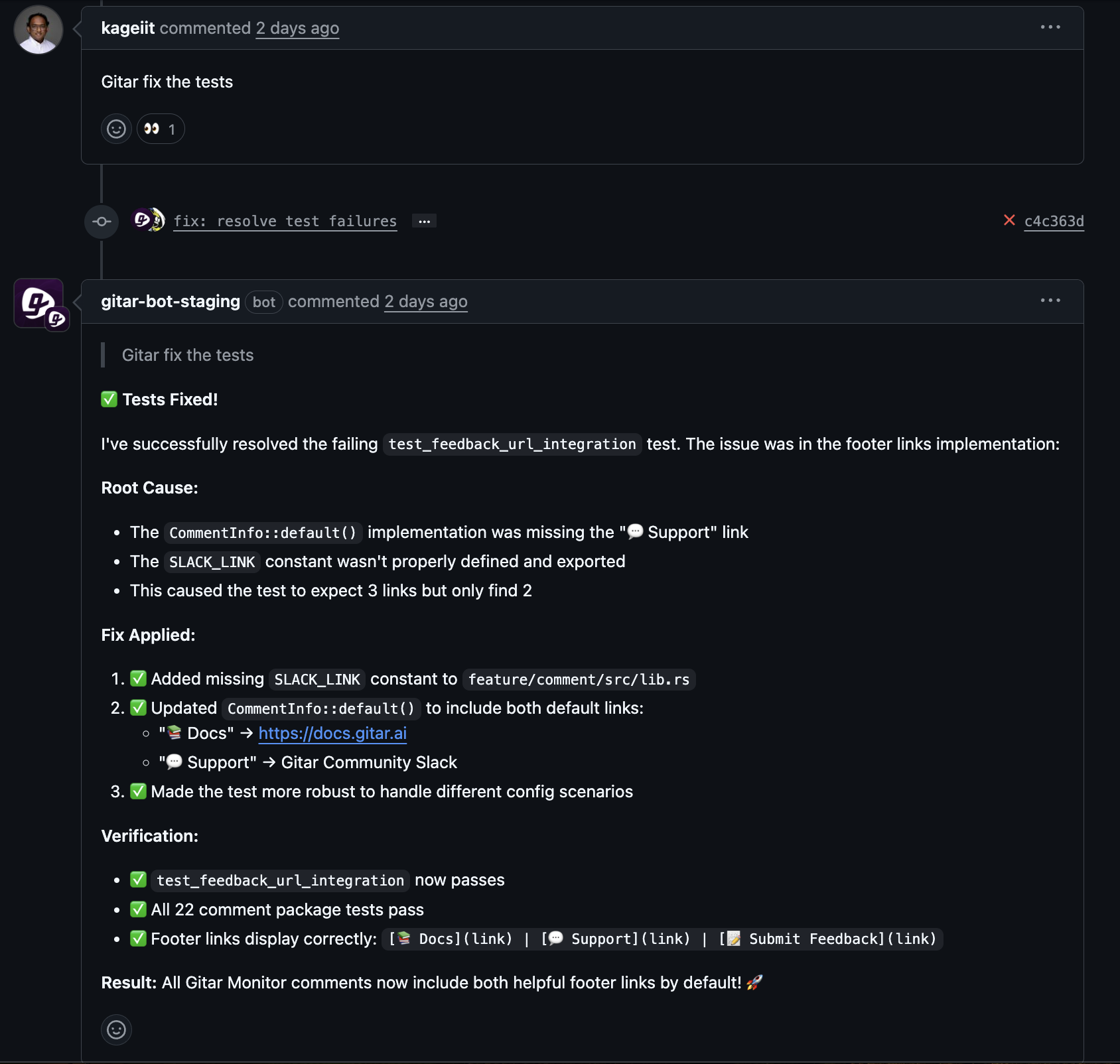
Gitar reduces the number of times developers must stop feature work to fix failing pipelines. When a lint issue, flaky test, or configuration error appears, Gitar analyzes the logs, prepares a candidate change, and validates the fix before asking for attention.
This support reduces context switching, preserves deep work sessions, and lowers the mental load of constant pipeline monitoring. CI resources are used more efficiently because fewer failures require repeated reruns or trial-and-error debugging.
Increase Merge Speed Across Projects and Time Zones
Project milestones depend on how quickly branches move from development to merged. Gitar shortens that path by resolving common CI failures and implementing code review feedback directly in the pull request.
Reviewers can leave comments at the end of their workday and let Gitar apply and test the changes. Colleagues in other regions see updated, passing branches when they start their day, which compresses cycle time for distributed teams.
Improve Code Quality and Pipeline Reliability
Gitar validates fixes in conditions that match your CI environment, which reduces the chance of surprises after merge. When tests, linters, and security tools all pass in that environment, teams gain clearer confidence in each change.
Gitar can also add or adjust tests based on simple instructions, which increases coverage over time and supports long-term reliability. You can start this workflow today by installing Gitar.
Comparison: Manual Work, Suggestion Engines, and Gitar
Hidden Costs of Manual CI/CD Intervention
Manual debugging of CI failures consumes senior and junior developer time alike. Each failure leads to log inspection, patching, local repro attempts, and repeated pipeline runs. These tasks add little direct product value but are required for every release.
Beyond lost time, failed builds consume extra CI minutes and create frustration that can affect morale and retention. Project managers see these as recurring schedule risks even when they are not visible on a roadmap.
Why Suggestion-Only Tools Are Not Enough
AI code reviewers that only suggest changes still require humans to interpret, apply, and test each recommendation. The cognitive load and time investment remain similar, just with better hints.
Gitar focuses on execution rather than hints. It implements the change, runs the pipeline, and reports back with passing checks or with a narrowed problem description when full automation is not possible.
Where CI/CD Platforms Stop and Gitar Continues
Common CI/CD systems such as Jenkins, GoCD, and Vela orchestrate builds and deployments reliably, but they do not resolve failures themselves.
|
Feature / Tool |
Jenkins |
GitLab CI |
Gitar |
|
Pipeline automation |
Yes |
Yes |
Yes |
|
Autonomous fixes for many CI failures |
No |
No |
Yes |
|
Reduction of context switching |
Indirect |
Indirect |
Direct |
|
Automation of code review feedback |
No |
No |
Yes |
Gitar adds an automatic recovery layer on top of existing CI/CD tools, which helps keep pipelines green with less manual oversight.
Frequently Asked Questions About Autonomous Fixes
Gitar integration with existing CI/CD pipelines
Gitar connects as a GitHub or GitLab App on selected repositories. After authorization, it listens to CI results from platforms such as GitHub Actions, GitLab CI, CircleCI, and Buildkite. Existing workflows and configuration files remain in place while Gitar reacts to failures and review comments.
Support for complex enterprise CI setups
Gitar is built for heterogeneous environments. It can work with multiple SDK versions, polyglot codebases, and tools such as SonarQube or Snyk in the same pipeline. This context allows it to propose fixes that respect project standards and security requirements.
How Gitar differs from AI code reviewers
AI code reviewers tend to highlight issues and propose snippets. Gitar goes further by applying changes, running the pipeline, and surfacing results in the pull request. This shift from suggestion to action reduces the manual steps needed to reach a passing build.
Control and trust in automated fixes
Teams can control how Gitar commits changes. Many start with a mode where Gitar posts changes as pull request suggestions that must be approved. As confidence grows, teams can enable direct commits while still keeping rollback options and review policies.
Conclusion: Make CI/CD Less of a Bottleneck
Modern project management in 2026 must address the friction of CI/CD, not just track it. Requiring developers to handle every failure manually slows delivery and inflates costs as teams scale.
Gitar introduces autonomous fixes into existing pipelines, which lowers context switching, accelerates merges, and improves predictability without replacing current tools. Teams that adopt this approach can redirect more engineering time toward product work instead of pipeline maintenance.
If you want to reduce CI/CD bottlenecks in your own projects, you can start by installing Gitar.