
Written by: Ali-Reza Adl-Tabatabai, Founder and CEO, Gitar
Key Takeaways for Securing AI-Generated Code
- AI coding tools increase vulnerabilities and code duplication, with 58% of developers reporting more bad code that needs fixes.
- Gitar leads free tools with comprehensive AI code review, security scanning, and autofix support for unlimited repositories.
- Top free alternatives include CodeQL for semantic analysis, Semgrep for fast scanning, and SonarQube for broad rules, but they lack native autofix.
- Specialized tools like Bandit for Python and Trivy for containers excel in narrow areas but miss full AI-generated code coverage.
- Install Gitar now to get automatic vulnerability fixes, green CI builds, and faster shipping of secure AI-generated code.
Quick Comparison of the Top 8 Free AI Security Tools
The comparison table below summarizes how each tool handles AI-generated code, autofix support, and GitHub integration based on hands-on testing with Copilot-generated pull requests.
| Tool | Languages | Vuln Accuracy | Autofix |
|---|---|---|---|
| Gitar | Multiple | High | 14-day free trial |
| CodeQL | 10+ | High | No |
| Semgrep | 30+ | 85-90% | User-defined only |
| SonarQube CE | 30 | Medium | No |
| Bandit | Python | High (Python) | No |
| Trivy | Containers/OSS | 90% (deps) | No |
| GitHub Advanced Security | 10+ | High | No |
| Aikido | Broad | 88% | Limited |
Why AI-Generated Code Needs Specialized Security Tools
AI-generated code introduces unique vulnerability patterns that traditional tools often miss. Logic bugs are 75% more common in AI-generated pull requests, so teams need scanners that understand repetitive patterns and partial security implementations.
Conventional static analysis tools struggle with context-dependent issues that appear when AI models reuse insecure snippets across files. Purpose-built AI-aware tools close this gap by analyzing how generated code behaves across the entire repository.
Aikido: IDE-Based Free SAST With Optional Autofix
8. Aikido
Aikido offers free SAST scans in the IDE with real-time feedback and optional AutoFix for supported findings. It focuses on common web application vulnerabilities and gives project-wide visibility across codebases.
Setup involves installing the IDE extension and connecting GitHub repositories so scans can run on active projects.
Pros: Real-time IDE feedback, broad language coverage, free tier for open-source projects.
Cons: Limited autofix coverage and manual implementation for most suggestions.
Benchmarks: 88% accuracy on standard vulnerabilities and moderate performance on AI-generated code patterns.
Ideal for: Open-source projects and security-focused teams that want security checks inside the IDE.
GitHub Advanced Security: Native Scanning for Public Repos
7. GitHub Advanced Security Free Tier
GitHub Advanced Security combines code scanning, secret scanning, and Dependabot alerts with AI Autofix via Copilot for remediation help. It relies on CodeQL for semantic analysis and adds native pull request annotations inside GitHub.
Pros: Tight GitHub integration, semantic analysis with CodeQL, and strong dependency scanning.
Cons: Free tier applies only to public repositories, with per-user billing for private repos on Team or Enterprise plans, and custom rules require significant learning.
Benchmarks: Very low false positives and high accuracy on complex vulnerabilities.
Ideal for: GitHub-native teams that primarily maintain public or open-source projects.
Trivy: Container and Dependency Security for DevOps Teams
6. Trivy
Trivy focuses on container and dependency vulnerability scanning with broad coverage of CVE databases. It integrates cleanly with GitHub Actions and scans Docker images, Kubernetes manifests, and infrastructure as code.
Pros: Strong container security coverage, fast scans, and a comprehensive CVE database.
Cons: Limited application code analysis and no autofix for code-level vulnerabilities.
Benchmarks: About 90% accuracy on dependency vulnerabilities and strong performance on container security checks.
Ideal for: DevOps teams that prioritize container and infrastructure security over application-level autofix.
Bandit: Python-First Security Scanning
5. Bandit
Bandit targets Python security vulnerabilities, which makes it highly effective for Python-heavy repositories. It plugs into GitHub workflows and produces detailed reports on common Python security anti-patterns.
Pros: Excellent Python security coverage, quick scans, and clear vulnerability explanations.
Cons: Python-only support, no autofix, and limited understanding of broader AI code context.
Benchmarks: High accuracy on Python security issues and strong detection of AI-generated Python vulnerabilities.
Ideal for: Python-focused engineering teams and data science projects that need language-specific checks.
SonarQube Community: Broad Rules and Code Quality Metrics
4. SonarQube Community
SonarQube Community Edition delivers 6,500+ rules for advanced SAST analysis across 30 languages. It pairs security detection with detailed code quality metrics.
Pros: Extensive rule coverage, wide language support, and rich quality dashboards.
Cons: Resource-intensive on large codebases, complex setup, and no native autofix.
Benchmarks: Medium accuracy on AI-generated code and strong results on traditional security patterns.
Ideal for: Small teams that want combined security and code quality analysis in one platform.
Semgrep: Fast Pattern-Based Scanning With Custom Rules
3. Semgrep
Semgrep delivers very fast scanning at 20K to 100K lines of code per second using semantic pattern matching. It supports custom rules and offers user-defined autofixes for certain vulnerability types.
Pros: Extremely fast scans, flexible custom rules, some autofix support, and a free tier for up to 10 contributors.
Cons: Pattern-based detection can miss complex AI-generated vulnerabilities and native autofix coverage remains limited.
Benchmarks: About 85 to 90% accuracy on standard vulnerabilities and good performance on repetitive AI code patterns.
Ideal for: Teams that need fast CI integration and custom security policies.
CodeQL: Deep Semantic Analysis With Low Noise
2. CodeQL
CodeQL uses semantic code analysis that produces fewer false positives than pattern-matching tools. It offers deep analysis and native GitHub integration for thorough vulnerability detection.
Pros: High-accuracy semantic analysis, very low false positive rates, and deep vulnerability coverage.
Cons: Steep learning curve for custom queries, no autofix, and complex setup outside GitHub.
Benchmarks: High accuracy on complex vulnerabilities and excellent performance on AI-generated code analysis.
Ideal for: Security teams that prioritize depth of analysis and minimal noise.
Gitar: Free AI Code Review With True Autofix
Gitar stands out as a free AI code review platform that scans for security issues and actually fixes them, including CI-related failures. When CI builds fail due to security problems, Gitar analyzes the failure, generates a fix, validates it against the full codebase, and commits the solution in a single dashboard comment.
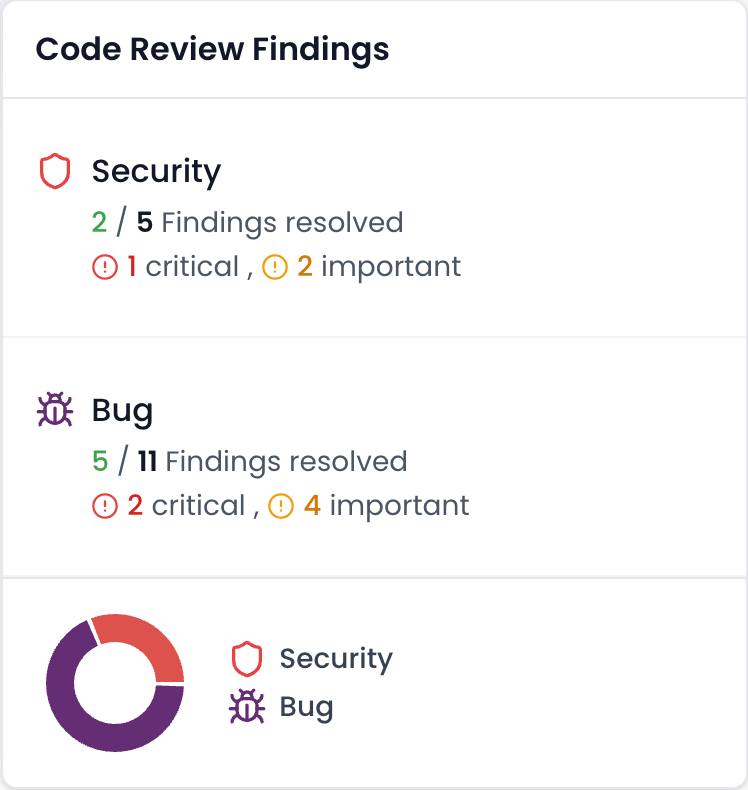
The platform absorbs PR floods from AI coding tools by offering unlimited free code review for private repositories with no seat limits. Teams report high autofix accuracy on Copilot-generated issues while developers stay focused on feature work instead of remediation.
Key Features:
- Automatic CI failure analysis and resolution.
- Single dashboard comment instead of notification spam.
- 14-day free autofix trial with unlimited repositories.
- Support for Python, Go, JavaScript, TypeScript, Java, Rust, and more.
- 30-second GitHub App installation.
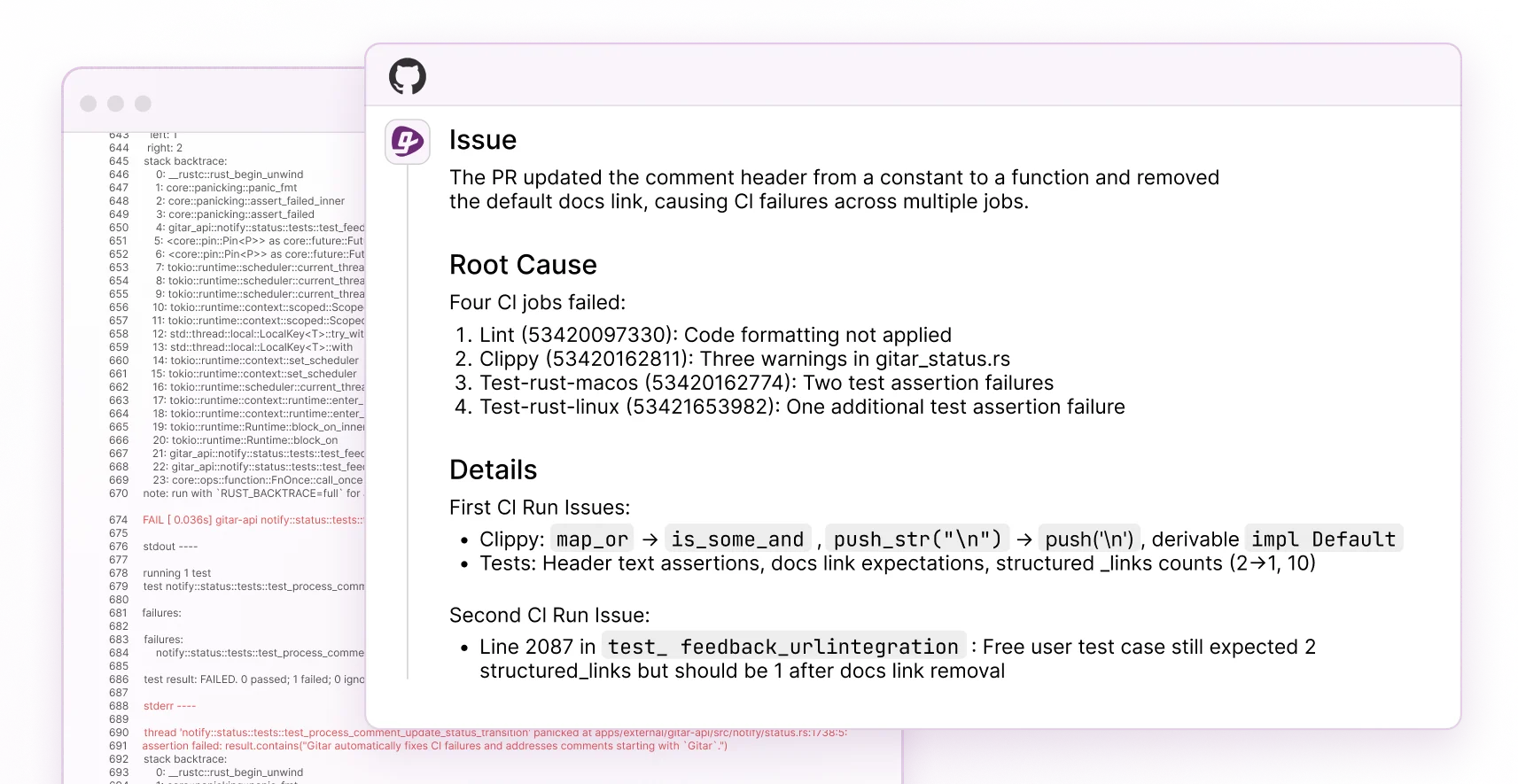
Setup: Install the Gitar GitHub App in about 30 seconds with no credit card. Gitar immediately starts analyzing pull requests and posting security feedback.
Benchmarks: High autofix accuracy on AI-generated vulnerabilities with validated fixes that keep CI builds green.
Ideal for: Development teams overwhelmed by AI-generated PR floods that need real fixes instead of suggestions.
Free AI Code Checkers That Work Smoothly With GitHub
Automated vulnerability detection for GitHub repos should add protection without adding heavy maintenance. Gitar keeps setup simple: install the GitHub App, choose repositories, and enable autofix rules.
The platform then scans pull requests and posts security feedback without YAML files or complex CI pipeline changes. Most free tools rely on custom workflows and ongoing configuration, while Gitar uses intelligent defaults that adapt to different repo structures and workflows.
The single-comment model also reduces notification fatigue while still covering the full pull request.
Gitar vs Paid AI Review Tools for Autofix
| Capability | Paid Tools (CodeRabbit/Greptile) | Gitar |
|---|---|---|
| Autofix | No | Yes (14-day trial) |
| Monthly Cost | $15-30/developer | Free |
| Repository Limits | Per-seat pricing | Unlimited |
| CI Integration | Limited | Full pipeline analysis |
A 20-developer team typically spends $300 to $600 each month on suggestion-only tools that still require manual fixes. Gitar delivers stronger functionality at no license cost and adds autofix that produces working solutions instead of hopeful recommendations.
How to Choose the Right Free AI Security Tool
Teams first decide between detection-only tools and healing engines that fix code. Tools like Semgrep and CodeQL excel at finding issues but leave remediation to developers.
Gitar uses a healing model that validates fixes against CI pipelines so changes work in production. For teams spending more than an hour each day on CI and review issues, autofix usually delivers a better return than suggestion-only engines.
FAQ
Which free AI code vulnerability scanner works with private repos?
Gitar offers unlimited free code review and security scanning for private repositories with no user limits, which makes it the most generous free option. Semgrep supports free scanning for up to 10 contributors on private repositories, and GitHub Advanced Security provides free code scanning for public repos with per-user billing for private repos on eligible plans. Most other free tools restrict private repo scanning or add tight user caps, so Gitar becomes the strongest choice for teams that need broad private repository coverage.
What are the best free AI code review tools?
The leading free AI code review tools for 2026 include Gitar for comprehensive autofix, CodeQL for low-noise semantic analysis, Semgrep for fast pattern-based scanning, and SonarQube Community for wide rule coverage. Gitar stands out because it not only detects vulnerabilities but also resolves them automatically, which removes the manual work that suggestion-only tools create. Teams often report major productivity gains after moving from detection-only tools to Gitar’s healing engine.
Is there a free AI tool for automated code vulnerability detection on GitHub?
Gitar provides free AI code review with security scanning for automated GitHub vulnerability detection. It offers unlimited repository scanning, automatic CI failure analysis, and validated autofix. Unlike paid tools that charge $15 to $30 per developer for suggestions, Gitar’s free tier includes full pull request analysis with security scanning and a 14-day autofix trial. The integration takes about 30 seconds and starts protecting repositories from AI-generated vulnerabilities without credit cards or complex configuration.
Which free AI code vulnerability scanner supports private repos?
Gitar supports unlimited free code review and security scanning for private repositories with no user limits, which makes it the most generous free option. Semgrep allows free scanning for up to 10 contributors on private repositories, and GitHub Advanced Security includes free code scanning for public repos with per-user billing for private repos on eligible plans. Most other free tools restrict private repository scanning or add tight user caps, so Gitar remains the clear choice for teams that need full private repository protection.
Conclusion: Use Gitar to Fix Vulnerabilities Automatically
AI-driven development requires security tools that move as fast as AI-generated code. Suggestion-only tools leave developers buried in manual fixes, while Gitar’s healing engine resolves vulnerabilities and keeps builds green.
With unlimited free repositories, high autofix accuracy, and a 30-second setup, Gitar removes the pull request bottleneck that slows AI-powered teams.