

Written by: Ali-Reza Adl-Tabatabai, Founder and CEO, Gitar
Key Takeaways
- AI coding tools speed up writing code 3-5x but increase PR review time by 91%, costing startups about $1M per year in lost productivity.
- Gitar leads free AI code review with unlimited repos and users, PR analysis, security scanning, bug detection, and auto-fixes for CI failures.
- CodeRabbit limits its free tier to open source, while tools like Semgrep and SonarQube need expert setup and do not fully automate PR workflows.
- Gitar saves 20-developer teams $450-900 per month versus paid tools and cuts CI fix time from 1 hour to 15 minutes per developer daily.
- Startups can install Gitar now for free unlimited AI code review that keeps builds green and ships code faster.
How We Tested Free AI Code Review Tools for Startup PR Workflows
We tested each free tier on real startup repositories. Our evaluation covered repository limits, auto-fix capabilities, and CI integration with GitHub Actions, GitLab CI, and CircleCI. We required setup in under two minutes, measured noise reduction, and checked scalability to more than 50 million lines of code. We also reviewed Reddit and GitHub feedback and calculated ROI for 20-developer teams.
Top 5 Free AI Code Review Tools at a Glance
|
Rank/Tool |
Free Limits |
Key Free Features |
Startup ROI Score |
|
1. Gitar |
Unlimited repos, users |
PR summaries, inline suggestions, full PR analysis, security scanning, bug detection, performance review |
9.5/10 |
|
2. CodeRabbit |
Open source only |
PR summaries, inline comments |
6/10 |
|
3. Aikido Security |
2 users, IDE scans |
Security scanning, SAST |
7/10 |
|
4. Semgrep |
Open source |
Rule-based security scanning |
6.5/10 |
|
5. SonarQube CE |
Open source |
Static analysis, quality gates |
6/10 |
#1: Gitar Free Healing Engine That Keeps Builds Green
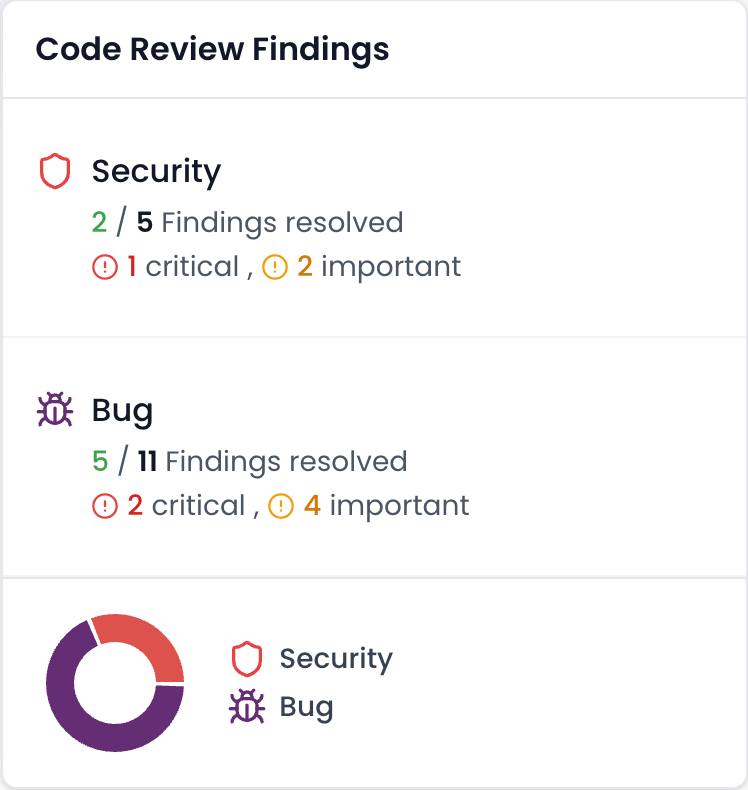
Gitar is the only free AI code review platform in this list that actively fixes your code. It resolves CI failures, addresses review feedback, and automates key development workflows. Competing tools charge $15-30 per developer for suggestion-only engines, while Gitar offers unlimited free repositories and users with full PR analysis, security scanning, and bug detection.
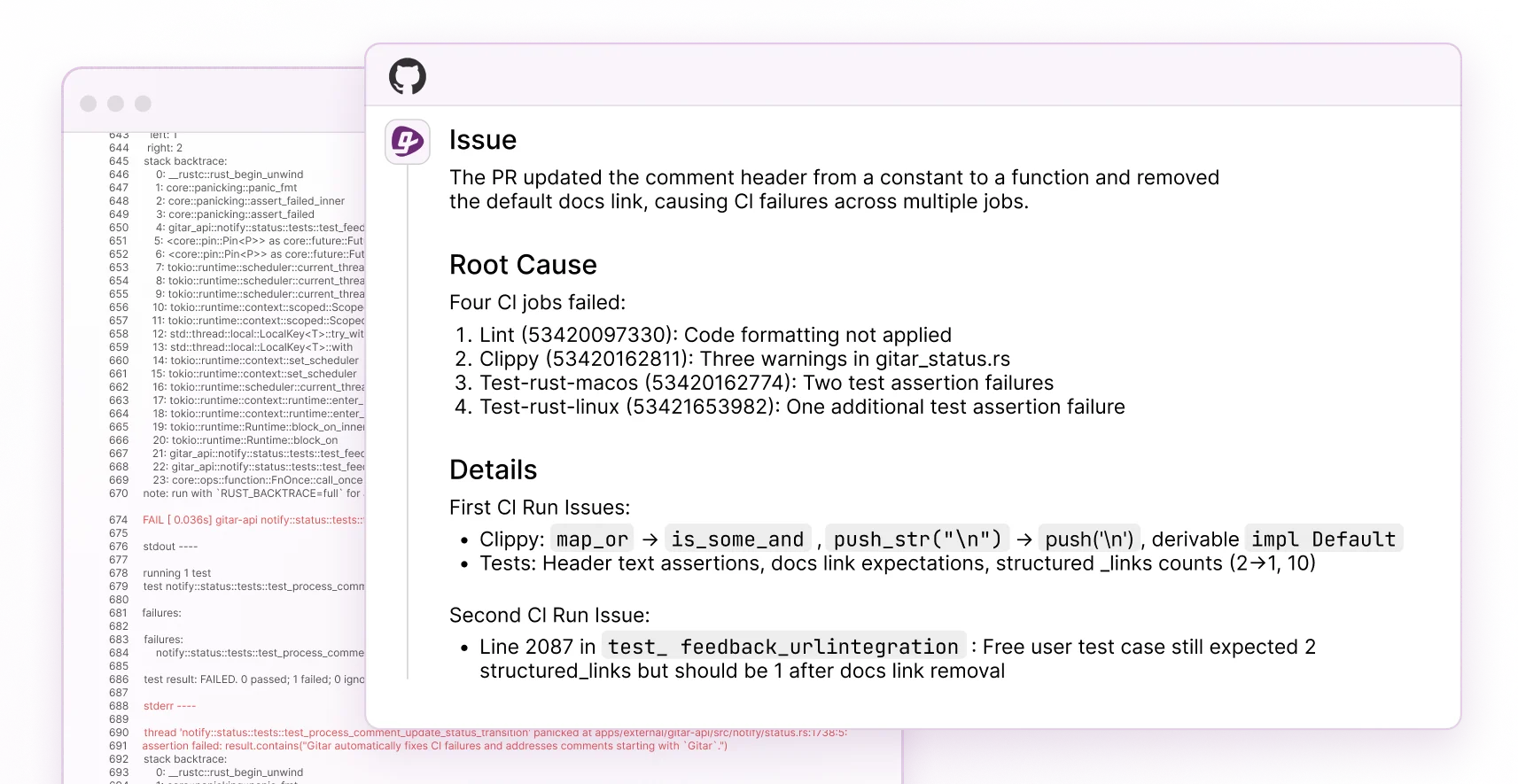
The healing engine analyzes CI failures, generates validated fixes, and commits them to pull requests. Autofix features run on a 14-day free trial while core review stays free. When lint errors, test failures, or build breaks appear, Gitar reads the failure logs, identifies the root cause, and creates a fix with full codebase context. It validates the fix in your CI, commits the change to the PR, and posts a single clean update. This workflow keeps builds green with minimal manual effort.
Gitar rolls all findings into one dashboard-style PR comment that updates in place. This approach removes the notification spam that many other tools create with dozens of inline comments. Teams report that summaries are “more concise than Greptile/Bugbot.” Gitar connects with GitHub, GitLab, GitHub Actions, GitLab CI, CircleCI, and Buildkite, and setup usually finishes in under two minutes.
For startups, Gitar’s zero-seat pricing delivers immediate savings. A 20-developer team typically saves $450-900 per month compared with paid alternatives while gaining stronger automation. The platform also scales to enterprise workloads, handling more than 50 million lines of code and thousands of pull requests per day.
#2: CodeRabbit Limited Free for Open Source Teams
Description/Use Cases: CodeRabbit offers AI-powered PR reviews with line-by-line comments, summaries, and diagrams. It adapts to team coding styles and integrates with IDEs and the command line.
Key Free Features: The free tier only supports open-source repositories. Paid plans start at $15 per month for individuals and $20 per month for teams.
Startup Fit: Value remains low for startups with private repositories because most real work requires a paid plan.
Strengths: High-quality contextual feedback, learning from team interactions, and strong GitHub integration.
Limitations: No free private repository support, suggestion-only reviews without auto-fixes, and relatively high pricing for small teams.
#3: Aikido Security Security-First Scanning for Small Teams
Description/Use Cases: Aikido Security ranks highly among AI code review tools in 2026 for its developer-first design and instant AI-driven insights. It focuses on security scanning and vulnerability detection.
Key Free Features: The free tier supports two users and IDE SAST scans. It includes SAST, secrets detection, infrastructure-as-code scanning, and one-click fixes for some vulnerabilities.
Startup Fit: Strong choice for security-focused startups but limited by the two-user cap and lack of full PR review features.
Strengths: Deep security focus, noise reduction up to 95%, simple GitHub and GitLab integration, and SOC2 compliance.
Limitations: Narrow free tier and emphasis on security rather than full code review.
#4: Semgrep Open Source Rule-Based Security Scanning
Description/Use Cases: Semgrep is a free open-source static analysis tool for security and quality policies. It integrates with GitHub and GitLab CI/CD and comments on pull requests.
Key Free Features: Fully open source, custom security policies, GitHub and GitLab support, rule-based analysis, AI-assisted rule generation, and fix suggestions.
Startup Fit: Ideal for teams comfortable writing and tuning rules who want strong security scanning.
Strengths: Truly free and open source, highly customizable rules, strong security coverage, and an active community.
Limitations: Requires rule configuration skills and focuses on security, quality, compliance, and policy checks rather than holistic PR review.
#5: SonarQube Community Edition Free Static Analysis Platform
Description/Use Cases: SonarQube Community Edition is a free open-source static analysis platform that includes security vulnerability detection and supports GitHub and GitLab integration.
Key Free Features: Static analysis, security vulnerability detection, code quality metrics, AI-powered fix suggestions, and self-hosting options.
Startup Fit: Useful for teams that want broad static analysis and can manage their own infrastructure.
Strengths: Mature ecosystem, wide language support, detailed quality metrics, and full control through self-hosting.
Limitations: Requires infrastructure management and involves a more complex setup process.
#10: CodeAnt AI Moderate Free Tier for Multi-Language Review
Description/Use Cases: CodeAnt AI ranks highly for GitHub AI code review in 2026, offering AI code review, quality analysis, and security scanning across more than 30 languages.
Key Free Features: Free-tier AI code review with security scanning, code quality analysis, AST-based context, and AI-generated fix suggestions.
Startup Fit: Reasonable option for small teams, although free tier limits can restrict long-term use.
Strengths: Advanced AST-based context, SOC 2 and ISO 27001 compliance, and moderate pricing.
Limitations: Constrained free tier and only moderate CI integration depth.
#7: Snyk DeepCode Free Security for Open Source
Description/Use Cases: Snyk provides AI-powered SAST, dependency scanning, and Agent Fix for auto-patches. It focuses on security rather than broad review.
Key Free Features: Free usage for open source projects, security scanning, and dependency analysis.
Startup Fit: Works well for open source security but does not cover full private startup codebases on the free tier.
Strengths: Strong security focus, robust dependency scanning, and some auto-fix features.
Limitations: Free tier restricted to open source, limited general review features, and a primarily security-driven design.
#8: Greptile Deep Context with Tight Free Limits
Description/Use Cases: Greptile specializes in deep codebase context using RAG and a knowledge graph for PR analysis that goes beyond simple diffs.
Key Free Features: Limited free tier with codebase context analysis focused on bugs and antipatterns.
Startup Fit: Pricing at $30 per user per month makes it expensive, and free options remain very narrow.
Strengths: Strong codebase understanding, RAG-based context, and thorough analysis.
Limitations: High pricing, very limited free tier, and no auto-fix capabilities.
#9: Codeium IDE-First Assistant with Light Review
Description/Use Cases: Codeium offers free tiers focused on codebase understanding and privacy, mainly as an IDE coding assistant.
Key Free Features: Free IDE integration, code completion, and limited review features.
Startup Fit: Better suited for day-to-day coding help than for complete PR review workflows.
Strengths: Strong IDE integration, privacy focus, and a usable free tier.
Limitations: Not built for PR reviews, limited CI integration, and primarily an assistant for writing code.
#10: GitHub Copilot Review Native GitHub PR Assistant
Description/Use Cases: GitHub Copilot Review integrates directly with GitHub pull requests and detects security issues with some automation.
Key Free Features: Free for GitHub users with repository context and native GitHub integration.
Startup Fit: Works well for GitHub-only teams that want basic AI review but not full automation.
Strengths: Native GitHub experience, free for existing users, and security detection.
Limitations: Limited to GitHub, basic review depth, and a focus closer to coding assistance than full PR automation.
Real Startup Pain Points from Reddit and GitHub
Many AI-powered code review tools feel noisy, rigid, or disconnected from real developer workflows. They often miss the core bottleneck. Code duplication has increased 4x with AI, while notification spam from many inline comments creates cognitive overload. Developers report spending more time managing review tools than reviewing code.
Gitar vs. CodeRabbit vs. Greptile: Why Free Fixes Matter
|
Feature |
Gitar |
CodeRabbit |
Greptile |
|
Free Private Repos |
Unlimited |
None ($15+/seat) |
Limited ($30/seat) |
|
Auto-Fix CI Failures |
Yes (14-day free trial) |
No |
No |
|
Single Comment Dashboard |
Yes |
No |
No |
|
CI Integration |
Full (GitHub Actions, GitLab CI, CircleCI, Buildkite) |
Limited |
Basic |
Install Gitar now to fix broken builds automatically and ship higher quality software faster.
Startup ROI Snapshot: $450 Monthly Savings for 20-Dev Teams
|
Metric |
Before Gitar |
After Gitar |
|
Tool Cost/Month |
$450-900 |
$0 |
|
CI Fix Time/Day |
1 hour/dev |
15 min/dev |
|
Annual Productivity Loss |
$1M |
$250K |
|
Context Switching |
Multiple/day |
Near-zero |
What GitHub and Reddit Recommend for Free AI Review
Community threads often highlight frustration with paid tools that only suggest changes. Tools like Korbit and AI Code Review Action create too many comments, which hides useful feedback. Developers consistently ask for concise, actionable tools that reduce noise and provide real value through automated fixes instead of extra manual work.
What Small Startup Teams Should Prioritize
Small teams should focus on tools with unlimited repositories, zero per-seat pricing, and strong CI integration. They should also favor platforms that apply real code fixes instead of just suggestions. Tight budgets make free tiers critical, while aggressive shipping goals require automation that cuts manual review and CI troubleshooting.
FAQ
What is the best AI code review tool for startups?
Gitar offers the most complete free AI code review platform for startups. It includes unlimited repositories, full PR analysis, security scanning, bug detection, performance review, and zero per-seat pricing. Competing tools often charge $15-30 per developer for suggestion-only reviews. Gitar keeps code review free and adds autofix features on a 14-day free trial while maintaining a permanent free tier for review.
Is CodeRabbit really free for startups?
CodeRabbit’s free tier only supports open-source repositories. Private repositories require paid subscriptions starting at $15 per month per user, which becomes expensive for startup teams. Because most startup codebases are private, the free tier rarely fits typical startup workflows.
How does Gitar integrate with CI systems?
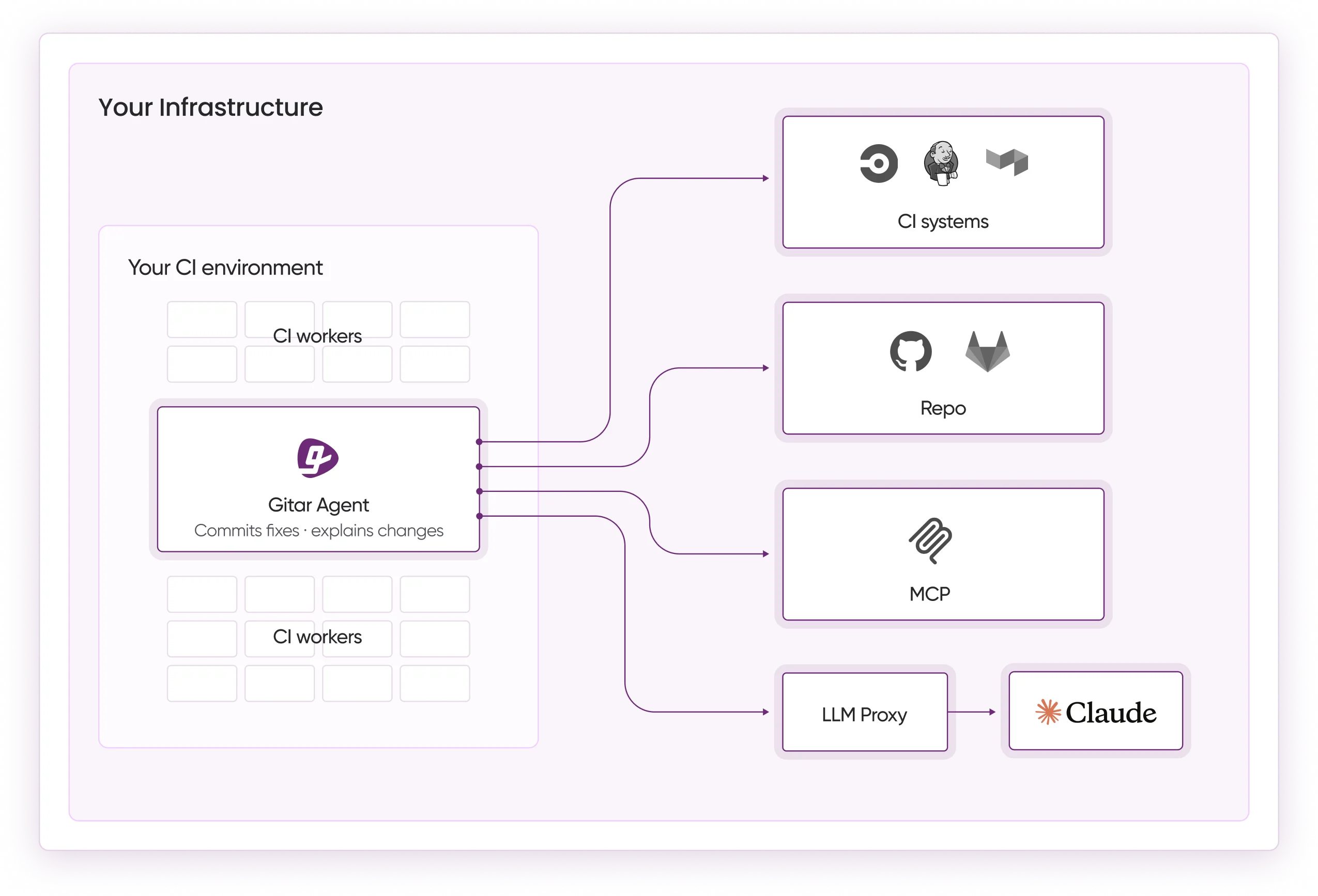
Gitar integrates natively with GitHub Actions, GitLab CI, CircleCI, and Buildkite. It analyzes CI failures, generates fixes with full codebase context, validates solutions in your CI environment, and commits working fixes directly to pull requests. Autofix features run on a 14-day free trial. Setup usually takes under two minutes through the GitHub or GitLab app.
What ROI can startups expect from free AI code review tools?
A 20-developer startup often saves $450-900 per month by using Gitar instead of paid tools. Teams also reduce review time and avoid long CI failure delays. Automated fixes and lower context switching recover significant developer hours that would otherwise go to manual CI debugging.
Do free AI code review tools provide adequate security scanning?
Gitar’s free tier includes security scanning, bug detection, and performance review alongside PR analysis. Security-focused tools such as Aikido and Semgrep offer deeper specialized scanning. Gitar combines security checks with general code review, which gives startups broad coverage without juggling multiple paid tools.
Conclusion: Gitar Leads Free AI Code Review for 2026 Startups
Modern AI coding workflows need tools that fix code, not just comment on it. Gitar’s free healing engine delivers strong value for startups through unlimited repositories, automatic CI fixes, and zero per-seat pricing. While many competitors charge premium prices for basic suggestions, Gitar provides comprehensive code review and automated fixes at no cost.
Install Gitar now to fix broken builds automatically and ship higher quality software faster.