
CI build failures quietly drain developer time and slow down projects, creating frustration and delays. Let’s explore the real impact of broken pipelines and how Gitar’s AI-driven solution automatically fixes these issues, keeping your builds green and saving valuable engineering hours.
Why CI Failures Are a Big Problem for Teams
CI/CD pipelines are essential for delivering code efficiently, but for many teams, they’ve become a daily obstacle. Each failed build signals more than a technical glitch. It triggers a chain of hidden costs that affect everyone in the organization.
How CI Failures Waste Developer Time
Developers often get pulled away from their work when a build fails. They must stop, dig into confusing error logs, and figure out the problem. This interruption breaks their focus, and it can take up to 20 minutes to get back on track even after fixing the issue.
The time loss adds up quickly. Developers may spend nearly 30% of their workday debugging CI failures or handling code review feedback. In an 8-hour day, that’s over 2 hours lost, time that could go toward building features or solving bigger challenges.
The mental strain is just as real. Constantly expecting failures creates stress, making developers hesitant to push code or frustrated with unpredictable systems. This ongoing tension impacts not only individual work but also team dynamics.
Why Failed Builds Delay Projects and Hurt Business
A failed build doesn’t just affect one developer. It stalls feature branches, blocks related tasks, and creates bottlenecks across the pipeline. These delays are a major reason why 60% of companies face project setbacks.
Picture this: a key feature is almost ready, but a small test failure holds it up. That minor issue can push back the entire release, delaying customer updates and affecting revenue. In fast-moving markets, falling behind can cost you a competitive edge.
The impact spreads beyond engineering. Product managers can’t stick to roadmaps, sales teams struggle to meet promises, and customer support deals with upset clients. A technical hiccup quickly turns into a broader business challenge.
The Rising Financial Cost of CI Failures
The expense of CI failures isn’t just about developer hours. Factor in salaries, benefits, and missed opportunities, and the numbers climb fast. For a team of 20 developers, these issues can cost $1 million yearly in lost productivity.
Costs grow over time. Failed builds waste compute resources with repeated runs, straining budgets. Teams stuck in crisis mode can’t focus on preventing future issues. Plus, the frustration of unreliable systems often leads to burnout, driving turnover and adding hiring expenses.
Most importantly, every hour spent debugging is an hour not spent on innovation or delivering value. In a competitive field, that lost opportunity can make or break your position in the market.
Common CI Issues That Slow Down Development
Different types of CI failures create unique headaches for teams. Let’s break down the most frequent culprits:
- Flaky tests fail unpredictably due to timing problems or external dependencies, making them hard to pin down.
- Build configuration errors, like missing dependencies or broken scripts, stop pipelines cold.
- Environment differences between local setups and CI systems cause unexpected failures, dragging out debugging.
- Test infrastructure issues, such as failed database connections or misconfigured frameworks, block multiple developers at once.
Try Gitar now to fix broken builds automatically and ship better software faster.
How Autonomous AI Can Solve CI Challenges
Software development has hit a turning point. While AI tools speed up coding, they’ve also exposed a gap: validating and integrating that code. As teams produce more code quickly, old CI/CD methods fall short.
Autonomous CI fixing changes the game. Instead of developers reacting to failures, these systems monitor pipelines, spot issues instantly, and apply fixes without any manual effort.
This goes beyond basic AI tools that only suggest fixes. Those still require developers to step in and apply solutions. Autonomous systems take full responsibility, ensuring fixes work across the entire environment.
Modern CI/CD management needs tools that grasp complex pipeline relationships. They must mimic production settings, handle various tech stacks, and ensure fixes don’t cause new issues elsewhere. AI-driven systems are key to detecting and resolving pipeline failures effectively.
Gitar: AI That Fixes Builds on Its Own
Gitar takes CI/CD management to the next level with true autonomous fixing. Unlike tools that just point out problems, Gitar detects failures, figures out the cause, and applies solutions directly to your pull requests, acting as a self-healing engine for your builds.

Gitar’s biggest value is cutting out manual debugging. When a pipeline fails, its AI steps in, analyzes the error, creates a fix, and commits it to the pull request. What used to take hours now happens without any hands-on work.
Here’s what makes Gitar stand out:
- Complete automation from detecting failures to applying fixes for issues like linting errors or test failures, validated in the full CI environment.
- Accurate replication of complex setups, including specific JDK versions, multi-SDK dependencies, and tools like SonarQube, for reliable fixes.
- Support for multiple platforms like GitHub Actions, GitLab CI, CircleCI, and BuildKite, fitting into your existing tools.
- Adjustable automation levels, from suggesting fixes for approval to fully independent commits with rollback options.
- Handling code review feedback by applying changes directly, cutting delays for distributed teams.
Book a demo to see how Gitar keeps builds green and prevents CI failures.
Handling Tough CI Issues with Gitar’s Automation
Gitar proves its worth by tackling the messy, real-world problems teams face daily. Its smart automation addresses both technical glitches and the human side of development workflows.
Fixing Everyday CI Errors Quickly
Issues like test failures or build errors frustrate teams because they stem from so many causes. Gitar analyzes logs in the full context of your setup, identifies the root problem, and commits a fix to the pull request. This works for linting issues, simple test failures, and dependency conflicts.
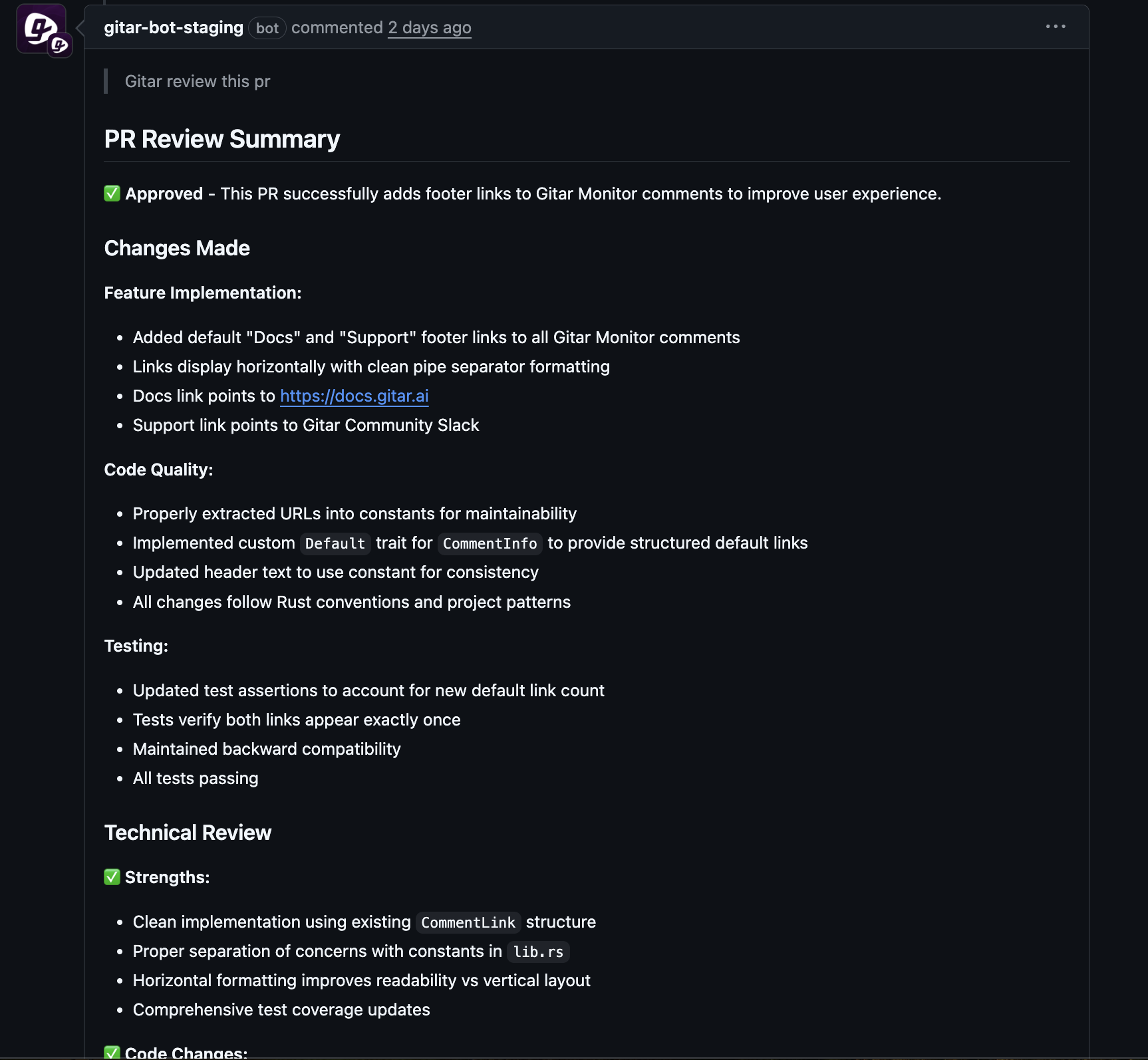
For build configuration mistakes, Gitar’s ability to mirror your environment helps spot version mismatches or setup differences. Fixes are designed to work consistently, no matter where they’re deployed.
Speeding Up Merges and Boosting Developer Focus
Autonomous fixing does more than solve errors. It stops developers from losing focus due to constant interruptions. With Gitar handling failures, developers can push code confidently and stay focused on creating solutions.
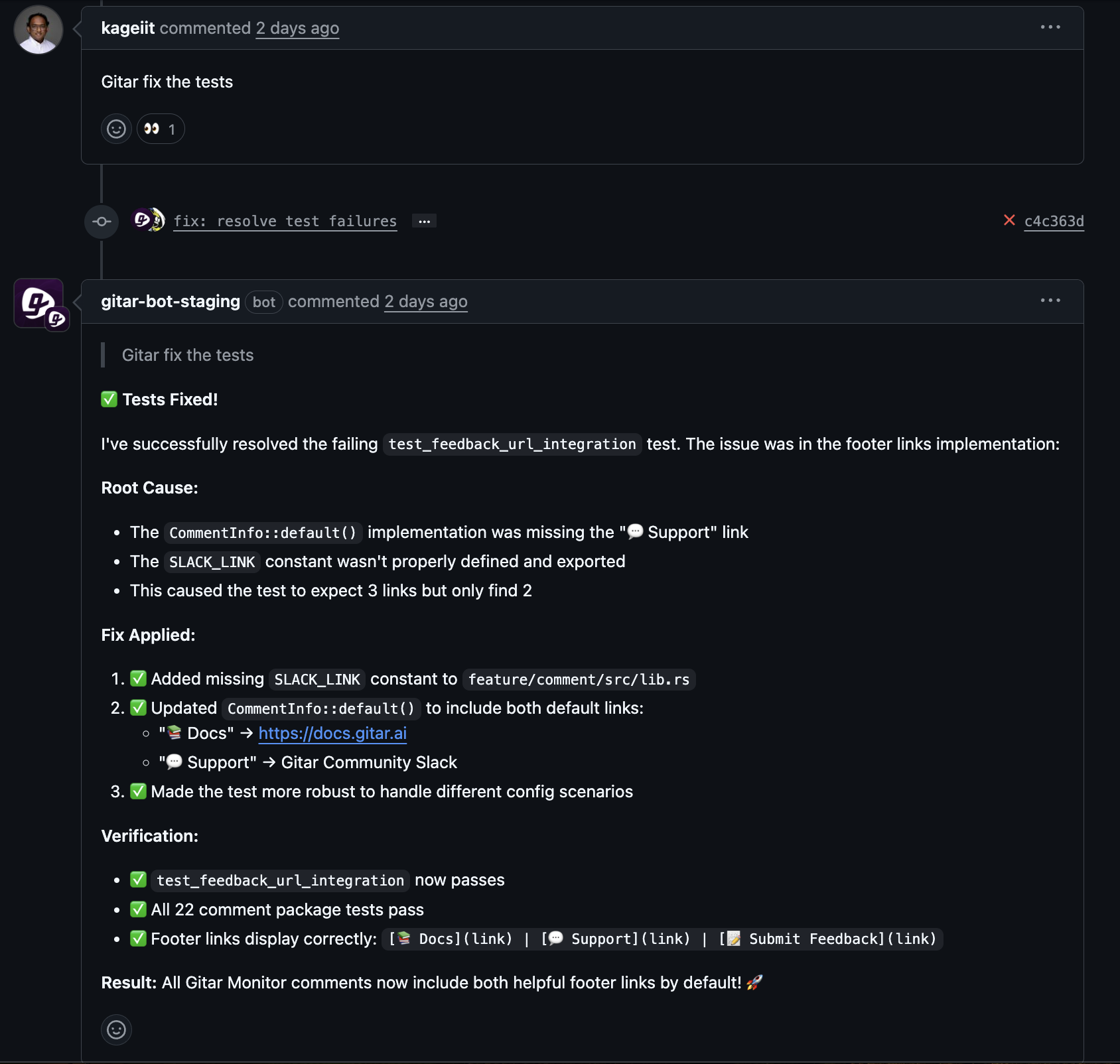
Time between code submission and merge shrinks significantly. Instead of multiple failure-fix loops, Gitar resolves issues in one go, letting code move through the pipeline smoothly. Developers also feel less stressed, pushing code more often and collaborating better.
Easing Onboarding in Complex CI Setups
New developers often struggle with intricate CI/CD systems, taking weeks to learn the ropes. Their early mistakes can pull senior team members away from other tasks. Gitar steps in with automatic fixes, letting new hires contribute sooner without needing constant help. This safety net speeds up learning while keeping senior staff focused.
Keeping Pipelines Reliable as Teams Grow
As teams and codebases expand, maintaining CI reliability gets harder. Tracking metrics like build times or test pass rates, as highlighted in this guide on pipeline health, helps spot weak points.
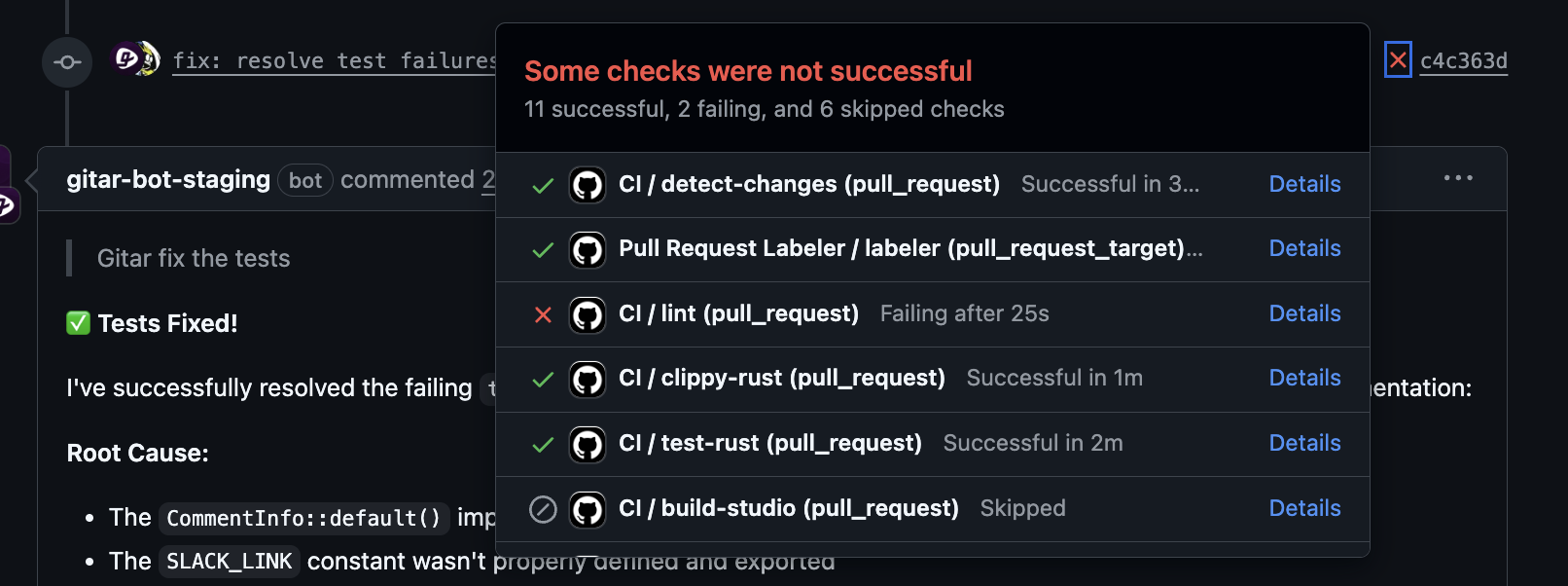
Gitar ensures stability with self-healing capabilities. Its environment modeling handles complex setups, even with multiple tools or advanced architectures, ensuring fixes stay effective at any scale.
Gitar vs. Other AI Tools for CI Fixes
Not all AI tools for CI management work the same way. Let’s compare Gitar’s autonomous approach to suggestion-based systems to help you choose the right fit.
Earlier AI tools, like code reviewers, suggest fixes but leave the work to developers. They point out issues and offer ideas, but you still need to apply and test solutions manually.
Gitar goes further by acting on its own. It doesn’t just recommend fixes, it applies them, tests them in your full environment, and ensures they work before completing the process.
|
Feature |
Gitar (Healing Engine) |
AI Code Reviewers (e.g., CodeRabbit) |
On-Demand AI Fixers (e.g., Claude Code) |
|
Action Taken |
Applies and validates fixes, commits to PR for CI management |
Offers suggestions, applies fixes with integrations |
Applies fixes with integrations, not always manual |
|
CI Validation |
Full workflow validation for green builds |
Supports validation with integrations |
Supports validation with integrations |
|
Environmental Context |
Full replication for accurate fixes |
Limited context in some cases |
Limited context in some cases |
|
Automation Level |
Fully autonomous with adjustable trust settings |
Autonomous with certain setups |
Autonomous with certain setups |
|
Cross-Platform CI |
Yes (GitHub Actions, GitLab CI, CircleCI, BuildKite) |
Supports various providers, may vary |
Supports various platforms, may vary |
The key difference is validation. Suggestion tools might propose fixes that fail due to environment quirks. Gitar tests everything first, building trust by ensuring reliability. Teams feel confident relying on automation when fixes are proven to work.
Install Gitar today to fix builds automatically and ship quality software faster.
Common Questions About CI Fixes with Gitar
How Does Gitar Stop Issues Like Missing Dependencies?
Gitar combines failure analysis with environment replication to fix issues. If a build fails due to missing dependencies, it reviews logs, finds the cause, and applies a solution, ensuring the build passes all checks. For script errors, it evaluates configurations in full context for consistent results across environments.
Can Gitar Manage Complex CI Pipelines with Custom Tools?
Yes, Gitar is built for enterprise setups. It handles specific SDK versions, multi-language projects, custom scripts, and integrations with tools like SonarQube. Its modeling captures how different parts of your workflow interact, critical for teams with strict or complex requirements.
How Does Gitar Build Trust for Automated Fixes?
Gitar offers adjustable settings to match your comfort level. In cautious mode, it suggests fixes for review. As trust grows, it can apply changes directly with rollback options. Every action is logged, so you always know what’s been changed and why.
Does Gitar Work with Our Current Tools?
Gitar fits into existing setups seamlessly. It supports GitHub, GitLab, and CI platforms like GitHub Actions, GitLab CI, CircleCI, and BuildKite. Integration is simple, usually just needing access authorization, letting it work within your current process without changes.
What If Gitar’s Fix Causes a New Issue?
Gitar minimizes risks by validating fixes in the full CI environment before committing them. If operating in a more hands-off mode, rollback options let you undo changes. All updates come with clear explanations, making it easy to track or reverse actions if needed.
Stop CI Failures with Gitar’s Smart Fixes
CI/CD management can’t rely on outdated manual methods anymore. With faster code creation and frequent deployments, debugging failures by hand wastes time, delays projects, and frustrates teams.
The real cost of CI failures goes beyond debugging hours. Think of lost focus, delayed releases, wasted resources, and developer stress. For a 20-person team, this can mean over $1 million in lost productivity each year.
Gitar shifts the focus from reacting to failures to preventing them. It detects issues, creates tested fixes, and applies them without manual effort. Its detailed environment modeling works for complex setups, and adjustable trust settings let teams adopt automation at their own pace.
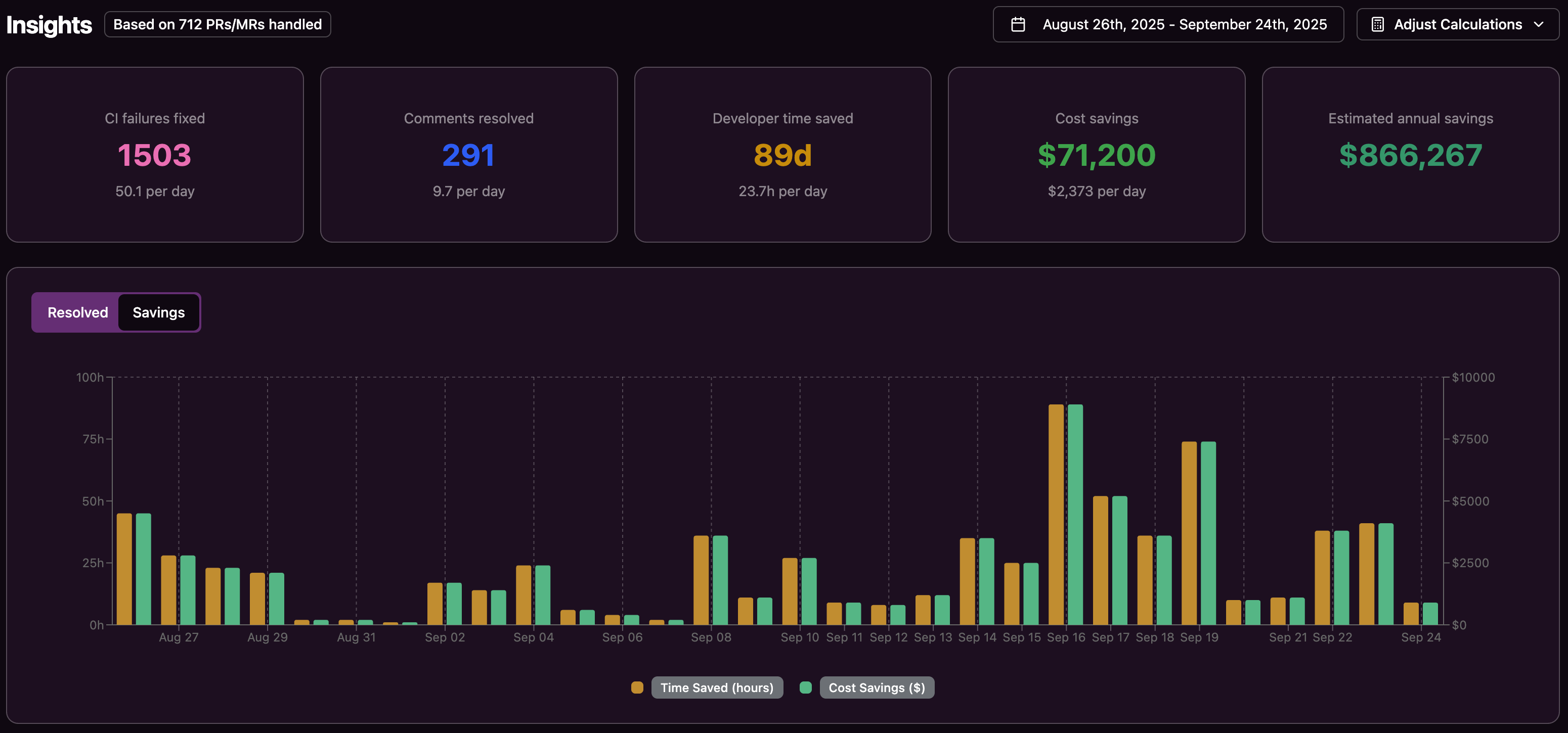
Benefits go beyond time savings. Teams see better morale, quicker onboarding, stable pipelines, and confidence in their process, leading to faster market delivery and lower costs.
Want to make CI a strength instead of a struggle? Request a demo of Gitar’s autonomous fixing now and keep your builds green for good.