
Written by: Ali-Reza Adl-Tabatabai, Founder and CEO, Gitar
Key Takeaways for Enterprise AI Code Review
- AI code generation has surged 3-5x, inflating PR review times by 91% and costing teams up to $1M annually in productivity losses.
- Traditional AI code review tools provide suggestions only, require manual fixes, and create notification spam without resolving bottlenecks.
- Gitar leads as the top free platform with true auto-fix remediation, CI failure healing, and enterprise scalability for 50M+ LOC.
- Competitors like CodeRabbit, Greptile, Snyk, and Mobb.ai offer limited or security-focused capabilities at $15-30 per user monthly without comprehensive automation.
- Teams achieve $750K+ ROI with Gitar’s healing engine; install Gitar now to automatically fix broken builds and ship higher quality software faster.
1. Gitar: Free Auto-Fix Code Review With True Healing
Gitar stands out as the only enterprise AI code automation platform that offers unlimited free PR analysis with real remediation. Competing tools charge premium prices for suggestion-only workflows, while Gitar delivers full code review, security scanning, bug detection, and performance review at no cost. Autofix features run on a 14-day free trial.
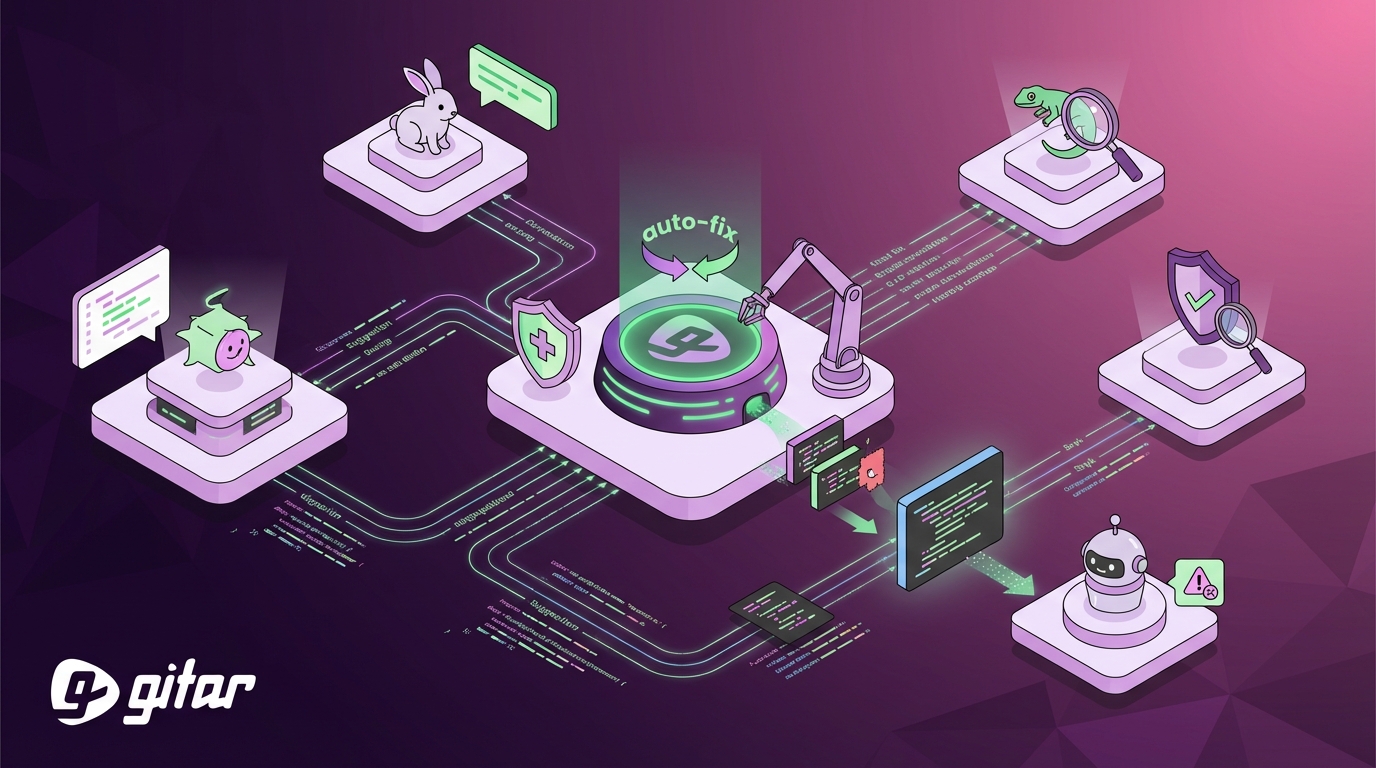
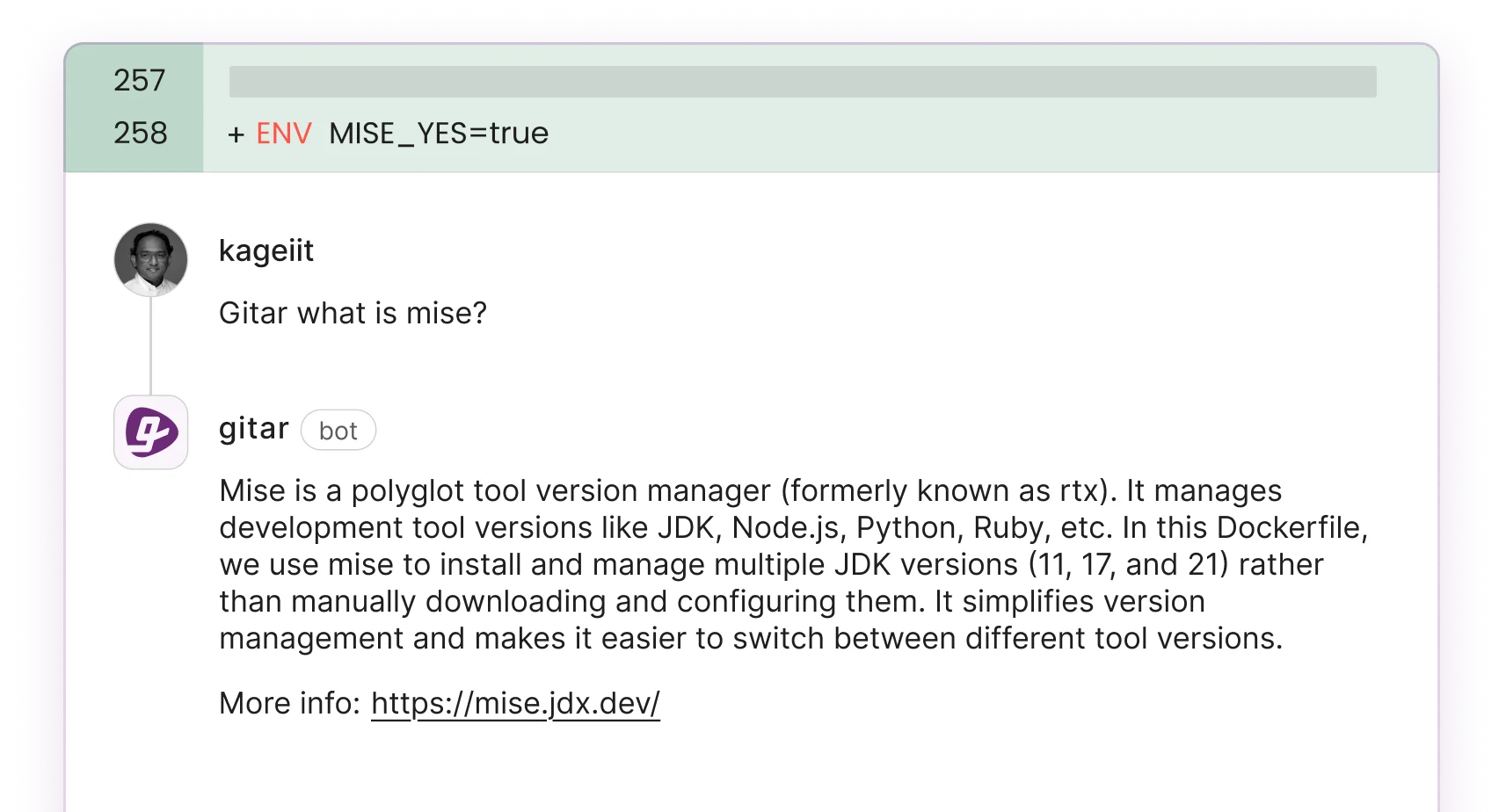
The healing engine analyzes CI failures, generates validated fixes, and commits them directly to pull requests. When reviewers leave feedback, Gitar applies the requested changes automatically. A single updating comment keeps everything in one place, which removes notification spam and centralizes CI analysis, review feedback, and rule evaluations in one clean view.
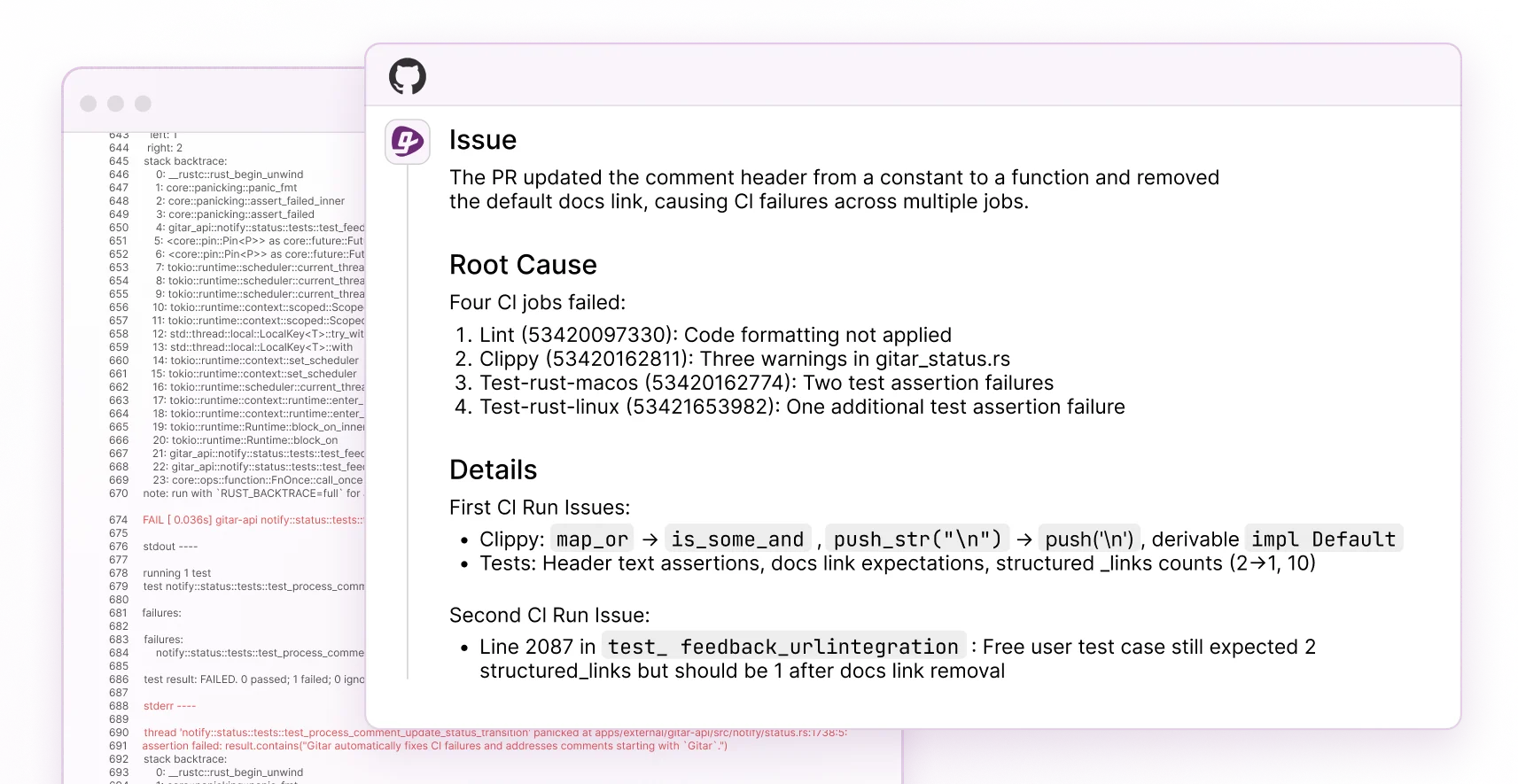
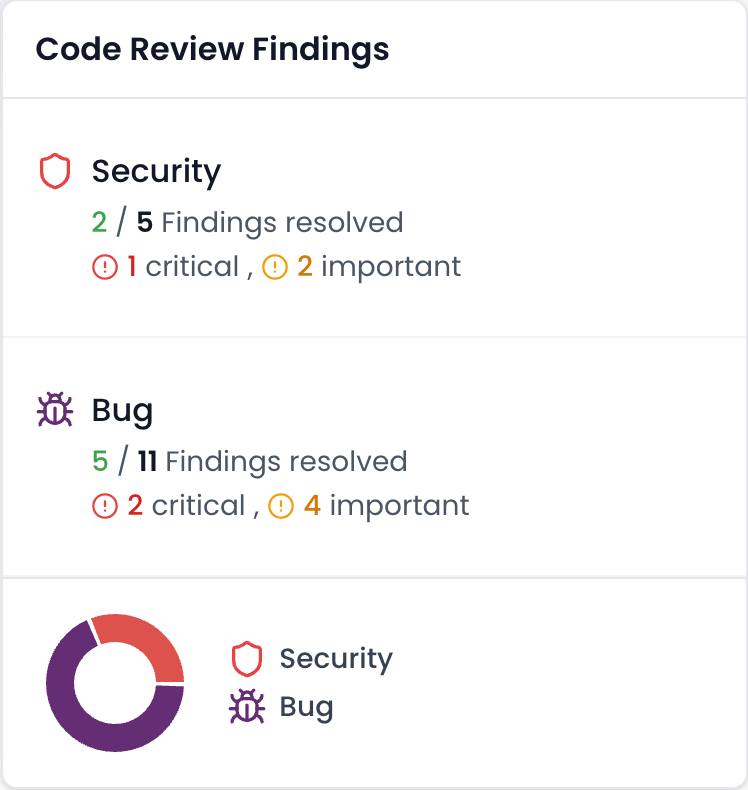
Enterprise deployments at Pinterest show Gitar handling more than 50M lines of code and thousands of daily PRs. The platform has caught high-severity security vulnerabilities in Copilot-generated code that the original AI tool missed. Teams report ROI above $750K each year through reduced context switching and automated issue resolution.
|
Metric |
Before Gitar |
After Gitar |
|
Time on CI/review issues |
1 hour/day/dev |
15 min/day/dev |
|
Annual productivity cost |
$1M |
$250K |
|
Tool cost |
$450-900/month |
$0 |
Setup takes about 30 seconds with no credit card and no seat limits. Gitar supports GitHub, GitLab, CircleCI, and Buildkite, and connects natively to Jira and Slack for smooth workflow automation.
Install Gitar now, automatically fix broken builds, start shipping higher quality software, faster and see the difference between suggestion engines and healing platforms.
2. CodeRabbit: Helpful Suggestions Without Full Healing
CodeRabbit offers AI-powered code reviews with line-by-line suggestions and PR summaries. It focuses on automated remediation for common issues such as bugs and style violations. The platform integrates with GitHub and GitLab, supports real-time chat, and can auto-apply fixes for up to 80% of simple cases.
CodeRabbit still operates mainly as a suggestion-based tool and requires manual approval for fixes. It struggles with complex, context-heavy bugs and does not provide native CI or CD pipeline healing. Multiple inline comments often create notification fatigue for busy teams. Enterprise pricing starts at $20 per user monthly, which becomes expensive at scale without delivering full automation.
CodeRabbit identifies many issues, yet teams continue to spend substantial time applying suggested fixes and validating them against CI systems. That manual work limits productivity gains compared with healing engine platforms.
3. Greptile: Deep Context With Suggestion-Only Fixes
Greptile focuses on AI code search and understanding with deep codebase indexing for semantic search. It supports more than 20 programming languages. The platform can generate auto-fix PRs for security and performance issues and offers context-aware suggestions inside IDEs.
Greptile achieved an 82% bug catch rate in 2025 benchmarks, yet remediation still remains suggestion-only. The product does not provide one-click auto-apply functionality. High compute costs on large repositories and weak handling of legacy code interdependencies limit its value for large enterprises. Cloud pricing starts at $30 per active developer each month.
Greptile delivers strong codebase context, but the absence of automated fix validation and CI integration means teams still carry heavy manual implementation overhead that rarely matches the premium price.
4. Snyk: Focused Security Scanning and Fixes
Snyk Code provides AI-driven security scanning with automated remediation for vulnerabilities. It supports auto-fix PRs for known CVEs and infrastructure-as-code misconfigurations. The platform offers IDE plugins and CI integration through GitHub Actions and Jenkins, along with exploit path analysis.
Snyk focuses tightly on security and does not cover full-spectrum code review. It ignores style, performance, and general bug fixes. Auto-fixes apply mainly to low-risk issues and succeed at roughly 60%, so teams still perform manual review before production. Pricing starts at $25 per developer monthly, which feels high for organizations that also need broader code quality automation.
Snyk works well for security-specific workflows but cannot replace platforms that handle the complete range of development quality issues.
5. Mobb.ai: Agentic Vulnerability Fixes With Narrow Coverage
Mobb.ai automates vulnerability remediation with AI agents that generate and test fix PRs directly in CI pipelines. The company claims 90% fix rates for vulnerabilities with binary-level verification after each fix. The platform integrates with Jira and Slack and focuses on OWASP Top 10 and custom security rules.
Mobb.ai concentrates on security and does not support non-security remediation. Agent-based fixes introduce regressions in 5-10% of cases, which forces extra review cycles. Enterprise setup requires significant configuration effort and a steep learning curve. Pricing starts at $15,000 annually for teams, which places it out of reach for many organizations.
Mobb.ai showcases advanced agentic behavior, yet its narrow scope and high cost reduce its appeal when compared with platforms that improve the entire development workflow.
Install Gitar now, automatically fix broken builds, start shipping higher quality software, faster and replace multiple specialized tools with one comprehensive platform.
Feature Comparison: Gitar vs. CodeRabbit, Greptile, and Snyk
|
Feature |
Gitar (Free) |
CodeRabbit |
Greptile |
Snyk |
|
PR Summaries |
Yes |
Yes |
Yes |
No |
|
Inline Suggestions |
Yes |
Yes |
Yes |
Yes |
|
Auto-Apply Fixes |
Yes (14-day trial) |
Partial |
No |
Partial |
|
CI Failure Resolution |
Yes |
No |
No |
Limited |
Enterprise-Grade Automation and Workflow Intelligence
Enterprise teams need AI code automation platforms that build trust, integrate with complex CI setups, and satisfy strict security requirements. Gitar addresses these needs with configurable suggestion modes that let teams ramp up gradually before enabling automated commits. SOC 2 Type II certification and detailed audit trails support compliance and governance.
Agentic workflows in Gitar extend beyond basic review. Teams define rules in natural language, benefit from hierarchical memory that learns team patterns, and access deep analytics for CI failure categorization. Competing tools often stop at review comments, while Gitar delivers a broader development intelligence layer that supports scalable automation.
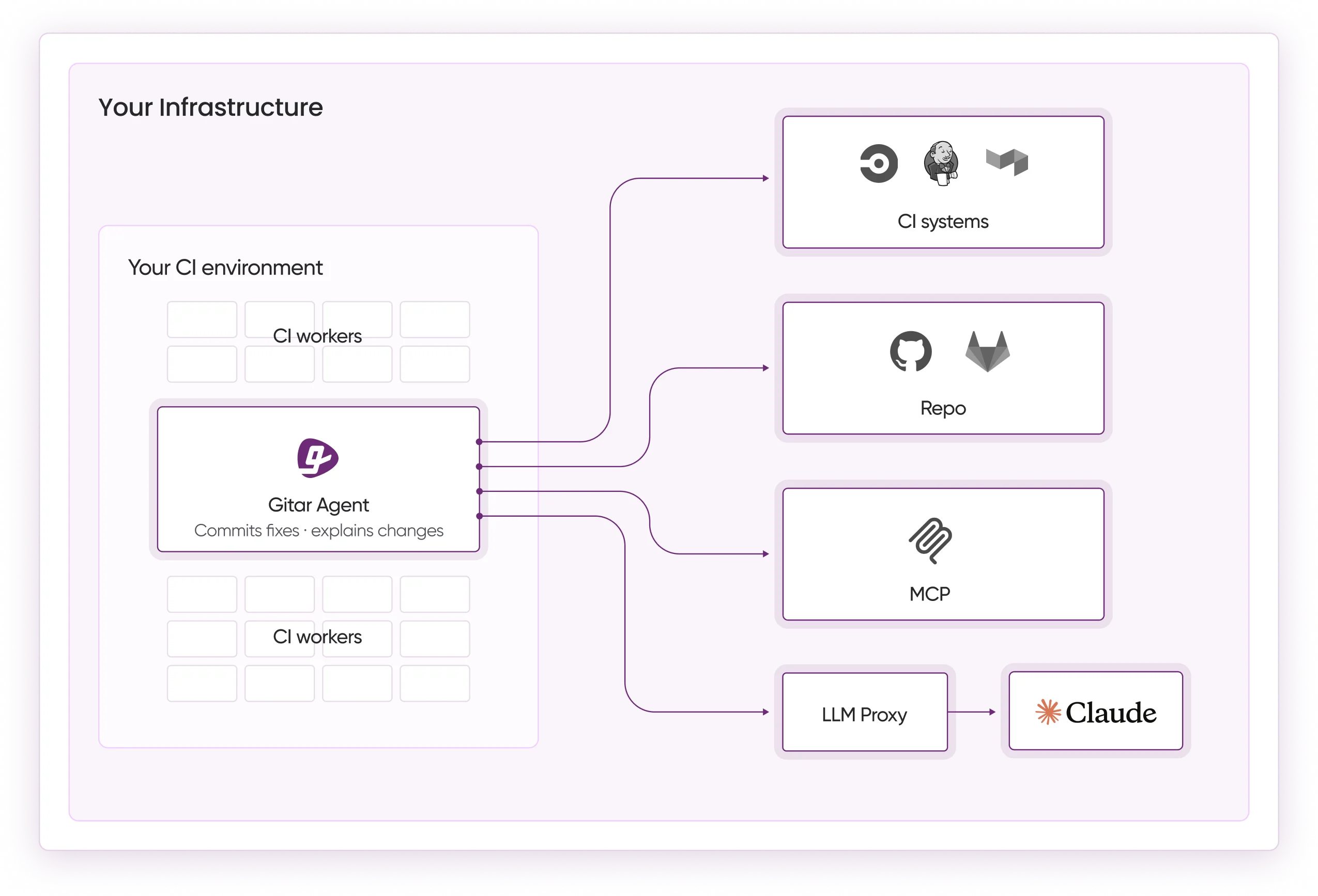
Gitar answers concerns about a free model through a clear platform strategy. Code review acts as the trust-building entry point, while advanced enterprise features, analytics, and custom workflows drive revenue. This model turns basic review into a commodity and delivers higher value through complete automation.
Install Gitar now, automatically fix broken builds, start shipping higher quality software, faster and access enterprise-grade AI code automation without enterprise-level pricing.
Key Tradeoffs When Choosing an AI Code Platform
Software engineers gain the most from platforms that remove context switching through automated CI failure resolution and consolidated feedback. Engineering leaders should favor solutions that show clear ROI with lower tool costs and faster team velocity. Platform and DevOps engineers need cross-platform coverage, natural language workflow configuration, and self-healing CI capabilities that cut maintenance work.
The decision between suggestion engines and healing platforms shapes whether AI code review saves time or adds extra tasks. Teams paying $15-30 per developer monthly for suggestion-only tools should examine whether manual implementation overhead justifies that spend when free platforms can fix code automatically.
Frequently Asked Questions
Is free AI code review from Gitar comparable to paid tools like CodeRabbit?
Free AI code review through Gitar often surpasses paid alternatives in both features and outcomes. CodeRabbit charges $20 or more per user monthly for suggestion-only workflows, while Gitar offers full PR analysis, security scanning, bug detection, and performance review at no cost. Autofix features run on a 14-day free trial. The main difference lies in remediation. Paid tools leave comments that require manual implementation, while Gitar’s healing engine fixes issues automatically and validates them against CI systems. Enterprise teams report stronger ROI with Gitar because they avoid tool costs and reduce manual effort.
How do AI code remediation tools automatically fix CI failures?
Advanced AI code remediation platforms such as Gitar read CI failure logs to pinpoint root causes, then generate code fixes with full codebase context. They validate those fixes inside the actual CI environment and commit only working solutions. The workflow parses build errors, lint failures, and test failures to identify specific problems. It then applies targeted fixes that address root causes instead of surface symptoms. The validation step ensures that fixes pass before commit, which prevents the cycle of broken fixes common with suggestion-only tools.
What are the key differences between Gitar and CodeRabbit or Greptile?
The core difference between Gitar and competitors sits in the remediation model. CodeRabbit and Greptile behave as suggestion engines that highlight issues and propose fixes through comments. Developers must still implement and validate those changes manually. Gitar operates as a healing engine that fixes code automatically, validates solutions against CI systems, and commits working fixes directly. Gitar also consolidates feedback into a single updating comment, while competitors often flood PRs with inline comments that create notification overload. Cost adds another major gap. Gitar delivers this functionality for free, while competitors charge $20-30 per user monthly.
Which platforms handle codebases larger than 50M lines of code?
Codebases above 50 million lines require platforms with strong infrastructure, efficient processing, and proven scale. Gitar demonstrates this scale at Pinterest and other large organizations, where it manages thousands of PRs each day without slowdowns. The architecture supports unlimited repositories and users and avoids seat-based pricing. Tools like CodeRabbit and Greptile rely on per-user pricing, which becomes costly for large engineering teams.
How does ROI compare for free versus paid enterprise AI code review?
Enterprise ROI strongly favors free platforms that deliver full automation over paid suggestion-only tools. A 20-developer team often loses about $1M each year to CI and review friction, while paying $450-900 monthly for tools like CodeRabbit or Greptile that do not remove the core bottlenecks. Gitar cuts productivity losses to roughly $250K annually and removes tool costs, which yields net savings above $750K. As teams grow, Gitar’s advantage increases because it scales without per-user fees, while competitor costs rise with every new hire.
Conclusion: Use Gitar to Break the AI Coding Bottleneck
The 2026 AI coding bottleneck requires healing engines instead of suggestion platforms. Competing tools charge premium prices for comment-based workflows that often create more work. Gitar delivers complete code review, automated CI failure resolution, and enterprise-ready features at no cost. Its proven scalability, strong remediation, and zero-price model make it a clear choice for teams that want to remove right-shift bottlenecks.
Enterprise teams can remove more than $750K in yearly productivity losses and avoid $450-900 in monthly tool spend with Gitar’s healing engine. A 30-second installation, unlimited scalability, and a comprehensive feature set provide immediate value without typical enterprise software friction.
Install Gitar now, automatically fix broken builds, start shipping higher quality software, faster and experience the future of AI code automation today.