
Key Takeaways
- Manual handling of CI failures and review feedback interrupts developer focus, slows delivery, and increases burnout risk.
- Hidden costs from broken builds, context switching, and review delays can reach millions of dollars per year for mid-sized teams.
- Autonomous CI fixing turns failing pipelines into self-healing workflows by diagnosing issues, applying code changes, and validating builds.
- Gitar integrates with existing CI and code review tools to resolve failures, implement feedback, and shorten time-to-merge for distributed teams.
- Teams can reduce manual toil and keep developers focused on product work by installing Gitar and automatically fixing CI and review issues at https://gitar.ai/fix.
The Pervasive Problems in Continuous Integration Testing Automation
Developer Productivity Drain and Context Switching
Developers lose significant time to manual debugging, context switching, and repetitive fixes, often reaching 30 percent of their working hours each year. Each failed build or review comment forces a jump from deep work back into investigation mode, which interrupts flow and slows feature work.
High cognitive load from technical debt and complex CI setups increases mental fatigue. A change that should take 20 minutes can expand into a full day of digging through logs, rebuilding environments, and reconciling configuration issues across services.
Hidden Financial Costs and Project Delays
For a 20-person development team, broken builds and manual review cycles can easily cost around 1 million dollars per year in lost productivity. Time spent chasing scattered logs, reproducing failures, and clarifying review comments comes directly out of time that could go toward new features or quality improvements.
CI pipeline failures also ripple beyond engineering. Delayed releases slow time-to-market, reduce the ability to respond to customers, and create room for competitors. Frequent delays and hotfixes erode customer trust when releases feel unpredictable or unstable.
Bottlenecks in Code Review Workflows
Code review often becomes a bottleneck when feedback cycles stretch across multiple days. Developers wait for reviews, then return to work they had mentally closed, which restarts the context-switching cycle.
Distributed teams feel this most acutely. Time zone gaps can turn a simple two-comment review into a multi-day process when each clarification waits for the next workday. Vague expectations and rework loops add to frustration and burnout.
The Right-Shift Bottleneck in an AI-Created Code World
Modern AI coding tools now generate more code and more pull requests than before. The bottleneck has shifted from writing code to validating, testing, and merging it safely.
More pull requests mean more tests, more CI runs, and more chances for failures. Effective continuous integration testing automation now depends on how quickly teams can fix and revalidate these failures, not only on how fast they can write code.
The Solution: Self-Healing Continuous Integration Testing Automation with Gitar
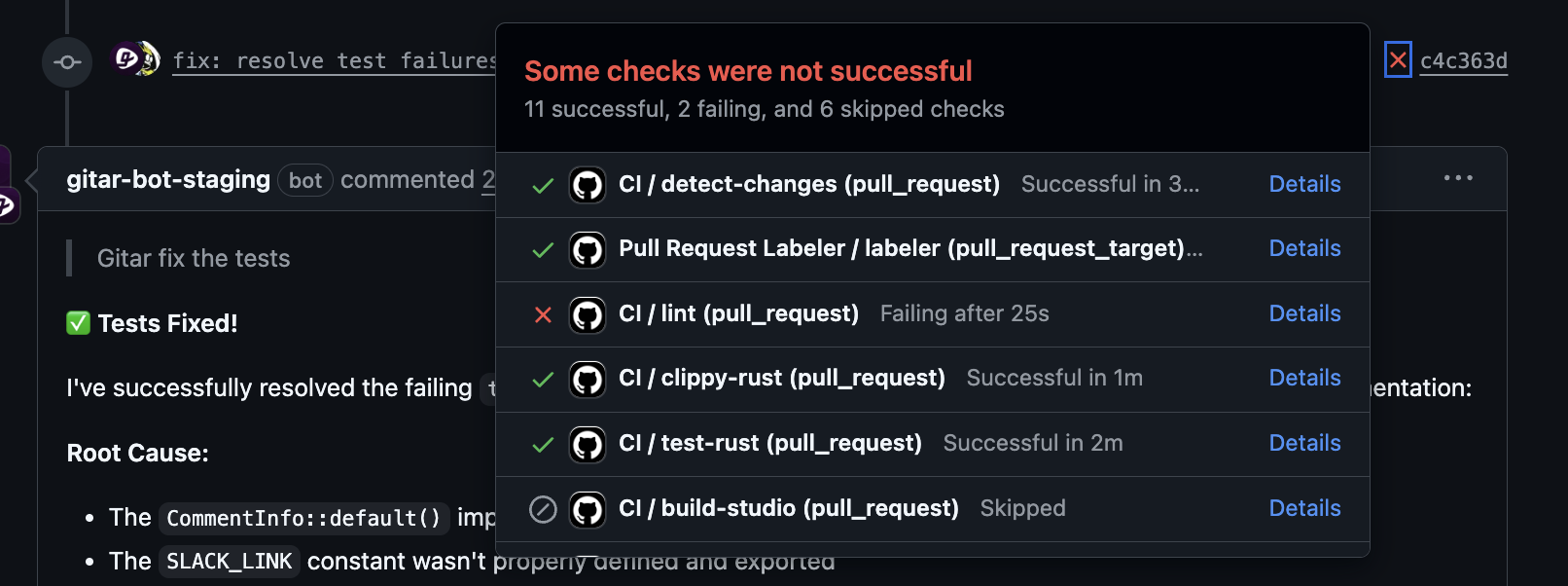
Gitar is an autonomous AI agent that fixes failing CI pipelines and implements code review feedback directly in pull or merge requests. When CI fails or a reviewer leaves a comment, Gitar analyzes the issue, generates the required code changes, and updates the branch with tested fixes.
This self-healing CI model replaces hours of manual investigation with an automated, background workflow. Developers stay focused on their current tasks while Gitar clears blockers, which raises effective throughput and shortens time from commit to merged code.
Key Capabilities of Gitar for Continuous Integration Testing Automation
- End-to-end fixing that applies code changes, validates them against the full CI workflow, and surfaces green pull requests only after all jobs pass.
- Full environment replication for complex enterprise workflows, including specific JDK versions, multiple SDKs, and tools such as SonarQube and Snyk.
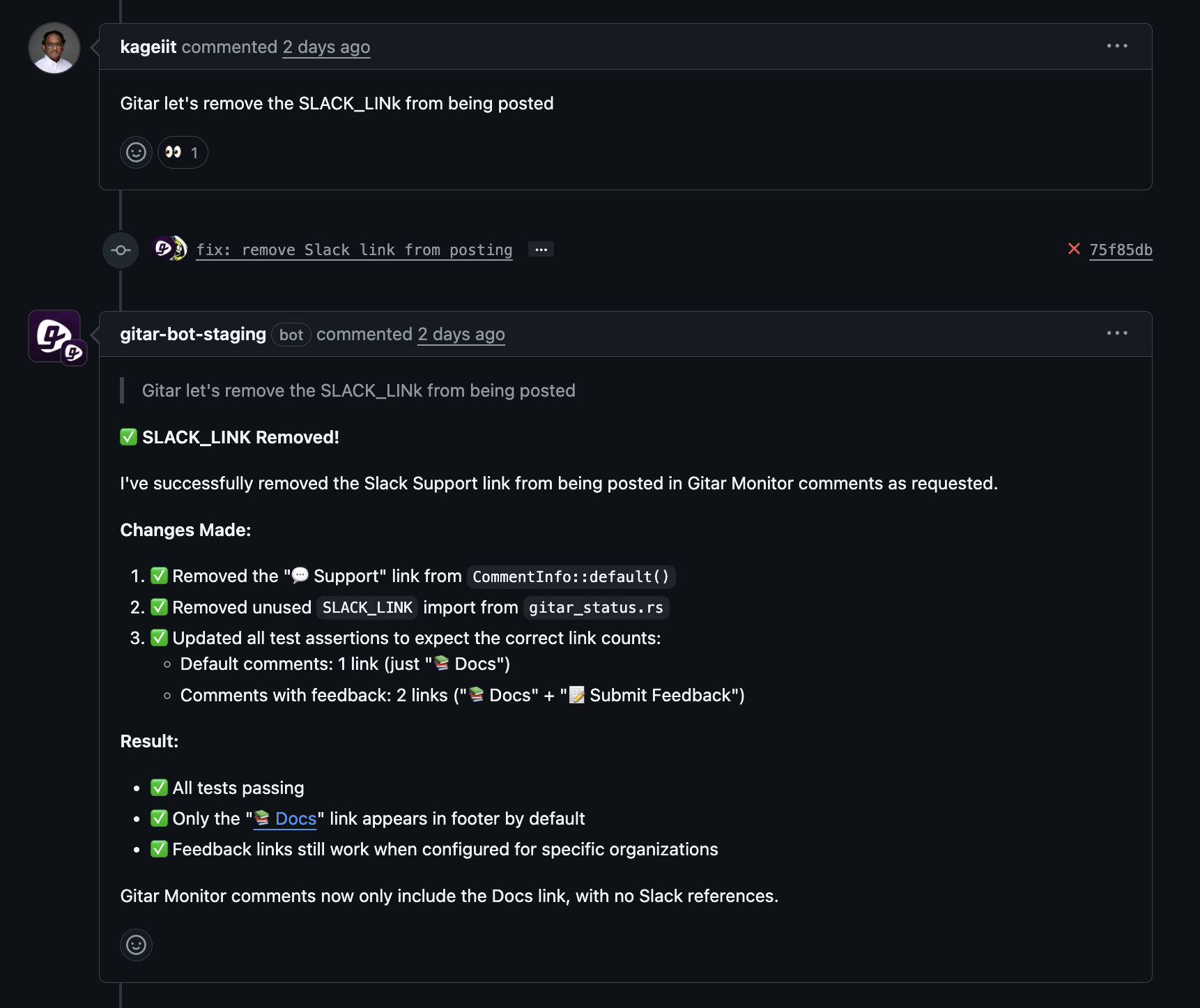
- Intelligent code review assistance that reads natural language comments, implements requested changes, and commits updates to the same branch.
- Configurable trust and approval models so teams can start with suggested fixes, then move toward auto-commit and auto-merge once confidence grows.
- Cross-platform support for GitHub Actions, GitLab CI, CircleCI, Buildkite, and other popular CI systems.
Teams that want to remove manual CI toil can start using Gitar to fix broken builds and address review feedback at https://gitar.ai/fix.
How Gitar Changes Your SDLC with Autonomous CI
Restoring Developer Flow and Improving Morale
Flow-friendly workflows keep developers focused on design and problem solving, not on babysitting CI. Gitar removes many of the interruptions that come from failed tests, missed dependencies, and minor review requests.
Less repetitive fixing work reduces frustration and helps teams avoid burnout. Developers can concentrate on complex tasks while Gitar resolves routine issues in the background.
Accelerating Time-to-Merge and Delivery Speed
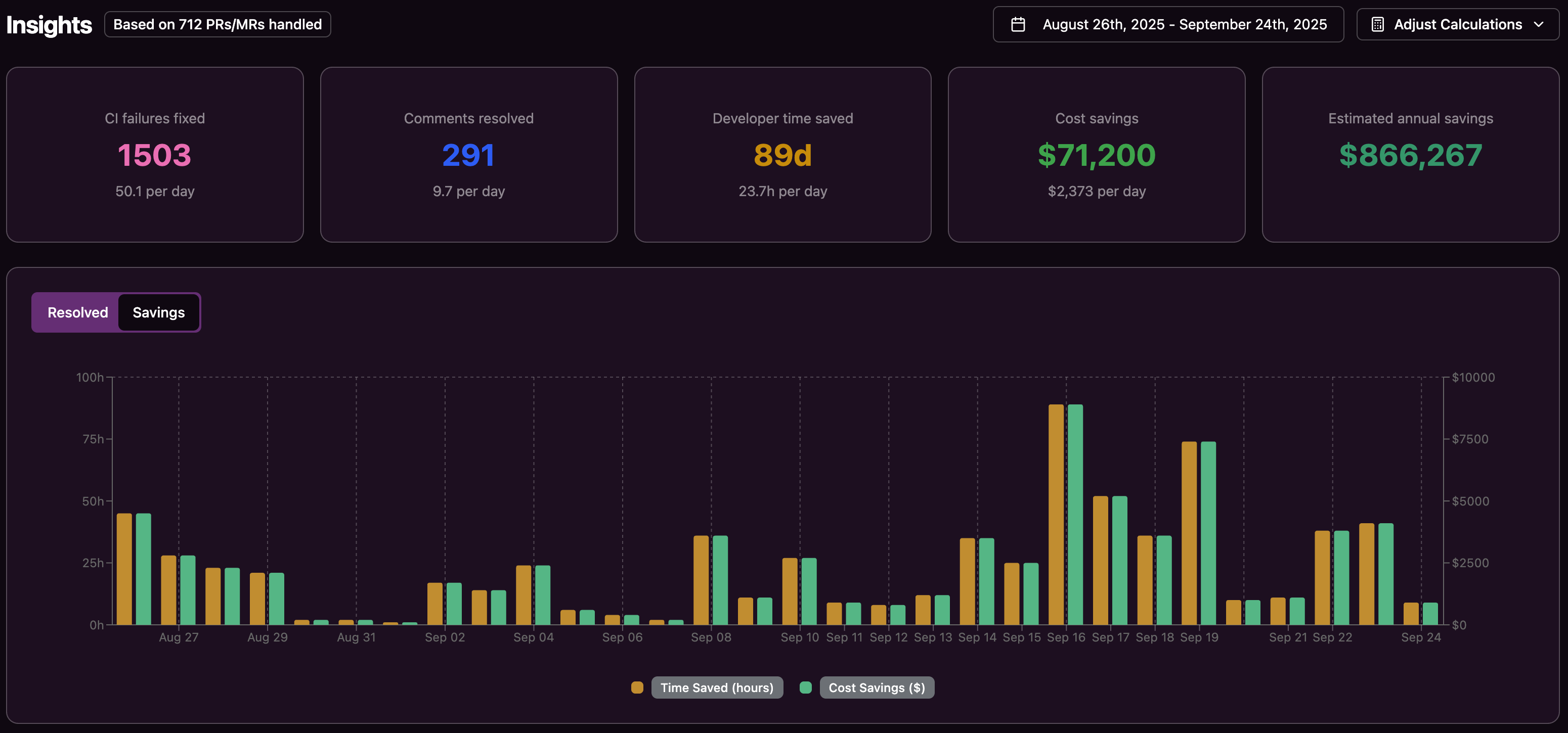
Shorter feedback loops lead directly to faster delivery. Gitar resolves common CI failures such as lint errors, flaky or failing tests, and build configuration issues without waiting for manual intervention.
Faster CI recovery improves time-to-merge, a core productivity metric. Pull requests spend less time stuck in a failed or “needs changes” state, which shortens release cycles and keeps work moving.
Ensuring Reliability and Compliance in Complex CI/CD Environments
Enterprise CI/CD environments often include language-specific toolchains, security scans, license checks, and organization-wide quality gates. Gitar mirrors these conditions so that the fixes it applies are tested in the same environment as production builds.
This context-aware approach reduces the risk of configuration drift between local and CI environments and improves confidence that green builds truly reflect production readiness.
Supporting Distributed Teams and Asynchronous Collaboration
Distributed teams benefit when work can progress while people are offline. Reviewers can leave detailed instructions for Gitar, and the requested changes are implemented and pushed before the original author returns.
This asynchronous loop reduces the impact of time zones. A pull request opened in one region can receive automated fixes and review updates overnight, turning multi-day review delays into a single cycle.
Gitar as a Healing Engine for Continuous Integration Testing Automation
Many AI tools for code review operate as suggestion engines. They point out potential problems and propose code snippets, but developers still need to apply, test, and refine those changes.
Gitar focuses on autonomous resolution rather than suggestions alone. The system applies changes, runs the full CI workflow, and only presents fixes that pass.
|
Feature / Tool |
Manual Work (Status Quo) |
AI Code Reviewers |
Gitar (Autonomous CI Fixing) |
|
CI failure resolution |
Manual investigation and fixing |
Suggests potential fixes |
Autonomously applies and validates fixes |
|
Code review feedback action |
Manual implementation |
Suggests changes |
Autonomously implements feedback and commits |
|
Developer interruption |
High, frequent context switching |
Moderate, manual application required |
Low, runs autonomously in the background |
|
Guaranteed green build |
No, manual revalidation required |
No, suggestions only |
Yes, validates against full CI workflow |
This healing-engine approach removes a major bottleneck in continuous integration testing automation and supports a more predictable path from commit to release.
Teams that want autonomous CI fixing rather than suggestions can try Gitar at https://gitar.ai/fix.
Frequently Asked Questions About Continuous Integration Testing Automation
How much developer time is spent on CI failures and code reviews?
Developers can lose up to 30 percent of their time each year to CI issues and review cycles. For a 20-person team, that loss can approach 1 million dollars in productivity when salary, overhead, and opportunity cost are combined.
Can AI code review tools replace human reviewers?
AI tools help surface issues and suggest improvements, but they do not fully replace human understanding of architecture, intent, and tradeoffs. Gitar complements human review by handling the implementation of requested changes and CI fixes so reviewers can focus on decisions rather than mechanics.
Is it safe to automate fixes in CI without human oversight?
Gitar supports configurable modes that let teams control automation. Many teams start by having Gitar open pull requests or suggest commits that require human approval. As confidence grows, they can enable more automated commit or merge behavior with logging and rollback options in place.
How does autonomous CI fixing differ from IDE-based coding assistants?
IDE assistants such as GitHub Copilot focus on the pre-commit phase while developers are writing code. Gitar operates after code is pushed, reacting to failed CI runs and review feedback in remote repositories. The goal is to ensure that submitted code passes organizational quality gates with minimal manual intervention.
Conclusion: Moving Toward Autonomous CI in 2026
Traditional continuous integration testing automation that depends on manual fixes no longer matches the pace of modern development. The combined cost in time, morale, and delayed releases is significant, especially as AI-generated code increases the volume of changes entering CI systems.
Gitar enables a more autonomous model in which CI pipelines recover on their own and review feedback turns into applied, validated code changes. Engineering teams gain faster delivery, more reliable builds, and a better developer experience.
Teams ready to reduce manual firefighting and move toward self-healing CI can install Gitar at https://gitar.ai/fix.