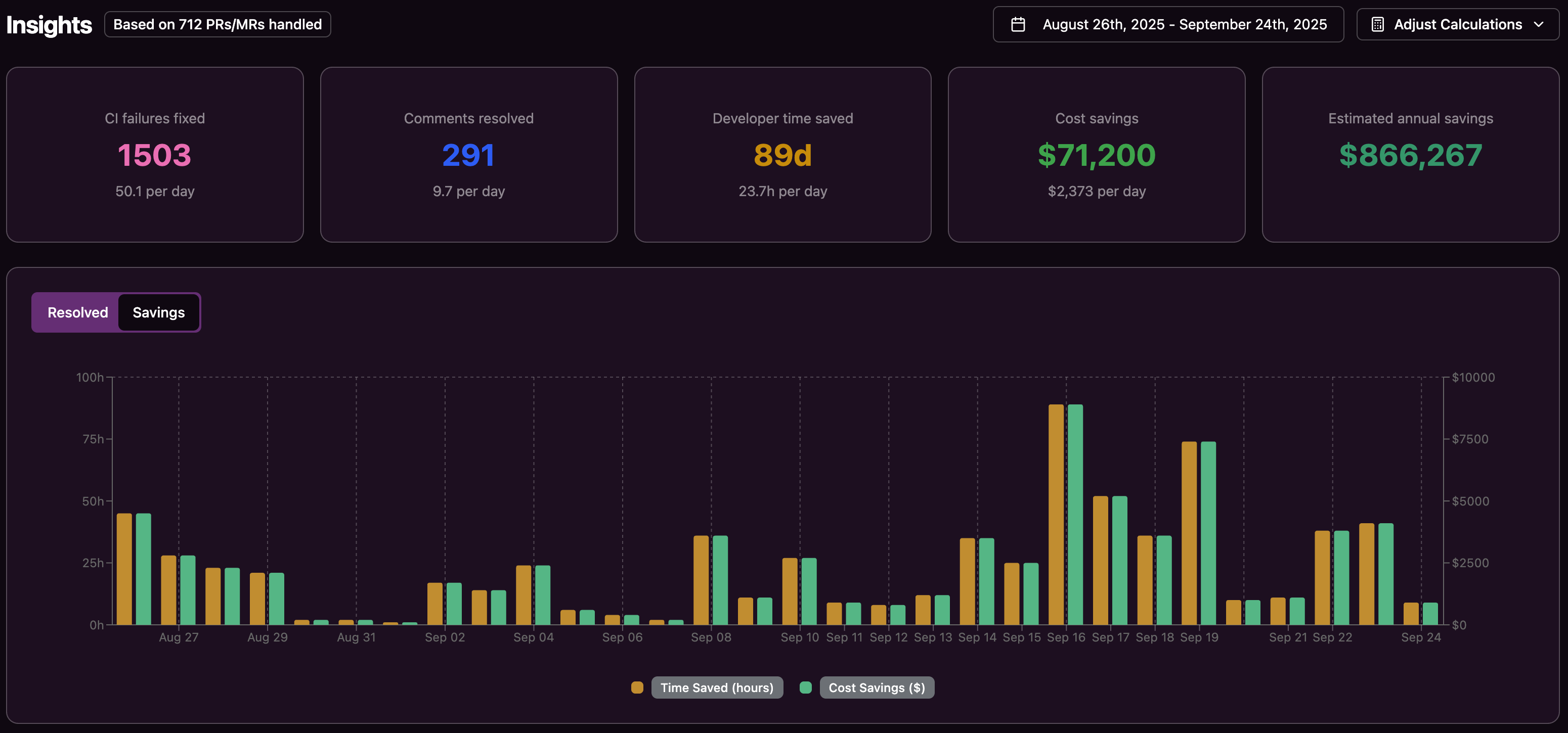
CI failures and lengthy code reviews slow down software development, frustrate developers, and delay project timelines. When code changes are pushed, issues like linting errors, test failures, or style violations often trigger failed builds, pulling developers away from their main tasks. This interruption can consume up to 30% of their time, turning code delivery into a bottleneck. In this article, we’ll explore these common challenges and show how effective code linting serves as a vital first step in maintaining quality. Then, we’ll introduce Gitar, an autonomous CI healing tool that goes beyond suggestions to fix issues automatically, helping developers stay focused and productive.
Why CI Failures and Code Reviews Slow Down Development
CI/CD pipelines aim to speed up software delivery, yet they often become a source of frustration for developers. Pushing a pull request can lead to a flood of build failure notifications due to minor issues like a missing semicolon, a failed test, or a dependency error. Developers then spend time decoding error logs, switching back to local setups, applying fixes, and waiting for pipelines to rerun, disrupting their workflow.
How Context Switching Impacts Productivity
CI failures cost more than just the time to fix them. When developers shift focus from one task to address an issue, regaining full concentration can take over 20 minutes. Even a quick linting fix might result in an hour of lost productivity due to this mental reset. For distributed teams, time zone differences can stretch a simple feedback loop into days, adding further delays with each round of context switching.
Manual Code Reviews as a Bottleneck
Code reviews ensure quality but slow down delivery as development speeds up. With tools like GitHub Copilot generating more code, the volume of pull requests increases, yet reviews remain largely manual. Reviewers often spend time on minor issues like formatting errors that linters could catch, while authors wait to interpret feedback and make changes. This process can extend over days, especially across time zones, delaying merges and impacting time-to-market.
Limitations of Standard Linting Tools
Linting tools catch code quality issues early, but they don’t solve the core productivity problem. Most only flag issues, leaving developers to figure out and apply fixes manually. Junior developers may struggle with unclear messages, while even experienced ones face delays with complex rules or setups. As a result, linting still requires human effort and doesn’t prevent workflow interruptions.
How Code Linting Strengthens Code Quality
Even with its limitations, linting remains a critical tool for maintaining high standards in codebases. It helps catch errors early and sets the stage for automated solutions like Gitar that can take quality assurance further by resolving issues without manual input.
What Code Linting Does for Early Error Detection
Linting tools analyze code statically to spot errors and style issues without running it, offering instant feedback. Unlike debugging at runtime, which catches issues after deployment, linting works directly on source code to prevent problems before they affect users or systems. It also enforces consistent coding standards across teams, aiding maintenance and collaboration.
Broader Benefits of Advanced Linting
Modern linting tools provide ongoing feedback and fit into workflows to uphold consistency and teamwork. They can detect performance issues, security risks, and design flaws early on. For newer developers, linting acts as a learning tool, teaching best practices through direct feedback, which speeds up onboarding and supports quality as teams grow.
Preventing Major Issues with Linting
Advanced linting catches serious problems like type mismatches, unreachable code, and memory leaks. It also helps address security concerns, such as SQL injection risks, aligning code with standards like OWASP Top 10. By combining syntax checks and security scans, linting becomes essential, though its full value emerges only when paired with automated resolution.
Ready to tackle CI failures and speed up delivery? Install Gitar now to fix builds automatically.
Meet Gitar: Automating CI Fixes from Detection to Resolution
Gitar changes how teams manage code quality and CI pipelines by automating the entire process of fixing issues. Unlike traditional linting tools that only point out problems or AI reviewers that suggest fixes, Gitar detects failures, finds root causes, applies solutions, validates them in full CI environments, and commits the working code, all without developer involvement.

Gitar offers several key features to streamline development:
- Fixes linting and formatting errors automatically by applying code changes for common issues.
- Validates fixes by running them through the full CI pipeline to ensure they work correctly.
- Replicates complex CI setups, including specific SDKs, tools like SonarQube, and custom configurations.
- Acts on code review feedback by implementing changes from comments, reducing delays in reviews.
- Allows teams to adjust automation levels, starting with suggestions and moving to full autonomy as trust grows.
Ready to eliminate CI failures? Install Gitar today.
How Gitar Enhances Productivity and Code Standards
Gitar does more than automate fixes. It reduces interruptions from CI failures and reviews, letting teams focus on core development work while maintaining consistent quality across projects.
Protect Developer Focus and Boost Output
Developers work best when fully focused, but CI issues and feedback often break this concentration. Gitar handles these disruptions by fixing problems in the background. Developers can push code and move to the next task without stopping to address build failures or comments, preserving their productivity.
Speed Up Merges and Delivery Times
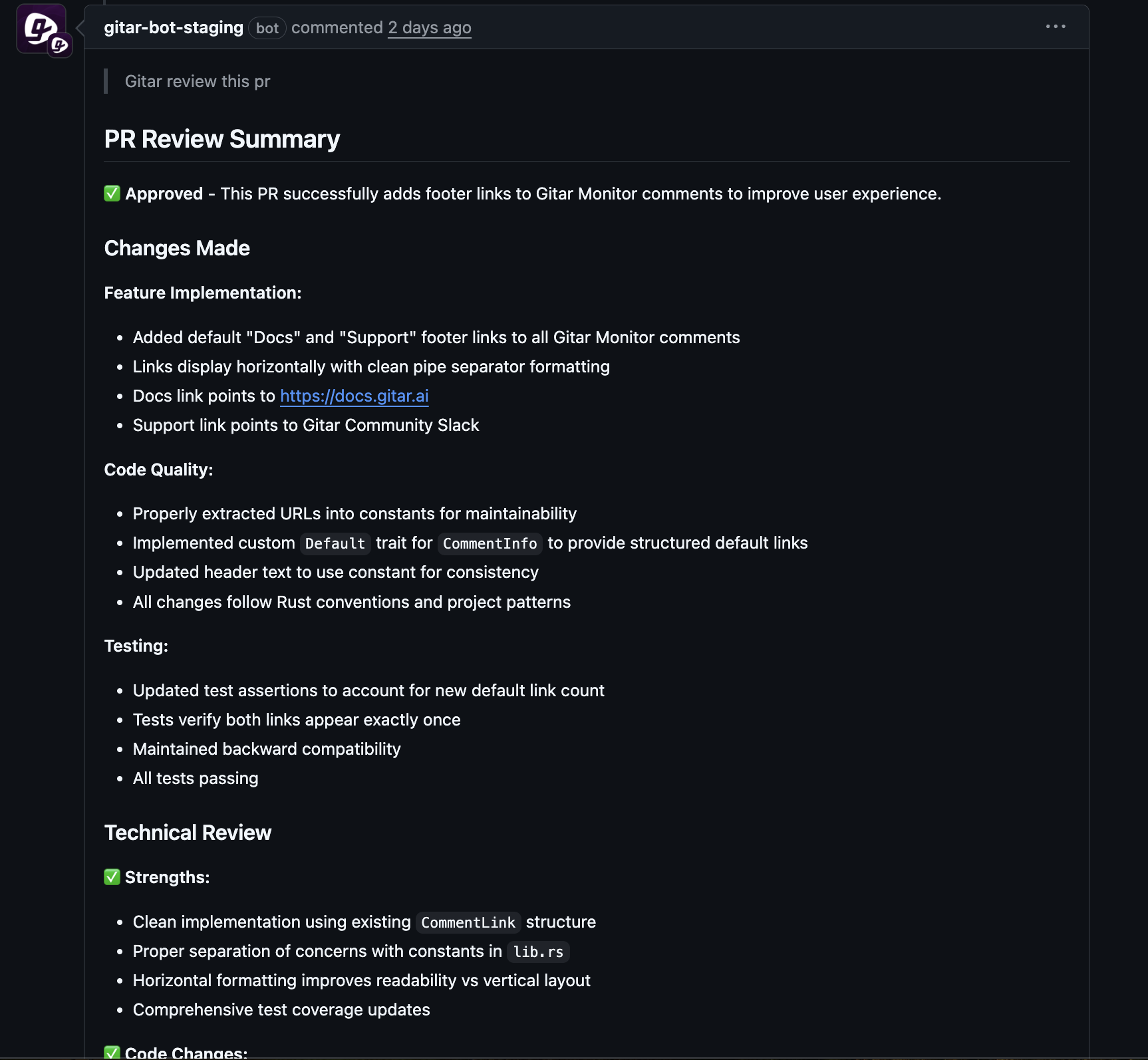
The time from commit to merge reflects a team’s delivery speed. Manual CI fixes and review cycles create delays. Gitar shortens these by automating fixes and validations, moving pull requests toward merge-ready status faster and focusing reviews on bigger-picture issues instead of minor corrections.
Maintain Consistent Quality and Limit Technical Debt
Manual processes can lead to uneven code quality based on individual attention or skill. Gitar applies fixes for linting violations uniformly, ensuring every change meets team standards. This consistency helps prevent small issues from building into larger maintenance challenges over time.
Ease Onboarding for New Developers
New engineers often find complex CI setups challenging, taking weeks to learn processes. Gitar simplifies this by managing failures and fixes automatically. This lets newcomers focus on core code logic while gradually learning CI details through the tool’s actions.
How Gitar Stands Out from Other Tools
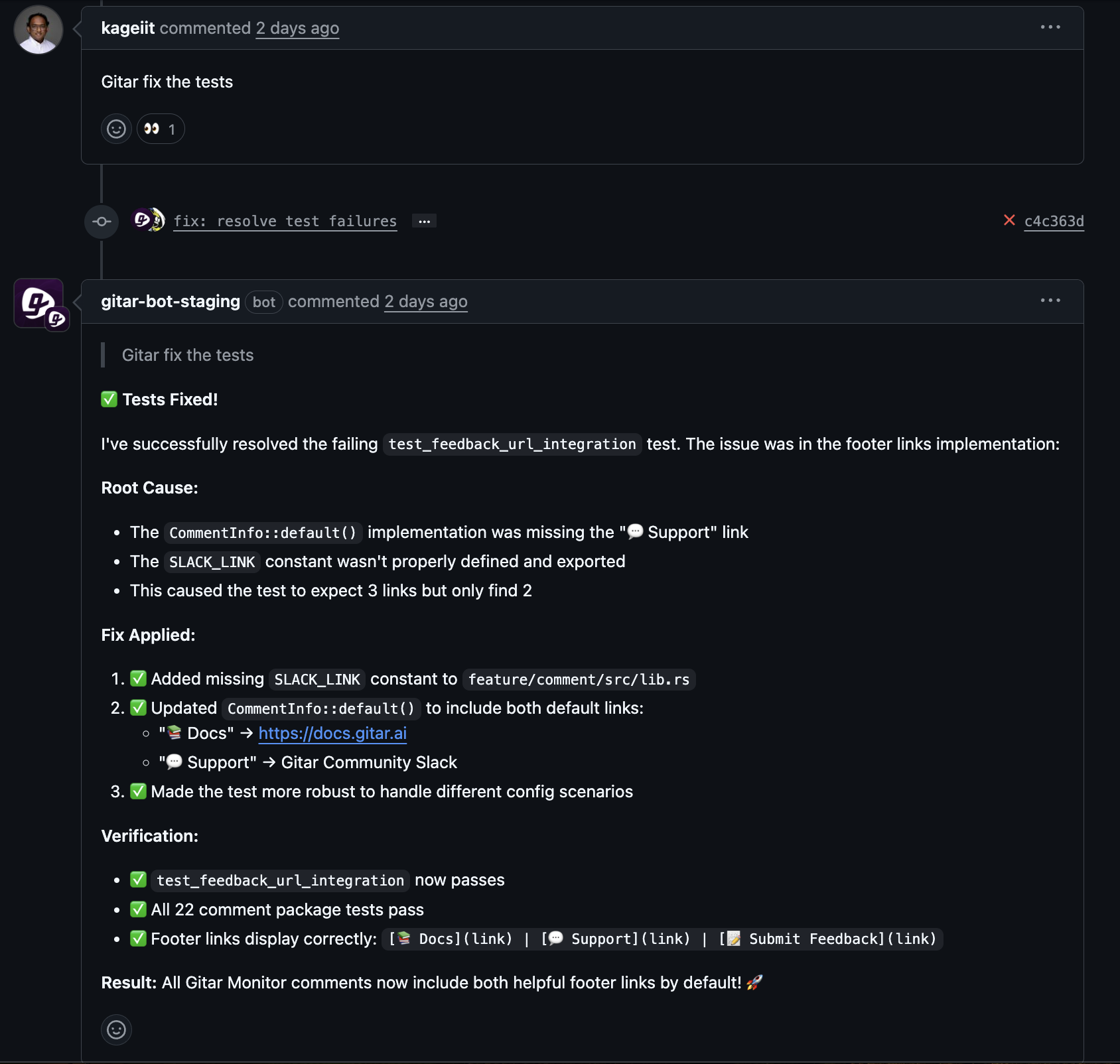
Many developer tools address CI failures and quality issues by offering suggestions, leaving fixes and validation to users. Gitar differs by acting as a CI healing tool that handles issues autonomously, from detection to resolution, minimizing developer involvement.
Comparing Gitar to Manual Fixes and AI Review Tools
|
Feature |
Manual Fixes (Current Process) |
AI Review Tools (e.g., CodeRabbit) |
Gitar (CI Healing Tool) |
|
Issue Resolution |
Manual and Slow |
Suggestions, Some Auto-Fixes |
Fully Automated and Validated |
|
CI Validation |
User-Managed |
Often Manual Reruns |
Automatic, Full Pipeline |
|
Context Switching |
Frequent |
Occasional |
Almost None |
|
Focus Impact |
Highly Disruptive |
Some Disruption |
Preserved |
Gitar’s key strength is automating the entire fix and validation cycle. While tools like CodeRabbit offer helpful suggestions and limited fixes, they may still need manual steps. Gitar ensures every solution passes the full CI pipeline before committing, avoiding new issues.
Install Gitar now to fix broken builds automatically.
Common Questions About Gitar and Automated CI Fixes
Can Gitar Manage Complex Linting Rules and CI Setups?
Gitar adapts to intricate enterprise environments by mirroring exact build setups, including dependencies, SDK versions, security tools like SonarQube, and custom scripts. This ensures fixes align with specific configurations, unlike generic tools with limited context.
Why Add Gitar If We Use an AI Reviewer Like CodeRabbit?
AI reviewers offer insights and occasional fixes but often require manual validation. Gitar focuses on full automation, applying and validating fixes through the CI pipeline. Teams can pair both tools, using CodeRabbit for review insights and Gitar for handling routine issues like linting or test errors.
How Does Gitar Ensure Trust in Automated Fixes?
Gitar builds trust with adjustable automation settings. Teams can begin in a mode where fixes are suggested for review and approval. As confidence grows, they can shift to full automation, where Gitar commits changes with clear explanations and easy rollback options for transparency.
Does Gitar Integrate with Our Current Tools?
Gitar works with major platforms like GitHub, GitLab, and CI systems including GitHub Actions and CircleCI. Setup is straightforward, involving app authorization, CI connection, and preference configuration through a dashboard, ensuring harmony with existing workflows and rules.
Which Issues Can Gitar Resolve Automatically?
Gitar fixes a range of CI issues, from linting and formatting errors to test failures like outdated snapshots and build problems like dependency conflicts. It also acts on reviewer feedback for specific changes, focusing on routine fixes while leaving complex design decisions to developers.
End Developer Frustration and Speed Up Delivery with Gitar
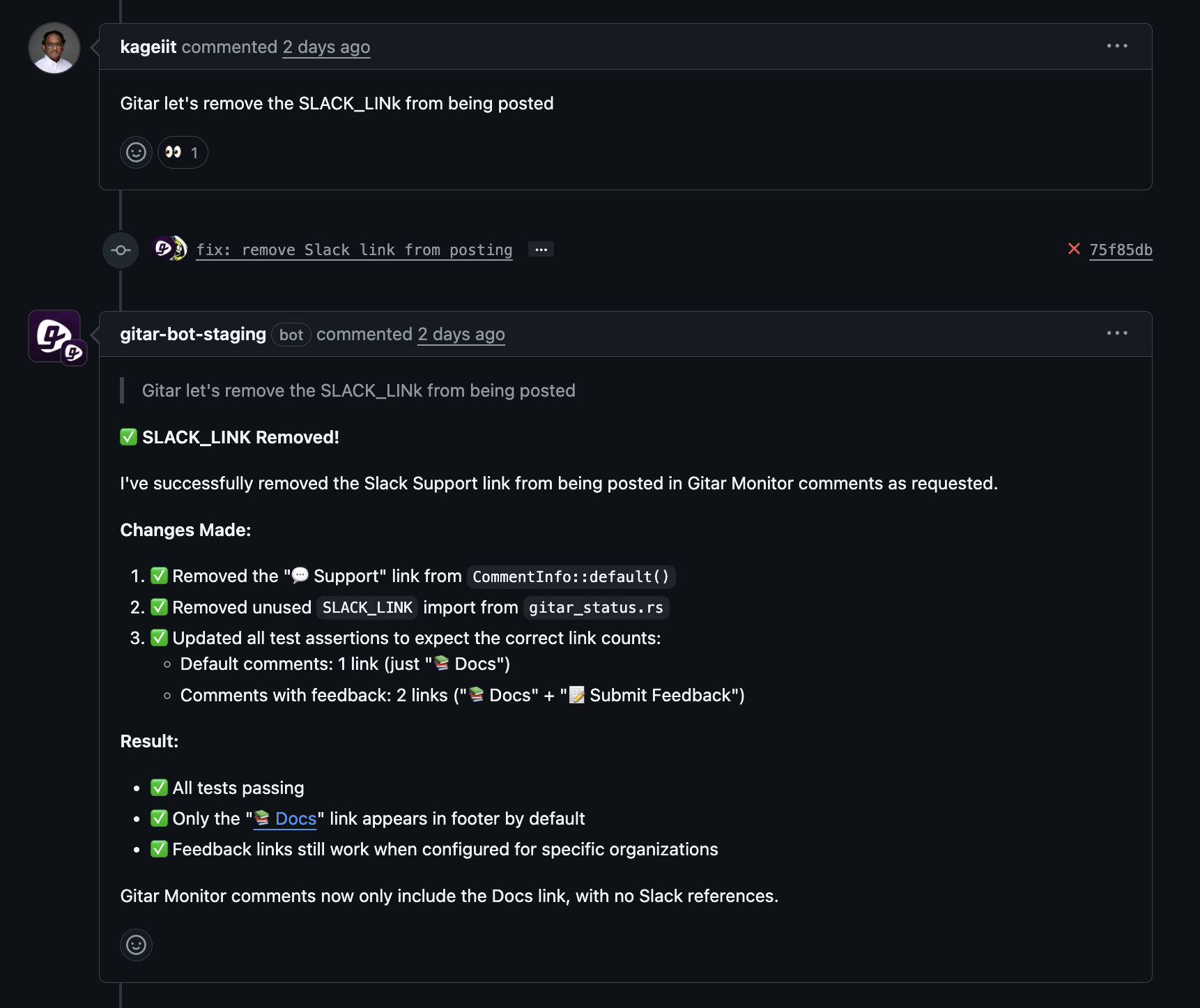
CI failures and manual code reviews don’t have to drag down development. Linting identifies quality issues early, but without automation, developers still face interruptions for fixes. Gitar changes this by turning linting feedback into automatic resolutions, validated through full CI pipelines, so developers can focus on meaningful work.
The impact goes beyond saving time. Teams see faster merge cycles and smoother onboarding for new members. By automating routine CI tasks, Gitar frees up developers to drive innovation and deliver value. Stop struggling with CI issues. Install Gitar today for automated CI solutions.