
AI tools like IntelliCode bring value to coding with helpful suggestions that speed up development. Yet, these tools often struggle during the CI/CD phase, leaving developers to fix broken builds manually. This gap between writing code and deploying it creates delays for many teams. Gitar, an autonomous AI agent, steps in to address this by fixing CI failures automatically, helping you merge code faster. Let’s dive into the challenges and how Gitar solves them.
AI Suggestions in CI/CD: Where They Fall Short
IntelliCode’s Limits in CI/CD Validation
IntelliCode offers useful features like autocomplete and style tips that make coding easier. These suggestions save time by cutting down on repetitive tasks. However, they often don’t account for the full CI/CD environment, creating issues when code moves from local setups to integration pipelines.
The problem is validation. IntelliCode works within your IDE, unaware of specific CI factors like SDK versions, test suites, or deployment rules. A suggestion might look fine locally but fail in CI due to these differences. Developers then spend extra time troubleshooting issues that the AI didn’t predict, slowing down the process.
The Downstream Delay from Rapid Code Generation
AI tools like GitHub Copilot enable developers to write code much faster. You can turn a simple idea into a full function or feature in minutes. While this speeds up coding, it shifts the workload to validation and integration, often called the ‘right-shift’ issue.
With more code comes more pull requests, tests, and potential CI failures. If AI generates three times more code without automated validation, you face three times the risk of build issues and review cycles. Suggestion-based tools increase output but don’t ensure the code passes quality checks, leaving teams stuck with manual fixes.
Context Switching: A Hidden Productivity Cost
CI/CD failures cost more than just time to fix. The bigger impact is context switching, where developers must stop their current work to handle unexpected issues. Imagine focusing on a complex feature when a CI failure notification arrives. You either ignore it and risk delays or switch tasks to address it.
Switching tasks disrupts focus. Studies show it takes about 23 minutes to regain deep focus after an interruption. A quick fix can derail an hour of productive work, creating a cycle of distraction that harms efficiency and adds stress.
Business Costs of CI/CD Delays
CI/CD inefficiencies affect more than just developers; they impact the entire business. For a team of 20 engineers, an hour per day on build issues adds up to 5,000 hours yearly, roughly the workload of 2.5 full-time staff. At $200 per hour, that’s a $1 million annual loss in productivity.
Beyond labor costs, delays in CI slow down feature releases, affecting customer deadlines and market position. In competitive fields, a delayed launch can mean lost revenue or extra marketing costs. Additionally, poor tools and processes frustrate developers, leading to higher turnover and further expenses in hiring and training.
Ready to cut CI/CD delays and ship code faster? Install Gitar now to fix broken builds automatically.
Gitar’s Approach: Autonomous Fixes for CI/CD
How Gitar Goes Beyond Suggestions to Heal Pipelines
Gitar shifts the focus from merely suggesting fixes to actively resolving CI/CD issues. Unlike tools that leave validation to developers, Gitar identifies problems, applies solutions, and confirms they work within your full CI setup. This cuts out manual effort and speeds up delivery.

Key aspects of Gitar’s approach include:
- Complete Automation: Gitar doesn’t just suggest fixes. It analyzes CI logs, applies corrections, and verifies results, removing the need for manual steps.
- Environment Awareness: Gitar mirrors your CI setup, including SDK versions and security tools like SonarQube, ensuring fixes match production conditions.
- Code Review Support: Gitar handles feedback by making changes based on reviewer comments, turning input into validated commits.
- Flexible Trust Settings: Teams can start with Gitar suggesting fixes for approval, then move to full automation as confidence grows.
- Broad Platform Compatibility: Gitar works with GitHub Actions, GitLab CI, and others, fitting into your existing tools without disruption.
This method turns CI/CD into a self-sustaining process, letting developers focus on coding while Gitar manages pipeline health.
Key Benefits of Gitar: Redefining CI/CD Efficiency
From Manual Fixes to Automated Solutions
Gitar streamlines CI/CD by automating resolutions that would otherwise require manual effort. If a linting error pops up, Gitar corrects the formatting, checks the fix, and commits it with clear notes on the changes. This turns a time-consuming task into a quick, background process.
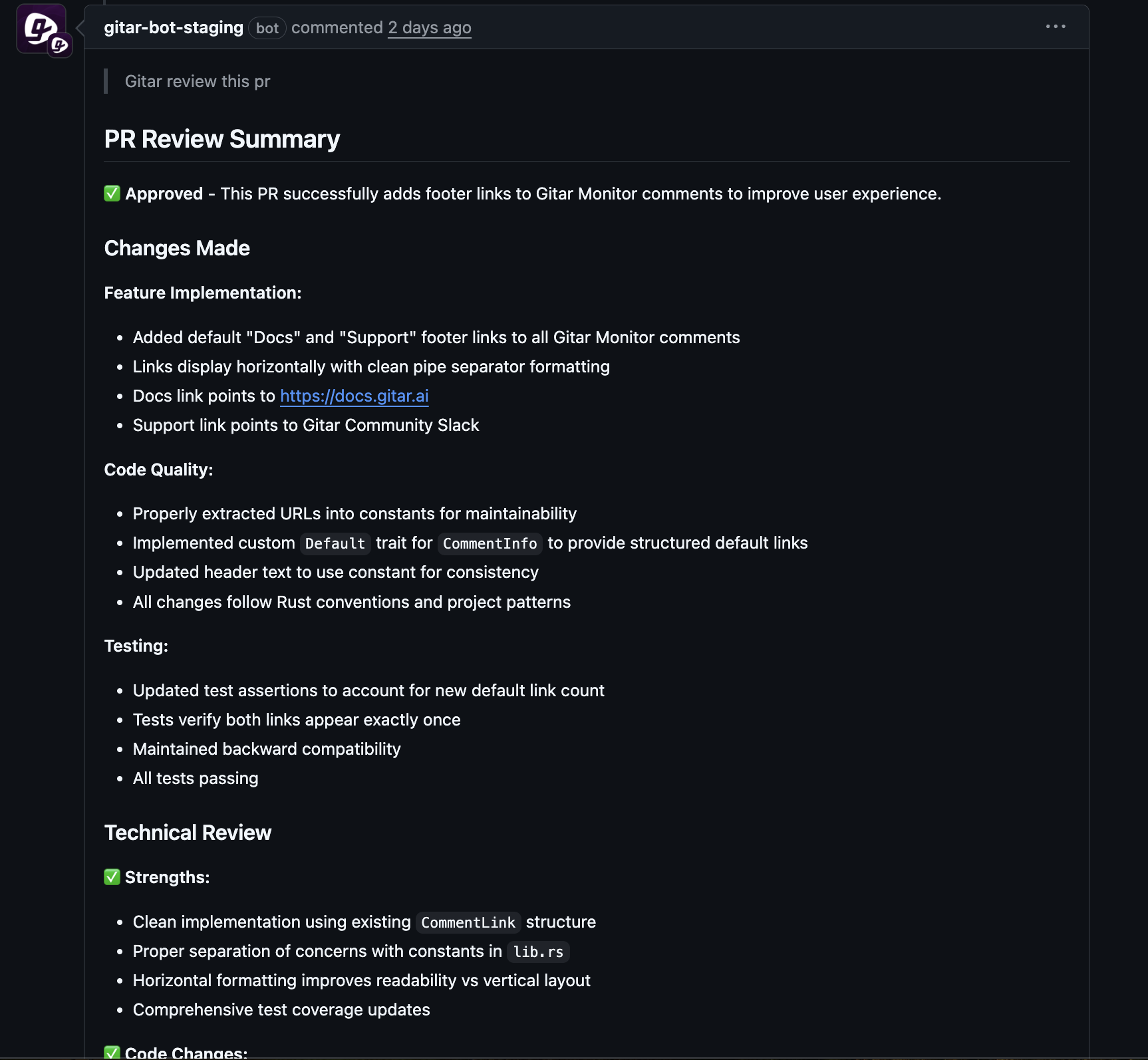
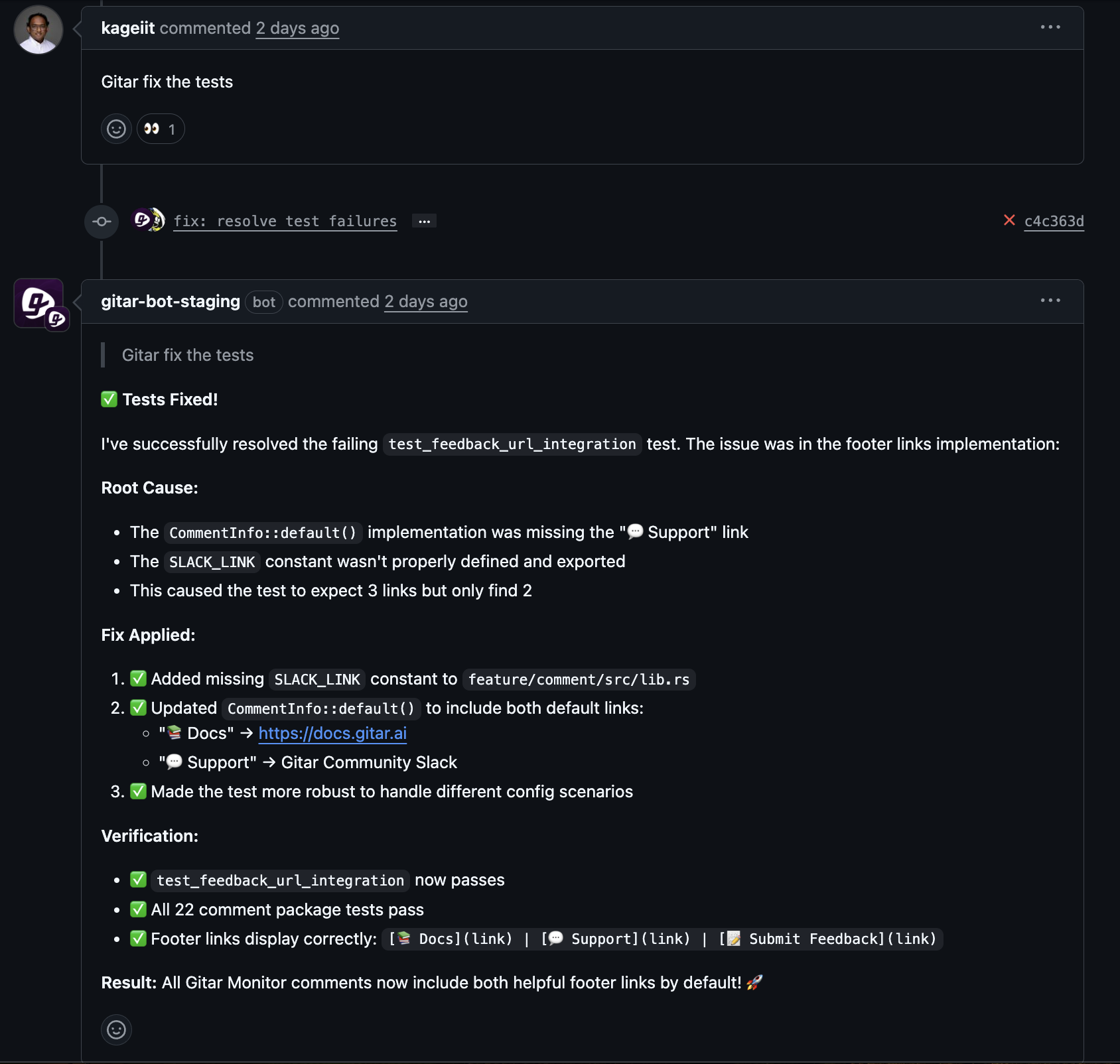
For test failures or dependency issues, Gitar identifies the root cause, applies a solution, and validates it against the full pipeline. Every change is tested in context, giving assurance that no further intervention is needed.
Protecting Developer Focus and Flow
Maintaining focus during coding boosts productivity significantly. Gitar helps by handling CI issues automatically, so developers don’t face constant interruptions from build failures. You can keep working on your tasks while Gitar resolves problems behind the scenes.
This reduces stress around deployments and encourages experimentation with new ideas. Teams using Gitar notice more time spent on creative work instead of repetitive fixes, leading to better output and job satisfaction.
Gitar vs. Suggestion Tools: A Side-by-Side Look
The difference between Gitar and suggestion tools becomes clear when comparing their impact on CI/CD workflows:
|
Feature |
Suggestion Tools (e.g., IntelliCode) |
Gitar (Autonomous Fixes) |
|
Action Taken |
Offers code ideas or advice |
Applies and validates fixes automatically |
|
Validation Process |
Needs manual checks by developers |
Tests fixes in full CI environment |
|
CI/CD Outcome |
May still cause build failures |
Ensures builds pass and tests succeed |
|
Developer Interruption |
Leads to frequent task switching |
Works quietly in the background |
Suggestion tools, while useful, keep developers in a loop of manual validation. Gitar breaks this pattern by owning the entire fix process, shifting focus from debugging to prevention.
Managing Complex Enterprise CI Setups
Enterprise CI environments often involve multiple languages, custom rules, and specific security tools. Gitar adapts by fully replicating these setups when fixing issues. It accounts for varied SDK versions, security scans, and build processes to ensure solutions hold up in production.
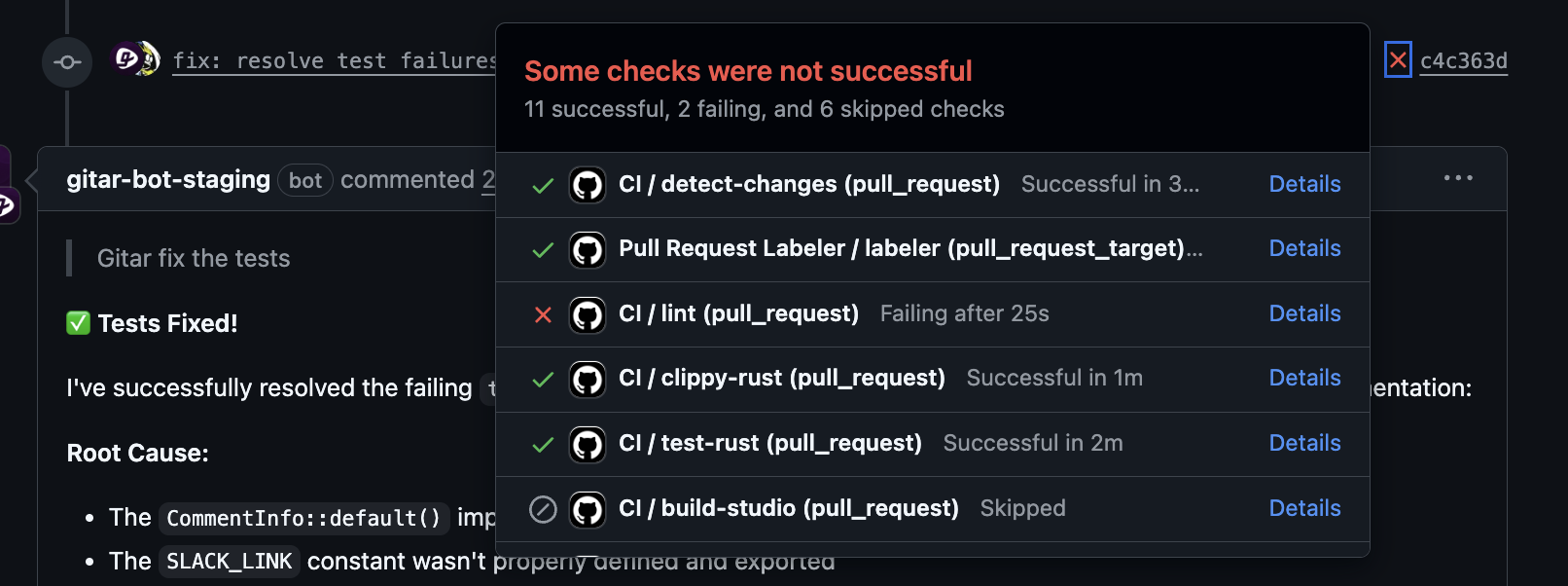
This precision is vital for large teams. A fix that fails security checks or corporate policies can create bigger issues. Gitar handles these complexities, including multi-stage builds and firewall constraints, making it reliable for enterprise needs.
Speeding Up Code Reviews Across Time Zones
For distributed teams, time zone differences slow down code reviews. A simple comment from a teammate in another region can delay progress by a full day. Gitar changes this by acting on feedback instantly, applying changes, testing them, and committing with detailed notes.
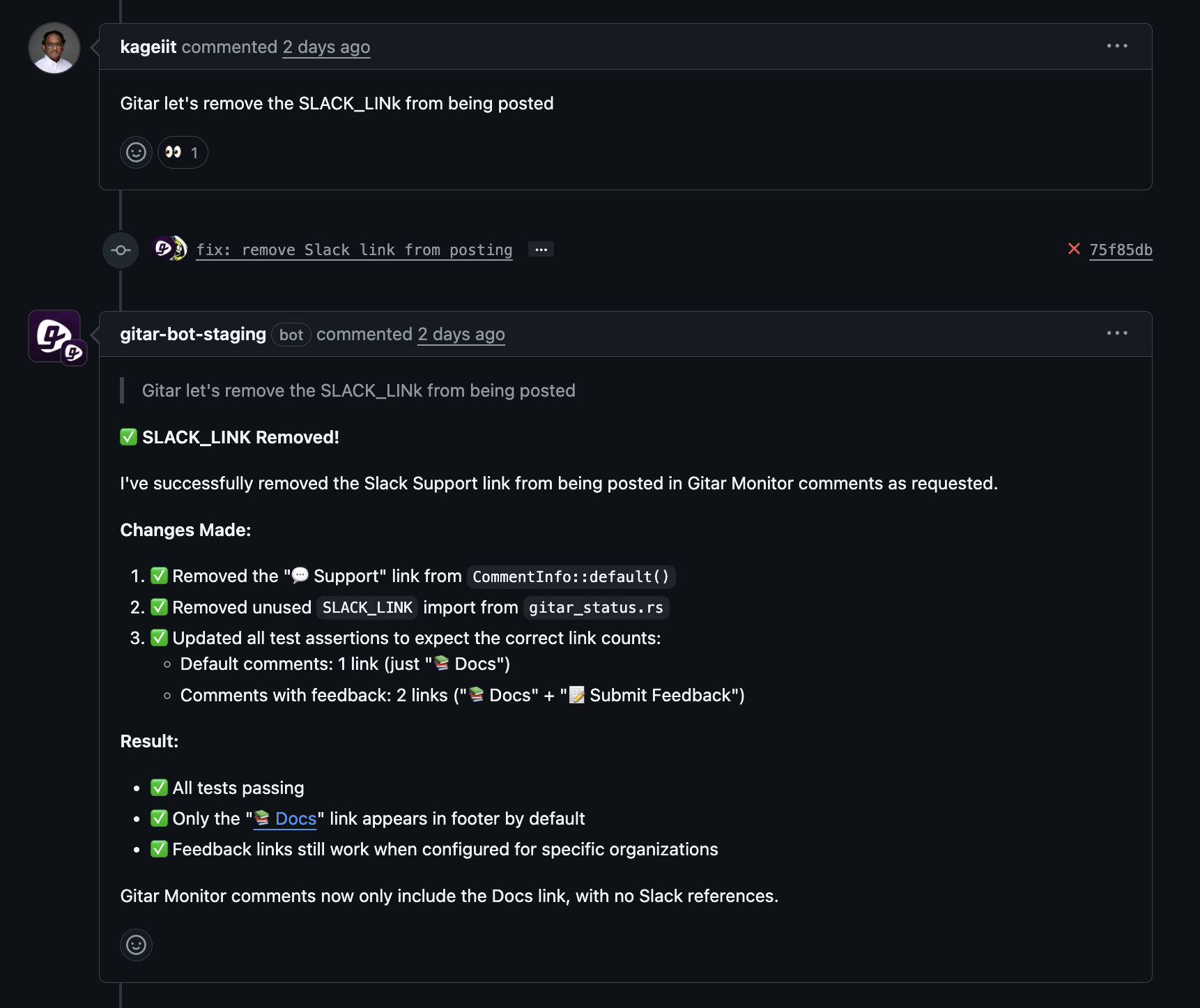
This means the original developer sees updates ready by their next workday, cutting review cycles and boosting speed for global teams.
Install Gitar now to fix broken builds automatically and ship software faster.
Common Questions About Gitar’s Automated CI Fixes
How Does Gitar Differ From AI Reviewers Like CodeRabbit?
AI reviewers like CodeRabbit offer insights during code reviews, pointing out potential issues or style improvements. However, they rely on developers to apply those suggestions manually. Gitar, in contrast, takes action by implementing fixes, testing them in your CI environment, and ensuring builds pass without extra effort. While CodeRabbit enhances suggestion quality, Gitar focuses on execution and results, often working alongside such tools.
How Does Gitar Tackle Complex CI Environments?
Gitar stands out by mirroring your exact CI setup, including SDK versions, security tools, and custom configurations. This ensures fixes aren’t just guesses but are tested against your real pipeline. It manages multi-language projects, Docker builds, and corporate restrictions like firewalls, delivering reliable solutions for intricate enterprise systems.
What If We’re Not Ready to Trust Automated Fixes?
Gitar offers adjustable settings to build trust over time. Start in a mode where it suggests fixes for review and approval. As confidence grows, shift to partial automation for simpler issues like lint errors, and eventually to full automation with rollback options. Detailed notes on every change help teams understand and trust Gitar’s actions within existing review workflows.
Can Gitar Address Security Risks in AI-Generated Code?
AI-generated code can bring vulnerabilities or technical debt. Gitar counters this by validating fixes with security tools like Snyk, ensuring no new risks are introduced. It also refactors based on feedback to improve code quality and can add tests to cover new functionality, balancing speed with safety in AI-assisted coding.
Wrapping Up: Gitar Brings the Future of CI/CD Today
AI suggestion tools, while helpful for coding speed, often leave teams struggling with CI/CD validation. This gap slows down delivery and undermines productivity gains. Gitar addresses this directly by automating fixes, ensuring builds pass, and freeing developers from repetitive debugging.
Teams using Gitar see faster merges, less stress, and measurable savings from reduced manual work. This efficiency allows for bolder projects and quicker responses to market needs, offering a clear edge in software delivery. As AI continues to shape development, tools like Gitar redefine CI/CD with true automation.
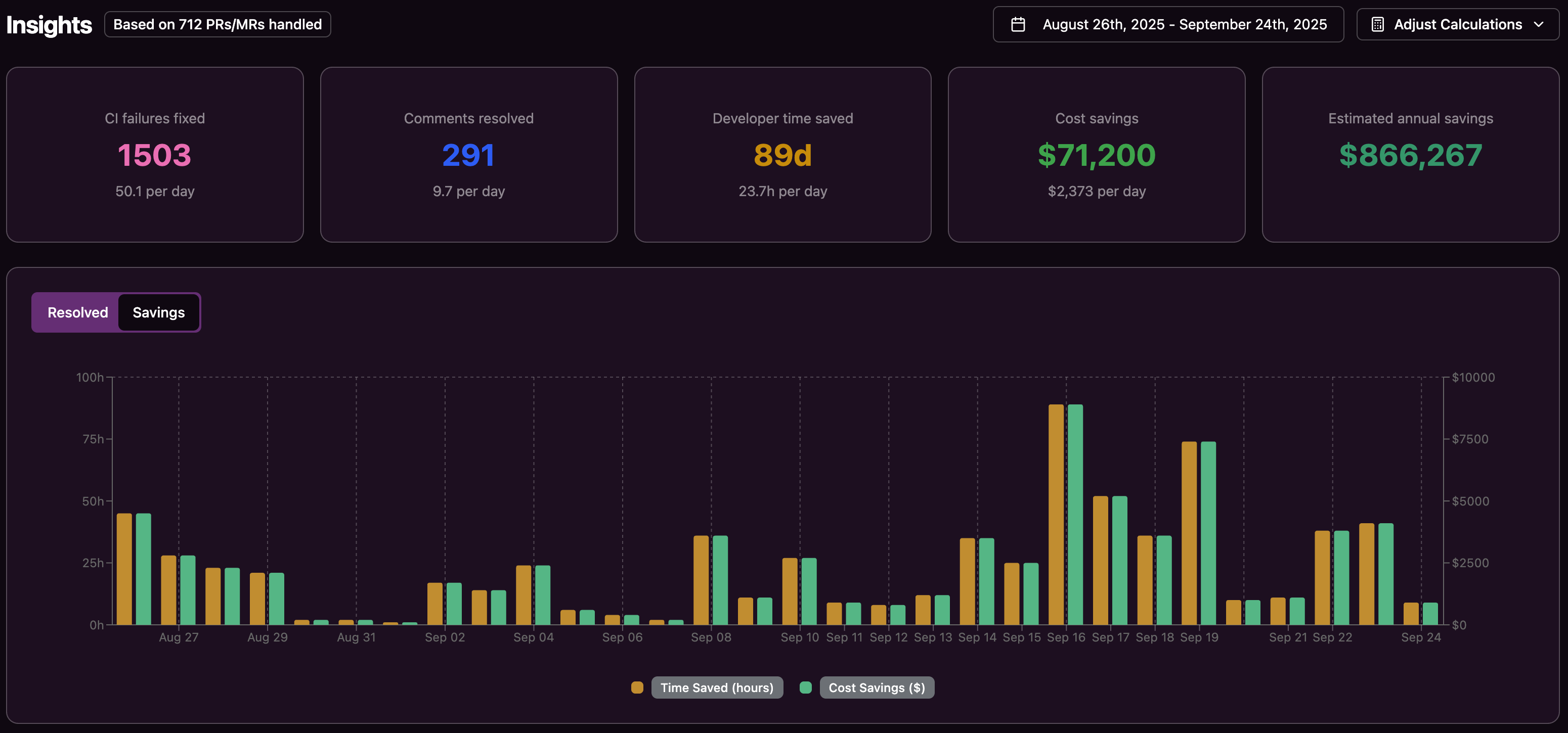
Stop debugging and start shipping. Install Gitar now to fix broken builds and speed up your workflow.