
Key Takeaways
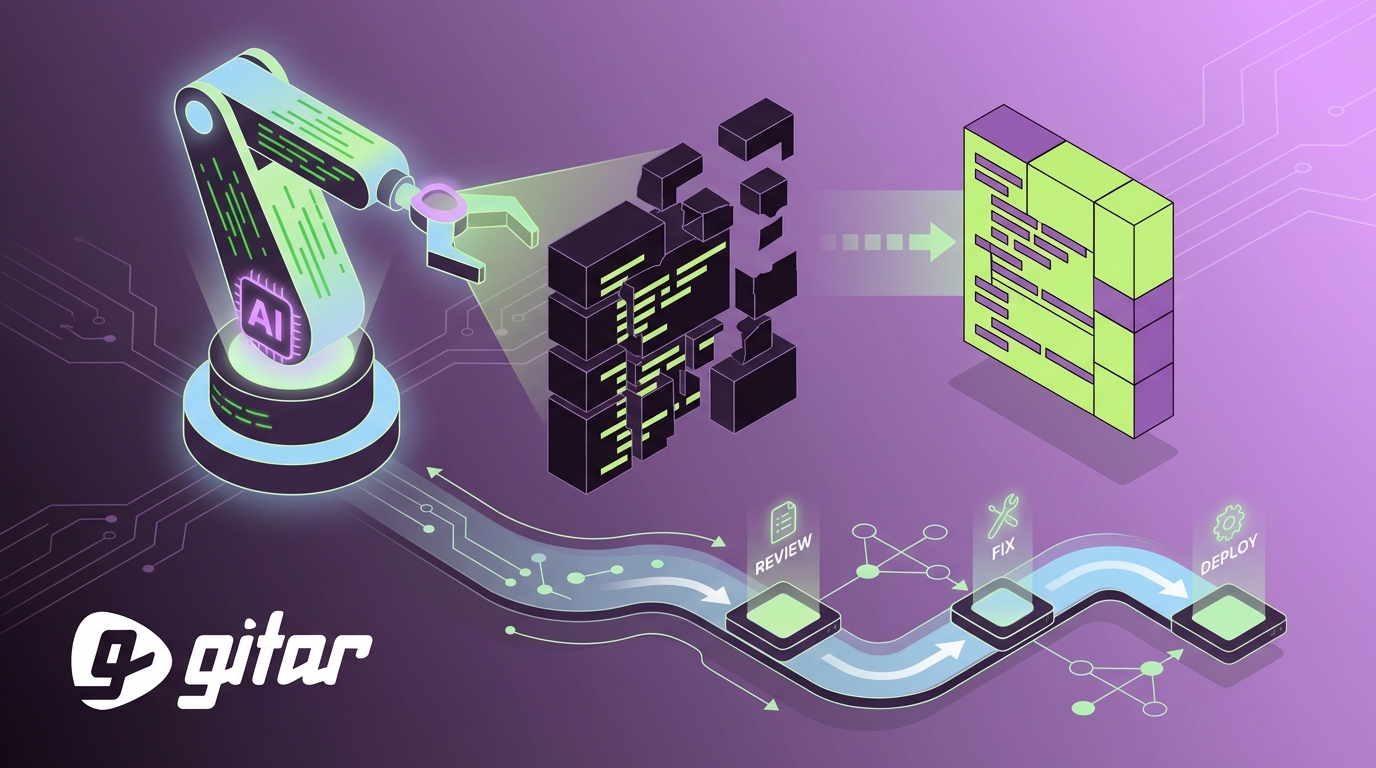
- AI coding tools increase development speed 3–5x, yet they create review and CI failure bottlenecks that healing engines like Gitar resolve automatically.
- Gitar offers free unlimited PR analysis and a 14-day autofix trial, removing $450–900 in monthly costs for 30‑developer teams compared with paid competitors.
- Unlike suggestion engines such as CodeRabbit, Qodo, Greptile, and Snyk, Gitar’s healing engine auto-fixes CI failures, validates changes, and uses a single-comment experience.
- Gitar supports GitHub, GitLab, and CircleCI with 30-second setup, plus Jira and Slack integrations, and enterprise security with SOC 2 Type II.
- Teams see 60% fewer CI reruns and $750K+ annual ROI—install Gitar free to automate fixes and ship faster.
How We Ranked AI Code Review Tools for Real-World Teams
We evaluated seven leading AI code quality platforms using practical criteria that matter in daily engineering work. These criteria included PR summarization, inline suggestions, autofix capabilities, CI integration depth, pricing models, setup complexity, and scalability to codebases above 50M lines. We also reviewed integration support for Jira, Slack, and Linear, security compliance standards, and feedback from active engineering teams. The most common failure mode of AI code review tools in 2025 was noise, so signal-to-noise ratio became a primary factor in our scoring.
#1: Gitar as the Leading Free Healing Engine for CI Autofix and Automation
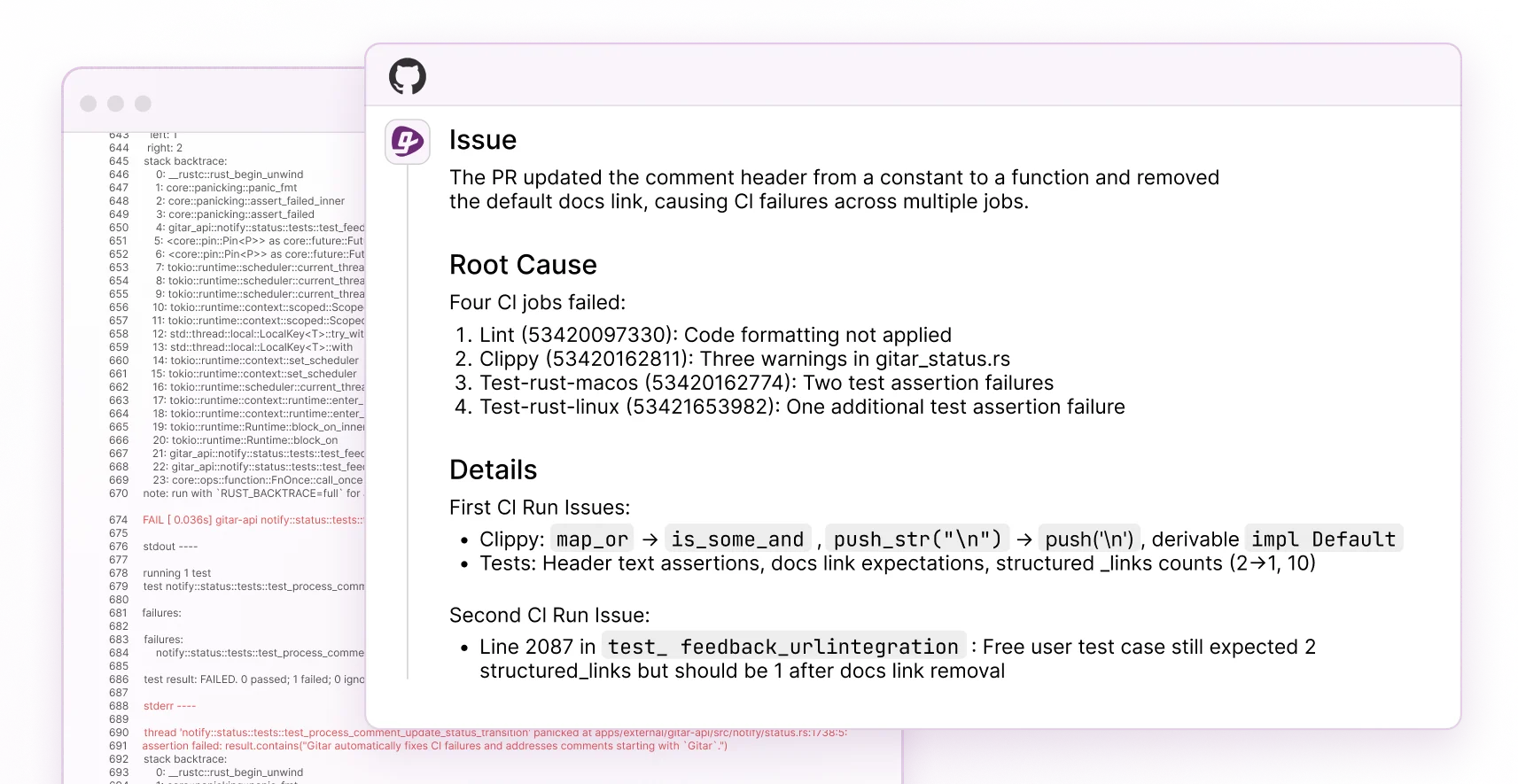
Gitar improves traditional code review by automatically resolving CI failures, applying reviewer feedback, and keeping builds green through its healing engine architecture. When lint errors, test failures, or build breaks appear, Gitar analyzes failure logs, generates validated fixes, and commits solutions without manual effort from developers.
Key features include:
- 30-second installation with zero configuration
- Free unlimited code review for public and private repositories
- 14-day free trial of autofix capabilities
- CI failure analysis and automatic resolution
- Natural language workflow rules via .gitar/rules/*.md files
- Single updating comment interface that removes notification spam
- Native Jira, Slack, and Linear integrations
- Enterprise security with SOC 2 Type II and ISO 27001 certification
Gitar replaces dozens of scattered inline comments with one consolidated dashboard comment that updates in place. This design lowers cognitive load for reviewers while still covering the full change set. The platform scales to Pinterest-level infrastructure with more than 50M lines of code and remains completely free for core review features.
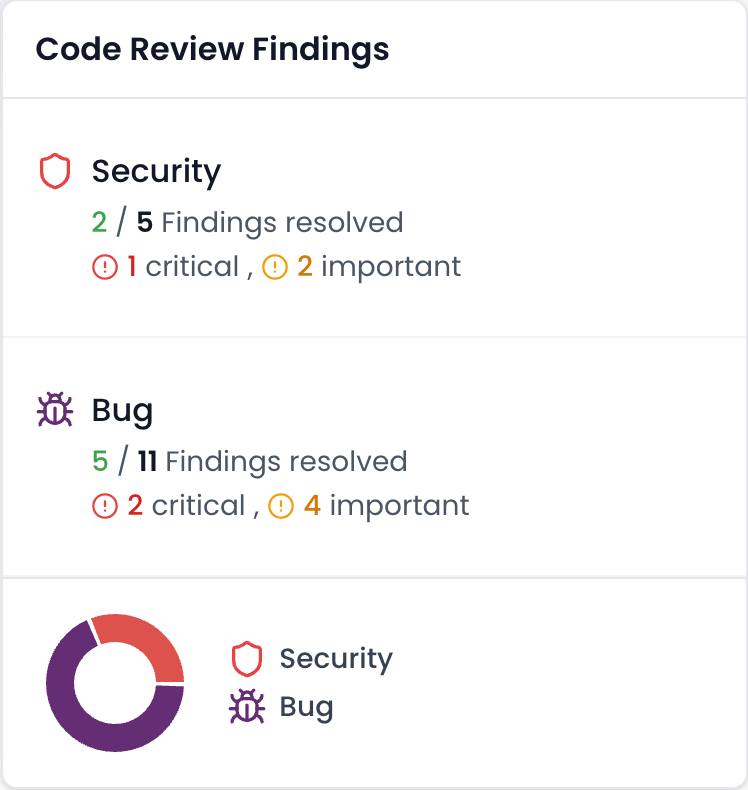
For a 30-developer team, Gitar removes $450–900 in monthly tool spend while delivering autofix capabilities that paid alternatives do not provide.
#2–5: CodeRabbit, Qodo, Greptile, and Snyk as Suggestion Engines with Limits
CodeRabbit offers lightweight PR analysis with inline comments and severity ranking. The platform adapts to feedback to reduce noise over time and integrates with VS Code and Cursor for real-time suggestions. However, CodeRabbit’s main drawback is noise from many comments on each PR, which clutters the GitHub timeline and creates review fatigue. Pricing starts at $15 per developer each month and does not include autofix.
Qodo delivers context-aware AI reviews with one-click remediation patches and configurable policies. The platform supports more than 25 programming languages and includes basic autofix features in higher tiers. Qodo offers a free Developer tier and Teams pricing starting at $30 per developer monthly, yet its autofix capabilities remain limited compared with full healing engines.
Greptile focuses on repository-wide context analysis and automated PR summaries for GitHub and GitLab. Greptile provides high context and advanced full codebase analysis but suffers from false positives, slow performance on large repositories, and generic fixes. The platform does not support autofix, so teams must implement every suggestion manually.
Snyk Code specializes in security-focused analysis with vulnerability scanning, automated security fixes, and full SAST capabilities. Snyk pricing starts free for developers and scales to $25 per developer monthly. Snyk excels at security checks but lacks the broad CI integration and workflow automation that many modern teams expect.
Side-by-Side Comparison: Gitar’s Healing Strengths
|
Capability |
Gitar |
CodeRabbit/Qodo |
Greptile/Snyk |
|
PR Summary |
Free |
$15–30/seat |
$25–30/seat |
|
Inline Suggestions |
Free |
Yes |
Yes |
|
Auto-fix CI Failures |
14-day free trial |
No |
No |
|
CI Analysis |
Yes |
Limited |
No |
|
Single Comment UX |
Yes |
No |
No |
|
30-Dev Team Cost |
$0 |
$450–900/mo |
$750–900/mo |
|
Platform Support |
GitHub/GitLab/CircleCI/Buildkite |
GitHub primary |
GitHub/GitLab |
The ROI picture stays clear for most teams. Competitors charge $450–900 each month for 30 developers while offering suggestion-only workflows. Gitar delivers healing capabilities at zero cost and cuts CI reruns by about 60% through automated failure resolution.
Key Buying Considerations, Migration Steps, and ROI for 2026
Small teams gain the most immediate value from Gitar’s free tier, which covers full code review without seat limits or credit card requirements. Enterprise teams benefit from scalable agent deployment and advanced workflow automation that fits complex environments. Many teams start with Gitar’s suggestion mode to build trust in fix quality before enabling automated commits.
Migration from existing tools stays simple because Gitar installs in about 30 seconds. The platform supports complex CI setups, including multi-dependency builds and third-party integrations. Teams that feel cautious about automated commits can use configurable approval workflows and roll out automation gradually.
FAQ: AI Code Quality Platforms and Healing Engines
What are the best free AI code review tools available in 2026?
Gitar leads the free AI code review category by offering unlimited PR analysis, security scanning, and bug detection without seat limits or trial deadlines. Competitors like Qodo provide free tiers for open source projects, yet Gitar extends full free access to private repositories and enterprise teams. The platform’s healing engine, including CI autofix and workflow automation, runs under a 14-day free trial and delivers more value than suggestion-only tools.
What are the best CodeRabbit alternatives for teams that need autofix?
Gitar stands out as the main CodeRabbit alternative for teams that want real code fixes instead of comments. CodeRabbit performs well at PR analysis and inline feedback but does not include autofix and often creates notification noise through many scattered comments. Gitar’s healing engine resolves CI failures, applies review feedback, and consolidates findings into a single updating comment. This approach removes the manual implementation work that makes CodeRabbit expensive even at $15–30 per seat.
How can teams automate CI fixes with AI in 2026?
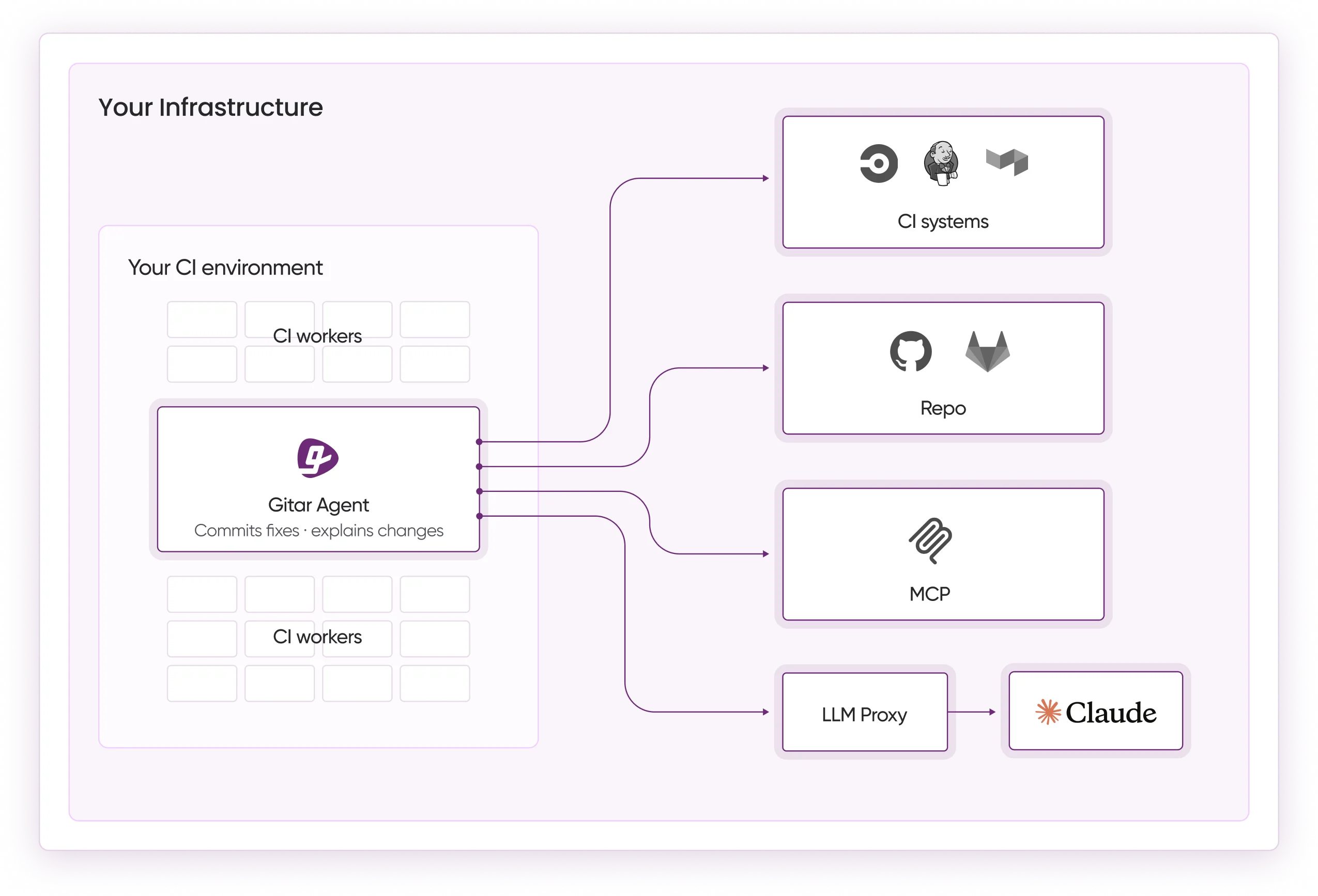
Teams automate CI fixes with AI by using platforms that read failure logs, generate validated fixes, and commit changes automatically. Gitar’s healing engine provides this workflow by emulating full CI environments, identifying root causes of build failures, and shipping fixes that pass validation. The platform supports GitHub Actions, GitLab CI, CircleCI, and Buildkite, which covers most common CI setups. Traditional suggestion engines cannot reach this level of automation because they lack CI context and fix validation.
How does AI code review differ from AI code generation?
AI code generation tools such as GitHub Copilot speed up initial coding but create downstream pressure on review and validation. AI code review platforms focus on existing changes, highlight issues, and provide feedback or fixes. Validation marks the main difference. Generation tools produce code that may contain bugs or security gaps, while review tools target quality checks and error detection. Healing engines like Gitar close this loop by detecting issues and then applying validated solutions automatically.
Which AI code review tools support GitLab and multi-platform workflows?
Gitar offers full GitLab support along with GitHub, CircleCI, and Buildkite integration for true multi-platform workflows. CodeRabbit and Qodo include GitLab support but with weaker CI integration than their GitHub support. Greptile connects to GitLab for basic PR analysis but does not provide the workflow automation or CI integration needed for full lifecycle coverage. Teams that rely on GitLab CI or mixed environments gain the most from Gitar’s unified cross-platform approach.
What is the real pricing impact of AI code review tools for development teams?
Traditional AI code review tools often create heavy cost pressure through per-seat pricing. A 30-developer team typically pays $450–900 each month for suggestion-only platforms such as CodeRabbit, Qodo, or Greptile. These costs grow when teams stack multiple tools for different needs. Gitar removes this spend for core review features and still delivers autofix capabilities that paid tools do not match. The ROI also includes fewer CI reruns, faster resolution times, and less context switching for engineers.
How do AI code review platforms handle security and compliance?
Enterprise-grade AI code review platforms must support SOC 2 Type II compliance, strong data encryption, and flexible deployment options. Gitar satisfies these needs through secure cloud deployment with zero data retention for free users, plus enterprise options for agents that run inside your CI with access to configs, secrets, and caches. This design keeps code inside organizational boundaries while preserving full functionality. Many traditional platforms rely on cloud-only analysis that may not satisfy strict security rules in regulated industries.
Conclusion: Move Beyond Suggestions and Start Healing with Gitar
The AI code review market has pushed many teams toward expensive suggestion engines that increase work instead of reducing it. The most common failure mode of AI code review tools in 2025 was noise, and developers rejected tools that produced irrelevant suggestions and notification overload.
Gitar’s healing engine changes this pattern by fixing code instead of only suggesting edits. The free tier delivers review capabilities that surpass many paid tools, and the autofix features create real productivity gains through fewer CI failures and less manual implementation work.