
Key Takeaways
- Engineering teams in 2026 still lose significant time to CI failures and code review loops, which slows delivery and increases costs.
- Security scanning, static analysis, code review assistants, and test generation tools now use AI to suggest targeted fixes instead of only flagging issues.
- Autonomous CI fixing platforms close the gap by both identifying and implementing validated fixes inside real CI environments.
- Self-healing CI pipelines reduce context switching, shorten feedback cycles, and free developers to focus on higher-value work.
- Teams can use Gitar to automatically fix failing CI pipelines and resolve review feedback, starting at https://gitar.ai/fix.
The Problem: Why Traditional Code Quality Approaches Fall Short
Many teams still rely on manual debugging, scattered tools, and human-only review cycles. Developers typically waste up to 30% of their time grappling with CI failures and code review feedback, which leads to lost flow, frequent context switching, and rising delivery costs.
Manual inspection of CI logs, switching between local and remote environments, and waiting for reviewers slows every change. Distributed teams feel the delays even more when feedback crosses time zones. Traditional static analysis and review tools highlight problems but rarely deliver validated, production-ready fixes, so developers still shoulder most of the remediation work.
5 Critical Code Quality Tools Transforming Development in 2026
1. AI-Powered Security Scanning with Autonomous Remediation
Security scanners now use AI to move from basic alerts to proposed, ready-to-apply patches. Snyk Agent Fix combines generative AI, symbolic AI, and program analysis for high-precision security fixes, reporting 80% accuracy with multiple fix options and verification to reduce new vulnerabilities. The platform supports languages such as Java, JavaScript, Python, C/C++, C#, Go, and APEX, trained on large sets of curated security fixes.
GitHub Copilot Autofix uses GPT-4o and CodeQL to address security issues detected in code scanning for GitHub Advanced Security users. Security teams move from manual patch authoring to reviewing AI-generated options, which shortens the time from detection to remediation.
Teams gain the most value by integrating these tools into CI/CD workflows, defining policies for when fixes appear as suggestions and when to auto-apply them. Automated security remediation still benefits from downstream validation in CI to confirm that patches do not break existing behavior.
2. Next-Generation Static Analysis with Contextual AI
Static analysis has expanded from style checks to deep, context-aware insight across entire codebases. Codiga offers static analysis for security and efficiency issues across languages like JavaScript, Python, and Ruby, while top AI tools apply custom-trained language models for context-aware suggestions, refactoring, and automated documentation.
These platforms integrate with IDEs and CI pipelines to highlight subtle bugs, performance issues, and security risks during development. Teams can enforce coding standards, reduce post-merge bugs, and standardize patterns across services.
Adoption usually starts with shared rule sets and per-repository policies. Static analysis still relies on developers to implement fixes, so organizations often pair it with tools that can automatically apply and validate changes.
3. Autonomous Code Review Assistants
AI review assistants now support reviewers with structured feedback on pull requests. Qodo offers capabilities for codebase analysis and pull request workflows to enhance code quality, focusing on architecture, style, and consistency.
CodeRabbit provides inline editor suggestions and PR feedback to improve code reviews and can summarize large changes so humans review more efficiently. These tools help maintain quality standards without requiring every detail to pass through senior engineers.
Most teams integrate these assistants with GitHub or GitLab and configure rules that reflect internal guidelines. AI review still stops at suggestions, so developers must modify code manually and rerun CI to confirm that issues are fully resolved.
4. Intelligent Test Generation and Maintenance
Automated test generation tools now help teams improve coverage and reduce flaky or outdated suites. CodeT5 is an open-source code generator supporting Java, Python, and JavaScript for code-related tasks, with capabilities that extend to automated test creation.
These platforms scan code for coverage gaps, propose new unit tests, and suggest updates when APIs change. Teams reduce the manual effort of writing and updating tests while keeping regression protection strong.
Implementation often adds a step in CI that proposes or generates tests when code changes touch untested logic. Developers then review and refine suggested tests before merging them into the main suite.
5. Autonomous CI Fixing Platforms
Autonomous CI agents address a gap that suggestion-only tools leave open. Cline is an open-source, editor-native coding agent for autonomous tasks such as bug fixes and refactoring, while OpenDevin supports autonomous software engineering workflows.
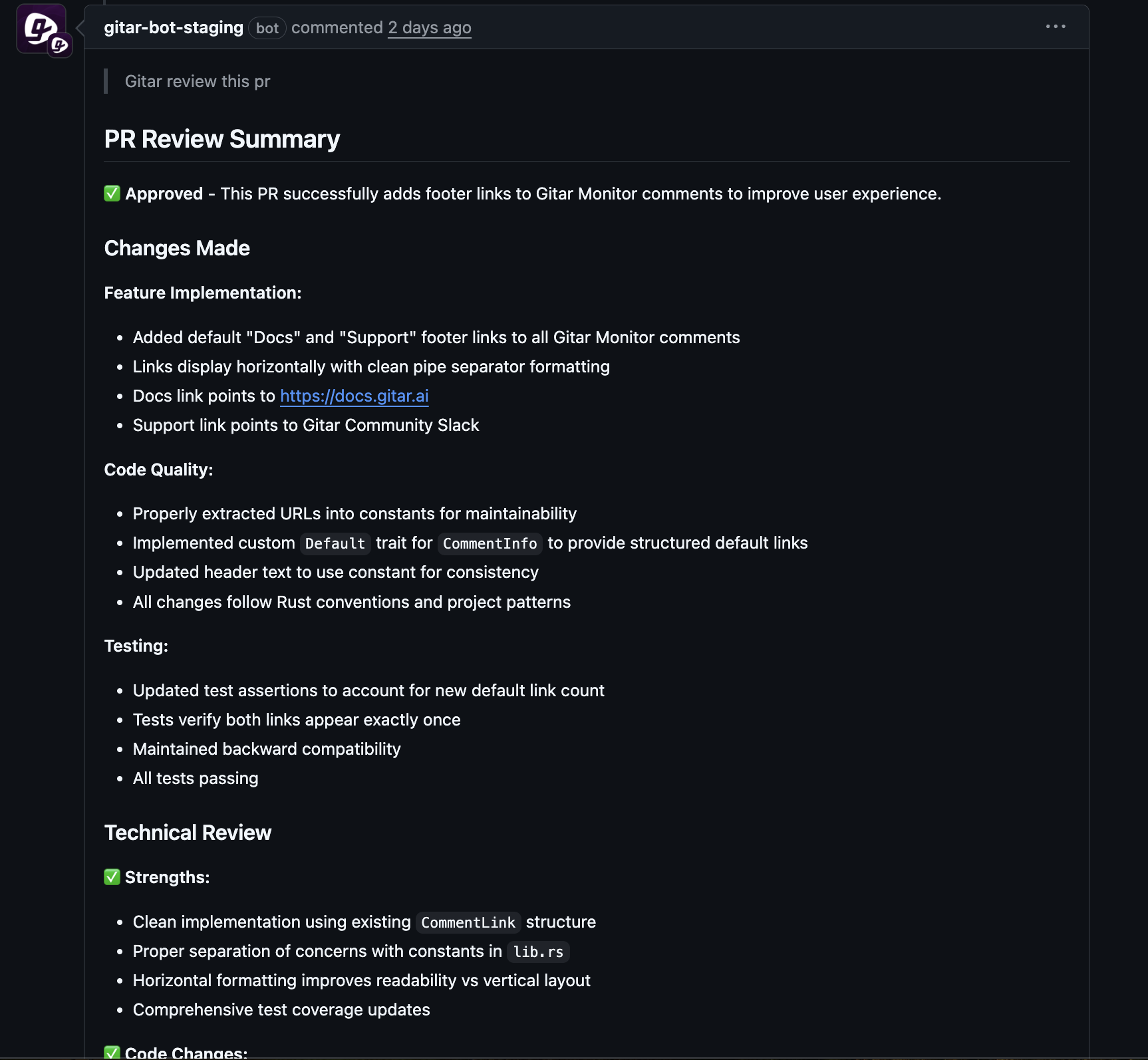
Gitar focuses on CI reliability and review follow-through. As an autonomous CI agent, it detects failing pipelines, analyzes logs, generates targeted code changes, and updates pull or merge requests so builds pass again. Typical issues include test failures, lint errors, and build configuration problems that would otherwise interrupt developer flow.
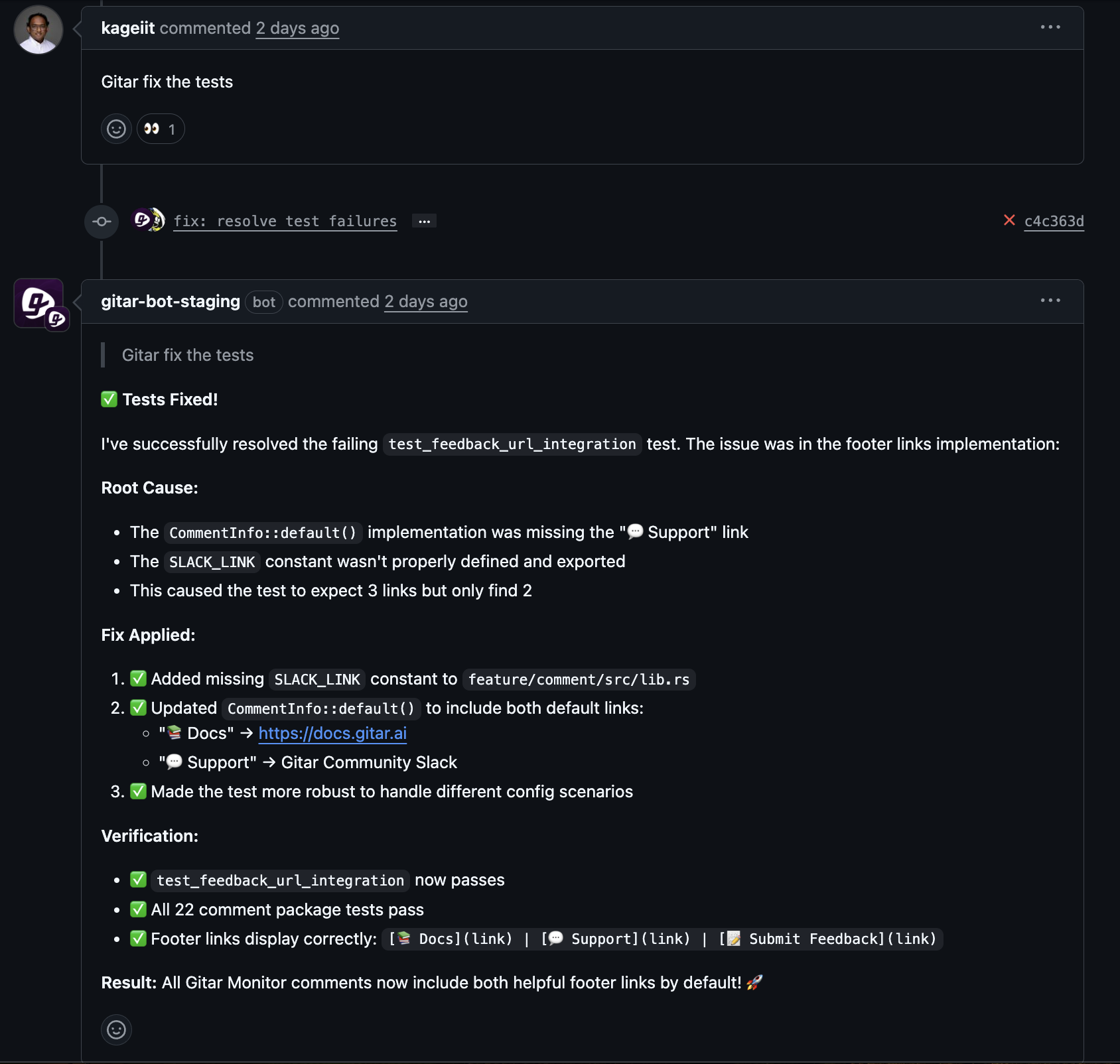
Gitar also replicates complex enterprise environments, including specific SDK versions, polyglot stacks, and third-party services, to keep fixes context-aware and reliable. Teams can start in a mode where Gitar proposes patches for review and then move toward automatic commits for well-understood failure types. To try this approach, start with Gitar’s autonomous CI fixing for your pipelines.
Code Quality Tools Comparison: Autonomous vs. Suggestion-Based
|
Feature |
Gitar |
AI Code Reviewers |
Security Scanners |
|
Problem Domain |
CI/CD failures and review feedback |
Code review suggestions |
Security vulnerability fixes |
|
Autonomy Level |
Autonomous fixing |
Suggestion engine |
Suggestions or limited fixes |
|
CI Validation |
Validates fixes against CI workflows |
No CI validation |
Partial or manual validation |
|
Environmental Replication |
Handles complex enterprise environments |
Limited context |
Basic environment awareness |
Suggestion-based tools highlight issues early and improve code quality, but they still rely on developers to implement and validate fixes. Autonomous platforms such as Gitar add the ability to apply changes, rerun CI, and confirm that pipelines are healthy, which reduces manual rework and preserves developer focus. Teams can explore this model by starting with Gitar in their existing CI workflows.
Implementing Self-Healing CI: ROI and Strategic Benefits
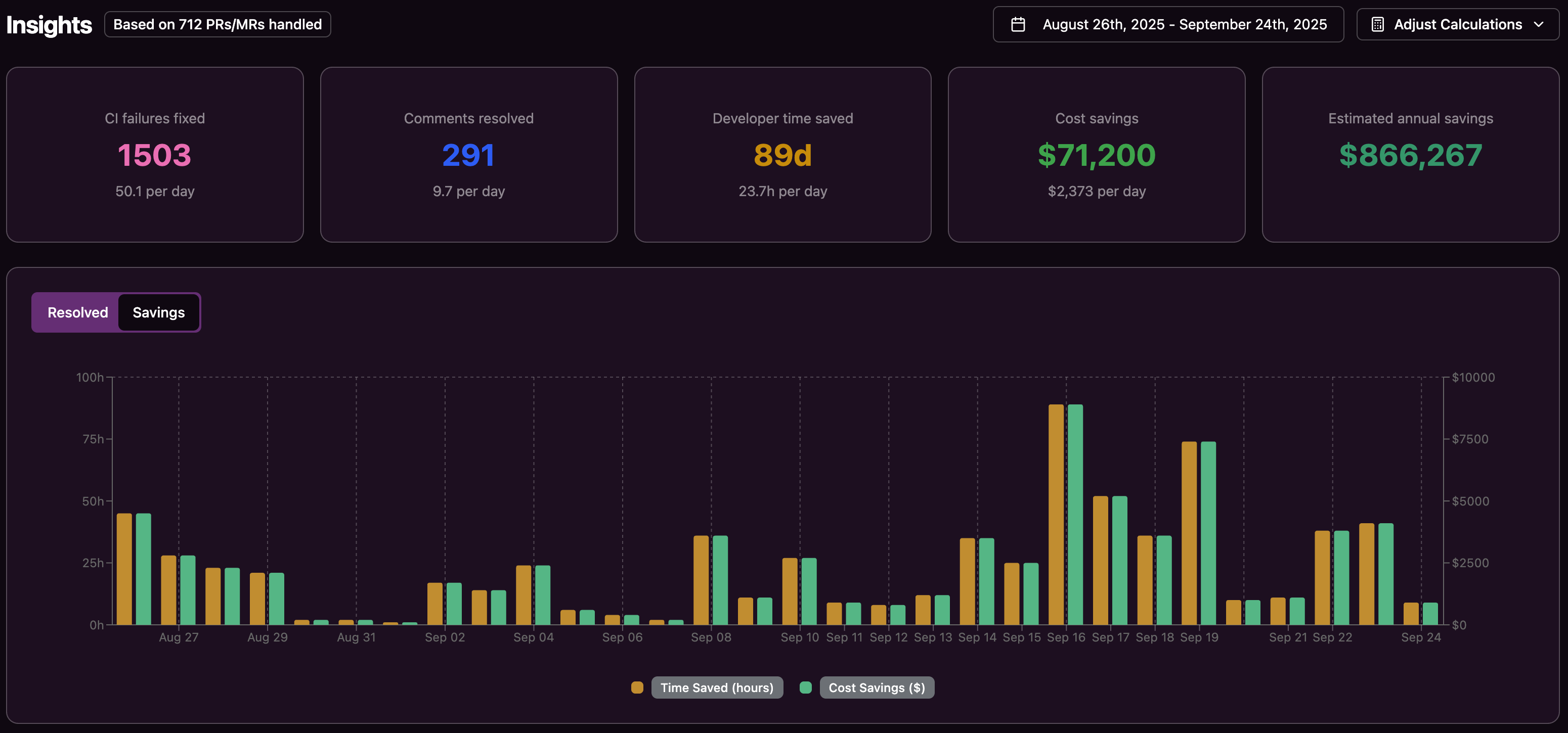
Investing in self-healing CI yields clear, measurable savings. A team of 20 developers who each spend one hour per day on CI and review issues loses roughly 5,000 hours per year. At a loaded rate of 200 dollars per hour, that equates to about 1 million dollars in annual cost. Reducing that time even by half recovers hundreds of thousands of dollars while easing pressure on delivery schedules.
Autonomous quality tools also reduce technical debt, accelerate release cycles, and allow engineers to focus on design and product work instead of repetitive debugging. For distributed teams, automated fixes keep pipelines moving overnight and between time zones so progress continues even when reviewers are offline.
Successful rollouts usually begin with conservative settings. Teams first log and review suggested fixes, then enable auto-application for low-risk patterns, and finally extend automation once they see consistent, reliable improvements.
Frequently Asked Questions
How do autonomous code quality tools differ from traditional static analysis tools?
Static analysis tools scan code and report potential problems such as security risks, style violations, and performance issues. Autonomous code quality tools like Gitar add execution and validation. They generate fixes, apply them to the branch or pull request, and rerun CI workflows to confirm that tests pass and the issue is resolved.
Can I trust AI to automatically fix my code without introducing new bugs?
Trust develops through gradual adoption and clear safeguards. Platforms like Gitar offer configurable aggression levels so teams can start with suggestion-only mode, then move to automatic commits for specific failure types. Full environment replication and CI validation act as safety nets, because each fix must pass existing tests and quality gates before it is accepted.
Can AI handle complex CI setups with many dependencies and third-party tools?
Modern autonomous agents are built for complex enterprise workflows. Gitar, for example, works within real CI environments that include language-specific SDKs, multi-language builds, containers, and integrations with external services. This context allows the agent to craft fixes that respect actual runtime conditions instead of working against simplified local assumptions.
What kind of ROI can teams expect from autonomous code quality tools?
Teams typically see value in three areas: reduced time spent diagnosing and fixing CI failures, shorter review cycles, and fewer disruptions to developer focus. For a 20-person team with roughly 1 million dollars in annual engineering time tied up in CI and review issues, even modest improvements can reclaim a significant share of that cost while improving morale and throughput.
Conclusion: Moving Toward Self-Healing CI for Better Code Quality
Software development in 2026 is shifting from manual inspection toward automated, validated fixes. Security scanners, static analysis, review assistants, and test generation tools all help surface and shape improvements, but autonomous CI fixing platforms close the loop by implementing and verifying changes.
By adopting self-healing CI practices, engineering teams can reduce time lost to routine failures, deliver features faster, and maintain higher confidence in every merge. Organizations that incorporate autonomous agents into their pipelines place developers in a stronger position to focus on architecture, product value, and long-term quality instead of repetitive firefighting. Teams ready to explore this model can start with Gitar for autonomous CI fixing and review support.