
Key Takeaways
- AI coding tools increased code generation 3-5x, yet PR review capacity stayed flat despite 43M+ monthly pull requests.
- Traditional AI review tools only suggest fixes, creating notification fatigue and wasting 30% of dev time ($1M yearly for 20 devs).
- Gitar automatically heals CI failures, applies reviewer feedback, and ships green builds using hierarchical memory and deep integrations.
- Gitar offers free unlimited repos with full PR analysis, security scanning, and a single low-noise comment, beating paid tools like CodeRabbit and Greptile.
- Teams using Gitar cut CI and review time by 75%, then ship higher quality software much faster.
The Post-AI Coding PR Bottleneck
AI-accelerated coding created a massive review bottleneck across modern engineering teams. Nearly 1 billion commits shipped in 2025 (+25.1% YoY), with 518.7 million pull requests merged (+29% YoY). At the same time, average lines of code per developer jumped from 4,450 to 7,839 in 2025 as AI tools multiplied output. PR review time then surged 91% because humans still validate most AI-generated code.
Engineering leaders now see a clear productivity drain. Teams lose roughly 30% of development time to CI failures and review loops. For a 20-developer group, that loss equals about $1 million per year in wasted capacity. Positive sentiment for AI tools dropped to 60% in 2025 from above 70% in 2023-2024, largely due to these downstream slowdowns.
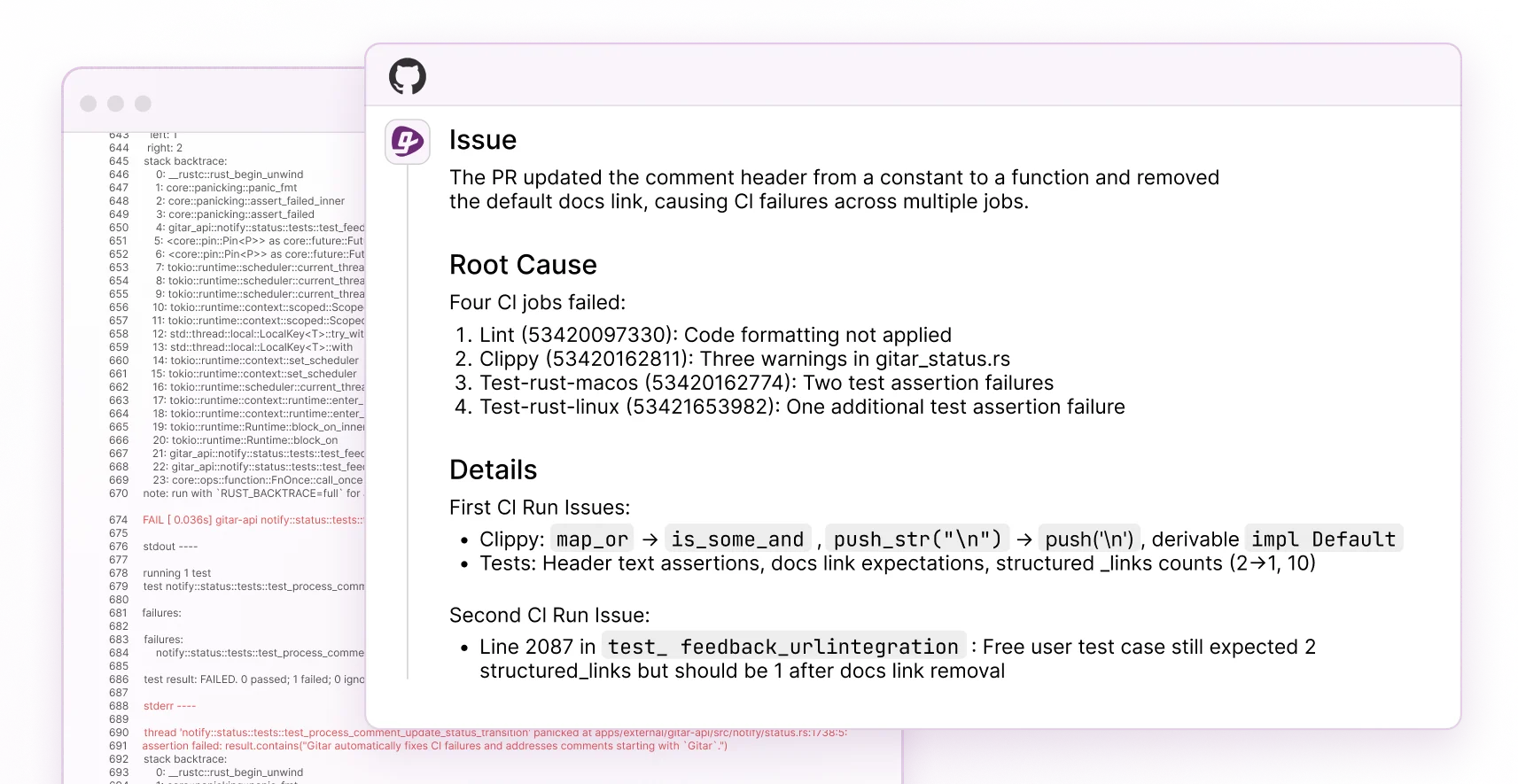
Legacy AI review platforms intensify the pain with noisy suggestion-only workflows. Developers receive dozens of inline comments on each PR, which creates cognitive overload and context switching. When CI fails from lint issues, tests, or builds, these tools highlight problems but force humans to implement every fix. The repeated loop of failure, suggestion, manual patch, and rerun burns hours each day and erodes the gains from AI coding.
Confirmation bias in AI review further increases risk. Tools that use the same models to generate and review code share blind spots. Logic and correctness issues appear 75% more often in AI-assisted PRs, yet traditional reviewers miss many of these bugs while focusing on minor style problems.
Healing-Focused AI Review: How Gitar Changes the Model
Intelligent review platforms now shift from suggestion engines to healing engines. These systems do not stop at comments. They automatically repair CI failures, apply reviewer feedback, and validate changes across the full build pipeline.
Gitar leads this shift as a free AI code review platform for modern teams. It delivers full PR analysis, security scanning, bug detection, and performance review at no cost for unlimited repositories. When CI checks fail from lint, tests, or builds, Gitar inspects logs, proposes contextual fixes, validates them against the codebase, and commits working changes automatically during a 14-day free trial of auto-fix features. When a reviewer writes feedback like “refactor this to use async/await,” Gitar performs the refactor instead of adding another task to the backlog.
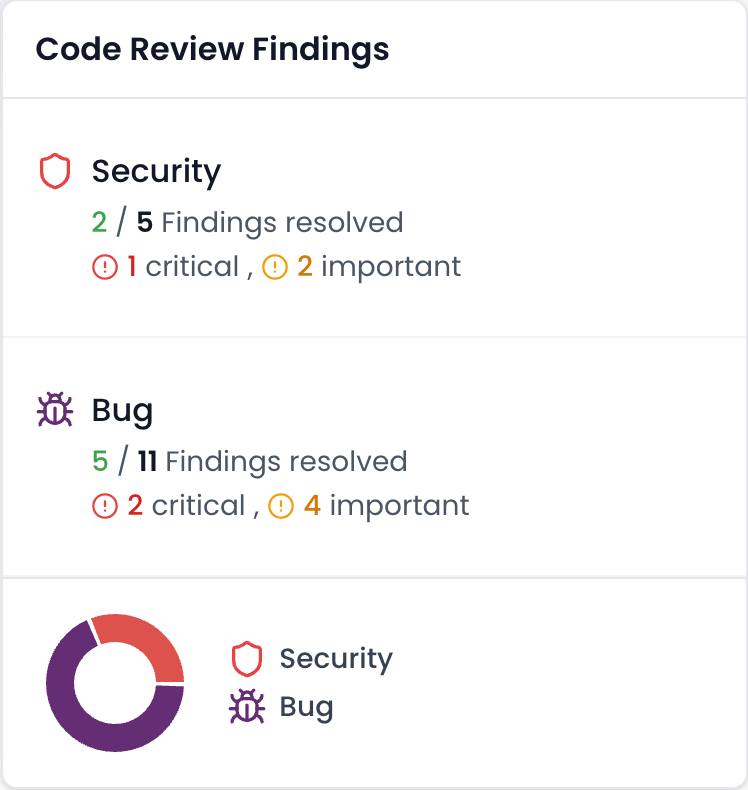
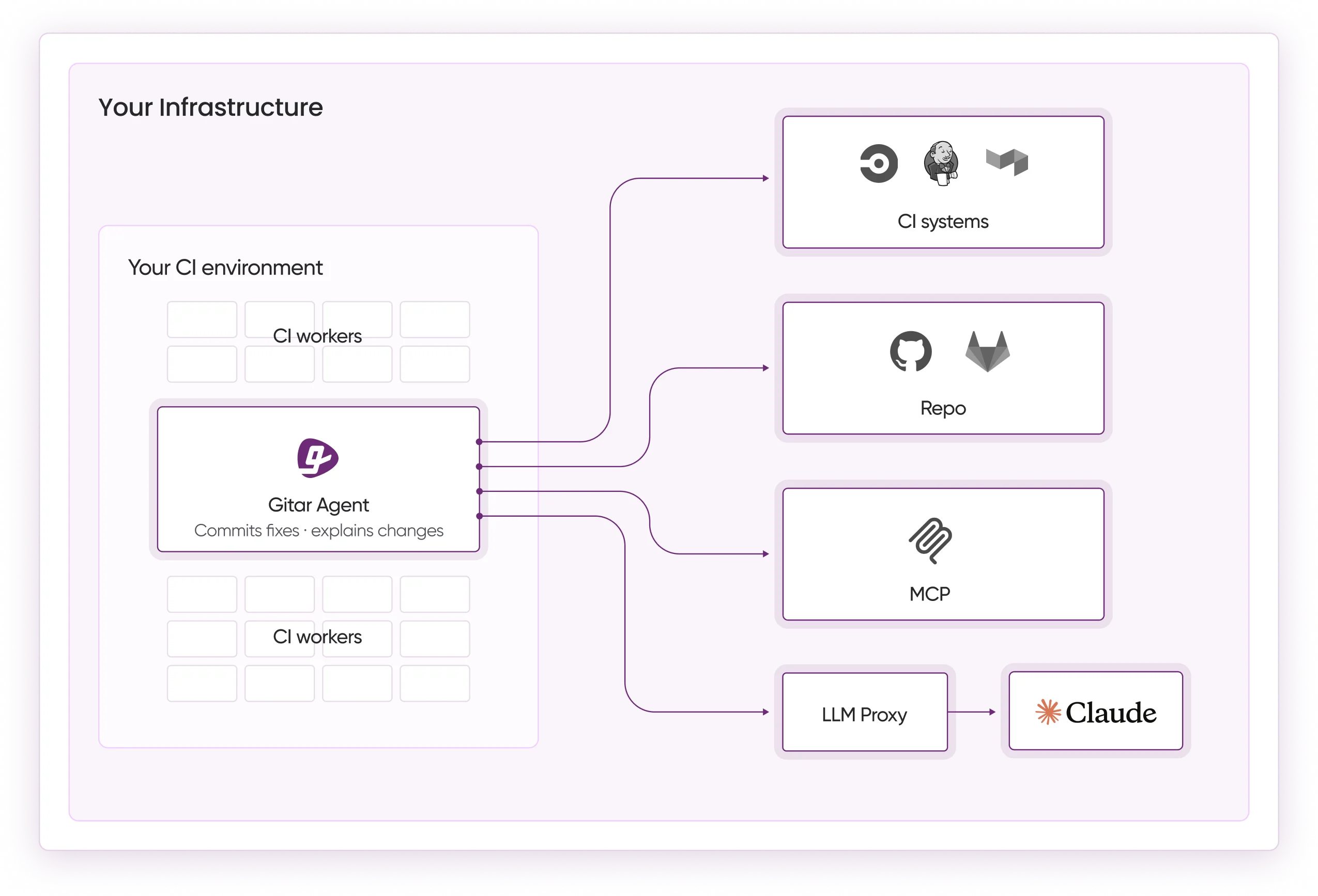
The platform rolls all findings into a single dashboard-style comment that updates in place. This approach removes comment spam and keeps discussions focused. Natural language rules in repository configuration files let teams automate workflows without complex YAML. Deep integrations with GitHub, GitLab, CircleCI, Buildkite, Jira, and Slack keep context synchronized across every tool developers already use.
Gitar’s hierarchical memory tracks context at the line, PR, repository, and organization levels. The system learns patterns over time, which improves accuracy and reduces false positives. Competing tools often start fresh on each PR, which discards valuable history and limits the quality of suggested or applied fixes.
Gitar vs Other AI Review Tools
|
Tool |
Auto-Fix/CI Healing |
Pricing |
Integrations/Noise |
|
Gitar |
Yes (validates and ships green builds, 14-day free trial) |
Free code review (unlimited repos), Autofix 14-day free trial |
Full stack (GitHub/GitLab/CircleCI/Buildkite/Jira/Slack), Single updating comment |
|
CodeRabbit |
Yes (one-click fixes and committable suggestions) |
$15-30/seat |
GitHub-focused, Noisy inline comments |
|
Greptile |
No (suggestions only) |
$30/seat |
GitHub/GitLab, High notification volume |
|
Qodo |
Yes (with CI/CD validation and coverage gates) |
Paid tiers |
CI/CD integration, Moderate noise |
This comparison highlights Gitar’s position as the only platform combining comprehensive free code review with true auto-fix and CI validation. CodeRabbit offers accurate auto-fixing and CI/CD support but charges higher per-seat pricing. Greptile focuses on analysis with strong accuracy and CI/CD support for GitHub and GitLab at a premium price. These tools deliver value, yet they require per-seat licenses, while Gitar keeps core review and analysis free. Install Gitar now, automatically fix broken builds, and ship higher quality software faster.
Core Capabilities of Modern AI Review Platforms
CI Auto-Healing for Real-World Failures
Advanced platforms read CI failure logs, identify root causes across lint, tests, builds, and dependencies, then generate validated fixes. Gitar’s agent architecture manages force pushes, concurrent updates, and complex multi-step failures that older tools cannot reliably handle.
Automatic Implementation of Reviewer Feedback
Intelligent systems now apply reviewer suggestions directly. When a comment tags @gitar, the platform parses the natural language feedback, edits the code, and pushes changes. This approach removes the manual implementation step that slows traditional review workflows.
Natural Language Workflow Automation
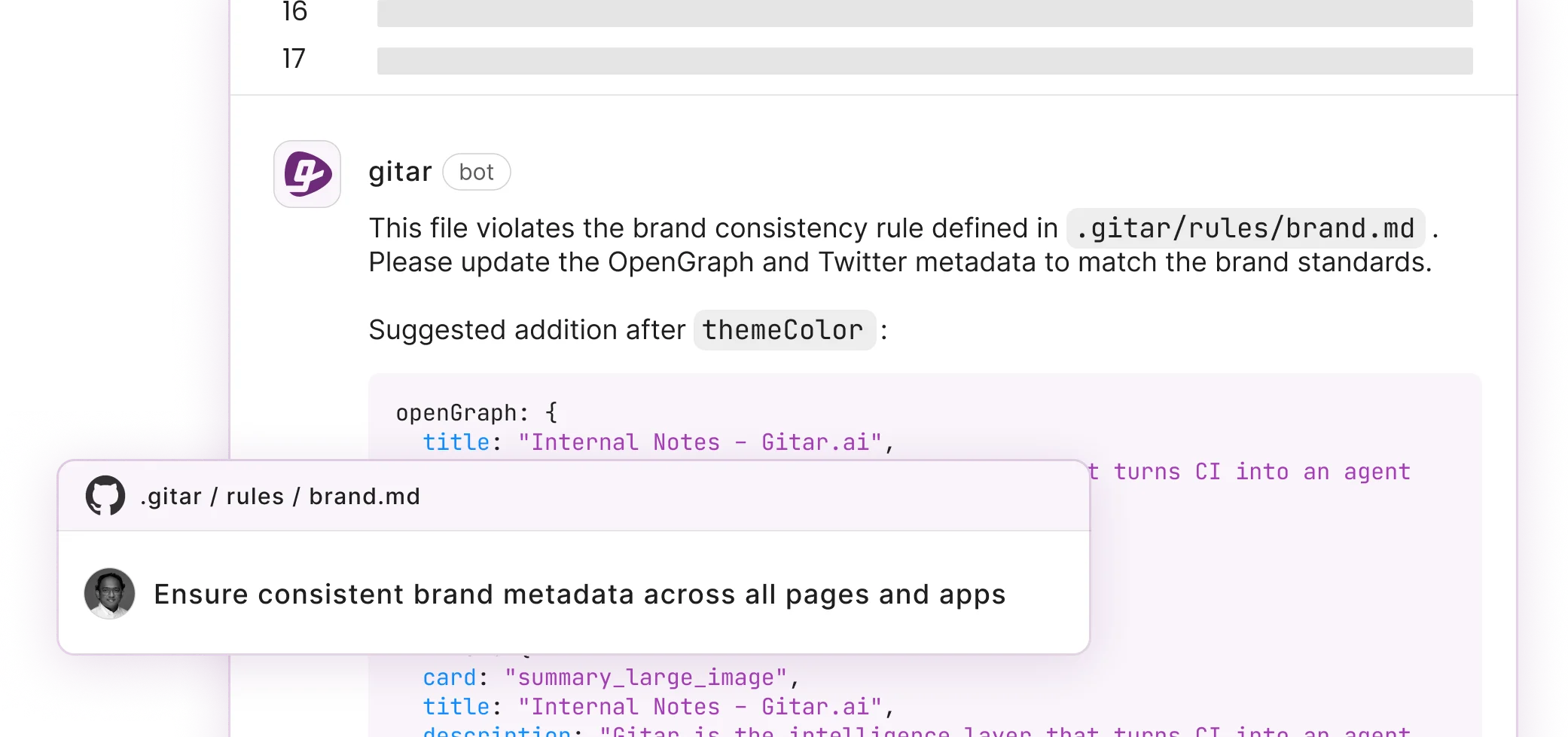
Rule configuration in plain language lets teams automate complex flows without YAML skills. Rules such as “assign security team for authentication changes” or “add performance label for database modifications” trigger automatically based on code analysis.
Security, Compliance, and Deployment Control
Production-ready platforms satisfy enterprise standards like SOC 2 Type II and ISO 27001. They also support deployment models that keep code inside company boundaries. Gitar offers both cloud-managed and on-premises agents so security teams can choose the right control level.
Noise Reduction and Signal Clarity
Modern tools reduce noise through single updating comments, severity thresholds, and context-aware filters. These features highlight critical issues while suppressing low-value style nits that distract reviewers.
Cross-Platform Integration for Existing Stacks
Broad integration across version control, CI, and project tools keeps teams in their current workflows. Gitar connects with GitHub, GitLab, GitHub Actions, CircleCI, Buildkite, Jira, Linear, and Slack, which removes the need for constant tool switching.
Gitar ROI: Cutting Review and CI Time
|
Metric |
Before Gitar |
After Gitar |
|
Time on CI/review issues |
1 hour/day/developer |
15 minutes/day/developer |
|
Annual productivity cost |
$1M (20-dev team) |
$250K |
|
Tool cost |
$450-900/month |
$0 |
These metrics show Gitar’s impact on engineering throughput. Teams report a 75% reduction in time spent on CI failures and review implementation. Tigris engineering shared that Gitar’s PR summaries are “more concise than Greptile/Bugbot,” while Collate’s team praised the “unrelated PR failure detection” that saves “significant time” by separating infrastructure issues from code bugs.
Gitar’s agentic architecture powers these outcomes through deep codebase understanding, hierarchical memory, and validation inside real CI environments. The platform has caught high-severity security vulnerabilities that GitHub Copilot missed, which highlights the value of dedicated review intelligence over general-purpose coding assistants.
Enterprise-Grade Scale and Trust
Large-scale adoption proves that intelligent review can handle demanding environments. Gitar processes more than 50 million lines of code and thousands of daily PRs in production at companies like Pinterest. The architecture supports monorepos, custom compliance rules, and integration with existing security scanners.
Claude excels at code review by reading and reasoning across many files, producing focused responses, and understanding intent in large codebases. Gitar builds on advanced models with Claude Sonnet 4.5 and its 200,000-token context window, which can process entire codebases without losing detail. This foundation enables accurate analysis and reliable fixes at enterprise scale.
Configurable auto-commit settings help teams adopt automation safely. Many teams start in suggestion mode, then enable automatic fixes for specific failure types as trust grows. Enterprise customers can run agents inside their CI infrastructure, which preserves strict control over code access and security. Install Gitar now, automatically fix broken builds, and ship higher quality software faster.
Frequently Asked Questions
How Gitar Compares to CodeRabbit
Gitar offers free unlimited code review, while CodeRabbit charges $15-30 per developer for analysis and one-click fixes. Gitar groups findings into a single updating comment that removes notification spam. CodeRabbit relies on many inline comments. Gitar provides auto-fix with a 14-day free trial, validates fixes against CI, and ships green builds. CodeRabbit focuses on committable suggestions. Teams that move from CodeRabbit to Gitar report a 75% reduction in time spent on review cycles and CI failures.
Reliability of Free AI Code Review in Production
Gitar’s free tier uses the same core engine that powers enterprise deployments across more than 50 million lines of code. The platform has surfaced high-severity security issues that premium tools like GitHub Copilot missed, which shows that higher price does not guarantee better accuracy. Free access does not mean limited capability. Gitar includes unlimited repositories, full security scanning, and CI integration without seat limits. Revenue comes from advanced enterprise features instead of restricting core review.
How Gitar Automatically Fixes CI Failures
When CI fails, Gitar’s agent reads the logs, identifies the root cause, and inspects the surrounding code. It then generates targeted fixes with advanced language models, validates those fixes in the full build environment, and commits working changes. The system handles multi-step failures, dependency conflicts, and environment-specific problems. Unlike suggestion-only tools, Gitar focuses on fixes that actually resolve the failure instead of creating new issues.
Why Gitar Beats Greptile and Qodo for Enterprises
Gitar delivers true auto-fix with CI validation, while Greptile and Qodo still rely heavily on manual implementation. Enterprise teams gain SOC 2 Type II coverage, on-prem deployment options, and natural language workflow automation. The single updating comment approach reduces notification fatigue compared with competitors that scatter inline comments. Gitar’s free tier also removes $30+ per developer monthly costs while matching or exceeding competing functionality.
Support for Large Monorepos
Gitar’s design addresses monorepo complexity directly. Hierarchical memory, incremental analysis, and context-aware processing maintain per-line, per-PR, and per-repo understanding across more than 50 million lines of code. Extended context windows in the underlying models enable broad codebase comprehension without performance loss. Enterprise customers can run agents inside existing CI infrastructure for predictable performance on very large repositories.
Conclusion: Ship Faster With Gitar’s Healing Engine
Modern teams need AI review that fixes problems, not just points at them. Gitar upgrades code review from noisy suggestion engines to a healing platform that ships green builds. With free unlimited repositories, automatic CI failure resolution, and enterprise-grade security, Gitar removes the tradeoff between cost, capability, and reliability. Install Gitar now, automatically fix broken builds, and start shipping higher quality software faster.