
Key Takeaways
- AI coding tools generate code 3-5x faster, yet PR review times have surged 91%, creating new bottlenecks for teams.
- Claude Opus delivers lower cost per PR than Sonnet on complex Rust work, using 19-76% fewer tokens despite higher rates.
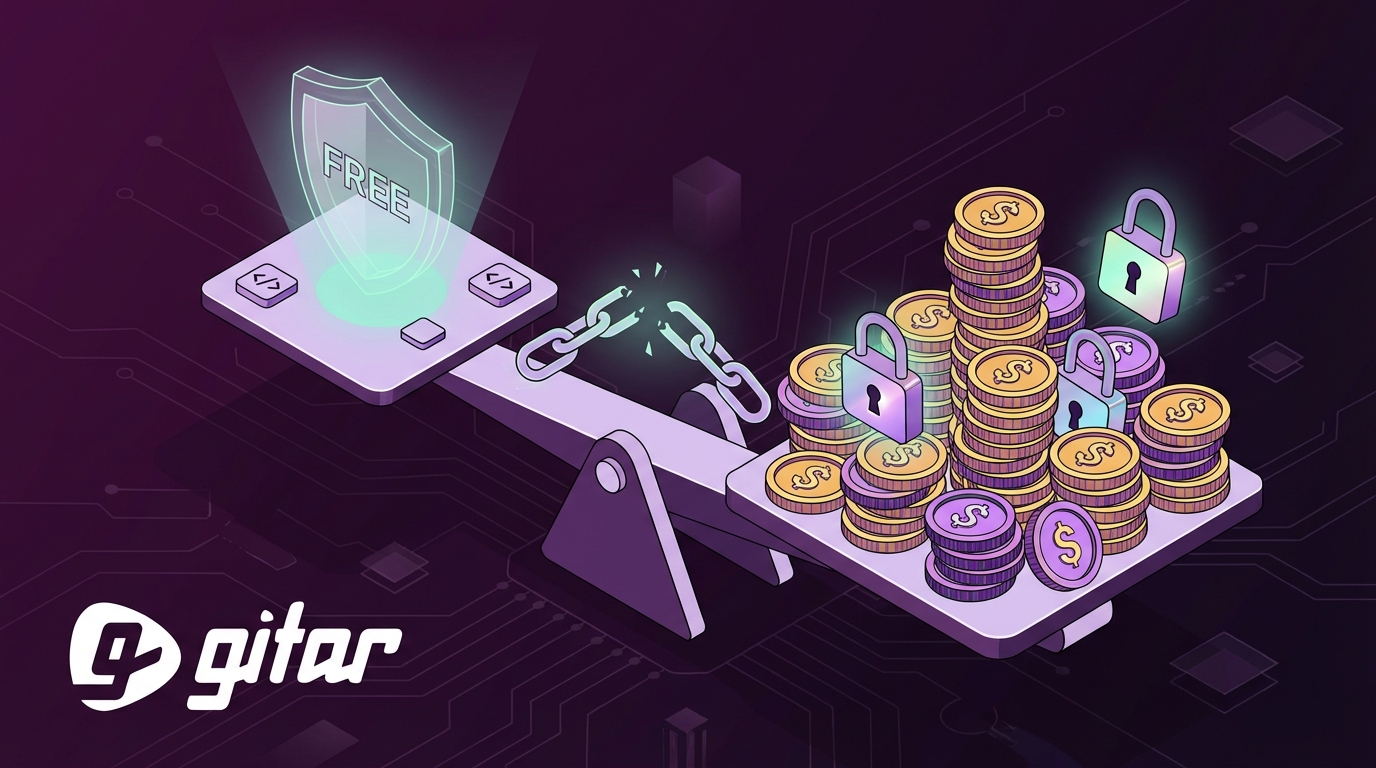
- Gitar.ai offers free, unlimited AI code review and autofix, saving teams $450-900 each month versus paid tools like Claude.
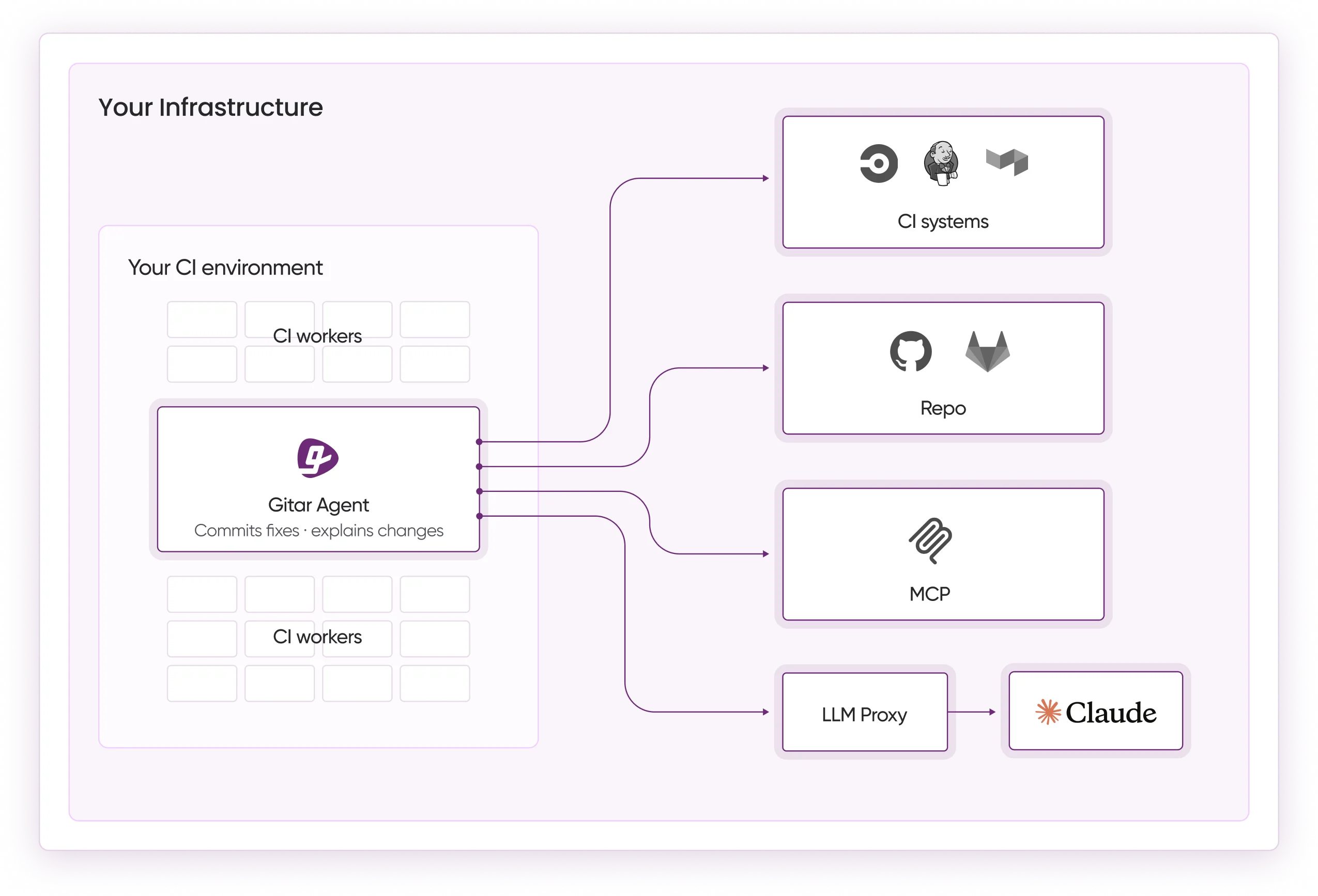
- Gitar connects directly to CI, validates fixes, and commits changes, so teams avoid manual review and rework cycles.
- Teams can replace expensive Claude subscriptions with Gitar’s free platform to gain stronger automation and easier scaling.
How We Evaluated AI Code Review Tools
Our analysis compares four solutions across cost per PR, autofix capabilities, CI integration, and scalability. We rely on primary data from Gitar’s CEO’s month-long Rust PR analysis, which shows Opus achieving lower per-outcome costs despite higher token rates.
We also reference IntuitionLabs’ finding that Claude Code typically costs $100-200 per developer monthly. We combine this with Hyperdev’s analysis showing Opus uses 19-76% fewer tokens for comparable results. Our comparison assumes moderate Rust workloads and standard prompting practices.
Overview of the Four AI Code Solutions
Four solutions currently dominate AI code assistance for teams.
1. Gitar.ai: Free AI code review and autofix for unlimited repositories. The platform automatically resolves CI failures and addresses review feedback in production environments.
2. Claude Code Sonnet: API pricing at $3 and $15 per million tokens, with Pro subscriptions from $17-20 monthly for code generation.
3. Claude Code Opus: API pricing at $5 and $25 per million tokens, delivering stronger token efficiency for complex development tasks.
4. CodeRabbit: $15-30 per developer for inline suggestions, without autofix capabilities.
Book a demo to see how Gitar removes Claude costs while increasing automation across your PR workflow.
Detailed Breakdown of Each Solution
1. Gitar.ai: Free AI Code Review With Autofix
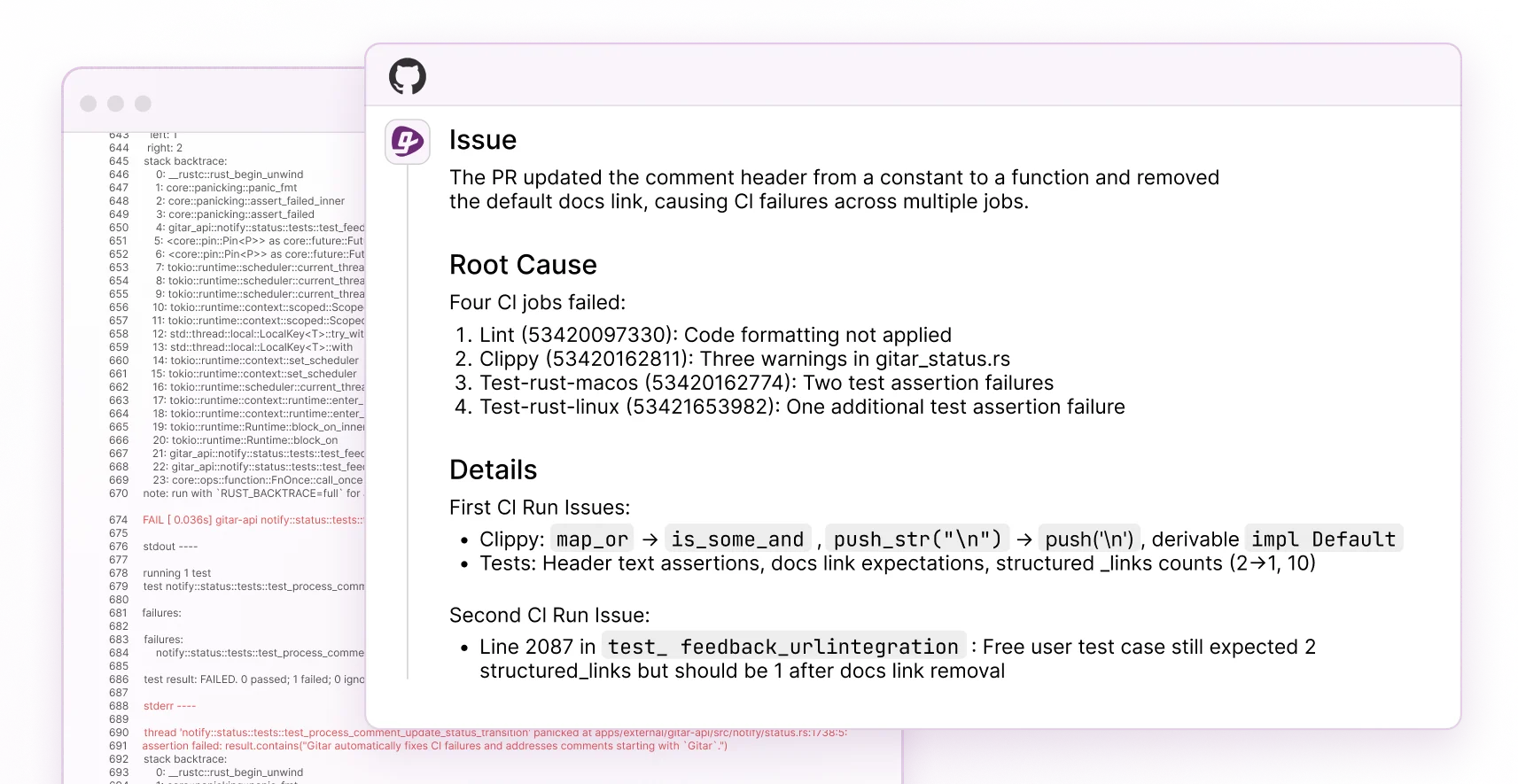
Gitar delivers free, comprehensive AI code review with a 14-day autofix trial and zero setup through GitHub and GitLab app integration. The platform automatically resolves CI failures, lint errors, and test breaks, which saves teams $450-900 each month compared to paid alternatives. Gitar validates fixes against CI and commits working solutions in a single, clean comment, instead of scattering feedback across many threads.
This workflow fits teams with 20 or more developers who feel productivity loss from review bottlenecks and broken builds. Gitar focuses on production-ready fixes rather than suggestions that still require manual effort.
2. Claude Code Sonnet: Lower Rates, Higher PR Costs
Sonnet offers $3 and $15 per million token pricing, with Pro subscriptions at $20 monthly, and delivers a solid speed-to-price ratio for routine coding tasks. CEO data shows higher per-PR costs on complex Rust development because Sonnet needs more retries and tokens.
Teams typically spend $100-200 monthly per developer on token usage alone. Sonnet also requires custom integration work and only generates code, without resolving CI failures or validating fixes.
Book a demo to replace expensive Claude subscriptions with free, automated code review and CI-aware autofix.
3. Claude Code Opus: Token Efficient but Still Generation-Only
Opus appears expensive at $5 and $25 per million tokens, yet CEO data and Hyperdev’s analysis showing 76% fewer tokens for medium tasks and 65% reduction on refactoring tasks tell a different story. This efficiency produces lower per-PR costs on Rust development, with Max subscriptions usually capped at $100-200 monthly.
Opus still focuses on generation-only workflows. It does not validate fixes or integrate with CI, which keeps scaling costs unpredictable as teams grow and complexity increases.
4. CodeRabbit: Inline Suggestions Without Autofix
CodeRabbit charges $15-30 per developer for inline suggestions across pull requests but does not include autofix or CI context integration. The tool creates notification overload through scattered comments instead of consolidated feedback.
Developers must manually implement every suggested change, which reduces the time savings that AI assistance should provide.
Side-by-Side Comparison of AI Code Tools
|
Solution |
Cost per PR (Our Data) |
Autofix/CI Integration |
Token Efficiency |
Scalability/Integrations |
|
Gitar.ai |
$0 |
Yes (14-day trial) |
N/A (free) |
Unlimited free repos, GitHub, GitLab, CircleCI |
|
Sonnet |
Higher (~$100-200/mo equiv.) |
No |
Baseline |
API integration, variable |
|
Opus |
Lower (19-76% fewer tokens per CEO/Hyperdev) |
No |
Superior (65% fewer refactoring) |
API, scales with spend |
|
CodeRabbit |
$15-30/dev |
No |
N/A |
Per-seat, GitHub-focused |
Key Tradeoffs for Developers and Engineering Leaders
Individual developers weigh Claude’s $100-200 monthly costs and integration work against Gitar’s instant, free setup that delivers about 75% time savings. Engineering leaders focus on total cost of ownership and long-term productivity.
Opus can deliver 65% cost reductions in enterprise implementations, yet Gitar removes the $1M annual productivity loss from slow reviews and broken builds. Enterprise teams also gain from Gitar’s lack of vendor lock-in and unlimited scaling without per-seat pricing.
Book a demo to see how free automation outperforms high-cost AI subscriptions in real workflows.
Frequently Asked Questions
What is the real cost of Claude Code per developer?
Based on IntuitionLabs research and our CEO’s analysis, teams usually spend $100-200 monthly per developer on Claude Code. Sonnet often costs more on complex Rust tasks because it needs more retries and tokens.
These figures do not include integration work or the time engineers spend resolving CI failures that the model creates.
Why does Opus end up cheaper than Sonnet despite higher rates?
Our CEO’s Rust analysis and Hyperdev research show that Opus uses 19-76% fewer tokens through stronger reasoning. The model needs fewer retries and iterations to reach a working solution.
Even with $5 and $25 per million token pricing versus Sonnet’s $3 and $15, this efficiency produces lower per-PR costs on complex development tasks.
How does Gitar compare on cost?
Gitar offers free core code review and a free autofix trial, while Claude charges ongoing monthly fees. Teams can scale across unlimited repositories without per-developer charges.
Most teams save $450-900 each month compared to paid alternatives and also gain CI integration and automated fix validation, which Claude does not provide.
What are Gitar’s free and paid tiers?
Gitar’s core code review supports unlimited repositories and users at no cost. The autofix feature includes a 14-day trial so teams can test it in real workflows.
Paid team plans add workflow automation, developer insights, and enterprise integrations tailored for production environments.
Does Gitar work with Claude-generated code?
Gitar integrates with Claude-generated PRs inside CI pipelines and automatically fixes lint errors, test failures, and build breaks. The platform cleans up the issues that Claude generation introduces.
This removes the manual fix cycle that makes Claude expensive, even though it generates code quickly.
Conclusion and Recommended Next Steps
CEO data shows that per-PR analysis gives a clearer cost picture than per-token pricing, and Opus wins internal Claude comparisons on efficiency. Gitar’s $0 model removes the PR bottleneck entirely while still grounding decisions in validated benchmarks.
Budget-conscious teams and heavy Claude users should start with Gitar’s free tier and layer comprehensive automation on top of existing workflows. Book a demo to automatically fix broken builds and ship higher quality software faster.